

Plot Summary
Prologue
Ann remembers the August when a body lay on the library floor and the gardens were searched. That summer at The Cloisters, jealousy, ambition, and secrecy gathered beneath the flowers, though she could not recognize the warnings in time.
Looking back, she questions whether a different job, a different journey, or a different choice could have altered what happened. The cards and the ancient arguments about fortune offer no simple answer. What remains is the conviction that the summer found her as much as she found it.
The prologue gives the story the shape of a remembered catastrophe before its causes are visible. Ann’s hindsight is not omniscience: she knows who died and that the gardens were searched, but she still wrestles with whether events could have gone another way. That uncertainty establishes the book’s central tension between fate and responsibility. The August setting also makes beauty ominous. The flowers and heat are not sinister in themselves, but become part of a landscape Ann can only read after the damage is done.
The Met Door Closes
After graduating from Whitman, Ann Stilwell leaves Walla Walla hoping a summer position at the Metropolitan Museum will open a path into art history. Her father’s recent death has made home feel airless, while her mother’s grief keeps the house suspended around his belongings.
At orientation, the Met tells Ann her assigned curator has left and there is no work for her. She expects to lose both the internship and her New York foothold. Then Patrick Roland, curator of The Cloisters, learns that his own assistant has quit and asks for Ann instead.
Her Renaissance research and language skills fit his project. Ann accepts before she can reconsider, trading the institution she coveted for a strange, beautiful museum at Manhattan’s northern edge.
Ann’s arrival is driven by two kinds of escape that she cannot cleanly separate: professional ambition and flight from grief. Her mother’s inability to move through the house makes departure feel like betrayal, but staying would mean inheriting a life already organized around loss. The Met’s rejection exposes how contingent institutional success can be, while Patrick’s offer appears to restore agency. Yet the job’s accidental timing introduces the novel’s governing doubt: Ann experiences the opening as a choice, though the circumstances that shape it are largely beyond her control.
A Museum in Stone
The Cloisters draws Ann into its reconstructed medieval world of gardens, chapels, reliquaries, and narrow staff passages. Patrick introduces her to Rachel Mondray, the accomplished young researcher who already works there and treats Ann with a warmth that feels both generous and difficult to interpret.
Rachel explains that she and Patrick are preparing an exhibition about divination, with a special interest in whether early Renaissance tarot cards might have served more than a gaming purpose.
Ann brings knowledge of Italian courts and astrology to the project, while Patrick offers to help her build an academic future. Surrounded by colleagues whose prestigious schools and connections sharpen her outsider status, Ann sees the research as a chance to prove that overlooked subjects, and perhaps she herself, deserve serious attention.
The museum’s architecture makes scholarship feel less like detached study than entry into a protected, almost theatrical world. Ann’s attraction to the place is also social: she wants access to the rooms, mentors, and confidence Rachel seems to possess naturally. Rachel’s welcome eases that longing while establishing an imbalance, since she already knows the institution’s people and habits. The tarot project gives Ann a legitimate role, but its subject unsettles the boundary she relies on between historical belief and present reality. Her desire to be recognized begins to make that boundary easier to cross.
Rachel's Games, Leo's Garden
As Ann and Rachel work through old texts, Rachel lets Ann see her mischievous side: she steals café biscuits, plays small tricks on Moira, and quietly enjoys making others doubt their certainty. Ann is drawn closer by their shared breaks and by Rachel’s probing questions about her life, even as Rachel keeps her own history private.
In the gardens, Leo Bitburg, The Cloisters’ gardener, teaches Ann which medicinal plants are also poisonous and flirts with an intensity she has never encountered. Rachel watches them together, then pulls Ann back toward work.
Ann later overhears Rachel and Patrick discussing whether she can be trusted and whether to involve her more deeply. The private invitation to dinner at Patrick’s house makes clear that the museum’s research is entangled with relationships Ann has not yet learned to read.
Rachel’s pranks matter because they turn social knowledge into a game: she controls what others know and enjoys watching them react. Ann mistakes access to this playfulness for equality, while Rachel’s refusal to disclose her own past preserves the advantage. Leo offers a different form of intimacy, physical and unscripted, which awakens Ann’s appetite for risk. The overheard conversation makes her inclusion feel conditional. Her professional worth, romantic desire, and need for friendship begin to converge, making it harder to know whether she is being welcomed for herself or recruited for a purpose.
A Salon of Oracles
At Patrick’s Tarrytown home, Ann meets Aruna Mehta, a rare-manuscript curator and Patrick’s longtime friend. Over dinner, Rachel argues that tarot may have had an occult use in Renaissance Italy, even though the surviving evidence is fragmentary and scholars generally treat the cards as a game.
Patrick produces an old Etteilla deck and has Ann handle it in a reading. The images seem to gather meaning around her grief and uncertainty, though she cannot tell whether she feels genuine insight or the pull of an elaborate setting.
After dinner, Aruna warns Ann away from whatever happens between Patrick and Rachel inside the house. Ann leaves with Rachel’s hand lingering on her arm and the sense that she has entered a private circle whose rules have not been explained.
The dinner gives the novel a compact model of its larger power structure. Patrick owns the house, the objects, and the professional authority; Rachel supplies the interpretive excitement; Ann is invited to participate but not to understand the relationship between them. Aruna’s warning marks the limits of hospitality: intimacy can be offered as a form of access while still concealing the terms of entry. The reading unsettles Ann because it turns her grief into material that can be interpreted. The cards may be inert artifacts, but the people around them are already acting as if belief has consequences.
The Father's Paper Trail
When Ann opens the untidy box her mother has mailed from Walla Walla, she finds the scraps her father once used to teach her languages. Mixed among them are handwritten transcriptions by her Whitman adviser, Richard Lingraf, describing tarot cards at the court of Ferrara and the astrologer Pellegrino Prisciani.
One page ends in an unfamiliar coded language. The papers suggest that Lingraf had pursued a line of research he never shared with Ann. Their discovery brings back the panic surrounding her father’s memorial, and she leaves the apartment to steady herself.
At a greenmarket, she unexpectedly finds Leo selling remedies made from herbs grown at The Cloisters. He gives her peony seeds for protection and pays her to help, then flees when a police officer approaches.
The papers make inheritance more than a matter of objects: Ann receives her father’s habits of attention, his willingness to work from discarded fragments, and the unfinished questions he left behind. Their arrival also forces her to confront the psychological cost of memory. The code becomes a practical bridge between grief and scholarship, while the greenmarket reveals Leo’s ability to turn institutional access into private profit. Ann is drawn to the same overlooked materials that interest him, but their shared skepticism toward official value may lead them toward very different forms of transgression.
Diana Beneath the Popess
Rachel takes Ann to Stephen Ketch’s hidden antiquities shop, where she buys a pair of silver friendship rings and shows Ann fragments of Patrick’s unusual collection. Ann shares the existence of Lingraf’s tarot papers, but Rachel asks her to keep the discovery from Patrick.
Later, Patrick brings Ann back to collect additional cards. While waiting alone, Ann examines one card, feels its unnatural stiffness, and peels away a false Popess pasted over an older image of Diana the Huntress.
The hidden card bears a strange word that resembles the coded language in Lingraf’s notes. Ann pockets it instead of telling Patrick. When Rachel invites her to Long Lake, Ann carries the card with her, already caught between the professional value of the discovery and the danger of withholding it.
The false front turns the novel’s central metaphor into a physical object: what appears authentic conceals an older, more valuable image. Ann’s discovery depends on touch and sustained attention, skills she has cultivated through scholarship, but her decision to keep the card converts research into possession. Rachel’s request for secrecy has already taught Ann that withholding information can be a form of intimacy. Now Ann repeats that lesson on her own terms. Her first independent act of ambition is also an ethical breach, giving her a stake in the secret before she understands its full meaning.
A Cipher at Long Lake
At Rachel’s family camp, Ann learns from caretaker Margaret that Rachel’s parents drowned during a storm while sailing, and that Rachel survived. Later, Ann wanders into the dense forest and loses the path as darkness and cold deepen. Rachel finds her and brings her safely back to the house. Ann then shows Rachel the hidden Diana card and Lingraf’s coded page.
Using the card’s word as a key, they identify a blend of Italian and Latin and translate a letter from a Renaissance father to his daughter. It says that a deck can reveal the future and may help make that future inevitable. The two women share the discovery and their histories of bereavement, though Ann does not tell Rachel every detail of her own past.
The forest gives Ann a bodily version of her intellectual predicament: she cannot see the whole terrain, and progress depends on trusting someone else to lead her. Rachel’s rescue deepens their bond, making the later collaboration feel earned rather than merely strategic. Yet the translated letter changes the nature of their research. The cards are no longer just evidence of an old practice; within the letter’s logic, they may participate in producing outcomes. Ann and Rachel choose to treat the message as a shared secret, an act that binds them while also placing their careers and judgments outside ordinary scrutiny.
The Morgan's Missing Oracle
At the Morgan symposium, historian Herb Diebold presents an arrest record from Pontegradella that bears the same eagle watermark as Lingraf’s papers. The record mentions a duchess’s oracle, though Diebold concludes that the word may refer to prayer rather than tarot.
Ann and Rachel recognize the archival link but keep their own evidence private. Afterward, Ann meets Leo in the Bronx, watches his punk band play, and begins a physical relationship with him. He gives her a tarot card, the Lovers, as a teasing fortune.
Back at The Cloisters, Patrick’s impatience with the stalled research grows. He invites Ann, Rachel, and Leo to test a theory using Leo’s mixtures of henbane, mandrake, and other plants, promising that the altered state may sharpen their intuition.
The symposium offers public recognition without resolution: an expert’s evidence confirms the archive’s importance but leaves the crucial interpretation unsettled. Ann and Rachel now possess knowledge that could reshape scholarship, yet their silence protects both their claim and their status within the museum. Ann’s romance with Leo gives her another route out of academic self-erasure, one based on bodily desire rather than credentials. Patrick’s experiment then fuses these strands. Research, intimacy, and risk are no longer separate domains, and Ann’s willingness to follow the group makes the search for knowledge physically consequential.
Poison Under Candlelight
Leo prepares a bitter herbal drink for Ann, Rachel, and Patrick, assuring them the measured ingredients are safe. In the candlelit library, Patrick lays out the cards while the mixture takes effect. Ann sees images glow and overlap, but the drug blurs rather than clarifies her perceptions.
Leo leads her to the kitchen, where he tries to make her eat, then takes her away when she remains disoriented. The following morning, Ann returns to an empty library and finds Patrick’s body in his office.
Rachel is still performing chest compressions, although he is cold and has been dead for hours. Ann calls emergency services. While Moira rushes in, Rachel searches Patrick’s belongings; Ann spots a leather box with a green ribbon and slips it into her backpack.
The experiment exposes a contradiction at the heart of Patrick’s project: he wants intuition to serve as evidence, but deliberately alters the minds meant to interpret it. Ann’s drugged state leaves her with sensations instead of reliable memories, a vulnerability sharpened by her earlier history of panic and disorientation. Patrick’s death therefore arrives in a fog of uncertainty that benefits anyone with a secret. The box Ann takes is both a concrete clue and an instinctive act of self-preservation. Her silence begins before the police arrive, shaped by the fear that truth could cost her the only future she has secured.
A Body in the Library
The museum closes while police and the coroner remove Patrick’s body. Ann and Rachel agree to continue their work, then learn that an autopsy found a lethal amount of belladonna in his system. Detectives question Ann separately. She hides the drug experiment, denies knowing about Patrick and Rachel’s relationship, and says she has no reason to suspect anyone.
At Patrick’s memorial, Leo challenges her for treating his death as an obstacle to career advancement. He insists she is refusing to see that someone among them may have killed him. Ann turns instead to Laure, who warns that Rachel has a history of disturbing relationships and a Yale roommate’s death. Ann defends Rachel, but the warning leaves a crack in her certainty.
The investigation tests whether Ann’s loyalty is affection, ambition, or fear of losing both. By withholding the experiment, she protects Rachel, herself, and the discovery, but also deprives the police of the most relevant context. Leo’s accusation punctures the museum’s cultivated atmosphere of decorum: an institution devoted to preserved objects can still harbor living motives. Laure’s warning is persuasive precisely because it comes from outside the Cloisters’ closed circle, yet Ann dismisses it partly because Laure once failed to support her. Personal abandonment distorts her assessment of present danger.
Saint Daria's Empty Shelf
At Leo’s apartment, Ann notices an ivory carving of Saint Daria and later finds its accession record in The Cloisters’ storage system. She discovers other small works missing as well, then tells Detective Murphy that Leo may have been stealing from the museum.
Police find belladonna root cut from a garden plant and arrest him, though the security footage has already been recycled. Rachel encourages Ann to cooperate. Before meeting Leo again, Ann learns that Rachel and Leo had once been involved and that their history troubled Patrick.
Leo admits he and Rachel stole objects from several institutions and sold them through Ketch, but denies killing Patrick. He says Rachel helped arrange the sales and had a reason to remove Patrick from their path.
Ann’s discovery is both an act of evidence-based reasoning and a betrayal of someone she desires. The missing carving gives the police a plausible suspect, while Leo’s thefts make that suspicion feel almost too convenient. The absence of preserved footage leaves motive and opportunity standing in for proof. Leo’s account complicates the moral categories Ann has been using: he has committed serious crimes but may not have committed murder. His revelation that Rachel shared the thefts also reframes her generosity and Ann’s arrival as possible parts of a longer arrangement, not a friendship outside institutional power.
The Wheel Turns on Rachel
Detective Murphy tells Ann that Leo used Ketch Rare Books and Antiques to fence stolen objects. Ann remembers Rachel’s familiarity with the shop and enters Rachel’s late parents’ apartment with a set of keys she finds at home. In a locked desk drawer, she discovers a missing Cloisters brooch.
Leo later explains that Rachel helped him steal and sell art, and that she and Patrick were lovers. He believes Rachel poisoned Patrick after he discovered the cards beneath their false fronts, then let suspicion fall on Leo.
Ann now sees that Rachel’s influence links the curator, the gardener, the dealer, and the research project. Still, she does not go to the police with the brooch. Instead, she accepts Rachel’s invitation to return to Long Lake, carrying the evidence and the secret toward a private confrontation.
The brooch changes suspicion into material proof, but Ann’s response is not immediate justice. She enters Rachel’s private family space, crossing a boundary that mirrors Rachel’s own intrusions into the lives and property of others. Leo’s testimony offers an explanation but remains self-interested, so Ann must weigh it against what she has observed. Her decision to go to Long Lake rather than report the evidence shows how thoroughly the friendship has become a private jurisdiction. She wants the truth, but also wants control over who gets to interpret it and what the discovery will cost.
The Storm at Long Lake
At the empty camp, Ann finds the Devil card, the last missing card, tucked inside a copy of Patrick’s book. During a storm, she lays out the complete deck for Rachel and sees a spread that offers no future beyond sudden change.
Rachel resists the reading, but Ann confronts her with Leo’s accusation. Rachel admits that Patrick discovered the hidden images during their drugged reading. She had ground belladonna root from the garden and given it to him, claiming he chose to drink it.
She says she acted to keep him from claiming the discovery and its credit. As Rachel insists Ann could always have chosen another path, Ann remembers the truth she buried: she was driving when her truck struck her father on a Walla Walla road, and he told her to keep going.
The confrontation strips away the comforting idea that knowledge automatically produces moral clarity. Rachel treats Patrick’s consent to drink as absolution, converting an engineered situation into a free choice. Ann recognizes the same maneuver in her own history, but her father’s instruction and her shock do not erase the fact of her flight. Their shared capacity for self-protection makes Rachel’s claim that they are alike both plausible and devastating. The storm and burning boathouse do not decide what either woman will do; they intensify the moment in which each must choose how to live with the past.
A Future Ann Authors
Before dawn, Ann leaves the camp and removes the plugs and life vests from the sailboats, then travels to the city without explaining herself to Rachel. The next day, The Cloisters tells Ann that Rachel drowned while sailing during a storm, in an accident resembling her parents’ deaths.
Ann keeps Rachel’s messages unheard, deletes her name from their article, and submits it as sole author. She throws the silver friendship ring into the East River but keeps the tarot deck. The article wins recognition, and Ann accepts a place at Yale.
Later she learns Rachel had arranged the absence that brought Ann to The Cloisters, and finds evidence suggesting Rachel may have caused her parents’ fatal boat accident. Ann’s own removal of the safety gear leaves her part in Rachel’s fate unresolved.
The ending refuses to let Ann’s survival become a clean moral victory. She gains the career and recognition she wanted, but does so by removing Rachel from the article and by taking actions that make another drowning possible. Her new life is built from the same mixture of opportunity and concealment that once drew her toward Rachel. The cards remain a record of the future she fears and the one she helps shape. Ann finally accepts that her father’s death was not her fault, yet the certainty she finds there does not absolve her later choices. Agency and fate coexist without becoming interchangeable.
Analysis
The Cloisters makes scholarship a form of both discovery and possession. Ann’s attention to marginal subjects is intellectually sincere, but the institution she enters rewards access, pedigree, and the appearance of effortless brilliance. The hidden tarot cards give that system a material mystery to compete over: whoever can establish their meaning may claim not only an academic breakthrough but a new professional identity. Ann’s ambition therefore cannot be separated from the inequalities that shape it. She is not simply tempted by greed; she wants the security and recognition that others around her inherit or assume.
The novel’s question about fate works through specific acts of interpretation. A coded document can be translated, a tarot image can be read, and a death can be called accident or murder. Each interpretation selects a pattern from incomplete evidence. The danger comes when a character treats interpretation as innocence. Rachel calls Patrick’s death his choice because he drank what she prepared; Ann once accepts her father’s instruction to leave as a way to survive unbearable shock. The book does not make these circumstances morally identical. Instead, it shows how people use the language of choice to manage guilt, and how power determines whose choices are visible to others.
The museum setting intensifies this conflict. Its stone passages preserve artworks by separating them from ordinary life, while its staff members compete over the objects’ meaning and value. The institution’s quiet rooms are not outside the modern world: they depend on labor, money, reputation, and surveillance. Leo’s thefts expose the neglected objects behind the galleries, but his claim to restore their value cannot erase the fact that he profits from them. Ann’s rise likewise carries a cost. She wins recognition and a future, yet her final decisions repeat the secrecy and self-interest she once judged in others.
The novel’s lasting discomfort comes from refusing a clean division between fate and agency. Chance opens the door to The Cloisters, but Ann and Rachel make consequential choices once inside. The past may be beyond repair, but the present is not therefore morally weightless.
Review Summary
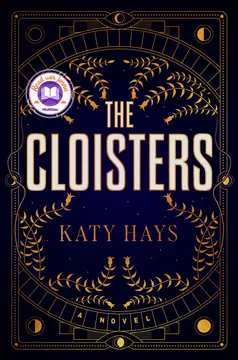
The Cloisters receives mixed reviews, with some praising its atmospheric setting and gothic vibes, while others criticize its slow pacing and underdeveloped characters. Readers appreciate the novel's exploration of tarot, medieval art, and dark academia themes. However, many find the plot lacking and the characters unlikeable. The book's beautiful cover and descriptive writing are frequently mentioned as positives. Overall, opinions are divided, with some readers thoroughly enjoying the novel's atmosphere and others feeling disappointed by its execution and pacing.
People Also Read



Characters
Ann Stilwell
The overlooked art historianA first-generation scholar from Walla Walla, Ann studies obscure Renaissance courts, languages, and objects that established departments often overlook. Her father nurtured her curiosity, while his death and her mother’s grief make leaving home feel necessary and painful. Ann is observant, disciplined, and hungry for intellectual recognition, but she also craves belonging in circles that seem to reward inherited confidence. She is drawn to archives because fragments can be patiently assembled, though her own memories are less orderly. Her desire to become a scholar is genuine, yet it can blur into a desire to escape a past she cannot fully face.
Rachel Mondray
The polished tarot scholarRachel is a brilliant, socially assured researcher whose work focuses on tarot and divination. Raised amid wealth, she moves through museums, academic circles, and inherited spaces with a confidence Ann envies. She is attentive to other people’s vulnerabilities and skilled at creating intimacy, but guards her own history closely. Her curiosity about Ann combines collegial interest with an instinct for assessing what another person might offer. Rachel’s charm does not make her simple: she can be generous, playful, ambitious, and controlling, sometimes within the same encounter.
Leo Bitburg
The unruly Cloisters gardenerLeo tends the gardens at The Cloisters, where his knowledge of medicinal and poisonous plants is both practical and unusually deep. He is also a playwright and occasional punk bassist, drawn to work that leaves room for experimentation rather than institutional approval. Tall, restless, and physically direct, he unsettles Ann’s careful reserve and makes desire feel like a form of action. His humor can turn sharp, and his distrust of wealth and museum hierarchies shapes how he judges the people around him. Leo lives by a personal code that does not always match the law.
Patrick Roland
The searching museum curatorPatrick curates The Cloisters and builds an exhibition around divination, medieval belief, and the possibility that tarot has a deeper history. He is an attentive mentor who recognizes Ann’s languages and research ability, offering the support she has long wanted from academia. His interest in the past is passionate rather than merely professional, and he expects others to take unfamiliar belief systems seriously. Patrick’s generosity exists alongside his authority: he controls access, defines the research agenda, and can make professional help feel inseparable from personal allegiance.
Ann's mother
The grieving homebound parentAnn’s mother works in Whitman College dining services and remains in Walla Walla after her husband’s death. Grief makes ordinary tasks and travel feel threatening, while the house becomes crowded with the objects she cannot yet sort. She loves Ann but often experiences her daughter’s ambition as a movement away from the family. Their conversations hold tenderness and frustration together, as each struggles to mourn without asking the other to carry the whole burden.
Ann's father
The self-taught linguistA facilities worker at Whitman College, Ann’s father teaches himself languages by studying discarded academic pages and library books. He shares this practice with Ann, giving her a lasting method for approaching incomplete texts and difficult lives. His intellectual appetite reaches far beyond the small world available to him, and his closeness with Ann sets him apart within the family. He is a formative presence in her scholarship and in her struggle to understand loss.
Richard Lingraf
Ann's elusive academic mentorLingraf is Ann’s former art history adviser at Whitman, an aging scholar whose early work once carried considerable prestige. He is inconsistent as a teacher and guarded about his research, but shares Ann’s interest in obscure Renaissance material. His handwritten transcriptions become an important model of the kind of scholarship that can survive outside formal recognition. Lingraf’s distance leaves Ann uncertain about what he knows and what he chose not to tell her.
Aruna Mehta
The candid manuscript curatorAruna curates rare manuscripts at the Beinecke Library and has known Patrick since graduate school. She is intellectually formidable, socially fluent, and less enchanted by academic prestige than many of her peers. Her warnings to Ann are indirect but pointed, reflecting both her knowledge of the circle around Patrick and her reluctance to be drawn into its private conflicts. She offers Ann the perspective of someone who has spent years inside the scholarly world without mistaking its rituals for innocence.
Laure
Ann's distant Whitman friendLaure was a slightly older student at Whitman who once served as Ann’s informal mentor. Stylish and perceptive, she has moved into Yale’s academic world and knows how its reputations travel. She reaches out to Ann after their paths cross in New York, bringing concern as well as old hurt from her earlier silence. Laure’s warnings about Rachel are shaped by her own experiences, though Ann’s history with her makes those warnings difficult to accept.
Michelle de Forte
The Met's practical gatekeeperMichelle directs Human Resources at the Metropolitan Museum and initially tells Ann that her summer placement has disappeared. She is blunt, procedural, and attentive to budgets and staffing needs. Later, she becomes the institutional point person for The Cloisters during its upheaval. Michelle represents a system that can be cold in its first decisions yet still make room for useful talent when circumstances change.
Moira
The watchful museum managerMoira manages the front desk and coordinates the docent program at The Cloisters. She tracks lateness, staff habits, and the small disruptions others would rather ignore. Her attention can feel intrusive, but it also gives her a strong grasp of the museum’s informal life. Moira is loyal to the institution and emotionally invested in its staff, with a taste for the gossip that fills the gaps official accounts leave behind.
Louis
The security chiefLouis heads security at The Cloisters and understands the practical limits of protecting a historic museum. He is patient with visitors and familiar with the staff’s routines, including Rachel’s occasional lateness. His son’s relationship with Rachel gives him a small personal connection to her, while his security responsibilities place him at the boundary between public display and private workspaces.
Stephen Ketch
The discreet antiquities dealerStephen runs Ketch Rare Books and Antiques, a crowded shop with a more private collection hidden upstairs. He specializes in acquiring objects whose histories are difficult to establish and cultivates clients who value unusual pieces. His attention to materials and provenance is matched by a willingness to work in a market that operates beyond ordinary museum channels. He is a broker between scholarship, private collecting, and secrecy.
Detective Murphy
The patient homicide investigatorDetective Murphy investigates Patrick’s death and questions the people who had access to him and The Cloisters. She is methodical, attentive to motive, and wary of explanations that rely on coincidence. Her questions force Ann to decide what she is willing to reveal, while the limits of the evidence keep the case from resolving quickly. Murphy represents an external system of accountability that the museum’s private culture cannot fully contain.
Margaret
The Long Lake caretakerMargaret has cared for Rachel’s family camp for many years. Warm and observant, she helps Ann feel at ease in an unfamiliar house and provides practical details about its history. Her knowledge of Rachel’s family comes from long proximity rather than academic or social circles. She is one of the few people who can describe the emotional life of the camp beyond its wealth and architecture.
Micah Yallsen
The well-connected classmateMicah is Ann’s fellow Whitman graduate, raised between several international cities and bound for a prestigious doctoral program. His advice about academic trends reflects the confidence of someone whose next step is already secured. He does not intend cruelty, but his casual certainty makes Ann feel how far she stands from the discipline’s centers of power.
Herb Diebold
The tarot symposium historianDiebold is a historian who presents research on tarot and divination at the Morgan symposium. His work connects archival evidence to larger questions about how Renaissance people understood prophecy and choice. He is careful about what documents can prove, a restraint that contrasts with Patrick’s more urgent hopes.
Karl Gerber
The absent Renaissance curatorGerber is the Renaissance curator whose planned absence creates an opening in the Met’s summer staffing. He works on exhibitions and has connections to European collections. His place in the museum’s professional network becomes relevant to Ann’s understanding of how careers and opportunities are arranged.
Plot Devices
The Ferrara tarot deck
A future hidden in paintThe deck at the center of the research appears to be an incomplete historical set, but some cards conceal earlier images beneath later painted fronts. The hidden pictures connect Roman gods with zodiac signs and celestial symbols. Ann discovers one image by noticing that a card feels too stiff, then uses its unusual lettering to help decode Lingraf’s transcription. The deck drives the scholarly mystery, the characters’ competition for credit, and the novel’s debate over whether prediction merely describes a future or helps create it.
Lingraf's coded papers
Fragments become a keyAnn’s father preserves discarded pages that include Richard Lingraf’s handwritten research on tarot at the Ferrara court. One transcription ends in a coded hybrid of Italian and Latin. Ann and Rachel identify a word on the hidden Diana card as a key to the code, then translate a letter warning that the cards may reveal and enforce a fate. The papers connect Ann’s childhood with her current work and give her the kind of original archival evidence that scholars have considered missing.
The Cloisters' poison garden
Beauty conceals dangerThe museum’s gardens contain plants once used for medicine and ritual, including belladonna, henbane, and mandrake. Leo teaches Ann about their properties and later sells preparations made from herbs grown at the museum. Patrick uses one of Leo’s mixtures in an experiment meant to sharpen intuition, leaving Ann and Rachel impaired and their memories unreliable. Belladonna also becomes central to the investigation into Patrick’s death. The garden’s mixture of useful and lethal plants gives the story a concrete mechanism for turning intellectual curiosity into physical risk.
The Wheel of Fortune
A symbol for unstable powerThe Wheel of Fortune appears in The Cloisters’ art, in the tarot imagery, and in Ann’s recurring reflections on luck. Its figures rise and fall according to the wheel’s movement, offering a visual language for changes in status, security, and control. Rachel’s wealth and influence can make her seem protected from ordinary consequences, while Ann’s precarious academic position makes every opportunity feel temporary. The symbol helps frame the novel’s question of whether people choose their direction or merely interpret the turns that have already begun.

Download PDF
Download EPUB
.epub digital book format is ideal for reading ebooks on phones, tablets, and e-readers.








