

Key Takeaways
Stop proving your worth by making yourself indispensable to everyone.
The central pattern. The book defines codependency as putting other people’s needs, expectations, or problems ahead of one’s own health, while relying on their approval to feel worthwhile. Rose, a nurse who works long shifts, spends her free time cooking for her boyfriend and gives up exercise and friendships to keep him happy. Her care is not the problem by itself. The cost to her own life, and the hope that her sacrifices will secure the relationship, reveal the pattern.
Care without self-erasure. The author describes five common areas: people-pleasing, weak self-worth, difficulty trusting one’s perceptions, distorted thinking, and intimacy problems. Codependency does not require a partner with an addiction, and it is not a formal psychiatric diagnosis. Recovery aims at interdependency: caring for others while also caring for oneself and accepting support.
The distinction between caring and self-erasure is more useful than treating kindness as a symptom. A practical test is whether a person can choose to help freely, say no without disproportionate fear, and maintain basic health while giving. The same act, such as preparing a meal, can be generous in one context and part of a damaging bargain in another. Because codependency is not a formal diagnosis, the label should prompt reflection rather than substitute for clinical assessment. The key question is not whether someone gives a lot, but whether giving has become the price they believe they must pay to belong.
Treat family roles as survival scripts, not your permanent identity.
Roles preserve the status quo. Troubled families may organize around fixed roles that make a stressful household feel predictable. The author names five: the Enabler protects others from consequences, the Hero earns praise, the Scapegoat absorbs blame, the Lost Child avoids attention, and the Mascot distracts with humor. These roles can change as family circumstances shift. Carrie, for instance, is praised as the perfect daughter, then expected to become her mother’s full-time caregiver even as her own health suffers.
Stress has many sources. The book notes that codependent patterns are not limited to families affected by addiction. Chronic illness, untreated mental health problems, and other serious stressors can shape family life, with or without abuse. A family system’s homeostasis is its familiar status quo, even when that status quo is painful. A child’s role can help maintain it without being a true expression of who that child is.
Family-role language can convert confusing childhood experience into a map: a person may see how a useful adaptation became a restrictive adult identity. Its strength is explanatory, not diagnostic. No family member is reducible to a single role, and labels can become another script if treated as permanent. A systems perspective also widens responsibility: individual behavior is shaped by relationships and circumstances, not simply by personal weakness. At the same time, understanding why a pattern formed does not require accepting it indefinitely. The most useful question is what the old role protected, and whether it still serves the person living it now.
Trace resentment back to the need your old story taught you to hide.
Start with what happens. Recovery begins with observing behavior without using it to condemn oneself. The book suggests listing recurring patterns, such as agreeing when one wants to refuse, then asking what need or fear sits beneath them. Caroline, who believes she matters only when serving her family, can use the Downward Arrow Technique: keep asking what a frustrating situation would mean if it were true. Her conclusion that nobody appreciates her leads to the deeper belief that she herself is invisible and useless.
Test the story against evidence. The author recommends identifying experiences that support a painful belief and those that contradict it. Caroline might remember an aunt who encouraged her to spend time with friends, evidence that she was not entirely trapped in the role she remembers. Bridge affirmations move toward a more self-respecting belief in small, credible steps rather than demanding instant self-love.
This approach resembles cognitive therapy: recurring interpretations are treated as hypotheses that can be examined, not facts merely because they feel familiar. Narrative therapy adds another useful distinction, separating a person from the problem that has shaped their story. That can reduce shame while preserving responsibility for present choices. The caution is that searching for counterexamples should not become forced optimism or a reason to minimize real harm. A balanced account can recognize both injury and agency: what happened mattered, and it does not exhaust the person’s identity. Small affirmations are most persuasive when they remain honest enough to be believed.
Put sleep, nourishment, movement, and small pleasures on your calendar first.
Self-care is basic maintenance. The book starts with sleep, food, exercise, and routine medical care, then expands self-care to creativity, social connection, spiritual life, and ordinary enjoyment. Oscar, who has swallowed his wish to have children rather than risk conflict with his wife, turns to overeating at work to manage distress. The behavior offers short-term relief but leaves him feeling worse. Noticing that pattern can help him consider healthier ways to respond, rather than treating self-neglect as proof of devotion.
Make care workable. A self-care schedule need not be elaborate. The author describes practical pleasures such as a midday break, a call to a friend, gentle movement, and enough time for sleep. A gratitude journal can help direct attention toward meaningful positive moments. Support from friends, a therapist, or peer meetings can also be part of self-care. Harmful coping strategies are not self-care simply because they briefly numb stress.
The book usefully treats self-care as infrastructure for emotional work, not as a reward for finishing everything else. Stress physiology helps explain why depleted people often have less room to pause, interpret a conflict, or communicate thoughtfully. Small routines are therefore more realistic than dramatic lifestyle overhauls. Yet this advice has limits: caregiving duties, poverty, illness, and unsafe living conditions can constrain a person’s options. Self-care should not become another standard by which an already overburdened person is blamed. The better measure is whether a feasible action protects health or replenishes capacity within the person’s actual circumstances.
Detach from another person's choices; take charge of your own response.
Detachment is attention, not escape. In the book, detachment means staying aware of what is happening while releasing the attempt to control another person’s decisions. It differs from dissociation, which involves disconnecting from present reality or minimizing it. The author recalls trying to fix therapy clients to prove her value, only to create pressure for both herself and them. She learned that guidance may help, but another person remains responsible for their own change.
Stay with your part. Carrie can tell her mother that work limits the time she can provide care while acknowledging that her mother may disagree. The goal is not to win an argument or force agreement. It is to state what is true and act within one’s own limits. Detachment can be difficult because control promises certainty, but another person’s readiness, values, and choices remain outside one’s command.
This distinction echoes the practical idea of separating what can be influenced from what can only be acknowledged. It protects both parties: one person is less consumed by monitoring another, while the other retains responsibility for their own decisions. Detachment does not mean emotional coldness, nor does it require passively enduring danger or mistreatment. In relationships with unequal power, the language of accepting another’s choices can be misused to silence legitimate protest. The relevant distinction is between respecting another adult’s autonomy and surrendering one’s own safety, judgment, or right to seek help.
Make boundaries clear enough to protect you without shutting everyone out.
Limits define your participation. The book compares boundaries to a fence that protects a home while still allowing people in. They can concern possessions and money, physical space and touch, emotional privacy and beliefs, or sexual choices and safety. Lori repeatedly reconnects with former partners who have declined commitment, hoping they will change. A boundary means deciding what she will do to protect herself, such as ending contact, rather than trying to make an ex choose commitment.
Be brief and consistent. A boundary does not need a long defense. State the limit plainly, repeat it if challenged, and decide what action follows if it is ignored. Some relationships become healthier when limits are made clear; others do not. The author emphasizes that physical or sexual abuse requires safety planning and outside support. Boundaries are not a way to control another person. They clarify what behavior one will accept and what one will do to protect oneself.
A boundary is most effective when it names the speaker’s own action, not a rule imposed on someone else. That makes the concept less like a demand and more like a personal policy: the other person remains free to choose, and the boundary-setter remains free to leave or limit contact. Consistency matters because repeated exceptions can make a limit difficult to interpret. Still, the fence metaphor should not imply that every conflict is solved by better boundary-setting. Material dependence, caregiving obligations, and coercion can make action complicated, so practical support may be as important as clarity.
State observations, feelings, needs, and requests instead of expecting mind-reading.
Make the message specific. Nonviolent communication, developed by Marshall Rosenberg, organizes a request around four elements: describe an observation without judgment, name the feeling, identify the need, and ask for a concrete action. Carla, upset that her husband dismisses her concerns about her mother, might explain that she feels hurt when he responds irritably because she needs to feel heard, then ask whether he can listen while she talks. He may still say no, but the request is clear.
Interrupt the familiar traps. The book contrasts direct communication with hinting, passive-aggression, criticism, threats, defensiveness, and gaslighting, an effort to undermine another person’s confidence in their perception of reality. Strong emotion, hunger, pain, or lack of sleep can make a conversation harder. Taking a pause and returning to it after calming down can help prevent escalation.
The four-part structure is useful because it separates observable events from the interpretations that often fuel conflict. A late reply is observable; the conclusion that it proves rejection is an inference. That distinction creates room for questions and negotiation. Clear requests also respect the other person’s right to refuse, a crucial check against turning vulnerability into control. However, communication technique cannot guarantee reciprocal good faith. When a person repeatedly denies events, intimidates, or retaliates, the problem may not be a poorly phrased request. In such cases, safety and trusted outside perspectives matter more than conversational polish.
Build intimacy through gradual honesty, mutual care, and protected separateness.
Closeness is broader than romance. Intimacy means emotional closeness and friendship, not only sexual or romantic connection. Sarah and Patrick have spent years living separate lives; a simple conversation about sharing time again opens a possibility for renewed connection. The book presents intimacy as a balance: people share parts of themselves while retaining private thoughts, distinct needs, and personal boundaries. Trust is built over time, so honesty need not mean revealing everything immediately.
Connection supports health. The author discusses research associating loneliness and social isolation with serious health risks. One study found overlap between brain areas involved in social rejection and physical pain, while a meta-analysis reported a mortality risk associated with loneliness that exceeded obesity. These findings do not mean every person needs constant company. The book distinguishes painful loneliness from chosen solitude and encourages connection through friends, family, community, pets, or volunteering.
The account resists a common false choice between self-sufficiency and fusion. Secure closeness can support exploration precisely because a person need not erase individuality to belong. Research on social pain is suggestive, but overlapping brain activity does not make social rejection identical to physical injury, and population-level risk cannot predict an individual’s outcome. Nor does a large social circle guarantee intimacy. The stronger practical insight is to cultivate relationships where attention and care can move in both directions. A brief, mutual exchange may matter more than maintaining contact that leaves someone persistently unseen.
Leave relationships that require self-erasure and refuse mutual repair.
Care is not carrying. The author distinguishes supporting another person from taking over the work they need to do for themselves. Caretaking can make the helper feel useful while leaving both people in unequal roles. A healthy relationship allows give-and-take to shift with circumstances, without requiring a perfect scorecard. Sarah and Patrick may rebuild closeness if both are willing to listen and make time for one another.
Some relationships cannot be repaired alone. Persistent disrespect, lies, abuse, or refusal to honor limits can make intimacy unsafe. The book cautions against believing that enough patience or sacrifice will make an unwilling person change. Leaving can be painful, especially after years of investment, but continuing a harmful relationship also carries a cost. When violence or coercion is present, the priority is a safety plan and support, not persuading the other person to understand.
This is where personal agency needs careful framing. A person can choose how to respond to a harmful relationship, but that does not make them responsible for another person’s abuse or coercion. The book’s focus on self-protection is strongest when read as restoring options, not assigning blame for having stayed. Relationship repair also requires more than equal effort in every moment; illness or crisis may create temporary imbalance. The useful test is whether care and accountability can move in both directions over time, and whether each person’s safety and dignity remain intact.
Analysis
The book is a practical, therapist-informed guide organized around a five-step recovery path: reconnect with the self, practice self-care, set boundaries, communicate directly, and nurture intimacy. Its central argument is that a person can care deeply for others without making external approval the measure of personal worth. The structure moves from recognizing a pattern to changing daily behavior, then to testing those changes within relationships. Case examples give the advice an emotional through-line, especially stories of adult children who learned to earn approval by caregiving or staying quiet.
Its most useful contribution is the distinction between interdependence and both extremes that can be mistaken for health: self-erasure in service of others, and total self-sufficiency that rejects support. The framework also treats boundaries and communication as connected skills. A person needs some knowledge of their needs to set a limit, and needs some tolerance for another person’s disappointment to express it. Intimacy then becomes mutual contact between separate people, not a prize earned through sacrifice.
The account also has limitations. Codependency is not a formal diagnosis, and the term can gather together behaviors with different causes, from trauma responses to ordinary caregiving under pressure. A questionnaire or family-role label should not be treated as a clinical verdict. The book’s emphasis on personal choices is empowering, but it can understate the constraints imposed by money, disability, cultural expectations, caregiving, or coercive partners. In unsafe situations, responsibility for abuse belongs to the perpetrator, not the person experiencing it. A trauma-informed reading preserves the book’s central promise of agency while recognizing that change often requires material support, professional care, and safety planning. The steps are best understood as practices for increasing choice and reciprocity, not a test of whether someone is recovering correctly.
Review Summary
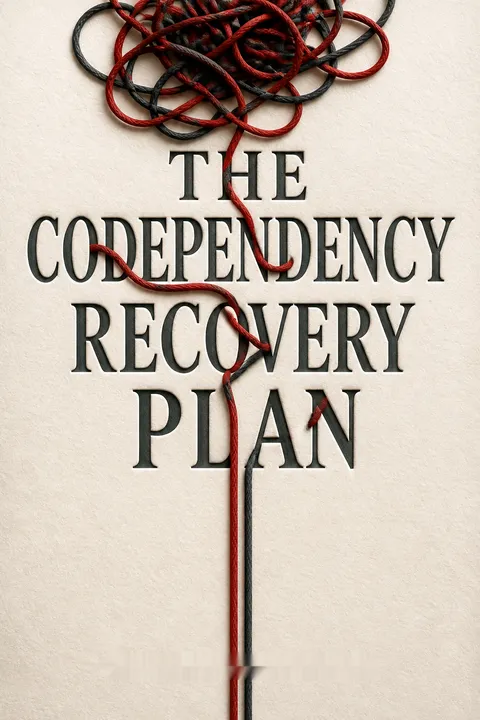
The Codependency Recovery Plan receives overwhelmingly positive reviews, with readers praising its practical approach, empowering message, and helpful exercises. Many appreciate its focus on boundary-setting and self-awareness without relying on 12-step programs. Reviewers found the book transformative, helping them understand and overcome codependent behaviors. Some highlight its utility for both individuals and therapists. A few critics noted organizational issues between the book and workbook, while others found certain concepts problematic. Overall, readers recommend it as an effective tool for personal growth and healing from codependency.
People Also Read










Glossary
Codependency
Worth measured through othersThe author uses codependency to describe prioritizing another person’s needs, expectations, or problems over one’s own mental and physical health, while relying on external approval to feel valuable. It may involve people-pleasing, difficulty trusting one’s perspective, distorted thinking, and intimacy problems. The book treats it as a cluster of patterns, not a formal psychiatric diagnosis, and does not require addiction to be present.
Interdependency
Balanced care and supportInterdependency is the book’s recovery goal: a person takes responsibility for their own emotional, physical, and financial well-being while also accepting help and caring for others. It differs from codependent self-neglect because care is not offered at the expense of personal health or worth. It also differs from rigid independence because connection and support remain important.
Dysfunctional Family Archetypes
Roles in stressed familiesThese are recurring family roles that help preserve a troubled family’s familiar patterns. The book describes the Enabler, Hero, Scapegoat, Lost Child, and Mascot. A child may protect others, win approval, absorb blame, disappear from attention, or provide comic relief. The roles can shift with circumstances and describe adaptations within a family system, not fixed identities or diagnoses.
Homeostasis
A family’s familiar status quoIn the book’s family-systems discussion, homeostasis means the status quo a family comes to treat as stability. That pattern may be chaotic or harmful, yet still feel familiar to its members. When one person changes, others may resist because the change disrupts established roles and expectations. The term explains a family dynamic; it does not mean the pattern is healthy.
Downward Arrow Technique
Tracing thoughts to core beliefsA reflective exercise that starts with a stressful situation or thought and repeatedly asks what it would mean if the thought were true. The process continues until a deeper belief about the self becomes visible. In the book’s example, feeling unappreciated leads to the belief that one is invisible and does not matter. The belief can then be examined and challenged.
Nonviolent communication
A structured way to make requestsA communication approach developed by Marshall Rosenberg that organizes a difficult conversation around observation, feeling, need, and request. The speaker describes what happened without judgment, names an emotion, identifies an unmet need, and asks for a specific action. The approach can reduce blame and make a request easier to understand, but it cannot ensure that the listener will agree or respond safely.
Four Horsemen of the Apocalypse
Four damaging conflict behaviorsThe book uses John Gottman’s name for four communication behaviors associated with relationship distress and divorce: criticism, contempt, defensiveness, and stonewalling. Criticism attacks a person broadly rather than describing a specific problem. Contempt communicates superiority, defensiveness blocks accountability, and stonewalling withdraws from interaction. The framework helps identify harmful interaction patterns, but it is not by itself a complete assessment of a relationship.
FAQ
What's "The Codependency Recovery Plan" about?
- Overview: "The Codependency Recovery Plan" by Krystal Mazzola is a guide designed to help individuals understand, accept, and break free from the cycle of codependency. It offers a structured approach to recovery through a 5-step plan.
- Personal Journey: The author shares her personal experiences with codependency, providing a relatable context for readers who may have similar backgrounds or struggles.
- Educational Content: The book educates readers on the history and symptoms of codependency, helping them identify these patterns in their own lives.
- Practical Steps: It provides actionable steps and exercises to help readers reconnect with their authentic selves, set boundaries, and nurture healthier relationships.
Why should I read "The Codependency Recovery Plan"?
- Personal Growth: If you struggle with codependency, this book offers a pathway to personal growth and healthier relationships.
- Expert Guidance: Written by a licensed marriage and family therapist, the book provides professional insights and strategies for recovery.
- Structured Approach: The 5-step plan offers a clear and structured approach to overcoming codependency, making it easier to follow and implement.
- Empowerment: The book empowers readers to reclaim their self-worth and develop interdependent relationships, leading to a more fulfilling life.
What are the key takeaways of "The Codependency Recovery Plan"?
- Understanding Codependency: The book explains what codependency is, its symptoms, and how it affects relationships and self-worth.
- 5-Step Recovery Plan: It outlines a 5-step plan: Get in Touch with Your "Self," Prioritize Self-Care, Build Boundaries, Maintain Open Communication, and Nurture Intimacy.
- Self-Discovery: Emphasizes the importance of self-awareness and reconnecting with one's authentic self as a foundation for recovery.
- Healthy Relationships: Guides readers on setting boundaries and communicating effectively to foster healthier, more balanced relationships.
How does Krystal Mazzola define codependency in the book?
- Prioritizing Others: Codependency is defined as prioritizing others' needs, expectations, or problems over one's own mental and physical health.
- External Validation: Codependent individuals derive their sense of worth from others rather than internally, leading to a need for external validation.
- Control Paradox: The book highlights the paradox where the more someone focuses on controlling another, the more out of control they feel.
- Imbalance in Relationships: Codependent relationships are inherently imbalanced, with one person giving beyond what is appropriate and the other taking inappropriately.
What is the 5-step recovery plan in "The Codependency Recovery Plan"?
- Step 1 - Self-Connection: Get in Touch with Your "Self" by understanding your authentic needs and wants, and reconnecting with your true self.
- Step 2 - Self-Care: Prioritize Self-Care by focusing on physical, mental, and emotional health, and replacing unhealthy coping strategies with nourishing activities.
- Step 3 - Boundaries: Build Boundaries to protect yourself from harmful behaviors and expectations, and to maintain self-respect and self-love.
- Step 4 - Communication: Maintain Open Communication by learning assertive communication skills and avoiding passive or aggressive communication styles.
- Step 5 - Intimacy: Nurture Intimacy by fostering secure attachments and embracing vulnerability, while maintaining healthy boundaries.
What are some exercises included in "The Codependency Recovery Plan"?
- Codependency Questionnaire: Helps readers identify their personal symptoms of codependency and areas for improvement.
- Imagining Your Boundaries: A visualization exercise to help readers identify and establish personal boundaries.
- Self-Care Schedule: Encourages readers to create a daily schedule that incorporates self-care activities to support recovery.
- Communication Script: Guides readers in developing assertive communication skills through practice and reflection.
How does "The Codependency Recovery Plan" address self-care?
- Fundamental Practice: Self-care is presented as a fundamental practice for recovery, essential for maintaining mental and physical health.
- Basic Needs: The book emphasizes the importance of meeting basic needs like sleep, nutrition, and exercise as a foundation for self-care.
- Enjoyment and Gratitude: Encourages readers to discover activities they enjoy and practice gratitude to enhance their self-care routine.
- Mindfulness: Introduces mindfulness as a tool to help readers stay present and appreciate the positives in their lives.
What are the best quotes from "The Codependency Recovery Plan" and what do they mean?
- "The world needs you in all your authentic glory." This quote emphasizes the importance of embracing one's true self and the unique contributions each person can make.
- "Progress, not perfection." A reminder that recovery is a journey and that small, consistent steps are more important than striving for perfection.
- "You can be a delicious, ripe peach and there will still be people in the world that hate peaches." Highlights the idea that not everyone will appreciate or accept you, and that's okay.
- "You’ve got to learn to leave the table when love’s no longer being served." Encourages readers to recognize when a relationship is no longer healthy and to have the courage to walk away.
How does "The Codependency Recovery Plan" suggest building boundaries?
- Identify What Bothers You: Pay attention to feelings of resentment or discomfort as indicators of where boundaries are needed.
- Visualize Boundaries: Use visualization exercises to imagine a protective bubble around yourself, helping to establish and maintain boundaries.
- Assertive Communication: Practice clear and concise communication to assert boundaries without lengthy explanations or apologies.
- Consistent Consequences: Establish natural consequences for boundary violations to reinforce their importance and maintain self-respect.
How does "The Codependency Recovery Plan" recommend improving communication?
- Assertive Communication: Encourages clear, honest, and respectful communication to express needs and feelings effectively.
- Nonviolent Communication: Introduces a model for expressing observations, feelings, needs, and requests without judgment or blame.
- Avoid Assumptions: Advises against making assumptions about others' thoughts or feelings, and instead encourages open dialogue.
- Manage Triggers: Identifies personal triggers that may lead to ineffective communication and suggests coping strategies to manage them.
What role does intimacy play in "The Codependency Recovery Plan"?
- Broad Definition: Intimacy is defined as closeness and friendship, not limited to romantic or sexual relationships.
- Emotional Guarding: The book addresses the tendency to guard against vulnerability and the importance of removing masks to foster intimacy.
- Positive Outcomes: Healthy intimacy is linked to reduced stress, increased empathy, and improved self-awareness.
- Letting Love In: Encourages readers to embrace vulnerability and let love in, despite fears of rejection or abandonment.
What resources does "The Codependency Recovery Plan" provide for further support?
- Websites and Hotlines: Lists websites and hotlines for additional support, including Co-dependents Anonymous and the National Domestic Violence Hotline.
- Books: Recommends further reading on topics related to codependency, trauma, and personal growth.
- Exercises and Journaling: Offers exercises and journaling prompts throughout the book to support self-reflection and recovery.
- Therapy and Support Groups: Encourages seeking professional therapy and participating in support groups for ongoing guidance and community.
Download PDF
Download EPUB
.epub digital book format is ideal for reading ebooks on phones, tablets, and e-readers.








