

Key Takeaways
Treat birth numbers as a symbolic map, not a verdict.
A personal origin story. Phillips says his interest began in 1954, when a friend sent him to numerologist Hettie Templeton. She used his birth date and name to describe parts of himself he believed he had kept private. The encounter redirected his attention from electrical engineering toward numerology, which he presents as a way to understand personality and life direction through number patterns.
A map, in his system. The book’s central promise is that knowing a pattern of strengths and gaps can help a person make sense of themselves, their choices, and their relationships. Its numerological claims are metaphysical beliefs, however, not demonstrated scientific findings. The map is best read as the author’s interpretive system, not an objective measurement of character.
The opening story explains why the system feels compelling: a description that seems personally precise can make self-reflection feel like discovery. Psychology offers a useful distinction here. People often recognise themselves in broad or affirming descriptions, especially when they are motivated to find meaning in them. That does not make the reflection worthless, but it does make independent testing important. A reading is more useful when it prompts a specific question, such as “Where do I struggle to express myself?”, than when it settles the answer in advance.
Read your chart as three interacting modes: action, thought, and feeling.
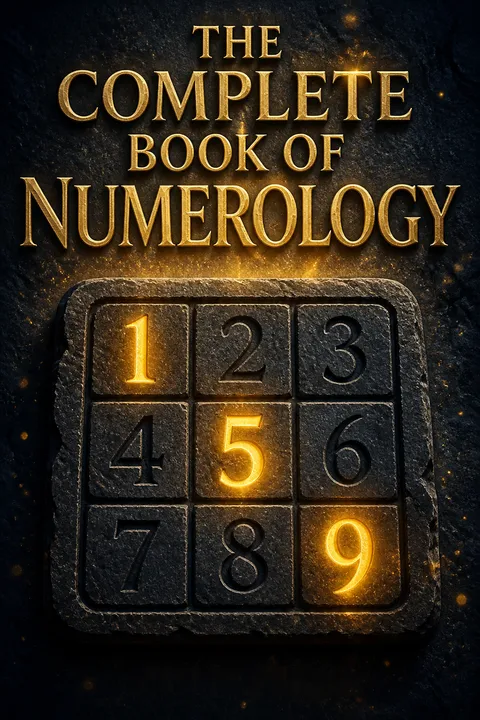
Three kinds of expression. Phillips’s Birth Chart is a nine-space grid, with one space assigned to each number from 1 to 9. The digits in a birth date are placed in their matching spaces; repeated digits appear more than once, while absent digits leave gaps. He groups the numbers into three planes: 1, 4, and 7 represent practical action; 3, 6, and 9 represent thought; and 2, 5, and 8 represent feeling and sensitivity.
Three selves, one person. He calls these dimensions the Basic Self, the Conscious Self, and the High Self. In his account, physical reactions, conscious thought, and values or intuition are meant to work together. A chart with more numbers on one plane is interpreted as favouring that mode of expression, not as proof that a person lacks the others.
The chart’s most useful feature may be its insistence that people are not one-dimensional. Contemporary personality approaches also distinguish between behavior, cognition, and emotion, even when they measure those dimensions differently. The grid gives readers a compact way to ask which mode feels easiest and which deserves attention. Its weakness is that counting birth-date digits does not establish a reliable psychological profile. The categories work better as prompts for noticing patterns than as conclusions about what a person can or cannot do.
Turn chart gaps into growth questions, not permanent labels.
Patterns of strength and absence. Phillips adds the Arrows of Individuality to the nine-space chart. An arrow is a straight line containing three numbers, which he reads as a strength; a line of three empty spaces is treated as a weakness or area for development. For example, numbers across the mental row are interpreted as a strong emphasis on thinking, while a completely empty row signals a quality that may need deliberate practice.
The gap is not destiny. The author repeatedly argues that an initially empty chart can be developed through effort. His advice is to build the missing capacity through practical action, creative activity, emotional expression, or learning, depending on the pattern. That emphasis on development is more constructive than treating a birth date as a fixed ceiling, even though the chart itself cannot verify the diagnosis.
A strength-and-gap model can be useful because it turns vague self-judgment into a concrete question: what skill deserves practice? This resembles a growth-oriented approach to learning, where current performance is not confused with permanent ability. The caution is that labels can become self-fulfilling. If a person is told a chart means poor memory or emotional weakness, ordinary lapses may start to look like confirmation. The safest use is to test the suggested pattern against lived experience and discard it when it does not fit.
Separate your life direction from the style you use to express it.
Two birth-date readings. The Ruling Number is calculated by adding the digits in the full birth date and reducing the total. Phillips treats it as the person’s primary developmental path. His system has no Ruling Number 1; totals that reduce to 1 are read as 10. It also gives special status to 11 and 22/4. The Day Number comes from the day of the month and is treated as a secondary or alternate mode of expression.
A route and a manner. The distinction helps explain how the book uses numbers: one identifies the main direction, while another describes a supplementary style. Phillips warns against letting the Day Number displace the Ruling Number. As a reflective exercise, readers can compare the two descriptions and ask which fits their choices, without assuming that either number determines what they must do.
Separating a broad direction from a day-to-day style is a helpful conceptual move. People often have a stable sense of purpose alongside different ways of acting in work, family, or social life. The distinction also makes room for complexity rather than forcing a single label to explain everything. Still, the numerical calculation does not demonstrate that a particular vocation or life task is objectively assigned. Used carefully, it can help generate options; used rigidly, it can narrow them.
Use number cycles to reflect on timing, not to surrender choice.
A repeating nine-year sequence. Phillips calculates a Personal Year Number by combining the birth month and day with the reduced digits of the calendar year. The result cycles from 1 through 9. He associates some years with action or change, and others with consolidation. In particular, he treats 9 and 1 as major transition points, while 4 and 7 are quieter periods for stabilising and reviewing.
Longer peaks. The book also describes four Pyramid Peaks across a 27-year maturity phase. The first begins at an age calculated by subtracting the Ruling Number from 36; further peaks arrive in nine-year intervals. Each peak number is given a different emphasis, such as learning, independence, or service. These cycles offer a planning vocabulary, but their timing claims are not established forecasts.
Cycles can help people notice that progress includes consolidation, not just expansion. In planning, alternating periods of exploration and review is sensible even without numerology: projects need both momentum and time to assess results. The framework can therefore serve as a calendar for reflection. Its risk is confirmation bias, where successes are credited to a predicted “peak” and setbacks to a “trough.” Decisions about jobs, money, or relationships should rest on concrete circumstances, not a cycle label.
Judge compatibility by shared care, conversation, and practical life.
Three dimensions of a relationship. Phillips argues that lasting partnership requires more than physical attraction or intellectual rapport. In his model, partners should connect through practical life, thought, and feeling. He also distinguishes relationships built on complementary traits from those built on similar traits. Differences can expose each partner to new strengths; similarities can create ease but may need fresh interests to prevent stagnation.
A couple’s chart reading. He recounts a long-married couple who sought help for health complaints. After he compared their birth charts, he interpreted their difficulties as connected to mismatched styles of expression. The couple reportedly became emotional during the discussion and later said their communication and symptoms had improved. The story illustrates how a reading can start a difficult conversation, but it cannot establish that numerology caused the improvement.
The section’s strongest insight is relational rather than numerical: durable intimacy needs communication, shared practical responsibility, and emotional responsiveness. Those dimensions make a more useful compatibility checklist than a simple “match” score. The couple’s story suggests that a structured conversation can help partners name long-ignored tensions. Yet the reported health changes are anecdotal, and a chart cannot diagnose the cause of a heart problem or digestive symptoms. Relationship reflection and medical assessment need different standards of evidence.
Notice how a name shapes identity without expecting it to create luck.
Names as part of expression. Phillips converts the letters of a person’s commonly used name into numbers. He separates vowels, which form the Soul Urge Number, from consonants, which form the Outer Expression Number. Adding all the letters produces the Complete Name Number. He then compares a Name Chart with the Birth Chart, preferring names that, in his system, balance underrepresented qualities rather than intensify an existing concentration.
Use matters. The book emphasises the name a person actually uses, including nicknames and professional names. Phillips describes an aspiring actor who adopted a suggested stage name and soon received better roles. The story supports his belief that names can affect opportunity, but it cannot show that the numerical pattern caused the change. A new name may also alter confidence, presentation, or how others respond.
Names do matter socially: they can carry family history, cultural belonging, and expectations, and a chosen name can help someone express an identity more comfortably. That gives the chapter a plausible human insight independent of its numerological explanation. But a number assigned to a name is not evidence of future success. The actor’s story has no comparison with what would have happened under the old name. A name change is best considered for personal meaning and practical fit, not as a guaranteed shortcut to recognition.
Treat intuition as a prompt to investigate, not proof of ESP.
Two kinds of knowing. Phillips distinguishes intuition, which he describes as a brief insight arriving before deliberate thought, from extrasensory perception, or ESP, which he associates with impressions received in a relaxed state. He lists abilities such as foreknowledge and telepathy, and suggests that numerology practice can sharpen them. He also links chart patterns to spiritual development and presents reincarnation as a framework for understanding recurring lessons and relationships.
Keep interpretation open. These ideas belong to the book’s metaphysical worldview. A reader can use an intuitive impression as a reason to pause, gather information, or reflect on a relationship. The impression alone does not prove that another person’s thoughts have been perceived, that a future event has been foreseen, or that a current difficulty comes from a past life.
Intuition can be understood in ordinary terms as rapid judgment built from prior experience, sometimes before a person can explain the cues involved. That interpretation respects the felt experience without requiring supernatural certainty. Phillips’s account goes further, but the book does not provide controlled evidence that numerology develops ESP or verifies reincarnation. For consequential decisions, intuitive impressions are worth checking against observable facts. This preserves their possible value as signals while reducing the danger of mistaking confidence for accuracy.
Never use a number chart to diagnose illness or choose treatment.
A broad health extension. Phillips connects astrological sun signs and numerological patterns with bodily vulnerabilities, dietary advice, and mineral cell salts. He also makes claims about emotional distress, memory decline, and other conditions. The book includes a disclaimer that it does not provide medical advice, but its detailed health explanations can still sound authoritative to an unprepared reader.
Keep medical decisions evidence-based. The source text does not establish that birth dates or sun signs diagnose disease, nor that its dietary or cell-salt recommendations treat the conditions it names. A chart may inspire general self-reflection, but it cannot replace a qualified clinician, testing, or evidence-based care. Serious or persistent physical and mental health symptoms deserve professional assessment, regardless of what a numerological reading suggests.
This boundary matters because the book mixes reflective spiritual material with specific claims about disease and treatment. That blend can make unsupported advice seem as reliable as the more harmless exercise of examining one’s habits. A responsible reader should separate the two. Symbolic systems may help someone articulate fears or priorities, but they cannot establish a diagnosis or identify an effective therapy. The same caution applies to claims that a chart predicts mental illness, accident risk, or a child’s developmental capacity.
Analysis
Phillips’s book is both a numerology manual and a spiritual autobiography. Its organising idea is that a birth date and a used name form a legible pattern of strengths, omissions, life direction, and changing phases. From that premise, the system expands into personality, relationships, vocation, timing, astrology, health, psychic perception, and reincarnation. The breadth gives the reader a satisfying sense that one key can open many doors, but it also makes the work difficult to summarise: its practical prompts are interwoven with claims about cosmic forces and personal fate.
The most constructive thread is developmental. Phillips says that missing chart qualities can be cultivated, that strengths can become imbalanced, and that partners need to communicate across practical, mental, and emotional life. Those ideas can be useful even if the numerical machinery is treated as metaphor. The Birth Chart and cycles offer a vocabulary for reflection, much as a journal prompt or personality framework can help someone notice recurring behavior.
The central limitation is evidentiary. The book calls numerology a science, yet the text offers personal readings and anecdotes rather than controlled tests showing that birth-date patterns reliably measure personality or predict outcomes. The feeling of accuracy is not enough to distinguish a valid method from selective memory or broad descriptions that many people can recognise in themselves. Historical claims about Pythagoras likewise do not validate the modern system presented here.
The greatest care is needed where the book moves from symbolism to health. It associates numbers and astrological signs with disease, mental distress, and dietary treatments, without establishing those links. Such claims should not guide diagnosis, parenting decisions, or care. The most responsible reading preserves the book’s invitation to examine one’s life while declining its unsupported authority. Use the system to ask better questions, then answer consequential questions with evidence, dialogue, and qualified expertise.
Review Summary
The Complete Book of Numerology receives mostly positive reviews, with readers praising its comprehensive approach and clear explanations of numerology concepts. Many find it helpful for beginners, offering practical instructions on creating and interpreting numerological charts. Some readers report feeling enlightened by the book's insights, while others remain skeptical. Critics note that the book lacks historical context and may oversimplify complex ideas. Overall, readers appreciate the book's accessibility and depth, though opinions vary on its accuracy and relevance.
People Also Read



Glossary
Birth Chart
birth-date pattern gridA nine-space grid Phillips constructs from the digits of a person’s full birth date. Each space belongs to one number from 1 to 9. Repeated digits are entered repeatedly, while absent digits leave spaces empty. He interprets the resulting pattern, including its concentrations and gaps, as a map of personal strengths and areas for development.
Three Selves
three modes of expressionPhillips’s names for three connected aspects of a person. The Basic Self concerns bodily action and sensory response; the Conscious Self concerns thought, memory, and attitudes; and the High Self concerns values, intuition, compassion, and spiritual awareness. He aligns these aspects with the chart’s practical, mental, and feeling planes.
Arrows of Individuality
chart lines of strength or gapPatterns Phillips identifies in the nine-space Birth Chart. A straight line containing three numbers is interpreted as a strength, while a straight line of three empty spaces is interpreted as a weakness or developmental need. The author gives different meanings to these patterns and recommends cultivating missing qualities rather than treating them as unchangeable.
Ruling Number
primary birth-date numberThe number Phillips calculates by adding the digits of a person’s complete birth date and reducing the total according to his rules. He interprets it as a primary life direction. His system uses 10 rather than 1, and gives special treatment to 11 and 22/4. These meanings are part of his numerological framework, not validated measures of vocation or personality.
Day Number
secondary birth-day influenceThe number derived from the calendar day on which a person was born. Phillips treats it as an alternate or supplementary mode of expression, distinct from the Ruling Number, which he regards as primary. He cautions that relying too heavily on the Day Number may pull a person away from their main direction.
Personal Year Number
number for a yearly cycleA yearly number Phillips calculates by combining the birth month and day with the reduced digits of a calendar year. The values cycle from 1 to 9, and each is assigned a theme such as action, reflection, or consolidation. He uses the sequence as a guide to timing, though it has not been established as a predictive system.
Pyramid Peaks
four maturity milestonesFour numerological peaks Phillips constructs from a person’s reduced birth month, day, and year. He places them across a 27-year maturity phase, with nine years between peaks. The first peak begins at an age found by subtracting the Ruling Number from 36. Each peak number is assigned a developmental emphasis.
Soul Urge Number
vowel-based name numberA number Phillips obtains by converting the vowels in a person’s used name to numerical values and reducing their total. He interprets it as a sign of inner feelings, desires, and spiritual sensitivity. When analysing names, he treats this separately from the consonant-based Outer Expression Number.
Outer Expression Number
consonant-based name numberA number Phillips calculates from the consonants in a person’s commonly used name. He interprets it as describing how the person expresses themselves outwardly. In his method, it complements the Soul Urge Number, which is calculated from vowels, and forms part of a broader comparison between the name and birth charts.
Complete Name Number
whole-name numerical totalThe number Phillips calculates by converting all letters in a person’s used name to numbers, adding them, and reducing the result under his system. He compares it with the Ruling Number to decide whether the name reinforces or balances the birth-date pattern. The interpretation depends on numerological assumptions rather than demonstrated causal effects of names.
FAQ
What's "The Complete Book of Numerology" about?
- Numerology Exploration: "The Complete Book of Numerology" by David A. Phillips delves into the ancient science of numerology, focusing on understanding the inner self through numbers.
- Personal Growth: The book provides a comprehensive guide to using numerology for personal development, self-discovery, and understanding life patterns.
- Historical Context: It explores the historical roots of numerology, particularly the teachings of Pythagoras, and how these principles can be applied in modern life.
- Practical Application: Readers are guided on how to calculate and interpret their own numerological charts, including life path numbers, personal year numbers, and more.
Why should I read "The Complete Book of Numerology"?
- Self-Discovery: The book offers tools for self-exploration, helping readers understand their strengths, weaknesses, and life purpose through numerology.
- Guidance and Insight: It provides insights into personal relationships, career choices, and life challenges, offering guidance on how to navigate them.
- Holistic Approach: The book combines numerology with elements of astrology and other metaphysical sciences for a holistic understanding of life.
- Practical Exercises: Readers can engage with practical exercises and examples to apply numerological concepts to their own lives.
What are the key takeaways of "The Complete Book of Numerology"?
- Numerology Basics: Understanding the significance of numbers 1 through 9, and how they relate to personal traits and life paths.
- Life Path Calculation: How to calculate and interpret your life path number, which reveals your life's purpose and challenges.
- Personal Year Numbers: Insight into the nine-year cycle of personal growth and how to align with its energies for optimal success.
- Numerology and Relationships: How numerology can enhance understanding and harmony in personal relationships.
How do I calculate my Life Path Number according to "The Complete Book of Numerology"?
- Birth Date Breakdown: Write down your full birth date in the format of month/day/year.
- Add the Numbers: Add each digit of your birth date together until you reach a single digit or a master number (11, 22).
- Example Calculation: For a birth date of January 21, 1973, add 1 + 2 + 1 + 1 + 9 + 7 + 3 = 24, then 2 + 4 = 6. The life path number is 6.
- Interpretation: Refer to the book for detailed interpretations of each life path number.
What is the significance of Personal Year Numbers in "The Complete Book of Numerology"?
- Nine-Year Cycle: Personal Year Numbers are part of a nine-year cycle that influences personal growth and life events.
- Annual Calculation: Calculate your Personal Year Number by adding the digits of your birth month and day to the current year.
- Guidance for Each Year: Each year in the cycle has specific themes and challenges, guiding personal development and decision-making.
- Example: If your birth date is January 21 and the current year is 2020, your Personal Year Number is calculated as 1 + 2 + 1 + 2 + 0 + 2 + 0 = 8.
How does "The Complete Book of Numerology" explain the concept of Numerology Arrows?
- Arrow Formation: Numerology Arrows are formed when three numbers in a row are present or absent in a numerology chart.
- Strengths and Weaknesses: Arrows indicate specific strengths (arrows of strength) or weaknesses (arrows of weakness) in a person's character.
- Example: An arrow of determination is formed by the numbers 1, 5, and 9, indicating strong willpower and persistence.
- Interpretation: The book provides detailed meanings for each arrow, helping readers understand their personal traits.
What role does astrology play in "The Complete Book of Numerology"?
- Complementary Sciences: Astrology is used alongside numerology to provide a more comprehensive understanding of personal traits and life patterns.
- Sun Signs: The book discusses the influence of sun signs on personality and how they interact with numerological numbers.
- Elemental Influence: It explores the relationship between astrological elements (fire, earth, air, water) and numerological numbers.
- Holistic Insight: Combining astrology with numerology offers a holistic view of an individual's life path and challenges.
How can "The Complete Book of Numerology" help improve personal relationships?
- Understanding Dynamics: Numerology helps in understanding the dynamics between different personalities and how they interact.
- Compatibility Analysis: The book provides tools for analyzing compatibility between partners based on their numerological charts.
- Conflict Resolution: By understanding each other's strengths and weaknesses, couples can resolve conflicts more effectively.
- Enhanced Communication: Numerology offers insights into communication styles, helping partners connect on a deeper level.
What are the best quotes from "The Complete Book of Numerology" and what do they mean?
- "Numbers are the language of the universe." This quote emphasizes the fundamental role numbers play in understanding the world and ourselves.
- "Know thyself, and you will know the universe and the gods." Reflecting Pythagorean philosophy, it highlights the importance of self-discovery in achieving greater wisdom.
- "Numerology is the key to understanding life's mysteries." It suggests that numerology offers profound insights into life's purpose and challenges.
- "Balance is the essence of life." This quote underscores the importance of achieving balance in all aspects of life for personal growth and fulfillment.
How does "The Complete Book of Numerology" address the concept of reincarnation?
- Reincarnation Belief: The book discusses reincarnation as a belief in the soul's journey through multiple lifetimes for spiritual growth.
- Karmic Lessons: It suggests that numerology can reveal karmic lessons and patterns from past lives that influence the present.
- Life Path Influence: Understanding one's life path number can provide insights into past life experiences and their impact on current life.
- Spiritual Evolution: Reincarnation is viewed as a process of spiritual evolution, with each lifetime offering opportunities for growth and learning.
What advice does "The Complete Book of Numerology" offer for choosing a name?
- Numerological Balance: The book advises choosing names that provide numerological balance and complement one's birth chart.
- Name Analysis: It offers methods for analyzing the numerological value of names to ensure they support personal growth.
- Impact on Personality: Names are seen as having a significant impact on personality and life path, influencing one's destiny.
- Practical Tips: Practical tips are provided for parents choosing names for their children, ensuring alignment with their numerological strengths.
How can "The Complete Book of Numerology" be used for career guidance?
- Life Path Alignment: The book suggests aligning career choices with one's life path number for greater fulfillment and success.
- Strength Identification: Numerology helps identify personal strengths and talents that can be leveraged in a professional setting.
- Career Transitions: It offers guidance on navigating career transitions and finding paths that resonate with one's true self.
- Decision-Making: Numerology provides a framework for making informed career decisions based on personal numerological insights.
Download PDF
Download EPUB
.epub digital book format is ideal for reading ebooks on phones, tablets, and e-readers.








