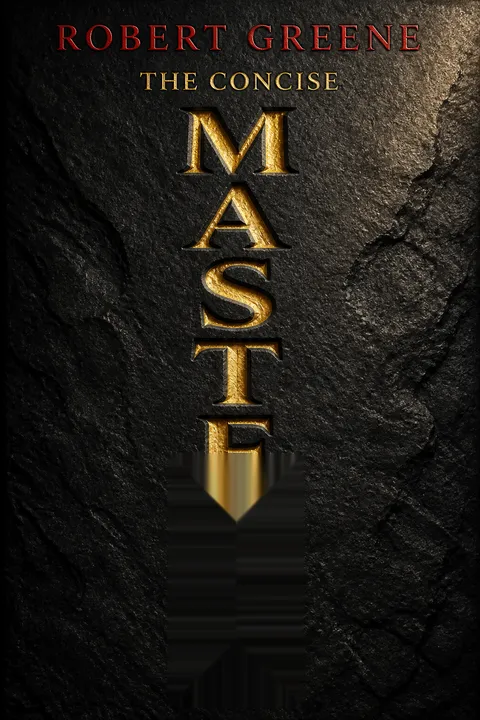


Key Takeaways
Mastery begins when practice turns a field into intuition
Mastery is built, not bestowed. Greene presents it as a progression: first, learn a field from the outside; then use that knowledge to experiment; finally, develop a feel for how its parts work together. A beginner sees separate piano keys. An experienced player can hear and shape musical relationships without stopping to reason through each note.
Intuition has a history. It is not magic or a substitute for thought. It grows from sustained, attentive experience, and becomes useful when joined to deliberate reasoning. Greene cites about 10,000 hours as a rough route to high skill, with even more experience behind intuitive command. The point is not to worship a number, but to understand that quick judgment can be the visible tip of years of learning.
The book’s strongest move is to explain intuition as compressed experience rather than supernatural talent. Research on expert decision-making similarly suggests that skilled people can recognize familiar patterns rapidly, especially in environments where feedback is reliable. Yet speed is not proof of accuracy. A veteran may read a stable situation well and misjudge a novel one. The useful lesson is therefore two-sided: build deep familiarity, then keep testing intuitive conclusions against outcomes. Greene’s hour estimates are best treated as illustrations of prolonged effort, not a universal threshold. Practice quality, access to instruction, and the nature of the field all affect what those hours produce.
Treat early fascinations as clues, not instructions, for choosing work
Follow recurring signals. Greene calls a person’s deep, enduring inclination their Life’s Task: a direction suggested by what consistently draws their curiosity and energy. Leonardo da Vinci, for instance, spent childhood hours observing and sketching nature. As an adult, that attention connected his art to anatomy, engineering, and questions about how living things change.
Use the clue to explore. The book recommends looking back for repeated interests, then choosing work that gives them room to develop. A career need not follow a straight line. A person can narrow into an unusual specialty or combine skills from neighboring fields to create a distinctive niche. If circumstances change, adapt the route without discarding everything learned. The guiding idea is continuity of interest, not blind loyalty to one job or youthful plan.
This approach gives career choice a better question than “What pays well?”: which problems keep attracting attention even when no reward is guaranteed? That can reveal motivation more reliably than a one-time personality test. Still, childhood interests are evidence, not destiny. Hobbies may reflect opportunity, family resources, or what was available to try. A viable vocation also depends on income, caregiving, health, and access to training. The strongest reading of Greene is not that everyone has one predestined occupation, but that people can build a more sustainable direction by noticing what repeatedly engages them and testing it in real conditions.
Observe how a workplace works before trying to prove yourself
Learn the terrain first. The Apprenticeship Phase is Greene’s term for the practical education that begins when formal schooling meets a real field. Its first task is deep observation: learn both the stated procedures and the unwritten expectations, including how decisions move and whose judgment matters. Beginners who focus only on impressing people miss information that could help them do good work.
Darwin learned by looking closely. On the voyage of the Beagle, Charles Darwin studied the ship’s social habits as well as the unfamiliar plants, animals, and fossils around him. He catalogued specimens, compared differences, and developed questions from what he saw. The book distills apprenticeship into three overlapping modes: observe the environment, build practical skills, and test ideas through action. Each mode makes the next more informed.
This is a practical account of situated learning: much of what makes a workplace function is tacit, transmitted through routines, examples, and correction rather than manuals. Observing before acting can prevent avoidable errors and reveal where expertise actually lives. But observation should not become passive conformity. A culture can reward habits that are inefficient or unfair. The apprentice’s job is first to understand the system, then to distinguish useful local knowledge from conventions that deserve challenge. Darwin’s example captures the productive sequence: close attention generates better questions, while firsthand evidence keeps speculation connected to the world.
Practice your weakest skills with focus, feedback, and patience
Repetition changes capability. Greene argues that skills become fluent through sustained practice, not by collecting explanations about them. Medieval craft apprentices learned largely by watching, imitating, and working with materials; the accumulated knowledge helped builders create complex structures, including Gothic cathedrals. Even mental skills, such as a language, improve through active use rather than study alone.
Make practice diagnostic. Once a basic action becomes automatic, attention can shift to mistakes and finer adjustments. Seek feedback, set demanding but realistic challenges, and spend time on the parts that resist improvement instead of repeating only what feels easy. Greene calls this Resistance Practice. He presents 10,000 hours as a rough estimate for developing high-level skill, not a guarantee. The more important ingredients are concentration, repetition, and learning from correction.
The emphasis on targeted difficulty aligns with deliberate-practice research: improvement is more likely when practice addresses specific weaknesses and supplies informative feedback. Repetition by itself can simply make an inefficient routine automatic. The distinction matters in workplaces where people can spend years performing familiar tasks without getting better at them. Greene’s insistence on patience is valuable, but his language about becoming one with a skill can obscure the role of good teaching, physical limits, and unequal access to time. A workable practice plan should be challenging enough to reveal errors, but not so punishing that it becomes unsustainable.
Choose mentors for fit, learn actively, and leave when growth stalls
Guidance makes learning specific. A mentor can notice errors, set useful challenges, and translate general knowledge into advice suited to an apprentice’s work. Michael Faraday began as a bookbinder, studied science independently, and pursued access to the chemist Humphry Davy. Under Davy’s supervision at the Royal Institution, Faraday gained practical experience that books alone could not provide.
Keep your own direction. Faraday eventually outgrew his assistant role and established himself through independent experiments, including work that helped lay groundwork for electric motors. Greene’s advice is to choose mentors whose strengths match the apprentice’s needs, invite frank feedback, and adapt rather than merely imitate their ideas. A productive relationship is not permanent submission. Its purpose is to build independent judgment, not a lifelong shadow career.
Mentorship is powerful because it combines instruction with observation: a mentor sees not only what someone knows, but how that knowledge is applied. That makes feedback more timely and concrete than advice from a distance. Faraday’s story also exposes an important asymmetry. A mentor may benefit from an apprentice’s labor while resisting the apprentice’s independence. Admiration should therefore coexist with boundaries, clear expectations, and more than one source of guidance. The best mentor is not necessarily the most famous person in a field, but someone who can teach, provide access, and tolerate a student becoming a distinct thinker.
Read people’s actions without treating every slight as a verdict on you
Replace projection with observation. Greene calls the habit of idealizing or demonizing others the Naïve Perspective. It makes people interpret workplace events through their own hopes and hurts instead of examining what others actually do. Benjamin Franklin learned this through painful misreadings: he trusted a governor’s promises, then misjudged the resentment of colleagues. He began stepping back from emotional reactions and considering other people’s motives and interests.
Look for patterns, not one clue. The book names recurring social hazards: envy, conformity, rigidity, self-absorption, laziness, flightiness, and passive aggression. It advises attention to behavior and decisions, alongside words, and recommends reviewing one’s own contribution to conflicts. Strong work, thoughtful self-presentation, and tolerating foolish behavior can keep interpersonal drama from displacing the work itself.
Franklin’s shift resembles perspective-taking in social psychology: people often explain their own actions through circumstances but explain others’ actions through character. Deliberately imagining another person’s incentives can correct that bias and improve negotiation. However, Greene’s catalog of social hazards can encourage excessive suspicion if treated as a diagnostic checklist. A missed deadline may signal unreliability, but it may also reflect overload or unclear instructions. The safest use of the framework is to notice repeated behavior, verify interpretations, and protect attention without assuming hidden malice. Social intelligence is not mind-reading; it is disciplined curiosity about motives and context.
Pair deep expertise with a childlike willingness to remake it
Knowledge needs room to play. Greene calls the blend of strong command and mental flexibility the Dimensional Mind. Skill supplies materials for creativity; openness lets a person recombine them. Mozart’s early tours exposed him to European musical styles, and his long apprenticeship gave him a broad musical vocabulary. When he later broke with the expectations of Salzburg’s court, he could reshape familiar forms rather than simply imitate them.
Choose work that matters to you. Greene argues that creative effort needs a task with a genuine personal pull, not just a promise of money or recognition. Then expertise must be used actively: question conventions, explore alternatives, and tolerate uncertainty instead of settling quickly for a safe answer. The related idea of Negative Capability, borrowed from poet John Keats, means staying with doubt and ambiguity without rushing to a premature conclusion.
The pairing of mastery and play helps explain why expertise can either enable invention or constrain it. A rich store of patterns makes recombination possible, but familiar methods can also become defaults that are difficult to question. Work on creativity often points to this tension: domain knowledge supports novelty, while distance from routine can help people see alternatives. Mozart’s case is vivid, though exceptional; his talent, training, and historical setting cannot be reduced to a general recipe. The transferable principle is more modest and useful: learn a field deeply enough to make informed departures, and keep some capacity to be surprised by it.
Test surprising ideas against reality instead of polishing assumptions
Alternate ideas and evidence. Greene calls the cycle of observation, speculation, and testing The Current. An observation suggests possible explanations; further observation or experiment then confirms, changes, or rejects them. This prevents two common failures: collecting facts without interpreting them, and defending an attractive theory without checking it.
Make room for the unexpected. The book encourages broad research, breaks from intense concentration, and recording stray observations so that unusual connections can surface. It also urges attention to anomalies, details that do not fit accepted explanations. Darwin’s comparisons among island species and fossils helped him question the assumption that species had always existed in fixed forms. An unexpected fact is not automatically a breakthrough, but it can be a reason to investigate rather than dismiss.
This is a compelling account of iterative inquiry, close to the logic of experimental science and design: propose, build or test, observe the response, revise. The advice to welcome anomalies is especially valuable because people tend to notice evidence that fits their current model. Yet surprise can be misleading; unusual observations may be noise, measurement error, or coincidence. The discipline lies in neither ignoring an anomaly nor crowning it a discovery too soon. Broad reading and unstructured breaks can feed association, but they work best when paired with a clear question and methods capable of checking whether a new connection holds.
Train judgment by connecting disciplines and entering others’ perspectives
See the system, not just its pieces. Greene describes mature intuition as a grasp of the dynamic relationships that make a situation change. It comes from many linked experiences, not from a single flash of insight, and it should be checked through rational analysis. His final strategies include observing the working environment closely, using personal strengths, and understanding people from the inside rather than projecting one’s own assumptions onto them.
Connect what specialization separates. Marcel Proust spent years studying literature and observing French society before turning that material into a vast novel about people, memory, and social life. Greene treats such breadth as part of mastery: expertise becomes more powerful when it can connect with other domains. The goal is not to know everything, but to recognize relationships that a narrow view would miss.
This whole-system emphasis resonates with systems thinking, which studies how interactions and feedback loops shape outcomes that cannot be explained by isolated parts. It also clarifies why domain expertise sometimes fails: a technically correct intervention can backfire if it ignores incentives, culture, or downstream effects. Cross-disciplinary learning can reveal such links, though breadth without depth risks shallow analogy. Likewise, entering another person’s perspective can improve understanding without guaranteeing that the interpretation is right. Strong judgment combines immersion, empathy, and verification. Its advantage is not certainty, but a more complete map of what may be influencing the situation.
Analysis
Mastery is presented as a learnable transformation, not a rare genetic gift. The book’s argument moves from personal inclination to apprenticeship, mentorship, social understanding, creative experimentation, and finally a form of judgment grounded in deep experience. Its narrative method gives the argument memorable human shape: Darwin’s field observations, Faraday’s apprenticeship, Franklin’s social misreadings, Mozart’s break from court expectations, and Proust’s long accumulation of material each show a different kind of learning. Together, these stories make mastery feel less like a single breakthrough than a way of paying attention over time.
The most durable insight is the book’s insistence that expertise requires contact with reality. Practice needs feedback; theories need testing; social interpretations need evidence; and intuition grows from repeated encounters with the details of a field. This is a strong counterweight to success stories that make achievement look instantaneous. The framework also usefully connects technical ability to emotional qualities such as patience, curiosity, and tolerance for uncertainty.
Some claims need a more cautious reading. The idea of one inner calling can make career development sound more fixed than it is, while many people discover interests through opportunity and necessity rather than childhood clues. The 10,000-hour figure is a rough illustration, not a law of achievement, and accumulated effort is shaped by instruction, resources, health, and luck. The book’s advice to read others’ hidden motives can also slide into overconfidence if patterns are inferred from isolated behavior. These limitations do not undo the central argument. They suggest a flexible interpretation: mastery is a direction built through attention, practice, and adaptation, not a guaranteed destination or a single prescribed route.
Review Summary
The Concise Mastery received mixed reviews, with ratings ranging from 2 to 5 stars. Positive reviews praised its insights on achieving mastery through dedication and hard work, while negative reviews criticized its repetitiveness and lack of depth. Some readers found the historical anecdotes engaging, while others felt the writing style was dull. Many appreciated the book's structure and practical advice, but some found it too simplistic or lacking scientific evidence. Overall, readers valued the book's guidance on personal growth and skill development, despite its limitations.
People Also Read





Glossary
Life’s Task
Deep vocational directionGreene’s term for the direction of work that expresses a person’s enduring inclinations and distinctive capacities. It is identified through recurring interests and tested through actual experience, rather than chosen solely for money, approval, or status. The idea is meant to guide a changing career, not require one fixed job for life.
Apprenticeship Phase
Practical learning periodThe period of hands-on education in which someone learns how a field operates, develops its essential skills, and tests their growing ability through action. Greene treats it as a transformation of attention and character as well as competence. It can involve one workplace or several settings and can recur when a person changes fields.
Creative-Active Phase
Experimental creative workThe phase in which accumulated skills and knowledge are used to make original contributions. Rather than only following established procedures, a practitioner begins experimenting, questioning conventions, and shaping a personal approach. Greene emphasizes that this creativity depends on prior learning, continued openness, and a willingness to work through uncertainty.
Naïve Perspective
Emotion-driven social misreadingGreene’s label for interpreting other people through idealized expectations, personal insecurities, or emotional reactions instead of observing their behavior realistically. It can lead someone to mistake promises for reliability, take events too personally, or overlook conflicting evidence. Social intelligence develops by noticing this bias and considering others’ interests and actions.
Seven Deadly Realities
Recurring social hazardsGreene’s set of destructive tendencies that can disrupt group life: envy, conformity, rigidity, self-obsessiveness, laziness, flightiness, and passive aggression. The term encourages readers to recognize recurring patterns that may impede work or cooperation. It is a practical lens for observation, not a clinical classification or proof of another person’s motives.
Negative Capability
Capacity to tolerate uncertaintyA phrase from poet John Keats that Greene applies to creative thought. It describes the ability to remain with ambiguity, doubt, or incomplete explanations without forcing an immediate answer. Temporarily suspending judgment allows more possibilities to be considered; it does not mean avoiding decisions or treating every explanation as equally likely.
Dimensional Mind
Flexible, informed creativityGreene’s term for a mind that combines substantial knowledge of a field with the flexibility to use that knowledge in original ways. It differs both from undisciplined spontaneity and from expertise locked into convention. Its creative range comes from accumulated skill, active curiosity, and a willingness to explore alternatives.
The Current
Observation and testing cycleGreene’s name for repeatedly moving between observation, possible explanations, and further tests. Each round can sharpen or alter the working idea by forcing it to meet evidence. The process avoids both speculation detached from reality and fact-gathering that never develops into an explanatory account.
Fact of Great Yield
Anomaly with broad implicationsA surprising or unusual piece of evidence that may reveal a limitation in accepted explanations and open up valuable lines of inquiry. Greene advises noticing such facts before deciding what they mean, then investigating them with care. An anomaly is a promising clue, not automatically a discovery or proof of a new theory.
Fingertip Feel
Embodied skill fluencyGreene’s term for a high level of practiced ability in which the component actions of a complex skill have become internalized. Because basic operations no longer demand constant conscious attention, a person can respond more fluidly to the larger task. The phrase describes expertise built through practice, not an innate physical gift.
FAQ
What's "The Concise Mastery" by Robert Greene about?
- Overview of Mastery: "The Concise Mastery" by Robert Greene explores the journey to achieving mastery in any field. It emphasizes the importance of understanding one's unique inclinations and pursuing a Life’s Task.
- Three Phases of Mastery: The book outlines three phases: Apprenticeship, Creative-Active, and Mastery, each requiring different strategies and mindsets.
- Historical Examples: Greene uses historical figures to illustrate the principles of mastery, showing how they navigated challenges and achieved greatness.
- Practical Guidance: The book provides actionable strategies for readers to apply in their own lives, aiming to unlock their full potential.
Why should I read "The Concise Mastery" by Robert Greene?
- Self-Improvement Focus: The book offers insights into personal development and the pursuit of excellence, making it valuable for anyone looking to improve their skills.
- Timeless Wisdom: Greene draws on historical examples, providing timeless lessons that are applicable across various fields and professions.
- Actionable Strategies: Readers gain practical advice on how to navigate their career paths, overcome obstacles, and achieve mastery.
- Inspiration and Motivation: The stories of great Masters serve as inspiration, motivating readers to pursue their own paths with determination and creativity.
What are the key takeaways of "The Concise Mastery" by Robert Greene?
- Discover Your Calling: Identifying and pursuing your Life’s Task is crucial for achieving mastery and fulfillment.
- Embrace the Apprenticeship Phase: This phase is about learning, observing, and acquiring skills, which are foundational for future success.
- Develop Social Intelligence: Understanding and navigating social dynamics is essential for overcoming obstacles and advancing in your field.
- Fuse Intuition with Rationality: Mastery involves combining deep knowledge with intuitive insights to see the bigger picture and innovate.
How does Robert Greene define "Mastery" in "The Concise Mastery"?
- Ultimate Power: Mastery is described as the ultimate form of power and intelligence, representing the high point of human potential.
- Process of Transformation: It involves a transformation of the mind and character through intense focus and practice over time.
- Intuitive Feel: Mastery is characterized by an intuitive feel for the whole, allowing one to see patterns and solutions instantly.
- Accessible to All: Greene emphasizes that mastery is not about innate talent but about dedication, practice, and the right mindset.
What is the "Apprenticeship Phase" in "The Concise Mastery"?
- Foundation of Mastery: The Apprenticeship Phase is the first step toward mastery, focusing on learning and skill acquisition.
- Three Steps: It involves Deep Observation, Skills Acquisition, and Experimentation, each building on the previous to develop expertise.
- Practical Knowledge: This phase emphasizes gaining practical knowledge and experience, which are more valuable than titles or diplomas.
- Transformation of Character: The goal is to transform one's mind and character, developing discipline, focus, and a deep understanding of the field.
What strategies does Robert Greene suggest for finding your Life’s Task in "The Concise Mastery"?
- Return to Origins: Reflect on childhood inclinations and passions to reconnect with your true interests and potential Life’s Task.
- Occupy the Perfect Niche: Find a niche that aligns with your uniqueness and allows you to dominate without overwhelming competition.
- Avoid the False Path: Be wary of choosing a career for the wrong reasons, such as money or approval, which can lead to dissatisfaction.
- Adapt and Evolve: Be flexible and willing to adapt your Life’s Task to changing circumstances, ensuring it remains relevant and fulfilling.
How does "The Concise Mastery" by Robert Greene address the role of mentors?
- Importance of Mentors: Mentors are crucial for streamlining the learning process, providing guidance, and sharing their experience and knowledge.
- Choosing the Right Mentor: Select mentors who align with your needs and inclinations, and who can help you develop your unique style.
- Dynamic Relationship: The mentor-protégé relationship should be interactive, with the protégé eventually surpassing the mentor in mastery.
- Emotional Investment: The relationship is emotionally charged, with mentors invested in the protégé's development and success.
What is "Social Intelligence" according to "The Concise Mastery" by Robert Greene?
- Understanding People: Social intelligence involves seeing people as they are, without projecting your own needs and desires onto them.
- Reading Behavior: It requires focusing on nonverbal cues, understanding motivations, and discerning manipulative tendencies.
- Navigating Social Dynamics: Success in any field requires the ability to navigate social dynamics and overcome resistance from others.
- Two Components: It consists of specific knowledge (reading individuals) and general knowledge (understanding universal patterns of behavior).
What are the "Creative Strategies" in "The Concise Mastery" by Robert Greene?
- Cultivate Negative Capability: Embrace uncertainty and mysteries without rushing to judgment, allowing for a broader range of ideas.
- Allow for Serendipity: Create conditions for chance associations and discoveries by widening your search and maintaining openness.
- Alternate the Mind: Engage in a dialogue between speculation and observation, allowing for deeper insights and understanding.
- Alter Perspective: Break habitual patterns of thinking by looking at problems from different angles and considering anomalies.
How does "The Concise Mastery" by Robert Greene describe the "Creative Breakthrough"?
- Tension and Insight: Creative breakthroughs often occur after a period of intense focus and frustration, followed by a moment of letting go.
- Role of Frustration: Frustration serves a purpose, pushing you to rework ideas and not settle for easy solutions.
- Incubation Period: During breaks, ideas continue to incubate unconsciously, leading to sudden insights and solutions.
- Zen Master Approach: Embrace the process of doubt and tension, knowing it often precedes moments of enlightenment and creativity.
What are the "Emotional Pitfalls" in the Creative-Active Phase according to "The Concise Mastery"?
- Complacency: Avoid becoming complacent and losing the sense of wonder and curiosity that drives creativity.
- Conservatism: Resist the urge to stick to what worked in the past; creativity requires boldness and experimentation.
- Dependency: Develop internal standards and independence, rather than relying on external validation and approval.
- Impatience: Cultivate patience and embrace the rigorous practice required for high-level creative work.
What are the best quotes from "The Concise Mastery" by Robert Greene and what do they mean?
- "Everyone holds his fortune in his own hands, like a sculptor the raw material he will fashion into a figure." This quote emphasizes the power of self-determination and the ability to shape one's destiny through effort and skill.
- "One can have no smaller or greater mastery than mastery of oneself." It highlights the importance of self-discipline and self-awareness as foundational to achieving mastery in any field.
- "The intuitive mind is a sacred gift and the rational mind is a faithful servant." This quote underscores the balance between intuition and rationality, both of which are essential for true mastery.
- "The ultimate distinction you make is between yourself and the world." It reflects the idea that mastery involves transcending the boundaries between self and environment, achieving a deep connection with reality.
About the Author
Other books by Robert Greene





Download PDF
Download EPUB
.epub digital book format is ideal for reading ebooks on phones, tablets, and e-readers.








