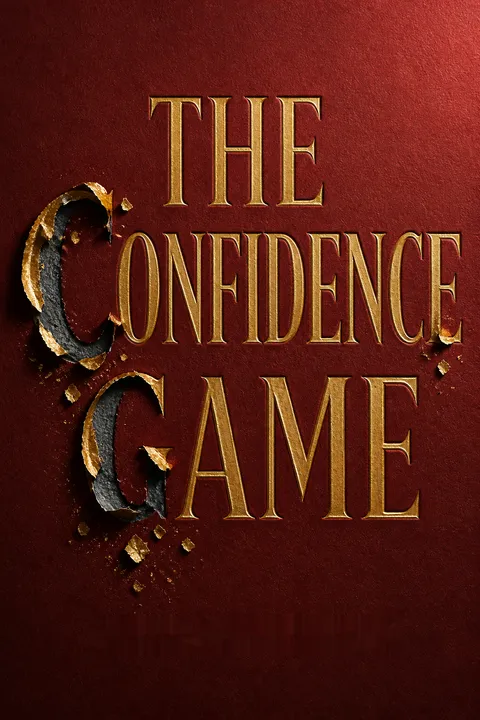


Key Takeaways
Treat confidence as a human vulnerability, not a mark of stupidity
No special victim type. Ferdinand Demara posed as a surgeon aboard a Canadian warship despite lacking medical qualifications. In 48 hours, he operated on 19 wounded Koreans. His audacity depended not on finding fools, but on occupying a role people urgently needed filled. The same human willingness to trust can be exploited in a hospital, a monastery, or an investment office. The book reports that a little over 10 percent of American adults surveyed in 2011 to 2012 had experienced fraud, with 25.6 million victims and still more incidents.
Trust is useful, not foolish. People rely on others to cooperate, share knowledge, and care for one another. Confidence artists exploit that social default, then make victims feel responsible for the deception because they agreed to participate. This helps explain why victims often stay silent, and why expertise offers no guaranteed protection.
The central distinction is between trusting as a social strategy and trusting a specific claim without checking it. A society that treated every stranger as a threat would lose the cooperation that makes daily life possible. The practical aim is therefore not universal suspicion, but selective verification when the stakes are high. Demara's story also warns that competence and confidence are separate things: a reassuring performance can fill an institutional gap before anyone checks credentials. Trust can remain humane while procedures insist on independent confirmation.
When the world feels uncertain, a satisfying story can outrun evidence
Stories fill gaps. People dislike uncertainty and readily supply explanations when events do not make sense. A con artist studies what someone hopes for, then offers a narrative that makes the desired outcome feel possible. The tale of a blind man who received more donations after his sign described the spring he would never see illustrates the force of a specific human story. A compelling narrative can prompt generosity, but the same emotional pull can make an implausible claim feel true.
Change multiplies openings. Cons thrive when familiar rules are shifting, whether during a gold rush, a war, or a technological upheaval. New settings create uncertainty about what is normal, and online communication can make a false identity or urgent plea appear ordinary. Technology changes the delivery route more readily than it changes the psychology: people still respond to hope, fear, and a story that seems to explain what is happening.
Narrative is not merely decoration around an argument. It helps people decide which facts matter and what those facts mean. That makes storytelling powerful in education, journalism, and public health as well as in fraud. The risk appears when emotional coherence substitutes for independent evidence. A useful test is to separate the story's human meaning from its factual claims: compassion can be genuine even when a stranger's account needs verification. The distinction protects generosity without requiring cynicism.
Assess the moment, not a stereotype of who gets conned
Circumstances change judgment. The book argues that vulnerability often reflects a person's situation more than a stable personality. Robin Lloyd, an educated college student, lost the only $40 she had for a short New York trip at a rigged three-card game. She was short of money and unfamiliar with the setting. In one study discussed in the book, people who took more risks were over six times as likely to fall victim as those with low risk tolerance. A stressful life change can temporarily make someone more impulsive and more eager to believe.
Profiles have limits. Online habits, age, income, and education may correlate with particular types of fraud, but no single victim profile predicts every scheme. Investment fraud victims in one study tended to differ from lottery fraud victims. The useful question is not whether someone is gullible by nature, but whether loneliness, debt, grief, or pressure has narrowed their judgment today.
This situational account replaces blame with a more useful question: what conditions made the pitch persuasive at that moment? It also makes prevention more compassionate. A person facing grief or financial strain may need a pause and another perspective, not a lecture about being smarter. At the same time, risk factors are not diagnoses. Loneliness or optimism does not make someone destined to be deceived. These conditions should prompt care and added checks, not assumptions about a person's judgment.
Cool emotional urgency before deciding what a compelling story asks
Feeling often leads. The confidence artist's early work is emotional: creating rapport, stirring hope or fear, and making the listener feel understood before presenting the request. In the 2013 Dublin case, a teenager appeared injured and unable to speak, prompting an extensive search and public appeal. She was actually 25-year-old Australian Samantha Azzopardi, who had invented identities and a story of trafficking. Authorities devoted roughly 2,000 hours and €250,000 to the case. The story moved people to help before they could establish who she was.
Urgency narrows attention. A plea involving a sick child, a missing person, or an imminent loss can make delay feel cruel or dangerous. The book describes how emotional arousal can shift decisions toward immediate feeling and away from deliberate evaluation. A practical response is to slow the transaction, seek corroboration through a separate channel, and ask what would still be true if the emotional story were removed.
The point is not to distrust distress. Real emergencies deserve swift help, and excessive skepticism can also cause harm. The useful distinction is between acting compassionately and accepting every factual detail as verified. Immediate aid can often be routed through a hospital, established charity, or known contact while claims are checked. A short pause is especially valuable when a story demands secrecy, money, or irreversible action. Emotion can identify a need for care without proving the proposed solution is legitimate.
Verify familiarity, status, and small favors before they become leverage
Trust can be staged. People tend to warm to what feels familiar, similar, or authoritative. In one phishing study described in the book, more than 70 percent of university students entered their login details after receiving a message that appeared to come from a friend. Con artists may also manufacture references, online profiles, shared interests, or prestigious affiliations. Mervyn Barrett trusted Matthew de Unger Brown, who claimed aristocratic connections and campaign expertise. Brown used that trust to gain access to Barrett's finances and, according to Barrett, took £84,000.
Small requests open doors. The foot-in-the-door technique describes how agreeing to a modest request can increase willingness to grant a larger one later. A friendly conversation, a small favor, or a low-cost introductory offer can establish a pattern of cooperation. Before sharing access or money, verify identities and credentials independently. A connection that feels personal is not itself proof that someone is safe.
Familiarity is a sensible shortcut in ordinary social life, which is why it is easy to exploit. The solution is not to reject every warm introduction, but to keep relational trust separate from technical authorization. A friend can be impersonated, and a reputable organization can be invoked falsely. Independent verification works best when it uses a channel the requester did not provide. This preserves the social benefits of recognition while preventing recognition from serving as the only security check.
Your sense of being exceptional is precisely what a con can exploit
Everyone feels above average. The book describes the superiority bias, the tendency to see oneself as unusually capable or deserving. In one survey of students, 70 percent rated their leadership ability above average, and 60 percent did so for athletic ability. A con artist turns this self-image into a reason to believe: the offer is not suspicious because the recipient is supposedly special enough to deserve it. Physicist Paul Frampton, lonely and eager for love, believed an online relationship with a much younger model was destined to succeed. He carried a suitcase containing cocaine, convinced the situation was a misunderstanding.
Motivation bends evidence. When a claim affects something central to a person's identity or hopes, contrary information becomes easier to dismiss. Frampton's intelligence did not protect him from the story he wanted to be true. Before accepting an unusually attractive offer, ask whether the same evidence would persuade a skeptical friend, and invite that friend to review it.
The bias is not simply vanity. A positive view of one's abilities can support persistence, ambition, and recovery from setbacks. The danger is confusing confidence in oneself with evidence about an outside offer. Frampton's case is a vivid reminder that expertise in one domain does not automatically transfer to romance, risk, or criminal logistics. Independent review is most valuable when it comes from someone with no emotional stake in the hoped-for outcome.
Early rewards make later losses look like temporary setbacks
A first win seals belief. William Franklin Miller promised investors weekly returns of 10 percent and paid early investors from money supplied by later ones. The visible payouts made the scheme feel real. When warnings appeared and Miller fled with the money, some investors still returned to deposit more. They had experienced enough success to interpret new problems as temporary, not as evidence that the whole arrangement was false.
Contradictions invite repair. Cognitive dissonance is the discomfort of holding a belief and encountering evidence that conflicts with it. People may reduce that discomfort by explaining away the evidence, revising their memory, or investing further in the original belief. A loss can even deepen commitment if the person hopes to recover it. When an early success is followed by an unexpected loss, pause before adding resources. A payout proves that money arrived, not that the promised source or business model is sound.
The pattern resembles learning from rewards: a successful early outcome makes a behavior feel validated, even when luck or manipulation produced it. That mechanism is powerful because the first reward is real. It is not necessary for every part of a scheme to be fabricated from the start. The useful safeguard is to check the mechanism behind a return, not simply its arrival. Independent records and outside review can distinguish a functioning enterprise from a performance funded by fresh participants.
Count future costs, not sunk effort, when warning signs appear
Investment can cloud sight. The sunk-cost fallacy is the tendency to keep committing resources because of what has already been spent, even when that past cost cannot be recovered. At the Teton Dam, warnings about the site and its geology did not stop construction. In 1976, the dam failed, killing 11 people and leaving 25,000 homeless. Investigators noted that no Bureau of Reclamation project had been stopped after construction began. Commitment had become momentum.
Art followed the same logic. Knoedler Gallery sold paintings supplied by Glafira Rosales as works by famous Abstract Expressionists. Concerns about their provenance emerged, and an art foundation questioned a painting's history, yet the gallery continued handling works. The paintings were later exposed as forgeries. Past sales, reputation, and personal belief made reversal costly. When evidence changes, evaluate the next decision on its future risks and benefits, not on the time, money, or status already invested.
Sunk costs are irrelevant to the best next choice, but they are not irrelevant to human psychology. Abandoning a project can feel like declaring prior effort worthless, even when stopping prevents greater harm. Institutions need explicit stop-work criteria, independent reviewers, and authority to halt projects without requiring their original champions to confess failure first. The comparison also has limits: continuing can be rational when future benefits still exceed future costs. The crucial test concerns what remains to be gained or lost.
Set exit rules early, and report fraud before shame seals it
Silence protects the scheme. Oscar Hartzell took over a version of the long-running story that investors could share in Sir Francis Drake's hidden fortune. He drew in tens of thousands of people and more than $2 million. Even after receiving no returns, many supporters defended him and helped pay for his legal defense. Admitting a loss threatened both their money and their reputation, so silence made the fraud easier to continue.
Make an exit possible. The book's practical lesson is to know personal limits before pressure arrives: how much money, time, or access is acceptable, and what evidence would trigger a stop. Arrange an independent person to review major decisions, and verify claims outside the seller's network. If something appears fraudulent, reporting it can protect others. Victims are not foolish for trusting; shame is one more tool that helps a con artist escape scrutiny.
Precommitment helps because decisions made in a calm moment are less vulnerable to urgency, embarrassment, and sunk costs. A written rule, such as never transferring money before independent verification, can be easier to follow than a vague promise to stay alert. Reporting also has a collective function: it turns private suspicion into information others can use. These measures cannot eliminate deception, but they reduce the advantage created by secrecy and make it easier to leave without treating departure as personal defeat.
Analysis
The book's central insight is that a confidence game is not merely a sequence of lies. It is a gradual reorganization of the target's interpretation of reality. A con artist first discovers what the person wants, then creates a relationship and a narrative that make the offer feel personally apt. Early rewards validate the story. Later contradictions are absorbed through motivated reasoning, and prior investment makes withdrawal feel like a second loss. Shame then helps conceal the outcome. This sequence explains why simply telling people to watch for obvious red flags is inadequate: the relevant evidence is often present, but attention and interpretation have been shaped before the warning arrives.
The account is strongest when it joins individual psychology to social context. Demara exploits institutional need; Mervyn Barrett trusts a supposed insider; the Teton Dam shows how organizations can become trapped by commitments as surely as individuals. Fraud is not only a flaw in a victim's judgment. It can also reveal weak verification systems, ambiguous ethical norms, and institutions that reward confidence more readily than candor. That broader view shifts prevention from blaming marks toward designing processes that make independent checks routine.
The book's psychological studies illuminate tendencies, not deterministic rules. A result from a laboratory task cannot by itself predict who will fall for a specific scheme, and the book's varied case histories do not establish that every fraud follows the same path. Nor are emotion, optimism, or trust inherently defects. They sustain cooperation, creativity, and hope. The challenge is calibration: preserve those capacities while adding friction when a decision is urgent, unusually rewarding, secretive, or difficult to reverse.
The most practical reading is therefore not a manual for detecting liars. People are poor at reading deception from facial gestures, and practiced offenders may show no obvious discomfort. Better safeguards target claims and decisions: confirm credentials independently, separate compassion from payment, set limits in advance, and consult someone outside the relationship. The book's lasting warning is that confidence can be manipulated precisely because it is valuable. The goal is not to stop believing, but to notice when belief is being used as a substitute for evidence.
Review Summary
The Confidence Game receives mixed reviews, with praise for its fascinating exploration of con artists and human psychology. Readers appreciate the engaging true stories and insights into why people fall for scams. Some criticize the book's organization and repetitiveness. Many find it eye-opening, realizing anyone can be conned under the right circumstances. The book's examination of trust, belief, and human nature resonates with readers, though some wish for more practical advice on avoiding scams. Overall, it's considered an intriguing read on the psychology of deception.
People Also Read





Glossary
put-up
target selection and profilingA traditional confidence-game term for the stage in which a grifter observes and selects a likely target. The artist looks for a person's circumstances, motives, and vulnerabilities, then uses those details to shape an approach. The book emphasizes that this profiling can be deliberate, patient, and based on small clues the target does not realize they have revealed.
Mere exposure effect
familiarity increases likingThe tendency to feel more positively toward something after encountering it repeatedly, even without consciously remembering those encounters. The book connects the effect to the creation of trust: a person, name, or idea that seems familiar can feel safer and more appealing. Con artists can exploit this through repeated contact, online presence, or staged social connections.
Approach-avoidance model
increase appeal, reduce resistanceA model of persuasion that describes two broad routes to agreement. An appeal can make an offer more attractive, or make reasons to refuse seem less important. A confidence artist may combine both, emphasizing rewards while minimizing perceived risk or effort, so the target feels drawn toward the proposal and sees little reason to hold back.
Foot-in-the-door technique
small request precedes larger oneA persuasion technique in which someone first secures agreement to a modest request, then follows with a larger one. The initial agreement can encourage a person to see themselves as helpful or consistent, making further cooperation easier. In a confidence game, a minor favor or small payment can establish a pattern that supports much larger commitments.
Affect heuristic
judgment guided by feelingA shortcut in judgment where people use their positive or negative feelings as evidence about whether something is good, bad, safe, or risky. The feeling may arise from the current situation or from earlier associations. Con artists deliberately create emotional states that can make a proposal seem promising or threatening before its details receive careful evaluation.
Superiority bias
seeing oneself as exceptionalThe tendency to rate oneself more favorably than others on desirable traits or abilities. The book also discusses it as the better-than-average effect. A confidence artist can exploit the belief that one is unusually smart, deserving, or immune to manipulation, recasting an implausible opportunity as something that makes sense for an exceptional person.
Cognitive dissonance
discomfort from conflicting beliefsThe psychological tension that arises when a person's beliefs, actions, or new evidence do not fit together. People often reduce the discomfort by reinterpreting events, dismissing contradictory information, or changing their behavior. In a con, this can lead a target to explain away warning signs rather than reconsider a story they have already accepted.
Sunk-cost fallacy
past investment drives persistenceThe tendency to continue a project or commitment because substantial resources have already been spent, even when those resources cannot be recovered. The rational question concerns future costs and benefits, but past investment can make stopping feel wasteful or humiliating. Confidence artists benefit when victims keep committing money, time, or reputation to justify earlier choices.
Illusion of control
overestimating personal influenceThe mistaken sense that one's skill or choices can control outcomes that are actually governed largely by chance or external forces. A run of success can strengthen this belief, leading people to see luck as evidence of competence. The book links this tendency to persistent commitment in gambling, investing, and confidence schemes.
FAQ
What's The Confidence Game about?
- Exploration of con artistry: The book delves into the psychology behind confidence games, examining why people fall for scams and the methods used by con artists to manipulate their victims.
- Historical and modern examples: Maria Konnikova provides numerous real-life stories of famous con artists, illustrating the timeless nature of deception.
- Psychological principles: The author discusses key psychological concepts, such as cognitive dissonance and the illusion of control, which contribute to our susceptibility to being conned.
Why should I read The Confidence Game?
- Understanding human psychology: The book offers insights into the human need for belief and how this can lead to gullibility, making it relevant for anyone interested in psychology or human behavior.
- Practical applications: Readers can learn to recognize the signs of manipulation in their own lives, helping them to avoid becoming victims of scams or deceitful practices.
- Engaging storytelling: Konnikova's narrative style combines research with compelling anecdotes, making complex psychological concepts accessible and entertaining.
What are the key takeaways of The Confidence Game?
- Everyone is susceptible: The book emphasizes that anyone can fall victim to a con, regardless of intelligence or background, due to inherent psychological vulnerabilities.
- Emotions drive decisions: Konnikova highlights the role of emotions in decision-making, explaining how feelings can override rational thought, especially in high-pressure situations.
- Cognitive biases: The author discusses various cognitive biases, such as the sunk-cost fallacy and confirmation bias, that influence our behavior.
What are the best quotes from The Confidence Game and what do they mean?
- “The confidence game is an exercise in soft skills.”: This quote underscores that con artists rely on trust and persuasion rather than force, highlighting the psychological manipulation involved in scams.
- “We believe because we want to.”: This reflects the idea that our desire for connection and understanding can lead us to accept false narratives, making us vulnerable to deception.
- “Con men and tricksters run the world. Rascals rule.”: This encapsulates the pervasive nature of deception in society, suggesting that manipulation often leads to success.
What is the "put-up" in The Confidence Game?
- Initial engagement: The "put-up" refers to the first stage of a con, where the con artist identifies and engages a potential victim, often by establishing rapport and trust.
- Emotional vulnerability: During this stage, con artists look for emotional cues that indicate a mark's vulnerabilities, such as recent losses or desires for connection.
- Building familiarity: The goal is to create a sense of familiarity and comfort, making the victim more likely to comply with future requests.
How does the "play" function in The Confidence Game?
- Capturing attention: The "play" is the second stage, where the con artist captivates the mark's attention through storytelling and emotional engagement.
- Emotional manipulation: This stage relies heavily on evoking emotions, whether sympathy, excitement, or fear, to lower the victim's defenses.
- Creating urgency: Con artists often create a sense of urgency during the play, prompting the mark to act quickly without fully considering the consequences.
What is the "rope" in The Confidence Game?
- Persuasive techniques: The "rope" is the third stage of a con, where the con artist employs various persuasive strategies to secure the mark's compliance.
- Building commitment: This stage involves getting the victim to commit to a smaller request first, which makes them more likely to agree to larger requests later on.
- Exploiting trust: The con artist leverages the trust established during the put-up and play to manipulate the mark into making decisions that benefit the con artist.
How do emotions influence decision-making in The Confidence Game?
- Emotional primacy: Konnikova explains that emotions often precede rational thought, meaning that our feelings can heavily influence our decisions.
- Mood congruity: The book discusses how our emotional state can affect how we process information, making us more likely to accept narratives that align with our current feelings.
- Vulnerability during crises: Emotional distress, such as grief or anxiety, can make individuals more susceptible to cons, as they may be seeking comfort or solutions.
What role does storytelling play in The Confidence Game?
- Engaging narratives: Storytelling is a powerful tool for con artists, as compelling stories can evoke strong emotions and draw victims in.
- Creating empathy: A well-told story can foster empathy, leading the mark to feel a connection with the con artist.
- Distraction from logic: When engrossed in a story, individuals may overlook inconsistencies or red flags, allowing the con artist to manipulate their perceptions.
What is the breakdown in The Confidence Game?
- Moment of doubt: The breakdown occurs when the mark begins to experience doubt about the con artist’s story or the legitimacy of the scheme.
- Cognitive dissonance: During the breakdown, the mark may experience cognitive dissonance, struggling to reconcile their previous beliefs with new evidence.
- Recommitment: Instead of walking away, marks often double down on their commitment, believing that their initial investment will eventually pay off.
How can I protect myself from being conned, based on The Confidence Game?
- Recognize emotional triggers: Be aware of your emotional state and how it may influence your decision-making, especially during times of stress or vulnerability.
- Question narratives: Cultivate a habit of skepticism towards compelling stories, especially those that evoke strong emotions or seem too good to be true.
- Verify information: Always check the credentials and backgrounds of individuals or offers that seem suspicious, and don’t hesitate to seek second opinions.
About the Author
Other books by Maria Konnikova


Download PDF
Download EPUB
.epub digital book format is ideal for reading ebooks on phones, tablets, and e-readers.








