

Key Takeaways
Treat consciousness as an evolutionary burden, not an automatic blessing.
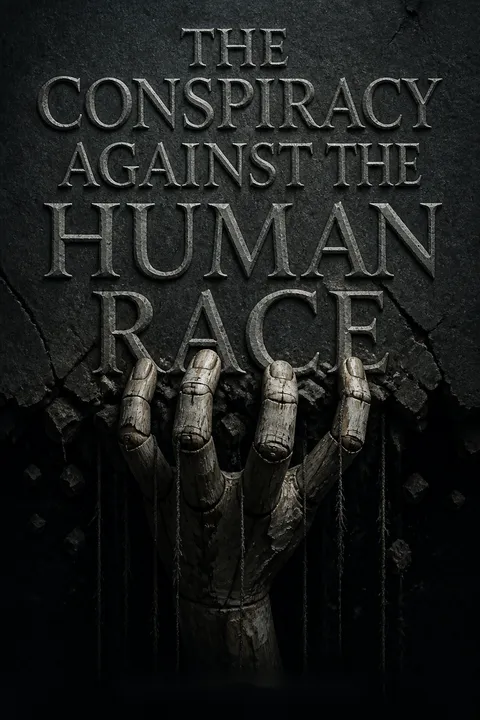
Awareness cuts both ways. Ligotti builds his case around Norwegian philosopher Peter Wessel Zapffe: human beings do not merely suffer, they know suffering exists, anticipate death, and ask what existence means. Zapffe calls this excess awareness a biological misfire. The book’s puppet image captures the resulting unease: people feel like independent agents, yet their bodies and minds arise from processes they did not choose.
A diagnosis, not a proof. Ligotti sets this bleak account against thinkers who consider consciousness a gift. Neither side can demonstrate that awareness makes life good or bad. The argument is philosophical and existential, not an established scientific finding that evolution made a mistake.
The distinction between evolutionary success and wellbeing sharpens the argument: a trait can help an organism survive without making its experience pleasant. Yet calling consciousness a biological error adds a value judgment to a description of evolution, which has no known intention or standard of correctness. Awareness also enables planning, art, and concern for other people. Those capacities do not refute the book’s account of suffering, but they complicate the claim that consciousness is only a burden.
Notice the four mental shelters that keep existential dread out of view.
A practical taxonomy. Zapffe’s four defenses are ways people limit attention to truths that might otherwise overwhelm them. They are not necessarily conscious choices or evidence of individual weakness.
1. Isolation: Push disturbing thoughts into a mental compartment.
2. Anchoring: Find stability in beliefs and institutions such as family, morality, or religion.
3. Distraction: Fill attention with work, entertainment, politics, or other activity.
4. Sublimation: Turn fear into an aesthetic form, such as a story or philosophical essay.
Ordinary life depends on them. These strategies help people function while keeping mortality and suffering from occupying every moment. Ligotti’s own book, which makes art from the fears it examines, can itself be read as an example of sublimation.
The taxonomy is memorable because it separates different forms of avoidance instead of treating denial as one vague habit. Compartmentalizing grief, committing to shared institutions, and getting absorbed in a task can each support daily functioning. The same tactics can also shield harmful norms from scrutiny, especially when a community treats uncomfortable questions as disloyalty. Their effects depend on what gets kept out of awareness, and who benefits from keeping it there.
Treat the self as a useful model, not a proven inner captain.
A familiar illusion. Ligotti questions the feeling of being a single, self-directing person. The book discusses philosopher Thomas Metzinger’s term phenomenal self-model: the brain’s representation of an experiencing self, which is perceived as the person rather than as a model. The body and its thoughts continue to function, but the inner captain may be less independent than it feels.
Choice has limits. The determinist argument asks whether anyone chooses the desires that guide their choices. Wanting a different life does not, by itself, explain where that new desire comes from. Ligotti connects this problem to the puppet: people act, but cannot step outside the causes that formed them. The argument challenges agency without proving that responsibility or choice are simply unreal.
The self-model idea offers a useful middle ground between imagining an immaterial inner ruler and denying that personal identity matters. A model can be constructed and still organize real experience, much as a map is not the territory but remains useful for navigating it. The difficult question is what follows ethically. If choices have causes, societies still need ways to prevent harm and support change, even if blame becomes more complicated.
When feeling collapses, life's meanings can vanish with it.
Emotion supplies significance. Ligotti argues that meaning is not simply an idea stored in the mind. Feelings make people, relationships, and plans seem important. His example is depression: a person may retain knowledge of what could help, yet feel so indifferent that even taking a simple step seems pointless. When emotion changes, the same world can lose its former color and importance.
This is an unsettling lesson, not a cure. Ligotti uses depression to show how dependent meaning is on a working emotional life. He also describes the return to ordinary feeling as a return to the sense of being oneself. The episode does not establish that depressed perception reveals reality more accurately; it shows that felt meaning can be fragile and bodily grounded.
The account usefully resists the idea that reason alone can generate motivation. Knowing that an action is sensible is different from caring enough to take it. But depression is an illness, not a neutral philosophical vantage point. It can narrow attention and distort expectations as well as strip away interest. The example is most compelling as a demonstration that meaning depends on emotional conditions, not as evidence that emotional detachment exposes the world as it truly is.
Popularity cannot prove life's value, but pessimism cannot measure it either.
A stalemate over value. Ligotti treats optimism as humanity’s default posture: people generally continue living and reproducing without first proving that existence is worthwhile. Pessimists question that assumption, but they cannot produce a universally accepted calculation that weighs every pleasure against every pain. No shared measure settles the dispute.
Temperament matters. The book contrasts confident defenses of consciousness with Zapffe’s bleak interpretation and considers writers such as Tolstoy, who examined how people respond when life’s value becomes doubtful. The point is not that both sides are equally persuasive in every case. It is that a widespread belief is not a proof, and a forceful rejection is not one either.
This is one of the book’s strongest checks on its own rhetoric. Popularity does not establish a proposition’s truth, but intensity does not establish it either. The inability to calculate a single life’s net value may reflect a genuine limit: suffering and joy vary in kind, duration, and personal meaning. That limit does not erase moral questions about preventable harm. It does caution against presenting a contested verdict on existence as though a simple arithmetic test had settled it.
Interrogate whether birth is a gift when suffering is guaranteed.
The antinatalist challenge. Ligotti presents Zapffe’s conclusion that humanity should stop reproducing and discusses philosopher David Benatar’s argument that coming into existence exposes a person to unavoidable suffering. On Benatar’s account, an absence of pain is good even when nobody exists to enjoy it, while an absence of pleasure is not a deprivation for someone who was never born.
A philosophical argument, not a mandate. The book emphasizes that no universally accepted formula proves either that humanity should continue or that it should end. Its challenge concerns creating future lives, not a recommendation to harm people who already exist. The distinction matters: arguing that birth carries ethical risks is not the same as establishing that every existing life should be ended.
The argument forces a neglected question into view: procreation creates a person who can be harmed, without asking that future person’s permission. Its asymmetry is also contestable. Benefits may matter to the person who comes to exist, and the absence of a person makes it difficult to identify who receives the supposed benefit of nonexistence. The case encourages careful thought about responsibility for foreseeable suffering, but it does not turn a complex ethical choice into a settled universal rule.
Let horror fiction stage what ordinary life trains you not to examine.
Fear with a frame. Zapffe calls the artistic transformation of existential dread sublimation: painful material is reshaped into a form people can approach without undergoing the original harm. Ligotti reads supernatural horror as especially suited to this task. A ghost, cosmic entity, or doomed character gives shape to fears that everyday life usually keeps at a distance.
The form changes the encounter. Poe’s decaying House of Usher makes dread feel inescapable, while Lovecraft’s cosmic horrors suggest that humanity is not central to the universe. These stories do not solve suffering. They let readers experience fear through crafted images and plots, where terror is both intensified and held at a remove.
Horror’s value here lies in its double action: it draws attention toward danger while marking that danger as fiction. That controlled distance can make difficult feelings thinkable without pretending they have been resolved. The form also gives readers room to notice what their culture finds frightening, from bodily breakdown to loss of human importance. Still, fictional fear is not a substitute for facing real suffering, and different readers may find the genre exhilarating, numbing, or simply unpleasant.
The uncanny puppet exposes how unstable the boundary between person and object feels.
A familiar thing turns strange. Ligotti uses the uncanny for the feeling that something familiar has violated expectations about what it is or how it should behave. A puppet that seems alive, or a person who appears mechanical, disturbs the boundary between animate and inanimate. The fear is not only of an external monster; it also raises the possibility that people themselves are mechanisms they do not understand.
Death deepens the disturbance. The book connects this unease to human awareness of mortality. Unlike a fictional character, a living person knows that a story will end, though not exactly how. In films such as Invasion of the Body Snatchers and The Thing, a person may be replaced while retaining a familiar appearance, turning identity into a source of suspense.
The puppet image works because it makes an abstract dispute about agency visible. A face can look human while seeming empty of the agency observers expect, unsettling the observer’s own assumptions about personhood. Contemporary debates about artificial intelligence echo this anxiety, although resemblance alone does not establish consciousness in a machine. The image is powerful as a metaphor for uncertainty, but it should not be mistaken for evidence that human beings lack inner experience.
Read Ligotti's pessimism as a diagnosis, not a demonstrated escape route.
No clean exit appears. Ligotti surveys religious salvation, Buddhist enlightenment, Nietzschean endurance, and technological promises of human improvement. He sees each as offering a story in which suffering can be overcome or made meaningful. His objection is that these stories cannot prove that existence has an ultimate purpose or that their proposed future will deliver what it promises.
The book implicates itself. Ligotti presents his argument through a crafted literary performance, using horror and wit to make bleakness compelling. By his own account, art can turn distress into a safer representation. The book therefore does not stand outside the coping mechanisms it analyzes. Its force is diagnostic: it reveals how people make meaning, but does not prove that awareness of those processes can free anyone from them.
This self-implication makes the book more interesting than a simple case against consolation. A work of art can expose its own strategies while still relying on them to hold attention and make an experience bearable. That does not invalidate the argument; it shows that insight and escape are different achievements. Readers can take the critique seriously without accepting its most sweeping verdict, or treating its bleakness as a prescription for how anyone should live.
Analysis
Ligotti’s book is less a proof of pessimism than a staged confrontation with the assumptions that usually protect optimism. Its central move is to shift the question from whether particular lives contain pleasure to whether a species capable of anticipating pain and death can justify its continuation. The shift is potent, but it also changes the burden of proof. A person defending life may point to relationships, projects, or joy; Ligotti asks whether any collection of such goods can justify the harms built into existence. Neither side has a neutral scale that can answer that question for everyone.
The strongest conceptual distinction is between describing how humans cope and deciding whether those coping mechanisms are false. Compartmentalization, shared beliefs, entertainment, and art can limit attention to mortality. They can also make sustained care and collective action possible. Calling them defenses explains a function, but does not establish that what they defend is worthless. Similarly, showing that meaning depends on emotion or that the self is cognitively constructed does not make meaning or personhood unreal in every relevant sense. Constructed realities can still organize actual commitments and consequences.
The book’s literary form matters. Its horror imagery gives abstract claims about consciousness, death, and agency emotional force, while its comic exaggeration prevents the argument from settling into academic abstraction. This is also a limitation: the aesthetic intensity can make speculative claims feel like discoveries. The proposal that consciousness is an evolutionary mistake is not a scientific finding, and the possibility that suffering outweighs pleasure cannot be established merely by vividly depicting suffering.
The most durable value is therefore methodological. Ligotti asks readers to separate what keeps a person going from what would justify existence in some ultimate sense. Those questions are not identical. A reader can recognize that the second may have no decisive answer, while still taking seriously the ethical demand to reduce suffering in the first.
Review Summary
The Conspiracy Against the Human Race is a philosophical work exploring pessimistic ideas about human existence. Readers find it thought-provoking, well-written, and darkly humorous, though some consider it exasperating or unreadable. Ligotti argues that consciousness is a burden, life is inherently meaningless, and non-existence may be preferable. The book draws on various philosophers and horror writers to support its bleak worldview. While many appreciate its intellectual rigor and unique perspective, others criticize its repetitiveness and extreme pessimism.
People Also Read


Glossary
ego-death
Loss of personal self-senseA reported experience in which the ordinary sense of being a distinct personal self disappears, even though perception, thought, speech, and bodily activity may continue. Ligotti discusses accounts of people who describe this change as occurring unexpectedly, sometimes after illness or near-death experiences. He treats such reports as suggestive but anecdotal, not as proof of a universal path to enlightenment.
FAQ
What is The Conspiracy Against the Human Race by Thomas Ligotti about?
- Philosophical pessimism focus: The book explores the idea that human existence is fundamentally tragic and undesirable, rooted in a surplus of consciousness that causes suffering.
- Human consciousness as a curse: Ligotti argues that self-awareness separates humans from nature, forcing us to confront mortality, suffering, and meaninglessness.
- Supernatural horror connection: The book links philosophical pessimism with supernatural horror, using uncanny phenomena as metaphors for the paradox of human existence.
- Call for extinction: Ligotti ultimately suggests that voluntary extinction may be the only rational response to the suffering consciousness entails.
Why should I read The Conspiracy Against the Human Race by Thomas Ligotti?
- Unique blend of philosophy and horror: The book offers a rare, uncompromising exploration of pessimism, challenging optimistic worldviews and traditional beliefs about life’s value.
- Insight into human psychology: Ligotti analyzes how humans use defense mechanisms to cope with existential dread, deepening understanding of self-deception and illusion.
- Critical examination of belief systems: The book critiques religion, science, and culture for masking life’s harsh realities, encouraging readers to confront uncomfortable truths.
- Stimulates existential reflection: It invites readers to question the meaning of life, the nature of self, and the possibility of liberation or extinction.
What are the key takeaways from The Conspiracy Against the Human Race by Thomas Ligotti?
- Consciousness as a curse: Human self-awareness is portrayed as an evolutionary blunder that brings suffering and existential horror.
- Defense mechanisms for survival: People use strategies like isolation, distraction, anchoring, and sublimation to limit awareness of life’s horrors.
- Supernatural horror as metaphor: Horror literature is used to symbolize the uncanny and the horror of existence, reflecting the paradox of being conscious beings.
- Voluntary extinction as rational: Ligotti suggests that ending the cycle of suffering through voluntary extinction is the only logical response, though humanity resists this truth.
How does Thomas Ligotti define and explore philosophical pessimism in The Conspiracy Against the Human Race?
- Pessimism as central theme: Ligotti builds on thinkers like Zapffe and Schopenhauer, arguing that human existence is fundamentally tragic and absurd.
- Critique of optimism: The book challenges common beliefs and illusions that make life seem worthwhile, exposing their role in masking suffering.
- Existential horror: Ligotti connects pessimism to the horror genre, showing how both confront the bleakness and futility of life.
- Call for honest confrontation: He urges readers to face the reality of suffering and meaninglessness, rather than relying on comforting illusions.
What is the "nightmare of being" in The Conspiracy Against the Human Race by Thomas Ligotti?
- Existential dread of consciousness: The "nightmare of being" refers to the profound horror and alienation that arise from human self-awareness of mortality, suffering, and meaninglessness.
- Biological paradox: Humans are uniquely burdened by the knowledge of their own insignificance and the futility of existence.
- Necessity of self-deception: To survive this nightmare, people must repress or distort their awareness, maintaining illusions that life is worthwhile.
- Psychological burden: This state creates a psychological weight that is unique to humans and central to Ligotti’s argument.
What are Zapffe’s four defense mechanisms as discussed in The Conspiracy Against the Human Race by Thomas Ligotti?
- Isolation: Denying or suppressing awareness of life’s harsh realities to protect oneself from existential dread.
- Anchoring: Relying on metaphysical, religious, or social certainties to create a sense of stability and meaning.
- Distraction: Engaging in trivial or absorbing activities to avoid confronting the horror of existence.
- Sublimation: Transforming suffering into art, philosophy, or other creative outlets as a way to cope with consciousness.
How does The Conspiracy Against the Human Race by Thomas Ligotti analyze the role of supernatural horror literature?
- Atmosphere as key element: Ligotti emphasizes that supernatural horror uses atmosphere to symbolize the ineffable horror of existence.
- Uncanny as metaphor: The supernatural is portrayed as a metaphor for alienation from nature and the awareness of death.
- Literary evolution: The book traces horror’s development from Gothic landscapes to Lovecraft’s cosmic horror, showing how literature reflects existential themes.
- Dissolution of self: Horror stories often focus on the loss of identity and confrontation with the uncanny, mirroring the book’s philosophical concerns.
How does Thomas Ligotti relate Buddhism to philosophical pessimism in The Conspiracy Against the Human Race?
- Buddhism as pessimism: Ligotti argues that Buddhism, like philosophical pessimism, centers on suffering (dukkha) as the primary reality of existence.
- The wanting paradox: He highlights the Buddhist paradox that the desire to end suffering perpetuates it, mirroring the inescapable nature of human suffering.
- Diversity of beliefs: The book notes the complexity and diversity within Buddhism, especially regarding concepts like no-self and reincarnation.
- Enlightenment’s rarity: Ligotti points out that true enlightenment or ego-death is extremely rare and often accidental, challenging the promise of a clear path out of suffering.
What is the "wanting paradox" in The Conspiracy Against the Human Race by Thomas Ligotti?
- Definition: The "wanting paradox" is the idea that the desire to end suffering actually ensures its continuation, as wanting itself is a form of suffering.
- Relation to consciousness: Consciousness creates desires and attachments, trapping individuals in cycles of suffering.
- Comparison to Zapffe’s paradox: Ligotti compares this to the paradox of consciousness, where awareness of life’s joylessness cannot be resolved.
- Implications for enlightenment: The paradox suggests that liberation cannot be attained through effort or desire, making it an elusive state.
Who are the key figures related to ego-death and enlightenment in The Conspiracy Against the Human Race by Thomas Ligotti?
- U. G. Krishnamurti: Experienced ego-death after a clinical death, living without self-awareness and rejecting spiritual doctrines.
- John Wren-Lewis: Awoke enlightened after a near-death experience, viewing ordinary consciousness as a malfunction.
- Suzanne Segal: Lived for years without personal identity after a meditation experience, describing a sense of "vastness" but also suffering distress.
- Significance: These cases illustrate that ego-death and enlightenment are rare, often accidental, and not easily replicable through spiritual practice.
What is the "conspiracy against the human race" as described by Thomas Ligotti?
- Definition: The "conspiracy" is the collective self-deception and denial by humans of the true nature of existence—suffering, the curse of consciousness, and inevitable death.
- Mechanisms of denial: Society uses isolation, distraction, anchoring, and sublimation to limit awareness and maintain the fiction that life is worthwhile.
- Resistance to extinction: Despite philosophical arguments for voluntary extinction, humanity continues to affirm life due to biological and social pressures.
- Survival mechanism and suffering: The conspiracy helps people survive but also perpetuates ongoing suffering by preventing honest confrontation with reality.
What are the best quotes from The Conspiracy Against the Human Race by Thomas Ligotti and what do they mean?
- "Life, in Ligotti’s outsized stamp of disapproval, is MALIGNANTLY USELESS." This encapsulates the book’s thesis that existence is not just meaningless but actively harmful and futile.
- "We are paradoxical beings whose continuance only worsens their plight." This highlights the contradiction of human consciousness: aware of suffering yet compelled to live and reproduce, deepening existential tragedy.
- "None of us wants to hear spoken the exact anxieties we keep locked up inside ourselves." This reflects the social repression of existential dread and the collective conspiracy to maintain illusions about life’s worth.
- Quotes as insight: These lines distill Ligotti’s core arguments about the horror of consciousness and the mechanisms of self-deception.
Download PDF
Download EPUB
.epub digital book format is ideal for reading ebooks on phones, tablets, and e-readers.








