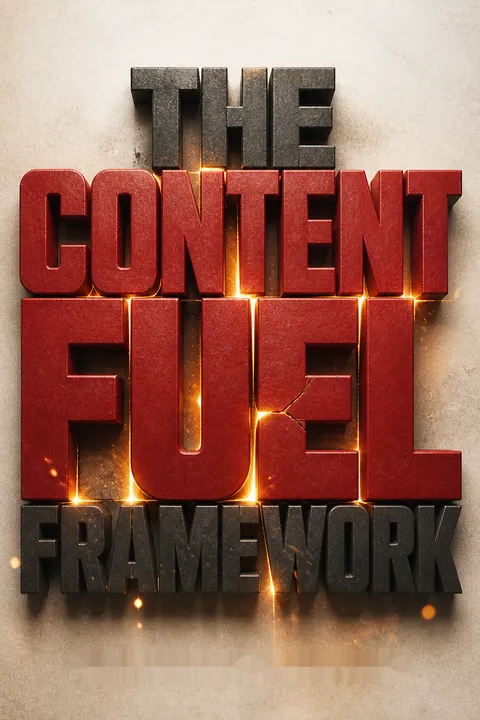


Key Takeaways
Stop waiting for inspiration: build ideas from a story angle and a medium.
Creativity has scaffolding. Deziel opens with a familiar pressure: audiences face a torrent of content, while creators are expected to keep finding fresh things to say. Her answer is practical, not mystical. A content idea combines a focus, the angle or subject being explored, with a format, the form in which the story reaches its audience. Together, these parts turn a vague demand to “come up with something” into a pair of decisions.
Structure makes searching easier. Just as someone listing 100 cities might sort them by region or sports teams, a creator can use categories to prompt ideas. Deziel developed this approach through years in journalism and content work, then watched workshop participants who doubted their creativity leave with pages of possibilities. A framework gives the mind somewhere to begin.
The useful shift is from treating creativity as a personal trait to treating it as a process that can be supported. That makes idea generation less dependent on mood and easier to share across a team: people can debate an angle or medium instead of arguing over who is “creative.” The caution is that a system can produce many combinations without producing a genuinely distinctive story. Structure lowers the barrier to starting; judgment, knowledge of the subject, and attention to the audience still determine whether an idea matters.
Choose the story's angle before choosing its delivery vehicle.
Start with the story. Deziel argues that content planning should identify what deserves attention before deciding whether to make a video, article, or other asset. Starting with a required format can force a story into an ill-fitting shape. Her example is a founder with a long, interesting history who is uneasy on camera. A static, half-hour monologue might technically satisfy a video request, but an interactive timeline with photos and audio can give audiences a more natural way to explore that history.
Match form to material. The question to ask after choosing a focus is: what form helps this particular story make sense? A conversation may gain meaning from audible pauses and tone; a repair instruction may need moving images that show each action. The format is not decoration. It affects what the audience can understand and experience.
This sequencing protects the story from becoming a platform-shaped assignment. It also forces a useful distinction between a channel requirement and a storytelling choice: a business may need to publish on a particular platform, but that does not automatically mean every idea should be designed around the platform's most visible feature. The approach is not an argument to ignore distribution realities. Rather, it makes those realities part of a considered design decision, instead of allowing them to erase the story before it has been understood.
Use a 10-by-10 grid to break stale brainstorm habits.
A grid creates routes. The Content Fuel Framework places 10 story focuses across one axis and 10 formats across the other, creating 100 possible combinations for a topic. A case's history could become audio, while a data story could become a quiz or map. The point is not that every square contains a brilliant idea. The grid makes less familiar approaches visible, so a brainstorm does not stop at the team's usual article or social video.
Generate, then select. Deziel describes turning the grid into a game: participants roll two 10-sided dice, with each roll selecting a focus and format, then brainstorm within that pairing. Teams may produce many possibilities and ultimately make only one or two. That is expected. The matrix is a prompt for exploration, not a production quota or a promise that every idea is equally good.
The grid is valuable because it makes the search space visible. A team can notice that it repeatedly chooses the same few combinations, then deliberately explore alternatives. Random prompts can also loosen habitual thinking, especially when colleagues have different knowledge of the subject. But randomness is a starting mechanism, not a quality filter. A strong selection process still needs to ask whether the pairing serves an audience need, can be executed credibly, and offers something more than novelty for novelty's sake.
Change the lens, not just the subject, to find fresh stories.
Ten lenses reveal different stories. Deziel's focuses are People, Basics, Details, History, Process, Curation, Data, Product, Example, and Opinion. They prompt distinct questions: who is involved, what newcomers need to know, what experts want in depth, how events developed, or how a task works. Other lenses gather selected items, examine evidence, explain an offering, use one case to illuminate a wider pattern, or present a judgment.
Know what each lens does. Basics and Details both teach, but Basics assumes little prior knowledge while Details serves readers seeking depth. A profile centers on a person; an Example uses a person's or company's story to explain a larger issue. Curation depends on selection criteria, while Data depends on numbers or research. Opinion depends on a stated point of view, not facts alone.
The taxonomy helps creators notice that a subject is not a story by itself. A product, for instance, can be explained to beginners, examined through customer data, or used as a case that reveals an industry shift. The distinctions also protect credibility. An anecdote can make a pattern understandable, but one case does not establish how common the pattern is; an opinion can guide a decision, but readers should be able to recognize it as judgment. The categories are prompts, not airtight boxes, and some stories naturally combine them.
Choose the medium for the audience's task, not your team's habit.
Formats shape experience. Deziel's 10 formats are Writing, Infographic, Audio, Video, Live Video, Image Gallery, Timeline, Quiz, Tool, and Map. Each offers a different way to engage: audio can accompany a commute, video can demonstrate a repair, and a timeline can organize events across years. A quiz can assess knowledge or offer recommendations; a tool can calculate or personalize an answer; a map can show geographic patterns or locations.
Combine formats when useful. A timeline might pair dates with photos, clips, or data, while an article can be supplemented with images or audio. The format should fit both the story and the audience's circumstances. Consider whether people will use a phone, need captions, want to explore at their own pace, or benefit from an audio alternative. More elaborate is not automatically more helpful.
A medium is a set of affordances and constraints, not simply a container. Choosing it well can reduce the effort required to understand a story: a visual sequence may clarify a process, while sound can convey a speaker's tone better than a transcript. The same choice can exclude people if it ignores device access, captions, readable design, or bandwidth. The book's range of formats encourages experimentation, but usefulness depends on whether the audience can comfortably access the experience and whether its added complexity earns its keep.
Multiply one useful idea across time, people, place, and resources.
Variations extend an idea. Content Multipliers are variables used to adapt one core idea into several related versions. Deziel highlights time, demographic, location, and resources. A fashion blogger's gallery of notable red-carpet looks could be divided by season or by groups of people; a travel recommendation could be organized by region. These variations may better match what different audience segments want or can afford.
Combine dimensions selectively. Applying two multipliers can produce a grid of possibilities. In the book's illustration, five time periods crossed with five audience groupings yield 25 candidate versions of a fashion gallery. That number is a menu, not a publishing schedule. A variation is worth making only when it changes the content in a meaningful way or serves a real audience distinction, rather than merely changing a label.
Multipliers turn one-time brainstorming into a way to plan recurring or tailored content. They can also reveal practical audience needs: a recommendation for one region, budget, or time constraint may be more useful than a universal list. Yet segmentation has a cost. Thin variations can look repetitive, and demographic categories can flatten people into assumptions. The strongest versions are grounded in differences that affect the answer, use accurate information, and justify the extra work through clearer relevance.
Let your content purpose decide which ideas deserve production.
Set the mission first. Content might support sales, education, loyalty, or donations; build a professional reputation; provide a creative outlet; or advance a cause. Before brainstorming, clarify who the intended audience is and what the content should help them understand, feel, or do. Those answers shape which focuses and formats are relevant, and help distinguish a compelling idea from one that is merely possible.
Choose within your limits. Deziel suggests writing down why the content exists, whom it serves, and what response it should encourage. The framework can generate far more ideas than a person or team has time, budget, or audience appetite to produce. Its value is having better options to choose from, not publishing the entire brainstorm. A clear purpose makes that choice less arbitrary.
Purpose is the selection rule that keeps ideation connected to work beyond the brainstorm. Without it, volume can become a misleading substitute for value: a full calendar may look productive even when the content does not help its audience or advance its stated aim. The goals also need to be specific enough to guide evaluation. Awareness, trust, learning, and conversion are different outcomes, and one piece may not achieve them all. A useful plan states the intended contribution before judging performance.
Test emerging formats for audience fit before investing heavily.
Novelty has a price. Deziel notes that new platforms and formats can attract creators eager to be early adopters, but experimentation takes time, money, skills, and infrastructure. An online course, for example, combines lessons and supporting materials into an ordered learning experience, so it requires enough content to teach a subject properly. The book describes a Blue Bottle Coffee course with 12 videos, illustrating that even a single offering can involve substantial production.
Evaluate before and after. Ask what the format makes possible that existing formats cannot, whether the audience can access it, what expertise it requires, and how success will be measured. After testing, record what worked, what proved difficult, and whether the result met its goal. This applies to familiar options such as live video as well as newer ones such as games or virtual reality.
Treating a format as an experiment turns enthusiasm into a manageable decision. A small pilot can reveal production costs and audience behavior before a team commits to a large investment. The key is to define success in advance: otherwise, novelty itself can be mistaken for impact. Some formats also carry obligations beyond performance, including privacy when collecting user information and safety when instructional material could enable harm. A promising medium deserves both creative ambition and responsible testing.
Analysis
The book's central contribution is not a catalogue of content types. It is a method for making idea generation less dependent on intuition. By separating a story's focus from its format, Deziel gives creators two different problems to solve: what deserves attention, and how should that material be experienced? The 10-by-10 matrix then makes the search systematic, while multipliers extend promising ideas across audience needs and contexts.
The framework is especially useful in organizations where brainstorming is vulnerable to hierarchy and habit. A preselected demand for a video can end discussion before anyone considers whether the story is best told through a timeline, a profile, or a data visualization. A shared grid gives participants a neutral structure for exploring alternatives. It also externalizes memory: the team can see options rather than relying on whichever idea occurs first or belongs to the most vocal person.
Its strength is combinatorial, not evaluative. One hundred possible pairings do not equal one hundred good ideas, and familiar ingredients can still produce familiar work. The framework therefore works best when paired with a selection test: Is the focus relevant to a real audience question? Does the format make the story clearer or more engaging? Can the team produce it accurately and accessibly? What outcome would justify the effort? Without those questions, ideation can become a performance of abundance.
The book's focus-first rule is persuasive as a corrective to format-led planning, though real projects may begin with constraints such as a required channel, deadline, or production budget. Those constraints need not dictate the story, but they belong in the decision. Likewise, multiplying content by demographic or geographic groups adds value only when the differences materially change the information. The framework's most durable lesson is disciplined possibility: widen the menu, then narrow it with purpose, evidence, audience fit, and available resources.
Review Summary
The Content Fuel Framework receives high praise from readers, with an average rating of 4.22 out of 5. Reviewers appreciate its practical approach to content creation, offering a structured framework that helps generate ideas and plan content strategies. Many find it useful for businesses, marketers, and content creators of all levels. The book is commended for its clarity, actionable advice, and ability to spark creativity. Some readers note that while the content is valuable, certain sections may seem basic to experienced professionals. Overall, it's considered a helpful resource for content planning and idea generation.
People Also Read




Glossary
Content Fuel Framework
Idea-generation matrixA brainstorming system that combines 10 content focuses with 10 content formats in a grid, creating 100 possible approaches to a topic. The grid is intended to prompt exploration and help creators choose among options, not to require production of every combination. It can be adapted to a team's audience, skills, and resources.
Focus
Story angleThe lens through which a piece of content approaches its subject: what it examines, explains, or emphasizes. The book groups common lenses into 10 focuses, including people, introductory knowledge, in-depth information, history, process, curation, data, product, examples, and opinion. Choosing a focus clarifies the story before the creator chooses its format.
Format
Story delivery formThe form a piece of content takes when it is created for an audience. Examples include writing, audio, video, quizzes, tools, timelines, and maps. A format shapes how people encounter and use a story, so it should be selected according to the material, the audience's needs, and the creator's practical capabilities.
Content Multipliers
Idea variation dimensionsVariables that let creators adapt one content idea into multiple versions. Common multipliers include time, demographic characteristics, location, and available resources. Combining multipliers can produce many candidate variations, but the system is meant to expand the range of choices, not encourage repetitive publishing or segmentation without a meaningful audience benefit.
FAQ
What's "The Content Fuel Framework" by Melanie Deziel about?
- Content Creation System: "The Content Fuel Framework" is a guide to generating content ideas using a structured system. It helps creators consistently come up with relevant and engaging content.
- Focus and Format: The book introduces a method that combines two elements—focus and format—to create content ideas. This approach allows for a wide variety of content possibilities.
- Practical Application: It provides practical advice and exercises to help readers apply the framework to their own content creation processes, making it suitable for marketers, writers, and content strategists.
- Author's Expertise: Written by Melanie Deziel, a seasoned journalist and content strategist, the book draws on her extensive experience in storytelling and content marketing.
Why should I read "The Content Fuel Framework"?
- Idea Generation: If you struggle with coming up with content ideas, this book offers a systematic approach to overcome creative blocks.
- Versatility: The framework is applicable across various industries and content types, making it a valuable tool for anyone involved in content creation.
- Enhanced Creativity: By using the framework, you can explore new angles and formats, enhancing your creativity and storytelling skills.
- Proven Methods: The book is based on Deziel's successful methods used in her career, providing tried-and-tested strategies for effective content marketing.
What are the key takeaways of "The Content Fuel Framework"?
- Focus + Format: Content ideas are generated by combining a focus (the angle or perspective) with a format (the medium or form).
- 10 Focuses and Formats: The book outlines 10 focuses and 10 formats, offering 100 potential content ideas when combined.
- Content Multipliers: These are variables that allow you to expand a single content idea into multiple pieces, maximizing content output.
- Practical Exercises: The book includes exercises and challenges to help readers apply the framework and improve their content creation skills.
How does the Focus + Format system work in "The Content Fuel Framework"?
- Focus Definition: The focus is the angle or perspective of the content, such as people, basics, details, history, process, curation, data, product, example, or opinion.
- Format Definition: The format is the medium or form the content takes, such as writing, infographic, audio, video, live video, image gallery, timeline, quiz, tool, or map.
- Combination Approach: By combining one focus with one format, you create a unique content idea. This method encourages diverse and creative storytelling.
- Strategic Selection: The book emphasizes starting with the focus to ensure the story is compelling, then choosing the best format to bring it to life.
What are the 10 focuses in "The Content Fuel Framework"?
- People: Content that tells the story of individuals or groups.
- Basics: Introductory content that provides foundational knowledge.
- Details: In-depth content that offers comprehensive information.
- History: Content that explores the past of a subject.
- Process: Instructional content that explains how something is done.
- Curation: Content that collects and presents related items or information.
- Data: Content that tells a story through numbers and statistics.
- Product: Content focused on items, services, or offerings.
- Example: Content that uses a specific case to illustrate a broader trend.
- Opinion: Content that shares personal views or judgments.
What are the 10 formats in "The Content Fuel Framework"?
- Writing: Text-based content like articles, blogs, and ebooks.
- Infographic: Visual content that represents data or information graphically.
- Audio: Sound-based content such as podcasts or audio books.
- Video: Moving images captured for storytelling, like YouTube clips.
- Live Video: Real-time video content streamed to an audience.
- Image Gallery: Collections of images arranged around a theme.
- Timeline: Content organized chronologically to show progression.
- Quiz: Interactive content that engages users with questions and results.
- Tool: Functional content that provides utility, like calculators or converters.
- Map: Geographically plotted content that provides spatial context.
How can content multipliers enhance content creation in "The Content Fuel Framework"?
- Definition: Content multipliers are variables that allow you to expand a single content idea into multiple pieces.
- Common Multipliers: These include time, demographic, location, and resources, which can be used to adapt content for different audiences or contexts.
- Application: By applying multipliers, you can create variations of a content idea, increasing its reach and relevance.
- Strategic Use: Multipliers help maximize the value of a single content idea, making your content strategy more efficient and effective.
What practical exercises does "The Content Fuel Framework" include?
- 100-Idea Challenge: Encourages readers to generate 100 content ideas using the framework, enhancing creativity and idea generation skills.
- Gamification: The book suggests turning content brainstorming into a game, using dice to randomly select focus and format combinations.
- Reference Lists: Keeping lists of focuses and formats visible during brainstorming sessions to inspire diverse content ideas.
- Custom Challenges: Readers are encouraged to create personalized challenges to apply the framework to their specific content needs.
What are some of the best quotes from "The Content Fuel Framework" and what do they mean?
- "Content Idea = Focus + Format": This quote encapsulates the core concept of the book, emphasizing the combination of focus and format to generate content ideas.
- "Focus Before Format": Highlights the importance of starting with the story's angle before choosing how to present it, ensuring the content is compelling.
- "Content Multipliers": Refers to the method of expanding a single content idea into multiple pieces, maximizing its potential and reach.
- "The Content Fuel Framework isn't a book, it's an action plan": Emphasizes the practical, actionable nature of the framework, designed to be implemented rather than just read.
How does Melanie Deziel's background influence "The Content Fuel Framework"?
- Journalism Experience: Deziel's background in journalism informs the book's emphasis on storytelling and content credibility.
- Content Strategy Expertise: Her experience in content marketing and strategy provides practical insights into effective content creation.
- Branded Content Success: Deziel's work with major brands and media outlets lends authority to her methods, showcasing their real-world applicability.
- Educational Approach: The book reflects her commitment to teaching and empowering others to become better storytellers and content creators.
What are some examples of how "The Content Fuel Framework" can be applied in different industries?
- Marketing: Use the framework to create diverse content campaigns that engage different audience segments.
- Education: Develop educational materials that cater to various learning styles and levels of understanding.
- Non-Profit: Craft compelling stories that highlight the impact of your organization's work and attract donors.
- Retail: Generate product-focused content that informs and persuades potential customers, enhancing sales and brand loyalty.
How can "The Content Fuel Framework" help improve my content strategy?
- Structured Approach: Provides a clear, systematic method for generating content ideas, reducing the time spent on brainstorming.
- Diverse Content: Encourages the exploration of new focuses and formats, leading to a more varied and engaging content strategy.
- Audience Engagement: By considering different focuses and formats, you can create content that resonates more deeply with your audience.
- Efficiency: The framework helps streamline the content creation process, making it easier to produce high-quality content consistently.
Download PDF
Download EPUB
.epub digital book format is ideal for reading ebooks on phones, tablets, and e-readers.








