

Plot Summary
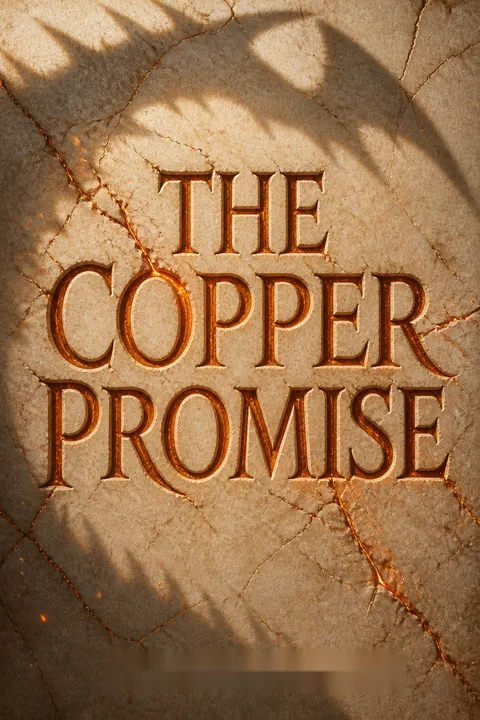
A Copper Promise
In a Krete tavern, Wydrin of Crosshaven, a quick-handed mercenary known as the Copper Cat, and Sebastian Carverson, an exiled Ynnsmouth knight, take a dangerous commission from Aaron Frith, the crippled, white-haired heir of Blackwood. Frith wants into the haunted Citadel, where ancient mages supposedly hid treasures and forbidden knowledge.
Sebastian agrees partly because his friend Gallo went ahead without him and has not returned. Wydrin sees a fortune in the fee; Frith guards his true purpose behind a fierce temper and a refusal to explain himself. They bribe their way past the city guards and enter the ruin, believing they are beginning a risky treasure hunt. They do not know that the Citadel still contains an imprisoned god.
The bargain joins three different economies of value. Wydrin measures risk in coin, Sebastian in loyalty to the missing Gallo, and Frith in the possibility of recovering what violence has taken from him. Their agreement is therefore practical but unstable: they share a destination, not a motive. Frith's visible injuries make his secrecy legible before its meaning is known, while Sebastian's decision to follow Gallo turns friendship into a structural engine for the plot. The Citadel is not merely a dungeon to explore. It is a place where private appetites will collide with consequences too large for any one adventurer to price.
The Citadel's Living Locks
The trio descends through cold corridors and finds the Culoss, pale artificial guardians sleeping in glass chambers. Their leader warns that a power below is waking, but Frith presses on, and the Culoss attack when the group refuses to leave.
Wydrin and Sebastian fight the swift, blade-producing creatures until Frith hurls green alchemical bombs, driving them back with explosive force and a poisonous cloud. The passage onward closes behind the adventurers, leaving retreat impossible.
They cross a chamber where acidic green liquid surges through the floor and a many-tentacled creature attacks. A bowman arrives at the last moment, burning the monster with fire-tipped arrows. It is Gallo, alive and apparently thriving in the deep Citadel, who leads them away from the trap.
The Culoss and the floor creature turn exploration into a test of whether the adventurers can revise their assumptions. Wydrin treats danger as familiar work, Sebastian relies on disciplined swordplay, and Frith survives by revealing skills he had concealed from his employers. The changing balance of competence unsettles the group's hierarchy: the apparently helpless client can be its most destructive member. Gallo's sudden appearance seems to repair Sebastian's central worry, but it also introduces a subtler threat. His confidence in the Citadel's comforts is difficult to reconcile with the warning that its old protections are failing.
Blood Opens the Prison
Gallo welcomes the group to a magically replenished feast, then takes them to jars he claims contain treasures and maps. Each jar holds only the decayed remains of a body, and Gallo grows increasingly urgent as the party opens them.
When the final seal breaks, the Citadel shudders and the Culoss rush in, warning that the imprisoned god is stirring. Gallo suddenly stabs Sebastian with a jeweled dagger, spilling the blood needed to finish breaking the prison.
Wydrin attacks him, but Gallo escapes while the Culoss explain that Y'Ruen, last of the old gods, had taken control of him and needed outsiders to open the seals. Sebastian is gravely wounded. The Culoss say only the Mages' Lake might save him, and the group must carry him deeper into the Citadel.
Gallo's betrayal is made more painful by its practical design: he does not simply attack his friends, he exploits their trust and competence to complete a task he could not perform himself. The jars first turn the promised treasure into evidence of decay, then become instruments in a prison break. Blood, normally the cost of violence, is also the mechanism that releases greater violence. Sebastian's injury transforms the group's abstract curiosity into an emergency, while Wydrin's fury exposes the emotional difference between seeing bloodshed as a job and watching a friend bleed.
A Lake Takes Its Price
The Culoss carry Sebastian toward the radiant Mages' Lake, where Frith recognizes the place he has sought. Told that only one person can use its magic each decade, he throws an explosive to scatter the guardians and enters the water before Wydrin can stop him.
The lake restores his damaged body, but the magic nearly destroys him; he endures its pain and emerges able to wield immense power. Meanwhile, Y'Ruen's scaled army pours into the cavern. Frith burns the attackers with magic and collapses the ceiling to escape.
The falling Citadel throws the survivors onto the Sea-Glass Road, but Y'Ruen rises from the rubble as a gigantic blue dragon and sets Krete ablaze. Frith teleports himself, Wydrin, and Sebastian to the Blackwood, leaving the city to its fate.
Frith's choice at the lake is not simply ambition. His body bears the history of torture, and restoration offers him the first imaginable escape from helplessness. Yet his decision costs the group its last chance to contain Y'Ruen before she reaches the surface. The power that repairs one wounded man releases a catastrophe capable of consuming cities. His rescue of Wydrin and Sebastian complicates blame without erasing it: he can be both their savior and the person whose actions made the emergency possible. Magic here answers desire, but never in a morally neutral way.
Pinehold Under Fane
Frith insists on returning to the Blackwood rather than pursuing the dragon, because Istrian forces still hold his home. He can now walk without his old injuries, but his new powers answer unpredictably.
At Pinehold, Wydrin scouts ahead and discovers townspeople living under the rule of Fane, a scarred commander whose soldiers feed captives to bears while torturers search for the Frith vault. Outside the walls, Sebastian and Frith meet Rognor, a woodsman who describes the cages and the nightly killings.
Sebastian tries to protect the prisoners, and the guards seize him, Frith, and Rognor. At the marketplace, Fane kills Rognor as a public offering and recognizes Frith as the last heir. Frith's rage ignites his magic, and Wydrin joins the fight as Crowleo, a young glassmaker's apprentice, opens a hidden escape route.
Pinehold makes Frith's private grievance visible as a political system. The search for his family's wealth gives Fane a pretext for cruelty, while the town's terror demonstrates how a ruler can turn spectacle into daily administration. Sebastian responds to the cages before calculating whether intervention is useful, revealing a moral reflex that repeatedly puts him in danger. Frith's magical flare is emotionally powerful but strategically crude: anger creates force, not control. Crowleo's secret passage gives resistance a form that brute strength cannot provide, shifting the story from revenge toward collective liberation.
The Bridge No One Sees
Crowleo leads the fugitives to Holley, an old secret keeper who recognizes Frith and explains that his father trusted her with the vault's location. Her enchanted glass shows a bridge invisible to ordinary sight, which Frith, Wydrin, and Sebastian cross to reach a hidden cavern.
Inside, they find ancestral portraits, gold, alchemical stores, and maps of tunnels running beneath settlements across Litvania. Frith realizes the vault preserves more than a fortune, though its larger purpose remains unclear. While the group is away, Fane discovers that Holley helped them.
He throws her from the cliff and destroys her glasswork and home. Crowleo survives by hiding, then returns to the wreckage with the lens Holley made for Wydrin. Her murder gives Frith a reason to turn the recovered maps into a weapon against Fane.
Holley's glass literalizes the problem of inheritance: the truth exists, but access depends on learning how to see it and who has the right to look. The vault's contents resist the simple fantasy of treasure. Gold matters, yet the maps point toward a larger history concealed beneath ordinary towns. Holley's death shows the cost of protecting knowledge under a regime that treats information as property to be extracted. Crowleo's survival and recovery of Wydrin's lens preserve a fragment of Holley's work, turning a tool of perception into a practical contribution to resistance.
Fire Beneath Pinehold
Frith studies the vault maps and identifies a network of tunnels under Pinehold. He, Sebastian, Wydrin, Crowleo, and the fire-priestess Dreyda plan to use the passages and Frith's father's alchemical materials against Fane's forces.
Frith enters the Queen's Tower, knocks out guards, and frees prisoners, including a woman being tortured by Yellow-Eyed Rin. He confronts Rin, whose instruments and blood hang suspended when Frith's magic surges.
Meanwhile, Wydrin wears a false pregnancy to smuggle explosive ingredients through town, then challenges Fane's illusion-making twins, Roki and Enri, to expose the real men using Holley's truth-lens. When the barracks explodes, townspeople attack the disoriented guards. Frith's escape route and Wydrin's public defiance give Pinehold's people the chance to fight back.
The uprising succeeds through complementary forms of agency. Frith uses family maps and raw magic, Sebastian supplies martial discipline, Dreyda contributes local knowledge, and Wydrin converts deception into public spectacle. None can liberate Pinehold alone. The truth-lens is especially important because it counters the twins' power to make false bodies appear real; seeing accurately becomes a tactical advantage. Frith's suspended torturer marks a shift from victimhood toward command, but his magic remains tied to anger and can easily become another instrument of domination.
A Throne Bought in Blood
Pinehold's assault collapses the Queen's Tower, but Fane escapes. Frith returns to Blackwood Keep, where the freed captives are gathering and his family's castle is still stripped of its former life.
Fane holds the great hall and keeps prisoners beside a cauldron of blood, including Lady Bethan, the commander who helped destroy Frith's family. Frith learns Bethan is already dead, then fights Fane, whose enchanted helm lets him recover from wounds. Frith heats the helm until Fane must remove it, then uses controlled force to kill him.
He frees the prisoners and reclaims the keep, but victory does not restore his family. Dreyda explains that the mages' power can be directed through written words. Frith chooses to learn that language, while Wydrin and Sebastian separate to pursue their own paths.
Frith achieves the revenge that has organized his choices, yet the castle makes clear that revenge cannot return the people or the ordinary objects that gave home its meaning. Killing Fane restores a political claim, not an intact past. The enchanted helm also exposes the instability of power delegated to a demon: Fane's apparent invulnerability ends when Frith learns to target the instrument itself. Dreyda's account of written magic offers a way beyond rage-driven power, but it arrives just as the central trio fractures, leaving each character to decide what responsibility means without the others nearby.
The Pirate's False Blessing
Back in Crosshaven, Wydrin joins Reilly in a plan to rob pirate lord Morgul during his son's coming-of-age feast. Disguised as a Graceful Lady, she drugs the guards and opens the loot house, expecting the guests to wake unharmed. Reilly changes the plan and attacks the hall, turning the theft into a massacre; Wydrin cannot reach the boy and escapes alone.
Later, the wounded Roki hunts her, and Gallo finds her in an alley. Gallo is dead but still moving, and says Y'Ruen controlled his actions in the Citadel. He believes Sebastian's blood has linked him to the dragon's brood. Wydrin agrees to take Gallo with her to find Sebastian, carrying guilt over Sandshield and dread that her friend may be changing in ways she cannot see.
Wydrin's Sandshield scheme begins as a controlled theft, a familiar performance in which disguise and timing are meant to prevent bloodshed. Reilly's decision destroys that distinction and leaves her with the knowledge that good intentions do not guarantee control over a plan once others share it. Gallo's return deepens the problem: he is simultaneously an injured friend, a possible threat, and evidence that Y'Ruen can inhabit another person's will. Wydrin's characteristic bravado now has to coexist with guilt and fear, emotions she would rather convert into motion than examine.
The Mask Beneath the Mask
Frith reaches Whittenfarne seeking the forbidden words that might control his magic. The masked mystic Jolnir teaches him that the mages' will-powered Edenier needs written words to direct it; Frith learns basic spells and discovers hidden tunnels across the world were built as a weapon against the old gods.
Jolnir then removes his disguise and reveals himself as O'rin, the trickster god who escaped the ancient prison. O'rin's assistants are former island mystics altered to serve him, and he takes Frith's magic to fuel a storm around the island.
Frith remains trapped inside the barrier while O'rin's birds circle overhead. At the same time, Sebastian has returned to the Ynnsmouth army seeking help against Y'Ruen, but the Order rejects him because of his past.
Frith's education gives structure to power that previously rose from impulse, making language an ethical as well as technical tool. A spell written on cloth can constrain destructive force; the lesson contrasts with the Citadel's seals, which were broken through appetite and trust. Jolnir's revelation undermines the stability of instruction itself: a teacher can impart real knowledge while concealing a self-serving purpose. Sebastian's rejection by the Order mirrors Frith's dependence on uncertain guidance. Both men are seeking institutions to help them act, and both discover that old authorities are compromised or unwilling.
A Brother's Burned Skin
Y'Ruen attacks the ships carrying Wydrin, Gallo, and her brother Jarath, burning The Briny Wolf and badly scorching Jarath. Wydrin steers the remaining ship to Whittenfarne, where she finds Frith trapped behind O'rin's storm and begs for help. Gallo crosses the barrier, climbs to O'rin, and bargains for Frith's return, using his connection to Y'Ruen to persuade the trickster god.
O'rin restores Frith's magic, gives the group a map to his mountain home, and sends three black birds that become flying griffins. Frith then heals Jarath, though the spell leaves him faint and brings back part of his old scar. O'rin explains that the hidden tunnel network can destroy Y'Ruen if Frith activates its four written words in sequence.
This turning point makes care a costly form of magic. Wydrin's urgency is not abstract compassion but the sight of her brother dying, and Frith's healing answers it at personal expense. Gallo's negotiation is an attempt to repair the betrayal he cannot undo, while also converting his connection to Y'Ruen into leverage. O'rin's gifts offer mobility and a plan, but they do not erase the risk of trusting a trickster. The group gains a possible weapon only by accepting that every solution carries bodily, relational, or strategic costs.
The Armor's Price
While Wydrin searches for Sebastian, the Ynnsmouth knights send him to bargain for enchanted armor kept by the Maundsley family. They refuse to lend it, and Sebastian kills them in a battle rage, sparing only the child Ip.
When Y'Ruen's army overruns the Order, the demon Bezcavar appears through Ip and offers Sebastian strength and the armor in return for dedicating his sword to pain and bloodshed. Sebastian accepts, and the armor lets him turn the battle, but Y'Ruen then burns the camp, killing nearly everyone.
Sebastian survives and finds a message from brood soldiers calling him their father and saying they are going to Ynnsmouth. Wydrin, Frith, and Gallo locate him among the dead. Sebastian is ashamed of his bargain, yet cannot bring himself to explain the full cost.
Sebastian's choice is driven by a moral emergency, but the bargain narrows his moral imagination rather than simply strengthening his body. Bezcavar offers effective action in exchange for a definition of action as suffering inflicted. The Maundsley massacre foreshadows that danger: before the formal oath, Sebastian has already been carried by a battle frenzy he barely remembers. His survival after the army's destruction feels less like triumph than complicity, especially when the message from the brood turns his blood into a relationship he never consented to create.
The Rookery's White Doves
O'rin's griffins carry the reunited party to the Rookery, his hidden home on a mountain peak. Inside, pale guardians called doves recognize the trace of Y'Ruen on Gallo and attack, believing he has brought the dragon into their sanctuary.
Frith's magic cannot stop them, and Sebastian is trapped in their burning cords. Gallo cuts Sebastian free despite the danger to his own decaying body. Frith answers with fire, then a blizzard, killing the guardians but setting the wooden chamber ablaze.
Gallo burns in the flames, ending the unnatural life that had kept him moving. The survivors discover a concealed chamber containing four eggs, each hiding maps and the words needed to activate O'rin's weapon. The words are written inside the shells, so they collect the fragments before fleeing.
The Rookery turns the group's accumulated strengths against one another. Frith's fire solves the immediate threat but nearly traps everyone in the combustible home, showing how newly mastered power remains dangerous in confined spaces. Gallo's choice to free Sebastian gives his apology a concrete form, but it cannot repair their friendship or restore his life. The eggs make the final weapon dependent on patient reconstruction rather than a single heroic revelation. Knowledge survives in pieces, and the living must accept responsibility for assembling it without the guide who first brought them together.
Baneswatch's Falling Gate
At Baneswatch, Y'Ruen and her brood attack the city while the remnants of the Ynnsmouth Order struggle to hold the gates. Sebastian separates from Wydrin and Frith to help the defenders, accepting that the tunnel spell will fail if the city and its sacred grove are destroyed. Bezcavar appears through Ip and equips him with the complete armor, summoning the Cursed Company, an army of ash-built dead.
Sebastian leads them into battle. Wydrin and Frith draw Y'Ruen away toward the ruins of Gostarae, where Frith activates the first word beneath the earth. Light rises through the old tunnels and pierces the dragon, wounding her. The spell works, but drains Frith, and Y'Ruen turns on the people who have injured her.
The separation at Baneswatch clarifies that the plan depends on more than Frith's spellwork. Sebastian chooses immediate defense over staying with the people who can protect him, while Wydrin and Frith accept the more exposed role of bait. The Cursed Company externalizes the bargain Sebastian has made: dead soldiers can be made to fight again, but their usefulness depends on a system that converts casualties into property. The first activation proves the weapon is real, yet its cost to Frith suggests that the plan's success will be measured not only by whether the dragon is wounded, but by what the survivors become.
The Brood Calls Father
Wydrin and Frith lead the wounded dragon through Pinehold and the Horns, activating the second and third tunnel words as Y'Ruen pursues them. On the battlefield, a brood soldier named Ephemeral approaches Sebastian and identifies him as the source of the blood and words in the soldiers' minds.
She and her sisters have begun choosing names and making private bonds, changes Y'Ruen punishes. Bezcavar urges Sebastian to keep fighting, but Ephemeral's appeal forces him to see the brood as people rather than targets.
When more of the soldiers sprout wings and fly toward their mother, Sebastian removes Bezcavar's armor and rejects the demon's claim on his sword. He calls the daughters to stop, interrupting the battle even as Y'Ruen closes in on Frith and Wydrin.
The names the brood choose are small acts of self-authorship against the identity Y'Ruen imposed on them. Their emerging individuality is not a sentimental cure for the violence they have committed; it is a reason the violence can no longer be treated as inevitable. Sebastian's connection to them is biological and magical, but his obligation becomes ethical only when he listens to what they want. Removing the armor is therefore more than a tactical risk. It rejects a bargain that makes suffering the sole measure of purpose and allows him to address the enemy as kin.
A God Pulled Under
As Y'Ruen's winged daughters break from the fight, Wydrin and Frith reach the God-Peak Grove for the final activation. Their damaged griffin catches fire, and Frith uses the dangerous healing spell to keep it flying, worsening his own injuries.
They crash inside the sacred stone circle, where Wydrin rouses Frith long enough to speak the final word. The spell tears open a void that pulls Y'Ruen away from the world.
With the dragon gone, some of the brood heed Sebastian while others resist; he leads the named daughters toward the mountains rather than leaving them to the frightened city. Frith returns to rebuild Blackwood, and Wydrin stays with her companions. The copper promise that began as a paid job becomes the start of a chosen alliance.
The ending resolves the opening contract by changing what the contract means. The three adventurers began as employer and hired swords, each protecting a private motive. They finish with a shared responsibility that cannot be settled by payment: Frith must rebuild, Sebastian must guide people formed for violence, and Wydrin must choose whether to remain. The final spell succeeds through dependence rather than mastery. Frith needs Wydrin's presence, Sebastian must renounce the armor's terms, and the daughters must be allowed to choose. Y'Ruen's removal ends the immediate catastrophe, not the moral labor it leaves behind.
Analysis
The novel begins with a mercenary contract and steadily dismantles the assumption that danger can be contained by payment. Wydrin, Sebastian, and Frith enter the Citadel for different reasons, but the consequences of their choices become shared. The story's central pattern is conversion: a private wound becomes public action, a body becomes a source of magical power, a written word channels that power, and a hidden map becomes a weapon. None of these conversions is morally neutral. Frith's desire to recover control releases Y'Ruen; Sebastian's wish to save soldiers binds him to a demon; Wydrin's carefully planned robbery becomes a massacre when Reilly changes its terms. The book is also interested in the difference between being made and becoming. Y'Ruen's brood are created as weapons, yet some begin to read, name themselves, and form attachments. Their individuality does not erase their victims, but it makes obedience to their creator no longer inevitable. Sebastian's blood links him to them, while his eventual refusal of Bezcavar's armor gives that connection an ethical direction. The names the daughters choose echo Frith's written spells: language can channel force, but it can also create a self that was not prescribed in advance.
The three leads develop through distinct forms of responsibility. Frith moves from secrecy and retaliatory fixation toward a broader obligation to the world beyond his inheritance. Sebastian must distinguish his own code from the Order that expelled him, and from the demon that offers him a simpler purpose. Wydrin, who initially treats risk as a lively trade, learns that clever planning cannot guarantee an innocent outcome. Their final success depends less on defeating power with greater power than on refusing the roles assigned to them: the heir as avenger, the knight as instrument, and the brood as an undifferentiated army. The ending closes the immediate catastrophe but leaves the work of repair in human hands.
Review Summary
People Also Read
Characters
Wydrin
The reckless cardsharpKnown as the Copper Cat, Wydrin is a mercenary from Crosshaven who prefers quick plans, sharp jokes, and daggers she can reach without thinking. She values money because it buys freedom, but her loyalty to Sebastian and her protectiveness toward her brother Jarath repeatedly pull her into danger without a fee attached. Her humor is both charm and armor: she can deflect fear by making a room laugh, or provoke an enemy into revealing a weakness. Wydrin is observant, especially about people who mistake confidence for control. Beneath her appetite for risk is a strong resistance to helplessness, which makes her act first and sort out the emotional cost later.
Sebastian Carverson
The exiled mountain knightSebastian is a large, disciplined swordsman trained by the Ynnsmouth knights and living outside their order. He is Wydrin's closest companion, a steadying presence who often tries to keep their work from becoming needless bloodshed. His faith and code matter deeply to him, even when the institution that taught them has wounded him. Sebastian's instinct is to protect strangers, particularly when he sees someone being abused or abandoned. That reflex gives him courage, but it can also make him accept impossible burdens and hide his distress from friends. He wants to be honorable without letting other people define honor for him.
Aaron Frith
The wounded heirAaron Frith is the young heir to Blackwood Keep, marked by torture, family loss, and a fierce need to regain control of his life. He hires Wydrin and Sebastian to enter the Citadel but keeps the purpose of his search private. Frith is educated, technically inventive, and accustomed to rank, yet his physical vulnerability has taught him how quickly authority can vanish. He resists dependence and often mistakes secrecy for strength. His sharp temper is not simply arrogance; it protects grief he has not learned to share. Frith's interest in history, alchemy, and his family's hidden knowledge gives him tools to act, while his pride makes it difficult to trust others with them.
Gallo
The charming deserterGallo is Sebastian's adventurous former partner, a nimble archer who tends to choose discovery over patience. He is charismatic, quick with a joke, and skilled at making a reckless decision feel like the beginning of a good story. His closeness to Sebastian gives their friendship an unspoken tenderness, though the two men differ in their attitudes toward faith, planning, and risk. Gallo's confidence is genuine, but it can conceal shame when his choices harm people he loves. He is drawn to hidden places and dangerous secrets, partly for the thrill and partly because he believes a remarkable discovery can justify the danger required to find it.
Y'Ruen
The dragon of destructionY'Ruen is an ancient power imprisoned beneath the Citadel and associated with destruction. She creates a brood army and regards its members as extensions of her own will. Her immense physical force is matched by a narrow emotional world: she understands obedience and appetite better than individual attachment. Y'Ruen is not a conventional military ruler seeking territory or subjects. She wants to see the world consumed, and her children are instruments of that purpose. Her presence tests whether people can recognize personhood in those shaped by violence, without pretending that the violence itself has caused no harm.
Dreyda
The stubborn fire-priestessDreyda is a Regnisse fire-priestess from Relios, marked with the sacred language her order studies. She has settled in Pinehold to tend the sick, including people injured by Fane's rule. Her manner is stern and unsentimental, and she has little patience for adventurers who mistake religious practice for decoration. Yet she is practical as well as devout: she shares local knowledge, helps plan resistance, and understands that care requires supplies and organization. Dreyda represents a tradition that preserves learning even when it cannot command the old magic itself.
Holley
The keeper of secretsHolley is an aging glassmaker whose enchanted windows and lenses preserve hidden histories and reveal what ordinary sight misses. She knew Frith's family and serves as guardian of the secret surrounding their vault. Blunt, industrious, and fiercely independent, she resists being treated as a helpless relic simply because she is old. Her craft joins patient technical skill with a sharp understanding of what information can do in the wrong hands. Holley protects secrets not for their own sake but because she knows how easily powerful people turn knowledge into leverage.
Crowleo
The glassmaker's apprenticeCrowleo is Holley's young apprentice, a maker of glass devices who helps the adventurers navigate Pinehold and the Blackwood. Curious, warm, and more courageous than his quiet manner first suggests, he combines technical ingenuity with a strong attachment to his mentor. He is especially good at finding practical uses for knowledge others overlook, from a concealed passage to a portable light. Crowleo is not a fighter, but he does not measure usefulness by sword skill. He wants to learn, to build, and to make a place for himself without abandoning the people who gave him one.
Jarath
Wydrin's pirate brotherJarath is Wydrin's younger half-brother and a confident sea captain who enjoys the attention of the Marrow Markets. He is playful, competitive, and adept at turning a fight into a performance, but his easy charm does not make him careless about the people who depend on him. Wydrin teases him freely and trusts him with more than she admits. Their sibling bond is affectionate and occasionally prickly, shaped by shared family history and different ideas about risk. Jarath's ships and crews give Wydrin a route across the sea, while his presence reminds her that her choices affect people beyond her adventuring circle.
Fane
The scarred tyrantFane is an Istrian commander who rules Pinehold through fear, public punishment, and an obsessive search for the Frith vault. His courteous manner can make his cruelty more unsettling, since he treats terror as ordinary governance. He is ambitious, calculating, and devoted to the power he believes he can obtain through offerings to Bezcavar. Fane understands how spectacle disciplines a population: the cages outside the walls and the executions in the marketplace are meant to be seen. His authority depends on making resistance appear futile, even when his own confidence rests on borrowed power.
Bezcavar
The prince of woundsBezcavar is a demon associated with pain, injury, and the power gained through sacrifice. Fane and his followers invoke him to justify offerings, while his enchanted armor rewards those who dedicate violence to him. Bezcavar is persuasive because he presents cruelty as efficacy: he promises strength precisely when a person feels too weak to protect anyone. He does not need to invent his followers' desperation; he turns it into a contract that benefits him. His influence raises the question of whether power used for protection remains protective when its source demands suffering.
Ip
The child at the battlefieldIp is a young, sharp-eyed girl Sebastian encounters among the ruins of war. She is self-possessed, difficult to frighten, and accustomed to surviving among people who treat her as useful before they treat her as a child. Her blunt observations often expose the gap between what adults claim to value and what they actually do. Ip's appetite for danger and her unnerving familiarity with death make others unsure how to respond to her. Sebastian's impulse to protect her brings out both his compassion and his tendency to mistake a child's appearance for the whole truth.
Jolnir
The masked island mysticJolnir is a masked teacher living on the forbidding island of Whittenfarne. He speaks in riddles, tests Frith's patience, and insists that learning the language of magic requires more than memorizing marks on cloth. His theatrical manner makes it difficult to tell when he is instructing, mocking, or concealing information. Jolnir's knowledge is extensive, but he does not share it in the orderly way Frith expects. He embodies the island's uneasy relationship with old history: wisdom is available, but the person holding it may have motives that are not immediately visible.
O'rin
The god of mischiefO'rin belongs to the old stories of the gods and is associated with deception, curiosity, and human invention. Unlike a force defined only by destruction, he takes interest in the questions and imaginative detours of mortal minds. His affection for humanity does not make him reliable; he enjoys withholding information and testing people through uncertainty. O'rin's gifts can offer a way forward, but accepting them means trusting someone who treats truth as a flexible instrument. His presence complicates the distinction between help and manipulation.
Roki
One of Fane's twinsRoki is one of the eerily similar young men known as the Children of the Fog. He carries paired swords and uses enchanted armor that lets him multiply into convincing doubles. Roki enjoys intimidation and games of pursuit, treating other people's fear as entertainment. His polished appearance and playful manner conceal a vindictive streak, especially when challenged. He is closely bound to his twin Enri, though they express their shared cruelty through different weapons and tactics.
Enri
The whip-wielding twinEnri is Roki's twin and a lieutenant in Fane's forces. He fights with a barbed whip and participates in the twins' illusions, which make it difficult for opponents to distinguish real bodies from copies. Enri is theatrical, taunting, and comfortable using pain to dominate a fight. His closeness to Roki appears in their coordinated movements and shared appetite for cruelty, but Enri's weapon makes his style more controlling and disorienting than his brother's direct swordplay.
Ephemeral
A daughter who choosesEphemeral is one of the brood soldiers created under Y'Ruen's rule. She becomes curious about human words and stories, then begins to question the life her mother has assigned her. Ephemeral's chosen name marks a desire to be an individual rather than a numbered part of a mass. She is still shaped by violence and by the instincts of the brood, but she can imagine meanings beyond obedience. Her search for language gives her a fragile route toward selfhood.
Lady Bethan
The Istrian commanderBethan is an Istrian officer involved in the seizure of Blackwood Keep and the search for the Frith family's hidden wealth. She is efficient, ambitious, and willing to use torture when it serves her political aims. Her attention to beauty and material possessions sits uneasily beside her practical brutality, suggesting a person who can compartmentalize cruelty rather than see it as a contradiction.
Yellow-Eyed Rin
Fane's torturerRin is Fane's torturer, a practitioner of pain who approaches cruelty as a trade requiring patience and specialized tools. He is physically repellent and emotionally untroubled by the suffering he causes. His confidence depends on the protection of more powerful men, making him dangerous to prisoners but less formidable when confronted by someone who can resist his authority.
Rognor
The forest's witnessRognor is a solitary woodsman living beyond Pinehold's walls. He watches the guards' treatment of captives and tries to reduce the harm done to people trapped in the cages. His awkward speech and rough appearance disguise a stubborn moral clarity: he recognizes Fane's cruelty and refuses to call it necessary.
Sir John
The pragmatic commanderSir John is a senior Ynnsmouth knight who leads troops against Y'Ruen's advancing army. He is experienced, practical, and willing to make compromises the Order's official leaders would reject. He recognizes Sebastian's skill but also understands how the institution has marked him as an outsider. Sir John measures decisions against the immediate survival of soldiers and civilians, not only against the Order's code.
Chednit
The lost Citadel guideChednit is the cautious guide Gallo hires to enter the Citadel. His warnings about the darkness and the unreliable map prove more sensible than Gallo's confidence allows. He represents the ordinary people whose expertise adventurers often hire but whose risks they too easily treat as part of the price of a story.
Reilly
The greedy pirate partnerReilly is a pirate from the Horns who recruits Wydrin for a robbery at Sandshield. He is opportunistic, persuasive, and quick to reinterpret a careful plan when a larger prize appears. His ambition treats other people's safety as expendable, making him a foil to Wydrin's preference for a clean escape.
Mother Maundsley
The armor's guardianMother Maundsley leads the family entrusted with an enchanted suit of armor. She is harsh, devout, and protective of her family's role as its keeper. Her reverence for Bezcavar shapes the way she understands both the armor and the people around her, including the child Ip.
Plot Devices
Edenier and written words
Magic given directionEdenier is the force of will the ancient mages could use to reshape the world, but without guidance it erupts through powerful emotions. The forgotten words written on linen direct that force into particular actions, such as light, fire, stillness, or healing. Frith first gains power through the Mages' Lake, then learns from Jolnir that the words can make it more precise. The healing word is especially costly because it gives life by drawing on the user's own strength. The system turns literacy into both a practical skill and a form of restraint: power becomes more usable when it is named and bounded.
The Mages' Lake
Power with a bodily costHidden beneath the Citadel, the lake holds surviving magic and can restore damaged bodies while granting access to the power of the mages. Its use is limited, and the experience nearly destroys Frith with pain. The lake heals his injuries and makes him powerful, but it also contributes to the catastrophe when he uses that power to escape Y'Ruen's army. Later, healing others drains him and restores the marks of his former injuries. The lake's promise is therefore deliberately double: it offers a way out of bodily helplessness, while making every act of restoration a new vulnerability.
Holley's enchanted glass
Hidden truths made visibleHolley makes glass that reveals concealed histories, places, and realities. Her lens lets Frith see the otherwise invisible bridge to the Frith vault, while a specially made pair of lenses lets Wydrin identify the real bodies among the Children of the Fog's illusory copies. Glass is more than a magical gadget in the story: it changes who can know what, and turns observation into leverage. The same craft that protects family secrets can also help dismantle an enemy's deception. Holley's work survives her destruction through the objects she has already given to others.
Bezcavar's armor
Protection bound to violenceThe armor, helm, and gauntlets grant extraordinary protection and powers, including the creation of the Cursed Company. Their benefits come through devotion to Bezcavar, who claims the bloodshed caused by the wearer. Sebastian accepts the armor when ordinary strength seems insufficient to save the Ynnsmouth forces, but its power encourages him to keep fighting long after tactical necessity has passed. The armor represents a bargain that is effective precisely because it answers real fear, then turns survival into continued violence. Its pieces recur through Fane, the Children of the Fog, and Sebastian, linking separate conflicts to the same demonic economy.
O'rin's buried word-spell
A weapon written beneath EdeO'rin's ancient tunnels form words of power beneath settlements across the world. Frith's father's maps reveal their locations, while maps and written instructions hidden in the Rookery explain how to activate four words in sequence. The spell is designed to trap or destroy the old gods, but it requires the dragon to be drawn across the sites and Frith to activate each word with the Edenier. The network connects local places to an ancient, continent-spanning plan. It also makes the climax depend on cooperation: Frith must know the words, Wydrin must lure Y'Ruen, and Sebastian must confront the consequences of the brood's connection to him.
The Copper Cat Series

About the Author
Other books by Jen Williams
Download PDF
Download EPUB
.epub digital book format is ideal for reading ebooks on phones, tablets, and e-readers.








