

Plot Summary
Prologue
At the start of the trial, lawyer Eddie Flynn sits beside Maria Hernandez, a pregnant widow suing a detective and New York City over her husband’s death. Across the courtroom, the detective’s enormous frame fills the witness stand; behind Eddie, a stranger’s lighter clicks as he marks a cross over his heart.
Eddie knows that asking the question he has prepared could win Maria millions, but it may also get them all killed. With the jury and judge waiting, he chooses neither the safe retreat nor the obvious attack, and the story turns back to the day before.
The courtroom frame makes legal suspense inseparable from physical danger. Eddie’s problem is not simply whether he can prove a case, but whether proof is worth the lives it may expose. His decision to avoid both the expected surrender and the prepared question establishes his characteristic form of agency: he treats strategy as improvisation under moral pressure. Maria’s pregnancy makes the lawsuit’s stakes visible, while the cross gesture gives an image of violence a place in the room before its meaning is known. The prologue asks whether law can protect the vulnerable without turning them into bait.
The Case That Costs Everything
The day before trial, Eddie learns that the defense lawyer, Vinnie Federof, has offered only $2,500 to settle Maria Hernandez’s claim that Detective Freddy Marzone killed her husband, Chilli. Eddie and his partner, Jack Halloran, have spent their struggling firm’s money preparing the case, while Vinnie has been stealing their paying clients.
Eddie’s family life is fraying too: he has missed his daughter Amy’s recital, and his wife, Christine, is tired of his absences. When a police desk sergeant calls about another client, Eddie rushes to the precinct but finds Vinnie has already taken the case. A note on Eddie’s car points him toward Internal Affairs, whose investigators may know what really happened to Chilli.
The lawsuit begins as both a moral commitment and a financial wager. Eddie has tied his firm’s survival to Maria’s claim, so doing right by her cannot be separated from the temptation to profit. His missed recital and Christine’s frustration give that professional gamble a domestic cost: he is spending the family’s time and security as well as the firm’s money. The lost client shows that pressure is not limited to the courtroom; police influence reaches into Eddie’s livelihood. Chilli’s history complicates the case before any evidence is heard, creating a conflict between the legal value of a life and society’s instinct to judge the person who lived it.
Frost's Ferry Trap
On a ferry across the East River, Internal Affairs chief Albert Frost tells Eddie that Marzone belongs to a secret police crew called the Morgue Squad. Frost offers evidence about ignored chokehold complaints, but wants Eddie to help expose the officers behind the operation. Eddie recognizes that Frost has arranged their meeting where Marzone’s men can see it, making Eddie bait for a trap.
Before he can leave, a sniper shoots Frost and Rick Jones, an undercover IAB lieutenant posing as a ferry worker. Two armed detectives rush toward the boat, so Eddie dives into the river, crawls out near the pier, and escapes onto a bus. From a stranger’s phone he warns Christine to keep Amy away from home, then calls Jack to collect him.
Frost’s offer converts Eddie from advocate into an unwitting instrument of police work. Eddie understands the difference between receiving evidence and consenting to become evidence himself, and his refusal to accept Frost’s terms cannot undo the exposure Frost has already created. The sniper’s attack reveals that the danger is organized, rapid, and willing to kill an internal investigator in public. Eddie’s escape depends on improvisation rather than authority: he uses the river, a bus, and borrowed phones because the normal channels of safety have become suspect. The threat reaches his family almost immediately, forcing his private obligations into the same crisis as the case.
A Photograph at the Red Light
Jack collects Eddie in his Cadillac, but Detective Roark is already hiding in the back seat. Roark locks an arm around Eddie’s throat and warns him to accept Vinnie’s offer. Eddie resists long enough to press Jack’s foot onto the accelerator. The car runs a red light, and a traffic camera records Roark choking him.
Once Roark leaves, Eddie tells Jack that the image can give them leverage. He also admits the danger is real, but refuses to abandon Maria. Jack, shaken and ready to quit, agrees to continue only if they can first see what McAllister has. They contact the Internal Affairs detective, who arranges to bring them the files Frost had gathered.
The attack repeats the method that killed Chilli, making Eddie’s fear bodily rather than hypothetical. Yet he converts the threat into a record by deliberately provoking a traffic-camera image. This is a characteristic reversal: Eddie survives by recognizing that institutions leave traces, even when their agents expect intimidation to remain private. Jack’s hesitation gives the scene emotional weight. His caution is not cowardice, but a response to the fact that their work now endangers families, partners, and clients. Eddie’s refusal to retreat is therefore both principled and reckless, and the photograph becomes a fragile substitute for protection.
Crosses in the Crime Scenes
Detective McAllister brings Eddie and Jack files showing how the Morgue Squad operates. Marzone and a small group of officers allegedly arrange contract killings, then frame convenient suspects by planting evidence and shaping witness testimony.
A series of wrongful convictions points toward the same detectives; some witnesses later recanted after being threatened, and several people connected to one case died. McAllister also tracked a traveling hit man whose visits coincided with murders.
Eddie notices a small chalk cross in photographs from separate crime scenes, linking them to the cross Roark drew on him. He realizes McAllister and Frost hoped the Hernandez case would draw the crew into the open. Despite Jack’s fear, Eddie decides to pursue the case rather than settle it quietly.
The chalk cross turns scattered crime scenes into a legible pattern, but the pattern is also a warning: the squad’s power depends on controlling what counts as evidence. False convictions are not collateral errors here; they are the mechanism that lets a murder disappear into an official case file. Eddie’s recognition links physical marks to institutional marks, the planted weapon and the falsified testimony. McAllister’s uneasy cooperation also complicates the idea of righteous investigation. She and Frost are not outside the danger they create; they have used Eddie’s lawsuit as an opening. Eddie’s commitment grows from representing Maria into confronting a system that manufactures guilt.
Five Thousand in Chinatown
To make Vinnie stop obstructing them, Eddie proposes a secret $5,000 settlement and directs him to deliver the cash to a process server named Jiang at a Chinatown restaurant. Eddie and McAllister watch the restaurant while Jack waits nearby. Vinnie gives the package to the wrong man, Harry Lam, the restaurant owner and fiancé of juror Ann Fulton.
Jiang records the handoff and keeps the money. Eddie now has footage that can make the payment look like an attempt to influence a juror, giving him leverage over Vinnie. The next morning, as Maria takes her place beside Eddie in court, Marzone and Roark arrive with Vinnie, confident that the case will soon disappear.
Eddie’s maneuver is a counter-con: he creates a situation in which Vinnie’s appetite for a secret payoff can be turned against him. The scheme depends on appearances, not on proving that Vinnie intended to bribe a juror, which gives Eddie leverage but also exposes the moral ambiguity of his tactics. In a case about planted evidence and manufactured guilt, Eddie himself builds a trap around an incriminating image. That resemblance is uncomfortable and deliberate. He uses deception to constrain a lawyer who has repeatedly used the system for advantage, but the story leaves open whether a just result can remain clean when its tools mimic the wrongdoing it opposes.
Maria Faces the Jury
Eddie opens the trial by arguing that Marzone killed Chilli with a forbidden chokehold and that the city should answer for its officer. Vinnie portrays Marzone as a policeman defending himself from a violent ex-con, while city lawyer Alfred Boles argues that department rules make the city blameless.
Maria testifies about meeting Chilli, his criminal past, and his efforts to leave the 47s after prison. She says he worked at a car wash and came home without blood or a knife on the night of the union official’s murder. Vinnie asks only whether she witnessed Chilli’s arrest, then stops, making her account seem irrelevant. When Maria stares Marzone down, he returns a cold smile before looking away.
The trial’s first contest is over who gets to define Chilli. Maria does not erase his past; she gives the jury a life that cannot be reduced to a list of convictions. Her testimony about his decision to leave the gang makes his reformation concrete, while Vinnie’s single question tries to confine the case to the one event she did not witness. The defense also splits responsibility: Marzone claims necessity, and the city claims policy. Maria’s stare briefly reverses the courtroom’s usual imbalance, placing the bereaved person, not the accused officer, at the center of judgment. Her presence makes abstraction difficult.
The Expert's Fatal Answer
Former police training instructor John Patrick uses a foam dummy to distinguish a permitted control hold from a chokehold forbidden by the Patrol Guide. His demonstration makes clear how Marzone’s described grip could kill.
Eddie deliberately leaves one point unasked, expecting Vinnie to press Patrick about the difference between training and a real struggle. Vinnie does, and Patrick answers that Chilli was unarmed when Marzone choked him. Judge Winter allows the answer because Vinnie opened the subject.
Vinnie then attacks Patrick’s credibility by exposing an old sexual-harassment finding and his reduced pension. The testimony gives Eddie a damaging statement, but not proof. At lunch, McAllister returns with a camera she found hidden among Frost’s belongings.
Patrick’s demonstration translates policy into visible action, but the pivotal statement emerges through the defense lawyer’s own questioning. Eddie’s restraint is strategic: he understands that a fact can carry more force when the opposing side appears to uncover it. The witness’s pension history then reveals how credibility itself can be manipulated, as Vinnie shifts attention from the mechanics of the killing to the character of the person explaining them. The camera’s arrival suggests a more direct record may exist, but its source is compromised by Frost’s secrecy. The section turns on the gap between what the jury can suspect and what the court can admit.
Frost's Camera Sees Everything
The camera contains footage Frost secretly recorded from behind a dumpster. It shows Chilli obeying Marzone and Roark during a traffic stop, then Marzone slipping a knife into Chilli’s pocket. Chilli throws it away, Roark attacks, and Marzone chokes him until he dies.
Frost never obtained a warrant or introduced the footage, so Eddie doubts it can be admitted in a criminal trial; Marzone’s men killed Frost before he could authenticate it. The recording gives Eddie the truth but not a simple courtroom weapon. Soon after, the hit man appears outside the courtroom and draws a cross on Maria’s pregnant stomach, warning her through the gesture that she and her child are targets.
The recording resolves the factual uncertainty while deepening the legal uncertainty. The camera shows what happened, yet Frost’s failure to secure and authenticate it means truth does not automatically become usable evidence. This distinction is central to the novella’s view of justice: institutions require procedures, but corrupt actors can exploit procedural gaps to bury what those procedures were meant to establish. The hit man’s violation of Maria’s body carries the conflict beyond evidence and into inheritance. His cross turns the unborn child into a threatened continuation of Chilli’s life, making the case’s stakes intimate and immediate rather than merely financial.
A Bargain With Zippo
After Marzone testifies, Eddie asks for a private meeting with the hit man, who has been watching from the courtroom. Eddie says he has the video and offers to let the city’s lawyer see it, then give the recording to the hit man. In exchange, he wants time to question a senior police official before the killer leaves town. Vinnie objects, but the hit man dismisses him, revealing who has control.
Eddie then shows Vinnie the Chinatown footage and identifies the recipient as juror Ann Fulton’s fiancé. He threatens to expose the apparent jury interference unless Vinnie follows his instructions, restores Eddie’s stolen clients, and lets the city’s case proceed first. Both men agree, each believing he can still limit the damage.
Eddie negotiates with two kinds of power at once. The hit man can kill, while Vinnie can damage a case through legal maneuvering; Eddie answers the first with a calculated delay and the second with a threat to reputation and liberty. His promise about the footage is strategic rather than fully secure, since he has not yet shown it to Boles. The scene also makes control visible: Vinnie’s status as a lawyer means little when the killer dismisses him. Eddie’s ability to manage the room rests on reading what each man fears, a skill inherited from his former life as a con artist and redirected toward advocacy.
Johnson's Empty Sanctions
Deputy Chief Commissioner Johnson tells the jury that the NYPD bans chokeholds and trains officers not to use them. Eddie asks how the department handles proven violations.
Johnson concedes that more than a thousand complaints were filed in five years, ten were upheld, and none of the ten officers lost their jobs, despite the Review Board recommending dismissal. The contradiction strips away the city’s claim that Marzone acted alone in a system that reliably enforces its rules. Eddie then shows Boles Frost’s recording.
Rather than rely on the inadmissible footage as ordinary trial evidence, he argues that Frost’s failure to intervene creates a separate basis for city liability. He demands $5 million for Maria, a $5 million trust for her child, and a public declaration clearing Chilli.
Johnson’s testimony makes the city’s defense collapse under its own distinction between written rules and actual consequences. A ban without meaningful enforcement is not a functioning safeguard; the contrast between a thousand complaints and ten findings exposes how institutional accountability can be narrowed until it becomes nearly symbolic. Eddie’s questioning succeeds by making the discrepancy audible to jurors rather than asking them to accept a general accusation. His use of Frost’s footage is equally important: he does not pretend procedural problems have vanished, but reframes the city’s exposure around Frost’s failure to act. The demanded trust fund gives legal damages a future-facing purpose, directing compensation toward the child rather than the law firm.
Bomb at the Courthouse
The city accepts Eddie’s terms, and Maria leaves court as Chilli’s innocence is formally restored. Outside, Marzone and Roark climb into a car that explodes moments later; a young officer nearby is found with his throat cut and a chalk cross beside him.
Maria is injured in the blast and rushed to hospital. The hit man then begins eliminating people who could connect him to the squad. Vinnie, fearing he will be next, tells McAllister how he moved money for the killer and agrees to cooperate in exchange for protection.
At Vinnie’s house, McAllister’s SWAT team waits out of sight while Vinnie and Eddie pretend to hand over Frost’s memory card. The hit man arrives, and Vinnie shoots when he thinks the man is reaching for a weapon; SWAT fire kills him.
The courthouse explosion makes the settlement a legal victory without a clean ending. The public declaration restores Chilli’s name, but violence immediately punishes the people still connected to the truth, and Maria pays for the danger with a physical injury. Vinnie’s cooperation changes his position from opportunistic fixer to endangered witness, though fear, not repentance alone, drives the shift. The trap succeeds, but its outcome is morally compromised: McAllister wanted the hit man alive, while Vinnie’s panic and the SWAT response leave him dead. The scene refuses the comfort of perfect justice. The conspiracy is interrupted through another contingent, lethal act.
Two Halves in the River
After the shooting, McAllister takes the camera, intending to expose the recording, while Vinnie agrees to testify and enter witness protection. Eddie secretly removes the memory card and breaks it over the river, unwilling to let Maria watch Chilli’s final moments.
Jack later reports that Maria has given birth to a healthy boy, named Chilli Junior. Over the next six months, evidence from Vinnie helps overturn twenty-six convictions, and wrongful-imprisonment cases bring money into Halloran and Flynn.
The success does not steady Jack: he drinks more, loses his poker nerve, and the firm nearly runs out of money again. When he finally arrives at work sober and energized by a new Russian mob client, Eddie senses a turning point, then recognizes his optimism may be misplaced.
Eddie’s destruction of the card is an act of care that also limits public knowledge. He protects Maria from an image of her husband’s death, but he chooses what truth others may see, echoing the earlier struggle over who controls evidence. The consequences split: Vinnie’s testimony helps free wrongly convicted men, while the original footage is no longer available through Eddie’s copy. Chilli Junior’s birth gives the story a concrete future, but it does not repair Jack’s trauma or stabilize the firm. The final return to financial uncertainty resists a triumphant ending. Justice here is real, partial, and paid for in forms that cannot be neatly settled.
Analysis
The novella’s central conflict is not simply whether Chilli was killed unlawfully. It is whether a legal system can recognize a truth when the people charged with producing evidence have corrupted the process itself. The Morgue Squad’s method joins murder to conviction: the hit man removes a target, while detectives manufacture a plausible substitute for the truth. This makes the courtroom an extension of the crime scene, where testimony, institutional statistics, and visual records compete to define what happened.
Eddie’s skill is persuasive because it resembles the wrongdoing he opposes. He misdirects Vinnie, uses a staged cash handoff, and turns an opponent’s behavior into leverage. The story does not pretend that these tactics are morally pure. Instead, it asks whether a compromised system leaves ethical actors any uncontaminated tools. Eddie’s most consequential work depends on managing appearances, even as he argues that appearances have been used to destroy innocent lives.
The book also distinguishes individual rules from institutional practice. The NYPD has formally banned chokeholds, yet upheld complaints produce almost no meaningful discipline. Johnson’s testimony exposes the distance between policy and consequence, making systemic failure visible through numbers rather than rhetoric. Chilli’s case matters not because his past makes him an uncomplicated symbol, but because the story refuses to treat a criminal history as permission to kill or falsify evidence.
Finally, the ending makes justice partial by design. Maria receives compensation and Chilli’s name is cleared; wrongly convicted men begin to regain their lives. Yet the public truth remains contested, the hit man’s death is not a courtroom reckoning, and Eddie destroys the surviving copy of the footage to spare Maria. His choice protects her while limiting what the public can know. The novella’s sharpest insight is that accountability may require disclosure, but human care sometimes demands withholding, leaving justice suspended between what must be shown and what should not be forced upon the bereaved.
Review Summary
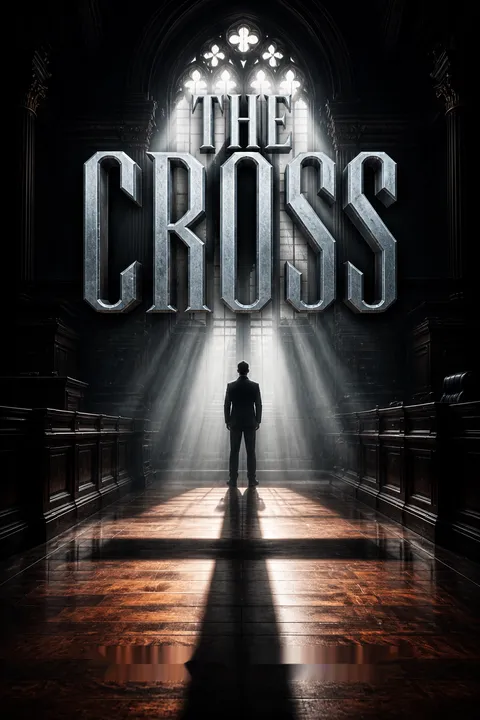
The Cross by Steve Cavanagh is a highly-praised novella introducing con-artist-turned-lawyer Eddie Flynn. Originally published in 2015, it serves as a prequel to the series. Flynn represents a widow whose husband died during a police confrontation, uncovering corruption within the NYPD's "Morgue Squad." Reviewers praise the fast-paced, gripping courtroom scenes and Flynn's clever cross-examination skills. At 160+ pages, it feels like a full novel despite its brevity. Adam Sims' audiobook narration receives particular acclaim. Most readers rate it 4-5 stars, calling it an excellent series introduction.
People Also Read


Characters
Eddie Flynn
The ex-con lawyerEddie is a New York civil and criminal lawyer who once made his living as a con artist. He reads people quickly, improvises under pressure, and understands how a carefully staged appearance can change what others believe. His talent is morally double-edged: he can use deception to corner a bully, but his past makes him alert to how easily a clever tactic can become exploitation. Eddie’s commitment to Maria’s case is tested by the risk to his partner and family, and by the possibility that winning may require sacrificing his own sense of control. He wants to be an advocate who can still recognize himself when the day is over.
Jack Halloran
Flynn's wary partnerJack is Eddie’s law partner, a skilled client-getter whose instincts and nerve were honed at poker tables rather than in court. Lean, practical, and often anxious about money, he keeps their small firm running while Eddie handles much of the trial work. Jack understands risk as something to calculate, not romanticize, so the threat against Maria and the lawyers tests his loyalty. His attachment to Eddie is expressed through the work he continues to do even when he is frightened. He is also vulnerable to the strain of prolonged danger, which complicates the firm’s apparent resilience.
Maria Hernandez
The grieving plaintiffMaria is Chilli’s wife and the plaintiff in the lawsuit against Marzone and the city. Pregnant and without money to spare, she insists that her husband be remembered as more than his criminal history. Her grief is direct, not performed for a jury, and she holds onto the details of Chilli’s attempts to leave gang life. Maria’s determination comes from a desire to protect her child and to make the authorities answer for what happened. She is not a legal strategist, but her presence gives the case its human scale and continually challenges the temptation to treat Chilli as an unsympathetic abstraction.
Chilli Hernandez
The reformed gang memberChilli is Maria’s husband, a former member of the 47s who spent years in prison and then tried to leave the gang behind. His criminal past is serious, but his refusal to return to that life shows a capacity for endurance and change. He accepts painful consequences rather than keep the gang tattoo that binds him to the crew, then takes ordinary work and imagines a future with Maria and their child. Chilli is largely present through other people’s accounts and the dispute over his death, so the novel makes his character a test of whether a person’s past can be allowed to define every later action.
Freddy Marzone
The imposing detectiveMarzone is a powerful NYPD detective whose physical size and history of force make him intimidating in court and on the street. He represents the authority that the city is asked to defend, while his handling of Chilli’s arrest is central to Maria’s lawsuit. Marzone is accustomed to institutional protection and to having his account treated as credible. His composure is part of his power: he can make a contested event appear settled simply by presenting it with confidence. The gap between the rules he is expected to follow and the authority he exercises drives the case’s conflict.
Detective Roark
Marzone's ruthless partnerRoark works alongside Marzone and serves as the second police witness to Chilli’s arrest. He is physically aggressive, comfortable with intimidation, and closely tied to Marzone’s authority. His conduct gives Eddie a glimpse of how threats operate away from formal proceedings, while his presence reinforces the danger surrounding the case. Roark’s role also matters because the city’s account depends on the agreement between two officers who were present at the scene.
Detective McAllister
The determined investigatorMcAllister is a Robbery Homicide detective newly assigned to Internal Affairs. She has pursued patterns linking a traveling contract killer to suspicious murder investigations, and she believes that corrupt officers make the entire department less trustworthy. Her drive is sharpened by the death of a fellow officer during her training, which taught her how quickly hesitation can become permanent. McAllister is physically capable and professionally focused, yet her work puts her in conflict with the ethics of using civilians to draw out suspects. She respects evidence, but she is also willing to take risks when conventional investigations have stalled.
Albert Frost
The zealous IAB chiefFrost is a senior Internal Affairs investigator who has spent years pursuing suspected corruption within the NYPD. He is intelligent, persistent, and convinced that the Morgue Squad cannot be exposed through ordinary channels alone. His faith in a larger investigation pushes him to take risks that Eddie finds unacceptable. Frost’s private methods, including secretly recording officers, reveal a man who has become increasingly willing to operate beyond the safeguards he is meant to defend.
Rick Jones
Frost's trusted lieutenantJones is a senior Internal Affairs officer who works with Frost on the investigation. He supports Frost’s effort to connect Marzone to the Morgue Squad and helps arrange the covert approach to Eddie. His presence signals that the inquiry is not a lone investigator’s obsession but a dangerous operation involving people inside the department. Jones’s role is brief but important to the chain of events that pushes Eddie into the center of the conflict.
Vinnie Federof
The polished defense lawyerVinnie is Marzone’s attorney, a stylish and experienced lawyer whose willingness to poach clients and pursue covert settlements makes him a formidable opponent. He knows how to shape a jury’s attention, often by steering a case toward the most damaging facts about the plaintiff. Beneath his polished manner is a lawyer who prefers control and advantage to principle. Eddie understands that Vinnie’s appetite for winning can be turned against him, but Vinnie remains dangerous because he is quick to see weakness and adapt when a plan collapses.
The hit man
The elusive contract killerThe hit man is a professional assassin whose work is tied to a pattern of murders and questionable convictions. He keeps a low profile, travels without leaving ordinary traces, and uses a gold lighter as a constant object of habit. His quiet manner makes his violence more unsettling, because he treats threats as routine business rather than emotional outbursts. He understands that a successful contract depends not only on killing a target but on ensuring that investigators pursue someone else.
Alfred Boles
The city's seasoned lawyerBoles is a veteran attorney who represents New York City. Decades of defending the city have given him a thick professional armor and a habit of viewing each case through institutional self-preservation. He is not presented as a simple villain; he believes in his role and knows how to make the city’s defense sound reasonable. Eddie’s questioning forces him to weigh the cost of protecting the department against the reputational damage of letting the evidence emerge publicly.
Judge Sam Winter
The exacting trial judgeJudge Winter presides over Maria’s civil case. He is attentive to courtroom procedure, has distinct habits, and expects lawyers to respect the rhythm of his court. His decisions shape which questions and evidence the jury can hear, but he is not a passive referee: he recognizes when counsel has opened a door and allows the consequences to follow. Winter’s presence gives the legal contest a concrete authority, distinct from the police power the case challenges.
John Patrick
The police training expertPatrick is a former police officer who later trained recruits in physical control and arrest procedures. He can explain the difference between a permitted restraint and a prohibited chokehold, making technical rules visible to jurors through demonstration. His testimony is persuasive, but his past disciplinary finding gives Vinnie a way to challenge his credibility. Patrick shows how expert knowledge can clarify an event while remaining vulnerable to attacks on the witness who carries it.
Christine Flynn
Eddie's exhausted wifeChristine is Eddie’s wife and Amy’s mother. She has endured earlier threats tied to Eddie’s work and is frustrated by his long absences and missed family commitments. Her fear is grounded in experience, not a lack of faith in Eddie. She wants security and a present husband, while Eddie feels pressure to provide for the family and prove he can manage one more dangerous case. Their conflict gives the professional stakes a household cost.
Amy Flynn
Eddie's overlooked daughterAmy is Eddie and Christine’s nine-year-old daughter. Eddie’s missed recital and rare glimpses of her at home show how his work has narrowed his place in her daily life. She is not involved in the legal conflict, but her absence from Eddie’s routine makes his promises to return to family life feel concrete rather than abstract.
Harry Lam
The Chinatown restaurateurHarry owns the Chinatown restaurant where Vinnie believes he is making a cash delivery to a process server. He is also engaged to juror Ann Fulton. His ordinary place in the neighborhood becomes unexpectedly important when Eddie uses the recorded handoff as leverage over Vinnie.
Ann Fulton
The juror's fiancéAnn is juror number seven and Harry Lam’s fiancée. She has little direct presence in the story, but her connection to the restaurant owner changes the meaning of Vinnie’s recorded cash handoff. Her role demonstrates how a courtroom can be influenced by the appearance of impropriety, even when the juror herself has done nothing wrong.
Plot Devices
The chalk cross
A killer's calling markSmall crosses appear in photographs from separate murder scenes, linking cases that otherwise seem unrelated. Eddie also sees Roark draw a cross on him, and the hit man later repeats the gesture toward Maria. The mark functions as both evidence and threat: it lets McAllister identify a pattern, while making the killer’s presence felt before he is fully understood. Its simplicity is part of its power. A single repeated sign connects official case files, private intimidation, and the violence hidden behind apparently solved crimes.
Frost's hidden camera
The truth without a warrantFrost’s privately owned camera contains footage of Chilli’s arrest. It records Marzone planting a knife and choking Chilli, contradicting the detectives’ account. The recording appears to offer decisive proof, but Frost failed to obtain a warrant or properly introduce it, leaving its courtroom use uncertain. That limitation forces Eddie to treat the footage as leverage rather than a straightforward trial exhibit. The camera therefore separates factual truth from legally usable proof, a distinction that shapes both the settlement and Eddie’s final choice about what should be seen.
The traffic camera image
A threat turned into evidenceEddie deliberately makes Jack run a red light while Roark is choking him in the Cadillac. The traffic camera captures Roark’s arm around Eddie’s throat, giving the lawyers an image that can support Eddie’s account of police intimidation. The photograph does not prove what happened to Chilli, but it gives Eddie leverage and helps persuade Jack to continue. It also shows Eddie’s instinct for turning an adversary’s action into a record, using a mundane city system as a witness when people are too frightened to testify.
The civil lawsuit
A courtroom pressure pointMaria’s suit seeks damages from Marzone and the city for Chilli’s death. The city argues that Marzone acted outside his employment, while Eddie argues that the NYPD’s enforcement record makes the department’s responsibility impossible to dismiss. The civil case brings together testimony, training rules, complaint statistics, and the question of Chilli’s innocence. It also gives Eddie a public forum in which to press the city, even when the strongest evidence cannot be used as an ordinary exhibit. The lawsuit becomes both compensation claim and route to an official restoration of Chilli’s name.
Vinnie's recorded handoff
A lawyer's leverageEddie arranges for Vinnie to deliver settlement money at a Chinatown restaurant, where a process server records the exchange. The recipient is Harry Lam, fiancé of juror Ann Fulton, allowing Eddie to present the handoff as apparent jury interference. Vinnie intended a secret settlement, not a direct approach to the juror, but the recording still gives Eddie a potent threat. He uses it to make Vinnie cooperate with his courtroom strategy and recover clients Vinnie had poached. The device reflects the book’s recurring concern with how images and circumstances can be made to tell more than one story.
Eddie Flynn Series



About the Author
Other books by Steve Cavanagh




Download PDF
Download EPUB
.epub digital book format is ideal for reading ebooks on phones, tablets, and e-readers.








