

Plot Summary
A Wire Beneath the Coat
Eddie Flynn, a New York defense lawyer who quit practice after a disastrous case and a bout of alcoholism, is eating alone at his favorite diner when a scarred stranger corners him. The man, Arturas, knows Eddie's name and has slipped a bomb jacket beneath his coat. Eddie discovers the wires as they stand on a crowded sidewalk, where a sudden explosion could kill strangers along with him.
Arturas explains that his employer, Russian crime boss Olek Volchek, hired Eddie's former firm, and now insists Eddie resume the work. Eddie has almost no money, no active practice, and no reason to help Volchek. But the bomb makes refusal a physical risk, and Arturas ushers him toward a waiting limousine before he can escape.
The bomb turns Eddie's old professional identity into a trap before he has time to decide whether he wants it back. His knowledge of danger helps him read Arturas accurately, but does not give him control. The public setting matters: the threat is not merely personal, since strangers would bear the cost of any desperate move. Eddie's return to law begins as coercion, not redemption. The distinction gives his later courtroom skill an uneasy foundation: he is working for a violent client, but his first objective is survival.
Jack's Head in the Limo
Inside the limousine, Volchek explains that his trial begins that morning and that the prosecution's protected witness, Little Benny, can identify him as the man who ordered a murder. Volchek wants Eddie to carry the bomb through courthouse security and plant it beneath Benny's witness chair. A gym bag contains the severed head of Eddie's former partner, Jack Halloran, proof that failure will be punished.
Then Volchek reveals that his crew has kidnapped Eddie's ten-year-old daughter, Amy, and threatens her if he disobeys. The court date gives the plan a deadline, while Volchek's bail and a private flight offer him a narrow escape window. Eddie agrees outwardly. Inside, he resolves to get Amy back and use every skill he once tried to bury.
Volchek's leverage attacks the place where Eddie is least defended: his bond with Amy. Jack's fate shows that the threat is not theatrical, while the trial deadline converts fear into a schedule. Eddie's decision to cooperate is therefore strategic rather than moral surrender. The old hustler returns because the respectable lawyer's usual protections, law, reputation, and procedure, have been stripped away. His recovery from addiction is also newly tested: the drink he accepts under pressure does not erase his purpose, but it reminds him how quickly crisis can reactivate the habits he fought to escape.
The Medal Opens Court
At Chambers Street Courthouse, Eddie finds an unprecedented security line and fears the bomb will be discovered. He remembers that his Saint Christopher medal always set off the metal detector, and that the guards had stopped searching him after years of seeing him every morning.
His friendship with the staff gets him inside, though a new guard nearly searches him. Volchek's trial is already underway: prosecutor Miriam Sullivan intends to present handwriting evidence linking him to the murder, followed by Benny's testimony.
Eddie has not reviewed the case and has barely returned to practice, yet he must take Jack's place at the defense table. Miriam privately signals that she expects Volchek's bail to be revoked that day. If she succeeds, Amy's life is in immediate danger.
The medal is both a practical loophole and a residue of Eddie's former life. Years of routine have made him familiar enough to evade a system designed to detect strangers, which is precisely why Arturas chose him. Yet the courthouse's trust is fragile: one new guard could expose the bomb. Miriam's warning raises the stakes before Eddie understands the evidence, placing him between a prosecutor's legitimate case and a criminal's coercive demands. His first advantage is not abstract legal brilliance but remembered relationships with people who have watched him work.
Goldstein's Paper Trap
Miriam calls forensic document examiner Dr. Goldstein, whose analysis says Volchek wrote Mario Geraldo's name on a torn ruble used to authorize a killing. Eddie finds Goldstein's old academic paper arguing that handwriting can reveal sexual deviance.
He provokes Miriam into asking about graphology, then exposes the contradiction between Goldstein's past claims and his present insistence that such judgments are impossible. Enlarged letters from the judge's and prosecutor's own writing show how common the supposedly distinctive formation is.
Goldstein's certainty collapses before the jury. But Arnold Novoselic, Miriam's lip-reading jury consultant, has seen enough of Eddie's exchanges to alert the FBI to a possible bomb. Agents arrive, and Eddie realizes the courtroom victory may bring a new threat.
Eddie does not disprove the handwriting match; he discredits the expert's authority to interpret it. His tactic shifts the jury's attention from a technical conclusion to the witness's judgment and consistency. The courtroom becomes another venue for his old skill at directing attention, with the jury's beliefs serving as leverage. Yet the win creates danger rather than safety. Arnold's observation shows that performance leaves traces, and Eddie's use of confidential space can be read by someone outside it. In this story, persuasion is never a clean tool: every successful maneuver risks alerting another player.
Harry's Nineteenth-Floor Window
After the FBI withdraws, Eddie demands proof that Amy is alive and is allowed a brief phone call. Her frightened questions confirm that she knows something is wrong. Eddie memorizes the number used by her captors, then escapes his locked room by climbing outside the courthouse and crossing its ledges to Judge Harry Ford's office.
Harry, Eddie's mentor and oldest legal ally, examines the bomb and recognizes C4, but the remote Eddie stole from Arturas is an empty shell. The real trigger is still elsewhere.
Harry cannot safely disarm the device, so he agrees to obtain specialized equipment and help Eddie contact trusted allies. Eddie returns to the courthouse by the same dangerous route, with a new sense that someone is playing a larger game.
Eddie's escape is a physical enactment of his refusal to accept the choices Volchek offers. The courthouse, usually a place of procedure and protection, becomes a sheer wall he must cross without institutional help. Harry's discovery changes the meaning of Eddie's stolen remote: it was not a solution but another planted deception. Amy's call supplies the emotional counterweight to this technical uncertainty. Her fear cannot be solved by cleverness alone, so Eddie turns to the only relationships he still trusts, even as the people around him may be compromised.
Gregor's Wallet Names Levine
Back in his room, Eddie studies the murder file instead of accepting the prosecutors' account. Photographs show a broken frame, burned Polaroids, and a scene suggesting Mario and Benny sat together before the shooting.
Eddie suspects the hidden photographs mattered more than the stated debt or nightclub fight. The witness list includes Mario's cousin Tony Geraldo, whom Eddie recognizes as a Mafia bagman connected to childhood friend Jimmy Fellini.
A wallet Eddie lifted from the giant Gregor contains an FBI card and a number written on it, leading Eddie to suspect an agent is helping Volchek. Harry's equipment lets Eddie contact Jimmy securely. Eddie now has a possible route to Amy, but the evidence points to a conspiracy that reaches inside law enforcement.
Eddie reads the crime scene as a set of interrupted actions rather than a finished police narrative. The frame and burned photographs imply a motive the prosecution cannot yet explain, while the missing deposition from Benny preserves his location but also leaves the case strangely incomplete. The wallet turns suspicion outward: the state itself may be penetrated. Eddie's past as a pickpocket is no decorative backstory; it gives him access to information that formal investigation has missed. His method joins courtroom inference to street-level observation, making the two halves of his life newly useful together.
Jimmy's Million-Dollar Search
Eddie reaches Jimmy Fellini, now a powerful Mafia leader, and trades a promise of money and help against Tony for a search for Amy. Jimmy's men trace the captors' phone to a high-rise near the courthouse. Tony explains that Mario had photographed Volchek with an FBI agent, and that he kept copies as leverage; he agrees to bring them to court.
The Lizard, an ex-Marine working for Jimmy, uses a pizza delivery call to obtain the penthouse entry code. He and his team enter the apartment and find Amy guarded by armed men and a woman. They get her out and send Eddie word that she is safe. For a few minutes, Eddie's plan has achieved its most urgent goal.
Jimmy's help rests on a relationship older than either man's present power. Eddie cannot approach the police safely, so he turns to an ally whose resources are formidable but morally compromised. The bargain exposes the cost of that choice: Amy's rescue depends on Mafia force. Tony's photographs shift the investigation from a single murder to a possible alliance between Volchek, an FBI agent, and rival criminal groups. The pizza call is a small, ordinary cover for a dangerous entry, a reminder that Eddie's best openings come from making routine behavior work against the people who rely on it.
Severn Towers Turns Deadly
The rescue does not hold. Arturas's crew attacks Jimmy's restaurant, kills seven people, including Jimmy's nephew Anthony, and takes Amy back. Eddie learns the news while hiding in a courthouse bathroom, after an FBI agent reports the massacre and Jimmy confirms that Amy has disappeared again.
Jimmy goes after the Russians, but Eddie warns him that a public gang war could put Amy in greater danger. The kidnapping has become a moving target, and the man Eddie trusted to find his daughter has now lost people he loves. With the trial approaching and Arturas still controlling Amy, Eddie returns to Volchek's defense under pressure from both sides.
The failed rescue prevents the story from treating violence as an easy corrective to institutional corruption. Jimmy's power can find Amy, but it cannot protect her once Arturas answers with greater force. Anthony's death makes the cost immediate for the people Eddie recruited, while Jimmy's desire for retaliation threatens to widen the danger. Eddie's refusal to let the conflict become a straightforward war is not pacifism; it is a calculation made under hostage conditions. He must use the trial to change the balance, because force alone has already failed.
Two Vans Beneath the Court
FBI agent Bill Kennedy takes Eddie to the Hudson, where investigators have found the Sacha's murdered crew and missing demolition cargo. Eddie connects the stolen explosives to the courthouse but cannot yet prove who arranged the theft.
Back at Chambers Street, he turns the compromised security guard Alvin against the Russians, then searches the basement and finds two vans packed with explosives. One contains a suitcase matching Arturas's, but its apparent emptiness deepens Eddie's suspicions.
Kennedy is preparing a warrant for Eddie's apartment, where Arturas may have planted evidence. Eddie cannot safely reveal everything while Levine, the FBI agent from the wallet, remains nearby. The building itself is now part of the plot, and the deadline is closing.
The courthouse's architecture stops being background and becomes an active instrument of danger. The vans exploit the difference between what security screens at the entrance and what a bribed insider can admit below ground. Kennedy's evidence about the Sacha confirms that the threat is larger than a witness bombing, but Eddie cannot simply hand the truth to the FBI because one of its agents may be compromised. His refusal to cooperate looks suspicious from the outside, yet it is the only way to preserve the possibility of exposing the conspiracy without triggering it prematurely.
The Suitcase's False Floor
In court, Tony refuses to testify by invoking his right against self-incrimination, while Eddie weakens nightclub dancer Nikki Blundell's identification of Volchek by showing she had seen his photograph before contacting police. Tony's concealed photographs reveal Volchek dining with Levine and Arturas meeting cartel and Yakuza representatives.
Eddie then finds a false compartment in the duplicate suitcase: rappelling coveralls, automatic weapons, and a remote controller. The equipment suggests an escape, not a courthouse bombing alone.
Volchek admits he had believed only one photograph existed, so Arturas had hidden his dealings from his own boss. Eddie recognizes that Benny's limited testimony and the elaborate preparations make sense if Arturas intends to free him and seize Volchek's organization. Volchek agrees to use his trusted driver to bring Amy if Eddie can end the trial.
The hidden compartment resolves several apparent contradictions at once: the bomb was not the only way into court, the duplicate case was not an accident, and Benny's limited cooperation was not simple loyalty to Volchek. Eddie's strength lies in combining material clues with character behavior. Volchek's ignorance matters because it fractures the supposed unity of the Bratva from within. The alliance Eddie forms with him is purely contingent, built on a shared threat rather than trust. Amy's release remains conditional, so even the revelation that makes the plot legible cannot yet make Eddie safe.
Chambers Street Explodes
Eddie drives Benny into acknowledging that he and his brother Arturas expected to take over Volchek's criminal business, then uses Benny's denial of any death threat to force Miriam to request a mistrial. He slips a fake detonator into Benny's pocket, and armed officers shoot Benny when he draws it.
The evacuation alarm gives Arturas's crew its opening. Levine reveals his betrayal and starts the basement bombs, but the Lizard arrives, kills Levine and Victor, and saves Eddie from Gregor's gunfire.
Eddie falls through a courthouse window onto the suspended work platform, where Arturas follows. Eddie has hidden the real bomb in Arturas's coveralls. He triggers it, dropping the platform and killing Arturas, then escapes with Harry and the surviving agents as the courthouse is demolished.
The climax turns the courtroom's own rules against the men who tried to weaponize them. Eddie uses Benny's answer to expose the conspiracy, then makes the false detonator transform a staged escape into an immediate threat that law enforcement cannot ignore. His victory is not clean: Benny dies, the building collapses, and the Lizard's intervention is essential. The final confrontation with Arturas depends on earlier observations about the coveralls, the real trigger, and the suspended platform. Eddie survives by converting the enemy's escape apparatus into the instrument that ends the pursuit.
No Forgiveness, Still Repair
Eddie wakes in hospital beside Amy, alive but shaken, while Christine makes clear that the kidnapping has further damaged their marriage. Eddie later confronts Volchek and warns him to stay away from his family, though the mob boss remains free and dangerous.
Jimmy's lawyer turns over the marked money to the authorities, with Jimmy and Eddie keeping their agreed shares. A month later, Eddie visits Hanna Tublowski, the young woman he once failed to protect from client Ted Berkley.
He leaves her a letter and most of the money he received, then drives away without waiting for forgiveness. Amy is slowly recovering and still needs constant protection. Eddie cannot undo the harm he has caused, but he chooses to make restitution and continue practicing the kind of vigilance he once ignored.
The ending refuses the easy emotional shape of absolution. Amy is safe for now, but Christine's distrust and Hanna's lasting injuries remain; Eddie cannot restore what his choices damaged. His visit to Hanna is meaningful precisely because he does not demand that she relieve his guilt. The money is restitution, not a purchase of innocence. The final movement also reframes his career: the law is neither a pure calling nor a game he can control, but a responsibility requiring attention to what clients may do beyond the courtroom. Eddie's repair begins with action, not self-forgiveness.
Analysis
The novel makes legal skill and criminal skill disturbingly adjacent. Eddie's talent for redirecting attention, reading behavior, and constructing a useful story began in his father's street education and matured in court. The same abilities can defend a client, deceive a jury consultant, or manipulate a witness. The ethical distinction cannot rest on technique alone; it depends on what Eddie notices, whose safety he considers, and whether he accepts responsibility after the performance ends.
The courtroom is not portrayed as a machine that reliably discovers truth. Goldstein's expert report, Miriam's framing, Benny's concealment, and Levine's corruption show how evidence acquires meaning through people and institutions, all of which can fail. Eddie's defense of Volchek therefore becomes less about proving innocence than about identifying who controls the story and what that story conceals. The burned photographs, false cases, and counterfeit detonator make material objects more trustworthy than the powerful men who explain them.
Eddie's guilt over Hanna gives this crisis its moral pressure. He once mistook a favorable verdict for a successful defense and learned too late that his client had harmed the person he questioned. Now he refuses to treat procedure as an excuse for ignoring danger, even when acting on that conviction costs lives and damages his family further. His final gesture toward Hanna does not erase the past or secure forgiveness. It is a concrete attempt to accept a debt without demanding that the injured person absolve him.
The story's most durable tension lies in Eddie's divided inheritance. His father gave him tools for survival; Harry gave those tools a professional direction; Amy gives him a reason to use them with care. None of these influences makes him innocent. They make his choices visible. The novel suggests that redemption is less a clean return to respectable life than a repeated willingness to see the person endangered by one's own cleverness.
Review Summary
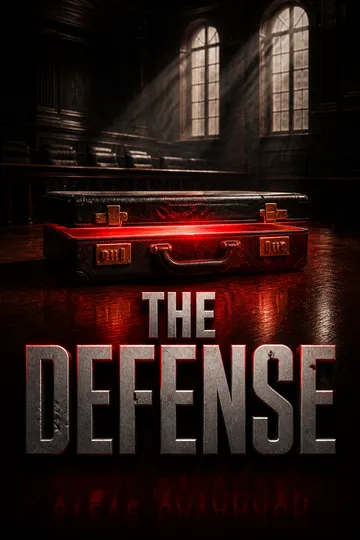
The Defense introduces Eddie Flynn, a con artist turned lawyer forced by Russian mobsters to defend their boss while wearing a bomb and with his daughter held hostage. Reviewers praise the intense, fast-paced courtroom drama and clever plot twists, though some find elements implausible. Flynn's character—combining street smarts with legal expertise—consistently captivates readers. Most acknowledge the story stretches credibility but find it wildly entertaining. Several note this debut novel effectively launches the series, with courtroom scenes being particular standouts despite familiar mob and troubled-lawyer tropes.
People Also Read







Characters
Eddie Flynn
The lawyer with two livesA New York defense lawyer shaped by the street skills his father taught him, Eddie reads people, redirects attention, and improvises under pressure. Before entering law, he made his living as a con artist; in court, he has turned those same talents toward persuading juries and testing witnesses. His recent alcoholism and withdrawal from practice stem from guilt over defending a client who later proved brutally dangerous. Eddie loves his daughter Amy deeply, but his work has often competed with family life. He is neither a pure idealist nor a cynical professional. His central drive is to protect the people he loves while trying to distinguish cleverness from responsibility.
Amy Flynn
Eddie's perceptive daughterAmy is ten, observant, intellectually curious, and unusually alert to the emotional weather around her parents. She loves reading, old rock music, and small rituals that keep her connected to Eddie, including matching birthday watches and their nightly calls. Her intelligence makes her more than a symbol of innocence: she notices when adults are hiding something and asks questions that expose their evasions. Amy's affection has helped Eddie remain connected to recovery, even while his history has made him an unreliable father at times. She wants closeness and reassurance, but she also has a mind of her own.
Olek Volchek
The calculating mob bossVolchek leads a Russian criminal organization and approaches power through ritual, intimidation, and enforced loyalty. His torn-ruble system turns a killing order into a private bond between boss and hitman, making trust both the foundation of his organization and a tool of control. He can present himself as measured and even reflective, but his capacity for cruelty is never far beneath that composure. His childhood memories of a war-hero father and a dead mother help explain his fixation on strength and protection, without excusing the violence he chooses. Volchek respects competence, but his dependence on obedience leaves him vulnerable to the people closest to him.
Arturas
The scarred strategistArturas is Volchek's lieutenant, an exacting planner whose calm manner makes his threats more frightening, not less. He studies routines, courthouse security, and the habits of the people he intends to use. Unlike Volchek, who takes visible pleasure in brutality, Arturas treats violence as a practical instrument. His scar is a recurring physical reminder of the discipline and punishment within the Bratva. He is intelligent enough to anticipate procedural obstacles, but his reliance on elaborate schemes also creates patterns Eddie can read. Arturas represents the danger of a mind that can turn every relationship and institution into a system to be exploited.
Harry Ford
Eddie's courthouse mentorHarry is a senior judge, former Army captain, and one of the few people Eddie trusts without reservation. Years earlier, he recognized Eddie's talent in court and encouraged him to become a lawyer rather than remain a hustler. He is blunt, funny, loyal, and experienced enough to understand that legal procedure cannot solve every emergency. His friendship with Eddie is not sentimental; he challenges Eddie's choices even as he risks himself to help. Harry's presence links Eddie's two lives, offering a model of authority grounded in judgment and personal accountability rather than status alone.
Jimmy Fellini
The friend turned crime bossJimmy, known as the Hat, is Eddie's childhood friend from the boxing gym and a powerful Mafia leader. He is a practical operator with a strong sense of family loyalty, capable of mobilizing money, informants, and armed men quickly. Eddie's old bond with him survives their divergent lives, though it cannot make Jimmy's world safe or morally simple. Jimmy's affection for Amy grows from his belief that Eddie is family, while his appetite for retaliation threatens to turn a rescue into a gang war. He combines tenderness toward his people with the hard calculations his position demands.
Christine Flynn
Eddie's estranged wifeChristine is Amy's mother and Eddie's estranged wife, a woman who has spent years bearing the costs of his long hours, drinking, and emotional withdrawal. She once shared a lively, unconventional bond with Eddie, but love has not erased the damage of being repeatedly left alone. Christine protects Amy by setting clear limits on Eddie's access and remains wary of the danger surrounding his work. Her anger is not a lack of feeling; it is a response to a pattern of promises that failed to keep their family safe. She represents the life Eddie wants back but cannot reclaim through affection alone.
Little Benny
The protected mob witnessA longtime Bratva hitman, Benny is in FBI protective custody after confessing to Mario Geraldo's murder and implicating Volchek. His limited cooperation makes him an unusually important witness: he has exposed one killing while withholding the wider knowledge that could dismantle the organization. In court, he appears guarded and resentful, carrying the habits of a man whose life has depended on loyalty and silence. His testimony forces Eddie to examine not only what Benny says, but what he refuses to say and whom that silence might protect.
Miriam Sullivan
The ambitious prosecutorMiriam is a formidable New York prosecutor whose preparation, courtroom command, and disciplined presentation have earned her a reputation for winning difficult cases. She believes the evidence against Volchek is strong and understands how a jury responds to both facts and framing. Her professional confidence sometimes makes her vulnerable to an opponent who can turn her own tactics against her. She is not careless or corrupt; she is ambitious, strategic, and accustomed to controlling a courtroom. Eddie's maneuvers challenge her skill without making her a simple antagonist.
Bill Kennedy
The cautious FBI agentKennedy is an FBI agent responsible for protecting a major witness and investigating a possible threat to the trial. He is diligent and alert to the danger of being manipulated, which makes him difficult for Eddie to persuade. His caution is partly professional and partly personal: a mistake could endanger his witness and compromise a major prosecution. Kennedy wants evidence that can withstand scrutiny, not simply a compelling story. His relationship with Eddie develops through contested trust, as each man must decide whether the other's actions are evidence of guilt or an attempt to prevent a greater disaster.
Tom Levine
Kennedy's FBI colleagueLevine is an FBI agent working alongside Kennedy on the Volchek case. He appears professional and experienced, with access to sensitive information about the witness and the investigation. His place within the federal team gives him unusual reach, while the boundaries of what he knows and what he shares remain important to the case. Levine's presence forces Eddie to consider whether the institutions meant to protect the trial have been compromised.
Tony Geraldo
Mario's connected cousinTony is Mario Geraldo's cousin and a Mafia bagman with ties to Jimmy's organization. He is polished enough to move between criminal and public settings, but his loyalty is shaped by practical survival and family obligation. Tony's knowledge connects the murder to both the Italian Mafia and Volchek's world. He is not motivated by simple affection for Mario; their relationship carries frustration, embarrassment, and the demands of a shared criminal life. His evidence and private information make him a pivotal witness even when he refuses to cooperate as expected.
Judge Gabriella Pike
The fast-moving trial judgePike is a quick-thinking, ambitious judge and former defense attorney who runs her courtroom at high speed. She is demanding toward lawyers and impatient with theatrics, but she understands how procedural decisions shape a trial. Her background gives her a sharp sense of courtroom strategy, even when Eddie's behavior tests her patience. She wants control and efficiency, yet the case repeatedly forces her to weigh legal fairness against an escalating threat.
Hanna Tublowski
The victim Eddie failedHanna is a young music student whose assault by Eddie's client Ted Berkley becomes the source of Eddie's deepest professional guilt. She was working toward a future as a cellist and is forced to endure the consequences of a defense that helped a dangerous man escape conviction. Hanna is not present through most of the action, but Eddie's memory of her shapes his suspicion of clients and his refusal to treat courtroom victory as the whole of justice. Her story gives his career crisis a concrete human cost.
Arnold Novoselic
The jury's silent observerArnold is a discreet jury consultant whose unusual skill is reading lips. He watches people closely and prefers to disappear into a crowd rather than draw attention to himself. His observational talent gives him access to conversations other people believe are private, making him useful to a trial team and unsettling to anyone who notices him. Arnold embodies the thin boundary between legitimate insight into jurors and invasive surveillance.
The Lizard
Jimmy's dangerous rescuerThe Lizard is an ex-Marine and a trusted operative in Jimmy's circle, known for his physical discipline and unsettling reputation. He handles dangerous assignments with calm efficiency and understands how to move through a city without attracting notice. His nickname comes from his fascination with reptiles and from the fear his methods inspire in people who have crossed Jimmy. Eddie values his competence while recognizing that the rescue operation depends on violence as much as planning.
Victor
Volchek's imposing enforcerVictor is a huge, hard-faced member of Volchek's crew, with the physical strength and fighting experience to intimidate without speaking. He serves as muscle and guard, watching Eddie closely while Arturas manages the plan. Victor's stillness and limited emotional display make him difficult to read, but his presence constantly reminds Eddie that one mistake can become physical.
Gregor
The silent giantGregor is the largest of Volchek's men, a powerful and nearly unreadable enforcer who can overpower Eddie with ease. He says little and operates as a physical threat, but small objects connected to him, especially his wallet and the cases he carries, become useful clues. Gregor's role shows how the Russians use size and silence to make surveillance feel constant.
Alvin Martin
The compromised courthouse guardAlvin is a courthouse security guard burdened by poor pay and financial obligations. His position gives him access to the building's most vulnerable entry points. He accepts money to assist the Russians, telling himself that he is only opening doors and recording vehicles. Alvin's rationalizations reveal how institutional weaknesses can be exploited through ordinary greed rather than elaborate ideology.
Nikki Blundell
The nightclub eyewitnessNikki is a nightclub dancer who is also studying law, paying her way through school with her work. She presents herself confidently and remembers seeing an altercation between Volchek and Mario. Her composure initially makes her a persuasive witness, while the limits of her view and the information she encountered later complicate her identification. Nikki's mix of professional ambition and practical independence resists the assumptions others might make about her.
Jack Halloran
Eddie's former partnerJack co-founded a law firm with Eddie and later took over the practice when Eddie left. He is a capable lawyer with serious gambling problems, and his financial desperation brings him into contact with Volchek. Jack's choices form part of the danger Eddie inherits when he returns to the courtroom.
Pat Flynn
Eddie's grifter fatherPat taught Eddie pickpocketing, misdirection, and self-defense, treating each skill as a way to survive a dangerous world. He ran an illegal gambling operation but also gave his son discipline, affection, and a model of quick hands. His death after an insurance dispute becomes a lasting source of Eddie's anger at powerful institutions and helps explain why Eddie chose both hustling and law.
Isabella Flynn
Eddie's devoted motherIsabella, Eddie's Italian mother, worked long hours as a waitress and held the family together after Pat became ill. She believed Eddie was building a respectable future and drew hope from that belief. Her quiet devotion gives Eddie a reason to leave the con life and become the lawyer she imagined.
Anthony Fellini
Jimmy's nephew and lieutenantAnthony is Jimmy's nephew, a capable young member of the family trusted with dangerous work. He helps organize the search for Amy and joins the rescue effort. His connection to Jimmy makes the risks of Eddie's appeal to the Mafia personal, not merely operational.
Uri
Volchek's trusted driverUri is Volchek's nephew and driver, regarded by Volchek as a rare person whose loyalty is secured by family ties. His access to Volchek and his relative distance from Arturas's planning make him a possible channel for urgent decisions.
Plot Devices
The concealed bomb jacket
A hostage made wearableArturas hides a compact explosive device inside a jacket tailored to pass as ordinary clothing. The threat forces Eddie to enter a courthouse where he is known and normally waved through security. A remote control appears to give the Russians instant power over him, while the bomb also threatens witnesses and everyone in the building. The device makes Eddie's body part of the evidence against him: if discovered, he will look like the bomber, even though he is acting under coercion. Its significance grows as Eddie learns that the apparent controls and the larger explosives are part of a wider deception.
The torn ruble
A private murder orderVolchek splits an old one-ruble note, keeps one half, and gives the matching piece to the man appointed as his hitman. When a victim's name is written on Volchek's half and sent to the holder, the joined bill authenticates the killing order. The ritual is meant to prevent soldiers from inventing orders and turning on one another. In court, the prosecution uses a surviving ruble and handwriting analysis to connect Volchek to Mario Geraldo's murder. The device embodies the Bratva's claim to loyalty, but it also leaves a tangible trace of the system it was meant to control.
Amy's matching watches
A nightly tether homeAmy and Eddie share inexpensive digital watches set to sound an alarm at the same hour. The ritual began when Eddie entered alcohol treatment, giving Amy a dependable reason to expect his call. He reads to her over the phone, and their shared time becomes a measure of his effort to remain present despite the separation from Christine. During the kidnapping, memories of the watches and Amy's routines keep Eddie focused on the difference between simply escaping and bringing his daughter home. The watch is a small object with emotional weight because it records a promise Eddie must repeatedly choose to honor.
The false suitcase and detonator
A deception within deceptionArturas uses an empty remote shell to mislead Eddie and keeps the genuine trigger elsewhere. He also moves between identical suitcases, one used to carry trial files and another fitted with a false bottom. The hidden compartment conceals weapons, rappelling coveralls, and equipment for an escape. Eddie recognizes the scheme by comparing the cases and recalling the apparent remote's emptiness. These decoys reveal that Arturas has not merely planned to kill a witness; he has built a separate operation inside the plan Volchek believes he controls. The layered deception is central to the final confrontation.
The trace-marked money
A bribe made traceableEddie secretly sprays part of the cash with an invisible property marker that glows under ultraviolet light and leaves a distinctive trace on anyone who handles it. He arranges for Jimmy to keep the marked money and later provide it through a lawyer, giving the authorities a way to link the funds to Volchek's crew. The plan turns a bribe meant to secure Tony's silence into evidence against the people paying it. It also demonstrates Eddie's habit of preparing a second use for every object, even when he appears to be acting in the Russians' interests.
Eddie Flynn Series




About the Author
Other books by Steve Cavanagh






Download PDF
Download EPUB
.epub digital book format is ideal for reading ebooks on phones, tablets, and e-readers.








