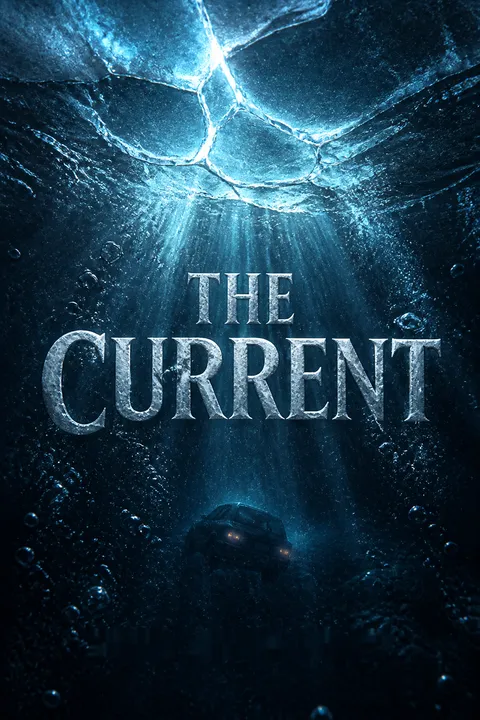


Plot Summary
The Northbound Favor
College roommates Caroline Price2 and Audrey Sutter1 once failed so badly at living together that they moved apart. A shared literature class slowly made them friends again. Now Audrey1 needs to reach Minnesota: her father,4 a retired sheriff, has cancer, and she cannot afford the bus.
Caroline,2 a Georgia volleyball player carrying her own troubles with her boyfriend and a professor, lends more than fare. She packs a bag and drives. At a remote Iowa gas station, two young men corner Audrey1 outside the restroom.
Caroline2 pepper-sprays them, pulls her friend away, and races from the station. On the sleet-slick road, her RAV4 spins out and stops near a riverbank. Another vehicle arrives behind them. Its driver fails to stop in time, and the car goes over the edge.
The friendship is rebuilt through practical acts rather than a grand reconciliation: a borrowed pen once reopened the relationship, and now a ride becomes an act of care. Caroline’s choice also takes her away from the boyfriend whose silence has been governing her attention. The gas-station assault abruptly turns a private road trip into a crisis of bodily safety. The women respond differently but together: Audrey is trapped, while Caroline acts. Their unequal positions become emotionally consequential when the car leaves the road.
Under the Black Ice
The RAV4 reaches the frozen river, where the ice breaks and the car rolls beneath the surface. Audrey1 escapes onto the ice, but the water and the vehicle drag her under again. She sees Caroline2 swept away by the current, then loses consciousness.
A passing motorist notices headlights beneath the ice and calls for help from a pay phone, but leaves without giving his name. Rescuers recover Audrey1 alive and find Caroline’s2 body downstream near a dam, miles from the crash site.
Audrey’s1 father,4 Tom Sutter,4 stays beside her in the hospital, while Caroline’s2 family takes her home for burial before Audrey1 wakes. The accident brings another grieving father into the story: Gordon Burke3 watches the news and recognizes the river’s old, unanswered loss.
The river is not simply an obstacle. Its unseen current governs what the characters can know, separating the living from the dead and carrying consequences far beyond the point of impact. Audrey’s survival begins with an absence she cannot repair: Caroline is gone, and Audrey cannot even say goodbye before the body is returned to Georgia. The unnamed caller offers a small, unresolved mercy. His intervention saves no one directly, yet without it Audrey might not have been found in time.
Holly’s Unfinished Case
Ten years earlier, Gordon Burke’s3 teenage daughter,10 Holly,10 died after entering the same river. Sheriff Tom Sutter4 investigated and suspected Danny Young,5 the nineteen-year-old son of Gordon’s3 former business partner.
Danny5 had been drinking, had been in the park, and left town for a hunting cabin soon after Holly10 vanished. But no witness or physical evidence tied him to her death, so Sutter4 let him go. Gordon3 never accepted that failure; he carried his anger into every ordinary encounter with Sutter.4
Danny’s5 mother, Rachel,6 was left raising Danny5 and his disabled twin brother, Marky,8 while the young men’s friendship with Jeff Goss12 fractured under suspicion. Years later, Gordon3 and Sutter4 have grown older, but the case remains a wound that no official report could close.
The novel makes uncertainty an active force. Danny’s suspicious movements can support a theory without proving it, while Sutter’s decision to follow the law leaves Gordon with no answer and no one to blame conclusively. That gap becomes part of family life: Gordon’s grief turns into resentment, Danny’s name becomes a burden, and Rachel’s household loses a source of stability. The old case also complicates the present one. When another pair of girls goes into the river, the community cannot meet the new tragedy without reopening the old one.
A Sheriff Goes Rogue
Before Audrey1 can give a full account, Tom Sutter4 begins investigating on his own. She tells him that Caroline2 fought the young men, and later remembers that she struck one with a wooden backscratcher from the station restroom.
Tom4 visits the gas-station attendant,18 who denies seeing the men, then searches local garages for a mechanic with scratches on his face. At Anderson Auto, he finds Ryan Radner,14 whose cheek bears fresh marks. Tom4 follows Radner14 to a bar, breaks into his truck, takes his handgun, and later confronts him at an isolated lot.
He cuffs Radner,14 accuses him of assaulting the women, then shoots through his raised hand and leaves him to seek medical help. Tom4 has acted without evidence or jurisdiction, and the intervention jeopardizes the case he hoped to solve.
Tom’s investigation is driven by love, but love does not make his actions just. The badge once gave him a structure for controlling danger; now he has relinquished its legal restraints while retaining its habits of surveillance and interrogation. The backscratcher and Radner’s scratches offer the appearance of a solvable trail, but Tom treats inference as certainty. His private punishment gives him a moment of agency at the cost of making evidence less trustworthy. The father trying to protect his daughter begins to resemble the danger he is hunting.
A Father’s Last Watch
In the hospital, Audrey1 tells Tom4 how the car went under and how she saw Caroline2 disappear into the current. She also recalls the boys at the gas station and the backscratcher, giving her father4 details that strengthen his private search. Tom4 is already gravely ill, and he keeps the full extent of his cancer from his daughter1 whenever he can.
Audrey1 asks to see Caroline’s2 family, but Tom4 says they may need time. Before he can take her home, he suffers a fatal heart attack. Audrey,1 waiting in a wheelchair for him to arrive, is led instead to the intensive-care unit, where she sees his body. His death leaves her alone with the questions he pursued and the old Holly Burke10 case he never resolved.
Audrey’s losses arrive in a sequence that denies her the rituals she expects. She cannot attend Caroline’s funeral, and she is waiting for her father when the hospital reveals that he will not return. Tom’s protective silence was meant to spare her fear, but it also limited what they could share while they still had time. The scene makes inheritance emotional rather than material: Audrey receives his unfinished questions, his habits of attention, and the burden of deciding whether those questions are hers to pursue.
Wyatt’s Last Winter
While Audrey1 recovers, Rachel Young6 faces the death of Wyatt, the stray dog her sons rescued as boys. The ground is frozen, and Rachel6 is trying to break it with a pickax when Gordon3 arrives, drawn there after seeing Marky8 at the garage. He builds a fire to thaw the soil and stays with Rachel6 while she buries the dog.
Their old friendship, once close through their shared family business, has been broken by Holly’s10 death and Danny’s5 suspicion. News of Wyatt’s death reaches Danny,5 now working far from Minnesota. He returns to the farmhouse, where Marky8 welcomes him and Rachel6 embraces him. Danny5 reconnects briefly with Jeff12 at the garage, but the town’s memory of Holly10 follows him into every conversation.
Wyatt’s burial gives the living a task grief can touch. Rachel cannot bring back her son’s presence or undo the old accusation, but she can give the dog a place in the family’s history. Gordon’s arrival matters because he helps without asking Rachel to resolve their past first. Danny’s return is prompted by loss, yet it does not make home feel safe. The grave draws together two forms of absence, the dog who waited for Danny and the daughter Gordon could not protect.
The Pocket in the Book
Danny5 visits Gordon3 and shows him a square of sheer fabric, the pocket torn from Holly’s blouse. Danny5 says he found it caught near his truck’s license plate after Deputy Ed Moran7 stopped him outside the park the night Holly10 died.
Moran7 had walked around the truck but never reported the stop, and Danny5 kept the fabric without understanding what to do with it. Gordon3 recognizes the pocket as a possible link to Holly’s10 last night, though Danny5 cannot prove how it reached his truck.
Gordon3 questions Moran,7 now a sheriff in Iowa. Moran7 confirms stopping Danny5 but says he reported it to Sutter.4 The official record contains no such account. Sick and feverish at Gordon’s3 house, Audrey1 hears the men discuss the contradiction through an open window.
The pocket is evidence and a psychological object: Danny has carried it for years as both a possible clue and a private accusation against himself. Its power depends on a chain of events no one can verify, so it sharpens rather than settles the mystery. Moran’s undocumented stop creates a second uncertainty, this time about the people entrusted with the record. Audrey’s fever places her at the edge of the conversation, where overheard fragments begin to connect her present survival to Holly’s unresolved death.
Katie Breaks Her Silence
After recovering enough to leave Gordon’s3 house, Audrey1 asks Sheriff Wayne Halsey11 why Moran7 left the Minnesota department. Halsey11 refuses to reopen old business, but his secretary, Gloria,13 gives Audrey1 the name of Katie Goss,9 Danny’s5 former girlfriend.
Katie9 tells Audrey1 that Moran7 stopped her when she was eighteen, alone in a borrowed car after drinking champagne, and sexually assaulted her rather than arresting her. Katie9 concealed what happened because she feared public exposure and wanted to leave town for college.
Her friend Ginny told Gloria,13 who passed the story to Tom;4 he later approached Katie,9 but she denied it. After Holly10 died, Tom4 also asked to inspect Katie’s9 phone, and Katie9 deleted the record of a call she had made to Danny5 that night.
Katie’s silence is not presented as consent or indifference. She calculates the costs of disclosure as a young woman in a small town, where a victim’s account can become more public than the offender’s conduct. Her decision to protect her future leaves Tom with no usable corroboration, while his own loyalty to a fellow officer constrains what he does next. Audrey’s inquiry therefore uncovers not a clean solution but a pattern of silences, each made for a different reason and each helping Moran remain beyond scrutiny.
Danny Leaves Again
After visiting Gordon,3 Danny5 wakes Marky8 in the middle of the night and says he must leave again. He gives his brother a sealed letter for Sheriff Halsey, to be delivered only if Danny5 fails to call by the next night. Danny5 asks Marky8 not to tell Rachel,6 and Marky8 keeps the promise even as their mother waits by the phone.
Audrey1 visits Rachel6 and explains what Danny5 told Gordon;3 Rachel6 searches the house and finds the letter and the silk pocket hidden among Danny’s5 things. She gives both to Halsey11 after Danny’s5 truck is found abandoned near the Mississippi River, its keys still inside and no sign of blood. Danny5 is missing, and the letter makes his disappearance part of the investigation.
Danny’s departure repeats an old family injury: he protects Rachel from worry by withholding the truth, while leaving Marky to carry a promise too heavy for him. The letter reverses that concealment only after Danny is unreachable. Its delayed delivery forces the family to choose between loyalty to Danny and cooperation with the law. The abandoned truck offers no reliable story about what happened to him. Once again, a vehicle near a river creates a boundary between what can be seen and what must be imagined.
Gordon Faces Moran
Gordon3 follows Moran7 on a winter road in a retired police car, then blocks him on a trestle bridge and aims a rifle at him. He accuses Moran7 of assaulting Katie9 and killing Holly,10 but Moran7 refuses to confess and points out that Gordon3 cannot know the truth with certainty. Gordon3 fires into Moran’s7 headlight, then lowers the rifle instead of shooting him.
Moran7 takes the weapon, clears its rounds, and lets Gordon3 leave without arresting him. The encounter gives Gordon3 no answer, only a warning about the violence he nearly chose. Later, Audrey1 goes alone to the park where she and Caroline2 entered the river. Moran7 follows her there, having learned she spoke with Katie.9
The bridge gathers the novel’s central conflict into one narrow space: a father wants certainty, while the law has repeatedly failed to produce it. Moran’s argument is not proof of innocence, but it exposes the danger of replacing evidence with conviction. Gordon does not become harmless when he lowers the rifle; he has already crossed into intimidation. His restraint is meaningful precisely because it cannot restore the years he lost to anger or establish what happened to Holly.
Audrey Returns to Ice
Moran7 confronts Audrey1 in the dark park and orders her away from the river. She refuses to retreat, and when he advances across the ice, it shifts beneath them. Audrey1 falls into the freezing water, clinging to a broken slab while Moran7 crawls toward her. He reaches for her shoulder; she swings her cast backward and strikes his head.
The blow knocks him flat, and Audrey1 cannot tell whether he is dead. She frees herself from the ice and follows the current beneath it until she surfaces at a spillway. Two teenagers, Hannah and Eric,19 find her and drive her home at her request. She wakes later with no clear account of how she escaped Moran7 or reached the river’s edge.
Audrey’s survival is not a triumphant return to control. She acts under extreme physical threat, then must live with the uncertainty of whether her blow killed Moran. The river, which once carried Caroline away, now offers Audrey a route out, though it nearly takes her too. Her refusal to ask the teenagers for help from the police reflects both trauma and fear of being disbelieved. Agency here is a narrow, bodily act: striking, swimming, and reaching the surface.
The Garage Arrest
Audrey1 tells Halsey11 that Moran7 attacked her on the river. Halsey11 finds the vehicles’ tracks and blood at the park, then learns Moran7 has brought his cruiser to Wabash Auto for repairs. Marky8 has raised it on a lift and discovered a missing oil-pan bolt, delaying Moran’s7 departure. Jeff12 helps keep the sheriff in the garage while Halsey11 arrives with deputies and arrests him for assault.
Moran7 insists he tried to rescue Audrey,1 but the witnesses, her injuries, and the physical scene support her account. Afterward, Halsey11 tells Audrey1 that Tom4 had once confronted Moran7 about Katie’s9 accusation, then let him leave the department when Katie9 denied it. Three more women come forward with similar accounts.
Marky’s practical knowledge becomes consequential in a way he does not explain. The missing bolt is not a confession or a courtroom argument; it is a small material intervention that alters the timing of an arrest. Halsey’s account also reframes Tom’s legacy. Tom did challenge Moran, but he made that challenge privately and accepted the limits imposed by Katie’s denial and his loyalty to the department. The new witnesses begin to break that institutional isolation, though the old case against Moran remains difficult to prove.
The Face She Cannot Name
After her cast is removed, Audrey1 travels to Iowa and visits Ryan Radner,14 the mechanic Tom4 shot. Radner14 denies being the young man who attacked her and says Tom’s4 actions cost him his job. Audrey1 studies his face but cannot confidently connect it to the hands and shadows she remembers at the gas station.
She leaves without accusing him, protecting the difference between suspicion and identification. Back in Minnesota, Moran7 remains jailed while Katie9 and three other women prepare to support the investigation, but Holly’s10 death still lacks conclusive proof.
Danny5 remains missing, and investigators cannot connect Moran7 to the bullet hole in Danny’s5 abandoned truck. Rachel6 has only the letter, the pocket, and the silence of a son who has not called.
Audrey’s inability to identify Radner is an act of epistemic discipline, not weakness. Tom’s certainty produced violence without establishing that he had the right man; Audrey refuses to repeat that mistake, even though uncertainty leaves her without a satisfying target. The scene separates personal truth from legal proof. She knows what happened to her, yet the physical details needed to name her attacker have blurred. Meanwhile, Danny’s absence prevents his account of Moran’s role in Holly’s case from becoming testimony.
A Home Left Waiting
Halsey11 returns Danny’s5 truck to Rachel6 and explains that it was found near the Mississippi with its belongings still packed. He has no evidence that Moran7 shot at Danny5 or knows where Danny5 went. Moran7 remains jailed, and the assault allegations have expanded, but the prosecution of Holly’s10 death remains uncertain.
Rachel6 notices a clean bolt placed upright on Danny’s5 desk, the same kind of part missing from Moran’s7 cruiser. She understands that Marky8 may have removed it to delay Moran,7 though neither brother has told her so. Rachel6 leaves the bolt where it is, preserving the small sign of Marky’s8 intervention. Danny’s5 room stays ready for him, while his family has no answer about whether he is alive or coming home.
The bolt is an intimate counterweight to the silk pocket. One object was preserved because Danny could not decide what it meant; the other was placed where Rachel would find it, yet Marky does not explain why. Both objects carry knowledge that words have failed to deliver. Rachel’s choice to leave the bolt untouched becomes a form of waiting rather than certainty. The novel refuses to convert Danny’s disappearance into a solved mystery, keeping the family’s hope suspended between evidence and absence.
The Current Carries On
At the cemetery, Audrey1 tells Gordon3 that she believes Holly10 fought hard before she died, though she never saw the man who hurt her. Gordon3 shares a recurring nightmare in which he occupies the back seat of a car while an unseen man attacks a young woman; only now can he recognize Moran’s7 eyes. The image strengthens their suspicion but does not provide courtroom proof.
Audrey1 later returns to the gas station and the bridge where she and Caroline2 went into the river. There, she imagines a different account: an old driver stops safely, helps pull their car from the snow, and follows them across the bridge. The ending leaves that rescue as a chosen story of kindness, not a solved fact.
The ending allows emotional knowledge to exist beside legal uncertainty. Audrey’s vision of Holly’s resistance gives Gordon a way to remember his daughter as more than the body the river returned, while his dream names the face his grief has long concealed from him. Neither account is forensic evidence. Audrey’s imagined rescue of herself and Caroline works differently: it does not deny Caroline’s death, but offers her family a memory in which the final stranger chose to help. The current carries both harm and care, and the novel leaves the reader responsible for distinguishing their kinds of truth.
Analysis
The Current is built around the distance between what people know, what they can prove, and what they can bear to say. Its two river tragedies mirror each other without becoming identical. In both, a young woman’s fate is shaped by violence, water, and failures of witness. Yet the book refuses to make trauma a perfect instrument of truth. Audrey’s1 memories preserve the urgency and bodily reality of the attack, but they do not reliably identify every man involved. Danny’s5 silk pocket gives his story weight without completing the chain of evidence. Katie’s9 testimony arrives years late because silence once seemed the price of keeping her life intact.
The novel’s lawmen embody different responses to this gap. Tom Sutter4 once obeyed evidentiary limits, then later breaks the law in an attempt to force justice for Audrey.1 Gordon3 nearly does the same when grief pushes him to aim a rifle at Moran.7 Halsey11 must decide whether to trust testimony while resisting the temptation to substitute loyalty, suspicion, or intuition for a case. The contrast is not between a pure legal system and flawed individuals. The officers themselves shape what becomes evidence, what stays private, and who gets believed.
Objects make these choices visible. The silk pocket records an uncertain history; the backscratcher turns self-defense into a trace; the cast becomes both injury and weapon; the missing bolt quietly changes the timing of an arrest. These things do not speak on their own. Their meanings depend on who notices them and whether anyone will accept the risk of acting on them.
The current offers the novel’s most unsettling image of connection. It carries Caroline2 away, returns Audrey1 to life, and seems to hold the dead within a shared space beyond ordinary time. That vision does not cancel grief or establish courtroom fact. It gives Audrey1 a way to tell Caroline’s2 family that their daughter2 was not alone. The ending’s imagined rescue is similarly an act of care, not a correction of the record. The book suggests that truth requires evidence, while mourning sometimes requires a story that can be carried forward without pretending to certainty.
Review Summary
The Current is a literary mystery that captivates readers with its atmospheric prose and complex characters. Set in a small Minnesota town, the novel explores two tragic events a decade apart, both involving young women and an icy river. Johnston's masterful writing creates a haunting, emotional narrative that delves into themes of grief, guilt, and unresolved trauma. While some readers found the pacing slow, many praised the author's ability to craft a thought-provoking story that lingers long after the final page.
People Also Read







Characters
Audrey Sutter
The river survivorA Minnesota college student and daughter of retired sheriff Tom Sutter4, Audrey is observant, stubborn, and more self-questioning than her composure suggests. She returns home because her father is ill, then finds herself tied to two river tragedies separated by a decade. Her close friendship with Caroline2 gives her a model of courage that is practical rather than polished. Audrey wants facts, but she also understands that memory can be incomplete and that an accusation can harm the wrong person. Her struggle is to honor what she has experienced without pretending uncertainty has disappeared. The old sheriff’s jacket and the river become linked to her inheritance of grief, responsibility, and a hard-won capacity to act.
Caroline Price
The fierce Georgia friendCaroline is Audrey’s1 college friend, a Georgia-born volleyball player with a quick wit and a strong instinct for action. Their friendship begins badly, ends in a roommate separation, and grows back through a shared class and small acts of attention. Caroline is generous without being meek: she offers Audrey1 a ride, confronts the men who threaten her, and brings humor into moments when fear might otherwise take over. Her confidence is not effortless; she is also caught in the emotional orbit of a disappointing boyfriend and an uncomfortable meeting with a professor. She represents the kind of loyalty that does not ask another person to earn help first.
Gordon Burke
The grieving fatherGordon is a Minnesota plumber, former business partner to Rachel Young6, and father of Holly10. He trusts tools, repair, and observable facts, yet his daughter’s death leaves him with a question no technical skill can answer. His anger toward Tom Sutter4 grows from the belief that the sheriff let Holly’s10 killer go, and that anger becomes part of his daily life. Gordon is guarded about intimacy, protective of his own daughter’s memory, and more capable of tenderness than his blunt manner suggests. His relationship with Rachel6 carries a history of shared family life and old affection, complicated by loss and suspicion. Audrey’s1 arrival forces him to consider what he knows, what he fears, and what he cannot prove.
Tom Sutter
The retired sheriffTom is Audrey’s1 father, a former county sheriff whose experience has taught him how often danger arrives disguised as ordinary life. He is protective, watchful, and affectionate, but his concern can become a form of control, especially as illness narrows the time he believes he has. His professional identity remains central even after retirement; he thinks in evidence, suspects, and the consequences of a missed clue. The unresolved Holly Burke10 case is one of the burdens he carries privately. Tom’s bond with Audrey1 is playful as well as protective, built from years of shared routines and jokes. He wants her safe, but he cannot shield her from grief or from the moral choices his own career left behind.
Danny Young
The suspect who leftDanny is Rachel’s6 son and Marky’s8 twin, a skilled mechanic with an aptitude for engineering and a history that has made home difficult. As a teenager he was close to Holly10, Jeff12, and the Burke and Young families. He is protective of Marky8 and careful about what he asks his mother to carry, but his secrecy can leave them alone with the consequences of his choices. Years away from Minnesota have not freed him from the old accusation. Danny’s character is shaped by the difference between what he remembers, what he fears might have happened, and what he can prove. His bond with his brother remains among the few relationships he trusts without reservation.
Rachel Young
The steadfast motherRachel raised Danny5 and Marky8 after her husband died, and her life is organized around caring for the people and animals who depend on her. She is practical, warm, and attentive to small changes in the household, but she often blames herself for events she could not control. Her old friendship with Gordon3 and Meredith15 once made the two families feel inseparable. After Danny5 became a suspect, Rachel learned how quickly communal closeness can turn into isolation. She rarely demands that her sons explain themselves, partly from love and partly from fear of what the answers might require. Her care is expressed through work: meals, letters, a warm house, and room for someone to return.
Ed Moran
The former deputyMoran is a former Minnesota deputy who later becomes sheriff in Iowa. He is experienced, confident in his authority, and accustomed to being treated as the person who decides what a situation means. His professional life places him at the intersection of two investigations and several personal histories. Moran’s manner can be brusque and controlling, though he also understands how to present himself as reasonable and measured. The people around him weigh his long service against questions they find difficult to raise. His character tests the distinction between holding office and deserving trust, and between a persuasive explanation and a verified account.
Marky Young
The loyal twinMarky is Danny’s5 twin brother, a large, strong, mechanically capable man whose speech can be difficult for strangers to follow. He thrives on routines, precise details, and familiar relationships, especially his bond with Danny5 and his mother6. People sometimes underestimate him because they mistake his communication style for a lack of understanding. Marky remembers more than others assume and expresses loyalty through concrete acts, work, and keeping promises. His relationship with Jeff12 and his attachment to the family dog give him a life beyond the role others assign him.
Katie Goss
The guarded former girlfriendKatie was Danny’s5 girlfriend as a teenager and is now a working mother raising her young daughter, Melanie. She is quick-witted, direct, and protective of the life she has built. Her past contains an experience she has kept private, not because it mattered little, but because she feared that speaking would take control of her story away from her. Katie resists being recruited into someone else’s version of events. Her complicated history with Danny5, and her connection to Audrey1 through the old case, make her an essential but wary witness.
Holly Burke
The remembered daughterHolly is Gordon’s3 daughter and a childhood acquaintance of Danny5 and Marky8. Bright, restless, and sometimes cruel, she is remembered differently by adults and young people who knew her at different ages. Rumors about her behavior often flatten her into a cautionary story, while Gordon’s3 memories insist on the child who played with the boys and chose a tree to watch grow. Her life and death connect the families long after their shared business and friendships have ended.
Wayne Halsey
The new sheriffHalsey succeeded Tom Sutter4 as sheriff and is responsible for investigating the events in Iowa and Minnesota. He is methodical, blunt, and conscious of the limits of his authority across state lines. He has worked alongside both Sutter4 and Moran7, so professional loyalty complicates his judgment. Halsey is not quick to promise what evidence cannot support, but he listens when testimony and physical details begin to converge. His choices reveal how an institution can recognize a pattern late and still have to build a case carefully.
Jeff Goss
Danny’s old friendJeff grew up beside Danny5 and Marky8 and remains close to Marky8 through their work at Wabash Auto. He is practical, teasing, and often more perceptive than his casual manner suggests. His friendship with Danny5 is strained by the old Holly Burke10 case, especially because suspicion could have fallen on either young man. Jeff also has responsibilities of his own, including concern for his mother and sister9. His loyalty is real, but it does not erase the questions he has carried for years.
Gloria Walsh
The sheriff’s secretaryGloria has worked in the sheriff’s office long enough to know what is said behind closed doors and what people choose not to report. Warm, blunt, and protective of the people she cares about, she becomes a link between Audrey1 and Katie9. Her knowledge is personal as well as professional because Katie’s9 friend was Gloria’s daughter. Gloria understands that passing along a name can expose someone to pain, but she also knows silence can keep a pattern hidden.
Ryan Radner
The Iowa mechanicRadner is a young mechanic whose scratched face draws Tom Sutter’s4 attention during the search for the men who attacked Audrey1 and Caroline2. He is proud, defensive, and resentful of being treated as a suspect without proof. His work, truck, and rough life make him easy for others to read as guilty, but appearance cannot establish what he did. Radner’s encounters with Tom4 and Audrey1 expose the danger of allowing an intuitive match to stand in for identification.
Meredith Burke
Gordon’s estranged former wifeMeredith is Gordon’s3 former wife and Holly’s10 mother. She once shared a close friendship with Rachel6, and their families were deeply intertwined before the marriages ended. Her stories reveal a past shaped by unequal power and by experiences she chose not to report. Meredith’s withdrawal leaves Gordon3 to raise Holly10 largely on his own and helps explain how the old family circle broke apart.
Eileen Lindeman
Gordon’s former companionEileen is a divorced supermarket manager who once had a relationship with Gordon3. She is candid about a frightening experience from her youth, but Gordon’s3 response makes clear how strongly her story activates his fears as a father. Their connection ends without a dramatic rupture, leaving them able to meet later through ordinary repair work.
Tuck Trevor
The family lawyerTrevor is a local lawyer who has known Audrey1 since childhood and advises her after Tom’s4 death. He understands both the legal system’s limits and the emotional pull of a parent’s choices. His counsel helps Audrey1 distinguish what she can know about her father from what she can prove about the case.
Pamela
The gas-station attendantPamela works alone on the night shift at the remote station where Audrey1 and Caroline2 stop. She is observant about the building and its routines, but her account of the two young men is incomplete and evasive. The station’s layout and her recollections become important to the investigation.
Hannah and Eric
The teenage rescuersHannah and Eric are teenagers driving near a spillway when they encounter Audrey1 soaked and in danger from the cold. Hannah responds with immediate concern, while Eric is wary of bringing an unknown person home. Their decision to help gives Audrey1 a way out of the woods and back to shelter.
Plot Devices
The Black Root River
Carries grief and evidenceThe river links the present accident to Holly Burke’s10 death ten years earlier. Its ice can appear solid while the current beneath it keeps moving, making it both a physical hazard and an image for facts that remain hidden under familiar accounts. Caroline2 is carried downstream, Audrey1 survives beneath the ice, and the river’s bridges become places where characters revisit old choices. It also resists easy symbolism: water can destroy, conceal, and carry a person toward survival. The river binds the two families through events they cannot fully explain or leave behind.
The Silk Pocket
Makes suspicion materialA small pocket torn from Holly’s10 blouse is the most tangible link between Danny’s5 truck and the night she died. Danny5 keeps it for years, unable to decide whether it clears him, condemns him, or proves that someone else handled his truck. Its value is complicated by its unknown chain of custody and by the many hands that touch it later. The object transforms an old suspicion into a testable possibility, but it cannot, by itself, establish how it arrived there or who was responsible.
The Backscratcher
Leaves a trace of assaultThe gas-station backscratcher begins as an ordinary object attached to the restroom key. During the attack, Audrey1 uses it to strike one of the young men, leaving scratches that later become a clue for Tom Sutter4. Its absence from the station and the attendant’s18 account help place the assault outside the public view. Like the silk pocket, it offers investigators a physical trace, but not a complete identification. The object shows how survival can produce evidence even when a witness is frightened, injured, or unsure what she remembers.
The Letter to Halsey
Speaks after Danny vanishesDanny5 leaves a sealed letter with Marky8, instructing him to give it to Sheriff Halsey11 if Danny5 does not call. The letter records Danny’s5 account of the old night and explains why he kept the silk pocket. Its delayed delivery places Rachel6 and Marky8 in the difficult position of deciding when a promise should yield to the search for a missing person. It also shifts the investigation from rumor to a written statement, while leaving the most important claims open to verification.
Audrey’s Cast
Turns injury into defenseAudrey’s1 purple cast is first a visible reminder of the river accident and her broken arm. During her later confrontation with Moran7, she uses it to strike him while trapped in the water. The same object then becomes part of the physical record of her defense, retained for possible use in court. Its meaning shifts from vulnerability to survival, without making the blow simple or consequence-free. The cast keeps bodily experience at the center of the investigation: Audrey’s1 account is not abstract testimony but something written into an injury that continues to heal.
Download PDF
Download EPUB
.epub digital book format is ideal for reading ebooks on phones, tablets, and e-readers.








