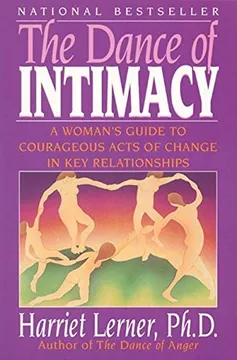


Key Takeaways
Build intimacy by bringing a clearer self, not demanding more closeness
Closeness needs two selves. Intimacy is not the rush of a new romance, emotional intensity, or agreement on everything. It is the capacity to remain connected over time while each person speaks honestly, holds values and limits, and lets the other person differ. Lerner frames this as keeping both the “I” and the “we” alive. Neither partner should have to disappear for the relationship to continue.
Change your own position. When Adrienne fixated on her husband’s lack of warmth, her push for closeness helped him retreat further. As she addressed painful family issues and focused less on his every response, she could share more of herself without demanding a particular reaction. Their connection improved not because she found a technique to make him intimate, but because she brought a steadier self to the relationship.
What's distinctive is the refusal to treat intimacy as a mood that one partner can produce on demand. The emphasis on keeping both self and relationship in view resembles a useful principle in negotiation: a durable agreement requires each party to represent its own interests while remaining able to hear the other. The model also corrects a common romantic confusion between closeness and sameness. Its limit is that mutuality cannot be assumed where one person holds coercive power; preserving connection is not always the safest or fairest goal.
Treat anxiety as the fuel behind familiar relationship moves
Notice the reflex. Lerner calls an automatic, anxiety-driven response reactivity. Under stress, people often intensify their familiar way of coping: pursuing, withdrawing, fighting, or taking over. These moves can calm distress briefly, but they can also provoke the very response that keeps the relationship stuck. The practical question is not just what someone did, but what happened in the emotional climate before it.
Susan’s pursuit of David intensified after a family visit stirred fears about illness and loss. She initially pressed him to decide about living together. Once she connected her panic to the wider family stress, she could speak more calmly, admit that she also had doubts, and put energy back into her neglected work. The shift did not erase uncertainty; it stopped making David responsible for all of it.
This is a systems view of emotion: behavior is treated as part of a feedback loop, not as an isolated personality flaw. That perspective can help someone pause before concluding, “I pursue because he withdraws,” or its reverse. It invites attention to timing, context, and reciprocal effects. But a pattern-based explanation should not flatten responsibility. Anxiety may help explain why someone behaves in a certain way; it does not excuse harm, erase unequal power, or make every conflict equally shared.
Trace stuck conflict beyond the person everyone calls the problem
Symptoms have a context. Lerner argues that the person labeled “the problem” may be expressing or stabilizing distress elsewhere in the family. Judy, a seven-year-old with tantrums and stomachaches, became the focus after her grandfather died. Her parents avoided discussing the loss, while her father grew withdrawn. Judy’s behavior drew him back into family life and briefly united her parents around her. Treating only Judy would have missed the grief and marital distance shaping the situation.
Look wider, not harder. Adrienne’s marital withdrawal followed the birth of a second son, her father’s terminal illness, and uncertainty about her career. These pressures were easy to miss when the couple focused only on their fights and distance. Context does not prove a single cause. It helps generate better questions about what else may be feeding the conflict.
The strength of this lens is its resistance to scapegoating. Instead of assuming a symptom belongs entirely to the person displaying it, it asks what role the symptom plays in a network of relationships. That can redirect attention from blame toward a fuller account of stress and unmet needs. The method is most responsible when used to widen inquiry, not to declare that a child’s or adult’s distress is “really” caused by family dynamics. Symptoms deserve direct care as well as contextual understanding.
Set limits around your own actions, not another person's choices
A boundary describes your part. A bottom line is a clear statement of what someone can accept and what they will do to protect their own well-being. It differs from a threat designed to force another person to change. Kristen spent years trying to stop her father’s drinking through advice, arguments, and rescue. She eventually decided not to stay with him or continue a phone call when he was drunk.
Make the limit concrete. When her father was too impaired to drive, Kristen called the police rather than personally rescuing him or doing nothing. Her parents were furious, and she was tempted to respond with more anger. Instead, she explained her decision briefly and held to it. A boundary cannot guarantee agreement or intimacy. It clarifies what one person will do, even when another refuses to change.
The distinction between a boundary and a demand is important because both can sound firm while serving different purposes. A demand tries to control another person’s behavior; a boundary defines one’s own participation. This is compatible with harm-reduction thinking, where safety and practical choices matter even when a person does not accept treatment. The hard edge is that a limit can carry real costs, especially when someone depends financially or physically on the person setting it. Planning and support are not optional extras.
Stop rescuing before someone else's competence disappears
Help can become a trap. Overfunctioning means taking charge, fixing, advising, or carrying responsibilities that another person might otherwise handle. Underfunctioning is the corresponding pattern of relying on others or doing less under stress. The roles reinforce each other: the more one person takes over, the less the other is invited to act; the more the other withdraws, the more urgently the first steps in.
Anita’s advice kept her stuck. When her mother exhausted herself caring for an aging grandmother, Anita repeatedly suggested solutions. Her mother resisted, and Anita grew angry. Anita changed the pattern by listening without prescribing, then sharing her own limits and worries about future caregiving. Linda made a related shift by stopping her efforts to manage her sister’s problems through her mother. Neither woman abandoned family concern; each stopped confusing concern with responsibility for another person’s choices.
The feedback-loop idea explains why benevolent intervention can have unintended effects. In caregiving, workplaces, and families, a capable person can become indispensable by repeatedly compensating for someone else, while the recipient loses opportunities to exercise agency. Still, the framework needs careful use: disability, illness, unequal resources, and genuine emergencies can make assistance necessary. The key question is not whether help is good or bad, but whether the help is chosen, proportionate, and responsive to the other person’s actual capacity.
Treat difference as information, not proof someone is defective
Different histories shape different rules. People may disagree because their families taught them contrasting ideas about duty, independence, religion, money, or closeness. Suzanne saw her husband John’s frequent contact with his Italian family as excessive dependence. Learning how their family traditions differed from her own more individualistic background helped her see his behavior as a different understanding of responsibility, not simply a character flaw.
Respect does not require surrender. Suzanne stopped managing John’s conversations with his parents, but clearly stated what she wanted for their shared visit. She asked for time alone and explained that staying with his family every night felt overwhelming. John negotiated a shorter stay with his parents. Lerner cautions that group descriptions are only starting points: they can reveal possible context, but they cannot tell us what any individual believes or what is right.
The value of this move is not that culture explains everything. It is that curiosity can loosen the false certainty that one person’s habits are the only reasonable ones. That shift can make disagreement more specific: what does loyalty mean here, and what arrangement can both people live with? Cultural generalizations become dangerous when treated as diagnoses or excuses. The strongest use is provisional, grounded in asking the particular person about their own meanings rather than assigning them a script based on ethnicity or family role.
Approach hot issues in stages, at the speed your safety allows
Disclosure is a process. A hot issue is a subject that triggers unusually strong feelings or cannot be discussed openly. Kimberly’s coming out to her parents was a courageous step, but she made it during the emotionally charged weeks before her sister’s wedding, after years of little personal contact with them. Her parents reacted painfully, and Kimberly responded by cutting them off. With time, she began communicating by letter, listened to her mother’s fears, and reopened contact without pretending the disagreement had vanished.
Prepare before the hard conversation. Lerner recommends building communication through smaller and less charged exchanges, considering timing, and anticipating that relatives may resist a changed pattern. Moving slowly is not weakness. Nor is choosing not to disclose proof of cowardice. The proper pace depends on the person’s readiness and circumstances. Where there is danger or abuse, safety takes priority over preserving contact or pursuing a conversation.
The process view is valuable because it separates a difficult first reaction from the whole future of a relationship. It also recognizes that disclosure can change a person’s daily freedom and self-respect, not merely reveal a private fact. The caution about timing should not become a demand that marginalized people manage everyone else’s comfort before being honest. The decision involves competing goods: safety, privacy, dignity, and connection. No outsider can rank those costs for the person who must live with them.
Notice who gets pulled into conflict, then return issues to their owners
Three people often manage a two-person strain. A triangle forms when tension between two people is eased by involving a third person, such as a child, relative, friend, or affair partner. In Julie’s family, conflict between her husband Rob and his mother Shirley gathered between the two women, while Rob tried to mediate. Their daughter Emma was also drawn into the emotional struggle and became especially aligned with her mother.
Step out without disappearing. Julie could have reduced her criticism of Shirley, addressed her needs directly with Rob, and interacted with Shirley without fighting over every parenting comment. This would not instantly resolve the family’s problems. It would make the underlying disagreements harder to hide and give each person a better chance to address their own relationship. Gossip can be a clue to a triangle when people repeatedly discuss someone’s flaws instead of speaking directly to them.
Triangles are a memorable way to see how conflict gets redistributed rather than resolved. In organizations, too, a manager may be asked to mediate a dispute that belongs between two colleagues, or a team may focus on one “difficult” member to avoid its own disagreements. The model helps identify where attention is going. It should not be used to shame someone for seeking support: confidential advice can help a person think clearly. The distinction is whether the third party helps restore direct communication or becomes a permanent substitute for it.
Map your family history and build a life beyond one relationship
A wider map can change the story. A genogram is a family diagram that records facts across at least three generations, including births, deaths, marriages, illnesses, and occupations. Cathy used family conversations to learn that her mother’s intense religious faith followed the childhood death of a brother, a loss no one had openly discussed. This history helped Cathy understand her mother without adopting her beliefs or defining herself only in opposition to them.
Keep a life of your own. Lerner also argues that relationships become overloaded when they are expected to supply a person’s entire identity, security, or direction. A life plan means clarifying values, goals, and practical needs, including economic security. The book places this advice in its feminist context: women may face particular costs when dependence makes it harder to set limits. A plan is not a demand to prioritize career over care; it is a way to make choices with more room to maneuver.
The genogram works as a disciplined prompt for inquiry: dates and relationships can expose gaps in what a family knows, while preventing a single person from becoming the whole explanation for a pattern. It is a map, not a verdict. Family histories can be incomplete, disputed, or painful to gather, and patterns across generations do not prove that the past determines the present. The life-plan argument adds material reality to emotional advice. Self-definition is harder when housing, income, or safety depend on someone else, so practical options are part of relational agency.
Analysis
Lerner’s central move is to redefine intimacy as a practice of remaining connected without surrendering a separate self. That definition changes the usual advice about closeness. Rather than teach tactics for making another person more attentive, the book asks readers to study their own position in repeating relationship patterns. Its cases make the systems perspective concrete: a child’s behavior can redirect family anxiety, a daughter’s rescue attempts can reinforce a parent’s passivity, and a third party can absorb conflict that two people avoid confronting.
The book is strongest when it joins psychological patterns to social conditions. Lerner does not present women’s relational labor as a natural female gift; she links it to gendered power, economic dependence, and the expectation that women maintain relationships while men pursue public achievement. Her discussion of life planning therefore deepens, rather than contradicts, the call for intimacy. A person with more practical options may be better able to define what she will accept.
The approach also demands interpretive restraint. Family patterns are useful hypotheses, not established causes. The book itself emphasizes how much remains unknown, and its best examples model inquiry rather than certainty. A modern reader should also distinguish ordinary relational anxiety from coercion, abuse, or acute illness. In those situations, safety and specialized help can outweigh continued connection or symmetrical self-examination. The framework is most useful when it expands attention without displacing accountability.
Its practical lesson is demanding but precise: pause before repeating the familiar move, understand what that move protects, and choose a small action that expresses a considered position. Such changes may not repair a relationship, and they cannot guarantee the other person will respond well. They can still make the reader less governed by the old dance and more able to decide what kind of connection is possible.
Review Summary
The Dance of Intimacy receives an overall rating of 4.02/5, with readers praising its insights on overfunctioning/underfunctioning, family systems, and triangulation. Many appreciate its feminist perspective and practical case studies. Common themes include self-focus over other-focus, managing relationship anxiety, and understanding first-family dynamics. Some readers find it repetitive, especially alongside The Dance of Anger. Critics note limitations around cutoffs and reconnection advice. Most recommend it for anyone seeking healthier relationships, regardless of gender.
People Also Read







Glossary
Self-focus
Attention returned to oneselfSelf-focus means shifting energy away from trying to fix, diagnose, or control another person and toward clarifying one’s own values, actions, limits, and goals. It does not mean self-blame, ignoring injustice, or withdrawing from relationships. In Lerner’s account, it allows someone to take a clearer position while remaining connected to others.
Reactivity
Automatic response under anxietyReactivity is an automatic response driven by anxiety rather than by considered choice. It can appear as pursuit, withdrawal, fighting, overinvolvement, or silence. These responses may reduce distress in the moment, but when repeated they can intensify a relationship pattern and make it harder to think clearly or take a new position.
Overfunctioning-underfunctioning
Reciprocal taking-over and withdrawalThis is a reciprocal relationship pattern in which one person takes excessive responsibility, advises, rescues, or manages, while another does less or relies on that person. Each side can reinforce the other. Lerner treats the pattern as a way of managing anxiety, not merely as a flaw in one individual, and argues that changing one person’s part can alter the interaction.
Triangle
Three-person anxiety patternA triangle is a relationship pattern in which tension between two people is managed by involving a third person. The third may mediate, take sides, or become the focus of shared worry or blame. Triangles can lower anxiety for the original pair, but may obscure the issues between them and place emotional pressure on the third person.
Genogram
Multigenerational family diagramA genogram is a diagram of family facts across at least three generations. It commonly records births, deaths, marriages, separations, illnesses, education, and occupations. The diagram helps organize questions about family history and possible recurring patterns. It is a tool for broadening perspective, not proof that a particular event or pattern caused a current problem.
Bottom line
Personal limit and responseA bottom line is a person’s considered statement of what they can accept in a relationship and what action they will take when that limit is crossed. It is grounded in the person’s own values and well-being, rather than being primarily a threat intended to force someone else to change. It may require planning and can provoke resistance.
Countermoves
Resistance to changed behaviorCountermoves are reactions that arise when someone changes a familiar role or pattern in a relationship. Others may criticize the change, express anger, or try to restore the old arrangement. The person making the change may also feel anxiety and retreat to familiar behavior. Countermoves are not proof that change is wrong, but they can make it difficult to sustain.
Pseudo-self
Borrowed appearance of independencePseudo-self refers to an apparent sense of independence or strength that depends on another person yielding, accommodating, or carrying less influence. In Lerner’s account of reciprocal relationship patterns, one person may seem to gain confidence as the other gives up self. This apparent imbalance can shift when the accommodating person begins to act with greater clarity and autonomy.
Download PDF
Download EPUB
.epub digital book format is ideal for reading ebooks on phones, tablets, and e-readers.








