

Key Takeaways
A snowbound 1925 meeting confirmed the Milky Way was not the whole universe
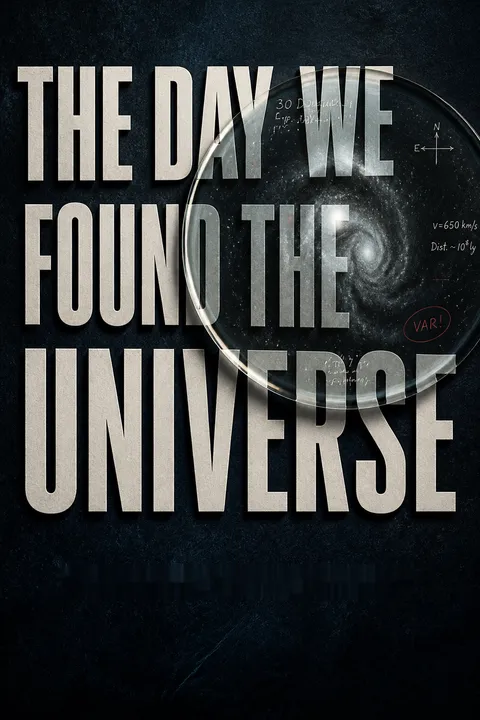
A quiet revolution. On January 1, 1925, astronomers gathered in Washington for a technical presentation by Edwin Hubble, who was not there. Henry Norris Russell read Hubble’s paper aloud. Its evidence showed that Andromeda and Triangulum lay far beyond the Milky Way: our galaxy was one among many. The result ended a debate that had lasted centuries, but it was no sudden flash of genius. It depended on earlier observations, disputed interpretations, new instruments, and a reliable way to measure distance.
The discovery had a cast. James Keeler photographed spirals, Heber Curtis argued that they were distant galaxies, Vesto Slipher measured their motion, Henrietta Leavitt made stellar distances measurable, and Hubble supplied decisive evidence. The story is less a lone-hero tale than a chain of work, with each link making the next possible.
The meeting makes a useful distinction between discovery and announcement. A scientific result becomes consequential when evidence can travel beyond the person who collected it, survive scrutiny, and change what a community considers plausible. Hubble’s absence did not diminish the finding, but the later concentration of credit around his name did obscure the chain that made it possible. This is not merely a fairness issue. Seeing the chain helps readers understand how knowledge is built, and why the celebrated final step may depend on work that looked less dramatic at the time.
Keeler's despised reflector revealed spiral nebulae by the tens of thousands
A telescope changes the question. At Lick Observatory, James Keeler revived the Crossley reflector, an instrument other astronomers considered poor and impractical. Photographic plates collected light over long exposures, revealing faint objects that the eye could not resolve. Keeler’s pictures of spirals such as the Whirlpool galaxy showed detail no earlier drawing had captured. He estimated that the sky might contain roughly 120,000 previously unrecorded nebulae within reach of his telescope, and suspected that many were spirals.
Technique redirected attention. Reflectors use mirrors rather than lenses. Keeler recognized that mirrors gathered a broader range of light and could be made larger than lenses, making them especially useful for photography and spectroscopy. His work helped establish the reflector as the instrument of choice for large astronomical research. Just as important, it made spiral nebulae a serious professional subject rather than a curiosity at the edge of the field.
The Crossley’s story shows that a tool’s value depends on the questions and practices built around it, not just its specifications. Keeler made an overlooked instrument productive by repairing it, adapting it, and concentrating on targets others had neglected. That is a general pattern in research: methodological innovation can create a new field of evidence before it produces a famous conclusion. There is a limit to the lesson, though. A better instrument does not interpret its own images. Keeler could count spirals, but the distance problem still left their physical nature uncertain.
Treat scientific consensus as provisional when evidence fits rival explanations
Nebulae resisted easy answers. For centuries, astronomers wondered whether spiral nebulae were nearby clouds in which stars and planets formed, or distant systems of stars like the Milky Way. William Herschel once favored distant star systems, then reconsidered after seeing a nebula that seemed gaseous. In the nineteenth century, William Huggins used a spectroscope to distinguish the light of glowing gas from the combined light of stars. Yet the Andromeda nebula’s spectrum looked star-like, and Edward Fath later found similar evidence, without a direct distance measurement to settle the question.
Interpretation followed the limits. If spirals were close, they could be small and local; if far away, they had to be immense. Each side could make sense of some observations, while other evidence, including exceptionally bright novae and alleged spiral motion, seemed to contradict it. The debate persisted because astronomers lacked a dependable way to measure the distance.
This history illustrates underdetermination: a set of observations can support more than one explanation when crucial measurements are missing. The danger is not simply that scientists are biased. It is that the available evidence may genuinely fail to discriminate between models. Competing interpretations can therefore remain rational for a time, even when one eventually proves wrong. The useful discipline is to ask what observation would separate the alternatives, rather than treating confidence or consensus as a substitute for that test. In this case, distance was the missing measurement that could turn an argument about appearance into a judgment about scale.
Leavitt turned a star's pulse into a cosmic distance ruler
A pattern became a measuring tool. Henrietta Leavitt compared photographs of the Small Magellanic Cloud and identified variable stars whose brightness rose and fell regularly. Among them were Cepheid variables, stars that pulse over predictable periods. In 1908, she noticed that the brighter Cepheids had longer cycles. Because the stars in that cloud were approximately the same distance from Earth, their apparent brightnesses could be compared directly. With a larger sample, Leavitt established the period-luminosity relation: a Cepheid’s pulsation period reveals its intrinsic brightness.
The distance follows. If astronomers know how bright a star truly is, they can compare that with how faint it appears and estimate how far away it must be. Leavitt’s work made Cepheids standard candles, a way to measure distances beyond the range of parallax. She found 1,777 variable stars in the Magellanic Clouds, but her work conditions were constrained by gender: women at Harvard were hired as “computers,” paid less, and largely kept from applying their findings themselves.
Leavitt’s result is a striking example of turning a correlation into a measuring instrument. The shared distance of the stars acted as a control, allowing a hidden property, intrinsic luminosity, to emerge from visible brightness. The method also depended on institutional labor that was easy to undervalue: painstaking classification created the data from which a powerful law could be drawn. The account complicates the familiar image of scientific progress as a sequence of inspired theories. Sometimes the decisive intellectual act is noticing a pattern in routine work, then recognizing what that pattern could make measurable.
Shapley moved the Sun off-center, but his enlarged Milky Way misled him
Globular clusters mapped our address. Harlow Shapley used Cepheid variables and other methods to estimate distances to sixty-nine globular clusters, dense balls of stars surrounding the Milky Way. The clusters gathered around a point in the direction of Sagittarius, not around the Sun. Shapley concluded that our solar system sat far from the galaxy’s center and that the Milky Way was much larger than astronomers had thought. His initial estimate of about 300,000 light-years across was too large, but the central result held: the Sun occupies no privileged central position.
A successful method had limits. Shapley extended the Cepheid relation to other rapid variables in globular clusters before their distinct nature was clear. He also overestimated distances, partly because his calibration was imperfect and interstellar dust dimmed starlight. Yet his work overturned the smaller, Sun-centered picture of the galaxy. The shift also made him more skeptical of the idea that spiral nebulae were galaxies beyond it.
Shapley’s achievement and error belong together. His bold use of imperfect evidence revealed a major structural truth, while the same confidence encouraged him to overextend his model and defend it against contrary clues. This is a useful reminder that methodological risk can produce insight without guaranteeing correctness. A result should be judged in layers: which measurements were sound, which assumptions were fragile, and which conclusions survive revision? Science rarely replaces an entire picture at once. It often preserves a sturdy central finding while correcting the scale, calibration, or interpretation around it.
Slipher measured the galaxies' flight before Hubble could explain it
Spectral lines became speed marks. Vesto Slipher used a spectrograph to split light into its component wavelengths. When an object moves away, its spectral lines shift toward redder wavelengths; when it approaches, they shift toward blue. In 1912, after long exposures and painstaking adjustments to Lowell Observatory’s equipment, Slipher found that Andromeda was approaching at about 300 kilometers per second. He then measured other spiral nebulae. By 1914, most of the fourteen he had studied were moving away, and some reached speeds above 1,000 kilometers per second.
The data outlasted the explanation. Slipher’s results strongly suggested that spirals were not ordinary objects inside the Milky Way, but he remained cautious about what they were. By 1925, he had measured nearly all of the forty-five spiral velocities then available. Hubble later used many of Slipher’s measurements in his own work on the relation between galaxy distance and redshift, though public credit for the expanding-universe discovery initially gathered around Hubble.
Slipher’s work separates three roles that popular accounts often collapse: detecting a pattern, interpreting it, and persuading a community that the interpretation is sound. His measurements supplied a crucial observational resource before anyone could fit them into a settled cosmology. The delay in recognition also reveals how credit follows visibility and narrative as much as technical contribution. A quiet researcher who publishes in a limited venue can be essential to a discovery and still be left out of its public story. Historical accuracy restores not just names, but the actual structure of the reasoning.
Question precise measurements when they imply physically impossible conclusions
The rotation paradox. Mount Wilson astronomer Adriaan van Maanen compared photographs of spiral nebulae taken years apart and reported that their internal features had shifted. If the spirals were distant galaxies as large as the Milky Way, the measured motion implied speeds near or beyond the speed of light. This appeared to support the view that the spirals were nearby, smaller objects. Van Maanen was respected for careful measurement, and other astronomers accepted his results. The conflict between his reported rotations and Slipher’s velocity data helped shape the 1920 Shapley-Curtis debate.
Reputation was not enough. Hubble later compared new photographs with old ones and found no reliable evidence of the expected rotation. Van Maanen’s measurements were ultimately rejected. His careful procedures could not compensate for subtle errors in comparing images. The episode shows how reasonable methods and trusted expertise can still produce a false result, especially when the result agrees with a favored picture of the world.
Van Maanen’s mistake is more instructive than a simple warning against bias. He used a recognized technique, controlled for possible instrumental effects, and worked within accepted standards. The problem was that errors too small to notice in individual comparisons could accumulate into a coherent but false signal. At the same time, an apparently impossible implication should trigger rechecking, not automatic dismissal: extraordinary conclusions can be real. The productive response is neither blind trust in precision nor reflexive appeal to common sense, but independent measurement using different data and methods.
Hubble's Cepheids settled the island-universe question with distance
One variable changed the scale. While photographing Andromeda with Mount Wilson’s 100-inch telescope in October 1923, Edwin Hubble spotted several new points of light. Comparing old and new plates, he recognized that one was a variable star, not a nova. By tracking its changing brightness, he identified it as a Cepheid. Its period let him estimate its true luminosity; its faint appearance then showed that Andromeda lay roughly a million light-years away, far beyond the Milky Way.
The finding held beyond one galaxy. Hubble found twelve Cepheids in Andromeda and twenty-two in Triangulum, with distances that placed both outside our galaxy. On January 1, 1925, Russell presented Hubble’s results to astronomers. Hubble was absent, still worried that van Maanen’s contradictory rotation measurements had not been explained. The Cepheids gave the island-universe idea the direct distance evidence it had lacked.
Hubble’s decisive contribution was not simply access to the biggest telescope. It was connecting a star he could observe to a distance rule established by Leavitt and calibrated through other astronomers’ work. That chain turned a fuzzy object’s appearance into a testable claim about its location. The event also shows why a single striking observation can matter only when its method is portable: other researchers could examine the periods, brightnesses, and distance calculation. Hubble’s caution slowed the announcement, but it also reflects the high burden of proof attached to overturning the prevailing map of the universe.
Separate the observation of recession from the theory of expansion
A distance-speed pattern emerged. In 1929, Hubble compared the distances of twenty-four galaxies with their measured radial velocities, drawing on Slipher’s earlier redshifts and new work by Milton Humason. The farther galaxies appeared to be, the greater their redshifts and inferred recession speeds. Hubble estimated an increase of about 500 kilometers per second for each megaparsec of distance, a figure later revised as measurements improved. Humason pushed the observations farther, including a galaxy whose measured speed reached 3,779 kilometers per second.
The meaning remained contested. Hubble presented the relation as an empirical result and called the velocities apparent. He did not champion cosmic expansion as its explanation. Georges Lemaître had already shown how an expanding spacetime could account for the pattern, but alternatives remained under discussion. The distinction matters: Hubble established a relation between distance and redshift; interpreting that relation as an expanding universe required a theoretical model.
The separation between measurement and interpretation is central to how this story should be understood. A graph can establish a regularity without uniquely identifying its cause. Hubble’s restraint protected the observational result from being mistaken for a complete cosmological theory, although his prominence later encouraged the two achievements to be blended together. There is also a tension in his posture: he wanted to avoid premature commitment, yet the choice of which measurements to foreground still shaped the debate. Observation is not theory-free, but keeping their claims distinct makes disagreement more precise and productive.
Trace the Big Bang to both telescopes and mathematical theory
The universe entered the equations. Einstein’s general relativity described space and time as dynamic, but he initially preferred a static universe and added the cosmological constant to balance gravity. Aleksandr Friedmann found mathematical solutions in which the universe could change over time. Georges Lemaître connected that possibility to the observed galaxy redshifts, proposing that expanding spacetime carried galaxies apart. His early paper attracted little notice, and Einstein initially rejected the physical picture even while acknowledging the mathematics.
Observations changed the argument. Hubble and Humason’s measurements made the distance-redshift pattern difficult to ignore. Lemaître’s model gave it a physical explanation, and Einstein eventually accepted a dynamic cosmos. Lemaître then proposed that the universe had begun in a compact, high-energy state, which he called the primeval atom. The book’s history is therefore not that Hubble discovered the Big Bang, but that observations and theory, produced by different people, gradually made cosmic expansion credible.
The account resists a common historical shortcut: treating a mathematical model, an observation, and a later cosmological interpretation as one discovery. Each answers a different question. Friedmann showed what the equations permitted; Lemaître tied a dynamic solution to astronomical evidence; Hubble and Humason strengthened the observational pattern. That division of labor is intellectually clarifying, even if it complicates the clean hero story. It also leaves room for scientific ideas to be tested and revised. The earliest distance scale was faulty, and later corrections changed estimates of the universe’s size and age without erasing the central evidence for expansion.
Analysis
The book’s deepest argument is about how scientific revolutions actually become possible. A new universe did not appear because one person looked through one extraordinary telescope. It emerged from a sequence of interlocking advances: reflecting telescopes collected faint light, photography preserved it, spectroscopy revealed composition and motion, Leavitt’s relation made distance estimable, and theorists found ways to interpret the resulting measurements. The final discovery was a change in scale, but the story’s real subject is the construction of reliable inference.
That construction is neither linear nor socially neutral. Astronomers repeatedly read ambiguous evidence through existing models. The same spiral could be a local nursery or another galaxy; a respected observer’s reported rotation could seem to settle the issue, until better comparisons overturned it. Shapley’s errors coexist with his genuine breakthrough, while Hubble’s caution coexists with his ambition to control credit and define the field. The people in the story are not detached instruments of reason. Their rivalries, careers, institutions, and limits affect which questions get asked and which results gain attention.
The book also complicates the public’s preference for singular heroes. Hubble supplied exceptionally persuasive distance evidence, but he depended on Leavitt’s insight, Slipher’s velocities, Humason’s endurance, and predecessors such as Keeler and Curtis. Lemaître, not Hubble, gave the observed trend a compelling expanding-universe interpretation. Reconstructing this distributed achievement does not make Hubble less important. It makes the discovery more intelligible by showing what each contribution did.
A further lesson is that scientific confidence should attach to specific claims, not whole people or whole theories. Shapley was right about the Sun’s off-center location and wrong about the spirals. Hubble established a distance-velocity relation while remaining wary of its cosmological meaning. Later corrections altered the scale without undoing the evidence for expansion. The result is a portrait of science as disciplined revision: robust knowledge grows not by avoiding error, but by making claims testable, exposing their dependencies, and correcting them without discarding what survives.
Review Summary
The Day We Found the Universe is widely praised for its engaging narrative of early 20th-century astronomy, detailing the discoveries that revealed the universe's true scale. Readers appreciate Bartusiak's accessible writing, focus on lesser-known contributors, and ability to convey the era's excitement. The book is lauded for its historical depth and scientific explanations. Some critics found the biographical focus and chronology challenging, but most reviewers recommend it for those interested in astronomy's history and the personalities behind major breakthroughs.
Glossary
Cepheid variables
Pulsating distance markersCepheid variables are stars whose brightness rises and falls in regular cycles. Their pulsation period is related to their intrinsic luminosity, so astronomers can infer how bright a Cepheid truly is, compare that with how bright it appears from Earth, and estimate its distance. Henrietta Leavitt identified this relationship using Cepheids in the Small Magellanic Cloud.
period-luminosity relation
Period predicts true brightnessThe period-luminosity relation links the duration of a Cepheid’s brightness cycle to its intrinsic luminosity. A longer-period Cepheid is intrinsically brighter. Once the relation is calibrated using stars with known distances, astronomers can use a Cepheid’s period and apparent brightness to estimate its distance, extending measurement beyond the range of direct stellar parallax.
island universe
Galaxy beyond our ownThe island-universe idea holds that spiral nebulae are separate stellar systems comparable to the Milky Way, rather than small clouds or developing planetary systems inside it. The name captures the image of galaxies as distinct star-filled islands in a much larger space. Hubble’s Cepheid measurements in Andromeda and Triangulum provided decisive evidence for this view.
redshift
Light shifted to longer wavelengthsA redshift is an increase in the wavelength of light, moving its spectral lines toward the red end of the spectrum. Astronomers use shifts in known spectral lines to infer motion along the line of sight: a redshift indicates recession under the Doppler interpretation. In cosmology, distant galaxies’ redshifts became key evidence for the relation between distance and recession.
Hubble constant
Expansion rate per distanceThe Hubble constant describes the proportionality between a galaxy’s distance and its recession rate in the observed distance-velocity relation. Hubble’s first estimate was about 500 kilometers per second per megaparsec, based on a small sample and an imperfect distance scale. Later measurements revised the value substantially, while retaining the broad linear relation.
cosmological constant
Term balancing cosmic gravityThe cosmological constant is a term Einstein added to his equations of general relativity to support a static universe. In his model, its repulsive effect balanced the gravitational attraction of matter. The term became unnecessary once cosmic expansion was accepted, though the book notes that cosmologists later revived it in efforts to explain an accelerating expansion.
primeval atom
Lemaître’s compact cosmic beginningThe primeval atom was Georges Lemaître’s proposed initial state of the universe: an extremely compact concentration containing the universe’s energy, which then broke apart through a process he compared to radioactivity. Lemaître used this idea to imagine a cosmic beginning in a universe whose spacetime expands. It was an early formulation of a universe with a finite history, not the modern Big Bang model in full.
FAQ
1. What is The Day We Found the Universe by Marcia Bartusiak about?
- Transformation of cosmic understanding: The book traces how astronomers moved from believing the Milky Way was the entire universe to discovering a cosmos filled with countless galaxies.
- Focus on key figures: It highlights the scientific and personal journeys of astronomers like Edwin Hubble, Harlow Shapley, Vesto Slipher, and others who played pivotal roles in this transformation.
- Scientific and cultural context: Bartusiak situates these discoveries within the broader backdrop of early 20th-century society, including technological advances and world events.
- Intertwined personal stories: The narrative weaves together scientific breakthroughs with the ambitions, rivalries, and personalities of the astronomers involved.
2. Why should I read The Day We Found the Universe by Marcia Bartusiak?
- Rich historical insight: The book offers a detailed account of a transformative era in astronomy, revealing how our cosmic perspective evolved.
- Accessible science explanations: Bartusiak breaks down complex concepts like Cepheid variables, redshifts, and general relativity in clear, approachable language.
- Humanizes scientific discovery: The book brings to life the ambitions, rivalries, and collaborations of astronomers, making the history engaging and relatable.
- Highlights unsung contributors: It restores recognition to lesser-known figures like Vesto Slipher and Henrietta Leavitt, emphasizing the collaborative nature of scientific progress.
3. What are the key takeaways from The Day We Found the Universe by Marcia Bartusiak?
- Revolution in cosmic scale: The realization that the universe is vastly larger than previously thought, with the Milky Way being just one of many galaxies.
- Importance of technological innovation: Advances in telescopes, spectroscopy, and astrophotography were crucial for gathering the data that changed our understanding.
- Role of personal dynamics: Scientific progress was shaped not just by data, but by the personalities, rivalries, and institutional politics of the astronomers involved.
- Interplay of theory and observation: The book shows how empirical discoveries and theoretical models, such as general relativity, influenced each other in shaping modern cosmology.
4. Who were the main astronomers featured in The Day We Found the Universe by Marcia Bartusiak and what were their contributions?
- Edwin Hubble: Used the 100-inch Mount Wilson telescope to identify Cepheid variables in Andromeda, proving it was a separate galaxy and later discovering the universe’s expansion.
- Harlow Shapley: Measured distances to globular clusters, expanding the known size of the Milky Way and relocating the Sun from its center.
- Heber Curtis: Advocated for the island-universe theory, arguing that spiral nebulae were distant galaxies, and contributed key photographic evidence.
- Vesto Slipher: Pioneered spectroscopic measurements of spiral nebulae, discovering their high velocities and redshifts, foundational for the expanding universe theory.
- Henrietta Leavitt and James Keeler: Leavitt’s work on Cepheid variables enabled distance measurements; Keeler advanced reflecting telescopes and nebulae studies.
5. What was the “Great Debate” of 1920 and how is it described in The Day We Found the Universe by Marcia Bartusiak?
- Debate over cosmic scale: The “Great Debate” was a public discussion between Harlow Shapley and Heber Curtis about whether spiral nebulae were part of the Milky Way or separate galaxies.
- Contrasting scientific views: Shapley argued for a large Milky Way containing the nebulae, while Curtis supported the idea that spirals were distant galaxies.
- Polite but pivotal event: The debate was more a series of lectures than a heated confrontation, but it highlighted the need for better data and set the stage for future discoveries.
- Lasting impact: It motivated astronomers to seek definitive evidence, leading to Hubble’s breakthrough observations.
6. How did Edwin Hubble’s discoveries change our understanding of the universe according to The Day We Found the Universe by Marcia Bartusiak?
- Proved existence of other galaxies: Hubble identified Cepheid variables in Andromeda, measuring its distance and confirming it lay far outside the Milky Way.
- Developed galaxy classification: He created a system to categorize galaxies, helping organize and understand their structures.
- Discovered the expanding universe: With Milton Humason, Hubble found a linear relationship between galaxy distances and redshifts (Hubble’s Law), implying cosmic expansion.
- Cautious interpretation: Hubble was careful in his conclusions, but his findings fundamentally reshaped cosmology.
7. What was Henrietta Leavitt’s key discovery and its significance in The Day We Found the Universe by Marcia Bartusiak?
- Period-luminosity relationship: Leavitt discovered that the brightness of Cepheid variable stars correlates with their pulsation period, providing a “standard candle” for measuring distances.
- Enabled cosmic distance measurement: Her method allowed astronomers to estimate distances to faraway stars and galaxies, overcoming previous limitations.
- Foundation for later breakthroughs: Leavitt’s work was essential for Shapley’s and Hubble’s distance calculations, which expanded the known universe.
- Enduring legacy: Though underrecognized in her lifetime, her discovery is a cornerstone of modern cosmology.
8. How did Vesto Slipher’s work contribute to the discovery of the expanding universe in The Day We Found the Universe by Marcia Bartusiak?
- Pioneered galaxy redshift measurements: Slipher used spectroscopy to measure the radial velocities of spiral nebulae, finding most were moving away from Earth.
- Provided crucial data: His observations of high velocities and redshifts laid the empirical groundwork for the expanding universe theory.
- Underappreciated at the time: Slipher’s contributions were often overshadowed by Hubble, though his data was essential for later breakthroughs.
- Broader scientific impact: He also made discoveries about interstellar gas and planetary phenomena, leaving a multifaceted legacy.
9. How does The Day We Found the Universe by Marcia Bartusiak explain the expanding universe and its theoretical background?
- Empirical evidence from Hubble: The book details how Hubble’s velocity-distance relation (Hubble’s Law) provided observational proof of cosmic expansion.
- Theoretical models by Lemaître and Friedmann: It explains how Georges Lemaître and Alexander Friedmann developed mathematical models of an expanding universe based on general relativity.
- Einstein’s evolving views: Einstein initially resisted the idea of expansion, favoring a static universe, but later accepted the new model after Hubble’s findings.
- Alternative theories discussed: The book covers competing ideas like the “tired photon” theory and steady-state models, illustrating the era’s scientific uncertainty.
10. What were the major telescopes and technological advances featured in The Day We Found the Universe by Marcia Bartusiak?
- 100-inch Hooker telescope: This Mount Wilson instrument was the world’s largest at the time and crucial for Hubble’s discoveries of Cepheid variables in distant galaxies.
- Crossley reflector and Yerkes refractor: The Crossley at Lick Observatory and the Yerkes 40-inch refractor played important roles in early nebulae studies and training astronomers.
- Rise of reflecting telescopes: The book highlights the shift from refractors to reflectors, which allowed for larger, more powerful instruments.
- Advances in spectroscopy and photography: These technologies enabled precise measurements of stellar compositions, velocities, and detailed images, revolutionizing astronomical research.
11. How does The Day We Found the Universe by Marcia Bartusiak portray the personal and professional relationships among astronomers?
- Rivalries and collaborations: The book explores tensions such as between Hubble and van Maanen over spiral nebula rotation, and between Hubble and Shapley over cosmic models.
- Mentorship and teamwork: It highlights partnerships like Hubble and Humason’s collaboration, and Shapley’s mentorship of Henrietta Leavitt and others.
- Impact on scientific progress: Personal dynamics influenced telescope access, publication disputes, and the pace of discovery.
- Humanizing the scientists: Bartusiak reveals the ambitions, sacrifices, and personalities behind the scientific achievements, making the history relatable.
12. What are the best quotes from The Day We Found the Universe by Marcia Bartusiak and what do they mean?
- On discovery and preparation: “In the fields of observation, chance favors only the prepared mind.” This highlights the importance of readiness and persistence in scientific breakthroughs.
- On the impact of redshifts: Einstein’s remark, “The red shift of distant nebulae has smashed my old construction like a hammer blow,” reflects how Hubble’s findings revolutionized theoretical physics.
- On the vastness of the cosmos: Hubble’s statement, “There is just not one universe. Countless whole worlds, each of them a mighty universe, are strewn all over the sky,” captures the profound shift in humanity’s understanding of its place in the universe.
- On the nature of science: These quotes collectively emphasize the interplay of observation, theory, and the willingness to revise beliefs in light of new evidence.
About the Author
Download PDF
Download EPUB
.epub digital book format is ideal for reading ebooks on phones, tablets, and e-readers.








