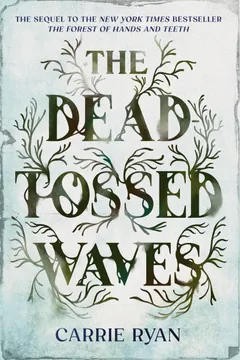


Plot Summary
The Carousel Kiss
In Vista, a walled town beside the ocean, Gabry has never crossed the Barrier into the ruins. Her best friend Cira persuades her to join a forbidden night visit to the abandoned amusement park, where Cira’s older brother Catcher helps Gabry climb the wall. Among the rusting rides, their childhood closeness becomes a first kiss.
Then a fast-moving Breaker attacks. Gabry freezes, swings too early, and lets the infected Mellie reach Catcher. He kills Mellie, but she bites his shoulder. As the surviving teens fight off newly turned friends, Catcher orders Gabry to flee before the Militia arrives. She leaves him and Cira behind, carrying the kiss and the guilt into a suddenly shattered home.
The Barrier is both civic defense and Gabry’s private model of safety: crossing it means risking bodily harm, but also discovering desire and a self beyond the role of obedient daughter. The kiss briefly makes the forbidden world feel like possibility. The Breaker then collapses that distinction. Gabry’s hesitation is not simply cowardice; it is the trained response of someone who has never had to act under real pressure. Her early mistake becomes a wound of responsibility, while Catcher’s infection turns a romantic awakening into anticipatory grief.
Cages in Vista
At dawn, Gabry’s mother, Mary, tells her that the Militia found the surviving teens and that the Council will punish them. Gabry lies about staying home, protecting Mary from having to choose between her daughter and her civic duty. In the square, she sees Cira among the prisoners and learns that two teens died, three are infected, and Catcher is missing.
The Council sends the infected beyond the Barrier to be killed and orders the rest to serve the Recruiters without citizenship or the usual rewards. Cira asks Gabry to find Catcher, then Blane threatens to expose Gabry’s presence unless she does. Fear still governs her, but now it has a price: she must cross the Barrier again or betray the people she left behind.
Vista’s punishment turns collective safety into a public spectacle. The Council treats the teens as warnings to the town, not as frightened young people whose risk has already cost lives. Gabry benefits from the same system she condemns because she escaped notice, and that unequal outcome deepens her shame. Cira’s demand gives her fear a direction, though not yet a freely chosen one: she agrees partly under threat. The gap between responsibility and self-protection becomes the story’s first moral pressure point.
Mary's Shore Confession
While patrolling the beach, Mary hesitates over a newly washed-up Mudo woman instead of killing her at once. Gabry rushes down to help, and the encounter draws out Mary’s account of two past loves: one died infected, while she left the other in the Forest when she escaped. When Gabry asks whether love means going back for someone, Mary admits she once tried, then reveals the deeper secret: Gabry was found alone as a young child on a Forest path.
Mary brought her to Vista and raised her as her own, but never told her because remembering hurt. Gabry feels her identity split between the mother who raised her and an unknown past. Mary decides to return to the Forest to seek the people she abandoned, and Gabry refuses to go with her.
Mary’s hesitation at the shoreline makes her own past visible before she explains it. Her advice to survive by forgetting has been a form of self-protection, but Gabry recognizes the cost: memories are not merely painful records; they bind people to obligations. The adoption revelation therefore lands as both love and concealment. Mary saved Gabry, yet also made decisions about her identity without her consent. Their separation is not a simple rejection. Both women are choosing what they can bear, with Gabry still too frightened to follow her mother into uncertainty.
A Boat Beyond Vista
Unable to climb the guarded Barrier, Gabry steals Mary’s decaying sailboat and aims for the ruins by sea. The current carries her beyond the amusement park, where buried Mudo rise from the dunes and trap her between the water and the seawall. A shaved-headed stranger in a white tunic pulls her from the surf and guides her over a fence as the dead crowd behind them.
He introduces himself as Elias, but withholds why he is traveling alone. Gabry explains that she is searching for Catcher; Elias says he knows where the infected boy is. Before guiding her onward, he kills the Mudo pressing against the fence, unsettling Gabry by treating them as both immediate threats and former people. She follows him because she cannot reach Catcher alone.
The sea route makes Gabry’s decision physical: she abandons the protected town and enters a landscape where neither training nor walls can guarantee safety. Elias’s rescue creates trust through action, but his evasiveness keeps that trust provisional. His precise violence also introduces a moral difference between him and Gabry. She sees the Mudo as people whose losses deserve attention; he sees killing them as necessary mercy. Their disagreement establishes a central tension between survival as practical action and survival as an ethical relationship to the dead.
Catcher's Fever Room
Elias leads Gabry to a ruined building where Catcher is hiding. Catcher confirms that Mellie’s bite infected him and refuses to return to Vista, fearing he will turn and attack someone. Gabry begs to stay, but he sends her home before the Militia can find her. Elias helps her escape the ruins, where the Breaker Griffin races after them; they push Mary’s boat into the surf and survive the pursuit.
On the crossing, Elias reveals a Recruiter’s medal, proving he once served the Protectorate, though he will not explain why he left. Back at the lighthouse, Gabry finds Mary gone on her Forest journey. With Catcher still alone and Cira imprisoned, Gabry’s rescue has not restored anything; it has only made her responsibilities harder to evade.
Catcher’s refusal protects Gabry while also depriving her of the intimacy she has just discovered. His fever turns ordinary touch into a possible danger, making love an ethical restraint rather than a simple claim on another person. Elias’s past as a Recruiter complicates the stranger’s apparent lawlessness, but his silence preserves uncertainty. Gabry comes home physically safe and emotionally more exposed: the lighthouse no longer contains Mary, and the town no longer offers a future she can accept without confronting what she has left behind.
The Souler Amphitheater
With the boat gone, Gabry swims back toward the ruins to visit Catcher. Lost among the buildings, she follows singing to an amphitheater and discovers Soulers, a religious sect that believes the Mudo offer resurrection. Their restrained followers are jawless, toothless, and kept on leashes.
A boy willingly cuts himself and lets a Mudo bite him; afterward, the Soulers break the creature’s jaw and collar the boy as he turns. Elias is among the group. Gabry escapes before he can explain, convinced he has helped sacrifice a child.
At the lighthouse, Militiaman Daniel recognizes the patterned knife Elias gave her as Souler-made and begins questioning her. Gabry invents a report about the cult to draw him away, leaving him suspicious and her caught between two dangers.
The ceremony changes the meaning of the Mudo from an unquestioned enemy into the center of competing belief. The Soulers’ ritual is horrifying because it converts infection into consent and spiritual promise, while the child’s fear remains visible inside the ceremony’s orderly structure. Gabry’s judgment of Elias is understandable, but it rests on an incomplete view of his motives. Daniel, meanwhile, turns her attempt to protect herself into a new vulnerability. The episode makes secrecy dangerous on every side: the cult hides its theology, Elias hides his purpose, and Gabry hides her own trespasses.
Blood at the Gate
When the Soulers arrive at Vista seeking entry, the Militia surrounds them. A soldier’s axe strikes a Souler woman who tries to protect the Mudo on her leash; the restrained dead surge toward her blood, and the Militia kills them in a chaotic melee.
Gabry recognizes the woman from the amphitheater and watches the ceremony’s participants become victims of the town’s brutal answer. She had reported the Soulers to Daniel and feels responsible for the assault. A storm then swells the sea, bringing more Mudo ashore and keeping the Militia at Mary’s lighthouse.
Daniel presses Gabry for information about her absent mother and the unlit lamp, while Catcher waits alone in the ruins. Though the weather gives her an excuse not to return, Gabry knows she is breaking her promise to him.
The attack exposes how quickly the language of public safety can license violence. The Soulers’ beliefs are disturbing, but the Militia’s response does not distinguish between doctrine, threat, and helplessness. Gabry’s report helps trigger the confrontation, making her responsible in a way that is real but not total. Her guilt repeats the same pattern as the amusement-park disaster: she overestimates her control over events and then treats every consequence as proof of personal failure. The storm externalizes her paralysis, allowing duty and fear to pull her in opposite directions.
Daniel at the Barrier
As the Recruiters arrive in Vista, Daniel corners Gabry beside the Barrier. He threatens to expose her trips beyond the wall and uses the town’s suspicion of Mary to suggest he can force Gabry into dependence on him. When his grip loosens, she draws Elias’s knife and stabs him.
She climbs over the Barrier and reaches Catcher’s hiding place, only to find it empty. At the amphitheater, she spots Catcher among the jawless Mudo and believes he has turned. Elias appears as she collapses in grief, then brings Catcher forward alive.
He explains that Catcher is immune: infected, but not dying or sensed by the Mudo. The discovery saves Catcher, yet Gabry cannot return to Vista after stabbing Daniel, and the Recruiters may now see Catcher as a resource to capture.
Daniel’s threat makes the town’s social order feel as dangerous as the Mudo. Gabry’s violence is an act of immediate self-defense, but it does not arrive cleanly: she has also been shaped by fear, accumulated humiliation, and the conviction that escape is her only remaining choice. Catcher’s apparent transformation briefly turns her worst fear into fact before Elias overturns it with immunity. The revelation offers biological hope but not restoration. Catcher survives, while Gabry’s old life becomes unreachable and his unusual condition creates a new political danger.
The Immune Among Dead
Catcher’s immunity means he can stand among Mudo without drawing their attention, but it does not erase his infection or the fever that still burns through him. He wants to return to Vista and rescue Cira, whom Gabry admits she falsely described as safe.
Elias warns that the Recruiters will pursue an Immune because he could enter overrun settlements, recover supplies, and serve as a weapon against hordes. The Soulers may also regard Catcher as proof of their resurrection beliefs. With both groups likely to seize him, the three decide to free Cira and flee through the Forest.
Elias retrieves Mary’s boat and helps Gabry plan a diversion using the collar-controlled Souler Mudo. Their temporary alliance is built on a grim calculation: if Catcher is discovered, none of them will be allowed to choose his future.
Immunity is not a cure; it changes Catcher’s place in the social world. His body becomes valuable precisely because it has not followed the expected course of infection, inviting institutions to treat him as a tool or a sacred sign. The Recruiters and Soulers disagree about what his survival means, but both risk overriding his personhood. Gabry’s deception about Cira now has consequences within their relationship, and the escape plan requires her to act collectively rather than seek private repair. Hope arrives as leverage others may use against them.
A False Breach
At dusk, Catcher leads the restrained Souler Mudo to Vista’s Barrier and sends them toward the town, creating enough alarm to pull guards from the Council House. Gabry and Elias enter the jail and find Cira badly weakened from cuts to her arms.
Elias binds the wounds while Gabry supports her, and Blane admits she could not stop Cira from harming herself. Catcher arrives, and the group carries Cira toward the beach, but Militiamen are already searching for Gabry after Daniel’s stabbing.
Catcher confirms that the Recruiters have also seen him with the Mudo and may know he is immune. With Vista closing behind them, Gabry proposes the Forest, the place she once refused to enter with Mary. Catcher finds a path through the woods, and they run for it together.
The false breach turns the Mudo into instruments of escape, reversing their usual narrative role without making them harmless. Cira’s injuries reveal that confinement has become psychologically intolerable, not merely punitive. Gabry’s care for her contrasts with the Council’s use of public punishment, but she cannot undo the abandonment that preceded it. Catcher’s immunity exposes the danger of being seen: survival itself attracts capture. The Forest becomes the only available route because every protected institution now threatens the group, so refuge must be sought in the place they were taught to fear.
The Sonnet Trail
The friends cross the waterfall bridge into the Forest and follow narrow paths fenced on both sides by Mudo. Recruiters pursue them, hoping to capture Catcher, while Cira struggles with fever and blood loss. At a fork, Gabry notices Roman numerals on the gates and realizes they correspond to Shakespeare’s sonnets, matching lines Mary carved around the lighthouse.
Her mother’s book becomes a map: by choosing gates linked to the carved verses, Gabry can follow the route Mary took. Elias explains that he joined the Recruiters to gain entry to the Protected Zones while searching for the woman he believes is his sister, Annah. The path gives them direction, but not safety; the fences strain under the dead, and the pursuers are closing in.
Mary’s poetry changes from a private habit into practical knowledge, linking memory to navigation. The map is not a declaration that the past should rule the present; it is an inheritance Gabry can interpret and use for her own purpose. The fenced path also makes safety visibly conditional. The dead are close enough to touch, while the Recruiters approach from behind. Elias’s search for Annah mirrors Gabry’s desire to recover her own history, but both searches depend on information each person has withheld.
The Village of Names
The sonnet route brings the group to an abandoned Forest village where Mary has reunited with Harry, the man she once left behind. Harry calls Gabry Abigail and recognizes Elias, revealing that Gabry and Annah are twin sisters and that Elias knew them as children. Elias admits he led the girls onto the forbidden paths, then left Gabry behind while taking Annah with him; his lifelong search has been driven by guilt and the belief that Annah is his sister.
Mary and Harry explain that the village fell after infection breached its defenses, and that Gabry’s birth mother died delivering the twins. Gabry has no clear memories of her first home, but the revelation gives her a family history she can finally question rather than merely inherit.
The village makes identity a matter of overlapping, imperfect stories. Mary’s motherhood is not erased by the discovery of Gabry’s birth, while Elias’s childhood wrongdoing does not cancel the care he has shown in the present. The truth arrives through people who remember different fragments, not through a single authoritative account. That structure resists the fantasy that a recovered origin can make the self whole. Gabry gains kinship and context, but must still decide what those facts mean to the person she has become.
Cira's Last Passage
Cira’s infected wounds continue to worsen, and she chooses to seek the same immunity that kept Catcher alive. She slips away and is eventually found after turning. When the Recruiters breach the village, Mary and Harry flee with Odys while Gabry turns back for the damaged book recording the Forest’s history. Cira, now a Mudo, attacks a Recruiter who has fallen beside Gabry.
The man catches her braid and holds her back long enough for Gabry to escape, then Cira turns on him. Mary and Harry survive the flight, but the village is lost. Later, Gabry reads the book and learns the Forest once held a hidden network of settlements, cut off by authorities who hoped isolation would contain infection or conceal a refuge.
Cira’s choice is shaped by both despair and hope: she refuses a slow death and bets on the possibility that infection might leave her alive as it did Catcher. Her fate makes that hope devastatingly uncertain. The dying village records the cost of isolation at a civilizational scale, showing that safety policies can preserve lives for a time while also erasing the knowledge needed to connect them. Gabry’s decision to retrieve the book is an act of memory, but it cannot reverse the loss of her friend or restore the community that produced the record.
The Broken Mountain Path
The Recruiters catch up as the group climbs through the Forest. A section of path collapses, leaving Elias injured on a ledge above a mass of Mudo. Catcher and the others haul him to safety, but his broken leg makes escape impossible. Elias urges Gabry and Catcher to continue before the Recruiters can use them to control Catcher.
Mary and Harry stay with him, and Gabry gives Elias the Recruiter’s citizenship medallion he had worn, trusting it may help him survive. He promises to recover and find her in the Dark City, while she promises to look for Annah. Gabry and Catcher descend toward a surviving stretch of path. Their separation is chosen under pressure, not because their bond has weakened.
The collapse turns the story’s recurring question of whether to stay or go into an irreversible decision. Gabry has repeatedly feared leaving people behind, yet this time remaining would expose everyone to capture. Elias’s injury makes the promise of reunion fragile, but the medallion gives that promise a concrete route and a possible claim to protection. Mary and Harry’s choice to stay also reframes care: love does not always mean traveling together. Sometimes it means entrusting someone to others while accepting the pain of distance.
The Bridge Over the Horde
A ruined bridge blocks Gabry and Catcher’s route, while Recruiters and Mudo close in behind them. Catcher can move among the dead, but Gabry must inch along a narrow ledge outside the bridge fence, relying on him to keep the Mudo from reaching her. Halfway across, Catcher freezes at a gap, overwhelmed by his fear of heights.
Gabry guides him one step at a time, recalling how he once helped her over Vista’s Barrier. Below them, a vast horde fills the valley. To stop the Recruiters from following, Catcher shifts wrecked cars until the bridge and fence collapse. They reach the far side and glimpse Mary, Harry, Odys, and the injured Elias alive across the gap. With no way back, Gabry and Catcher continue toward the Dark City.
The bridge gives the novel’s paired fears a physical form: Gabry confronts a dangerous height, while Catcher faces the panic he once disclosed on the wall. She now offers him the patient guidance he gave her, reversing their earlier roles without making either fear disappear. The horde below also enlarges the scale of the story from private survival to a civilization still surrounded by the dead. Destroying the bridge protects the group but severs the return route, making forward movement a consequence rather than a slogan.
Epilogue
Beyond the broken bridge, Gabry and Catcher keep walking toward the Dark City, where they hope to find Annah and wait for Elias. Gabry no longer measures safety by whether she can return to the lighthouse or restore the life she had before the amusement park.
She carries Cira’s superhero charm, Elias’s medallion, and the memory of Mary’s light. The dead still crowd the world, and the old settlements continue to crumble, but Gabry chooses to seek a future that cannot be guaranteed. Survival, she understands, must include the work of building something new.
The ending refuses a cure, a restored town, or a complete reunion. Gabry’s future remains uncertain, but the bridge’s destruction converts that uncertainty into a chosen direction. The keepsakes she carries are not solutions: they are portable relationships, reminders that love and memory can persist across separation. Her shift is from treating safety as enclosure to treating it as a condition people must make together. The book’s final hope is therefore practical rather than triumphant. The world remains dangerous, but its survivors can still imagine forms of life beyond mere defense.
Analysis
The novel makes survival a conflict between protection and participation. Vista’s walls preserve a community, yet they also teach Gabry to confuse obedience with safety and to imagine the world beyond them as a single undifferentiated threat. When she crosses the Barrier, the danger is real, but so are the relationships and histories she could not encounter while sheltered. The story does not dismiss fear; it asks what fear becomes when it dictates every choice.
Its infected bodies destabilize moral certainty. Most Mudo are dangerous, and the living must defend themselves, but the Soulers’ rituals and Catcher’s immunity prevent the dead from remaining an uncomplicated category. Gabry’s changing understanding does not make her violence or grief disappear. It makes her attend to what each act costs, including the cost of treating people as symbols, weapons, or inevitable losses.
Memory is equally double-edged. Mary hides Gabry’s origins to spare them both pain, while the sonnet map and village chronicle show how lost knowledge can guide the living. Recovering history does not restore the dead or erase the consequences of secrecy. It gives Gabry a fuller account from which to act. Her final movement toward the Dark City is therefore not a return to normal life. It is a commitment to relationships that can survive distance, uncertainty, and change, and to building possibilities in a world that offers no guarantee of safety.
Review Summary
The Dead-Tossed Waves received mixed reviews. Some readers found it more compelling than its predecessor, praising the world-building, character development, and intense atmosphere. Others criticized the repetitive plot structure, lackluster love triangle, and protagonist's constant self-pity. The book explores themes of survival, identity, and the nature of humanity in a post-apocalyptic world overrun by zombies. While some appreciated the emotional depth and philosophical questions posed, others felt the romance overshadowed the more interesting aspects of the story.


Characters
Gabry
The lighthouse keeper's daughterGabry grows up in Vista’s lighthouse, where the Barrier and Mary’s routines make danger seem distant and manageable. Cautious, observant, and deeply attached to familiar people, she often mistakes hesitation for a fixed weakness in herself. Her bond with Cira gives her an intimate measure of courage, while her feelings for Catcher awaken a desire she has not learned how to express. Gabry’s attention to stories, poetry, and small details helps her make sense of a world that resists simple explanations. She is most compelling when she tries to take responsibility, even when guilt distorts her understanding of what she could control.
Mary
The keeper of the lightMary raises Gabry at the edge of Vista, maintaining the lighthouse and clearing Mudo from the shore. Her competence and independence make her a reassuring presence, but her silence about the Forest also shows how fear can turn protection into concealment. She has survived love, loss, and exile, and she keeps her past close through carved lines of poetry and stories told selectively. Mary wants Gabry to have the safety she lacked, yet she also longs to recover the people and place she left behind. Her life embodies the tension between building a home and answering the call of an unfinished past.
Catcher
Gabry's childhood confidantCatcher is Cira’s older brother and one of the few people who has known Gabry since childhood. Beneath his ease with the dangerous ruins, he carries a private fear of heights and a strong instinct to protect the people he loves. His closeness with Gabry shifts as they grow older, though he struggles to reconcile affection with the risks surrounding him. Catcher is shaped by loyalty to Cira and by the harsh expectations of a world that treats every infection as a certain death. His reserve makes it difficult for others to know what he is afraid of until he can no longer hide it.
Cira
Gabry's daring best friendCira is an orphan raised alongside Catcher, and she meets danger with a boldness that often unsettles Gabry. She is playful, socially confident, and drawn to possibilities beyond Vista, including the distant Dark City. Her daring is not simple fearlessness: Cira depends deeply on the people around her and measures her own worth through those bonds. She gives Gabry the superhero charm she wears as a token of protection, reflecting Cira’s wish to believe that someone can still intervene in a frightening world. Their friendship is affectionate, candid, and vulnerable to the unequal choices survival forces on them.
Elias
The guarded forest travelerElias is a capable young traveler Gabry meets beyond Vista, dressed in the white tunic associated with the Soulers. He knows how to navigate the ruins, fight Mudo, and survive outside protected settlements, yet he guards the personal history that explains his choices. His restraint can look like indifference, especially when he believes that telling the truth might cause further harm. Elias is motivated by loyalty to family and a restless search for someone he has lost. His practical knowledge contrasts with Gabry’s moral questions, and their uneasy trust grows through repeated acts of help, disagreement, and vulnerability.
Harry
Mary's old friendHarry is one of the few survivors still living in the Forest village where Mary grew up. He shares her memories of the community and carries a quieter understanding of how much history has been lost. His affection for Mary is rooted in a life they once imagined together, but he does not treat their past as a claim on her present. Harry offers Gabry context about the village and the people who came before her, helping her distinguish remembered history from the story she was raised to believe.
Annah
The absent young womanAnnah is an absent figure whose disappearance shapes Elias’s travels and decisions. Gabry first encounters her through his account of the person he is seeking, rather than through direct experience. What is known about Annah comes filtered through memory and longing, which makes her presence both emotionally important and incomplete. She represents the family bonds Elias is unwilling to abandon, while her unknown life beyond the search keeps her distinct from the assumptions others make about her.
Daniel
The resentful militiamanDaniel is a Militiaman with a crooked leg that kept him from joining the Recruiters, a rejection that appears to have hardened his need for status. He can be helpful and attentive, but his loyalty to Vista’s authorities gives his concern a controlling edge. Daniel watches Gabry closely and uses rumors, rules, and civic suspicion to increase his influence over her. His character shows how exclusion can produce resentment without excusing the harm someone chooses to inflict.
Blane
Cira's fierce fellow prisonerBlane is an older teen in Catcher’s circle, confident enough to challenge Gabry and protective of Cira after the arrests. Her anger at Gabry comes from believing that Gabry abandoned the group when they needed one another. Blane’s judgments can be harsh, but they arise from a genuine fear of being left alone with the consequences of others’ choices. She is one of the people through whom Gabry sees how differently the same night looks to those who stayed.
Mellie
The dreamer of the Dark CityMellie is an older teen who speaks openly about leaving Vista for the Dark City. Graceful and confident among her friends, she embodies a kind of ease that Gabry envies. Her plans give shape to the young people’s restless fantasies before the danger outside the Barrier becomes immediate.
Griffin
Mellie's dancing companionGriffin is a red-haired teen in Catcher’s social circle who joins Mellie in the amusement park’s dancing and flirtation. His presence helps make the night feel like an ordinary adolescent adventure, even as the group stands among hazards they do not understand.
Odys
The village's watchful dogOdys is Harry’s aging black dog, trained to alert the village to Mudo and quick to react to the infected. He provides a practical warning system in a landscape where people can miss approaching danger. His loyalty to the village and its people gives him a steady, physical presence amid the group’s fear and uncertainty.
Plot Devices
The Barrier and Forest paths
Safety with a costVista’s wooden Barrier separates a protected town from dangerous ruins, while the fenced paths through the Forest create narrow routes that keep travelers away from open ground and guide them toward other settlements. The walls first represent the safety Gabry trusts, then become obstacles she must cross to find Catcher and escape the Recruiters. Their limits matter: fences can fail, paths can collapse, and being enclosed does not eliminate danger. The geography turns each decision into a test of what safety means and who is allowed to move beyond its boundaries.
Infection and immunity
A body changed by deathA Mudo bite spreads infection, which ordinarily kills the victim and causes them to rise as one of the dead. When few Mudo are nearby, the newly turned become faster Breakers, able to spread infection quickly. Catcher’s unusual survival challenges the rule that infection always ends in death: he remains infected but is not attacked or noticed by Mudo. The discovery changes him from a doomed boy into someone both the Recruiters and Soulers may want to control. The device joins bodily horror to a question of agency, since the same condition can make a person vulnerable, valuable, or feared.
Mary's sonnet markings
Memory becomes a mapMary carves lines from Shakespeare’s sonnets around the lighthouse and leaves Gabry a book of the poems. Gates along the Forest paths carry Roman numerals that correspond to particular sonnets, allowing Gabry to match the route to the verses. The clues convert a habit Gabry once regarded as private decoration into practical guidance. They also make inherited memory active: Gabry cannot rely on Mary to lead her, but she can interpret what Mary left behind and make her own choices from it. Poetry becomes both navigation and a form of connection across separation.
The Souler collars
The dead under restraintThe Soulers remove the Mudo’s teeth and lower jaws, then collar and leash them so they cannot bite living people. This practice makes the dead appear controlled, while the exposed hunger and moans reveal that restraint has not restored or comforted them. The collars allow the Soulers to travel with Mudo and stage rituals around their beliefs in resurrection. They also become a means of creating a diversion when Gabry, Elias, and Catcher need to free Cira. The device keeps the danger visible while showing how different groups try to impose meaning and control on it.
The Recruiter medallion
A promise of passageElias’s medallion identifies him as a former Recruiter and later offers Gabry a possible claim to entry into the Dark City. It complicates her first impression of Elias as an outsider, then becomes a token he gives her when they must separate. Unlike the fences, the medallion does not physically keep anyone safe. Its value depends on people recognizing the authority behind it. As a story object, it turns an institution Elias once served into a fragile means of reaching him again.
The Forest of Hands and Teeth Series

Download PDF
Download EPUB
.epub digital book format is ideal for reading ebooks on phones, tablets, and e-readers.








