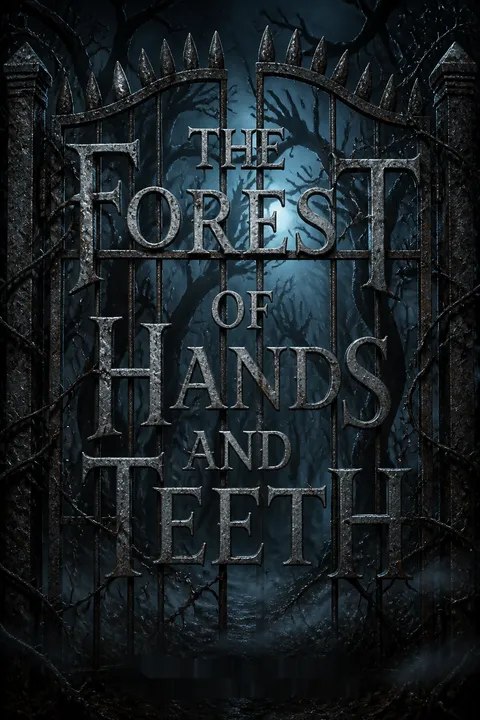


Plot Summary
A Mother Chooses the Forest
Mary lives in a fenced village surrounded by the Unconsecrated, the dead who hunger for the living. Her father has vanished into the Forest, and her mother still hopes he may return. When the alarm sounds, Mary races from the stream and learns her mother has been bitten while searching near the fence.
The Sisters offer the customary choice: die before infection takes hold, or be sent beyond the fence after turning. Mary’s mother chooses the Forest, hoping to join her husband. At the fence, as infection clouds her mind, she suddenly recalls the ocean from family stories and urges Mary to remember it. Her mother dies and returns as one of the Unconsecrated. Mary watches, then loses her belief in God.
Mary’s mother makes the same choice the village claims to honor, but its cost exposes how little control anyone has over the meaning of that choice. For Mary, witnessing her mother’s transformation collapses the distinction between faith and institutional custom. The ocean story becomes more than inherited wonder: it is a fragment of a world her village cannot explain. Her grief begins not with rebellion, but with the realization that familiar beliefs cannot answer what she has seen.
A Home Closes Behind Her
After a week in the Cathedral, Mary returns to her family’s house expecting her brother Jed to share their grief. Instead, he blames her for allowing their mother to choose the Forest and insists he may have to kill her if he finds her on patrol. He tells Mary that no one has spoken for her at the Harvest Celebration and that she must join the Sisterhood.
His wife Beth has also lost the child she was carrying. Refused entry to the only home she knows, Mary climbs the abandoned lookout tower and studies the village’s fences and forbidden paths. Sister Tabitha then leads her underground and forces her into a clearing ringed by Unconsecrated. Mary must declare that she chooses the Sisterhood before the Sisters let her return.
The village presents its rules as protection, yet Mary experiences them as a system that turns bereavement into social exclusion. Jed’s demand that she accept the Sisters also shifts responsibility away from his own painful choices. Tabitha’s staged danger makes obedience feel voluntary only after Mary has been shown the cost of refusal. The scene establishes the novel’s central question about agency: a choice may be real while still being made inside boundaries someone else controls.
Snow for Travis
Winter studies confine Mary to the Cathedral, where Sister Tabitha assigns her to care for an injured patient. The patient is Travis, Harry’s younger brother and the boy Mary has wanted for years. A severe, infected-looking leg wound leaves him feverish and unsure whether he will walk again.
Though Mary is still under a vow of silence, she brings him snow to ease his thirst and visits him each day. Instead of relying on prayers she no longer believes, she tells him the stories her mother passed down, especially those about the ocean.
Travis gradually improves, while Mary recognizes that her care has become love. When his intended, Mary’s friend Cassandra, visits him, Mary sees his response to Cass and has to face that he is pledged to someone else.
Caring for Travis gives Mary a form of closeness that the village’s marriage customs do not provide: attention grounded in another person’s immediate needs. Her stories function as comfort, but also as a test of whether inherited memory can matter when its teller is gone. Cass’s visit complicates Mary’s private attachment by making visible the difference between love and entitlement. Mary’s tenderness is sincere, yet it does not erase her awareness that Travis belongs to an existing promise.
Footprints Beyond the Fence
Sneaking to Travis’s room at night, Mary hears the Sisters hiding someone in the adjoining chamber. After the visitors leave, she finds fresh footprints leading from the forbidden path to the Cathedral.
The tracks belong to a living person, not an Unconsecrated, so Mary realizes that people exist beyond her village. She later speaks through the wall to the stranger, a girl named Gabrielle, who says she is uninfected. Mary sees Gabrielle briefly at a window, wearing an unmistakable red vest, before the curtains close.
Soon Gabrielle disappears, and the Sisters erase every trace of her presence. Mary’s discovery turns her childhood belief in the outside world into evidence. The locked path now seems less like a meaningless boundary than a route somebody has traveled.
Gabrielle’s arrival gives Mary empirical confirmation of what the village has trained her to dismiss as fantasy. Yet the stranger’s secrecy also reveals that truth is not simply hidden by distance: local authorities actively decide who may know it. Mary’s first response is not to abandon the village at once, but to reinterpret its architecture and restrictions. The footprints transform curiosity into a political problem because the Sisters’ account of the world can no longer be accepted as complete.
Two Couples, One Choice
When Mary is told that Travis may not recover, Harry unexpectedly asks to court her, and the Sisters approve the match. Cass explains that her own courtship with Travis can be ended because his injury may leave him unable to support a wife.
She has begun to love Harry, but agrees to marry Travis instead, believing commitment matters more than desire. At Brethlaw, Mary and Harry exchange their Troth, while Travis and Cass do the same. Before the final vows, Mary finds Travis on the lookout hill.
They nearly kiss, and he shares her suspicion that the village cannot be the whole world. A flash of red at the fence interrupts them: Gabrielle has returned as a fast, newly turned Unconsecrated. Mary recognizes her and runs to alert the Guardians.
The four young people are caught between private desire and a marriage system designed to preserve the village, not to reward emotional honesty. Cass and Mary both make accommodations that appear dutiful, though each carries unspoken hurt. Travis’s shared belief in a world beyond the fence briefly gives Mary a companion in her deepest longing. Gabrielle’s return abruptly joins that intimate conflict to the wider danger: the truth Mary wants to pursue has already been made lethal.
The Sisters' Hidden Experiment
As the Binding ceremony with Harry approaches, Mary searches the Cathedral’s forbidden underground rooms for proof of what happened to Gabrielle. She forces open a concealed door and finds a small chamber containing a Scripture crowded with handwritten notes.
The records describe how extreme isolation made a test subject unusually strong and fast, and say the Sisters planned to send her into the Forest to measure how long she would last. Gabrielle’s name is freshly carved among the names at the doorway.
Mary realizes the Sisters did not merely conceal an outsider; they used her to learn about the Unconsecrated. Mary returns upstairs without taking the book, then lets Sister Tabitha bind her to Harry. The next morning the alarm sounds, and the village’s fences fail.
The discovery reverses the moral arrangement Mary has been taught to trust. The Sisters’ order may preserve life, but their records show that they can treat a vulnerable person as a means to communal knowledge. Mary’s decision to proceed with the Binding after finding this evidence is not simple consent; she has already been deprived of a safe alternative. The alarm makes the concealed experiment’s consequences immediate, though the records do not prove precisely how Gabrielle became fast.
The Village Falls
As the Unconsecrated pour through the breach, Harry cuts the Binding rope between himself and Mary and gathers supplies. He rescues Jacob, a young boy left on the ground, while Mary struggles toward a platform with Argos, their dog.
The platforms are full or inaccessible, and Travis and Cass are already trying to climb to safety. An Unconsecrated woman attacks Mary; Harry kills it and pulls her toward the Cathedral. Sister Tabitha holds the door open for them, but Gabrielle strikes, bites Tabitha, and nearly enters the building.
The Sisters shut the door, leaving the pair outside. With the village overwhelmed, Mary, Harry, Jacob, Argos, Travis, and Cass escape through the forbidden path. Jed and Beth later reach them there, confirming that the village is lost.
The breach strips away the village’s comforting distinction between orderly safety and chaotic danger. The platforms, built as communal refuge, become scarce resources that invite people to abandon those below. Harry’s rescue of Jacob contrasts with that panic and gives Mary a reason to trust him beyond their failed courtship. Tabitha’s death at the door also exposes the limits of authority: even the person who enforced the rules cannot control the threat those rules were meant to contain.
Beth's Last Days
Jed tells the group that the village has fallen and that the forbidden path contains supplies prepared by the Guardians in case they had to flee. He does not tell his brothers that Beth has been bitten.
When Mary discovers the wound, she urges Jed to follow Guardian practice, but he asks for one more day with his wife. Mary agrees to keep his secret. At a later camp, she exposes Beth’s infection in anger, and Jed strikes her. Beth soon dies; Jed reveals that she was pregnant and describes how he pulled her toward the path during the attack.
As the survivors continue, Mary finds numbered metal markers at forks in the path and connects them to Gabrielle’s Roman numerals. She keeps the discovery to herself, afraid to offer the group hope she cannot yet justify.
Jed’s concealment is an act of love that endangers the group, while Mary’s decision to expose it is partly moral alarm and partly displaced anger. Neither sibling can make grief fit the community’s rules without harm. Beth’s death and pregnancy loss sharpen the cost of survival into something more intimate than statistics. The numbered markers give Mary a task that can be pursued without pretending the path is safe or that any answer is assured.
A Village in the Trees
With supplies dwindling and Cass demanding a return to the village, Mary points out that the path markers might form a code. The group follows a sequence that matches the Roman numeral Gabrielle left on the Cathedral window.
It leads them to another settlement, silent and apparently abandoned. When they enter, the Unconsecrated rise from buildings and fields, forcing the survivors into a large house. Mary discovers an Unconsecrated infant alone in a crib. She wraps the child and holds it, then drops it from an upstairs window to end its threat.
The house proves unusually well stocked and fortified, and the others reach refuge in a network of tree platforms. Mary and Travis remain separated from them in the house, with the broken bridge between their shelters.
The second village offers proof that Mary’s pursuit can uncover real places, but not a safe destination. Its tree platforms and fortified house suggest that earlier inhabitants anticipated siege more realistically than Mary’s village did. The infant forces Mary to confront how little remains of the human meaning attached to the Unconsecrated. Her act is both protective and morally devastating, showing that survival may demand actions her former self could scarcely imagine.
Photographs Beneath the Roof
Travis and Mary settle into the house, eating stored food and listening to the Unconsecrated press against the shutters. Mary searches the attic and finds photographs of a family who once lived there, including a child beside the ocean.
One girl resembles Mary enough to make the image feel like a bridge to her mother’s stories. The discovery deepens Mary’s restlessness, even as she and Travis build a quiet life together. They eventually make contact with the others by attaching notes to arrows.
When the Unconsecrated break into the house, Mary fights them with an axe while Argos saves her from being dragged down. The pair escape toward the tree platforms using a rope made from torn clothes and an old bridge line. During the escape, Mary sees old newspaper pages confirming the global scale of the Return.
The photographs turn the ocean from a family legend into a documented place, but documentation does not restore the world that made the images. Mary’s longing grows precisely when she has found domestic safety with Travis, revealing that love and security cannot automatically replace an independent purpose. The house’s former family is present only through artifacts, much like Mary’s own threatened inheritance. Her fight and escape show that she is no longer only a witness to danger.
A Dream Kept from Mary
After reaching the tree platforms, Mary reads a small book found among the house’s belongings and recognizes that its numbered sections correspond to the markers on the paths.
The code offers a route through the maze, but Travis reveals a more painful secret: Gabrielle told him she had seen the ocean and warned that its shores were dangerous. He kept this from Mary because he feared she would leave and die. He also admits that, despite their kiss and his promise, he had decided not to claim her before her Binding to Harry.
Mary is devastated by his silence and by the possibility that the ocean is no refuge. She cannot promise to give up the search. Their love remains real, but Travis understands that he cannot be the whole future she wants.
Travis’s concealment is protective in intention but paternal in effect: he substitutes his judgment for Mary’s right to choose danger. His admission exposes a painful asymmetry between loving someone and trusting their agency. The coded book gives Mary a practical means to pursue what had been an almost mythical desire, even as Gabrielle’s warning complicates its promise. Their separation is not a rejection of affection, but a recognition that intimacy cannot resolve incompatible futures.
Fire Takes the Platforms
A fire spreads through the tree settlement, cutting off the survivors’ escape. Someone must reach the path and anchor a rope across the gap. Travis, whose leg is still damaged, runs through the Unconsecrated to secure it while Harry and Jed shoot from the platform. Mary crosses first, then watches Travis struggle along the line as the rope begins to fray.
He reaches safety, but collapses. He tells Mary he was bitten during their earlier escape from the house and is already infected. Before he turns, he asks her to continue toward the ocean. When he dies and returns, Mary takes Jed’s scythe and decapitates him. The survivors flee the burning settlement, carrying their remaining supplies and Mary’s grief with them.
The fire makes escape a collective problem, but Travis chooses to bear its most dangerous part because his injury prevents him from crossing the rope. His sacrifice cannot undo the earlier failures of honesty between them, yet it gives Mary a final act of care: she ends his returned existence herself. The scene refuses an easy distinction between love and violence. Mary’s grief is inseparable from responsibility, and continuing onward becomes a way to honor a promise she did not want to make.
Beyond the First Gate
The survivors travel ahead of the fire, passing gates until they reach a dead end marked with the number one. Mary reads this as the beginning of the coded route and decides the gate must open directly into the Forest. Harry and Jed urge her to wait, but Mary goes through in the rain, hoping it will mask her scent. Jed follows because he will not leave his sister alone.
They fight through Unconsecrated and tumble down a slope toward a flooded river. At the canyon, a horde forces them to climb down beside a waterfall. Falling bodies knock Jed into the torrent, and Mary cannot find him. A current pulls her under as she struggles against an Unconsecrated in the water. She wakes on a beach, alive, with no sign of Jed.
The first gate asks Mary to exchange one kind of danger for another: the predictable confinement of the paths for exposure to the open Forest. Jed’s decision to follow repairs part of their broken sibling bond, even though it cannot guarantee either of them safety. The river makes the journey’s central paradox physical: the force that may carry Mary toward freedom also takes her brother from sight. Her arrival is survival without triumph, accompanied by unresolved loss.
The Ocean Is Real
Mary wakes among bodies washed onto the beach after the storm. A man with a shovel mistakes her for one of the Unconsecrated, whom he calls Mudo, until she moves and proves she is alive. He helps her check the bodies for Jed, but they find no sign of him. The man explains that he lives in a nearby lighthouse and clears the beach after storms.
Mary steps into the water, tastes its salt, and lets the waves lift her, at last meeting the place her mother described. The ocean is not untouched by the Return: Unconsecrated wash ashore, and the keeper warns that danger remains along the coast. Mary leaves the water with her memories of Travis and Jed and follows the man toward the lighthouse.
The ocean fulfills Mary’s childhood hope without validating the fantasy that any place can be wholly free of danger. Its tides both deliver the dead and carry them away, making renewal inseparable from recurrence. The keeper offers practical companionship rather than a grand rescue, while Mary’s missing brother and lost friends remain part of the life she brings to shore. The ending changes her relation to hope: it is no longer proof of safety, but a reason to keep moving.
Analysis
The novel makes the boundary between safety and captivity tangible. Mary’s village has survived by turning fences, platforms, ritual, and restricted knowledge into one system. That system does save lives for generations, which is why questioning it feels dangerous rather than merely rebellious. Yet its leaders also decide which histories may be remembered and whose suffering may be used for communal knowledge. Mary’s investigation therefore challenges not only religious authority, but the claim that survival justifies every form of control.
Mary’s ocean quest begins as inherited imagination, then becomes a concrete route through evidence: Gabrielle’s arrival, the markers, old photographs, and newspapers. Each revelation strengthens her belief that the world is larger while refusing the comforting idea that the world beyond is safe. The ocean is real, but it contains the same returned dead as the land. Hope survives not because Mary finds an untouched refuge, but because she reaches a place her community insisted could not exist. The relationships deepen this argument. Jed’s love for Beth makes him conceal her infection; Mary’s anger exposes the danger of that concealment, then her own failures force her to recognize the pain beneath his choices. Travis loves Mary but hides what Gabrielle told him, mistaking protection for the right to choose her future. Harry’s steadiness and Cass’s devotion to Jacob show other ways people build attachment amid loss. None of these bonds abolishes danger or guarantees fairness.
Mary’s development is not a simple victory of independence over community. She remains responsible to people she loves, and her choices injure them as well as herself. By the shore, she has lost much of what made home recognizable, and Jed’s fate remains uncertain. The ending offers no clean cure for grief. Instead, it defines hope as movement, memory, and continued choice in a world where survival is never the same as safety.
Review Summary
The Forest of Hands and Teeth received mixed reviews. Many praised its atmospheric writing, zombie premise, and complex characters, particularly Mary's selfishness and determination. Critics found the love triangle frustrating and the ending unsatisfying. Some felt the pacing was slow and world-building lacking. Readers were divided on the present-tense narration and open-ended conclusion. Despite flaws, many found it captivating and appreciated its darker themes. Overall, it's a polarizing but memorable zombie apocalypse story that resonated with some readers while disappointing others.
People Also Read
Characters
Mary
Keeper of family storiesMary is a young woman raised in a tightly controlled village where the Forest beyond the fences is treated as the limit of the world. Her mother’s stories about the ocean give her a private inheritance of curiosity, and she is drawn to evidence that contradicts the Sisters’ teachings. She is loyal and capable of deep tenderness, but grief and frustrated desire can make her impulsive or self-centered. Her relationships with Travis, Cass, Harry, and Jed expose different pressures on her: romantic longing, friendship, obligation, and family loyalty. Mary’s defining drive is not simply escape. She wants to know what is true and to decide for herself what risks make a life worth living.
Travis
The wounded dreamerTravis is Harry’s younger brother and Mary’s longtime friend, a thoughtful young man whose curiosity about life beyond the village matches hers. His serious leg injury leaves him dependent on the Sisters’ care and shapes his sense of what he can offer others. He is gentle and attentive, but his fear of losing Mary leads him to withhold information and make decisions on her behalf. His feelings for Mary exist beside prior commitments to Cass and loyalty to Harry, leaving him caught between desire and responsibility. Travis values the hope Mary’s stories offer, even while he doubts whether the world they describe can be reached safely.
Harry
Mary's steadfast childhood friendHarry is Travis’s older brother, Beth’s brother, and one of Mary’s oldest friends. Polite and dependable, he takes village duties seriously and is trained among the Guardians. His affection for Mary is tied to years of shared childhood, not merely the marriage arrangement imposed by circumstance. He can act decisively under pressure, as when he saves Jacob during the breach, yet he is also shaped by the same rules and fears that constrain Mary. His bond with Travis and his developing closeness with Cass complicate his feelings. Harry’s sense of duty is sincere, but he must repeatedly decide whether preserving order is the same as protecting the people he loves.
Cassandra
Mary's changing best friendCassandra, usually called Cass, is Mary’s childhood best friend and Travis’s intended partner. She is affectionate, sunny, and often more comfortable with the village’s familiar routines than with Mary’s stories about the outside world. Her gentleness should not be mistaken for passivity: when grief and danger strip away her usual ease, she can become fiercely protective of the people she considers family. Cass is particularly devoted to Jacob, whose need gives her a clear purpose amid upheaval. Her relationship with Mary is marked by genuine love as well as jealousy, hurt, and unspoken competition. Cass’s practical instincts offer a counterweight to Mary’s appetite for discovery.
Jed
Mary's hardened older brotherJed is Mary’s older brother and a Guardian, trained to maintain the fences and kill the infected. The loss of their father hardens him, and his sense of responsibility often appears as sternness or anger. He expects Mary to follow the rules because he understands how quickly the village can be endangered, yet his own attachments make those rules painful to enforce. His marriage to Beth and his closeness to Mary reveal a more vulnerable man beneath the Guardian’s discipline. Jed’s central conflict is how to protect his family when every available choice involves loss. He is both a representative of the village’s survival code and someone deeply wounded by its demands.
Sister Tabitha
Guardian of village doctrineSister Tabitha leads the Sisterhood, which teaches Scripture, provides healing, and governs much of village life. She is disciplined, commanding, and convinced that secrecy and strict rules preserve the community. Her treatment of Mary reveals a complicated mix of protectiveness, suspicion, and coercion: she believes she is preventing harm, but is willing to frighten and confine a young woman to secure obedience. Tabitha carries knowledge that ordinary villagers are denied and sees that knowledge as a burden only the Sisters can manage. Her authority makes her both a caregiver and a source of danger for Mary.
Gabrielle
The forbidden outsiderGabrielle is a young stranger who reaches Mary’s village by way of its forbidden path. Her brief presence challenges the Sisters’ claim that no other human community exists. Mary glimpses her in a bright red vest and learns her name through a wall, but knows little about her origins or intentions. Gabrielle becomes an unsettling figure because the authorities keep her existence secret, and later signs associated with her appear along the paths. She represents the possibility that the world is larger than Mary’s village, while her fate warns that crossing boundaries can carry a terrible cost.
Beth
Jed's tender-hearted wifeBeth is Jed’s wife and the younger sister of Harry and Travis. She is expecting a child and is closely tied to the village’s hopes for its next generation. Her pregnancy keeps her apart from the dangerous perimeter patrols, while her gentle nature makes her an important emotional presence in the family. Beth’s relationships connect Mary to the brothers’ household and give Jed a source of intimacy beyond his Guardian duties. She embodies the ordinary future the village is trying to preserve.
Jacob
The young survivorJacob is a young boy from Mary’s village who is caught in the breach and rescued by Harry. He has seen more fear and loss than a child should have to carry, and he clings to the adults who offer him steadiness. Cass becomes deeply protective of him, while Mary shares stories and gives him a photograph to hold onto. Jacob’s questions and need for reassurance keep the group’s choices grounded in the future of someone too young to protect himself.
Argos
The loyal village dogArgos is the young dog Harry gives Mary as a wedding present. He senses the Unconsecrated and stays close to the people he trusts, particularly Mary and later Jacob. His instincts make him useful in moments when the humans cannot see danger clearly, while his vulnerability reminds them that survival includes more than their own lives. Argos offers uncomplicated companionship in a world where affection is often tangled with obligation.
Mary's mother
Source of ocean storiesMary’s mother passes down stories about the world before the Return, especially the ocean, and nurtures her daughter’s imagination. She remains devoted to her missing husband and sees hope where others see only the Forest. Her love for Mary is expressed through care and memory, leaving her daughter with a rich inheritance of stories but few explanations for why she herself remained within the village.
The lighthouse keeper
Keeper of the coastal refugeThe keeper lives near the beach and clears Unconsecrated bodies after storms. He is practical and matter-of-fact about the danger along the coast, and offers Mary help without pretending the ocean is safe.
Plot Devices
The fences and platforms
Safety that becomes confinementFences keep the Unconsecrated outside the village, while elevated platforms give residents a refuge during breaches. Together, they shape the community’s routines, laws, and assumptions about what lies beyond. The system appears to preserve life, but it also makes the village dependent on controlled access and scarce refuge. When a fast Unconsecrated breaches the defenses, the platforms become dangerous bottlenecks and the fences no longer guarantee safety. Their practical purpose is inseparable from their psychological one: they protect villagers from immediate danger while teaching them not to imagine life beyond the boundary.
The ocean stories
A memory that points outwardMary’s mother tells her about the ocean and other remnants of the pre-Return world. The stories provide a language for imagining something beyond the village, even when Mary doubts their truth. Later, photographs and scraps of old newspapers confirm that the world her mother described existed. The ocean remains more than a destination: it represents Mary’s wish to inherit knowledge without being confined by the people who preserve it. It also complicates her relationship with Travis, whose love cannot simply replace her desire to know the world.
The Sisters' Scripture
Doctrine conceals a historyThe Sisterhood uses Scripture and ritual to organize village life, teach obedience, and justify its control over knowledge. Mary initially encounters this system as a source of order and care, especially through healing and communal ceremonies. In the Cathedral’s hidden rooms, however, she finds handwritten records in a copy of Scripture that reveal secret experiments involving Gabrielle. The same religious object therefore serves two purposes: it instructs the villagers while concealing evidence of what the leaders have done in the name of survival.
Roman numeral markers
A code through the ForestMetal markers attached to gates and path forks bear Roman numerals. Mary first notices them as isolated signs, then connects them to numerals Gabrielle left behind and to the numbered sections of a small book. The markers turn the Forest’s fenced paths into a navigable route rather than a random maze. They do not promise a safe destination: following the code leads the survivors to another settlement filled with Unconsecrated. The device makes knowledge actionable while preserving the uncertainty of what the route will demand.
The Unconsecrated
Death made physically presentThe Unconsecrated are the returned dead, driven by hunger for human flesh. A bite can infect the living, and the infected eventually die and return as one of them. The village’s Guardians monitor the fences and kill the Unconsecrated, while infected people may be held until their transformation. Gabrielle’s unusual speed shows that the threat is not always predictable. The Unconsecrated force Mary and the others to confront survival as a sequence of practical and moral decisions, from fleeing a breach to ending the existence of someone they love.
The Forest of Hands and Teeth Series
Download PDF
Download EPUB
.epub digital book format is ideal for reading ebooks on phones, tablets, and e-readers.








