

Key Takeaways
Explain life as organized information, not chemistry alone
Matter needs instructions. In his 1943 lectures, physicist Erwin Schrödinger asked how ordinary atoms and molecules produce living organisms. Davies argues that chemistry alone misses what makes life distinctive: biological matter stores, transmits, and uses information. DNA holds instructions, proteins perform much of the work, and cells coordinate activity through signals and regulatory networks. The living state is therefore not a mysterious extra force, but chemistry organized by information.
Information is embodied. It is not a substance floating free of matter. Genetic sequences, molecules, and cellular structures carry it, while their organization helps determine what the system does. This framework links physics to biology without reducing an organism to a mere list of molecules.
What's powerful here is the shift from asking which ingredients life contains to asking how those ingredients are organized and used. Similar distinctions appear in computing: hardware alone does not explain what a program does, even though the program cannot run without hardware. The analogy clarifies why molecular inventories can be insufficient. It also has limits: biological information is not always a literal set of instructions, and its meaning depends on cellular context. Information offers a useful explanatory level, not a replacement for chemistry.
Use Maxwell's demon to see how information can do physical work
A thought experiment becomes a tool. James Clerk Maxwell imagined a tiny agent that sorts fast and slow gas molecules, creating a temperature difference that could power an engine. The puzzle was how this could happen without violating the second law of thermodynamics. Leo Szilárd sharpened the problem by imagining a box containing one molecule: knowing which side holds it lets a demon extract work from its random motion.
Information has a cost. Rolf Landauer showed that erasing information in a computer must dissipate heat. The demon can use information to extract work, but it cannot repeat the process indefinitely without paying an entropic cost to clear its memory. Cells use molecular machines that similarly convert energy and information into directed work, while remaining subject to thermodynamic limits.
The demon is useful because it makes information's physical consequences concrete: knowing the molecule's position changes what work can be extracted. The same accounting connects computation, heat management, and cellular machinery. It also blocks an appealing misconception. Information is not a free fuel that abolishes thermodynamics; measurement, memory, and resetting have physical costs. The framework is especially valuable in engineering, where tiny energy costs matter, but it should not be mistaken for a complete explanation of how cells organize their many interacting processes.
Study living systems as information-processing networks, not inventories of parts
Connections shape behavior. A cell's genes interact through chemical pathways that can switch other genes on or off. In fission yeast, researchers modeled a cell-cycle network with ten nodes and twenty-seven links. Its changing pattern of gene activity follows the stages of cell division, and a small group of four genes appears to coordinate much of the network's activity. This control kernel helps keep the cycle on track.
Simple rules can make complexity. A cellular automaton is a grid whose cells change state according to rules applied repeatedly. Conway's Game of Life shows how simple rules can generate moving patterns and even universal computation. These models suggest that system-level behavior can be studied through information flow, not only by inspecting each molecular component.
Network models make biological organization tractable in the same way circuit diagrams help engineers reason about electronics. They can reveal control points, feedback, and bottlenecks that a parts list conceals. The yeast example is particularly useful because the model can be compared with observed cell-cycle behavior. Still, a network is a representation, not the organism itself. Results depend on how nodes, links, and rules are defined, and a neat circuit diagram can hide chemical detail that matters in particular conditions.
Treat evolution as more than random mutations filtered by selection
Variation has structure. Natural selection acts on variation, but Davies describes evidence that organisms can influence how variation arises. Epigenetics studies mechanisms that regulate gene activity beyond changes to the DNA sequence itself. In bacteria, stress can raise mutation rates in particular regions or genes, increasing the chance of a useful change. Barbara McClintock also found that cells can rearrange genetic material, including by moving chromosome segments.
This refines, not discards, Darwinism. The examples do not show organisms deliberately choosing the exact mutation they need. They suggest that biological systems can adjust the production and repair of variation, while natural selection still determines which variants persist. In this view, evolution acts on both organisms and some of the mechanisms that generate their variation.
This account makes the evolutionary process more sophisticated without requiring foresight. A system can have evolved mechanisms that increase variation under stress, just as it can evolve mechanisms for DNA repair. That distinction matters: a biased search is not the same as a goal-directed one. The evidence also varies in strength across examples. Epigenetic effects, stress responses, and inherited changes should not be collapsed into one universal mechanism, and claims about inheritance across generations need careful testing.
Read cancer as a possible ancient survival program gone rogue
A breakdown of cooperation. Multicellular life depends on cells limiting their own replication for the benefit of the organism. Cancer can be understood as a breach of that arrangement: cells resume uncontrolled growth and may spread through the body. Davies and colleagues propose that cancer often reactivates ancient cellular functions that predate complex multicellular organisms, rather than assembling every cancer trait from scratch through random mutations.
The proposal makes testable predictions. The book points to studies finding that cancer-associated genes cluster around the evolutionary emergence of multicellularity, and that cancers often express older genes more strongly than younger ones. It also describes elevated mutation and DNA-repair activity in tumors. These findings support an atavistic interpretation, in which cancer resembles a regression toward older survival strategies, but they do not establish it as the sole cause of cancer.
The evolutionary framing offers a compelling way to connect cancer's recurring features with the history of multicellularity. It encourages researchers to ask why tumors repeatedly use familiar developmental and survival processes, rather than treating every case as a wholly new accident. That is a productive research lens, not a settled replacement for the somatic mutation account. Cancer is diverse, and evolutionary age correlations do not by themselves prove that a tumor is reverting to an ancestral state. The strongest version of the argument is one that generates predictions and remains open to competing mechanisms.
Look for quantum effects where biology needs speed, sensitivity, or efficiency
Life may exploit quantum behavior. In photosynthesis, energy captured by light-harvesting molecules reaches a reaction center with remarkable efficiency. Experiments on green sulphur bacteria suggest that quantum coherence may help energy explore multiple routes through a molecular complex, improving its delivery. Another proposed case is bird navigation: quantum interactions between electrons in retinal proteins may help birds sense Earth's weak magnetic field.
The evidence remains provisional. Quantum tunneling has also been proposed as part of smell, where molecular vibrations might help distinguish odorants. These examples go beyond the ordinary fact that all chemistry depends on quantum mechanics. They concern potentially useful quantum effects in living systems, but several claims remain debated, and experiments must distinguish quantum coherence from classical molecular motion.
Quantum biology is compelling precisely because biological environments are warm, crowded, and noisy, conditions that usually disrupt delicate quantum effects. If organisms preserve useful coherence amid that noise, the mechanisms could inform both biology and quantum engineering. The distinction between ordinary quantum chemistry and unusual, functionally important coherence is crucial. Evidence for one process cannot establish that quantum effects explain life broadly, and the proposed bird and smell mechanisms remain more contested than the general quantum basis of molecular structure.
Separate chemical complexity from the information architecture needed for life
Amino acids are not organisms. Stanley Miller's 1953 experiment produced amino acids by sparking electricity through a mixture of gases and water. It demonstrated that some building blocks of life can form under plausible conditions, not that life itself follows automatically. Fossils and stromatolites in Western Australia's Pilbara region suggest that microbial life existed at least 3.5 billion years ago, but the place and pathway of life's origin remain uncertain.
The missing bridge is organization. A full origin story must explain how chemistry came to store, interpret, and transmit information, including the genetic code linking DNA sequences to proteins. Davies argues that chemical complexity alone cannot tell us how this coding system emerged. A second, independently originated form of life, perhaps found as a shadow biosphere, would transform the debate, but no such discovery is reported.
This distinction helps prevent a common leap from making organic molecules to explaining life. The origin problem is not simply whether chemistry can build complex ingredients; it is how a self-maintaining system couples those ingredients to information and coordinated activity. The book is strongest when it marks this gap clearly. Its confidence about what chemistry cannot explain is more speculative than its account of Miller's result or the fossil evidence. Until researchers know the relevant pathway, estimates of how readily life begins remain highly uncertain.
Treat minds as integrated information patterns, while keeping the hard problem open
The whole may matter most. The brain processes information through vast networks of neurons, but consciousness does not appear to be a simple sum of individual signals. Integrated information theory proposes that consciousness is associated with how irreducibly interconnected a system is: if dividing the system destroys substantial information, its integration is high. The theory offers a way to quantify a feature that ordinary descriptions of brain activity can miss.
A measure is not an explanation. Even a detailed map of neural activity may not explain what an experience feels like, such as the redness of red. Davies also connects agency to open systems that gather information from their surroundings and respond. These ideas suggest that information patterns may help explain mind, while leaving unresolved how subjective experience arises or how mental states produce physical action.
Integrated information theory addresses a real explanatory gap between listing neural activity and explaining coordinated experience. Its focus on system-wide organization also fits the book's broader argument that relationships can matter more than components. Yet a mathematical measure of integration is not automatically a measure of consciousness. Any proposed metric needs to distinguish conscious systems from complex but apparently nonconscious ones, and to make predictions that competing accounts do not. The book appropriately leaves subjective experience as an open problem rather than claiming that information theory has solved it.
Question fixed laws when explaining systems that rewrite their own rules
Life changes its operating rules. In conventional physics, laws govern how a system changes while remaining fixed themselves. Biology complicates that picture: genomes encode processes, yet evolution can alter the genome and therefore alter the rules governing future activity. Davies uses the analogy of a game whose rules change in response to its state. Such systems can generate forms and behaviors that fixed-rule systems cannot reach.
A new physics is a proposal. The book suggests that information patterns, self-reference, and top-down effects may require laws operating at the level of organized systems, alongside familiar particle-level physics. These ideas could help connect biology with physics, but the proposed principles are not established physical laws. Their importance is as a research challenge: explain how organization changes what systems can do without invoking a mystical life force.
The proposal presses on an important boundary in explanation: a genome is both data and part of the machinery that determines how data is used. That makes biological change harder to describe with rules assumed to be wholly external to the system. Still, calling emergent regularities new physical laws requires more than showing that higher-level descriptions are useful. The next step is operational: specify measurable predictions that distinguish state-dependent organization from known physics. This keeps the ambition high while separating a productive question from a demonstrated result.
Analysis
Davies builds a coherent bridge from thermodynamics to biology by treating information as something physically embodied that can organize matter and alter what a system is able to do. Maxwell's demon supplies the conceptual hinge: information can help extract work, but its use remains constrained by the thermodynamic costs of memory and erasure. From there, the book extends the informational lens across genetic regulation, cellular networks, evolution, cancer, quantum effects, origins, and consciousness. Its strongest contribution is not a finished theory of life, but a change in what counts as an adequate explanation. A molecular inventory is often less illuminating than the organization and flow of information among its parts.
That breadth is also the book's main vulnerability. The evidence is uneven. Thermodynamic limits and molecular information processing are more firmly grounded than proposed quantum navigation mechanisms, an atavistic theory of cancer, or new state-dependent physical laws. Davies often signals that difference, but a brisk narrative can make speculative connections feel more established than they are. The claim that information has independent causal status also needs careful handling: information is always realized in physical systems, and describing its effects at a higher level does not by itself show that known physics is incomplete.
The most productive reading is therefore neither reductionist dismissal nor uncritical acceptance. Information provides a powerful explanatory vocabulary for comparing systems at different scales, from molecular machines to brains. It can reveal coordination, feedback, and system-level constraints that disappear in atom-by-atom descriptions. But each application must establish what is measured, how the information is defined, and whether the framework generates predictions beyond existing models. The book's enduring value is its research program: investigate how physical systems acquire, preserve, and use information, and test whether the same organizational principles help explain life's distinctive capacities. That program is ambitious precisely because its central questions remain open.
Review Summary
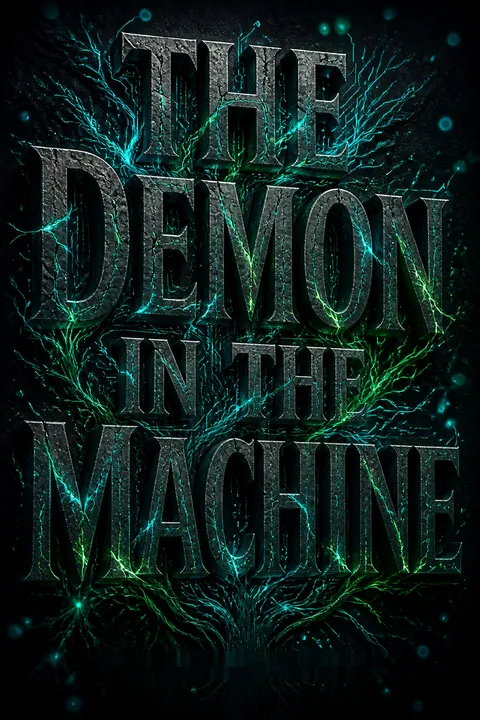
The Demon in the Machine explores life through the lens of information theory and physics. Davies argues that information processing is fundamental to living systems, combining biology, quantum mechanics, and computation. Readers found the book fascinating yet challenging, praising its insights into epigenetics and cellular processes. Some felt it didn't fully deliver on explaining life's mysteries, while others appreciated its thought-provoking ideas. The book's technical nature and occasional lack of clarity were noted drawbacks, but overall it was well-received for its unique perspective on the intersection of physics and biology.
Glossary
Maxwell's demon
Information-guided molecular sorterA hypothetical agent introduced by James Clerk Maxwell that observes gas molecules and selectively lets fast or slow molecules pass through a barrier. Its sorting appears to create a temperature difference without energy expenditure, challenging the second law of thermodynamics. Later analyses show that information acquisition and especially memory erasure carry physical costs, preventing unlimited work from being extracted.
Landauer limit
Minimum erasure costThe minimum heat that must be dissipated when a computer irreversibly erases one bit of information. Rolf Landauer connected this cost to the physical resetting of memory, showing that information processing is constrained by thermodynamics. The limit is tiny at ordinary temperatures, but it establishes that information is not abstractly detached from the physical devices that store and manipulate it.
Shannon information
Measured reduction in uncertaintyA mathematical measure of information developed by Claude Shannon for communication systems. It quantifies how much uncertainty is reduced when an outcome is observed, commonly in bits. The measure concerns the statistical content of a message, not its meaning or usefulness. In biology, a DNA sequence can contain Shannon information whether or not the cell can interpret it functionally.
dissipative structures
Order sustained by energy flowOrganized patterns that arise in systems driven far from thermodynamic equilibrium and maintained by a continuous flow of energy or matter. Examples discussed include convection patterns and chemical waves. Ilya Prigogine proposed that such structures could represent a waystation on the path toward life, because they show how order can emerge without violating the second law.
cellular automaton
Rule-driven grid modelA mathematical model made of cells arranged on a grid. Each cell changes state according to a rule based on the states of other cells, often nearby ones. Repeating simple update rules can produce complex patterns. Conway's Game of Life is a well-known example, used in the book to explore computation, self-reproduction, and the emergence of organized behavior from simple rules.
epigenetics
Gene regulation beyond sequenceThe study of mechanisms that affect gene activity without changing the underlying DNA sequence. Examples include chemical modifications that block or enable gene expression, changes to chromatin organization, and certain forms of inherited regulation. Epigenetic processes help explain why cells with the same genome can develop different functions and why environmental or cellular conditions can affect biological outcomes.
adaptive mutations
Stress-linked mutation patternsMutations whose rates or locations are influenced by a cell's condition, particularly under stress. Experiments described in the book show bacteria increasing variation in particular genes or genomic regions when ordinary repair or metabolism fails. This does not mean a cell deliberately selects the exact beneficial mutation. It means mutation is not always distributed uniformly across the genome.
atavistic phenotype
Ancestral-like biological stateA phenotype that resembles an older evolutionary condition. Davies and collaborators use the term for their proposal that cancer can reactivate ancient cellular functions associated with unicellular life or early multicellularity. On this account, tumors draw on conserved survival mechanisms rather than inventing every cancer trait anew. The interpretation is a hypothesis, not an established replacement for other cancer theories.
integrated information theory
Consciousness through irreducibilityA theory associated with Giulio Tononi that links consciousness to the degree a system's information is integrated. A system is highly integrated when dividing it into parts substantially changes or destroys its cause-and-effect structure. The theory proposes a quantitative measure, commonly denoted by the Greek letter phi, but whether that measure tracks consciousness in a reliable and distinctive way remains debated.
shadow biosphere
Independent life on EarthA proposed population of organisms on Earth descended from an independent origin of life, rather than from the lineage that produced all known terrestrial life. Such organisms might be difficult to recognize because microbes can look similar while using different underlying biochemistry. Finding even one clear example would provide evidence that life began independently more than once.
state-dependent dynamics
Rules altered by system stateA proposed way to describe systems in which the rules governing change can themselves vary according to the system's current state. Davies argues that biological systems complicate the conventional picture of fixed laws acting on changing matter, because evolution can alter the genome that helps govern future activity. Applying this idea as a physical principle remains speculative.
FAQ
What's The Demon in the Machine about?
- Exploration of life: The book investigates the fundamental nature of life, focusing on the unique properties that differentiate living organisms from non-living matter.
- Role of information: Paul Davies emphasizes the importance of information in biological systems, proposing a new framework that integrates physics, biology, and information theory.
- Interdisciplinary approach: The author combines insights from various fields to propose a unified theory of life, suggesting that we are on the verge of fully understanding it.
Why should I read The Demon in the Machine?
- Profound questions: The book addresses big questions about the nature and origin of life, making it a thought-provoking read for science and philosophy enthusiasts.
- Challenging perspectives: Davies presents cutting-edge ideas that challenge traditional views in biology, offering a fresh perspective on evolution and information.
- Accessible writing: The author explains complex concepts in an engaging manner, making the book suitable for both scientists and general readers.
What are the key takeaways of The Demon in the Machine?
- Life as information processing: The book posits that living organisms are fundamentally information-processing systems, where the flow and organization of information are crucial.
- Maxwell's demon and order: Davies uses the concept of Maxwell's demon to illustrate how information can create order from chaos, linking it to biological processes.
- Evolution and information: The author argues for a revised understanding of Darwinism that incorporates the role of information in evolution.
What are the best quotes from The Demon in the Machine and what do they mean?
- “Life is the next great frontier of physics!”: This quote encapsulates Davies' belief that understanding life requires new physical principles, bridging biology and physics.
- “Nothing in biology makes sense except in the light of evolution.”: This emphasizes the importance of evolutionary theory in understanding biological processes.
- “Information is the currency of life.”: This highlights the central role of information in biological systems, suggesting that life’s processes are about managing information.
How does Paul Davies define life in The Demon in the Machine?
- Complex system: Davies suggests that life is characterized by its ability to process information, adapt, and evolve, distinguishing it from non-living systems.
- Integration of matter and information: Life emerges from the interplay between physical matter and abstract information, creating organized patterns.
- Beyond reductionism: The author challenges the reductionist view, advocating for a holistic understanding that includes information dynamics.
What role does Maxwell's demon play in The Demon in the Machine?
- Information's power: Maxwell's demon serves as a metaphor for how information can create order from chaos, a concept applied to biological systems.
- Thermodynamics connection: The demon concept challenges the second law of thermodynamics by suggesting that information can be harnessed to generate work.
- Understanding life: By using the demon as a lens, Davies explores how organisms manage information to maintain order and function.
How does The Demon in the Machine relate to Darwinism?
- Darwinism 2.0: Davies introduces a revised understanding of evolution that incorporates the role of information and epigenetics.
- Information as a driver: The book argues that the flow and management of information are crucial to understanding adaptation and evolution.
- Complexity and adaptability: Life’s complexity involves sophisticated information processing that enhances adaptability, beyond random mutations.
What is the significance of information in The Demon in the Machine?
- Central theme: Information is portrayed as a fundamental aspect of life, akin to energy, that animates matter and drives biological processes.
- Biology and physics: Understanding life requires recognizing how information flows through biological systems, influencing processes from cellular to consciousness.
- Future research: Emphasizing information opens new avenues for scientific inquiry, particularly in bioinformatics and systems biology.
What role does quantum mechanics play in The Demon in the Machine?
- Quantum effects in biology: The book explores how quantum mechanics may influence biological processes, suggesting life could harness quantum phenomena.
- Measurement problem: Davies discusses the quantum measurement problem, raising questions about the relationship between consciousness and the physical world.
- Integration of theories: Understanding quantum mechanics is essential for a comprehensive theory of consciousness and life, leading to new insights.
What are the implications of a "shadow biosphere" as discussed in The Demon in the Machine?
- Alternative life forms: The concept suggests there may be forms of life on Earth that are fundamentally different from known life.
- Multiple origins: Life could have originated multiple times on Earth, with different forms potentially coexisting, challenging the notion of a single origin.
- Astrobiology implications: This concept informs the search for extraterrestrial life, suggesting life could exist in forms we do not yet recognize.
How does The Demon in the Machine address the origin of life?
- Complexity of origins: The book emphasizes that the origin of life involves both chemistry and information, crucial for explaining life's beginnings.
- Prebiotic chemistry: Davies discusses theories and experiments related to prebiotic chemistry, aiming to recreate conditions that led to life.
- Cosmic imperative: The author explores the idea that life may be a cosmic imperative, suggesting the universe is predisposed to generate life.
What future research directions does The Demon in the Machine suggest?
- Interdisciplinary studies: The book advocates for research combining physics, biology, and information theory, potentially leading to breakthroughs.
- Quantum biology: Further exploration of quantum effects in biological systems could provide new insights into life’s fundamental operations.
- Information theory in biology: Developing a comprehensive theory of information management in biological systems is essential for understanding life's complexity.
About the Author
Other books by Paul C.W. Davies


Download PDF
Download EPUB
.epub digital book format is ideal for reading ebooks on phones, tablets, and e-readers.








