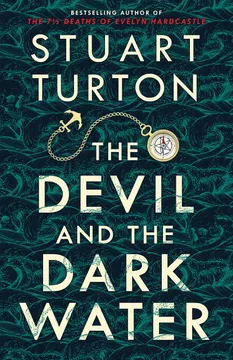


Plot Summary
Batavia’s Bloody Procession
In 1634, mercenary Arent Hayes1 shields his friend Samuel Pipps3 from a Batavian crowd pelting the famous investigator3 with stones. Pipps,3 bruised and chained, is being sent back to Amsterdam under arrest, though Arent1 does not know what crime he is accused of. Governor General Jan Haan6 leads the procession toward the harbor with his wife2 Sara,2 daughter5 Lia,5 and a mysterious casket called the Folly.
At the docks, a bandaged man17 standing on crates warns that the Saardam will never reach Amsterdam. He claims a dark master has marked the ship for ruin, then catches fire before the crowd. Arent1 extinguishes the flames, but the warning follows the passengers toward the waiting ship.
The opening makes public cruelty the book’s first supernatural-looking spectacle. The crowd does not need proof of Pipps’s guilt; chains and a captive body are enough to turn suspicion into entertainment. Arent’s physical protection of his friend establishes a competing code, one based on loyalty rather than the crowd’s appetite. The warning then shifts the pressure from a city square to a ship, a closed world where rumor can travel faster than evidence. The Folly’s presence hints that commercial ambition, not simply occult danger, will help determine who is trapped aboard.
Mercy Beside the Crates
Jan Haan’s6 wife,2 Sara Wessel,2 ignores the crowd and kneels beside the stranger,17 using a medicinal draught to ease his agony. When the man17 can no longer be saved, she asks Arent1 to end his suffering; she stays with him, and Lia5 watches beside her. Pipps3 notices that the supposed leper17 has no tongue, a damaged foot, and the hands of a carpenter.
Those injuries suggest someone staged his appearance and spoke for him. Sara2 asks her husband6 to delay sailing so Arent1 can investigate, but Haan6 refuses to heed a prisoner’s3 warning. Pipps3 cannot examine the body in chains, so he entrusts the case to Arent,1 who must investigate a threat before it becomes an attack.
Sara’s mercy is not a decorative gesture. It brings her into contact with the evidence and makes her the first person willing to treat the supposed monster as a victim. Pipps’s deductions likewise turn spectacle into a set of testable details: tongue, gait, hands. The contrast matters. Compassion notices what contempt overlooks, while method challenges what fear accepts. Haan’s refusal to pause the voyage is the first consequential failure of authority. His decision traps the passengers inside a danger that might still have been investigated on land.
The Saardam’s Mark
Aboard the Saardam, Arent1 learns that Haan6 intends to keep Pipps3 imprisoned until their return to Amsterdam, where the investigator3 may face execution. Haan’s6 Guard Captain Jacobi Drecht7 assigns Arent1 to investigate the threatened gunpowder store and identify the dead carpenter.17 Before Arent1 can begin, the ship’s sail unfurls bearing the same eye-shaped mark carved into his wrist after his father vanished.
Haan6 recognizes the mark and tells Arent1 that it once preceded calamities across the United Provinces. The connection turns an external threat into a private mystery. Arent1 still has no memory of the forest where he acquired the scar, but now the ship’s danger and his unresolved past appear to share a source.
The mark changes the scale of the mystery without explaining it. Arent’s scar has been a private wound, an absence where memory should be; on the sail, it becomes public evidence that his history may have consequences for everyone aboard. Haan’s knowledge deepens the family tension, since he can supply fragments while withholding the truth that would make them meaningful. The ship’s symbol therefore functions both as threat and as accusation. Arent is not merely investigating a crime; he is being forced to question the stories that have allowed him to live with his missing father.
Bosey’s Missing Tongue
While Arent1 questions the captain8 and the gunpowder-store constable,19 Sara2 draws information from Henri,18 a young carpenter’s mate.18 The dead man17 was Bosey,17 a lame carpenter17 who once served on the Saardam and bragged about a profitable bargain in Batavia. Boatswain Johannes Wyck12 cut out Bosey’s17 tongue after growing tired of his talk.
Before losing it, Bosey17 repeatedly used a word that Henri18 cannot translate. Sara2 also learns that Wyck12 is the only sailor aboard who speaks Nornish. She and Arent1 compare findings, while Sara’s2 friend Creesjie Jens4 refuses to abandon the voyage despite the danger. The investigation now has a human trail: Bosey’s17 money, his silencing, and the men who knew what work he was doing.
The ship’s hierarchy makes information a controlled resource. Wyck can silence a carpenter physically, while the captain’s rules prevent passengers from freely crossing the mast to question the crew. Sara finds a way around that barrier by recruiting a young worker whom authority has overlooked. Her method is social and practical, not mystical. The unknown word becomes a compact clue whose meaning depends on a relationship between men. By centering Bosey as a harmed person rather than an evil herald, Pipps’s investigative ethic begins to take root in Arent and Sara.
Old Tom’s Old Bargain
Creesjie4 explains that her late husband, Pieter Fletcher, hunted a force called Old Tom after its eye-like mark spread through the Provinces decades earlier. According to the stories Fletcher left behind, Old Tom promised desperate people their heart’s desire in exchange for cruel favors, then used them to spread suffering.
Arent’s1 scar and the warning on the sail fit that history. Haan6 still refuses to free Pipps,3 but grants Arent1 permission to walk the prisoner3 at midnight. The confinement has nearly broken Pipps,3 who panics in the narrow cell.
Arent1 brings him Sara’s2 sleeping draught and shares what he has learned. Pipps3 then connects Arent’s1 childhood scar, the missing father, Bosey,17 and the ship’s threat into a case Arent1 must pursue without his usual partner at his side.
The demon story offers a ready-made explanation, but the chapter also makes it psychologically plausible: people bargain when ordinary routes to safety or status seem closed. Arent’s scar tempts him toward a supernatural account of his own past, while Pipps insists that the living remain the investigator’s proper concern. Their relationship is not simply master and bodyguard. Pipps’s confidence can strengthen Arent, but it can also leave him measuring himself against a talent he cannot imitate. The midnight release gives Arent responsibility without granting him authority, a small freedom that makes the larger confinement more visible.
The Eighth Lantern
Aboard the Saardam, Captain Adrian Crauwels8 addresses the crew as the ship begins its voyage. When the sail opens, the eye-shaped mark is already there. That night, Arent1 and Pipps3 count eight lights on the water, though only seven ships left Batavia. Crauwels8 treats the distant vessel as a possible danger and orders the first mate13 to watch it quietly.
Isabel,11 the ward of predikant10 Sander Kers,10 is caught eavesdropping on the officers’ discussion. Before dawn, the eighth light disappears. The fleet finds no ship nearby and receives no explanation. The incident gives the passengers a visible reason to fear the warning, while the officers’ secrecy ensures that uncertainty spreads faster than reliable information.
The lantern is effective because it is neither immediately attack nor mere rumor. It gives fear a distant, observable object, then removes that object before anyone can verify it. The crew’s existing superstitions fill the gap. Meanwhile, the officers’ decision to withhold information protects order in the short term but leaves the passengers to invent explanations. Isabel’s clandestine attention establishes her as an active observer, not simply an appendage to Kers. The missing eighth light also invites a practical question: what can move across the sea so quickly that a full ship seems to appear and vanish?
An Altar Belowdecks
Sara2 sees the bandaged figure outside her cabin porthole, though it vanishes before Arent1 can catch it. The officers dismiss her account until she finds scorched handholds climbing the hull. Later, Arent1 and Sara2 follow the figure through the flooded cargo hold, where marks have been scratched across crates.
It leads them to an altar bearing the same symbol as the sail. Arent1 suspects the ship has followers among its crew. Sara2 also learns that Kers10 believes Old Tom may possess one of the passengers and has been lured aboard by a forged letter supposedly from Pieter Fletcher.
Kers’s10 confidence that Arent1 might be the demon complicates their alliance. The cargo hold is no longer just a workplace; it has become the center of an organized, hidden threat.
The physical trail briefly seems to validate the supernatural account. Charred handholds, repeated marks, and a hidden altar give the myth material form. Yet the scene also preserves the possibility of human construction: someone has moved through the ship, carved the crates, and arranged the shrine. Sara’s willingness to enter the hold despite her fear marks a shift from observer to investigator. Kers’s suspicion of Arent shows how easily a method of inquiry can become a license for accusation. The altar does not answer who is responsible. It reveals how belief itself is being staged aboard the ship.
Arent’s Buried Past
After Sara2 overhears Haan6 acknowledging that he once summoned Old Tom, Arent1 confronts his uncle. Haan6 reveals that Arent’s1 grandfather ordered Arent’s1 father killed because the preacher was abusing the boy and might eventually kill him. Haan6 arranged the murder, but neither man knows why Arent1 was left alone in the woods or how he received the mark on his wrist.
Arent1 learns that his childhood return from the forest was built around a secret kept by the two men he trusted most. Meanwhile, the ship’s officers search for the leper’s rags, and Sara2 and Arent1 discover a concealed compartment in the cargo hold, already emptied by someone. The past is now tied to present evidence, but Haan6 still withholds how the old bargain began.
The revelation replaces Arent’s uncertainty with betrayal rather than relief. He had feared that he might have killed his father; now he learns that his family arranged the killing and concealed it from him. Their motive was protection, but the secrecy denied him ownership of his own memory. The scene echoes the book’s larger concern with authority deciding which truths others are permitted to bear. The empty compartment adds a second kind of concealment: unlike family silence, it is a physical space designed to hide material evidence. Both mysteries require Arent to look behind what powerful people present as settled.
Blood on the Deck
When the Eighth Lantern returns with a blood-red glow, the Saardam’s livestock are found slaughtered and the mark of Old Tom has been drawn in blood. The lantern disappears again before anyone can reach it.
Pipps3 identifies a bloodied bandage and a rosary near the animals; Arent1 recognizes the rosary as his father’s. Haan6 orders the fleet to turn back, but the storm soon makes escape impossible. During the same stretch of nights, Old Tom whispers private offers to Sara,2 Creesjie,4 and others, urging them to kill Haan6 in exchange for what they desire.
Sara2 refuses, even though freedom from her abusive marriage is the wish she most wants. Kers10 disappears, and the ship’s passengers begin to suspect that the warning is becoming a sequence of deliberate attacks.
The slaughter is designed as a message, not merely an assault. Its apparent impossibility gives the crew permission to treat fear as evidence, while Arent’s father’s rosary makes the spectacle intimate and destabilizing. The whispered bargains expose how temptation adapts to each listener: Sara is offered freedom, not an abstract fortune. Her refusal matters because it separates desire from consent to harm another person. Kers’s disappearance removes the ship’s supposed specialist just as the staged miracles gain force. The result is a community primed to see every later misfortune as proof of the demon’s power.
The Storm Breaks the Fleet
Haan6 refuses to return to Batavia, insisting the voyage and its cargo must continue. A storm then pursues the Saardam for two weeks, scattering the fleet and battering the ship. Passengers are trapped belowdecks, while the crew hears new rumors of Old Tom’s whispered bargains and unexplained deaths. Arent1 searches for the missing Kers10 but finds no trace of him.
When the ship finally takes on dangerous amounts of water, Arent1 braves the rocking hull to drag Pipps3 from his cell, then works the bilge pump for hours beside Drecht.7 Sara2 and Lia5 treat the injured. The Saardam survives, but its sails and stores are damaged, the fleet is gone, and the survivors have no clear route home.
The storm turns an occult mystery into bodily labor. It does not matter whether the weather has a supernatural cause when water is rising and the ship’s pumps need human strength. Arent’s rescue of Pipps also reverses their usual roles: the investigator is physically helpless, and the bodyguard’s endurance becomes the crew’s practical resource. Sara’s healing work makes care part of survival rather than a private feminine duty. Yet the storm does not unite everyone. Isolation, exhaustion, and hunger sharpen the conditions in which Old Tom’s promises can seem more credible than cooperation.
The Folly’s Empty Box
After the storm, Haan6 discovers the Folly missing from its locked box in the gunpowder store. He blames the one-armed constable19 and orders him flogged, though Arent1 knows him as a decent man. Pipps3 investigates the room and finds evidence that three pieces may have been hidden inside empty gunpowder kegs.
He suspects Chamberlain Cornelius Vos,9 whose new wealth and proposal to Creesjie4 suggest an ambition he had concealed. Arent1 follows Vos9 into the cargo hold, where the chamberlain9 opens a hidden crate, then knocks Arent1 unconscious.
When Arent1 wakes bound, Vos9 admits to stealing valuable family heirlooms but denies taking the Folly. Before Vos9 can explain further, the bandaged figure kills him and leaves Arent1 alive after finding his father’s rosary.
The missing device produces institutional violence before it produces clarity. Haan uses the theft to punish a vulnerable worker, while Pipps’s deductions make Vos seem guilty for reasons that are partly correct and partly misleading. The distinction matters: a sound investigator can still build the wrong story from incomplete evidence. Vos’s murder by the leper intensifies the apparent supernatural case, yet the rosary’s role in sparing Arent is strange enough to resist a simple interpretation. The book repeatedly makes violence legible as a message, then asks whether the message belongs to the murderer, the victim, or those watching.
The Governor’s Murder
As Arent1 lies feverish, the crew’s senior figures discover Jan Haan6 dead in his cabin with a crude dagger in his chest. Sara2 notices that the candle has been extinguished, although Haan6 feared sleeping in darkness, and that the dagger may have been planted after the killing.
Haan6 had recently gone to meet the hidden passenger in cabin six,16 and afterward he returned shaken. Sara2 and Lia5 connect the passenger’s name, Viscountess Dalvhain,16 to Emily de Haviland,4 a woman listed in Pieter Fletcher’s old records.
In Dalvhain’s16 empty room they find a book that imitates the witchfinder’s manual and depicts events aboard the Saardam, including Haan’s6 death. Its final image appears to be an island. The book offers apparent prophecy, but its maker’s identity remains unknown.
Haan’s death strips power of its public costume. His family feels relief and exhaustion more readily than grief, while Sara’s attention turns to the mechanics of the crime. That shift is not coldness so much as survival: evidence gives her a task when emotion would leave her trapped in the same old marriage. The false-looking prophecy expands the mystery by making the future appear already authored. Its island image, however, may point not to magic but to an intended destination. The chapter’s uncertainty is productive: the characters must distinguish a real pattern from a story designed to make them stop asking questions.
Smoke and Mutiny
A red lantern appears again as white smoke fills the lower deck. The leper kills Wyck,12 and Haan’s6 death completes the three supposed miracles. Arent1 recognizes that the smoke is not fire and frees Pipps3 from his cell. The passengers and crew are already on edge when Captain Crauwels8 urges the sailors to pledge themselves to Old Tom.
Drecht7 kills Crauwels,8 revealing that he has planned his own mutiny to claim the fortune Haan6 promised him. Arent1 refuses to join, protecting the passengers instead. The fight spreads across the deck, and a surge of dark water tears through the ship. The Saardam strikes a rock on the island, breaking apart and killing most aboard. Arent1 is swept ashore, badly injured, with Pipps3 missing.
The apparent supernatural sequence culminates not in submission to a demon but in human factions trying to seize power. Crauwels uses the crew’s grievance against the Company to recruit them; Drecht answers with armed force for the reward he believes he has earned. Arent’s choice to protect passengers rather than either leader is an ethical break from the chain of command. The shipwreck then punishes everyone indiscriminately, exposing the limits of control that the captain, governor, and mutineers each claimed. The darkness becomes terrifying not because it proves a devil exists, but because it removes the structures that had restrained violence.
The Island’s Second Captivity
Arent1 finds the wounded Pipps3 on the shore and carries him toward a camp where Sara,2 Lia,5 Creesjie,4 and the children have survived. Drecht7 now commands the remaining musketeers and proposes trading protection for sexual access to the women.
Arent1 appears to accept terms that would protect Sara2 and Lia,5 but quietly plans to get the passengers away. In the jungle, he discovers furnished huts stocked with food and water, evidence that someone prepared the island before the wreck.
Sara,2 meanwhile, examines treasure recovered from the Saardam and finds family crests belonging to people destroyed during Old Tom’s earlier rise. She realizes Haan6 had kept trophies from his victims. The island’s provisions and treasure suggest that the wreck, the old crimes, and the present voyage were connected before the storm.
The island reproduces the ship’s power structure in a more naked form. Drecht’s proposal turns hunger into leverage and treats women’s safety as a negotiable resource. Arent’s apparent compliance is tactical, but it reveals how survival may require entering a bargain in order to create room for refusal. Sara’s discovery of the family crests changes the meaning of wealth: the treasure is not merely an escape fund but a record of destroyed lives. The stocked huts are equally ambiguous. They look like a merciful refuge, yet their preparation suggests the castaways were expected and that someone has been shaping their choices.
The Island’s Human Trap
Arent1 finds traces of a carefully built encampment and a wrecked frame designed to carry a lantern over the water. Sara2 recognizes the treasure as property taken from families associated with the old witch hunts.
Together they infer that someone arranged the voyage to bring Haan6 onto the Saardam and lure him to the island. Back at the wreck, Arent1 and Sara2 reconstruct how Haan6 was killed: a long blade passed through a narrow opening beneath Sara’s bunk, reaching the cabin below, while a candlesnuffer helped conceal the crime.
They also understand how the leper could move between the hull and the cabins. Their discoveries point toward a planned human conspiracy, but the identity and purpose of its organizers remain unsettled. Arent1 and Sara2 return to camp ready to test their theory.
Arent and Sara now do what the ship’s official investigators failed to do: combine physical evidence with intimate knowledge of the people involved. A narrow slit, a damaged rug, a missing snuffer, and an unusual passage between decks turn an impossible murder into an engineered one. The answer does not diminish the horror; it relocates it from magic to preparation. Sara’s knowledge of domestic space becomes crucial evidence, while Arent contributes a soldier’s understanding of weapons and access. Their partnership is built on complementary forms of attention, and on the trust that neither must pretend to know everything alone.
The Lantern Loses Its Ghost
Sara,2 Arent,1 and Lia5 stage a test using Isabel’s11 fear that Old Tom may still possess someone among the survivors. Isabel11 drugs and binds the camp, then appears ready to burn Lia5 as part of a supposed banishing rite.
Creesjie4 breaks and claims responsibility for the entire plot, hoping to save the girl. The confession confirms that the threats, signs, and supposed miracles were manufactured to frighten Haan6 and hide a revenge scheme. The Eighth Lantern then explodes, and a real ship, the Leeuwarden, appears offshore.
Arent1 explains that the ghostly light came from a specially rigged yawl. Creesjie4 admits she is Emily de Haviland,4 and the returning passengers learn that Sammy3 is her brother, Hugo, whose apparent imprisonment concealed his role in the plan.
The staged trial mirrors the witchfinding procedures that destroyed Creesjie’s family: fear is used to force a confession, and the threat of burning makes truth inseparable from coercion. This time, however, the performance is intended to expose rather than condemn. Creesjie’s decision to confess for Lia demonstrates that her loyalties are real even though the identities and histories she presented were false. The arrival of the Leeuwarden dissolves the last visual proof of a ghost. Yet revelation does not undo the deaths. The scheme’s human authorship makes accountability more necessary, not less.
Atonement’s New Contract
Creesjie4 and Sammy3 explain that they staged the supernatural attacks to terrify Haan6 and avenge the destruction of their family. Sammy,3 disguised as Pipps,3 had been investigating Arent1 while helping carry out the plot; Creesjie’s4 accomplices included Crauwels,8 Eggert,21 and Thyman.21
Sammy3 killed Haan6 with a concealed blade, while Creesjie4 planted the crude dagger to make the death look like Old Tom’s work. Their revenge also caused real deaths, especially when Crauwels8 betrayed the plan and provoked the mutiny. Sammy3 offers Sara,2 Lia,5 and Arent1 a share of the treasure and a chance to leave quietly.
Arent1 demands justice. Sara2 rejects both easy escape and simple vengeance, insisting they compensate survivors and use their knowledge to hold powerful wrongdoers accountable. The group accepts her proposal and begins a new partnership.
The final bargain deliberately echoes the supernatural bargains that have governed the voyage. Sammy offers freedom and wealth in exchange for silence; Sara refuses to let a desirable outcome erase the people who paid for it. Her alternative is not purity or total punishment, but a difficult obligation to make amends and redirect the group’s abilities. Arent’s disillusionment with Pipps matters here: loyalty cannot mean surrendering judgment. Their new partnership is therefore more fragile and ethically demanding than the old one. It rests on a shared purpose that must confront the same temptation that shaped Haan: using people as the price of a grand design.
Analysis
The Devil and the Dark Water makes a mystery out of the ways people manufacture certainty. A mark appears, a light vanishes, a body is found, and the passengers reach for the explanation already supplied by the demon story. That explanation is not harmless: it influences who is trusted, who is punished, and which crimes are treated as inevitable. The supernatural design works because the Saardam is already a place where people have little control over their lives. Sailors are trapped by poverty and Company discipline; women are constrained by marriage and male authority; even a famous investigator3 can be locked away by a powerful patron. Old Tom’s promise of desire fulfilled gives that deprivation a tempting shape.
The book’s central contrast is not simply reason against superstition. Pipps3 is brilliant, but his confidence can serve self-interest; Kers’s10 religious certainty can turn suspicion into persecution; Haan’s6 rational business language conceals mass violence. Sara’s2 practical care and Arent’s1 refusal to treat strength as permission to dominate offer more reliable moral measures. Their investigation succeeds because they combine different forms of knowledge: Sara2 understands domestic arrangements and social performance, Arent1 reads bodies and weapons, Lia5 models the ship, and Pipps3 reconstructs motives. No single intelligence is sufficient.
The final revelation refuses the comfort of blaming a demon for human cruelty. The conspiracy borrows the language of possession and miracles, but revenge, ambition, and the pursuit of wealth drive its machinery. The illusion does not make the consequences unreal. The wreck, deaths, and coerced choices remain. Sara’s2 final proposal therefore matters more than a simple exposure of the trick: she rejects both private escape and retaliation without limits. The group must use its talents to answer for harm rather than merely redirect it. In a world where powerful institutions routinely escape judgment, accountability becomes a deliberate practice, not an automatic outcome of solving a crime.
Review Summary
The Devil and the Dark Water receives generally positive reviews, averaging 3.83/5. Readers praise its atmospheric 17th-century seafaring setting, complex mystery, and Sherlock Holmes-Watson dynamic between detective Samuel Pipps and bodyguard Arent Hayes. Many highlight the clever plotting, supernatural elements, and strong female characters. Common criticisms include slow pacing, excessive length, overly modern dialogue for the period, and an ending some found either brilliant or disappointing. Most who enjoyed Turton's debut, The Seven Deaths of Evelyn Hardcastle, found this a worthy follow-up.
People Also Read








Characters
Arent Hayes
The bear with a conscienceArent is a huge, scarred mercenary whose first instinct is to put his body between danger and someone weaker. He serves as Samuel Pipps’s3 bodyguard and has learned to notice details through years of watching his friend investigate, though he doubts his own ability to reason. His strength is both useful and frightening to him because anger can make him lethal. Arent distrusts inherited wealth and the authority it buys, yet remains loyal to family and friends even when their choices wound him. His past contains a missing father and a mark he cannot explain. He is driven less by glory than by a stubborn wish to make protection mean more than obedience.
Sara Wessel
The unwillingly caged investigatorSara is Jan Haan’s6 wife and Lia’s5 mother, a healer raised to read people carefully because her marriage has made open defiance dangerous. She is compassionate without being naïve: when a stranger17 burns on the docks, she recognizes that mercy matters even when it cannot save him. Sara has spent years constrained by wealth, rank, and her husband’s6 violence, but she retains a sharp mind and a taste for solving Pipps’s3 cases with Lia5. She wants freedom for herself and her daughter5, yet her deepest instinct is to protect others as well. Her growing partnership with Arent1 gives her room to act as an investigator rather than a witness.
Samuel Pipps
The celebrated problem solverSamuel Pipps is a famous investigator whose deductions have made him admired, resented, and widely suspected of unnatural gifts. Small, vain, quick-tempered, and gifted with an exceptional memory, he depends on Arent1 for protection and often repays that loyalty with blunt advice. His origins are poor, and his comfort with performance and deception reflects a life spent finding ways to survive. Pipps approaches mysteries as patterns to be dismantled, but he is not an uncomplicated moral ideal. He can be selfish, restless, and more interested in a difficult puzzle than in the reputation it brings. His presence changes how Arent1 and others understand what intelligence can accomplish.
Creesjie Jens
The charming survivorCreesjie is Sara’s2 close friend, a beautiful, witty woman who travels with her two young sons20, Marcus and Osbert20. She has survived poverty, unwanted marriages, and the expectations placed on women by turning charm into a practical instrument. Her flirtation is not simply vanity; it gives her access to information and influence in rooms where direct authority belongs to men. Creesjie prizes security because she knows how quickly a woman without money can become vulnerable. She also loves deeply and keeps painful memories close, especially those connected to her past. Her lightness can conceal both calculation and grief, making it difficult for others to know where her performance ends.
Lia Jan
The hidden inventorLia is Sara2 and Jan Haan’s6 daughter, a perceptive young woman whose talent for invention has been treated as a danger to the family’s reputation. She is curious about mechanisms, ships, and how systems work, and she often notices practical details adults miss. Her father’s6 protection has also been a form of confinement, keeping her isolated rather than allowing her abilities to develop openly. Lia loves her mother2 and is attached to Creesjie’s4 family, but she is old enough to question the choices adults make in her name. Her intelligence is inventive rather than merely deductive: she builds models and turns abstract problems into structures that can be inspected.
Jan Haan
The iron governorJan Haan is the powerful governor general of Batavia, a Company leader whose ambition has shaped the lives of his family and those under his rule. He values control, reputation, and institutional power, and he expects others to accept his decisions as necessary. His marriage to Sara2 is marked by cruelty and coercion, while his relationship with Lia5 is protective in ways that also restrict her. Haan can show affection toward Arent1, whom he helped raise, but family feeling does not prevent him from concealing painful truths. He embodies a form of authority that believes order justifies its costs, even when those costs are borne by people with less power.
Jacobi Drecht
The governor’s armed shieldDrecht is the guard captain charged with protecting Haan6 and his household. A veteran soldier with a battered appearance and a fine sword, he balances practical discipline with a personal hunger for security and reward. He understands that a ship’s armed men can become a threat as easily as a defense, so he works to keep their loyalties intact. Drecht’s family remains far away, and the future he imagines for them shapes the risks he is willing to take. His belief that people can commit terrible acts without supernatural encouragement makes him a useful skeptic, but his own moral choices complicate that certainty.
Adrian Crauwels
The proud ship captainCrauwels commands the Saardam and trusts his skill at navigation, weather reading, and keeping an unruly crew working together. He dresses and speaks like a gentleman because he has not accepted the loss of his family’s former status. With nobles he is polished; with sailors he is blunt and demanding. He understands that the ship’s survival depends on practical decisions, even when the governor general’s6 pride pushes against them. Crauwels wants to restore his family’s fortune and standing, which makes him susceptible to promises of opportunity. His authority is real but conditional, sustained by the crew’s belief that he can bring them home.
Cornelius Vos
The governor’s quiet chamberlainVos is Haan’s6 chamberlain, an unremarkable-looking man with an unusual gift for figures, arrangements, and discretion. He once worked as a merchant before Haan6 ruined his business and brought him into service. Vos describes this history without visible bitterness, suggesting that he has made loyalty and competence the foundations of his identity. He watches more than he speaks and often knows what his master needs before being asked. His attachment to Creesjie4 exposes a longing that his professional reserve rarely reveals. He is an example of how service can be both a chosen vocation and a response to having few alternatives.
Sander Kers
The embattled predikantKers is an elderly preacher traveling with Isabel11, his young ward. His body is frail, but his religious conviction gives him force in public and certainty in private. He believes spiritual dangers can be identified and confronted through the knowledge collected by his witchfinding order. That conviction offers him purpose after a life spent pursuing hidden threats, but it also makes him quick to interpret suspicion as proof. Kers sees his voyage as a mission and expects Isabel11 to share its demands. His presence brings an older history of witch hunts into the ship’s immediate crisis.
Isabel
Kers’s determined wardIsabel is a Mardijker woman who travels with Sander Kers10 and carries his heavy reference book. Strong, watchful, and accustomed to hard labor, she has learned to defend herself in a world that gives her little protection. Kers10 has trained her in his religious and investigative work, giving her a vocation as well as a place beside him. Her faith is intense, but she is not merely obedient; she questions the limits others impose and acts when danger reaches people she cares about. She is also pregnant, a fact she keeps private while navigating a ship where safety and status are unevenly distributed.
Johannes Wyck
The feared boatswainWyck is the boatswain, a hulking and violent sailor responsible for maintaining order among the crew. His authority comes from fear rather than affection, and he treats shipboard discipline as a matter of physical dominance. He has a damaged eye and a history of serving powerful households before joining the Company. Wyck is quick to anger and protective of the narrow world he considers his own. He knows the crew’s grudges and habits better than the officers do, which makes him both dangerous and informative. His brutality toward subordinates is part of how the ship’s unequal power structure reproduces itself.
Isaack Larme
The sharp-tongued first mateLarme is the Saardam’s first mate, a dwarf whose seamanship and hard judgments help keep the crew functioning. He is brusque with passengers and deeply protective of the ship, which he regards as the first place where his small stature does not make him an automatic target. He understands that the crew’s hostility must be directed somewhere or it will turn inward. Larme’s loyalty is practical rather than sentimental, but he is capable of recognizing when the ship’s interests conflict with the Company’s. His uneasy dealings with sailors and soldiers make him an important guide to the vessel’s hidden rules.
Reynier van Schooten
The anxious chief merchantVan Schooten oversees the Saardam’s cargo and provisions, a Company official who measures consequences in profit, stores, and delivery schedules. His manner is often pompous and his drinking conspicuous, but beneath both lies a man who has spent years trying to rise through a system that rewards results more than conscience. He resents the nobles whose privilege appears effortless, while also wanting access to their security and status. His position gives him authority over the voyage’s resources, though not the captain’s8 control of the ship. He becomes increasingly uneasy as the cost of the decisions he has supported becomes harder to ignore.
Dorothea
Sara’s watchful maidDorothea has served Sara’s2 household for years and acts as her blunt, steady confidante. She is practical, observant, and willing to help Sara2 evade restrictions when she believes the danger justifies it. Her loyalty is not blind: she speaks plainly when Sara2 is being reckless and distrusts the governor general’s6 cruelty. Dorothea’s age and experience make her a quiet source of judgment amid the ship’s competing claims. She also looks after the children and notices small sounds and changes that others dismiss.
The Viscountess Dalvhain
The hidden passengerDalvhain is a reclusive passenger whose cabin is surrounded by stories of a curse and unexplained sounds. She rarely appears in public and sharply rebuffs anyone who tries to visit. Her absence makes her an easy focus for the ship’s gossip, especially when fear has made every closed door seem significant. The mystery around her is sharpened by her isolation from the usual routines of the other passengers.
Bosey
The silenced carpenterBosey is a lame carpenter formerly employed aboard the Saardam. He is remembered by sailors as talkative, boastful, and unusually fortunate after making a secret bargain in Batavia. His knowledge of the ship gives him access to its hidden spaces, while his damaged tongue leaves others to interpret his actions. He is treated as a threat by men who fear what he knows, but Pipps3 insists that his death should be investigated as a crime.
Henri
The young carpenter’s mateHenri is a young ship carpenter who works under the boatswain’s12 orders and earns little for his labor. Sara’s2 questions draw out what he knows about Bosey17, though speaking carries a risk of punishment. His limited authority makes him vulnerable to Wyck12, while his practical knowledge helps the investigation move beyond rumor.
The Constable
The one-armed watchmanThe elderly constable guards the gunpowder store and knows the ship’s routines better than the passengers do. Missing an arm, he is plainly vulnerable, but his practical judgment and dry humor make him a valuable source of information. He wants to return to his family and has little patience for needless danger.
Marcus and Osbert
Creesjie’s lively sonsMarcus and Osbert are Creesjie’s4 young sons, energetic brothers who turn cramped shipboard life into play. They are close to Lia5 and attach themselves easily to adults who treat them kindly. Their innocence gives the voyage’s threats a human measure: the danger is not only to powerful passengers but to children who have no control over the adults’ bargains.
Eggert and Thyman
The quarrelsome musketeersEggert and Thyman are musketeers assigned to guard passengers and prisoners. Their rough manners and readiness to bicker reflect the violent culture of the Company’s armed men. They are easily distracted by pride and amusement, but they can also be relied upon to carry out orders. Their shifting proximity to Arent1 and Pipps3 makes them part of the ship’s uncertain boundary between threat and assistance.
Plot Devices
The Eye-Shaped Mark
A fear made visibleThe recurring eye with a curling tail appears on the Saardam’s sail, cargo, and other surfaces. Characters associate it with the demon Old Tom and with disasters from the past, while Arent1 carries a similar scar from childhood. The mark directs suspicion toward the supernatural and gives frightened passengers a shared sign to interpret. Its appearance also functions as a clue: someone is making sure the crew sees it, and the marks can connect a sequence of apparently unrelated events. The story ultimately makes the symbol’s power depend as much on human belief and deliberate staging as on any supernatural source.
The Folly
A prize built for powerThe Folly is a secret Company device assembled from three pieces, an intricate mechanism that can determine a ship’s position beyond known sea routes. Its value explains why Haan6 brought it aboard and why the Company expects him to deliver it to Amsterdam. Its disappearance becomes one of the supposed miracles attributed to Old Tom, while the search for it reveals hidden cargo spaces, suspicious access to the gunpowder store, and the ambitions of several passengers. The device also embodies the book’s political question: a tool that expands human knowledge can become an instrument for expanding an empire.
The Eighth Lantern
A ghost made of lightThe fleet leaves Batavia with seven ships, but an eighth light appears offshore and vanishes before dawn. Its returns coincide with terror and apparent attacks, leading sailors to imagine a ghost ship capable of pursuing them across the sea. The unexplained light shapes the crew’s decisions, fuels the belief in Old Tom, and makes each disappearance feel like proof of a supernatural enemy. The lantern’s quick appearances become comprehensible only when the survivors connect it to a smaller, specially rigged boat and a nearby ship. The device demonstrates how limited observation can make a constructed illusion feel more powerful than an ordinary vessel.
The Daemonologica
A manual for suspicionKers10 carries a witchfinder’s illustrated record of demons, supposed possessions, and methods of banishment. He uses it to explain Old Tom’s bargains, its heralds, and the three miracles said to precede a slaughter. The book gives the passengers a framework for interpreting events, but its authority is compromised by the violence and unreliable judgments recorded in its pages. A second book later imitates its form and depicts events aboard the Saardam, making the supposed prophecy seem to confirm the supernatural story. Together, the books show how a written system can organize evidence while also encouraging people to mistake a theory for proof.
Hidden Ship Passages
A map beneath appearancesBosey17 and Larme13 have built concealed compartments in the Saardam’s hull, while passages and hatches connect parts of the ship that passengers believe are separate. These spaces enable smuggling, conceal a body, and provide routes for someone moving unseen between decks. Sara2 and Arent1 use Lia’s5 model of the ship to consider where such spaces could be placed, and physical details such as a broken candlesnuffer, a hidden opening, and hull handholds eventually make an impossible murder explainable. The passages give the ship a second architecture, one made not of public rooms and rules but of access, concealment, and opportunity.
About the Author


Download PDF
Download EPUB
.epub digital book format is ideal for reading ebooks on phones, tablets, and e-readers.








