

Plot Summary
Blood Rises Through the Floor
A leak from the attic flat above Vibeke Knutsen’s kitchen sends dark drops into her pan. Her partner, Anders Nygård, tastes one of the coagulated lumps and mistakes it for egg; Vibeke recognizes blood from her days working in a kitchen and calls the police. The dead woman upstairs is Camilla Loen, a young graphic designer, shot in her shower.
Someone has cut off her index finger and left a red, five-pointed diamond beneath her eyelid. Detective Harry Hole arrives hungover beside Tom Waaler, the polished inspector he already distrusts, while forensic investigator Beate Lønn documents the scene. The unusual wound, severed finger and jewel turn an apparent domestic killing into a mystery with deliberate markings.
The case begins not with a detective’s insight but with a neighbor’s practical knowledge: Vibeke recognizes how blood behaves in hot water. That ordinary domestic skill opens a crime scene, making the home both a site of vulnerability and an instrument of detection. The diamond and missing finger suggest an author behind the violence, but the police do not yet know whether the symbols express a message, a ritual, or a killer’s private logic. Harry’s presence introduces a second uncertainty. The investigator is perceptive, yet his impaired condition threatens the very attention the case demands.
Harry Returns Beside Waaler
Harry has spent months pursuing the murder of his closest colleague, Ellen Gjelten, and believes Waaler helped cover up her killing and an illegal arms network. He brought the accusation to the head of Kripos, but his sole witness, Roy Kvinsvik, has withdrawn his claim, leaving Harry without proof.
His work has consumed his relationship with Rakel and her son, Oleg; after a bitter separation, Harry disappears into a drinking binge. Chief Inspector Bjarne Møller, who has repeatedly protected him, puts him down as on leave and calls him back only because summer staffing is thin. Harry reaches Camilla’s scene with Waaler, but his resentment is immediate, and he insists he wants no part of a case they must share.
Harry’s investigation of Camilla’s death is entangled from the outset with his private war against Waaler. His suspicion may be justified, but his inability to prove it has turned vigilance into obsession and damaged the relationships that might steady him. The contrast between the two detectives is institutional as well as personal: Waaler appears dependable, while Harry’s skill is obscured by drinking and absence. Møller’s decision to pair them is therefore a gamble, not a neutral staffing choice. It puts Harry’s professional talent beside the man he considers its most dangerous enemy.
Lisbeth Vanishes at Supper
While Harry is still avoiding work, Wilhelm Barli reports that his wife, Lisbeth, has failed to return from a nearby shop. She had left in a bikini with a small amount of cash while he prepared supper, and her phone remains at home. Harry joins forensic investigator Beate Lønn, a dog handler and a patrol officer to search the flat, the courtyard and the street.
Neighbors establish that Lisbeth went inside after sunbathing, while Wilhelm began cooking and later tried to call her. The dog finds no trail, but a high-heeled shoe is discovered beneath a parked car outside. Wilhelm’s fear is unmistakable. Harry can offer no reassurance, and the abandoned shoe makes a simple change of plans look increasingly unlikely.
The disappearance introduces a familiar investigative rule, the spouse as an obvious suspect, while also showing Harry resisting the comfort of treating that rule as a conclusion. Wilhelm’s distress appears genuine, but appearance is not evidence, and Harry keeps both possibilities open. The shoe is a small object with disproportionate force: it changes an absence into a likely violent event without explaining how Lisbeth left the courtyard or who took her. The search also reveals how little ordinary surveillance can guarantee. Neighbors have watched the building for hours, yet a woman may have been taken in broad daylight without anyone seeing the decisive moment.
A Finger in the Mail
After four days away from the police, Harry returns to headquarters and finds Møller’s dismissal papers awaiting a signature. Møller tells him the department can no longer absorb his absences, though he allows him to work until the paperwork is final. That night, a padded envelope sent to Møller yields Lisbeth’s severed middle finger, still wearing a five-pointed diamond ring.
The jewel matches the stone removed from beneath Camilla’s eyelid, and Beate confirms the finger’s identity from its print. Harry, recently arrested after smashing the window at a church hall while trying to reach Kvinsvik, is released by Møller and asked to investigate sober. The two women’s cases now carry the same signature, and Harry accepts the work.
The finger transforms Lisbeth’s disappearance into a probable murder and supplies the connection that the first investigation lacked. Its placement in the mail also makes the killer an active participant in the police inquiry, sending evidence rather than merely trying to evade it. Harry’s return is similarly double-edged. Møller gives him another chance, but only within the shadow of dismissal, and Harry’s release from custody is no proof that his underlying crisis has passed. The case offers him a reason to function; it also risks becoming another instrument through which he avoids the losses he helped create.
The Courier Leaves a Pattern
At Halle, Thune and Wetterlid, receptionist Barbara Svendsen is found shot in the women’s lavatory after leaving her desk to fetch water for a visitor. Like Camilla and Lisbeth, she has lost a finger, and a red star-shaped diamond has been placed in an earring beside her.
The repeated mutilation, the matching stones and the killings’ close timing persuade the investigators that one offender is responsible. Forensics identifies a Czech pistol with a silencer at Barbara’s scene, while witness accounts suggest a masked bicycle courier could have entered the earlier crime locations without attracting attention.
Harry works alongside Waaler despite their hostility. The ordinary disguise gives the killer a way into places where visitors are expected and rarely remembered.
Barbara’s killing expands the pattern beyond private homes and makes the killer’s apparent access more alarming. He can reach a woman in a workplace lavatory after hours, then leave evidence arranged to echo the earlier scenes. The courier theory matters because it explains not only how someone might enter, but why witnesses could overlook him: a plausible role can erase a person more effectively than darkness. At the same time, the apparent ritual tempts the police to interpret the victims as a set. Harry’s central task becomes distinguishing what is truly connected from what the killer has staged to make his explanation feel inevitable.
Five Points on Oslo
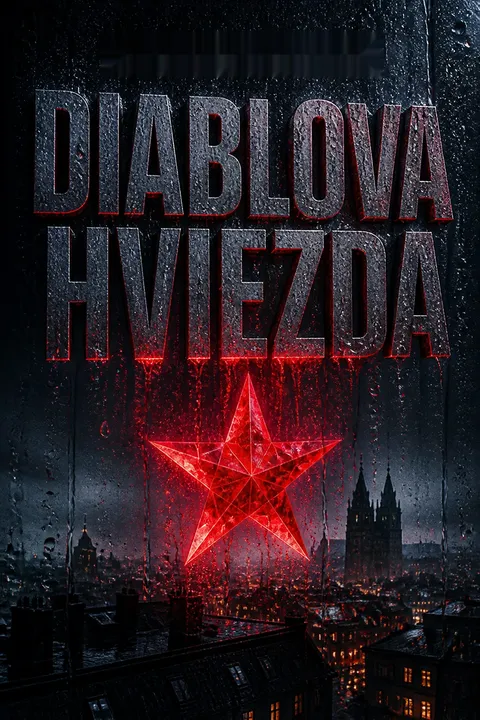
Harry notices that the case repeats the number five: five-pointed diamonds, five fingers, five days between the known dates, deaths around five in the afternoon and victims on the fifth floor. He recognizes that the pentagram carved near Camilla’s bed and traced in dust at the television shop may be a map rather than decoration.
By laying the star over central Oslo, he marks the three known crime locations and predicts two more points, one at a student residence in Kampen and another at Villa Valle, where Lisbeth’s mother-in-law, Olaug Sivertsen, lives. The police prepare surveillance at the student building and send Beate to stay with Olaug. The pattern changes their task from interpreting past murders to preventing the next one.
The number five becomes useful only when Harry connects details that police procedure had kept in separate files. The discovery is not mystical: it is a spatial hypothesis built from repeated, concrete features. Yet its elegance carries danger. A clean pattern can create confidence before all the facts are known, and the predicted locations will soon prove to contain an earlier crime as well as a future risk. Harry’s reasoning works because he treats the star as a message from someone who wants to be read. That choice opens a route to prevention, but it also lets the killer influence where the police look.
The First Body Was Hidden
The police fill the student residence with hidden cameras and armed officers, expecting the killer to arrive at the predicted point. They first mistake returning student Odd Einar Lillebostad for their target and briefly arrest him. Harry spots a devil’s star above room 406 and discovers that its occupant, Marius Veland, has vanished.
A note claims Marius has gone abroad, but his parents say the letter arrived twenty days earlier, just five days before Camilla’s murder. In the loft, Harry finds Marius’s body sealed inside a plastic suit bag in a wardrobe. A wax-coated thumb left in the room confirms that Marius was the killer’s first victim, moving the entire murder sequence five days earlier than the police had believed.
The hidden body exposes the weakness in a pattern that seemed complete: the police had mistaken the first discovered victim for the first victim killed. Marius’s concealment is both practical and theatrical. It delays the investigation while leaving a false travel explanation in place, allowing the killer to shape the police’s sense of time. The wax thumb makes the numbered mutilations legible, but only after the actual sequence has been disrupted. The failed arrest of Lillebostad also shows the human cost of treating a prediction as certainty. Harry’s insight remains valuable, yet the story insists that every elegant theory must survive contact with an overlooked fact.
Waaler Claims the Arrest
Sven Sivertsen arrives at his mother Olaug’s house carrying a suitcase, and Waaler presents himself as the officer in control. Beate nearly shoots Sven when he appears behind her, but sees he is unarmed. Waaler has Beate handcuff him and takes credit for securing the suspected Courier Killer.
At headquarters, the suitcase yields a Czech pistol and a red diamond, apparently confirming the case against Sven, a Norwegian smuggler based in Prague. Waaler then privately offers Harry a place in his criminal network and assigns him to kill Sven in custody with a poison ampoule called Joseph’s Blessing. He claims the law will fail and frames the murder as necessary justice. Harry must choose whether his hatred of Waaler outweighs his duty.
Waaler’s offer exposes the moral structure beneath his public authority: he presents extrajudicial violence as a more efficient form of justice. His appeal is tailored to Harry’s exhaustion, career collapse and anger at a system that may indeed protect its own. The poison is not merely a threat to Sven; it is a test designed to bind Harry through complicity. By offering him status and purpose, Waaler turns the language of professional loyalty into recruitment. The scene sharpens the novel’s central ethical problem: whether a detective can oppose corruption without adopting the same permission to decide who deserves to live.
Harry Breaks the Custody Chain
Harry enters Sven’s cell carrying Waaler’s poison, but has already emptied the ampoule and replaced it with water. He tells Sven that Waaler planned to kill him because his arrest could expose their arms-smuggling connection.
Sven initially distrusts him, then realizes that cooperating with Harry is his only chance to survive. Harry removes the restraints, stages the impression that Sven has taken the poison, and persuades the corrupt guard Groth to let them leave through the official sign-out process.
The two men flee together. At a student residence, Sven explains that he smuggles diamonds and weapons from Prague and knows Waaler as Prince, the organizer of the gun network. He offers evidence, but insists Harry must also prove he is not the killer.
Harry’s escape is not a clean conversion into heroism. He lies to a prisoner, manipulates a guard and risks relying on a smuggler whose interests are plainly self-preserving. What changes is the direction of his deception: instead of serving Waaler’s scheme, it creates a chance to expose it. Sven’s testimony is valuable but insufficient, because he has reason to bargain and the apparent evidence points toward him. Their alliance therefore begins in mutual necessity rather than trust. That uneasy partnership mirrors Harry’s broader dilemma: justice requires cooperation with people who are neither innocent nor safely understood.
A Lover's Photograph
Sven recounts how he met Eva Marvanova, a young Czech woman he loves, and admits that he entered arms smuggling to earn enough to keep her. He has a photograph of himself meeting Waaler in Prague, evidence that may expose the inspector’s role in the weapons trade. Harry asks Eva to send it to Beate, despite the danger of surveillance.
Meanwhile, police interview records and a photograph of Wilhelm and Lisbeth Barli in Prague bring a different connection into focus: the picture was taken near the same statue visible in Eva’s image. Harry recognizes that Lisbeth knew Sven before her marriage. The supposed random pattern may conceal a personal motive, and the man grieving publicly for Lisbeth becomes part of the investigation.
Sven’s account makes love both the explanation for his criminal choices and the weakness that leaves him vulnerable to coercion. His photograph can implicate Waaler, but it also risks exposing Eva, so evidence arrives with an intimate cost. The parallel images from Prague redirect Harry’s attention from the visible ritual to the people who shared a past. This is the first serious crack in the theory that the murders arise from an unknowable compulsion. The crucial clue is not another symbol but a relationship concealed behind apparently unrelated lives. Harry’s ability to revise his assumptions becomes more important than the pattern that first made him useful.
The Seed Gives Him Away
Forensics finds a fennel seed among the biological material beneath Lisbeth’s severed fingernail. Harry remembers Wilhelm’s habit of eating herring with fennel bread at the Theatre Café and learns the seed could not have passed through his body in the short time between his breakfast and Lisbeth’s reported disappearance.
It proves he handled her after she was supposedly gone. Harry also follows the courier trail: receptionist Barbara’s visitor, André Clausen, recognizes the cyclist in a photograph, while Beate identifies a plaster on the rider’s knee.
A Czech pistol, a red diamond and the Prague photograph reinforce the case against Sven, but the seed points to Wilhelm. Harry now sees that the elaborate pattern may have been designed to frame the smuggler and punish him for an affair with Lisbeth.
The fennel seed is a modest, bodily fact that defeats an elaborate fiction. It matters because time constrains what a body can do; the evidence is persuasive not through spectacle but through an ordinary biological limit. In contrast, the courier’s disguise, diamonds and mapped star are all signs that can be arranged to persuade. The distinction between evidence and performance becomes central. Harry’s investigation succeeds when he stops asking what the symbols mean on their own and asks what concrete event must have happened for them to appear. The body, which the killer has tried to turn into a stage prop, restores the sequence he tried to falsify.
The Producer's Final Scene
Harry reaches Wilhelm’s flat by crossing the roof in a storm and finds him in the bedroom with Toya, Lisbeth’s sister, preparing her to replace Lisbeth in the musical. Wilhelm admits that he discovered Lisbeth’s old letters to Sven, then built the murders around a pentagram to make Sven appear to be a serial killer.
He killed Marius, Camilla, Lisbeth and Barbara, concealing Lisbeth’s body inside the waterbed and hiding her finger in his own body. Harry finds Lisbeth’s remains in the mattress, but Wilhelm kills Toya and then hangs himself in the courtyard. Harry has exposed the killer and the true motive, yet the confession arrives too late to save Toya. Before he can call for help, Waaler threatens Oleg.
Wilhelm’s theatrical profession gives him a vocabulary for controlling appearances, but the murder plot is more than a clever staging. He turns his wounded marriage into a story in which Sven must suffer indefinitely, while treating strangers as scenery in his private revenge. His language of love cannot redeem the acts it rationalizes; it makes them more disturbing by converting possession into devotion. The waterbed literalizes that confusion, holding Lisbeth’s body beneath a surface designed for intimacy. Harry solves the case but cannot make understanding equivalent to rescue. The late discovery of Toya’s death marks the limit of interpretation: insight can name violence without undoing it.
Oleg Becomes the Leverage
Waaler learns that Harry has escaped with Sven and uses his contacts to monitor calls, pressure Beate and threaten journalist Roger Gjendem through Roger’s imprisoned brother. He also reaches Oleg at Rakel’s home and takes the boy as a hostage. Harry is forced to arrange a meeting at the student residence where Marius was killed, the place already wired with surveillance cameras.
He contacts the equipment operator, Otto Tangen, so the cameras will record the confrontation. Harry and Sven wait in room 406, handcuffed together, while Waaler brings Oleg into the corridor. Harry knows the cameras record images but not sound, so the evidence may capture the danger without proving what Waaler says. The trap is real, but far from secure.
Waaler’s power depends less on official rank than on his ability to make private vulnerability usable. He reaches Harry through Oleg, Beate through their shared history, and Roger through his brother. Each relationship becomes a pressure point. The cameras offer a possible counterweight, but their silence exposes the limits of technological witnessing: an image can record a gun or a body without recording the threat that explains it. Harry’s plan is therefore not a simple reversal of control. He enters the confrontation knowing that the same evidence intended to expose Waaler may be interpreted against him.
The Lift Becomes a Guillotine
Waaler dismisses the cameras because they lack sound and begins forcing Harry, Sven and Oleg toward the lift. Harry has hidden a chisel, and when Waaler turns to control Sven, Harry drives it into his shoulder and disables his arm. A struggle follows; Waaler recovers his gun and reaches through the lift grille to seize Oleg.
Harry gets the boy inside, then handcuffs Waaler’s arm to the grille as the lift descends. The moving cage crushes Waaler’s trapped arm and leaves him fatally wounded. Harry and Sven keep Oleg alive, then wait in darkness until the lift is safe to exit. The apparent showdown ends not with a clean arrest, but with Waaler’s death and the collapse of his threat.
The lift that has haunted Harry since childhood becomes the physical mechanism of the climax. Its grille once symbolized helplessness, with a child caught on the wrong side; now Harry uses the same structure to stop a man who has made helplessness his method. The reversal does not erase the fear. Harry freezes when Oleg is taken, reliving the old image before he can act, so courage here is not fearlessness but movement after paralysis. Waaler’s death is also morally compromised: Harry engineers a lethal outcome rather than bringing him safely to trial. The victory protects Oleg, yet leaves the corruption’s full scope unresolved.
A Job Beyond the Badge
After escaping the student building, Harry takes Oleg home to Rakel and reports Waaler’s death and Sven’s survival to Møller. Sven is returned to custody under guard, while the police begin investigating Waaler’s criminal network.
The head of Kripos offers Harry his job back and apologizes for doubting him, but Harry does not accept immediately. He tells Rakel he has a different plan: to take the taxi-driver examination and work with his friend Øystein. Their reunion is tender but cautious.
Rakel admits she cannot manage without him, while Harry asks her to consider whether she can manage with him. He leaves with a promise to return the next morning. The police case is closed, but Harry’s future with Rakel remains a decision rather than a solved problem.
The ending refuses to make professional vindication a cure for Harry’s private damage. The head of Kripos restores the possibility of a police career, but Harry considers work outside the institution that has both sustained and consumed him. His taxi plan offers a concrete change in daily life, not a grand declaration of personal transformation. With Rakel, he avoids the promise that would turn hope into another future failure. Their renewed closeness is real, but it is not a guarantee. The final emotional movement is from compulsive certainty toward a more difficult form of honesty: Harry can offer presence, but Rakel must decide whether that is enough.
Analysis
The novel makes detection a contest over who gets to impose the story on a set of facts. The killer’s pentagram, diamonds and mutilations are designed to look like the signature of an unknowable serial murderer, while the police’s professional routines encourage them to sort each clue into familiar categories. Harry’s breakthrough comes when he stops treating the pattern as a complete explanation and asks what kind of human motive could have arranged it. The fennel seed matters because it is stubbornly material: unlike a symbol, it cannot be made to mean anything the killer wants.
That contest over interpretation is also ethical. Waaler calls corruption a necessary instrument for public safety, and his appeal works because Harry is angry at failures of the legal system and has already crossed boundaries himself. The novel does not allow Harry’s competence to erase the danger in that resemblance. His choice to deceive Waaler protects Sven and Oleg, but the final confrontation ends in a death he helps cause, not a clean institutional victory. The resulting uncertainty is deliberate: resisting a corrupt system may require action, yet action without accountability can reproduce the same logic of private judgment.
Touch and concealment carry the emotional argument. Harry’s memories of Sis and Ellen make lifts, bodies and helplessness recur as physical experiences rather than abstract symbols. Wilhelm, meanwhile, treats love as a claim to possess and preserve another person, turning a marriage into a stage for revenge. His waterbed makes that wish literal: the beloved is hidden beneath the surface, present but unable to answer. Harry’s relationship with Rakel offers a different model, one based not on rescue or ownership but on choice. He cannot promise to become harmless or dependable overnight. He can only return, tell the truth more plainly, and leave her free to decide whether life with him is possible.
Review Summary
The Devil's Star is a complex thriller featuring detective Harry Hole, who battles alcoholism and corruption while solving a serial killer case. Readers praise Nesbo's intricate plotting, character development, and atmospheric Oslo setting. Some find the book slow-paced or convoluted, while others consider it a gripping page-turner. The novel continues storylines from previous books, exploring Hole's personal struggles and professional rivalries. Most reviewers recommend the series, highlighting Nesbo's skillful writing and Harry Hole's compelling character.
People Also Read

Characters
Harry Hole
The brilliant damaged detectiveHarry is a gifted Oslo detective whose ability to notice overlooked details coexists with a severe drinking problem and a habit of sacrificing private life to work. He is grieving his colleague Ellen Gjelten and remains convinced that respected inspector Tom Waaler is dangerous, though he initially lacks proof. His relationship with Rakel and her son Oleg gives him a glimpse of family life he wants but struggles to sustain. Harry’s pride makes him resistant to help, while his attention to evidence can cut through his own assumptions. He is not a detached solver: his perceptions are sharpened by grief, shame and an unstable desire to find a purpose strong enough to keep him sober.
Tom Waaler
The immaculate senior inspectorWaaler is a respected, disciplined detective with the physical confidence of a trained martial artist and the political ease of a likely leader. He is consistently composed where Harry is visibly frayed, and colleagues respond to him as a source of order. His ambition is bound to a belief that large goals justify hard methods, a conviction that makes his calm more unsettling than simple aggression would. Waaler understands how others want to see themselves and can make an offer feel like recognition. His rivalry with Harry is personal, professional and ideological, since each man sees the other as a threat to his own version of justice.
Beate Lønn
The forensic pattern readerBeate is a forensic investigator with exceptional memory for faces and details, patient enough to revisit evidence long after others have moved on. Quiet and prone to blushing, she often appears less forceful than she is; in the laboratory, her precision gives her authority. She has worked with Harry before and respects his investigative instincts, while also challenging his recklessness. Her past relationship with Waaler leaves her exposed to his pressure, and her professional identity has long served as a refuge from uncertainty in her private life. Beate’s strength lies not in bravado but in sustained attention, especially when a small inconsistency could redirect an entire case.
Rakel
Harry's clear-eyed loveRakel is Harry’s partner and Oleg’s mother, a capable woman who wants affection without having to manage another person’s self-destruction. She has built a life around caring for her son and maintaining an old family home, and she expects Harry to recognize the cost of his absences. Her love for him does not make her blind to his drinking or his tendency to treat work as an excuse for neglect. Rakel is warm, direct and emotionally perceptive, but she protects herself by setting boundaries. She represents a possible home for Harry, not a reward he can claim simply by solving a case.
Wilhelm Barli
The theatrical producerWilhelm is a former dancer turned producer, an expressive, cultivated man whose work depends on transforming performers and assembling a convincing stage. He is married to singer Lisbeth and is bringing her sister Toya into a major production. His instinct is to shape experience into story, and he takes pride in recognizing talent and directing other people’s efforts. Beneath his expansive manner lies a need for emotional certainty and a strong attachment to romantic ideals. He can be generous and perceptive, but he also expects art and love to follow patterns he understands. His profession makes him unusually alert to the gap between what an audience sees and what may be happening behind it.
Bjarne Møller
Harry's protective chiefMøller leads the Crime Squad and has repeatedly shielded Harry from the consequences of his drinking and insubordination. He is a practical manager, a devoted family man and one of the few people Harry trusts at headquarters. His loyalty is not limitless: he knows that protecting Harry also puts his own career and responsibilities at risk. Møller’s concern often appears as administrative firmness, but it is rooted in genuine affection and respect for Harry’s investigative ability.
Sven Sivertsen
The Prague-based smugglerSven is a Norwegian who has spent years in Prague, trading in diamonds and weapons while moving easily between countries and identities. His history includes criminal convictions, but he is also capable of deep attachment, particularly to Eva Marvanova. He is worldly, charming and practiced at judging what another person wants to hear. When he enters the investigation, his instinct is to bargain rather than trust. Sven’s intelligence makes him a useful witness, while his self-interest ensures that Harry must test every claim rather than accept it at face value.
Oleg
Rakel's watchful sonOleg is Rakel’s young son, observant and emotionally direct. He has grown fond of Harry through shared outings, football and small family rituals, and he wants the adults around him to become a family. His loyalty is not abstract: he notices when Harry is absent and asks for him plainly. Oleg is brave in the way children can be, trusting the people he loves even when he cannot understand their dangers. His presence gives Harry a glimpse of the ordinary responsibilities he has repeatedly failed to honor.
Olaug Sivertsen
The lonely family witnessOlaug is an elderly woman who lives alone in Villa Valle, a house beside Oslo’s railway lines. She values company, routine and the memories attached to the home where she once worked as a young maid. Her son Sven’s difficult childhood remains a source of regret, and she is eager to believe that he has found stability. Olaug’s warmth makes her a generous host, but her trust in family can leave her slow to recognize danger. She carries a private history that links wartime Oslo to the present without seeing how closely the two periods may touch.
Lisbeth Barli
The singer at the centerLisbeth is a country singer who once performed with her sister Toya and is now preparing for a leading role in Wilhelm’s musical production. She is remembered as talented, attractive and capable of holding an audience, though her public image reveals little about her private life. Her marriage to Wilhelm and her earlier musical career connect several otherwise separate social circles. Lisbeth’s story is filtered through the people around her, making the difference between a woman’s actual choices and the roles others assign her especially important.
Toya Harang
The sister in the spotlightToya is Lisbeth’s younger sister, a lively singer with a rougher, more spontaneous stage presence. She has spent years outside the success her sister seemed to command and carries old resentments toward her family. Her opportunity to step into a leading role brings ambition and grief together, and she is willing to take risks that more cautious people would avoid. Toya’s humor and brashness can disguise how much she wants recognition, especially from people who once treated her as the difficult sister.
Ståle Aune
The police psychologistAune advises the Crime Squad on behavior and criminal psychology. He is talkative, theatrical and fond of humor, traits that sometimes conceal how seriously he takes the emotional strain of an investigation. Aune offers frameworks for understanding serial offenders but is careful about the limits of psychological prediction. He knows Harry well enough to speak to him with unusual frankness, and their relationship mixes professional guidance with personal concern.
Øystein Eikeland
Harry's taxi-driving friendØystein is Harry’s childhood friend, a taxi driver and former computer hacker with a taste for music and unconventional problem-solving. His humor is irreverent, but he recognizes when Harry’s need for help is serious. He understands codes and technical systems better than people, and he is willing to lend Harry both practical knowledge and companionship. Their friendship is one of Harry’s few connections outside the police and his damaged romantic life.
Roger Gjendem
The crime reporterRoger is an Aftenposten journalist temporarily covering crime during the summer. He approaches stories with persistence and a personal investment shaped by his younger brother’s struggles with addiction. Roger wants reliable information, not merely a sensational headline, though the danger around this case places pressure on his judgment and loyalties.
Vibeke Knutsen
The perceptive neighborVibeke lives with Anders Nygård beneath Camilla Loen’s flat. Sociable and observant, she is the first to recognize blood in the water dripping into her kitchen. Her loneliness and dissatisfaction with her relationship make her unusually attentive to the emotional lives of people around her, including Harry. She is frank about what she sees, though her partner’s disapproval can make her cautious.
Anders Nygård
Vibeke's guarded partnerAnders sells furnishings and fittings for churches, a job that keeps him traveling. He is restrained, orderly and uncomfortable with raised voices or sexual openness, qualities that shape his uneasy relationship with Vibeke. His religious upbringing remains present even though he no longer considers himself a believer. Anders is attentive to appearances and rules, but his reserve makes it difficult for others to know what he feels.
Eva Marvanova
Sven's Czech partnerEva is a young Czech woman living in Prague who has built a close relationship with Sven. Her past has taught her to be alert to financial security and to keep parts of her life private. She wants a future with him and is forced to judge whether love can coexist with the dangerous work he refuses to explain. Eva is perceptive enough to notice gaps in his account, yet she also longs to trust him.
Marius Veland
The missing studentMarius is a young student living in a Kampen residence during the summer. He hopes to establish himself as a music reviewer and is eager to make a life in Oslo beyond the small community where he grew up. His plans, tastes and unfinished ambitions give his disappearance a human dimension beyond the police investigation.
Plot Devices
The pentagram
A map disguised as ritualThe five-pointed star appears in diamonds, a carving above a bed and a tracing left in dust. Harry eventually overlays its geometry on a map of Oslo and uses the points to predict crime locations. The device gives the police an actionable pattern, but it also misleads them about the sequence because Marius Veland has been dead before they identify him as the first victim. The star is both a clue and a performance: it helps the killer direct the investigation while allowing Harry to read the city as evidence.
The severed fingers
A sequence hidden in mutilationThe victims’ left-hand fingers are removed one by one, while diamonds shaped like stars are left at the scenes or sent through the mail. The missing digits seem at first to support a ritual or a serial killer’s private code. The first hidden victim’s preserved thumb clarifies that the order begins with the thumb and proceeds across the hand. Together with the diamonds and five-day intervals, the mutilations help Harry decode the offender’s intended pattern, though they do not reveal the true motive by themselves.
The courier disguise
An ordinary face of accessA masked bicycle courier can enter apartment buildings and offices without attracting much attention. Witnesses remember the expected clothing more readily than the person wearing it, which makes the disguise effective across several crime scenes. Police connect the courier to the killings through sightings, a photograph and a plaster on the rider’s knee. The role also gives the offender a plausible reason to move quickly through public spaces, reinforcing the impression that the crimes were committed by a practiced stranger.
The waterbed
A body concealed in intimacyWilhelm Barli’s waterbed is both a domestic object and a hiding place. Its sealed rubber surface conceals Lisbeth’s body, keeping the police and their dog from finding her during the early search. The bed’s apparent softness and intimacy contrast with the practical violence required to conceal a corpse inside it. It also develops the novel’s recurring connection between touch, possession and the effort to keep another person from leaving.
Surveillance recordings
Images without full testimonyOtto Tangen installs cameras throughout the student residence to help the police catch the expected offender. The recording system later becomes part of Harry’s plan to document his confrontation with Waaler. The cameras can show where people stand, who holds a weapon and how a struggle unfolds, but they do not capture sound. Their limitation makes the footage valuable without making it conclusive, and underlines how evidence depends on interpretation as well as recording.
FAQ
Synopsis & Basic Details
What is The Devil's Star about?
- A Ritualistic Murder Spree: The Devil's Star plunges Oslo into a sweltering summer of fear as Detective Harry Hole investigates a series of ritualistic murders. Each victim, a young woman, is found with a severed finger and a unique five-pointed red diamond star hidden on her body, signaling the work of a meticulous serial killer.
- Harry Hole's Personal Descent: Simultaneously, the novel chronicles Harry Hole's battle with alcoholism, his crumbling relationship with Rakel, and his relentless, almost paranoid, pursuit of his corrupt colleague, Tom Waaler, whom he suspects of being involved in the murder of his former partner, Ellen Gjelten, and an arms smuggling ring.
- Unraveling a Complex Code: As the body count rises, Harry must decipher the killer's intricate code, which involves numerology (the number five), occult symbolism (the pentagram), and specific geographical locations, all while navigating internal police politics and the media frenzy surrounding "The Courier Killer."
Why should I read The Devil's Star?
- Deep Psychological Thriller: Readers seeking a crime novel that delves into the darkest corners of the human psyche will find Jo Nesbø's exploration of obsession, revenge, and the blurred lines between good and evil utterly compelling. The psychological depth of both the protagonist and the antagonist is a major draw.
- Intricate Plot & Symbolism: For those who appreciate a meticulously crafted mystery, the novel offers a complex puzzle woven with rich symbolism, from the recurring pentagram motif to the significance of the number five. It's a story that rewards close reading and invites interpretive debate.
- Character-Driven Narrative: Beyond the thrilling plot, the book excels in character development, particularly Harry Hole's internal struggles and his fraught relationships. His journey from despair to a fragile sense of purpose, alongside the nuanced portrayal of supporting characters, makes for a deeply engaging read.
What is the background of The Devil's Star?
- Oslo's Summer Heatwave: The story is set against a backdrop of an unusually hot and deserted Oslo summer, a stark contrast to the chilling events unfolding. This oppressive heat amplifies the sense of unease and isolation, making the city itself feel like a character.
- Post-Cold War Smuggling Routes: The narrative subtly integrates the geopolitical shifts following the fall of the Iron Curtain, particularly in its exploration of arms and blood diamond smuggling through Eastern Europe. This provides a realistic, gritty context for the criminal underworld elements.
- Police Corruption & Internal Strife: The novel highlights the internal politics and corruption within the Norwegian police force, particularly through the character of Tom Waaler. This institutional decay creates a challenging environment for Harry, where trust is scarce and justice is often compromised.
What are the most memorable quotes in The Devil's Star?
- "Isn't it wonderful to have someone to hate?": This quote, attributed to Michael Krohn of Raga Rockers, is uttered by Harry Hole to Tom Waaler. It encapsulates the complex, almost symbiotic relationship between Harry and his nemesis, hinting at the dark satisfaction derived from having a clear target for one's animosity, and reflecting the novel's exploration of hatred as a driving force.
- "Building cathedrals is a calling, Harry. In Italy they gave masons who died during the construction of a church the status of a martyr. Even though cathedral builders built for humanity there isn't a single cathedral in human history that was not founded on human bones and human blood.": Spoken by Tom Waaler, this quote reveals his chilling philosophy. It justifies his ruthless actions and corruption as necessary sacrifices for a greater, albeit twisted, vision of order and justice, highlighting the novel's themes of moral compromise and the cost of power.
- "Love is a thirst, Harry. It needs to drink. Water. A thirst for revenge. It's a good expression, isn't it? You know what I'm talking about, Harry. Death is no revenge. Death is a delivery, a happy ending. What I wanted to make for Sven Sivertsen was a true tragedy, suffering without end.": Wilhelm Barli's chilling explanation of his motive for the murders. This quote delves into the psychological depths of his revenge, distinguishing it from mere killing and revealing his desire to inflict prolonged, existential suffering, underscoring the novel's exploration of the destructive nature of betrayal and hatred.
What writing style, narrative choices, and literary techniques does Jo Nesbø use?
- Gritty, Atmospheric Prose: Nesbø employs a stark, unadorned prose style that perfectly captures the grim realities of crime and Harry's internal landscape. His descriptions of Oslo, especially during the oppressive heatwave, create a palpable sense of atmosphere, enhancing the novel's dark tone.
- Multiple Perspectives & Internal Monologue: While primarily following Harry's third-person limited perspective, Nesbø occasionally shifts to other characters' viewpoints, including the killer's internal monologues. This narrative choice builds suspense and offers fragmented insights, deepening the mystery and psychological complexity.
- Symbolism and Foreshadowing: The novel is rich with literary devices, particularly recurring symbols like water (drowning, cleansing), the pentagram, and the number five, which serve as both plot devices and thematic anchors. Subtle foreshadowing, often embedded in seemingly minor details or character thoughts, builds anticipation and rewards attentive readers.
Hidden Details & Subtle Connections
What are some minor details that add significant meaning?
- The Carpenter's Lost Coin: In Chapter 1, a five-kroner coin from 1987 is mentioned, lost by a carpenter in the wall of Camilla Loen's building. This seemingly throwaway detail subtly introduces the recurring motif of the number five and the idea of hidden, forgotten elements within structures, foreshadowing the killer's meticulous placement of clues and the deep history embedded in Oslo's buildings.
- Vibeke Knutsen's Leopard-Pattern Top: Vibeke's choice of clothing, specifically her "tight-fitting leopard-pattern top" (Chapter 4) and later "tiger stripes" (Chapter 11), subtly hints at her underlying wildness and sensuality, contrasting sharply with her austere partner, Anders Nygård. This visual detail foreshadows her attraction to Harry and her eventual confession of Anders's controlling nature and her own suppressed desires.
- The "Smilly Dillies" Code: Otto Tangen's childhood memory of whispering "smilly dillies" into a tin can (Chapter 27) is a seemingly innocent detail that connects to the novel's overarching theme of hidden communication and codes. It highlights the human desire to transmit secret messages, mirroring the killer's elaborate pentagram code and Harry's own attempts to decipher unspoken truths.
What are some subtle foreshadowing and callbacks?
- The Bricklayer's Blood and Hair Mortar: The opening chapter's detailed history of Jacob Andersen, the bricklayer who used pig's blood and horsehair in his mortar, and the subsequent myth of the "woman with the pig's head," subtly foreshadows the gruesome, ritualistic nature of the murders and the killer's use of organic materials (like the excrement under Lisbeth's nail) as part of his macabre "art." It also hints at the deep, dark history embedded within the city's very foundations.
- Harry's Elevator Phobia and Sis's Scream: Harry's intense aversion to old-fashioned lifts with sliding grilles (Chapter 3), triggered by a memory of his sister's hair getting trapped, is a powerful callback to a childhood trauma. This phobia is later exploited by the killer in the climax, turning a personal fear into a literal trap, and emphasizing how past wounds can be weaponized.
- Waaler's Childhood Dog Story: Tom Waaler's lengthy anecdote about his father killing the neighbor's barking German shepherd (Chapter 10) serves as a chilling piece of foreshadowing. It reveals his early exposure to violence, his father's ruthless pragmatism, and his own capacity for cold, calculated acts, hinting at his involvement in the arms smuggling and his willingness to eliminate "troublesome" individuals.
What are some unexpected character connections?
- Anders Nygård's Pentecostal Background: Vibeke Knutsen reveals that her partner, Anders Nygård, grew up in the Pentecostal sect and that his father once spoke in tongues, using derogatory terms for women (Chapter 25). This unexpected detail links Anders to a strict, judgmental moral framework, providing a potential, albeit misdirected, motive for the killer's "punishment" of promiscuous women, and adding a layer of misdirection before the true killer is revealed.
- Wilhelm Barli's Dance Career: The revelation that Wilhelm Barli was a dancer for 20 years (Chapter 14) is an unexpected detail that explains his physical prowess and his theatrical flair. This background subtly informs his meticulous staging of the murders, his "choreography" of the crime scenes, and his ability to manipulate others as if they were performers in his grand, tragic play.
- Olaug Sivertsen's Wartime Romance: Olaug's story of her wartime romance with a German Gruppenführer (Chapter 17) and her son Sven's subsequent birth and difficult upbringing, provides a poignant, historical context for Sven's character. It explains his "German half-breed" identity and his mother's deep, protective love, adding a layer of pathos to his role as a framed suspect.
Who are the most significant supporting characters?
- André Clausen: Initially appearing as a seemingly innocuous witness, André Clausen, the "private businessman" with the golden retriever, becomes a crucial, albeit unwitting, source of information. His detailed, if somewhat detached, observations of the "courier" and his later identification of the masked cyclist (Chapter 37) are pivotal in advancing the investigation, highlighting the importance of seemingly minor characters in complex cases.
- Nikolai Loeb: The Russian Orthodox priest, Nikolai Loeb, provides Harry with critical insights into the symbolism of the pentagram and demonology (Chapter 18). His unexpected knowledge of occult symbols, combined with his role as a confessor, adds a spiritual and intellectual dimension to the investigation, guiding Harry towards understanding the killer's "why" beyond mere criminal intent.
- Roger Gjendem: The crime reporter for Aftenposten, Roger Gjendem, serves as a conduit for information between the police and the public, but also as a pawn in Waaler's scheme to manipulate Harry. His personal connection to his junkie brother, Thomas, makes him vulnerable to blackmail (Chapter 36), highlighting the pervasive corruption and the moral compromises individuals are forced to make.
Psychological, Emotional, & Relational Analysis
What are some unspoken motivations of the characters?
- Harry's Self-Punishment: Beyond solving the case, Harry's relentless pursuit of the killer and his willingness to put himself in harm's way is driven by an unspoken need for self-punishment. His guilt over Ellen's death and his failures with Rakel manifest as a desire to atone, even if it means sacrificing himself. This is subtly hinted at in his internal monologues about his "medicine" (alcohol) and his self-destructive tendencies (Chapter 22).
- Waaler's Craving for Legitimacy: Tom Waaler's ambition and corruption are not solely for power or money; there's an underlying, unspoken desire for legitimacy and respect, particularly from the "middle-class" establishment he felt excluded from in his youth (Chapter 10). His "cathedral building" philosophy is a twisted attempt to justify his brutal methods as necessary for a greater, more "majestic" order, seeking validation for his dark vision.
- Wilhelm Barli's Artistic Control: Wilhelm Barli's motivation for the elaborate murders extends beyond simple revenge; it's an unspoken need for ultimate artistic control and a desire to create a "masterpiece" of suffering. His background as a producer and dancer (Chapter 14) suggests a deep-seated need to choreograph and direct, turning human lives into elements of his tragic play, where he is the ultimate puppetmaster.
What psychological complexities do the characters exhibit?
- Harry's Necrophilia of Grief: Harry exhibits a complex psychological state that borders on a "necrophilia of grief," as Rakel accuses him (Chapter 5). His obsession with Ellen's murder, his inability to "move on," and his vivid nightmares suggest a profound attachment to the dead, hindering his ability to fully engage with the living. This complexity makes him uniquely suited to understand the killer's motives, yet also deeply vulnerable.
- Waaler's Sociopathic Charisma: Tom Waaler is a classic sociopath, exhibiting a chilling blend of charisma, intelligence, and a complete lack of empathy. His ability to feign concern, manipulate others, and justify his actions with a veneer of logic (Chapter 10, 20) makes him a highly dangerous and complex antagonist. His "effortless self-confidence" (Chapter 4) masks a predatory nature, making him difficult to detect and confront.
- Barli's Pygmalion Complex: Wilhelm Barli displays a profound Pygmalion complex, not only in his theatrical work but also in his personal life. His desire to "create" and "transform" Lisbeth (Chapter 21) extends to his vengeful acts, where he attempts to sculpt Sven Sivertsen's fate into a "true tragedy." This complex reveals a deep-seated need for control over others' identities and destinies, blurring the lines between art and life, love and destruction.
What are the major emotional turning points?
- Rakel's Ultimatum: Rakel's declaration that Harry is "the problem" and her decision to sell their house (Chapter 13) marks a critical emotional turning point for Harry. This ultimatum forces him to confront the devastating impact of his self-destructive behavior on his most cherished relationship, pushing him towards a desperate attempt at change and a re-evaluation of his priorities.
- Harry's Dream Revelation: Harry's drug-induced "trance" and subsequent dream (Chapter 22) where he deciphers the killer's code is a major emotional and intellectual turning point. It's a moment of profound insight, but also one of intense personal struggle, as the "pattern of a benumbed man in a desperate search for genuine feelings" reflects his own inner turmoil.
- Beate's Confrontation with Waaler: Beate's physical and emotional confrontation with Tom Waaler (Chapter 39), where she realizes she is no longer afraid of him, is a significant emotional turning point for her. It marks her transition from a shy, deferential forensic expert to a woman capable of standing up to abuse, symbolizing her growth and newfound inner strength.
How do relationship dynamics evolve?
- Harry and Rakel's Fragile Reconciliation: The relationship between Harry and Rakel undergoes a tumultuous evolution. Initially strained to breaking point by Harry's alcoholism and obsession, it moves towards a fragile, ambiguous reconciliation. Rakel's willingness to give him "one last chance" (Chapter 32) and Harry's acceptance of his dismissal from the police (Chapter 32) suggest a potential for renewal, but their future remains uncertain, reflecting the novel's theme of hard-won, imperfect hope.
- Harry and Waaler's Deadly Dance: The dynamic between Harry and Tom Waaler escalates from professional rivalry to a deeply personal, life-or-death struggle. Their relationship is characterized by mutual suspicion, manipulation, and a perverse understanding of each other's dark sides. Waaler's attempt to recruit Harry (Chapter 10, 20) and their final confrontation (Chapter 42) reveal a complex interplay of admiration and hatred, culminating in a violent, definitive end.
- Beate and Harry's Professional Trust: Beate Lønn's relationship with Harry evolves from a mentor-mentee dynamic to one of deep professional trust and mutual respect. Despite Harry's erratic behavior, Beate consistently provides him with crucial support and insights, often risking her own career. Their collaboration highlights the power of unconventional alliances and the importance of integrity within a corrupt system.
Interpretation & Debate
Which parts of the story remain ambiguous or open-ended?
- Harry's Future with Rakel: Despite a moment of tender reconciliation and Harry's decision to leave the police force, his future with Rakel remains ambiguous. Her final words, "Can you manage with me?" (Chapter 44), leave their relationship open-ended, questioning whether Harry's inherent nature will allow for lasting domestic happiness, or if his demons will inevitably resurface.
- The Extent of Police Corruption: While Tom Waaler's corruption is definitively exposed, the novel leaves the full extent of the arms smuggling network and the involvement of other high-ranking police officials somewhat ambiguous. The Chief Superintendent's quick cover-up and his willingness to let Waaler operate "unconventionally" (Chapter 36) suggest a deeper, systemic issue that remains largely unaddressed.
- The Nature of Harry's "New Job": Harry mentions accepting a "new job" from Øystein, implying a departure from police work (Chapter 32, 44). However, the exact nature of this job is left vague, allowing for speculation about whether he truly leaves the world of crime behind or finds a different, perhaps unofficial, way to pursue justice.
What are some debatable, controversial scenes or moments in The Devil's Star?
- Waaler's Attempted Execution of Sivertsen: Tom Waaler's plan to execute Sven Sivertsen and frame Harry (Chapter 31) is a highly controversial moment. It forces readers to confront the depths of Waaler's corruption and his willingness to subvert justice for his own ends, raising ethical questions about the role of law enforcement and the justification of extrajudicial killings.
- Harry's Use of Oleg as Bait: Harry's decision to bring Oleg to the student building, knowing Waaler might use him as a hostage (Chapter 42), is a deeply debatable moment. While Harry claims it was part of a larger plan to trap Waaler, it puts an innocent child in extreme danger, forcing readers to question Harry's moral compass and the lengths he will go to achieve his goals.
- Wilhelm Barli's "Rebirth" of Lisbeth: Wilhelm Barli's method of concealing Lisbeth's body within her waterbed, describing it as a "rebirth" and a "womb" (Chapter 41), is a grotesque and controversial act. It highlights the killer's profound psychological disturbance and his twisted perception of love and control, pushing the boundaries of what is considered acceptable in crime fiction.
The Devil's Star Ending Explained: How It Ends & What It Means
- The Trap and Waaler's Demise: The Devil's Star culminates in a tense confrontation at the student building. Harry, having deduced Waaler's plan to kill him and Sivertsen, sets a counter-trap. He uses Otto Tangen's surveillance equipment to record Waaler's actions and, in a desperate struggle in the lift, Harry impales Waaler with a chisel, causing his death as the lift descends. This act, while violent, is presented as a necessary measure to protect Oleg and expose Waaler's corruption.
- Justice and Its Costs: Wilhelm Barli is exposed as the Courier Killer, confessing his elaborate, revenge-driven scheme to Harry. Sven Sivertsen is cleared of the murders but faces charges for arms smuggling. The police force is rocked by the revelations of Waaler's corruption, leading to an internal inquiry. Harry is offered his job back with "complete and unreserved confidence" from the Chief Superintendent, but he hesitates, contemplating a new life as a taxi driver. The ending suggests that justice is served, but at a profound personal and institutional cost.
- Ambiguous Hope and Lingering Shadows: The novel concludes with Harry's future uncertain, poised between a potential new life with Rakel and the lingering pull of his past. The "mumbling" he hears in his flat, and the taste of "egg" from the ancient mortar, symbolize the deep, unresolved histories and the ever-present shadows of evil and corruption that continue to permeate Oslo. While there's a glimmer of hope for Harry's personal redemption, the ending acknowledges that some wounds never fully heal, and the fight against darkness is never truly over.
Download PDF
Download EPUB
.epub digital book format is ideal for reading ebooks on phones, tablets, and e-readers.








