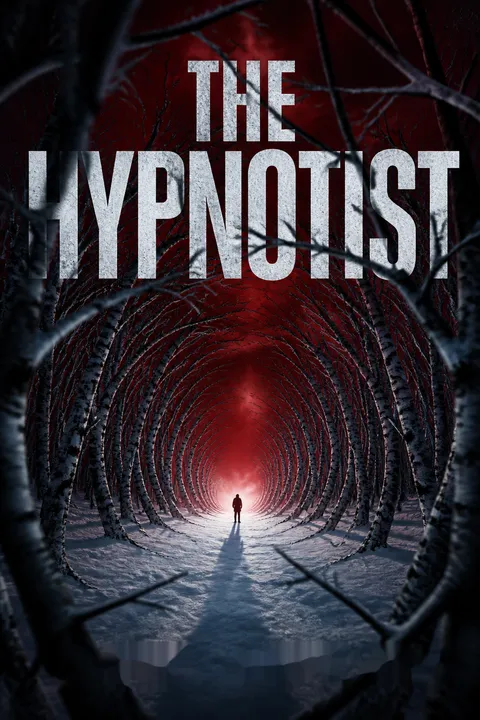


Plot Summary
Prologue
A fifteen-year-old lies critically wounded after the slaughter of his family, the only person who might identify the killer. Detective Joona Linna believes the boy can help save his missing older sister, so he turns to Erik Maria Bark, a psychiatrist who once became famous for hypnosis and then swore it off.
Under hypnosis, the boy begins to describe a scene of fire and frantic violence. His account may reveal what happened in the house, but it also raises a dangerous question: whether his memories can be trusted, and what the act of drawing them out might do to him.
The opening makes hypnosis both the story’s instrument and its central ethical hazard. Josef’s injured body makes urgency tangible, while his fractured account warns that memory under pressure is not a clean recording. The fire image offers an emotionally legible symbol of violence, but not yet a reliable explanation of it. By introducing the technique before its practitioner, the prologue makes the reader feel the same double pull as Joona: the possibility that a child’s testimony may save someone, and the fear that extracting it could cause further harm.
The Tumba Family Slaughter
On December 7, caretaker Karim Muhammed finds a murdered man in the changing rooms at a Tumba sports centre. The victim is teacher Anders Ek, whose family lives nearby. Sent alone to notify them, officer Erland Björkander discovers Anders’s wife Katja and their young daughter Lisa dead in the family home.
Their fifteen-year-old son Josef is barely alive among the bodies. His older sister Evelyn is missing. Joona Linna reaches the crime scenes, sees that the father died first, and rejects the easy theory that a loan enforcer killed the family over Anders’s gambling debts.
The order suggests a planned attempt to erase the whole family, and the missing daughter may be next. Joona begins looking for a way to question Josef before the killer reaches her.
The crime is designed to invite a simple explanation, a debt collector’s violence, while Joona’s attention to the order of deaths resists that closure. His insistence is not merely professional pride: the story links his inability to abandon a case to the guilt he carries over his father’s death, after his father entered a dangerous home without backup. Joona’s method begins with close observation, but his emotional history gives observation its urgency. A missing young woman turns forensic sequence into a race against time.
Erik Breaks His Vow
At Karolinska Hospital, Erik Maria Bark examines Josef and agrees with Daniella Richards, the doctor treating him, that the boy is too unstable for ordinary questioning. Joona reveals that Erik once practised hypnosis, but Erik refuses to use it again.
He left the work behind after a crisis ten years earlier and promised his wife Simone he would stop. Joona’s case for an exception is concrete: Evelyn may be in immediate danger, and Josef is their only witness.
Daniella eventually accepts responsibility for allowing a carefully limited attempt, while Erik is asked to take over the boy’s care. At home, Simone is already suspicious of Erik’s pills and of the old breach of trust behind his promise. He returns to the hospital knowing the decision may damage both his patient and his marriage.
Erik’s refusal is not simple cowardice or caution. Hypnosis represents a form of professional power he no longer trusts himself to wield, and his family’s history gives that distrust an intimate cost. Joona converts time pressure into moral leverage, but Daniella’s medical responsibility keeps the choice from becoming a purely police decision. The book places expertise under scrutiny: skill may make intervention possible, yet it does not guarantee that the practitioner can control what follows. Erik’s depleted, medication-dependent home life also suggests that his promise has not ended the past so much as buried it.
Josef Remembers the Knives
Erik guides Josef into deep hypnosis and asks him to revisit the day of the murders. Josef describes his younger sister Lisa suffering a frightening episode, then himself attacking her and his mother with knives. He recalls stabbing until exhaustion left him on the floor, wounded and thirsty.
The account supports Joona’s belief that Josef may have killed his family, but it does not settle the motive. Near the end, Josef refers to seeing Evelyn at their aunt Sonja’s cottage and describes a framed photograph there.
He also says Evelyn expected him to bite for a reward, a statement Erik warns Joona not to treat as proof. Joona uses the cottage detail to send officers to Värmdö. The session gives police a lead, but Josef’s subjective memory leaves room for dangerous misinterpretation.
The scene demonstrates both the power and the limits of Erik’s technique. Josef can narrate actions that ordinary questioning could not reach, yet the material arrives through a traumatized mind and cannot be separated from his interpretations. Erik’s caution about what counts as truth is an important counterweight to Joona’s need for a suspect. The cottage detail is useful precisely because it is verifiable, unlike the accusation against Evelyn. The episode therefore distinguishes memory as evidence from memory as a person’s lived account, a distinction the investigation will repeatedly strain.
Evelyn Bites Back
At Sonja’s cottage, Erik spots a young woman returning through the trees with a shotgun. She is Evelyn Ek, Anders and Katja’s eldest child. Joona questions her inside, but her grief turns abruptly dangerous when she bites a police officer in the throat and collapses.
At the station, Evelyn denies that Josef has visited the cottage, though Josef described a recent birthday visit and the photograph there. A detail in the picture’s frame persuades Joona to give her more time before deciding whether she can be held.
Evelyn finally admits that Josef came with a cake on his birthday. Her lie keeps suspicion alive, but it also suggests she is hiding a relationship too frightening to explain. Joona has found the endangered sister, yet still cannot tell whether she is a witness, a suspect, or both.
Evelyn’s violence and evasions do not map neatly onto guilt. Joona recognizes that her stillness is not ordinary composure, while Erik sees how shock can make a person’s behavior look inexplicable from the outside. The scene refuses the familiar binary of innocent victim and dangerous suspect. Evelyn’s lies may protect something, but her fear is not evidence of the crime Joona is investigating. Her birthday admission shifts the inquiry from a simple alibi to a hidden pattern of contact, one that forces police to consider what kind of threat could make a sister conceal her own brother’s visit.
A Family Under Fluorescent Light
While the police pursue the Eks, Erik and Simone’s fourteen-year-old son Benjamin grows close to Aida, a seventeen-year-old who wears a swastika tattoo beside a Star of David. Erik challenges her about the tattoo, embarrassing Benjamin and driving Aida away.
Simone later finds Benjamin at a Tensta tattoo parlour, where she has gone after his school reports him absent. Before finding him, she intervenes when boys dangle Aida’s younger brother Nicky over a shopping-centre railing. Her attempt to confront one of them frightens Benjamin, who asks her to stop interfering.
At home, Simone tells him she and Erik may separate. The next day, the press turns Erik’s hypnosis of Josef into a public scandal, and Benjamin is made to answer reporters at school. His parents’ secrecy, Erik’s broken promise, and the public humiliation deepen the distance already opening between them.
The family subplot mirrors the investigation without becoming a simple parallel. Benjamin’s need for independence collides with a medical condition that makes parental care physically necessary, while Simone’s search for him exposes how little she knows about his social world. Her intervention at Tensta is protective but also repeats the adult habit of deciding what children’s experience means. Erik’s public scandal amplifies private mistrust: his decision may have been meant to protect Evelyn, yet Benjamin sees a father whose actions are explained only after they become unavoidable. The family’s fractures are made of specific failures to listen.
The Killer Leaves the Ward
Forensic technicians find Josef’s hair in the women’s shower at the sports centre and traces of Anders Ek’s blood between its tiles. Joona now has evidence linking Josef to the first crime scene.
Evelyn explains why she fled: from childhood, Josef had bullied and sexually threatened her, hurt their younger sister when she resisted, and killed her dog. Their mother’s rejection of Josef after a traumatic birth had left Evelyn as his principal caregiver, but that did not make her safe. At the hospital, Josef angrily rejects Erik and threatens him.
Soon after, he pulls out his medical lines, kills nurse Ann-Katrin with a scalpel, steals clothes, and escapes. He injures a man and takes his car in a cemetery. The killer Joona thought contained is loose again, and Erik’s family has become vulnerable.
Forensic evidence turns a disturbing hypnotic account into an actionable case, but the evidence does not explain the violence that formed Josef. Evelyn’s account reveals a household that adapted around abuse instead of interrupting it. Her role as caretaker concealed the danger rather than curing it. Josef’s escape makes the institution’s medical setting part of the threat: the same hospital that kept him alive becomes the place from which he attacks. The sequence complicates the idea that a confession solves a crime. It identifies a perpetrator while leaving the psychological and social conditions around him unresolved.
Benjamin Taken at Night
During the night Josef escapes, someone enters the Bark apartment. Simone is injected with alfentanil and becomes unable to move. From the hallway she sees a figure drag Benjamin out by his legs, but cannot reach him. Erik, asleep in another room after taking pills, hears nothing.
When Simone wakes in hospital, Erik initially believes Benjamin has simply left, then accepts that he is missing. Joona reports Josef’s escape and offers police protection. Erik fears Josef has taken his son as revenge for the hypnosis, but the pattern does not fit: the abductor used a powerful anaesthetic and avoided a direct confrontation.
Simone blames Erik for reviving hypnosis; Erik blames himself for not believing her earlier report of an open door. Their son’s disappearance turns a professional decision into a domestic emergency neither parent can manage alone.
The abduction converts the novel’s ethical debate into bodily consequence. Simone’s paralysis literalizes the helplessness she has felt inside her marriage, while Erik’s drugged sleep makes his dependence more than a private flaw. Both parents reach first for blame because blame offers a shape to panic. Yet the method of the kidnapping resists the immediate explanation that Josef is responsible. The details of the open door and anaesthetic matter because the family’s fear is not merely emotional; it contains evidence that Erik and the police have not yet interpreted.
The Monster Named Wailord
Simone’s father, retired detective Kennet Sträng, takes over some of the search while Erik and Joona chase other leads. Benjamin’s messages mention Wailord and warn Aida to keep Nicky away from the sea.
Kennet first treats the name as a possible location, then discovers that local children use Pokémon identities to intimidate and rob younger children. He follows Nicky and sees a boy force him to the ground beside a fountain, pressing his face into the water until he coughs.
Kennet tracks the boy to a misleading apartment and obtains a card marked with an address at Loudden. Later, he and Simone capture Birk Jansson, the boy known as Wailord, who has been assaulted and has lost the tip of his nose. Birk admits the gang’s abuse but knows nothing about Benjamin’s kidnapping.
The Pokémon language is not a childish distraction but a social code that adults initially fail to read. The children’s invented identities give them a shared mythology, while also letting cruelty masquerade as play. Kennet’s mistake in pursuing the wrong boy shows how easily adult authority can be redirected by a partial clue. His attention to Nicky’s treatment, however, reveals an important distinction: the gang’s violence is real even when its names and rituals are fictional. The search expands from one missing child to a network of neglected children whose danger had been dismissed as mischief.
The Old Hypnosis Group
With Josef’s connection to Benjamin uncertain, Erik searches his memory for someone who might resent him. Ten years earlier, he led a group in which patients explored trauma through hypnosis. Lydia Everson described a child locked in a basement cage, but Erik and a social worker found no child and treated her account as delusion.
Lydia later attempted suicide, accused Erik of harming her, and was committed again; the hospital board suspended his work. Erik also remembers Eva Blau, an unstable patient who feared someone and once threatened revenge.
His affair with intern Maja Swartling, exposed by photographs she sent Simone, had already broken his marriage’s trust. These memories make the present case feel connected to Erik’s abandoned practice, but he cannot yet identify which patient, or which old mistake, has returned.
The flashback shifts the novel’s suspense from identifying a stranger to reassessing the observer. Erik’s professional confidence once depended on interpreting patients’ images, but the missing child suggests that interpretation may have protected his own assumptions. Lydia’s account was treated as evidence of illness because it lacked external confirmation; that judgment may have been correct about her state and still disastrously incomplete about the facts. The affair with Maja adds a different form of concealment, one that has taught Simone to distrust explanations. Erik’s past is not a solved case file but an active source of distortion.
The Mirrors Give Her Away
Joona reconstructs the abduction in the Bark apartment, asking Simone to replay where she lay and what she could see. The exercise helps her recall yellow rubber gloves and lets Joona notice that a landing mirror reflects a neighbor’s peephole, a view the original canvass missed.
A homeless cleaner, Anabella, tells him she saw a woman’s face in that mirror during the early-morning disturbance. Erik follows a different clue to Eva Blau’s address, only to find her dead in her shower, apparently for about a week.
Meanwhile, Kennet and Simone investigate Josef’s family home and discover a concealed cellar room where he had been hiding, though he has escaped. The evidence now points toward more than Josef: a woman entered the Bark home, and someone else may have helped.
The reconstruction treats memory as something that can be prompted by space, not simply extracted from a witness. Mirrors, doors, and sightlines become part of the testimony, while Anabella’s precarious presence reveals how an overlooked person can hold the decisive observation. The hidden room produces a false sense of progress: the family has found Josef’s refuge but not Benjamin. Eva’s death also removes the most obvious link to Erik’s past. Each clue narrows the possible story without making it simpler, emphasizing that evidence is often useful only after investigators ask who has been invisible.
Josef Returns to Simone
On December 17, Josef reaches Simone’s apartment while she is with artist Sim Shulman. Shulman answers Simone’s phone, and Josef enters with Evelyn, who has been forced to accompany him. Simone hides as Josef searches the rooms for Erik, unaware that Benjamin is elsewhere.
Josef kills Shulman with a carving knife. When Simone finds the exit, Evelyn attacks her brother and pretends to be wounded, buying Simone a chance to escape. She then stabs Josef between the ribs. He dies in the hallway, and Evelyn survives.
The encounter ends the immediate threat posed by the escaped family murderer, but it does not explain who abducted Benjamin. Simone is left with another death in her home and the knowledge that Evelyn’s intervention has saved her life.
Evelyn’s actions reveal a form of agency built under coercion. She has spent years managing Josef’s moods and threats, and in this moment she uses his expectations against him. Simone, meanwhile, survives by reading the scene quickly rather than by controlling it. Shulman’s death exposes the cost of Simone’s attempt to escape her marriage through an affair: it offers no refuge from the violence converging on the family. Josef’s death closes one line of danger, but the unresolved kidnapping prevents relief from becoming closure.
A Mother Called Kasper
Kennet’s conversation with Aida uncovers a second story behind the Pokémon gang. Aida says a woman had approached Benjamin and claimed to be his biological mother, calling him Kasper and giving him the photograph of a family grave. Simone recognizes that the image she found on Benjamin’s computer came from Aida, but Aida had sent it at Benjamin’s request.
Erik connects Kasper to Lydia, the former patient who once described a child imprisoned in a cellar. He returns to Lydia’s house and finds a burned room with the remains of a cage. A police dog locates a child’s body in the garden. The remains belong not to Benjamin, but to Johan Samuelsson, abducted thirteen years earlier and killed after years of captivity.
The false name Kasper is a psychological instrument: it gives Benjamin an alternative story of belonging at precisely the age when he wants distance from his parents. Lydia’s claim offers him recognition, but that recognition is built on a fabricated identity. The buried child turns Erik’s dismissed clinical material into forensic reality and forces the investigation to confront the difference between delusion and disclosure. The grave photograph, first interpreted as a threat within a children’s game, becomes a map to a family history erased by abduction. The novel makes identity both intimate and manipulable.
Johan’s Buried Years
Joona identifies the child buried in Lydia’s garden as Johan Samuelsson, taken from his parents at age two and killed at five. Lydia had kept the boy for three years, abusing and starving him before burying him.
Joona learns that Lydia was herself a child caregiver under an abusive mother and killed her younger brother, Kasper, when she was ten. As an adolescent she became pregnant, but the institution forced an abortion that left her unable to have children. Her former partner, Joakim Samuelsson, admits they had hoped for a child together.
The connections explain why Lydia seized Johan and later targeted Benjamin: she imposed the name Kasper on him and treated him as the child she believed she had lost. A brief drug-induced awakening from Shulman supplies the name Jussi, pointing the search north.
Lydia’s history explains motive without excusing harm. Her desire for a child is rooted in a life shaped by forced responsibility, institutional control, and loss, but she answers those injuries by making another child bear the cost. The family she invents for herself is not reciprocal; it is a system of possession, discipline, and silence. Joakim’s confession complicates the case further by showing how a shared past can remain hidden even from those closest to it. The revelation of Johan’s fate gives the investigation moral weight beyond the rescue of Benjamin.
Jussi’s Haunted House
Joona, Erik, and Simone fly north after learning that Jussi Persson, one of Erik’s former hypnosis patients, may be connected to Lydia. Their first search reaches the wrong cottage. A Sami hunter directs them deeper into the forest, where Jussi’s pale-green house stands among derelict buses and cars. Benjamin has been held there with Lydia, Jussi, Marek, and Jussi’s partner Annbritt.
He is left in pyjamas with a dog collar around his neck and deprived of food, water, and his medication. Jussi helps him make a phone call, then Lydia kills Jussi with an axe. When Lydia orders Annbritt to cut off Benjamin’s nose as punishment, Annbritt turns on her, giving Benjamin time to escape into the snowy vehicle yard.
The haunted house is no longer only a metaphor for traumatic memory. It becomes a physical place where people repeat the structures of domination that shaped them. Benjamin’s leash and withheld medicine make control concrete, while Jussi’s brief act of help shows that complicity is not permanent. Annbritt’s resistance arrives at terrible personal risk, but it interrupts Lydia’s ritual of punishment long enough for Benjamin to move. The false first cottage also matters: the group’s progress depends on accepting that an address can be accurate and still fail to lead to the truth.
The Bus on Djuptjärnen
Benjamin reaches an abandoned bus and hides beneath old rugs. When his parents and Joona arrive, Marek holds Joona at gunpoint and Lydia raises scissors. Benjamin finds the keys and starts the bus, creating a distraction that lets Joona overpower Marek and cuff him.
Lydia takes the wheel and drives the bus onto the frozen lake with Erik pursuing on foot. The ice breaks; Benjamin climbs out through the roof, while Erik boards to reach him. Lydia remains inside with a gun and shoots Erik through the shoulder.
Erik pushes Benjamin through the hatch, then falls beneath the water as the bus rolls over. The life-belt rope tied around Erik’s waist catches; Simone and Benjamin pull together until he breaks free of the sinking vehicle and reaches the ice.
The climax turns the novel’s central motifs into physical tests. Erik’s decision to enter the bus is not a return to the controlling confidence of his old practice; he acts with imperfect knowledge because his son needs help. Benjamin contributes to his own rescue by starting the engine, while Simone’s grip on the rope makes survival collective rather than heroic. The ice gives way beneath the very vehicle that has served as Lydia’s shelter and prison. Water, once Erik’s private image for hypnosis, becomes the literal environment in which he must relinquish control and trust others to pull him out.
Christmas Without Pretence
Police and rescue workers recover Lydia’s body from the submerged bus, while Marek is arrested and Annbritt survives. Benjamin receives hospital care for dehydration, injuries, and missed treatment for his blood disorder; Erik’s shoulder wound is treated, and Joona recovers from Marek’s attack.
The family learns more about Benjamin’s captivity in fragments, allowing him to speak at his own pace rather than forcing a complete account. On Christmas Eve, the Barks find Stockholm closed for the holiday and choose an open McDonald’s for dinner.
Simone sits beside Benjamin, Erik brings their food, and they make plans to seek proper psychological support. Their reunion is not a return to the life they had before. It is a fragile beginning in which they can finally acknowledge fear, injury, and the need to depend on one another.
The ending resists the thriller’s usual promise that capture and rescue restore normality. Benjamin is home, but he remains inwardly burdened; Erik and Simone have not erased the harms in their marriage, and their son will need care beyond the immediate crisis. Their improvised Christmas meal matters because it is deliberately modest, a family choosing presence over ceremony. Joona’s insistence that he was right offers a small note of relief, but the deeper resolution is that the Barks begin to speak of help without disguising the damage. Survival is a condition for repair, not repair itself.
Analysis
The Hypnotist is built around the difference between gaining access to a story and knowing what the story means. Hypnosis seems to offer a shortcut through Josef’s injuries, Erik’s patients’ defenses, and the mystery of Benjamin’s disappearance. Yet every account arrives filtered through fear, desire, shame, or a need for attachment. The novel’s most consequential errors occur when people treat interpretation as fact: Erik dismisses Lydia’s account because it appears delusional, Benjamin accepts her claim because it supplies a desired identity, and investigators initially mistake the Pokémon gang for the source of his disappearance. The book does not argue that testimony is useless. It insists that testimony must be tested against bodies, places, timelines, and other people’s memories.
Its families are defined by care that can both protect and constrain. Erik’s daily injections for Benjamin are acts of devotion, but his secrecy and dependence make that devotion hard for Simone to trust. Evelyn’s years of caregiving for Josef do not make her responsible for his violence, though the family’s accommodations helped conceal its scale. Lydia’s hunger to possess a child grows from childhood abuse and reproductive loss, but the novel refuses to make suffering an alibi for the harm she inflicts. A history can explain an action without absolving it.
The recurring house and water images give private trauma physical form. A haunted house is at once a memory, a place of captivity, and a structure people may enter only when they are ready. Water first belongs to Erik’s hypnotic imagination, then becomes the cold lake where his family must act together. The rescue depends not on one expert’s control but on shared effort: Benjamin starts the bus, Simone holds the line, and Erik accepts help. The final Christmas meal offers no complete cure. It offers something more credible: a family that has survived enough to begin speaking honestly about what remains broken.
Review Summary
The Hypnotist receives mixed reviews, with some praising its gripping plot and creepy atmosphere, while others criticize its length and unresolved subplots. Many readers find the characters unlikable and the dialogue stilted. The book is noted for its dark themes and intense scenes, particularly the opening chapters. Some reviewers compare it favorably to other Nordic noir thrillers, while others feel it falls short of the hype. Despite its flaws, many readers find it engaging and look forward to continuing the series.
People Also Read






Characters
Erik Maria Bark
The reluctant hypnotistErik is a psychiatrist known for treating trauma and once celebrated for his work with hypnosis. His clinical skill is matched by a powerful need to interpret what patients cannot readily say, but his confidence has been shaken by a past case and by the promise he made to stop. At home, he is devoted to Benjamin’s demanding medical care, yet dependent on painkillers and prone to retreat when Simone asks for trust. Erik’s central tension is between intervention and restraint: he wants to reach suffering quickly, but the story repeatedly asks whether his wish to understand can become another form of control.
Joona Linna
The relentless investigatorJoona is a National CID detective whose patience for uncertainty is nearly inexhaustible. He notices details others dismiss, from footprints in blood to a reflected peephole, and presses institutions when they resist a difficult case. His persistence has roots in personal guilt and grief, which make it hard for him to leave any victim behind. Joona can be blunt and stubborn, but he understands that evidence and interpretation are not the same thing. His work with Erik is marked by mutual respect and friction: Joona pushes for answers, while Erik warns him that the human mind may not offer clean testimony.
Simone Bark
The watchful motherSimone is an art-gallery owner, Erik’s wife, and Benjamin’s mother. She is perceptive about small changes in the home and fiercely protective of her son, yet years of concealed hurt have made her doubt what Erik tells her. Her instinct to act can save people, but it can also bring her into danger when she confronts threats without support. Simone’s emotional life is sharpened by the conflict between wanting intimacy and refusing to accept another betrayal. She is not simply the family’s caretaker: she has her own work, desires, anger, and judgment, all of which the crisis forces her to reclaim.
Benjamin Bark
The medically fragile sonBenjamin is fourteen, thoughtful, and eager to be treated as older than his years. His von Willebrand’s disease requires regular medication and makes injury unusually dangerous, a fact that shapes the care Erik provides and the freedom Benjamin resents. He is drawn to Aida because she shares a world beyond his parents’ watchfulness, and he wants room to decide what to believe about himself. Benjamin’s vulnerability does not erase his agency. He observes adults carefully, keeps confidences, and makes choices whose consequences he cannot fully foresee.
Josef Ek
The wounded witnessJosef is the surviving son of the Ek family, found grievously injured after the attack on his home. He is intelligent enough to conceal or redirect parts of his experience, but his life has been shaped by frightening impulses and a profound hunger for attachment. The family’s early treatment of him and his relationship with his sisters form part of the emotional terrain around the murders. Josef is difficult to read because his vulnerability and capacity for violence coexist; the people around him repeatedly mistake one for proof against the other.
Evelyn Ek
The estranged eldest sisterEvelyn is the eldest of the Ek siblings, a university student who withdraws to a cottage in the forest to study. She carries a long history of fear and responsibility within her family, and her reserve can look like indifference to people who do not understand what she is protecting. Evelyn is both observant and guarded, accustomed to measuring danger before she speaks. Her relationship with Josef has left her wary of dependence, while her connection to her younger sister and brother is marked by a burden she was never equipped to carry.
Lydia Everson
Erik’s former patientLydia is a former member of Erik’s hypnosis group, a woman whose intense need for belonging and family emerges through troubling stories and shifting states of mind. She can appear composed, even charming, while holding rigid ideas about loyalty and obedience. Erik’s uncertainty about how to interpret her is central to his professional history. Lydia’s presence raises difficult questions about what a clinician owes a patient, what a patient may be concealing, and how institutional labels can obscure as much as they explain.
Kennet Sträng
The retired detective fatherKennet is Simone’s father and a retired police detective who remains alert to patterns and practical details. He offers Simone the steadiness she wants when her marriage and family life feel uncertain, but his confidence can become overreach. His conversations with Nicky reveal patience beneath his brusque manner, and his willingness to enter danger reflects the habits of a career he has not entirely left behind. Kennet’s bond with Simone is affectionate and protective, though both must negotiate the line between support and taking control.
Aida
Benjamin’s guarded friendAida is seventeen and close to Benjamin. Her tattoos, dark clothes, and direct manner conceal a life shaped by family hardship and the need to protect her younger brother. Adults often misread her appearance before understanding her loyalties. Aida gives Benjamin companionship outside his parents’ anxious care, but she also holds information that she is reluctant to share. Her bond with Nicky is tender and practical, revealing a maturity that contrasts with the dismissive judgments she receives.
Nicky
Aida’s vulnerable brotherNicky is Aida’s younger brother, a large, trusting boy who loves Pokémon and takes its characters seriously. He communicates through stories, routines, and game language, which adults may mistake for nonsense. His loyalty to Aida and Benjamin is sincere, but he is easily manipulated by people who exploit his need for approval. Nicky’s perspective helps expose the distance between a child’s imaginative vocabulary and the real threats surrounding him.
Daniella Richards
Josef’s hospital doctorDaniella is the physician responsible for Josef’s immediate treatment. She balances medical caution against the possibility that information could protect Evelyn, and she makes difficult decisions under pressure after a sleepless night. Her relationship with Erik is collegial and warm, though Simone’s suspicions make even ordinary contact feel charged. Daniella’s role grounds the story’s ethical debate in the practical responsibilities of caring for a critically injured patient.
Sim Shulman
The artist who desires SimoneSim Shulman is an artist whose work Simone exhibits at her gallery. He is charismatic, attentive, and openly drawn to her, offering a brief escape from the strain of her marriage. His presence complicates Simone’s feelings about fidelity and the kind of intimacy she has lost. Shulman’s artistic ambitions and private desire intersect in a relationship that exposes how the need to feel wanted can cloud judgment.
Jussi Persson
The haunted-house patientJussi is one of Erik’s former hypnosis patients, a reserved man from northern Sweden who carries a complicated history connected to a remote wooden house. He is practical, accustomed to rural life, and not quick to challenge stronger personalities. His relationship with Annbritt and his place within Erik’s old therapy group make him important to the story’s developing idea of how people may become entangled in another person’s private world.
Marek Semiovic
The former wartime perpetratorMarek is a former refugee from Bosnia and a patient in Erik’s hypnosis group. He is physically powerful, guarded, and troubled by memories of acts committed under coercion. His insistence that he is not dangerous sits uneasily beside what emerges in treatment. Marek’s presence complicates the line between victim and perpetrator, showing how a person can be shaped by violence without being reducible to it.
Annbritt
Jussi’s partnerAnnbritt lives with Jussi in the remote north. She is initially wary of conflict and protective of the fragile peace in their home. When that peace is threatened, her fear does not prevent her from acting. Annbritt’s choices show the difficult moment when a bystander must decide whether survival means compliance or resistance.
Birk Jansson
The boy called WailordBirk is a child known by the Pokémon name Wailord, part of a group that uses invented identities to intimidate other children. His behavior is cruel, but his own condition reveals neglect and vulnerability. Birk’s story asks adults to distinguish accountability from the fantasy that children’s violence comes from nowhere.
Joakim Samuelsson
The missing boy’s fatherJoakim is an engineer and the father of Johan, whose disappearance has remained an unresolved wound for his family. His difficult youth and relationship with Lydia connect the investigation to a history he has tried to leave behind. Joakim is restrained when grief first returns, but his silence is not indifference. It is an effort to keep functioning in the face of a loss he has never understood.
Eva Blau
The elusive patientEva was a patient in Erik’s former hypnosis group, resistant to treatment and difficult for him to understand. She expressed fear, anger, and suspicion in ways that made it hard to tell what she knew and what she believed. Erik remembers her as someone who seemed threatened by an unseen presence. Her case becomes a measure of the limits of his interpretations and the cost of assuming that a patient’s account is only symbolic.
Maja Swartling
The ambitious medical internMaja is an intern who admires Erik’s research and pursues a personal relationship with him. She is bright, persistent, and conscious of the influence she can exert in professional settings. Her connection with Erik exposes his vanity and his capacity for self-deception. Maja’s role is less about romance than about the consequences of blurred boundaries between professional admiration and personal desire.
Disa
Joona’s longtime friendDisa is an archaeologist and a longtime friend of Joona’s. Their bond carries affection and unresolved disappointment, and her work gives her a life distinct from his cases. She sees Joona’s limitations clearly, even when she remains close to him.
Anja Larsson
Joona’s capable assistantAnja works with Joona at the National CID and helps him pursue records, addresses, and leads. She is competent, direct, and willing to challenge his demands. Their banter gives the investigation a human rhythm without softening its urgency.
Plot Devices
Clinical hypnosis
A doorway into memoryErik uses hypnosis to reach memories that injured or traumatized witnesses cannot readily express. The method creates immediate access to Josef’s account, but it does not make that account objective or legally reliable. Erik repeatedly cautions that people under hypnosis speak from their own perception, including mistaken beliefs. The technique also connects the present investigation to his former patients and to the mistakes that ended his career in hypnosis. Its dramatic function is therefore double: it produces leads, while making the investigator and reader question whether insight has been confused with certainty.
The haunted house
A name for buried traumaIn Erik’s former therapy group, haunted house becomes the name for the place where a person’s worst experiences occurred. The house is different for each patient, so it is not a single building at first. The phrase links the group’s memories, the remote home where Benjamin is held, and Erik’s investigation of Lydia’s past. It becomes a useful but dangerous interpretive tool: the same image can point toward a real place or serve as a protective story around an unbearable event.
Pokémon identities
Children’s code conceals violenceAida, Nicky, and other children use Pokémon names to describe a group that threatens and robs younger children. Adults initially hear the names as harmless game talk, while the children use them to organize real intimidation. Benjamin’s messages also use this vocabulary to warn Aida about danger. The device shows how children create a shared code that can protect them from adult attention, but it also lets outsiders mistake coercion for play. The clues lead Kennet to Birk, whose gang is dangerous but not responsible for Benjamin’s abduction.
Benjamin’s blood disorder
A medical clock keeps tickingBenjamin’s von Willebrand’s disease means his blood does not clot normally, so regular medication is essential and seemingly minor injuries can become life-threatening. Erik administers his treatment at home, making care a daily expression of their bond. Once Benjamin disappears, the missed doses turn every delay into a measurable risk. The condition also shapes Benjamin’s choices: he wants independence, but his body requires vigilance. It makes the rescue more than a question of finding him alive; his parents must also consider how long he has gone without treatment.
The reflected peephole
A missed witness becomes visibleDuring a reconstruction of Simone’s account, Joona studies the landing’s mirrors and discovers that one reflection reveals the peephole of an apartment overlooked by the original canvass. The tenant is away, but a cleaner staying inside saw a woman during the abduction. The clue turns architecture into evidence and gives Joona a reason to question the assumption that no one witnessed the event. It also reinforces the novel’s broader method: a detail ignored because it seems peripheral can become decisive when viewed from the right angle.
FAQ
Synopsis & Basic Details
What is The Hypnotist about?
- A Brutal Family Massacre: The story begins with the horrific murder of a family in a quiet Swedish suburb, leaving only a severely injured teenage boy, Josef Ek, as the sole survivor and witness. The father is found mutilated at a sports field, and the mother and young daughter are butchered at home.
- A Desperate Search for Truth: Detective Joona Linna, a relentless and intuitive investigator, is called to the scene. Faced with a critically wounded witness who cannot speak, Linna turns to Erik Maria Bark, a psychiatrist and former hypnotist, to unlock Josef's memories and identify the killer, especially as an older sister, Evelyn, is still missing and believed to be in grave danger.
- Unearthing Buried Secrets: As Erik reluctantly breaks his decade-old vow against hypnosis, the investigation spirals into a complex web of family secrets, past traumas, and psychological manipulation, revealing that the killer's motive is far more twisted and personal than initially imagined, leading to further abductions and a race against time to save an innocent life.
Why should I read The Hypnotist?
- Intricate Psychological Depth: Delve into the complex psyches of characters grappling with profound trauma, guilt, and obsession. The novel offers a deep dive into how past abuses shape present actions, making it a compelling read for those interested in psychological thrillers and character analysis.
- Masterful Suspense and Pacing: Experience a relentless, high-stakes narrative that keeps you on the edge of your seat. Lars Kepler (the pseudonym for Alexander and Alexandra Ahndoril) expertly builds tension through unexpected twists, unreliable narration, and a constant sense of urgency, making it a true page-turner.
- Exploration of Moral Ambiguity: The story challenges conventional notions of good and evil, victim and perpetrator, forcing readers to confront uncomfortable truths about human nature and the ethical dilemmas faced by those seeking justice and healing. The use of hypnosis itself is a central point of ethical debate within the narrative.
What is the background of The Hypnotist?
- Swedish Crime Fiction Tradition: The novel is deeply rooted in the Nordic Noir genre, characterized by its dark, gritty realism, complex social commentary, and often bleak settings. It reflects a fascination with the hidden darkness beneath seemingly orderly societies, a hallmark of Swedish crime literature.
- Exploration of Hypnosis in Therapy: The book delves into the controversial history and application of hypnosis, particularly in the context of trauma therapy and criminal investigation. The introductory text explicitly mentions James Braid's coining of the term "hypnosis" and the lingering ambivalence surrounding its usefulness and dangers, setting a factual and ethical backdrop for Erik Bark's professional struggles.
- Themes of Family Dysfunction & Abuse: The narrative explores the devastating impact of long-term family abuse and neglect, particularly through the Ek family and Lydia Everson's past. It touches upon societal failures in protecting vulnerable individuals and the cyclical nature of violence stemming from unresolved trauma.
What are the most memorable quotes in The Hypnotist?
- "Like fire, just like fire.": These are Josef Ek's first fragmented words under hypnosis, vividly describing the horrific scene of the murders. This quote is memorable for its chilling imagery and its immediate plunge into the subjective, traumatized mind, setting the tone for the unreliable nature of memory under hypnosis.
- "Mortui vivis docent—the dead teach the living.": Uttered by Chief Medical Officer Nils Åhlén ("The Needle") at the forensic unit, this Latin phrase encapsulates the grim but essential work of forensic pathology. It highlights the novel's theme that truth, even from the most gruesome sources, can provide crucial lessons and lead to understanding.
- "I will never hypnotize anyone again.": This is Erik Maria Bark's solemn promise, broken early in the novel due to desperate circumstances. It's a powerful quote that defines Erik's central internal conflict and foreshadows the catastrophic consequences that breaking this vow will unleash upon his own family.
What writing style, narrative choices, and literary techniques does Lars Kepler use?
- Propulsive, Cinematic Pacing: Kepler employs short, sharp chapters and frequent scene changes, often marked by precise time stamps, creating a relentless, almost cinematic flow. This technique immerses the reader in the unfolding events, mirroring the urgency and high stakes of the police investigation.
- Multiple, Shifting Perspectives: The narrative frequently shifts between the viewpoints of Joona Linna, Erik Maria Bark, Simone Bark, and other key characters. This allows for a multi-faceted exploration of events, deepening psychological insights while also contributing to the novel's unreliable narration, as each character's perception is colored by their own trauma and biases.
- Sensory-Rich, Visceral Detail: Kepler uses vivid, often disturbing, sensory descriptions, particularly of crime scenes and physical sensations (e.g., the smell of rancid blood, the cold of the ice, the feeling of pain). This visceral language grounds the psychological horror in a tangible reality, enhancing the reader's immersion and emotional response.
Hidden Details & Subtle Connections
What are some minor details that add significant meaning?
- The Ferrule as a Symbol of Control: The old punishment tool, a "ferrule," found outside Erik's door after the first break-in, is initially dismissed as a prank. This seemingly minor detail subtly foreshadows Lydia Everson's twisted ideology of "proper upbringing" and her belief in corporal punishment, directly linking her past trauma to her later actions and her desire to "discipline" Benjamin.
- Benjamin's Pokémon Obsession: Benjamin's deep engagement with Pokémon, particularly the character "Wailord," initially appears as a typical teenage hobby. However, it becomes a crucial, albeit veiled, communication channel for Benjamin and Nicky to describe the real-world threats they face, highlighting how children process and communicate trauma through familiar, often misunderstood, frameworks.
- Erik's "Balloons and Streamers" Dream: Erik's opening dream phrase, "Balloons and streamers," is a fleeting, seemingly nonsensical detail upon waking. This subconscious imagery of celebration and lightness stands in stark contrast to the grim reality he is pulled into, subtly hinting at his deep-seated desire for normalcy and joy amidst his professional and personal turmoil, a desire that is constantly thwarted.
What are some subtle foreshadowing and callbacks?
- Eva Blau's "Faked" Hypnosis: Erik's past patient, Eva Blau, is revealed to have "faked" her hypnotic state, lying about seeing a "man with a ponytail" taking someone. This early detail subtly foreshadows Lydia's own manipulative nature and her ability to deceive, as well as the unreliability of hypnotic testimony, which Erik himself later acknowledges. It also hints at the deeper, more complex motivations behind the "taking" of children.
- Joona's Migraine and Father's Death: Joona's chronic migraines, a physical manifestation of his unresolved guilt over his father's death, subtly foreshadow his relentless, almost self-punishing pursuit of justice. His father's solo action leading to his death is mirrored in Joona's own tendency to operate alone, often putting himself in danger, driven by an inability to "give up."
- The "Anatomical Binoculars" Gift: Maja Swartling's gift to Erik, "anatomical binoculars," is a subtle callback to Erik's professional focus on "seeing" the hidden depths of the human psyche. It symbolizes the act of dissection and revealing inner truths, ironically given by someone who later betrays him and contributes to his downfall, highlighting the dangers of probing too deeply.
What are some unexpected character connections?
- Lydia Everson and Joakim Samuelsson's Shared Past: The revelation that Lydia and Joakim (Johan Samuelsson's father) were together in a youth offenders' institution and that Joakim was the father of Lydia's aborted child is a deeply unexpected and tragic connection. This explains Lydia's twisted motive for kidnapping Johan, revealing a cycle of trauma and revenge rooted in a shared, painful history.
- Erik Bark and Lars Ohlson's Complicated Relationship: Erik's former colleague, Lars Ohlson, who refers Eva Blau to him, is subtly implicated in a deeper, unstated illness or fear. Lars's evasiveness, sweating, and eventual limping off the badminton court hint at a personal struggle that he offloads onto Erik, creating an unexpected link between Erik's professional downfall and Lars's hidden issues.
- Benjamin's Connection to Lydia's "Kasper": The most shocking connection is Benjamin's unwitting role as a surrogate for Lydia's lost child, Kasper. Lydia's manipulation of Benjamin, convincing him he is "Kasper" and that she is his "real mother," reveals a profound psychological connection rooted in her unresolved grief and delusion, making Benjamin a victim of her past trauma.
Who are the most significant supporting characters?
- Nicky (Aida's Brother): Nicky, Aida's younger brother with a learning disability, is crucial as a conduit for information, albeit in a fragmented, symbolic way (e.g., "Wailord," "the sea"). His vulnerability and unique perspective provide vital clues that the adults initially dismiss, highlighting the importance of listening to marginalized voices.
- Annbritt (Jussi's Partner): Annbritt, Jussi's partner, initially appears as a passive enabler within Lydia's twisted "family." However, her desperate act of attacking Lydia to allow Benjamin to escape reveals a hidden strength and moral compass, making her a pivotal figure in Benjamin's survival and a tragic victim of Lydia's cruelty.
- Maja Swartling (Erik's Former Intern): Maja, Erik's admiring intern, initially seems like a supportive colleague. Her later betrayal, providing information that leads to Erik's suspension and public shaming, makes her a significant antagonist. She represents the insidious nature of ambition and the personal cost of professional vulnerability, directly contributing to Erik's "tarnished doc" reputation.
Psychological, Emotional, & Relational Analysis
What are some unspoken motivations of the characters?
- Erik's Desire for Forgiveness: Beyond his professional duty, Erik's desperate attempts to save Benjamin are fueled by an unspoken desire for Simone's forgiveness and a desperate need to prove his love and trustworthiness after past betrayals. His willingness to risk everything, including his life, is a silent plea for redemption.
- Lydia's Quest for a "Perfect" Family: Lydia's actions are driven by a profound, unspoken longing to recreate the family she lost (her brother Kasper, her aborted child) and to exert absolute control over it. Her violence stems from a desperate need for loyalty and a twisted sense of "discipline" to prevent perceived betrayals, mirroring her own childhood trauma.
- Joona's Need for Control and Order: Joona's relentless pursuit of the truth is not just about justice but also an unspoken need to impose order on chaos, a coping mechanism for his own unresolved trauma (his father's death). His stubbornness is a manifestation of his fear of losing control, both in investigations and in his personal life.
What psychological complexities do the characters exhibit?
- Erik's Addiction and Dissociation: Erik's reliance on painkillers and sleeping pills is a complex coping mechanism for his past trauma and current stress. This addiction leads to moments of dissociation (dreaming while awake, missing Benjamin's abduction), blurring his perception of reality and contributing to Simone's distrust, highlighting the psychological toll of his profession.
- Lydia's Delusional Identity and Projection: Lydia exhibits profound psychological complexity through her delusional belief that Benjamin is her lost son, Kasper. She projects her past trauma and desire for control onto him, reenacting her own abuse and the "discipline" she experienced. Her inability to distinguish reality from her internal world is a central aspect of her pathology.
- Simone's Cycle of Distrust and Resilience: Simone's psychological journey is marked by a deep-seated distrust stemming from Erik's past infidelity and secrecy. This makes her initially skeptical of his claims about Benjamin's abduction. However, her fierce maternal instinct and resilience allow her to overcome this distrust and actively participate in the search, showcasing a complex interplay of vulnerability and strength.
What are the major emotional turning points?
- Erik's Decision to Hypnotize Josef: This is a pivotal emotional turning point for Erik, forcing him to confront his deepest fears and break a sacred vow. The act itself reawakens his dormant skills but also unleashes a chain of events that directly impacts his family, marking the true beginning of his personal ordeal.
- Evelyn's Confession of Abuse: Evelyn's raw, tearful confession of Josef's long-term sexual and physical abuse is a major emotional turning point, shifting the narrative's understanding of the Ek family murders. It transforms Josef from a simple victim into a complex perpetrator, and Evelyn from a suspect into a deeply traumatized survivor, revealing the hidden horror within the family.
- Benjamin's Call from the Car Boot: Benjamin's terrified, fragmented phone call to Erik from the car boot is a critical emotional turning point, confirming his abduction and galvanizing his parents into desperate action. This moment injects a visceral sense of panic and urgency, transforming the abstract threat into a concrete, personal nightmare for Erik and Simone.
How do relationship dynamics evolve?
- Erik and Simone: From Fractured to Reunited: Their marriage begins strained by past infidelity and Erik's pill addiction, leading to Simone's declaration of separation. The shared trauma of Benjamin's abduction, however, forces them to confront their issues, leading to a fragile but profound reunion built on shared vulnerability and a renewed, albeit painful, trust.
- Joona and Erik: Professional Respect to Personal Alliance: Initially, their relationship is purely professional, marked by Joona's manipulation of Erik into using hypnosis. As the case progresses and Benjamin is abducted, their dynamic evolves into a deep, albeit unspoken, alliance based on mutual respect and a shared determination to find Benjamin, transcending their professional boundaries.
- Lydia and Her "Family": Twisted Control and Betrayal: Lydia's relationships with Marek, Jussi, and Annbritt are a perverse parody of a family, built on her psychological manipulation and their own vulnerabilities. This dynamic ultimately devolves into violence and betrayal, culminating in Jussi's murder and Annbritt's desperate act of defiance, showcasing the destructive nature of unchecked trauma.
Interpretation & Debate
Which parts of the story remain ambiguous or open-ended?
- Benjamin's Long-Term Psychological Impact: While Benjamin is physically rescued, the novel leaves ambiguous the full extent of his long-term psychological trauma. His "inward gaze" and the need for "real help" suggest a difficult and uncertain path to recovery, leaving the reader to ponder the lasting scars of his ordeal.
- The Nature of Hypnotic "Truth": Despite Erik's assertion that patients "always speak the truth under hypnosis," the narrative consistently blurs the line between subjective perception, delusion, and actual events (e.g., Josef's ambiguous account, Eva Blau's faking, Lydia's "confession" of a non-existent child). This leaves the reader to debate the reliability and ethical implications of using hypnosis in such contexts.
- The Future of Erik and Simone's Marriage: While the shared trauma brings Erik and Simone back together, their reunion is described as "fragile" and "battered." The novel ends with them unable to return home, suggesting that their healing process is far from over and leaving open the question of whether their relationship can truly recover from the deep wounds of betrayal and addiction.
What are some debatable, controversial scenes or moments in The Hypnotist?
- Josef Ek's Hypnotic Confession: The scene where Josef, under hypnosis, describes the murders as if he were the perpetrator is highly controversial. It sparks debate about the validity of hypnotic testimony, the potential for self-incrimination under trance, and whether Josef was truly confessing or merely re-experiencing the trauma through a distorted lens, projecting the killer's actions onto himself.
- Erik's Decision to Administer Zolpidem to Sim Shulman: Erik's unauthorized injection of Zolpidem to temporarily rouse Sim Shulman from his coma is a morally debatable act. It raises questions about medical ethics, the boundaries of a doctor's authority, and whether the desperate need for information justifies potentially harmful or non-consensual medical intervention.
- Lydia's "Discipline" of Benjamin: The scenes depicting Lydia's psychological and physical abuse of Benjamin, particularly her attempts to "discipline" him by depriving him of medication and forcing him to endure pain, are deeply disturbing and controversial. They force readers to confront the horrific reality of child abuse and the twisted logic of perpetrators who believe they are acting for the child's "good."
The Hypnotist Ending Explained: How It Ends & What It Means
Download PDF
Download EPUB
.epub digital book format is ideal for reading ebooks on phones, tablets, and e-readers.








