



Plot Summary
The First Snowman
On a November day in 1980, Sara Kvinesland20 leaves her young son2 waiting in the car while she visits her lover. Outside his house, a snowman watches the window. The boy2 sees his mother20 with the man and notices that the snowman seems to look toward him, not the road.
On the drive home, Sara20 turns up the radio to smother his frightened attempts to explain what he saw. The boy2 finally leans between the seats and warns her that they are going to die. The scene ends before the warning is explained, leaving a child, an adulterous encounter, and a snowman knotted together in dread.
The opening makes betrayal a child's first lesson in reading the world. The boy does not understand adult desire, but he notices what the adults try to conceal: the waiting, the altered snowman, his mother's haste to drown out his words. The snow figure becomes more than a witness. It is a crude object that seems to return the boy's gaze, giving his fear a shape outside himself. By withholding what happens after his warning, the novel makes childhood perception feel both fallible and prophetic, a clue whose meaning will change as the story's hidden history comes into view.
Hole's November Letter
In 2004, Inspector Harry Hole1 begins the first snowy days of November with a hangover, a history of alcoholism, and a letter that mentions Toowoomba, the Australian serial killer he once caught. His flat is being stripped for mould treatment, an intrusion he accepts with weary indifference.
At work, he meets Katrine Bratt,3 a new detective transferred from Bergen, and tests her judgment against a missing mother case. That evening, Harry's1 former partner Rakel4 tells him she plans to marry doctor Mathias Lund-Helgesen2 and move to Botswana with her son,5 Oleg.5 The news sharpens Harry's1 loneliness just as a new disappearance, Birte Becker's,8 gives him a case he cannot ignore.
Harry's private life and professional danger enter together, but neither offers him a clean beginning. He has stopped drinking, yet his body still remembers alcohol as relief; he has lost Rakel, yet remains emotionally responsible for Oleg. The letter arrives when his attention is already divided, turning his past success against a serial killer into a vulnerability. Katrine's arrival supplies a capable partner, but Harry immediately treats her as someone to assess. His instinct to investigate others is also a way to avoid examining himself, a tension the case will repeatedly exploit.
A Phone in Snow
At the Becker home, ten-year-old Jonas9 tells Harry1 that a snowman appeared in the garden and wore his mother's8 pink scarf after Birte8 vanished. Professor Filip Becker6 insists his wife8 would not have left voluntarily, while Jonas9 hints that she had taken him to a doctor without explaining why.
Harry1 later finds Birte's8 still-working mobile phone hidden inside the snowman's body. Its familiar ringtone reaches Jonas9 through the doorway, turning hope into certainty that his mother8 is not coming home.
Harry1 compares the case with years of missing-person records and finds an unusual pattern: married women with children disappear around the first snowfall. He persuades his superior15 to form a small team and treats the letter as a credible warning.
The phone changes absence from an abstraction into a physical fact. Jonas hears the ringtone and understands more than the adults have told him; the evidence does not comfort him, it removes the possibility that Birte simply chose to leave. Harry's statistical work performs a similar conversion at a larger scale. Cases scattered across police districts begin to form a pattern only when he stops treating each disappearance as an isolated family crisis. The snowman thus works in two registers: an intimate object in a child's garden and a marker that lets a detective connect victims whom institutions had failed to see together.
The Forest Gives a Head
A new report sends Harry's1 team to the Ottersen farm in the woods near Sollihøgda. Sylvia10 has disappeared while her husband,11 Rolf,11 was away with their twin daughters. In the barn, Harry1 finds chickens slaughtered, a missing hatchet, and a second trail leading into the forest. He follows it despite his old terror of getting lost in darkness.
Near a stream, he discovers Sylvia's10 severed head arranged on a snowman; the rest of her body is missing. Forensics find no ordinary blood trail, and even a cadaver dog refuses the forest. The head, the absent body, and the strange cutting marks suggest a murderer2 who planned the scene and wants the police to follow it.
The discovery makes Harry's childhood fear operational: he must enter the dark forest rather than let it dictate the limits of his work. Yet courage does not yield a straightforward crime scene. The killer has arranged a head where it can be found while withholding the body and most physical evidence. That imbalance is a form of control. Harry is not simply pursuing a murderer; he is being addressed through the placement of objects. The failed dog search and missing weapon also unsettle ordinary police procedure, forcing the team to distinguish between evidence left by accident and evidence composed for an audience.
Rafto's Frozen Evidence
Katrine3 links the Oslo disappearances to a 1992 Bergen case. Inspector Gert Rafto12 had investigated the mutilated killing of Laila Aasen,22 while Laila's22 friend Onny Hetland21 and Rafto12 himself disappeared. A snowman appears in a photograph from the old crime scene, though it was overlooked. Harry1 and Katrine3 travel to Bergen, where Harry1 learns that colleagues assumed Rafto12 had drowned or fled.
On Finnøy, they search his neglected family cabin. Harry1 pries open a locked freezer in the cellar and finds Rafto's12 frozen body, grotesquely altered with a carrot nose and nails arranged into a grin. The discovery proves that the old case was not an unrelated historical curiosity and that the killer2 has kept evidence close for years.
Rafto's body turns institutional memory into a crime scene. Bergen police had treated his disappearance as a convenient ending, partly because investigating him threatened the force's own reputation. Harry instead reads the neglected cabin as unfinished evidence. The freezer preserves what the official investigation let go cold, while the snowman modifications show that the killer has been making a private language out of bodies. Katrine's knowledge of the overlooked photograph is useful, but it also makes her unusually invested in the case. The trip therefore advances the hunt while quietly establishing that her connection to Rafto is more than professional.
The Doctor's Secret Clinic
Harry1 and Katrine3 trace Birte8 and Sylvia's10 children to Idar Vetlesen,13 a plastic surgeon who also treats private patients at a discreet clinic. Vetlesen13 refuses to discuss his records, citing medical confidentiality, but the mothers had taken their children to him for tests related to Fahr's syndrome, a rare inherited disorder.
Their husbands did not know about the visits. Meanwhile, police learn that a man called Doctor visits Hotel Leon, where African sex workers say he provides free examinations and medicine rather than buying sex.
The same doctor has connections to prominent editor Arve Støp,7 who refuses to explain his calls to Vetlesen.13 Harry1 sees a possible line between secret diagnoses, family relationships, and the missing women, but cannot yet tell whether he has found a motive or a decoy.
Medical privacy becomes both a legitimate protection and a barrier that the killer can exploit. The mothers' secrecy is not evidence of guilt; they are trying to protect their children from a frightening diagnosis and from family consequences. Yet their hidden appointments create a pattern that the police can follow only by pushing against confidentiality. Vetlesen's charitable work complicates suspicion rather than erasing it. Harry must resist the convenience of turning a morally mixed person into a simple culprit. The case's central question is increasingly familial: who knows the truth about a child's origins, and what might that knowledge cost?
The Curling Rink
Vetlesen13 is found dead on the ice at his private curling club, a syringe in his hand and a lethal dose of carnadrioxide in his body. The police treat the scene as suicide and announce that the Snowman may be dead. Harry1 distrusts the neat conclusion but attends the team's celebration, where pressure, exhaustion, and the sight of alcohol break his sobriety.
At Hotel Leon, he questions a sex worker who remembers Doctor as a helpful physician who tested and treated the women without charge. That account contradicts the imagined predator the team has built around Vetlesen.13 Harry1 realizes the doctor's13 death may have concealed the real killer's2 identity, while a new report of Camilla Lossius's disappearance suggests the killing has not stopped.
The apparent solution offers the police institutional relief before it offers Harry conviction. His relapse mirrors the team's rush to closure: both are temporary anesthetics that make an unbearable problem feel finished. The woman at Hotel Leon restores complexity to Vetlesen's image and shows how easily the police can mistake secrecy for depravity. Her testimony does not prove his innocence, but it breaks the story the investigators had begun telling themselves. Harry's return to work is driven by the recognition that an emotionally satisfying answer can still be false, especially when the evidence has been arranged to make it feel complete.
A Father by DNA
After Filip Becker6 confronts Camilla Lossius about her connection to Birte,8 he tells police that Birte8 had been secretly meeting other men. He had used a toy gun to frighten Camilla and demanded information, but did not abduct her.
Later, he privately tells Harry1 that a DNA test has disproved his own paternity of Jonas.9 The test matches an anonymous sample submitted years earlier by Marienlyst Clinic, linking the boy to Vetlesen's13 confidential records.
Filip's6 grief is sharpened by the discovery that Birte8 built their family around a lie, yet he still goes to Harry1 rather than letting despair turn into violence. Meanwhile, Camilla returns and ends her marriage to Erik Lossius, exposing the personal wreckage behind the missing-person investigations without explaining the murders.
The DNA result separates biological truth from lived parenthood without making either one disappear. Filip has been deceived, but his attachment to Jonas is not thereby exposed as false; he chooses to tell Harry what he learned while still thinking of the boy as his son. The novel contrasts that choice with the killer's belief that genetic information determines human worth. Camilla's departure also reveals how a secret affair can devastate a marriage without making the betrayed spouse a murderer. By connecting the children through old clinic samples, the investigation finds a shared mechanism, but the meaning of that mechanism remains unsettled.
Støp's Missing Alibi
Harry1 challenges Støp7 about his relationship with Vetlesen,13 then goes on television and publicly says the Snowman has not been caught. The announcement angers police leadership but keeps the investigation alive. Støp7 refuses to give an alibi, and his celebrity, secret medical history, and evasions make him a plausible suspect.
At Liberal's anniversary party, Katrine3 lures him to his apartment, binds him, and tries to strangle him while accusing him of being the killer.2 Harry1 and forensic officer Bjørn Holm17 break in after following her trail. Harry1 jumps into the canal when he sees what appears to be Katrine's3 coat in the water, but she has escaped by another route. Støp7 survives, and the hunt turns toward Katrine3 herself.
This sequence makes performance dangerous on both sides of the investigation. Støp has built a public identity out of integrity, while Harry uses live television to violate police instructions in the name of public safety. Katrine's attempt to force a confession converts suspicion into violence, but Støp's evasiveness means her accusation cannot be dismissed as irrational. Harry's leap into the canal is an impulsive rescue attempt that shows how quickly professional pursuit becomes personal risk. The scene also reverses the team's assumptions: the detective who seemed to be helping Harry may be steering him toward a culprit of her own choosing.
Katrine's Borrowed Investigation
Harry1 breaks into Katrine's3 flat and finds newspaper clippings from his own murder investigations, files on the Bergen killings, and drawings of snowmen. He recognizes that she has been studying him as carefully as he has studied the case. On Finnøy, he confronts her with an empty revolver and a fishing rod; a hook catches her mouth and lets him disarm and restrain her.
Katrine3 tells him she sent the letter and joined his team to make him investigate the Snowman, not because she was the killer but because she needed his experience to solve her father's12 old case. Her father,12 Gert Rafto,12 had been blamed for the Bergen murders. Katrine's3 ensuing psychological collapse leaves Harry1 unsure how much of her explanation she can trust.
Katrine's actions expose the danger of treating a colleague's competence as proof of shared purpose. She has not merely withheld information; she has shaped Harry's route through the evidence, making his authority part of her private investigation. Yet her deception grows from a daughter's attempt to repair a public disgrace, not from simple ambition. The fishing hook that restrains her is an accidental tool turned into an instrument of control, echoing the improvised clues that have guided the larger case. Her collapse prevents easy judgment: Harry must distinguish her deliberate manipulation from the unstable state that now makes her own memory uncertain.
Bodies Beneath Anatomy
Harry1 and Holm17 return to the Anatomy Department after learning how bodies are stored and transferred between universities. They lift the metal lids of alcohol-filled tanks and find Sylvia Ottersen's10 headless body among the donated cadavers.
Harry1 realizes the killer2 could hide victims in plain sight by attaching false identification tags. A second clue comes from the Ottersen barn: a rare B-negative blood group in human blood beneath chicken blood. Sylvia10 had struck her attacker with the hatchet, and the killer2 slaughtered another chicken afterward to conceal the stain.
The veterinary cutting loop explains the cauterized wound and the clean dismemberment. Those details point Harry1 toward Mathias Lund-Helgesen,2 whose medical access and blood type make the apparently helpful doctor newly suspect.
The Anatomy Department transforms the killer's profession into an infrastructure for concealment. Bodies are present, documented, and yet practically invisible because the institution trusts its own tags and routines. Harry's insight depends on treating procedure as a vulnerability rather than a guarantee. The blood beneath the chicken blood is equally revealing: concealment has not erased evidence, it has buried one material layer under another. This is the novel's most literal model of its investigative method. Harry must look beneath the explanation placed on top, whether that explanation is a suicide, a family record, or a seemingly ordinary institutional practice.
The Boy Beneath the Snowman
The past reveals that the boy from the opening was Mathias Lund-Helgesen.2 In 1980, he saw his mother20 Sara20 with a lover and understood that the man, not his gentle father, was likely his biological parent. He struck Sara20 with a car jack and drove their Toyota into a river, then told rescuers he was alone.
Years later, as a medical student, Mathias2 learned through blood testing that a child was not her presumed father's. He recruited disgraced detective Gert Rafto12 to explain how a killer could evade detection, then murdered Laila Aasen22 and killed Rafto.12
In later years he used confidential genetic tests to identify children conceived through affairs, murdered their mothers, and hid their bodies. His inherited illness and fear of physical decline gave his private crusade an urgent deadline.
Mathias turns a childhood wound into a theory of justice, but his theory depends on a fatal confusion: he treats betrayal as a biological fact that can explain a person's entire life. His mother's affair does not simply hurt him; he makes it the origin story for every later act, converting grief into permission. Rafto's expertise supplies technique, while medical records supply targets. The yearly snow ritual repeats the scene that shaped him, as if reenactment could master what the child could not understand. Instead, each repetition makes the past more powerful, until Mathias mistakes repetition for proof that his violence has meaning.
The Snowman in Rakel's House
Mathias2 enters Rakel's4 house while Harry1 races through stopped traffic. He locks Oleg5 in the cellar freezer, then binds Rakel4 above a huge indoor snowman with a heated cutting loop rigged to the bedroom door. Oleg5 escapes by cutting his restraints with the blade of a skate stored in the freezer.
Harry1 finds him, sends him to the neighbors, and reaches Rakel4 as the snowman begins to collapse. When her weight pulls the glowing wire toward her throat, Harry1 catches it with his hand and switches off the tool, losing a finger and badly injuring another.
Mathias2 escapes to the Holmenkollen ski jump. Harry1 follows and refuses to kill him, even when Mathias2 takes Harry's1 handcuff-linked revolver and jumps. The cuffs hold Harry1 to the tower railing, leaving both men alive.
The climax brings the novel's competing ideas of family into one room. Mathias treats Oleg as a tainted biological product; Harry and Rakel treat him as a child whose fear deserves protection. Oleg's escape is not a rescue bestowed on him but an act of agency built from the very object he loves, his skate. Harry's injured hand becomes the cost of refusing Mathias's logic of sacrifice. At the tower, Harry will not become executioner, even when Mathias offers him that role. The killer's failed jump leaves judgment to the law and denies him the grand ending he wants.
The Scapegoat Resigns
After Mathias2 is arrested, police leaders face the scandal of having hired Katrine3 without detecting her private investigation or her psychological crisis. They decide that Gunnar Hagen15 should resign and absorb public blame rather than allow the failure to rise through the department.
Harry's1 injuries are treated, and he helps establish that Katrine3 had been pursuing her father's12 killer, though her psychosis has left her unable to explain everything clearly. A psychiatrist describes her breakdown as a response to unbearable stress, not proof that every remembered event is reliable.
Filip Becker,6 now knowing Jonas9 is not biologically his, remains the boy's father in practice. The case is solved, but neither the institution nor the families can simply return to their former arrangements.
The institution's response repeats the case's central habit of placing one visible object over a more complicated truth. Hagen's resignation offers a manageable explanation for a systemic failure: one officer can carry the blame that would otherwise implicate the hiring and supervision process. Katrine's condition likewise resists a clean division between guilt, illness, and memory. Meanwhile Filip's choice to remain Jonas's father stands against the bureaucratic impulse to make identity depend on records. The resolutions are deliberately uneven. The killer is caught, but responsibility is distributed in ways that protect some people and leave others carrying the cost.
No Promise Like Swans
In December, Harry1 visits his hospitalized friend Ståle Aune14 and learns Katrine3 is recovering and plans to return to police work in Bergen. Harry's1 hand bears the lasting damage of the cutting loop.
Later, he walks with Rakel4 beside Lake Sognsvann, where she tells him that Oleg's5 biological father was a Norwegian diplomat she loved in Moscow, before she married Fjodor. She chose a family structure built on concealment because she believed it protected Oleg5 and the adults around him.
Harry1 accepts the explanation but does not mistake understanding for a promise to reunite. They part, and he says he will not return. The final image shifts to a cellar where a man warns residents that mould can exist unseen, leaving the book with a last, quiet unease.
Rakel's confession answers the novel's recurring question about whether blood determines family, but it does not repair her relationship with Harry. She acted to protect Oleg, while Mathias used genetic knowledge to punish mothers and children; the same fact becomes either care or violence according to the human choices surrounding it. Harry's response is compassion without possession. He understands her decision and still leaves. The mould coda refuses a tidy sense of safety: unseen danger can be real, but discovering it does not mean every relationship can be restored. The story closes on both a resolved crime and an unresolved private life.
Analysis
The Snowman builds its mystery around the belief that biology can settle moral uncertainty. The killer2 treats paternity as a verdict: a hidden affair becomes proof that a mother has corrupted a family, and inherited illness becomes a mandate to punish. The novel exposes the cruelty of that reasoning by placing it beside choices that biology cannot explain. Filip6 continues to love Jonas9 after learning he is not the boy's biological father.6 Rakel4 conceals Oleg's5 origins because she believes the lie protects him. Harry's1 care for Oleg5 is real without any claim of blood or legal status. These relationships show that family is made through repeated acts of responsibility, not merely through genetic evidence.
The investigation's structure echoes this argument. Harry1 repeatedly finds explanations that appear complete: Birte8 may have left, Vetlesen13 may be the killer, Katrine3 may be the Snowman. Each is a plausible story built from partial evidence, and each fails when a hidden layer comes into view. The snowmen are clues, but also performances designed to make the police interpret events according to the killer's2 private script. Harry's1 strength lies in revising his theory; his danger lies in confusing obsession with certainty.
The novel also makes institutions part of the crime's landscape. Police departments bury Rafto's12 case to protect their reputation. Medical confidentiality shelters vulnerable patients but also conceals patterns. The Anatomy Department's routines allow bodies to disappear in plain sight. These institutions are neither simply corrupt nor simply virtuous; their good purposes create vulnerabilities when no one checks how they work. In the end, justice requires individuals willing to look again, but the department still seeks a scapegoat,15 and Harry1 and Rakel4 cannot restore their relationship. Solving a crime repairs neither every institution nor every intimate wound.
Review Summary
The Snowman receives mixed reviews, with many praising its intricate plot, atmospheric setting, and compelling protagonist Harry Hole. Readers appreciate the suspenseful storytelling and unexpected twists. However, some criticize the excessive length, numerous red herrings, and graphic violence. The novel is noted for its dark Nordic noir style and complex character development. While some find it confusing or clichéd, others consider it a gripping thriller that keeps them engaged throughout. Overall, it's viewed as a solid entry in the Harry Hole series, though opinions vary on its quality compared to other installments.
People Also Read
Characters
Harry Hole
The relentless investigatorHarry is an Oslo homicide detective whose gifts for pattern recognition and interrogation are matched by an appetite for self-punishment. He has stopped drinking, but alcohol remains a vivid temptation, especially when a case echoes his own grief. He trains hard, sleeps poorly, and carries the dead colleagues he has failed to save as if they still sit in his office. His past relationship with Rakel4 and his bond with her son Oleg5 expose a tenderness he rarely knows how to express. Harry's central conflict is not whether he can endure danger, but whether he can pursue justice without letting anger turn him into the kind of person he hunts.
Mathias Lund-Helgesen
Rakel's attentive partnerMathias is a physician and anatomy lecturer who presents himself as warm, patient, and quietly self-deprecating. He is Rakel's4 new partner and makes a sincere effort to build a relationship with Oleg5, even when the boy keeps him at a distance. Mathias's unusual physical condition has shaped his experience of being judged, while his medical work gives him an intimate knowledge of illness and the body. His careful manner contrasts with Harry's1 roughness, which helps explain why Rakel4 sees him as a possible foundation for a steadier life. He is also connected to the medical world surrounding the missing families.
Katrine Bratt
The guarded new detectiveKatrine arrives from Bergen with strong investigative instincts, a law degree, and a habit of watching before she speaks. She is attractive without appearing to cultivate attention, and she resists the assumptions colleagues make about her marriage and gender. Her confidence can look like coolness; beneath it lies a fierce need to finish work she believes others have abandoned. Harry1 recognizes her competence quickly, though he does not understand what drives it. Katrine's professional ambition is inseparable from family history, and the pressure to keep private motives hidden gives her reserve both its strength and its danger.
Rakel Fauke
Harry's former partnerRakel is Harry's1 former lover and Oleg's5 devoted mother. She is perceptive, emotionally direct, and determined to build a life that does not revolve around Harry's1 work or his capacity for crisis. Her attraction to Mathias2 reflects a desire for presence and reliability, not merely a contrast with Harry's1 volatility. Yet her past with Harry1 remains alive in small rituals and old confidences. Rakel's choices are shaped by a protective instinct: she weighs the effects of truth on Oleg5 before she weighs what honesty might offer her own peace.
Oleg
Rakel's wary sonOleg is Rakel's4 son, a serious boy who loves skating, heavy music, and the attention Harry1 gives him without demanding easy affection in return. He is cautious with Mathias2 and more emotionally attached to Harry1 than he can comfortably explain. His fear of dark spaces is real, but he wants to confront it rather than have adults remove every challenge. Oleg's loyalties are complicated by absent and uncertain fathers, yet he is not defined by those gaps. His practical courage grows from small acts, especially when he decides that fear cannot be allowed to make every choice for him.
Filip Becker
The grieving physics professorFilip is a physics professor, Birte's8 husband, and Jonas's9 father in the life they have built together. Precise, controlling, and impatient with disorder, he often speaks to his son9 as if correction were a substitute for comfort. Birte's8 disappearance forces him into a world where his methods cannot restore control. He responds to betrayal with suspicion and rash action, yet he also seeks Harry1 out when he learns something that may matter to Jonas9. Filip's intellectual confidence does not protect him from emotional uncertainty; he wants facts to settle a question that family life cannot answer so neatly.
Arve Støp
The celebrated magazine editorArve Støp owns the influential magazine Liberal and enjoys the attention that comes with being a sharp, provocative public figure. He is wealthy, charismatic, and adept at turning conversation into a contest in which he controls the terms. His reputation for integrity is part of his professional identity, and he understands how images and narratives can protect or damage a person. Beneath the polished confidence, Støp is attentive to status, desire, and the stories others tell about him. He is a useful contact for Harry1 precisely because he can be both informative and self-serving.
Birte Becker
The missing motherBirte is Filip Becker's6 wife and Jonas's9 mother. She is described as attractive, socially liberal, and more open to pleasure than her orderly household suggests. Her relationship with her son9 is close, and she arranges medical visits for him that she keeps from Filip6. Birte's private life contains choices and secrets that others interpret through their own needs. Her disappearance leaves Jonas9 with fragments of memory and Filip6 with questions he cannot answer.
Jonas Becker
The observant childJonas is Birte8 and Filip's6 ten-year-old son, thoughtful, sensitive, and more perceptive than his father6 realizes. He notices the snowman in the garden, remembers his mother's8 habits, and expresses grief indirectly through drawings and small observations. He dislikes being interrogated and is careful about what he reveals, especially concerning the doctor visits. His empathy extends even to fictional characters who are repeatedly hurt. Jonas gives the case its most intimate measure of loss: the child who must keep living while adults search for an explanation.
Sylvia Ottersen
The restless shopkeeperSylvia runs Taste of Africa with her husband Rolf11 and raises twin daughters. Her sister describes her as impulsive, ideological, and difficult to contain, a person who repeatedly changes direction when a life begins to feel fixed. She has a strong appetite for independence and can be manipulative in intimate relationships, but she also shows fierce attachment to her family. Her interests in African art and political ideals shape the home and business she shares with Rolf11, even as her private choices strain their marriage.
Rolf Ottersen
Sylvia's devoted husbandRolf is a gentle, thin, soft-spoken engineer who helps run the couple's African goods shop and cares deeply for his daughters. He believes in fair trade and the possibility of practical service, a contrast to Sylvia's10 more changeable convictions. His love for her survives repeated departures and disappointments, making him loyal to a fault. When Sylvia10 vanishes, he cooperates with Harry1 but struggles to describe the marriage honestly. Rolf's reserve can conceal fear as easily as grief.
Gert Rafto
The disgraced Bergen detectiveGert Rafto was once Bergen's celebrated homicide investigator, famous for forceful methods and sharp intuition. Allegations of police brutality and theft from crime scenes damaged his standing and his family life. He is remembered as a volatile loner whose professional brilliance coexisted with poor judgment and a drinking problem. His daughter3 remains deeply affected by the public collapse of his career. The unresolved case connected to Rafto gives the present investigation its oldest and most politically uncomfortable thread.
Idar Vetlesen
The discreet private surgeonIdar is a plastic surgeon who works with wealthy clients and values discretion as much as professional reputation. He studied with Mathias2 and belongs to a social circle that includes Arve Støp7. Idar is ambitious, candid about the status and money he wants, and less idealistic than many colleagues. His private clinic gives him access to patients who want their medical lives kept separate from public scrutiny. That discretion makes him difficult for Harry1 to investigate and places him at the center of several uncertain connections.
Ståle Aune
Harry's trusted psychologistAune is Crime Squad's resident psychologist and one of Harry's1 few confidants. He is humorous, sharp, and willing to ask questions that Harry1 would rather avoid. Their relationship is not simply professional: Aune supports Harry's1 effort to stay sober and understands how old grief shapes his work. Even while ill, he approaches the case with curiosity and offers Harry1 ways to think about stress, memory, and dissociation without pretending that psychology can provide certain answers.
Gunnar Hagen
The pressured police chiefHagen leads the Crime Squad and must balance Harry's1 need for independence against the expectations of senior police officials and the press. He is a former military instructor, disciplined and politically aware, but not blind to Harry's1 abilities. Their exchanges often become contests of pride, though Hagen also protects the investigation when institutional pressure rises. He thinks in terms of responsibility, resources, and the department's survival, which puts him at odds with Harry's1 insistence that catching the killer comes first.
Magnus Skarre
The eager police officerSkarre is a Crime Squad officer who gathers missing-person information and supports Harry's1 investigation. He is talkative, ambitious, and sometimes too confident in his social instincts, but his work helps expose the pattern across cases. His early treatment of Katrine3 shows how workplace assumptions can masquerade as charm or mentoring. As the investigation grows, Skarre becomes a practical member of the team, even when he doubts Harry's1 theories.
Bjørn Holm
The inventive forensic officerHolm is the Crime Scene Unit's forensic specialist, a warm, eccentric man with a farmer's practicality and deep knowledge of tools, materials, and bodies. His observations about the cutting loop and the barn evidence give Harry1 crucial leads. Holm's humor eases tense rooms without making him careless; he understands that small physical details can overturn a confident theory. He is one of the colleagues Harry1 trusts to follow an unusual line of reasoning.
Beate Lønn
The gifted forensic analystBeate leads the forensic unit and has an exceptional ability to recognize faces, even in poor surveillance images. She is a colleague Harry1 respects and a new mother whose partner Jack Halvorsen died before meeting their child. Her competence is quiet and exacting, and her personal loss parallels Harry's1 difficulty accepting what he could not prevent. Beate's work supplies evidence that others might overlook, while her presence reminds Harry1 of the colleagues who continue living with the costs of police work.
Eli Kvale
A mother under threatEli is a careful, anxious mother whose adult son Trygve returns from university. She carries a secret from an earlier assault and has spent years trying to protect her family from its consequences. A threatening call revives the fear she had tried to contain. Eli's story gives the investigation another example of how shame and silence can shape a household long after the original event.
Sara Kvinesland
The mother in the openingSara is a married mother whose affair places her young son2 in the position of witnessing an adult secret he cannot understand. She is impulsive and emotionally dependent on the man she visits, yet attentive to her son's2 needs in ordinary moments. Her attempts to hide what has happened reveal how a parent can mistake silence for protection. Sara's choices form the first family fracture in the novel's long chain of concealed paternity.
Onny Hetland
Laila's closest friendOnny is Laila Aasen's22 closest friend and knows more about the secret meeting that preceded Laila's22 death than she initially admits. Fear and loyalty compete in her response to police questioning. Her hesitation becomes an important weakness in the old Bergen investigation, showing how a witness can be pressured into silence even when she is not protecting a criminal.
Laila Aasen
The first Bergen victimLaila is a married mother whose private meeting with a doctor becomes part of the 1992 Bergen murder investigation. She confides only a few details to Onny21, hoping to preserve her privacy from her husband. Her case establishes the older pattern that Katrine3 and Harry1 later revisit, and it exposes the vulnerability created when medical authority and personal secrecy overlap.
Plot Devices
The Snowman
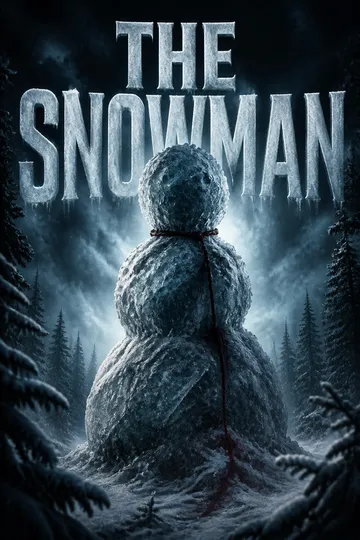
A signature in snowSnowmen appear at scenes of disappearance and murder, sometimes facing a house or wearing an object taken from a victim. They are both clues and staged messages, drawing investigators toward the killer while making ordinary winter scenery feel watched. Their construction changes over time, from a crude garden figure to elaborate arrangements involving bodies. For Harry1, the snowman becomes a way to connect cases that once looked unrelated. It also carries the killer's private history, so its meaning shifts from a police signature to a reenactment of childhood trauma.
The First Snowfall
A calendar for murderHarry1 and Katrine3 discover that several missing women disappeared when the first snow arrived in their region. The weather pattern links cases spread across years and police districts, which ordinary local files had kept separate. Snowfall is not merely atmosphere: it gives the killer a recurring schedule and creates the setting for the snowmen. The seasonal clue helps Harry1 recognize that the new disappearances are not spontaneous departures. It also binds the adult murders to the childhood event that the novel withholds from the reader until late in the story.
The Toowoomba Letter
A challenge aimed at HarryAn anonymous letter reaches Harry1 after his television appearance and refers to Toowoomba, the serial killer Harry1 caught in Australia. Its mention of the coming snow and the Snowman makes Harry1 suspect that someone knows about his past work and wants him involved. The letter is a lure, but it also gives Harry1 a reason to press for a small investigation team when the evidence is still incomplete. Its paper and digital copy later help trace the message's author. The device turns Harry's1 reputation into a tool the killer can use to draw him closer.
DNA and Blood
Family secrets leave tracesSecret paternity tests connect children whose mothers have disappeared, while a rare blood type links the struggle in the Ottersen barn to the suspected attacker. The clinic's records explain how the killer identified families, and the forensic blood test helps distinguish the attacker from the false suspect. Together, these traces expose the difference between social parenthood and biological descent without making either one morally simple. The evidence is highly revealing, but its ethical force depends on interpretation: DNA can establish a relationship, not the value of the people within it.
The Anatomy Tanks
Bodies hidden in plain sightThe Anatomy Department stores donated bodies in alcohol-filled tanks, identified by metal tags and shared with universities. Because the system depends on records that are not checked constantly, it offers a place where a body can be concealed among legitimate cadavers. Harry's1 inspection exposes how professional routine can become a hiding place. The tanks also connect the killer's medical knowledge to the practical disposal of victims. What should be a site of teaching and public service becomes part of the crime, turning institutional trust into a blind spot.
FAQ
Synopsis & Basic Details
What is The Snowman about?
- A chilling serial killer hunt: The Snowman follows Inspector Harry Hole as he investigates a series of disappearances and murders of married women across Norway, all occurring on the day of the first snow, each marked by an ominous snowman facing the victim's house. This pattern suggests the work of Norway's first true serial killer, drawing Harry into a deeply personal and psychologically complex case.
- Harry Hole's personal demons: The narrative is deeply intertwined with Harry Hole's struggles with alcoholism, his fractured relationship with Rakel and her son Oleg, and the ghosts of his past cases and fallen colleagues. His internal turmoil mirrors the dark and unsettling nature of the crimes he is trying to solve, making the investigation a journey into his own psyche.
- A game of cat and mouse: As Harry delves deeper, he receives taunting letters from the killer, who seems to be playing a calculated game with him, anticipating his moves and planting misleading clues. The story evolves into a high-stakes intellectual and emotional battle between the brilliant, tormented detective and a cunning, elusive murderer.
Why should I read The Snowman?
- Masterful psychological suspense: Jo Nesbø crafts a deeply unsettling atmosphere, blending intricate police procedural with profound psychological exploration of both the detective and the killer. Readers are drawn into a chilling world where hidden traumas and obsessions drive horrific acts, offering more than just a whodunit.
- Complex character depth: Beyond the thrilling plot, The Snowman excels in its character development, particularly Harry Hole, whose flaws and brilliance make him a compelling and relatable protagonist. The supporting cast, including his new partner Katrine Bratt and his former love Rakel, are equally nuanced, adding rich emotional layers to the narrative.
- Subversive crime fiction: The novel subverts typical crime thriller tropes by presenting a killer who is not just a monster but a product of deep-seated psychological wounds and societal pressures, forcing readers to confront uncomfortable truths about human nature and the consequences of secrets. The intricate plotting and unexpected twists keep readers guessing until the very end.
What is the background of The Snowman?
- Norwegian societal context: The story is set against the backdrop of modern Norway, a seemingly peaceful and affluent nation, which makes the emergence of a serial killer even more shocking. Nesbø subtly critiques aspects of Norwegian society, from its perceived naivety about global threats ("Norway, a gibbering, pea-brained blonde") to its insular nature, where "everyone is, at most, two acquaintances from knowing everyone else."
- Technological and forensic advancements: The investigation heavily relies on emerging forensic techniques of the early 2000s, such as DNA profiling and mobile phone triangulation, highlighting the evolving landscape of crime detection. The killer's awareness and subversion of these technologies add a layer of sophistication to the cat-and-mouse game.
- Cultural and historical allusions: The novel weaves in references to American politics (Ronald Reagan, George W. Bush elections), popular culture (Johnny Cash, Slipknot, Charlie Chaplin, Joni Mitchell), and even obscure scientific theories (Berhaus seals, quantum physics), enriching the narrative's texture and providing subtle thematic parallels to the characters' internal worlds and motivations.
What are the most memorable quotes in The Snowman?
- "I imprison people who are already imprisoned inside themselves.": This quote, spoken by Harry Hole in Chapter 2, encapsulates his profound empathy and understanding of the human condition, revealing his core motivation as a detective. It highlights the psychological depth of the novel, suggesting that the true prisons are often internal, built from hatred and self-contempt.
- "We're going to die.": Young Mathias's chilling whisper in Chapter 1, repeated later in the car, foreshadows the tragic events that follow and establishes the killer's traumatic origin. This simple, yet terrifying, declaration marks the birth of the Snowman's twisted ideology and his obsession with death and control.
- "Pain is a good thing; we would never survive without it. We should be grateful for pain.": Arve Støp's philosophical musing in Chapter 17, while seemingly detached, reflects a core theme of the novel: the complex relationship between suffering and human experience. It subtly echoes the killer's own warped justification for inflicting pain, viewing it as a necessary, even purifying, force.
What writing style, narrative choices, and literary techniques does Jo Nesbø use?
- Sparse, atmospheric prose: Nesbø employs a lean, direct writing style, often characterized by short sentences and vivid, sensory descriptions, particularly of the cold, snow-laden Norwegian landscape. This creates a stark, atmospheric backdrop that enhances the chilling nature of the crimes and the isolation of the characters.
- Deep psychological immersion: The narrative frequently delves into Harry Hole's internal monologue, offering unfiltered access to his thoughts, fears, and deductive processes. This first-person-like insight, even within a third-person limited perspective, allows readers to experience Harry's struggles and brilliant leaps of logic firsthand, fostering a strong connection with the protagonist.
- Intricate plotting and misdirection: Nesbø is a master of complex, multi-layered plots, weaving together past and present timelines, multiple suspects, and numerous red herrings. He uses narrative misdirection and subtle foreshadowing to keep readers constantly off balance, ensuring that the true identity and motives of the killer remain elusive until the climactic reveal.
Hidden Details & Subtle Connections
What are some minor details that add significant meaning?
- Harry's Mould Infestation: The "Aspergillus versicolor" mould in Harry's apartment (Chapter 6), initially a mundane detail, subtly mirrors the pervasive, unseen decay of society and the hidden psychological rot within characters. The mould man's comment, "Mould doesn't spread. Dry rot does," foreshadows the deep-seated, systemic nature of the killer's pathology, which has been festering for years.
- The "Swan Neck" Fox Trap: The detailed description of the "swan neck" fox trap (Chapter 8), used by Sylvia Ottersen's husband, foreshadows the killer's method of strangulation and dismemberment. This seemingly innocuous rural detail connects to Mathias's medical knowledge and his cold, calculated approach to murder, turning a tool of animal control into a chilling instrument of human demise.
- The Kono Paper and its Seller: The rare, expensive Kono paper used for the Snowman's letter (Chapter 16), sold by a Bergen antique dealer who also dealt with Gert Rafto, is a crucial, almost overlooked detail. It not only provides a direct link to the killer's location and meticulous nature but also subtly hints at the killer's desire to be found and recognized, as such a unique item would inevitably be traced.
What are some subtle foreshadowing and callbacks?
- The Berhaus Seal Analogy: The radio program about Berhaus seals (Chapter 2), where the male seal kills the female after mating to prevent competition for his offspring, is a chillingly precise foreshadowing of Mathias's motive. This seemingly random detail provides a biological, albeit twisted, justification for his murders, linking his actions to a primal, Darwinian drive for "purity" and control over paternity.
- Katrine Bratt's "Period" Excuse: Katrine's sudden emotional outburst and subsequent excuse of "It's my period" (Chapter 17) is a subtle misdirection. While seemingly a moment of vulnerability, it's a calculated deflection from her true psychological state and her deep-seated rage, which is later revealed to be the driving force behind her own obsessive pursuit of the killer.
- The Mould Man's "Red Wall" Comment: The mould man's note to Harry (Chapter 21) stating, "When blood gets into untreated wood it's impossible to wash off. The alternative would have been to paint the wall red," is a direct callback to Mathias's attempt to cover up Sylvia Ottersen's blood with chicken blood in the barn. This detail highlights the killer's meticulousness and the symbolic significance of blood and concealment in his crimes.
What are some unexpected character connections?
- Mathias and Gert Rafto's Mentorship: The revelation that Mathias Lund-Helgesen sought out and learned from Gert Rafto (Chapter 32) is a profound and unexpected connection. Rafto, a disgraced detective, unknowingly becomes a mentor to his future killer, teaching him about "perfect murder" and the psychology of the hunter, creating a chilling lineage of knowledge.
- Arve Støp's Hidden Paternity: The discovery that Arve Støp is the biological father of Jonas Becker and Sylvia Ottersen's twins (Chapter 26) is a central, unexpected twist. This connection not only provides a plausible motive for Støp as a red herring but also underscores the novel's theme of hidden paternity and the devastating impact of infidelity on families, which fuels the killer's rage.
- Katrine Bratt's Familial Link to Rafto: The most shocking connection is Katrine Bratt being Gert Rafto's daughter (Chapter 23). This transforms her from a mere partner into a deeply conflicted character driven by a personal vendetta to clear her father's name, blurring the lines between investigator and avenger and adding a layer of tragic irony to her role in the investigation.
Who are the most significant supporting characters?
- Bjørn Holm, the Forensic Maverick: Holm, with his eccentric personality and deep knowledge of forensics, serves as Harry's indispensable technical expert. His ability to spot minute details (like the shoelace knot or the chicken blood) and his unwavering loyalty to Harry provide crucial breakthroughs and a grounding presence amidst the chaos, highlighting the importance of meticulous scientific work in solving complex crimes.
- Ståle Aune, Harry's Psychological Confidant: The police psychologist, Aune, acts as Harry's intellectual and emotional sounding board, offering insights into the criminal mind and Harry's own psychological state. His discussions on mental illness, sleepwalking, and the nature of evil provide a theoretical framework for understanding the killer's pathology and Harry's own struggles, enriching the novel's psychological depth.
- Filip Becker, the Tragic Victim of Deceit: Initially a suspect, Filip Becker evolves into a deeply sympathetic character whose life is shattered by his wife's disappearance and the revelation of his son's true paternity. His journey from a controlling academic to a broken man underscores the devastating personal cost of the lies and betrayals that are central to the Snowman's motives, highlighting the collateral damage of the killer's "crusade."
Psychological, Emotional, & Relational Analysis
What are some unspoken motivations of the characters?
- Harry's Self-Punishment: Beyond his stated desire to catch the killer, Harry's self-destructive tendencies, including his relapse into alcoholism and his willingness to put himself in extreme danger, can be interpreted as an unspoken motivation for self-punishment. This stems from his deep-seated guilt over past failures and the deaths of loved ones, suggesting a subconscious desire for atonement or even an end to his own suffering.
- Mathias's Quest for "Purity": Mathias's obsession with paternity and his violent acts against women are driven by an unspoken, deeply pathological need for "purity" and control over hereditary lines. His own physical anomaly (lack of nipples) and the discovery of his mother's infidelity create a twisted sense of genetic betrayal, leading him to believe he is "cleansing" the world of perceived impurity and deceit.
- Katrine's Need for Vindication: Katrine Bratt's relentless pursuit of the Snowman, even to the point of psychological breakdown, is fueled by an unspoken need to vindicate her father, Gert Rafto. Her obsession is not just about solving a case but about rewriting her family's narrative and restoring her father's honor, revealing the powerful, often destructive, nature of familial loyalty and unresolved trauma.
What psychological complexities do the characters exhibit?
- Harry's Addiction as a Coping Mechanism: Harry's alcoholism is portrayed not merely as a weakness but as a complex coping mechanism for his profound trauma and the horrors he witnesses. It offers him a temporary escape from his nightmares and the "ghosts" of his past, highlighting the psychological toll of his profession and the difficulty of confronting inner demons without external crutches.
- Mathias's Narcissistic Grandiosity: Mathias exhibits strong narcissistic traits, viewing his murders as a "life's work" and a "masterpiece," and seeking recognition for his "genius." His desire to play a game with Harry and leave intricate clues stems from a need for validation and a belief in his own intellectual superiority, a common psychological complexity in serial killers.
- Katrine's Borderline Personality Traits: Katrine's intense emotional swings, her sudden rages (e.g., at Skarre, at Harry in the gym), and her obsessive focus on her father's case suggest elements of a borderline personality. Her psychiatrist's diagnosis of a "cocktail case" (Chapter 31) further highlights her complex psychological makeup, where various disorders intertwine to create a highly functional yet deeply disturbed individual.
What are the major emotional turning points?
- Filip Becker's Confession of Paternity: Filip Becker's anguished confession that Jonas is not his biological son (Chapter 22) is a major emotional turning point, shifting the focus from his potential guilt to his profound personal tragedy. This moment humanizes him and underscores the devastating impact of hidden truths on innocent lives, deepening the novel's exploration of betrayal and identity.
- Harry's Breakdown in Jonas's Room: Harry's unexpected emotional breakdown and tears in Jonas's bedroom (Chapter 19), triggered by the boy's innocent "Mummy?" and his own childhood memories, is a pivotal emotional turning point. It reveals Harry's deep vulnerability and empathy, showing that despite his hardened exterior, he is profoundly affected by the suffering of children and the echoes of his own past.
- Rakel's Final Farewell to Harry: Rakel's decision to end her physical relationship with Harry (Chapter 18), despite their lingering attraction, marks a significant emotional turning point for both characters. It signifies her choice for a stable, "endurable love" over the chaotic, destructive passion she shares with Harry, highlighting the painful sacrifices made for personal well-being and the acceptance of what cannot be.
How do relationship dynamics evolve?
- Harry and Katrine's Shifting Partnership: The dynamic between Harry and Katrine evolves from initial skepticism and professional testing to a complex, almost symbiotic partnership. Katrine's initial manipulation of Harry gives way to a grudging respect and even a protective instinct, while Harry, despite his suspicions, comes to rely on her sharp intellect, creating a bond forged in the crucible of a terrifying investigation.
- Rakel and Mathias's Illusory Stability: Rakel's relationship with Mathias initially represents a move towards stability and a "better life" away from Harry's chaos. However, as Mathias's true nature is revealed, this dynamic shatters, exposing the fragility of perceived normalcy and the terrifying reality of hidden evil within intimate relationships.
- Filip and Jonas's Redefined Father-Son Bond: The relationship between Filip Becker and Jonas undergoes a profound transformation. The revelation of Jonas's true paternity initially devastates Filip, but his subsequent embrace of Jonas as "My boy" (Chapter 37) redefines their bond, moving beyond biological ties to a deeper, chosen love. This evolution highlights the novel's theme of what truly constitutes family and fatherhood.
Interpretation & Debate
Which parts of the story remain ambiguous or open-ended?
- Katrine Bratt's True Psychological State: While Katrine is diagnosed with psychosis and later deemed "no longer psychotic" (Chapter 30), her long-term psychological stability remains ambiguous. Her final conversation with Harry, where she still seems to believe her father's name is cleared and hints at a return to her "old unit" (Chapter 38), leaves open the question of whether her underlying issues are truly resolved or merely suppressed.
- Harry's Future and "Never Coming Back": Harry's final statement to Rakel, "I'm never coming back" (Chapter 38), leaves his future deliberately open-ended. It's ambiguous whether this refers to his relationship with Rakel, his life in Oslo, or his role as a detective. This ending invites debate on whether Harry will finally find peace or if his self-destructive tendencies will lead him to another form of "South Pole" isolation.
- The Extent of Mathias's Scleroderma: While Mathias claims to be suffering from scleroderma and uses it as a justification for his "homage to life" suicide, the full extent and progression of his disease are not definitively confirmed by an independent medical source within the narrative. This leaves a slight ambiguity as to whether his illness is truly as debilitating as he claims, or if it's partly a psychological construct to rationalize his monstrous acts.
What are some debatable, controversial scenes or moments in The Snowman?
- The Graphic Nature of the Murders: The detailed descriptions of the victims' mutilations, particularly Sylvia Ottersen's decapitation and reassembly, and the use of the electric cutting loop, are highly graphic and can be controversial. Readers might debate whether such explicit violence is gratuitous or necessary to convey the killer's depravity and the psychological impact on the investigators.
- Harry's Unconventional and Illegal Methods: Harry Hole frequently bends or breaks police rules, engaging in unauthorized break-ins (Katrine's flat), blackmail (Idar Vetlesen), and reckless endangerment (the car crash into Støp's building). This raises ethical questions about whether the ends justify the means, and if Harry's "rat-catching gene" makes him a hero or a dangerous rogue.
- The Police's Handling of the Investigation and Public Relations: The police force's decision to publicly declare the case solved with Idar Vetlesen's "suicide" (Chapter 17), despite Harry's doubts, is a controversial moment. It highlights the tension between public perception and the pursuit of truth, sparking debate about institutional integrity and the willingness of superiors to sacrifice individuals (like Gunnar Hagen) for the sake of reputation.
The Snowman Ending Explained: How It Ends & What It Means
- The Killer's Capture and Harry's Sacrifice: The Snowman ending explained reveals Mathias Lund-Helgesen as the serial killer, apprehended by Harry Hole in a dramatic confrontation atop the Holmenkollen ski jump. Harry, despite being severely injured and losing a finger, manages to subdue Mathias, preventing his spectacular suicide. This physical sacrifice symbolizes the profound personal cost of Harry's relentless pursuit of justice and his willingness to pay any price to save those he cares about.
- The Unmasking of Deceit and Hereditary Trauma: The ending signifies the unmasking of the deep-seated lies and hereditary traumas that fueled Mathias's crimes. His obsession with paternity, stemming from his own childhood discovery of his mother's infidelity and his physical anomaly, is fully revealed. The "homage to life" he seeks is a twisted form of cleansing, punishing women for perceived genetic betrayal, highlighting the novel's exploration of the destructive power of secrets and the inescapable influence of the past.
- Lingering Scars and Ambiguous Future: While the immediate threat is neutralized, the ending leaves a sense of lingering scars and an ambiguous future for Harry Hole. His physical injury, the emotional toll of the case, and Rakel's decision to end their relationship suggest that victory comes at a heavy price. The final image of Harry contemplating his future, perhaps disappearing like the melting snow, underscores themes of loss, the impossibility of perfect resolution, and the enduring struggle against inner and outer darkness. This open-ended conclusion invites readers to ponder Harry Hole's motivations and whether he can ever truly escape the shadows that define him.
Harry Hole Series

About the Author

Download PDF
Download EPUB
.epub digital book format is ideal for reading ebooks on phones, tablets, and e-readers.








