

Plot Summary
Anna's Vanishing Clock
In Oslo, Jon Hansen is an absent, unreliable father to Anna, the daughter he had with Bobby, a fellow hash smoker. When doctors diagnose Anna with acute leukaemia, Jon discovers that a German treatment might give her a chance, but it costs far more than his small-time dealing can earn.
The Fisherman, Oslo's feared crime boss, summons Jon after his old friend Toralf dies with a pistol registered in Jon's name. Jon insists he did not kill Toralf, but the Fisherman believes he has the nerve to replace Toralf as a debt collector and fixer. Jon accepts the dangerous work for the money, telling himself that each payment brings Anna closer to treatment.
Jon's first moral compromise is also an act of care, but the distinction does not make it safe. He accepts the Fisherman's job because ordinary work cannot meet Anna's urgent need, then lets the criminal economy define what responsibility looks like. His history with Toralf adds a second burden: Jon is suspected of a killing he did not commit, while the killing he may yet be asked to perform becomes a price he believes he can postpone. The novel begins with responsibility arriving too late and under coercive conditions.
Gustavo Leaves Alive
Jon proves himself as a collector by making the speed dealer Kosmos pay without violence. Then the Fisherman assigns him Gustavo, a dealer who has stolen money and drugs. Jon aims his pistol but cannot pull the trigger when Gustavo's face is visible. Instead, he accepts half the stolen cash and amphetamines, helps Gustavo disappear, and tells the Fisherman that he disposed of the body.
By the time Jon has scraped together the money for Anna's German treatment, she is already in a coma; she dies three weeks later. His lie has bought him money, not rescue, and left him in debt to a crime boss who never stops looking for what is missing.
Jon's refusal to kill is not presented as uncomplicated virtue. He protects Gustavo, but also takes money, lies to his employer, and makes himself vulnerable to the Fisherman's pursuit. His paralysis at the trigger exposes a gap between the identity the job demands and the person he remains. Anna's death then turns the money into a monument to failed timing: Jon's effort was real, yet he cannot use effort to reverse what has happened. Guilt becomes both his punishment and his last proof that he cared.
The Bin Lorry Leap
The Fisherman's new enforcer, Johnny Moe, finds Gustavo in Brazil and kills him, confirming Jon's deception. Johnny visits Jon's flat and demands the stolen money and drugs. Jon tries to shoot him, but his finger locks again; when Johnny raises his revolver, Jon escapes through a first-floor window and lands on a rubbish truck below.
He runs with his pistol, cash and the knowledge that the Fisherman's people will keep hunting him. After days travelling north, he steps off a bus in Kåsund, a remote Finnmark village under the midnight sun. He calls himself Ulf, claims to be a hunter, and hopes that a place nearly at the end of the road can hide him.
The escape is physical, but its deeper turn is that Jon stops being able to treat flight as a temporary solution. His body refuses the violence he has accepted as work, yet the same hesitation nearly kills him. The leap onto the truck is a reckless substitute for a decision: survival happens before courage does. In choosing an alias and the empty northern landscape, Jon tries to make himself unrecognizable. The village will instead require him to be seen by people who have little reason to trust him.
A Name for Kåsund
On his first night, Jon sleeps in the church until Lea, its sexton, arrives with her ten-year-old son, Knut. Lea does not press hard when he gives his false name, and she offers him a remote hunting cabin after learning he needs somewhere to stay. She lends him her husband Hugo's rifle and binoculars; Knut guides him across the plateau, bringing food, firewood and a Sámi knife.
Jon hides his cash and pistol inside the cabin wall and watches the horizon through narrow windows. Knut's jokes and questions unsettle his guarded routine, while Lea's practical kindness gives him a first foothold in a community where nearly everyone else is away.
The cabin is both refuge and surveillance post: Jon chooses it because he can see danger approaching, while its borrowed supplies quietly bind him to the people he means to avoid. Knut's attention makes concealment harder, not through interrogation but through ordinary curiosity. Lea's welcome is similarly concrete. She lends what Jon needs without pretending that his story is convincing. In a novel shaped by evasion, hospitality becomes an ethical pressure: accepting care means becoming answerable to someone beyond himself.
The Empty Coffin
Mattis, a Sámi villager with a talent for reading people, tells Jon that fishermen found Hugo's life jacket after his boat disappeared. Jon learns that Lea and Knut have spent weeks waiting for news. He goes to the church expecting a wedding and instead finds Hugo's empty coffin and a funeral.
Hugo's twin brother, Ove, follows Lea home and tries to assert control over her, but Jon hears her resist from outside. Afterward, Jon offers Lea the money hidden in his cabin in case she and Knut need to escape. She refuses it. Jon does not leave, however, and he asks Knut to watch for unfamiliar visitors and cars from Oslo.
The empty coffin turns absence into a social fact: the village can mourn Hugo without knowing what happened to him, while Lea is expected to resume life under her husband's family's authority. Ove's attempt to claim her reveals that bereavement has not freed her from coercion. Jon's offer of money is sincere but also self-serving; he wants to help and to imagine himself useful to this family. Lea's refusal preserves her agency, while Jon's decision to stay marks his first deliberate involvement in their danger.
The Wrong Promise
Jon leaves the cabin for a Sámi wedding celebration, where Anita, a local woman who claims second sight, tells him that a visitor from Oslo has been asking for a man named Jon. The description matches Johnny. Jon has left his pistol at the cabin, so he follows Anita to her home and spends the night there.
In the morning he promises to return, a pledge she treats as binding. While Jon is away, Johnny searches the cabin. Lea tells him Jon has gone south, and Johnny takes the bus back in that direction. When Jon returns, Lea confirms the danger has passed for now, but the alias and the lie have become harder to keep separate.
Jon's attempt to manage danger through improvisation creates a new obligation rather than a clean escape. Anita gives him useful intelligence, but the night with her turns his need for shelter into a promise he does not intend to keep. Her insistence on that promise is not merely romantic; in a small village, private choices become public information. Meanwhile, Lea's lie protects him without requiring her to know his full story. The episode makes secrecy relational: every person who helps Jon acquires some power over what happens next.
Cod Beneath Midnight
After Johnny leaves, Lea, Knut and Jon take a boat out at night and catch cod. The quiet outing lets Jon tell Lea that Anna died before he could secure her treatment, and his anger at religious certainty surfaces as they discuss what follows death. Lea then explains that her father pressured her to marry Hugo after Hugo raped her and she became pregnant with Knut.
Her father threatened to expel her from the congregation, while Hugo's family agreed to the match. Jon hears how faith, family standing and fear combined to make her marriage seem unavoidable. On the journey back, Knut rows beside his mother, eager for Jon's approval, while Jon begins to imagine a life beyond hiding.
The boat creates a temporary space where neither the village nor the criminal world dictates the conversation. Jon's grief comes out as argument against a God who permits arbitrary suffering; Lea answers not with doctrine but with the history of what doctrine enabled in her own family. Her account complicates the apparent shelter of the congregation, showing how shared belief can sustain care and enforce obedience at once. Knut's rowing offers a quieter counterpoint: the child is learning steadiness from his mother, not from the father whose authority shaped their home.
Ove's Knife in Alta
At a prayer meeting, Mattis warns Jon that Johnny could return and asks for money to keep quiet. Lea then drives Jon to Alta, where he buys clothes and supplies. When they sit together listening to a song, Ove arrives drunk with two companions and insults Lea, then attacks Jon. Jon fights back, but Ove cuts his cheek and batters him until Lea draws a pistol and forces Ove to retreat.
She stitches Jon's wound and explains that Hugo had also beaten her and Knut; Knut's forehead scar came from one of those attacks. Back at the cabin, Lea stays beside Jon while he recovers. Their closeness finally breaks into a kiss, but she leaves when she realizes what it could cost her.
The violence makes visible what the earlier village scenes kept partially concealed: Lea has survived by anticipating men who mistake control for entitlement. Her pistol and medical kit are not symbols of abstract resilience; they are tools acquired because danger has been domestic and repeated. Jon's intervention matters, but his impulse to protect her cannot erase the history she has endured. Their kiss arrives amid injury and care, a moment of mutual recognition that also exposes the limits of Jon's fantasy that love alone can make a new life possible.
A Door Closes Twice
Lea leaves the cabin after the kiss, insisting that her son, faith and life in Kåsund cannot be traded for Jon's uncertain future. Jon spends two days drinking and grieving, then goes to the church to ask her to leave with him. Lea has already heard from Anita, who came to ask why Jon had been with her and reminded Lea that he had promised to return.
Jon cannot honestly deny sleeping with Anita. Lea refuses his offer, and he returns to the cabin convinced that nobody would miss him. He tries to kill himself with the rifle, but finds it unloaded. As he searches for cartridges, church bells begin to ring, drawing his attention to men approaching across the plateau.
Jon's second rejection is sharper because it is not only about incompatible lives. His attempt to build a future with Lea depends on asking her to trust him, while his recent conduct has given her reason not to. The lie he could not tell Anita has become a truth that costs him intimacy. His suicide attempt translates shame into a wish to erase the person who keeps failing others. The bells interrupt that inward collapse with a public signal, pulling his attention back toward a danger that can still be acted upon.
Buried in the Buck
Through his binoculars, Jon sees Johnny, two of the Fisherman's men and Mattis approaching the cabin with trained dogs. He believes Mattis has sold him out, but the group searches after being led on a long detour. Jon hides his cash, takes Knut's knife and cuts open the dead reindeer buck that has been lingering near the cabin.
With the dogs closing in, he crawls inside the carcass and seals the opening with the knife. Johnny's men search the cabin and the stream, while Mattis distracts them with a false trail and a warning about the carcass. Once they leave, Jon slips into the cold water to wash away the filth and survive another day.
The hiding place is a grotesque inversion of Jon's earlier strategy. He has spent the story trying to remain unseen by changing names and watching from a distance; now survival requires him to abandon dignity and enter the material consequence of death. Mattis's role remains morally ambiguous, but his delay buys Jon the minutes he needs. The scene also shifts Jon's relation to survival: he no longer waits passively for a bullet or an escape route. He improvises, endures disgust, and emerges alive because he chooses action.
The Wrong Twin
After washing, Jon learns the men have searched the cabin and taken apart his hiding places, so he prepares to leave Kåsund. Before he can go, he sees a man threatening Lea through her kitchen window and fires through the glass. The man falls, and Lea identifies him as Hugo, not Ove.
Hugo had survived after his boat drifted out to sea and had returned to Kåsund that night. Jon's shot kills the husband everyone believed lost. Lea says she had told Hugo she loved someone else and wanted to leave; she means Jon. They decide that the village must believe Jon died instead, giving them a chance to escape without the Fisherman's men finding him.
The mistaken identity is not a puzzle solved by superior deduction; Jon acts under pressure, and the consequences arrive before he understands whom he has shot. The title's mirror motif becomes literal: he has aimed at the wrong twin, but the deeper confusion is between the roles people impose and the lives they want. Lea's confession changes the emotional meaning of the killing without undoing it. Their plan begins in a morally compromised place, where survival depends on concealing a death and accepting responsibility for what that concealment requires.
A Death They Can Leave
Lea and Jon wrap Hugo's body, take it to the cabin and place Jon's dog tag around his neck. They remove a matching tooth, add Jon's rifle and the bullet, then set fire to the cabin so the remains will be identified as Jon's. Lea's father, Jakob, agrees to support the false account and arrange the burial; he recognizes that his own rigid enforcement of faith helped trap Lea in her marriage.
Before dawn, Mattis uses his legal authority to marry Jon and Lea, with Knut beside them. Snow begins to fall as the three leave Kåsund in Lea's Volkswagen. They cross into Sweden, carrying little beyond their new marriage, Jon's money and the chance to begin again.
The escape does not purify Jon or Lea; it gives them a future by making the village accept a fabricated past. The staged body turns identity into evidence that can be assembled from a tag, a tooth and a story, exposing how official certainty depends on fragile material signs. Jakob's help matters because he finally uses his authority to repair, in part, what he once helped enforce. Marriage is both practical protection and chosen intimacy. The snow marks no guarantee of happiness, only a change in direction and a willingness to risk what comes next.
Analysis
Midnight Sun sets two systems of belief beside each other: the Læstadian community's faith in salvation and Jon's insistence that death ends everything. Neither is treated as a simple answer. Faith offers Kåsund shared practice and mutual care, but Jakob's authority also turns doctrine into a means of controlling Lea. Jon's skepticism protects him from easy consolation, yet it does not protect him from despair. His attempt to save Anna shows that love can persist without certainty; his later choices test whether care can become more than guilt.
The novel makes responsibility physical. Jon's disabled trigger finger, his hidden money, Lea's needle and pistol, the bells and the ruined cabin all convert inner conflicts into actions with material costs. The remote setting magnifies those costs. Under a sun that refuses to set, Jon cannot simply wait for darkness to conceal him or sleep to suspend his thoughts. The plateau offers distance from the Fisherman, but isolation also intensifies his grief and dependence on alcohol.
Knut is the story's sharpest moral observer. His jokes and riddles expose adult evasions, while his rowing and play show how trust is learned through repeated acts rather than declarations. Jon's transformation therefore is not a clean redemption. He remains implicated in a theft, a deception and a killing. What changes is his willingness to stay present when consequences arrive. The ending grants him no guarantee that love will last or that his past can be erased. It offers something more modest: a chosen family, a shared escape and the courage to risk another beginning.
Review Summary
Midnight Sun is a novella by Jo Nesbø featuring a criminal on the run in northern Norway. Readers found it an enjoyable, quick read with vivid descriptions of the landscape and interesting characters. Some felt it lacked the depth and complexity of Nesbø's Harry Hole series but appreciated the different style. The story explores themes of redemption, faith, and second chances. While some found the plot predictable, others enjoyed the noir atmosphere and dark humor. Overall, fans consider it a solid entry in Nesbø's non-Harry Hole works.
People Also Read
Characters
Jon Hansen
Runaway, reluctant fixerJon is a small-time Oslo hash dealer whose talent for reading people makes him useful to the Fisherman, while his inability to carry out a killing makes him dangerous to that employer. He is Anna's father, though fear and poor judgment have kept him from becoming the parent he wants to be. Jon treats self-condemnation as a kind of honesty, often naming himself a failure before anyone else can. Beneath that defense is a man capable of tenderness, quick improvisation and loyalty. His challenge is not simply to become brave; it is to accept that caring for someone requires decisions, not only remorse.
Lea
Mother guarding her freedomLea is Knut's mother, the village church's sexton and the wife of a fisherman whose family carries considerable local authority. She is practical and physically capable, accustomed to solving problems without waiting for permission. Her faith gives her a language for community and care, but the congregation's rules and her father's influence have also narrowed her choices. Lea's guarded manner is not coldness; it reflects years of having to calculate the cost of speaking openly. She recognizes kindness without confusing it with safety, and her central tension is between the life she has learned to endure and the possibility of choosing one for herself.
Knut
Curious, grieving sonKnut is Lea's ten-year-old son, bright, restless and full of jokes, riddles and questions adults would rather avoid. He wants ordinary childhood freedoms, including sport and companionship, but grief and family conflict have made him watchful. Knut tests people for honesty, often spotting evasions that grown-ups mistake for cleverness. His attachment to Jon begins in curiosity and the pleasure of having someone to talk to; he also wants approval and a model of how a man might behave. His humor does not erase his fear. It gives him a way to approach difficult truths without surrendering his playfulness.
Mattis
Sámi, slippery mediatorMattis is a short, bow-legged Sámi villager known for moonshine, blunt observations and a history that includes theology and law. He distrusts institutions, including the religious and legal systems he once studied, but he remains attentive to the people living at their edges. Mattis makes money from his knowledge and does not pretend to be selfless; his help comes with a price, a joke or a calculated lie. Beneath the opportunism is a strong sense of local obligation. He reads character well, though his methods leave others unsure whether he is protecting them, exploiting them or doing both.
The Fisherman
Oslo's ruthless crime lordThe Fisherman controls a drug business from a fish shop, using rumor, punishment and the certainty of pursuit to defend his territory. He treats loyalty as a contract and violence as a tool of management, but he also understands that fear can be more efficient than constant force. Jon's small operation interests him only when it intersects with his authority. The Fisherman represents a system in which personal need is converted into leverage: he can offer money when someone is desperate, then claim that desperation as obedience.
Johnny Moe
Patient professional killerJohnny is the Fisherman's new enforcer, a thin, controlled man who approaches violence as a task rather than an emotional release. He has little interest in Jon's explanations and trusts evidence of disloyalty more than promises. His calm manner makes him frightening: he does not need to perform rage to make a threat credible. Johnny's function in the story is to turn Jon's old choices into an immediate physical danger, tracking a debt across borders without treating distance as protection.
Anna
Daughter at the story's heartAnna is Jon and Bobby's young daughter. Jon falls in love with her almost at once, yet his fear of harming her has kept him on the margins of her care. Her illness forces him to confront the difference between affection and responsibility, and her presence shapes nearly every dangerous choice he makes. Anna is not merely a motive for Jon's actions; she is the person who reveals how badly he wants to be dependable, even when he does not know how to become so.
Bobby
Estranged, struggling motherBobby, whose birth name is Borgny, is Anna's mother and Jon's former partner. She once embraced an outsider identity, but drugs and instability gradually overwhelm her capacity to care for her daughter. Her relationship with Jon is shaped by mutual avoidance: each can see the other's failures, yet neither consistently takes responsibility. Bobby is more than a foil for Jon's guilt. Her decline shows how fragile a family becomes when both adults mistake escape for freedom.
Gustavo
Dealer Jon cannot killGustavo is a street dealer who has stolen from the Fisherman and becomes Jon's first major test as a hired killer. He is quick enough to recognize Jon's hesitation and offers him a way out that also implicates him in the theft. Gustavo's appeal is not that he is innocent, but that Jon can see a frightened human being where his employer sees only a problem to be removed.
Jakob Sara
Preacher, influential fatherJakob Sara is Lea's father, Knut's grandfather and a travelling preacher with deep authority in the local congregation. He values discipline, humility and the continuity of his community, but his devotion has made him capable of imposing severe choices on his daughter. Jakob is neither a simple hypocrite nor a harmless traditionalist. He believes that faith can protect people, yet must confront the damage done when his interpretation of faith outweighs Lea's freedom.
Hugo Eliassen
Fisherman, volatile husbandHugo is Lea's husband, Knut's father and Ove's twin brother. He comes from a powerful fishing family and has a reputation for drinking, fighting and expecting obedience at home. The village's account of him is shaped by what his family can command others to say, while Lea and Knut carry a more intimate knowledge of his behavior. Hugo's place in the story joins the northern economy of boats and family status to the private violence that those structures can conceal.
Ove Eliassen
Entitled twin, family enforcerOve is Hugo's twin brother and part of the influential Eliassen family. He drinks heavily and assumes that family ties give him authority over Lea and Knut. His aggression is not only personal volatility; it reflects a local hierarchy in which men with money and kinship connections expect women to yield. Ove's presence makes the cost of Lea's independence concrete and forces Jon to decide whether to remain a passerby.
Anita
Desire, rumor and leverageAnita is a young woman at the village's Sámi celebrations who claims to read people through second sight. She is frank about wanting men and refuses the shame others might attach to that desire. Her confidence does not make her invulnerable; she also expects promises to be honored and can use information when she feels dismissed. Anita's brief relationship with Jon becomes consequential because in Kåsund, private behavior quickly enters public circulation.
Basse
Atheist grandfather, moral anchorBasse is Jon's grandfather, an architect who designed churches without believing in God. He raised Jon after Jon's parents died and offered him a model of practical goodness that did not depend on promises of salvation. His stories, Spanish sayings and blunt reflections on mortality remain part of Jon's inner vocabulary. Basse gives Jon a counterweight to the religious certainty he encounters in Kåsund, but his atheism does not make him cynical about kindness.
Toralf
Friend whose death implicates JonToralf is Jon's childhood friend and former flatmate, a depressed drug user who also worked for the Fisherman. His death creates the suspicion that draws Jon into the Fisherman's organization. Their old friendship helps explain why Jon once lent Toralf a pistol, and why the accusation follows him even though he did not kill him.
Brynhildsen
Fisherman's seasoned lieutenantBrynhildsen is a veteran of the Fisherman's organization, a former associate of the crime boss Hoffmann and a regular presence in the shop's back room. He is one of the men sent north with Johnny. His familiarity with the business makes him part of the machinery Jon is trying to escape.
Styrker
Handler of trained dogsStyrker is one of the Fisherman's men and is known for his Rottweilers. He accompanies Johnny and Brynhildsen to Finnmark, where the dogs become part of the search for Jon. His pride in their training makes him a practical threat rather than merely another armed follower.
Plot Devices
Ulf Hansen
A borrowed identity buys timeJon uses the name Ulf after arriving in Kåsund, hoping a false identity will separate him from the Fisherman's search. The alias is easy to sustain among strangers but grows complicated as he accepts help from Lea and Knut. His necklace still carries his real name, and the final escape depends on turning identity into physical evidence that the village can misread. The device links the criminal plot to the question of whether a person can become someone new through choice, or only through a story others agree to believe.
The Midnight Sun
A distorted northern timekeeperThe sun never sets over Kåsund during Jon's stay. Its unbroken light damages his sleep, blurs the distinction between day and night, and makes the exposed landscape feel difficult to escape. It also removes the darkness a fugitive might normally use for cover. As Jon grows more isolated and drinks to quiet himself, the sun becomes a physical pressure that shapes his judgment rather than a decorative feature of the setting.
The Unfired Shot
A trigger for moral changeJon's finger repeatedly fails him when he tries to shoot someone whose face he can see. The hesitation complicates his reputation as a fixer and repeatedly leaves him vulnerable. The novel returns to reflection and sight as Jon confronts whether he can act without hiding from the human consequences. His struggle does not disappear when he finally fires; the act brings a consequence he did not understand until afterward.
The Reindeer Buck
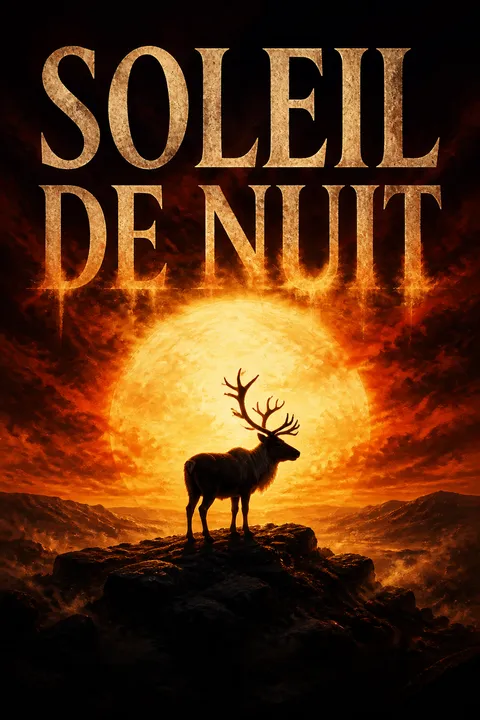
Sentinel, mirror and hiding placeA solitary buck repeatedly appears near Jon's cabin, its clicking knees serving as an improvised alarm when someone approaches. Its isolation reflects Jon's own exile, while its eventual death becomes essential to his survival. The carcass provides a hiding place when the Fisherman's men and their dogs search the plateau. The animal shifts from companion-like presence to practical shelter, binding the novel's landscape to Jon's changing relationship with vulnerability and survival.
Church Bells
Warning carried through ritualIn Kåsund, church bells can signal that danger is approaching, a practice rooted in the village's history of resistance. Jon initially hears them as part of religious life, then recognizes them as an urgent warning. Their sound interrupts his suicide attempt and gives him time to prepare for the men coming to the cabin. The bells let Lea communicate within a community whose customs and local knowledge can protect people as effectively as conceal them.
About the Author
Other books by Jo Nesbø





Download PDF
Download EPUB
.epub digital book format is ideal for reading ebooks on phones, tablets, and e-readers.








