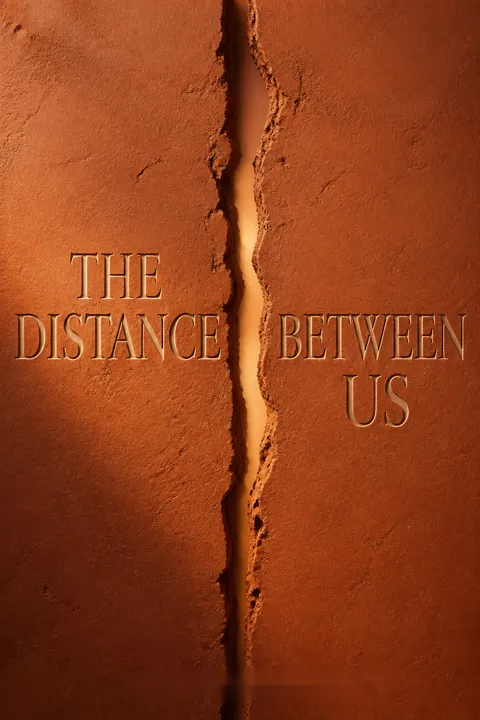


Key Takeaways
Treat migration as a family rupture, not a simple change of address
Separation starts early. In 1980, four-year-old Reyna watches her mother, Juana, leave Iguala to join Natalio in the United States. Her father has already been away for two years. The children are told their mother will return within a year, but she is gone for two and a half. Reyna clings to her father's photograph because it is the only version of him she can hold onto. The promised house is meant to reunite the family, yet the children experience the plan first as the loss of their mother.
Distance keeps changing shape. The memoir follows more than a border crossing: it tracks promises, missed childhoods, and relationships altered by years apart. Grande cites studies estimating that 80 percent of Latin American children in U.S. schools have been separated from a parent during migration.
What's striking is how the memoir makes distance both measurable and emotional. A child can know a parent's location and still experience that parent as unreachable. Psychologists use the term ambiguous loss for grief without a clear ending, such as when someone remains alive but is absent from daily life. That lens helps explain why reunion does not simply close the wound. The family's separation is also not just a matter of personal choice: poverty and the search for work shape the parents' decisions. Holding both truths prevents the story from becoming either a simple indictment or a simple celebration of sacrifice.
When parents leave, siblings can become one another's emergency shelter
Mago becomes the stand-in. Before leaving, Juana asks eight-year-old Mago to look after her younger siblings. Mago takes the task seriously: she protects Reyna and Carlos from threats, helps them endure hunger and harsh discipline, and supplies stories and memories to keep their parents present. When neighbors call the children orphans, Mago insists that being left behind does not erase their family ties.
Care has a cost. Mago is not simply a miniature hero. She also carries anger, envies other children who have their mothers, and sometimes turns that hurt on Reyna or others. Later, she works while studying to help pay for her sister's medical care and school needs. Her strength keeps the family functioning, but it also means a child must shoulder responsibilities that belong to adults.
The memoir captures a family-systems pattern often called parentification: a child takes on adult caregiving responsibilities. Such responsibility can build competence and deep sibling loyalty, as it does for Mago, but competence should not be mistaken for freedom from harm. Her protective role leaves little room for her own fear, ambition, or ordinary adolescence. The story also resists a neat moral split between the strong sister and the struggling siblings. Mago's care is real, and so is the anger that escapes through it. Recognizing both makes resilience more than a feel-good label.
A dream house can cost more than the bricks that build it
A house stands for safety. Natalio leaves Mexico hoping to earn enough to build a brick home for his family. The dream is rooted in real deprivation: the children live with unreliable water, poor housing, and limited food. Years later, construction begins beside his mother's house. Reyna, Mago, and Carlos carry gravel, bricks, and mortar after school, believing that their labor will bring their family back together.
Ownership matters, too. The house is eventually finished, but it stands on land belonging to Natalio's mother. His sister later obtains the property deed, leaving him without the home he worked toward. The building could not guarantee a family's return, and its construction did not secure control of the land. The dream's emotional price had been paid long before the family learned how precarious the asset was.
This house is both a material aspiration and a family promise, which is why its loss lands twice. The story offers a useful distinction between making an asset and having secure control over it: labor alone cannot protect property when ownership rests with someone else. It also shows how a concrete goal can become a proxy for an emotional one. A finished home may provide shelter, but it cannot by itself restore trust or recover years of childhood. The memoir honors the hope behind the project without pretending that hope made the sacrifices worthwhile.
A parent's return cannot rewind the years children survived without them
Reunion is not repair. When Juana returns to Mexico, Reyna is nearly seven and barely recognizes her. The children are happy their mother is back, but she returns hurt by Natalio's betrayal and soon leaves again with a new partner. Later, Natalio returns after eight years away. Reyna has spent years imagining him through a photograph, but the living man is a stranger, and he soon announces that he will leave again, taking some children but not all.
Each return brings a choice. Reyna eventually crosses the border with her father because she cannot bear to be separated from Mago. Physical reunification gives her a chance to live with him, but it does not erase the years of absence or make the family immediately safe. The memoir treats reunion as a beginning under difficult conditions, not as a guaranteed happy ending.
The narrative distinguishes physical reunification from relational repair, a distinction with practical importance for families and institutions. A child may be returned to a parent while still feeling uncertain, unfamiliar, or unsafe. Trust is built through repeated care, not through a single reunion or a declaration of love. The book also complicates the idea that parents' intentions settle the moral question. Juana and Natalio both face constraints and pain, yet their children bear the consequences of their decisions. Compassion for a parent's circumstances need not require denial of a child's experience.
Crossing the border is not a clean passage from danger to safety
The journey is physical danger. In 1985, nine-year-old Reyna attempts the crossing with her father, Mago, and Carlos. The first two attempts fail. Reyna is sick and struggling to keep pace; during the second trip, she finds a dead man. On the third attempt, a helicopter's searchlight forces the family to hide under brush while agents search nearby. The smuggler guiding them escapes ahead, leaving the family to continue without him.
Arrival is only one threshold. After they reach California, another driver hides the children in a car for the trip to Los Angeles. Their first view of the United States comes in fragments, and Reyna's first meal is sunflower seeds shared in the car. She is safe from immediate capture, but she has left her mother, Betty, and grandmother behind. The crossing delivers opportunity and separation at once.
The scenes counter a tidy success story in which arrival resolves the danger. Here, crossing is a high-risk process undertaken by a child who has little control over its timing or terms. The family's success depends on endurance, luck, and help from smugglers, not on a frictionless route to a better life. Migration debates often reduce journeys to legal categories or outcomes; the memoir restores the human scale, including the child who must run, hide, and leave loved ones behind. Its account is one family's experience, not a template for every border crossing.
The United States offered opportunity, but never a frictionless rescue
A new country brings new obstacles. In Los Angeles, Reyna must learn English, navigate a much larger school, and accept that the school record uses only her father's surname, Grande, dropping Rodríguez, her mother's name. Her family also lives with fear of deportation and neighborhood violence. In school, classmates mock her background, while her father's insistence on achievement comes with threats and abuse at home.
Opportunity is real, but uneven. The family eventually receives legal residency, and the children gain access to education their parents lacked. Yet a visit back to Iguala reveals another divide: friends see Reyna as privileged and no longer fully Mexican, while she still feels tied to home. The United States expands her possibilities, but it does not erase poverty, discrimination, or the ache of belonging to more than one place.
The memoir refuses both familiar extremes: the United States as a promised paradise and migration as pure loss. Its opportunities are tangible, including legal status, school access, and a path to college, but they arrive alongside language barriers, prejudice, violence, and family strain. This complexity matters because opportunity is often discussed as though access alone ensures equal outcomes. Reyna's story shows that access can open a door without removing the burdens a child carries through it. Her identity is not a failed choice between countries; it is shaped by life in both.
Education opens doors, but achievement cannot force a parent to notice
School becomes a route forward. Natalio, pulled from school at nine to work in the fields, tells his children that education can give them choices he never had. Reyna takes that demand seriously. She struggles through English-language classes, discovers music through a school saxophone, and keeps writing even after a teacher rejects her first book project. By 1999, she becomes the first in her family to graduate from college.
Achievement cannot repair everything. Reyna wants her success to make her father proud, but he misses her performances and dismisses an early writing prize. Her education is a genuine source of possibility, yet it cannot guarantee his approval or undo his violence. The memoir shows both the value of pursuing education and the danger of making a parent's recognition the sole measure of its worth.
Education functions here as both mobility and emotional currency. Natalio's own lost schooling gives his demand urgency, while his harshness turns that demand into pressure. Reyna's achievements matter in their own right, even when they fail to produce the affirmation she craves. This distinction is useful beyond the memoir: a goal can be worth pursuing while the hoped-for response from another person remains outside one's control. The story does not condemn ambition; it asks readers to notice when achievement is being used to settle an emotional account that success cannot pay.
A teacher's recognition can turn private pain into a public voice
Diana sees a writer. At community college, Reyna's teacher Diana Savas notices that an assignment meant to describe social groups has become an autobiographical essay. Diana encourages her writing, gives her a book by Helena María Viramontes, and later introduces her to Sandra Cisneros's work. Reading characters whose lives resemble her own gives Reyna a new sense of literary belonging.
Support becomes practical. When violence at home makes it impossible for Reyna to stay with her father, Diana offers her a room. She encourages Reyna to keep studying and writing, and helps her revise an essay that wins a scholarship competition. Diana does not erase Reyna's past; she gives her safety, books, and serious attention, conditions in which Reyna can turn experience into craft.
What's powerful is that recognition here is not vague praise. Diana pairs it with concrete resources: books, feedback, a safe place to live, and encouragement to continue school. In education, that combination can matter more than a single motivational speech because it links belief in a student to the conditions that make learning possible. Literature also gives Reyna an interpretive community, showing that her experience is intelligible rather than unspeakable. The memoir does not suggest that one mentor can solve structural problems, but it demonstrates how one reliable adult can change what choices feel available.
Keep both countries in your identity, even when each calls you foreign
Belonging shifts with the border. In the United States, Reyna is mocked for her accent and called an outsider. In Iguala, after years away, an old friend says she speaks like a pocha, a Mexican living in the United States. Mago responds to the return visit by distancing herself from the poverty they escaped; Reyna feels anger because those streets and people are still part of her history.
A name can carry the divide. At school, Reyna is registered with Grande alone, though Rodríguez is her mother's surname. Over time, she comes to understand herself as Mexican American, shaped by both countries. Her writing becomes a way to hold those histories together rather than prove loyalty to one side. The memoir presents identity as lived connection, not a test administered by either country.
The memoir makes identity relational: the same person is read differently depending on language, accent, class, and location. That is why Reyna can feel like an outsider in both places without being rootless. Her conflict with Mago also shows that shared origins do not require identical attachments; siblings can adapt differently without one being the authentic one. The idea of writing as a bridge is especially apt because language can preserve experiences that assimilation pressures might otherwise flatten. Belonging here is not a final verdict, but a practice of carrying more than one home.
Make room for both the father who failed you and the one you needed
The final reckoning is mixed. When Natalio develops liver cancer, Reyna and her siblings must decide whether to let life support end. By then, their father has been distant and abusive, but he is also the man who pushed them toward education and brought them to the United States. Reyna remembers both versions: the parent who hurt her and the one she spent childhood longing for.
Love does not erase harm. Reyna struggles to forgive him, sometimes staying away from the hospital and sometimes researching his illness or bringing him food. At his bedside, she wonders whether she would still have followed him if she had known what life with him would become. Her answer is yes. That answer recognizes the life she built without making his failures harmless or her childhood pain unreal.
The ending offers integration rather than a verdict. A person can acknowledge harm, preserve love, and recognize what a relationship made possible without claiming that the good cancels the damage. That is a more demanding form of remembrance than either idealization or total rejection. The memoir's answer is specific to Reyna's life; it should not be mistaken for an obligation imposed on people harmed by family members. Its force lies in showing how she chooses to interpret her own history, with grief and gratitude both present.
Analysis
The memoir is built around a distance that keeps changing meaning. Its opening childhood scenes present the United States as a force that takes parents away; the second half shows the country as both the site of new opportunities and the place where the family continues to fracture. The book's two-part structure moves from being left behind in Iguala to arriving in Los Angeles, but it refuses to treat arrival as resolution. The final hospital scene, placed before the childhood narrative, makes the reader hold the adult reckoning alongside the child's longing.
Recurring objects give this story its emotional architecture. The framed photograph offers a relationship with a father who is absent; the buried umbilical cord anchors Reyna to her mother and birthplace; houses promise safety but fail to reunite or protect the family. These motifs turn abstract ideas such as memory, home, and belonging into things a child can touch, smell, or lose. The book also resonates with ambiguous loss, the grief that persists when a loved one is alive but unavailable and no clear ending arrives.
Grande's greatest strength is her refusal of a simple immigrant success narrative. Education and legal status expand the siblings' possibilities, while violence, poverty, and cultural estrangement persist. The parents' motives can be understood without pretending that the children were not harmed. Mago's caregiving and Diana's mentorship further show how survival depends on relationships beyond the parents, though neither sisterly devotion nor a teacher's support can repair every fracture.
The memoir is one family's account, not a comprehensive history of Mexican migration. Its cited estimate about children separated from parents is important context, but the excerpt does not identify the underlying studies, so it should not stand alone as a general statistic. The book's contribution is more intimate: it demonstrates how migration distributes its costs across parents, children, and generations, and how a person can claim a future without severing the place from which she came.
Review Summary
People Also Read









Glossary
El Otro Lado
The other sideA Spanish phrase meaning the other side, used in Iguala for the United States. In the children's imagination, it is a faraway place of paved streets, plentiful goods, and money. In lived experience, it becomes a real destination with work and opportunity, but also danger, separation, and hardship.
The Man Behind the Glass
A father in a photographReyna's name for the framed photograph of her absent father. As a small child, she treats the image as her only tangible connection to him and speaks to it as if it might answer. When she eventually meets him, the photograph's idealized, familiar face contrasts with the complicated man standing before her.
ganas
Drive to keep strivingA Spanish word Reyna uses for a determined desire to make a better future. Her father instills this drive through his insistence on education, and she draws on it in school, music, and writing. It is not simple optimism: it persists alongside fear, family conflict, and disappointment.
coyote
Paid border smugglerA person paid to guide migrants across the U.S.-Mexico border outside official entry procedures. In Reyna's crossing, a coyote directs the family through the darkness and helps them evade detection. The term describes a role in the journey, not a guarantee of safety or successful passage.
IRCA
1986 immigration lawThe Immigration Reform and Control Act of 1986, referred to in the memoir as a route through which Natalio sought legal residency. The law also shaped the family's attempts to regularize their status. In the story, obtaining residency reduces deportation fears and opens possibilities, though it does not resolve family or economic problems.
FAQ
What is The Distance Between Us by Reyna Grande about?
- Memoir of immigration and separation: The book is a memoir chronicling Reyna Grande’s childhood in Mexico, her separation from her parents who immigrated to the U.S., and her eventual journey to reunite with them.
- Family and resilience: It explores the emotional and physical hardships faced by Reyna and her siblings, including poverty, abandonment, and the longing for family unity.
- Immigrant experience: The narrative provides a firsthand account of the dangers and sacrifices involved in crossing the U.S.-Mexico border and adapting to life in a new country.
Why should I read The Distance Between Us by Reyna Grande?
- Insight into immigrant life: The memoir offers a raw, honest portrayal of the emotional toll of immigration, especially on children left behind.
- Powerful storytelling: Reyna Grande’s vivid narrative and heartfelt descriptions make the story relatable and compelling, humanizing the immigrant experience.
- Themes of hope and resilience: Despite adversity, the book emphasizes the strength of family bonds and the enduring hope for a better future.
Who are the main characters in The Distance Between Us by Reyna Grande?
- Reyna Grande: The author and narrator, whose childhood and adolescence are central to the memoir.
- Mami and Papi: Reyna’s mother and father, whose decisions to immigrate shape the family’s fate and emotional landscape.
- Mago and Carlos: Reyna’s older siblings, who take on protective roles during their parents’ absence.
- Abuela Evila and Abuelita Chinta: The grandmothers who care for the children in Mexico, each with distinct personalities and approaches.
What are the key themes in The Distance Between Us by Reyna Grande?
- Separation and abandonment: The memoir centers on the emotional and physical distance caused by immigration and parental absence.
- Poverty and survival: Reyna’s story highlights the harsh realities of poverty in Mexico and the lengths families go to for a better life.
- Identity and belonging: The struggle to reconcile Mexican roots with a new American identity is a recurring theme.
- Family and forgiveness: Complex family relationships, love, betrayal, and the possibility of forgiveness are explored throughout the book.
What are the main challenges Reyna and her siblings face while their parents are in the U.S. in The Distance Between Us?
- Neglect and mistrust: Their grandmother Abuela Evila often withholds money and treats them harshly, leading to feelings of neglect.
- Social stigma: The children are labeled as “little orphans,” affecting their self-esteem and social interactions.
- Health and safety risks: They endure lice infestations, scorpion stings, and dangers from floods and neighborhood violence.
How does Reyna Grande describe her childhood in Mexico in The Distance Between Us?
- Life with grandmothers: Reyna and her siblings live with strict Abuela Evila and nurturing but impoverished Abuelita Chinta.
- Harsh living conditions: The children face poverty, lack of running water, and emotional neglect, vividly depicted through daily struggles.
- Emotional impact: Reyna conveys loneliness, fear, and longing for her parents, while her sister Mago assumes a protective role.
How does Reyna Grande portray her parents’ immigration experience in The Distance Between Us?
- Father’s dream and absence: Papi leaves to build a better life but becomes emotionally distant and starts a new family in the U.S.
- Mother’s struggle and return: Mami faces hardship and betrayal in the U.S., eventually returning to Mexico and struggling to support her children.
- Complex family dynamics: The memoir reveals pain, broken promises, and fractured relationships caused by immigration, showing both parents’ flaws and humanity.
How does Reyna Grande describe her journey crossing the U.S.-Mexico border in The Distance Between Us?
- Perilous attempts: Reyna recounts multiple failed attempts to cross the border, including being caught by border patrol.
- Physical and emotional hardship: She describes illness, exhaustion, fear of immigration agents, and the constant threat of harm.
- Hope and determination: Despite the risks, Reyna’s determination to reunite with her father and build a new life drives her forward.
How does Reyna Grande portray the immigrant experience and assimilation in the U.S. in The Distance Between Us?
- Fear and secrecy: The family lives in constant fear of deportation and must hide their undocumented status.
- Cultural dislocation: Reyna misses Mexican traditions and struggles to adapt to American customs and language.
- Economic hardship: The memoir details financial struggles, low-wage jobs, and cramped living conditions common among immigrant families.
What role does education play in The Distance Between Us by Reyna Grande?
- Path to opportunity: Education is depicted as the key to a better future, emphasized by Reyna’s father.
- Struggles with language: Reyna faces challenges learning English and being placed in ESL classes.
- Empowerment through learning: Academic achievements, such as winning writing contests and graduating college, symbolize Reyna’s resilience and determination.
How does The Distance Between Us by Reyna Grande address themes of abuse and resilience?
- Physical and emotional abuse: The memoir candidly describes the beatings and emotional neglect Reyna and her siblings endure from their father.
- Survival and hope: Reyna finds strength in education, writing, and supportive mentors like Diana Savas.
- Breaking the cycle: The story highlights the importance of confronting trauma and striving for a better life, breaking free from patterns of violence and poverty.
What are the best quotes from The Distance Between Us by Reyna Grande and what do they mean?
- “Nothing happens unless first we dream.” — Carl Sandburg: Captures the theme of hope and aspiration motivating the family’s sacrifices.
- “It is because they love you very much that they have left.” — Don Bartolo: Reflects the painful paradox of immigrant parents leaving children behind for a better future.
- “You made me who I am.”: The final line acknowledges Reyna’s complex feelings toward her father and his role in shaping her.
- “Here in this country, if you aren’t educated, you won’t go very far.”: Emphasizes the central role of education in achieving success as an immigrant.
Download PDF
Download EPUB
.epub digital book format is ideal for reading ebooks on phones, tablets, and e-readers.








