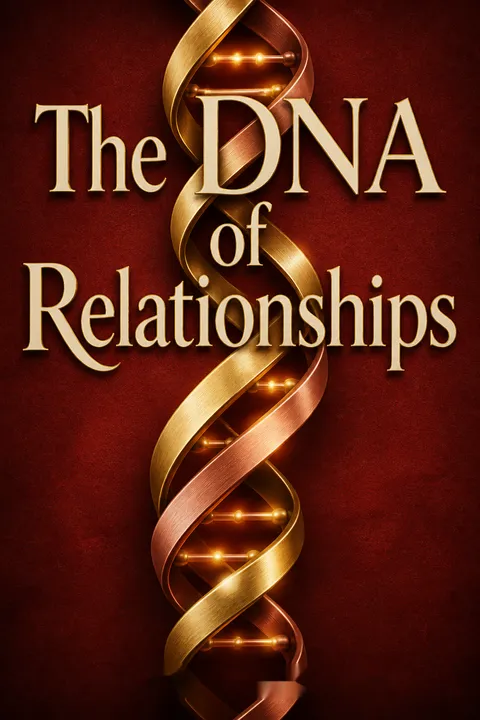


Key Takeaways
Treat relationships as life's central work, not leftover time
Connection is built in. The book's central claim is that people are made for relationships, can choose how they behave in them, and must take responsibility for their own choices. These three ideas form what the authors call relational DNA. Relationships are not optional, though their health is shaped by daily actions. The book cites research connecting social isolation with poorer health, and describes a five-year follow-up from its marriage intensives in which the team reported that 93 percent of participating couples remained together and were doing well. That is the authors' account of their program, not a guarantee for every couple.
The practical consequence: prioritize the relationships that give life meaning, and notice how choices affect them. The book's closing appeal extends this beyond home: strengthen relationships in communities, workplaces, and churches, too.
What's compelling is the shift from treating relationships as one life domain among many to seeing them as the medium through which much of life happens. That reframing makes small interactions consequential: attention, repair, and shared time are not soft extras. The reported intensive outcome gives the argument narrative force, but the number alone cannot establish which parts of the program produced it or how broadly it applies. Its clearest value is as a reason to take relational skills seriously, not as a forecast of guaranteed results.
Trace the fight beneath the topic to the fear underneath
Find the hidden concern. A recurring conflict may appear to concern money, a move, or a household decision, while the deeper issue is what the situation seems to say about each person. The authors call the repeating pattern the Fear Dance: hurt gives rise to a want, unmet wants activate fear, and fear prompts a reaction that can trigger the other person's fear in turn.
A move becomes a warning. Dan wanted to relocate for a job; Celeste resisted leaving family and friends. Asking why the move felt threatening revealed that she feared being unimportant and alone, while Dan feared feeling powerless under her family's influence. Once they discussed those fears, the argument was no longer simply about geography. The book names disconnection and loss of control as common underlying fears, but encourages readers to identify their own rather than assume.
The useful move is from debating positions to asking what a position protects. A disagreement about location becomes more workable when each person can describe the need for belonging or agency beneath it. This resembles a systems view of conflict: each reaction changes the conditions that shape the other person's next reaction. The model can also become too neat if every dispute is reduced to fear. Practical disagreements still matter, and some conflicts involve real harms or incompatible priorities, not merely misunderstood emotions.
Interrupt your reaction before demanding that someone else change
Take charge of your part. The Power of One is the authors' name for the ability to choose one's own response, even when another person's behavior cannot be controlled. They argue that attention spent trying to force change in someone else often escalates conflict, while examining one's own thoughts and actions creates room to respond differently.
A phone starts a fire. Michael bought another cell phone after agreeing to discuss purchases with Amy first. Amy criticized him in front of their son, Michael blamed her, and the argument intensified. It began to settle only when each acknowledged their own behavior: Amy apologized to their child, and Michael apologized for the purchase and returned the phone. The point is not that the original issue was irrelevant, but that accountability had to begin with each person's own choices.
The framework is strongest when it distinguishes influence from control. A person cannot dictate another's response, but can stop adding fuel, state a boundary, or own a broken agreement. That creates agency without requiring the other party's cooperation. The argument becomes less convincing when it suggests that people simply choose their feelings. Feelings can arise involuntarily; responsibility is more realistically located in how someone interprets, expresses, and acts on them.
Make trust safer by honoring boundaries instead of forcing openness
Safety precedes intimacy. The book argues that people often build emotional walls to protect themselves when they feel threatened. Trying to batter those walls down can confirm the danger they were meant to guard against. Trust grows through consistent behavior, respect for another person's limits, and genuine interest rather than judgment.
Repair takes patience. Greg secretly kept money from his wife, Erin, and used it for personal purchases. When she discovered the deception, she became wary of his financial behavior. Greg's pressure for her to trust him only deepened the problem. Progress began when he accepted why she needed caution and worked to become more trustworthy. The authors also urge people to honor differences and treat others as valuable, rather than demanding that they disclose more or become more like oneself.
This account makes trust a pattern to be demonstrated, not a feeling to be demanded. It also gives boundaries a constructive role: they can preserve a person's safety while leaving room for future connection. That is more persuasive than treating openness as an immediate duty. A boundary should not be confused with punishment, however. Its value depends on whether it clearly protects well-being and whether the person who caused harm accepts responsibility rather than using patience as a substitute for repair.
Recharge your whole self before depletion spills into relationships
Care supports connection. The authors describe self-care as attending to the spiritual, emotional, intellectual, and physical parts of a person. They compare a depleted person to a dead battery: there is little energy left to offer others. Their model has three parts: receive help and care, attend to one's legitimate needs, and give from a position of greater fullness. They also treat emotions as information that can point to needs or assumptions worth examining.
Notice the warning signs. On vacation, Gary Smalley ignored red flags on a beach and was swept out by a strong current. A lifeguard rescued him, but he recognized that paying attention to the warning would have been wiser than needing rescue. The story illustrates the relationship lesson: rest, reflection, and asking for support are not automatically selfish; chronic depletion can make caring harder.
The battery image clarifies why self-neglect can damage both the person and the relationships they hope to serve. It also challenges a familiar moral confusion: sacrifice is not the same as sustainable care. Still, self-care is not a universal remedy for exhaustion. Workload, poverty, illness, and caregiving demands can limit a person's options. The model is most useful when it helps identify needs and seek realistic support, rather than turning structural strain into an individual failure.
Answer the feeling beneath the words before solving the problem
Listen for the emotional message. The authors argue that repeating someone's words accurately is not the same as understanding what those words mean emotionally. Their phrase emotional nugget refers to the feeling or concern beneath a statement. Asking about that concern signals care, even when the listener does not agree with the speaker's conclusion.
A romantic gesture misses. Bob thought sweeping his wife, Jenni, up for a kiss would make her feel loved. She experienced it as an interruption while she was managing dinner. When he asked what would have helped, she said that noticing her workload or offering practical help would have felt more caring. The authors recommend curiosity, patience, and reflecting feelings before moving to blame or solutions. They also stress that emotional communication takes practice and works best in a safe environment.
This method treats conversation as discovery rather than a contest over whose account is correct. That matters because a person can feel heard without receiving agreement, and that distinction can lower the pressure to defend every point. The method also asks the listener to check interpretations instead of claiming to know what another person feels. Emotional reflection is not a substitute for decisions or factual clarity, but it can make both easier by revealing what the disagreement means to the people involved.
Define winning as a solution both people can genuinely endorse
Think like a team. A no-losers policy means treating people in an important relationship as partners rather than opponents. The goal is a solution both can support, not a compromise that leaves one person feeling worn down or ignored. The authors recommend understanding each person's concerns, generating options, choosing a workable plan, and revisiting it if it stops working. In relationships with unequal authority, such as parent and child or employer and employee, the same principle applies in spirit, though the person with authority may still need to make a difficult decision.
A son's question changes the frame. Counselor Bob Paul realized that his argument with his son had left the boy feeling defeated. He asked who had won. When his son said his father mostly had, Bob replied that a loss for his son was a loss for their team. The exchange shifted the goal from winning the argument to preserving partnership.
The team's frame exposes the hidden cost of a hollow victory: the decision may be settled while trust and willingness to cooperate are diminished. Seeking a solution both people can endorse encourages creativity because neither has to defend a fixed position at all costs. Not every situation permits equal choice, and some decisions must be made under time pressure or for safety. Even then, explaining the reasons and recognizing the other person's stake can preserve dignity without pretending that power is evenly shared.
Apologize and forgive without waiting for the other person to move first
Repair requires initiative. The book presents forgiveness as a choice to release an offense and to care about the person who caused it. Taking responsibility also means naming one's own wrongdoing and asking for forgiveness, rather than making an apology conditional on the other person's first move.
Two people wait. Amy and her friend Ted each told a mutual friend that the conflict would be resolved if the other apologized. Neither had called the other. The stalemate ended only when both took responsibility and apologized. Smalley also recounts wrongly berating a repair-shop employee after dialing the wrong number, then calling back to explain his mistake and ask forgiveness. These stories make repair concrete: identify what was done, own it without shifting blame, and make a direct effort to restore the relationship.
The emphasis on initiative counters the familiar deadlock in which each person waits for proof of the other's goodwill. Apology can reopen communication because it replaces accusation with specific accountability. Forgiveness, however, should not be mistaken for instant trust, excusing repeated harm, or abandoning protection. The book's emphasis on safeguarding oneself matters here: reconciliation may be a goal, while access and trust still depend on changed behavior. That distinction keeps forgiveness from becoming pressure to tolerate danger.
Change what you control without treating another person's growth as guaranteed
Choose your own direction. The authors warn that relationship skills cannot force another person to change or guarantee that a relationship will survive. They ask readers to replace the goal of controlling a partner with a question about the person they want to become. Change may influence the other person, but that outcome is uncertain; personal growth remains worthwhile on its own.
A difficult limit. One wife repeatedly investigated her husband's hidden financial mistakes and lies, hoping to make him responsible. She eventually focused on her own conduct and stopped trying to manage his choices. The authors say he later confronted his behavior himself, but present this as an unexpected outcome, not a promise. They acknowledge that some couples still separate despite serious effort. The book closes by urging readers to practice these skills in their wider communities, not only in private relationships.
This is the book's necessary limit on its more optimistic message: responsible action improves the conditions for connection, but it cannot guarantee reciprocity. That distinction protects the reader from interpreting another person's choices as proof of personal failure. It also keeps self-change from becoming a covert strategy for managing someone else. The difficult question is when continued effort becomes harmful. In situations involving coercion or abuse, safety and outside support may matter more than preserving the relationship.
Analysis
The book's most useful contribution is not the claim that conflict can be eliminated, but its sequence for making conflict more intelligible: identify the fear beneath a reaction, take responsibility for one's own response, establish enough safety to communicate, then approach decisions as shared problems. The sequence joins emotional awareness with practical conduct. Its stories make abstract advice memorable, from the couple whose disagreement about moving concealed fears of disconnection and powerlessness to the husband whose grand romantic gesture failed because he had not understood his wife's actual experience.
The framework has affinities with attachment-oriented thinking, in which people seek connection and may protest or withdraw when they perceive a threat to the bond. It also resembles systems thinking: one person's response becomes part of the conditions that shape the other's next response. The book's emphasis on listening to emotion can therefore be read not as abandoning problem solving, but as improving the information available before solving.
Its limits matter. Claims that everyone has a core fear or that thoughts determine feelings are more absolute than the practical advice requires. Some reactions are shaped by trauma, illness, material hardship, or unequal power, and cannot be responsibly addressed as mere choices of attitude. The book's gender generalizations about disconnection and control may illuminate some couples, but they should not be treated as reliable descriptions of every man or woman. The reported 93 percent intensive outcome is striking, yet the supplied account does not provide enough methodological detail to infer causation or generalize to all couples.
Read with those cautions, the book offers a strong discipline: stop treating a disagreement as proof that the other person is the whole problem, but do not confuse personal responsibility with accepting blame for another person's harmful choices. Its best practices are reciprocal listening, accountable behavior, boundaries, and collaborative decisions. They improve the possibility of connection while leaving room for the possibility that a relationship cannot or should not continue.
Review Summary
The DNA of Relationships receives mixed reviews, with an average rating of 4.11/5. Many readers find it insightful and helpful for improving relationships, praising its practical advice and focus on personal responsibility. Some appreciate its Christian perspective, while others find the religious content excessive. Critics note its simplistic approach and lack of scientific backing. The book is particularly recommended for couples and those seeking to understand relationship dynamics, though some readers find it repetitive or struggle with its emphasis on self-change rather than addressing problematic partners.
People Also Read









Glossary
relational DNA
relationship design principlesThe authors' name for three principles they believe underlie human relationships: people are made for connection, can choose how to act, and are responsible for their own choices. The phrase is a metaphor for relational tendencies, not a biological claim. It serves as the book's foundation for understanding conflict and personal responsibility.
Fear Dance
a repeating conflict cycleA recurring interaction in which a hurt person wants something, fears it will not be met, and reacts in ways that may trigger fear in the other person. The second person's reaction can then intensify the first person's distress. The authors use the term to help people notice their part in escalating conflict and interrupt familiar reactions.
Power of One
choice over one's responseThe authors' term for the ability to take responsibility for one's own thoughts, actions, and reactions instead of trying to control another person. It does not mean having power over every circumstance or feeling. Its practical aim is to restore agency by focusing on choices that belong to oneself.
emotional nugget
feeling beneath the wordsThe emotion or underlying concern that gives a person's spoken words their personal significance. The listener seeks to understand this concern rather than merely repeat the words or rush to solve the surface issue. The term captures the book's approach to listening for what a person feels, as well as what they say.
no-losers policy
shared solutions without defeatA commitment to keep working toward a decision that both people can genuinely support, rather than treating one person's defeat as a successful outcome. The authors apply it literally to some relationships and as a guiding ideal where authority is unequal. If a solution stops working for either person, the parties revisit it.
serendipity
unexpected positive discoveryThe authors use this term for a beneficial result that arises unexpectedly when a person focuses on becoming more responsible rather than trying to force another person to change. The other person may respond positively, but that response is not promised. Personal growth remains valuable even if the hoped-for relationship outcome does not occur.
FAQ
What is "The DNA of Relationships" by Gary Smalley about?
- Core focus on relationships: The book explores the foundational truths of human relationships, emphasizing that "Life is relationships; the rest is just details."
- Understanding relational DNA: Smalley explains how our God-designed relational hardwiring shapes marriages, families, friendships, and even work relationships.
- Biblical and practical integration: The book combines biblical principles with psychological insights to help readers build healthy, lasting connections.
Why should I read "The DNA of Relationships" by Gary Smalley?
- Proven relationship strategies: The book is based on research and real-life experience, including marriage intensives with a 93% success rate in saving troubled marriages.
- Actionable and spiritual advice: It offers practical steps and spiritual wisdom for improving all types of relationships.
- Empowers personal responsibility: Readers learn to focus on changing themselves, not others, which is key to healthier, more satisfying relationships.
What are the key takeaways from "The DNA of Relationships" by Gary Smalley?
- You are made for relationships: Relationships are essential and hardwired into us; we cannot opt out, but we can choose how to engage and nurture them.
- Personal responsibility is crucial: Change begins with taking responsibility for your own thoughts, feelings, and actions, rather than trying to control others.
- Create safety and practice self-care: Building a safe environment and maintaining your own well-being are vital for healthy, thriving relationships.
What are the three strands of relational DNA according to Gary Smalley?
- Made for relationships: Humans are designed to connect with others; isolation is contrary to our nature.
- Capacity to choose: We have the ability to choose our actions and responses in every relationship situation.
- Responsibility for self: Each person is responsible for their own thoughts, feelings, and behaviors, not for controlling others.
What is the "Fear Dance" in "The DNA of Relationships" by Gary Smalley?
- Destructive conflict cycle: The Fear Dance is a recurring pattern where core fears trigger emotional reactions that escalate conflict.
- Four-step process: It involves hurt, want, fear, and react, with each person’s fear fueling the other’s negative responses.
- Driven by core fears: Most women fear disconnection or invalidation, while most men fear helplessness or loss of control, leading to unhealthy reactions.
How can I break the "Fear Dance" using Gary Smalley’s advice?
- Recognize your core fear: Identify what triggers your fear in relationships and how you typically react.
- Take personal responsibility: Choose to respond differently instead of reacting impulsively to fear triggers.
- Practice new "dance steps": Replace destructive patterns with healthy communication, respect, and emotional safety to stop the cycle.
What is the "Power of One" in "The DNA of Relationships" and why is it important?
- Focus on self-change: The Power of One means only you can control your thoughts, feelings, and reactions, regardless of others’ behavior.
- Breaks destructive cycles: By changing your own responses, you can positively influence the relationship and reduce conflict.
- Becoming the CEO of your life: Embracing this principle means managing your emotions, forgiving others, and taking initiative for healthy change.
How does Gary Smalley define and encourage self-care in relationships?
- Essential for healthy relationships: Self-care keeps your "battery charged," enabling you to love and serve others effectively.
- Holistic approach: Good self-care involves nurturing your spiritual, emotional, intellectual, and physical health.
- Not selfish, but godly: Proper self-care honors God and allows you to bless others from a place of fullness, not depletion.
How does "The DNA of Relationships" by Gary Smalley recommend creating a safe environment in relationships?
- Respect personal boundaries: Understand that people build walls for protection and honor their need for safety.
- Honor and value others: Treat others as unique and valuable, affirming their worth to foster trust and openness.
- Suspend judgment: Replace judgment with curiosity and appreciate differences as strengths, not problems.
What practical steps does Gary Smalley suggest for improving communication in relationships?
- Listen with the heart: Focus on understanding the emotions behind words, not just the literal content.
- Create emotional safety: Foster an environment where people feel safe to express feelings without fear of judgment or rejection.
- Ongoing process: Communication requires patience, trial and error, and continuous effort to maintain connection.
What is the "no-losers policy" in teamwork from "The DNA of Relationships" by Gary Smalley?
- Win-win commitment: Both parties must feel like winners in any conflict or decision; if one loses, both lose.
- Creative solutions: The goal is to find solutions that satisfy both parties, rather than settling for compromise.
- Structured process: The book outlines steps including establishing the policy, listening, seeking God’s guidance, brainstorming, and evaluating solutions.
How does forgiveness fit into the "Power of One" in "The DNA of Relationships" by Gary Smalley?
- Key to healing: Forgiveness involves pardoning offenses and caring for the offender’s healing, releasing both parties from bondage.
- Taking initiative: Adults take responsibility by asking for and offering forgiveness, regardless of the other person’s actions.
- Breaks the Fear Dance: Forgiveness disrupts cycles of blame and hurt, allowing relationships to move forward in peace and love.
Download PDF
Download EPUB
.epub digital book format is ideal for reading ebooks on phones, tablets, and e-readers.








