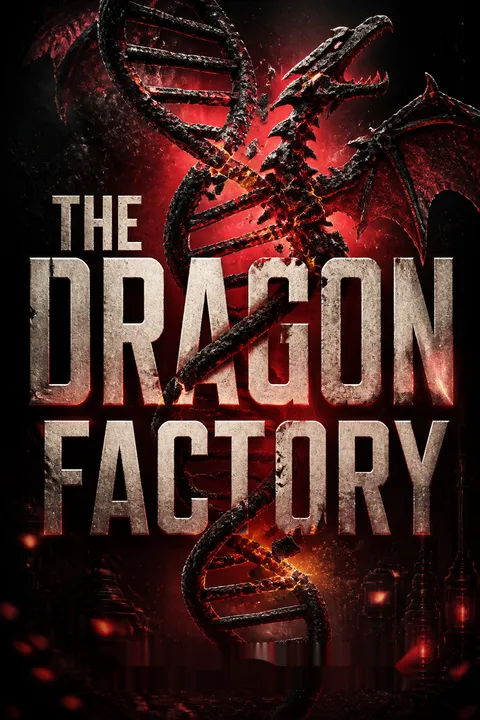


Plot Summary
Prologue
A week before Joe Ledger knows their names, Otto Wirths and Cyrus Jakoby start a digital clock at 10,080 minutes and toast the catastrophe they intend to unleash. In the present, Joe is wounded and cornered, with three bullets and a knife, while attackers batter the door.
He has crossed Denver, Costa Rica, and the Bahamas in pursuit of the people behind the clock. The opening promises a race already running late, then rewinds to the Baltimore cemetery where Joe first learns that the danger is much larger than one arrest.
The clock turns mass murder into a scheduled procedure. Wirths and Jakoby celebrate not an achievement already completed but a future they regard as inevitable, while Joe's later predicament shows the human cost of arriving after a hidden plan has gathered momentum. The abrupt shift from their toast to Joe's battered body also frames the story as a retrospective investigation: the reader knows the pursuit will be brutal before knowing what is being pursued. Its central tension is therefore not simply whether Joe can fight, but whether evidence and action can catch up with a catastrophe designed to outrun both.
The Cemetery Arrest
On a Saturday morning in Baltimore, Joe Ledger visits the grave of Helen, his dead friend, carrying flowers and water. Four National Security Agency agents demand that he come with them, but refuse to explain why. Joe calls his boss, Mr. Church, and learns the Vice President has used the President's heart surgery to order arrests of Department of Military Sciences staff and seize its facilities.
The stated concern is Church's access to MindReader, a system that can penetrate secure computer networks. When the agents close in, Joe fights his way out of the cemetery and flees through Baltimore. Church warns him that capture could mean disappearing into the system, while a gunshot would give the administration grounds to dismantle the DMS.
The assault arrives at a place Joe treats as private and sacred, so his resistance is both tactical and personal. His anger over Helen's grave helps explain why he escalates rather than submit, but the larger danger is institutional: the Vice President's legal authority makes the DMS vulnerable without requiring a public coup. MindReader embodies the same double edge. It protects the country by bypassing bureaucratic delay, yet its reach makes it a plausible source of political fear and abuse. Joe's escape preserves his freedom, but it also turns him into a fugitive at the very moment his organization is being blinded.
Wilmington Runs Red
While Joe evades the NSA, First Sergeant Top Sims, Harvey Rabbit, and Big Bob Faraday go to arrest Burt Gilpin, a computer hacker whose stolen genetic research has drawn Church's attention. Russian gunmen open fire through the motel door. Big Bob is gravely wounded, and the team kills the attackers, but they find Gilpin tortured and dead beside a wrecked computer.
The Russians had been trying to copy his files. Church orders Top and Bunny to disappear and head west, then tells Joe that the Denver team has also gone silent. Big Bob survives surgery but loses his spleen. The ambush gives Joe a second crisis to pursue, and its Russian weapons later connect to the violence at Deep Iron.
The ambush breaks the comforting division between a political crisis and a field operation. The NSA is constraining the DMS from above, while professional gunmen are killing its people on the ground. Gilpin's death removes the easiest witness and turns stolen information into a contested object rather than a recoverable lead. Big Bob's injury also makes the cost personal for Joe, who cannot immediately stand beside his team because he is still running from federal agents. The simultaneous threats create a useful uncertainty: they may be connected, but Joe and Church cannot afford to assume that coincidence is proof.
The Clock Behind Water
Reports from several regions reveal illnesses that should not spread from person to person. In Benin, Dr. Rina Panjay and epidemiologist Thomas Smithwick find a rapidly expanding outbreak that resembles inherited sickle-cell disease.
In Louisiana, doctors see adults developing a sudden, aggressive form of Tay-Sachs, while Nigerian surgeons report children dying from unusually severe noma. The World Health Organization director, Arjeta Hlasek, receives the Benin evidence but delays public action and alerts Otto Wirths instead.
Meanwhile, Wirths has bribed a North Carolina bottling manager to allow unknown additives into bottled water, and shipments move through ports and warehouses. The separate cases and quiet distribution networks establish that someone is preparing a coordinated attack, though the doctors do not yet understand how.
These interludes make the threat visible first through symptoms and consequences, not through a villain's explanation. The doctors recognize a contradiction between genetic illness and geographic spread, but institutional caution and deliberate concealment slow their response. Hlasek's choice is especially consequential: she frames secrecy as public-health discipline, yet her private contact with Wirths converts caution into complicity. Bottled water offers the perpetrators a mundane delivery system, one hidden inside ordinary commerce. By letting the reader see separate outbreaks before Joe can connect them, the novel gives the clock a biological dimension: the plan is already moving through bodies while the investigators are still assembling its shape.
A Unicorn in Brazil
A video sent anonymously to Church shows wealthy hunters pursuing and killing a white, horned animal in a Brazilian clearing. Joe doubts the footage until specialists confirm it is not an obvious effects trick, and Dr. Hu explains that transgenic engineering could produce such a creature.
Church identifies one hunter as Harold Sunderland, brother of Senator J. P. Sunderland, and another as Gunnar Haeckel, an operative officially believed dead. Haeckel had served the Cabal, a secret network associated with Nazi eugenics and attacks on targeted populations.
The hunters' talk also includes a reference to an Extinction Wave. Church sends Joe to Deep Iron, a vast underground storage facility near Denver, where Haeckel's family records may explain how the old network survived.
The unicorn is not a whimsical detour; it is proof that the limits separating myth from engineered product have collapsed. Its private hunt reveals both a market for impossible animals and a technical capacity that could serve more lethal ambitions. The identities of the hunters then turn spectacle into intelligence: a political family and a supposedly dead operative stand together in the same clearing. Church's history of the Cabal gives Haeckel's survival a political meaning, while the phrase about an Extinction Wave supplies a frightening but still incomplete objective. Joe must now investigate a threat whose first undeniable evidence looks like an exotic trophy.
Deep Iron's Bloody Mile
Joe reaches Deep Iron with Top and Bunny and finds the surface facility abandoned. Inside, they discover guards and staff murdered, then descend through trapped caverns toward Haeckel's sealed archive. Russian mercenaries ambush them among the storage boxes.
A second team of enormous, unnaturally strong men attacks the Russians and escapes after Joe wounds one. In Haeckel's records, Joe finds wartime correspondence between Heinrich Haeckel and Josef Mengele, along with meticulous notes on the effects of physical torture.
The documents show that the archive is more than a family relic. After reinforcements arrive, Church learns that Hack Peterson's Jigsaw Team has been killed near the facility, their vehicles destroyed by rocket fire. The mission yields evidence, but the enemy has taken key copies.
Deep Iron makes archival knowledge physically dangerous. The attackers risk a mile underground, kill bystanders, and fight one another for papers whose contents are not yet fully understood. Joe's discovery links old camp experiments to a later research program, but the damaged archive leaves the DMS with evidence rather than a complete manual. Jigsaw's deaths sharpen that loss: this is no longer an inquiry that can be paused until politics settle. The cave's darkness also literalizes the team's epistemic disadvantage. Joe can identify fragments, bodies, and patterns, but every answer arrives beside another unseen opponent.
The Boy on the Island
A second video shows a frightened teenager asking Church to stop the people conducting experiments at a hidden facility in Costa Rica. Bug traces the accompanying map to Isla D'Oro, and Joe leads Top and Bunny through the jungle to reach the boy, who calls himself Eighty-two. He guides them through the perimeter and into the complex, but guards discover the intrusion and a firefight erupts.
Joe's team finds evidence of a violent purge, while engineered tiger-hounds attack them in the corridors. They reach the boy and bring him out with the surviving captives. The boy has risked punishment to expose the operation, and his information gives the DMS its first direct route from the strange outbreaks to the people producing them.
Eighty-two changes the investigation from a search for evidence into a relationship of trust. He cannot explain the whole operation from safety, so he makes himself useful by providing a map, a frequency, and practical security knowledge. Joe's team, in turn, has to act before it knows whether the boy's guidance is reliable. The attack reveals that the facility's defenses are not simply armed guards: the tiger-hounds are products of the same science as the unicorn. The boy's courage is therefore measured less by combat ability than by his decision to contact outsiders despite knowing exactly how much power the people inside hold over him.
Five Hundred New Men
Inside the island's barracks, Joe and his team find hundreds of red-haired captives who move in lines, bow to the rescuers, and respond to commands planted through conditioning. Eighty-two explains that the researchers have reconstructed Neanderthals and altered them to suppress aggression and independence.
The guards have used them as coerced labor and subjected them to routine abuse. One woman recognizes the boy's gesture of wiping away tears, a small sign of connection between captives who have been trained not to resist.
The computer rooms have been destroyed before Joe can seize their files, but he captures the guard Carteret and learns that a timed release plan and a portable trigger device remain in play. The DMS evacuates the captives under military protection.
The New Men turn the novel's genetic ambition into a problem of personhood rather than spectacle. Their obedience is not consent; it has been imposed through both biological alteration and repeated punishment. The small exchange of gestures matters because it shows recognition surviving where the designers tried to remove agency. Joe's promise to help them is tested against mission priorities, since the evidence needed to stop the outbreak is disappearing even as the captives need immediate rescue. Hu's scientific language elsewhere risks reducing them to a category. Their bodies and behavior insist that any response must account for the people who have been made, used, and denied choice.
The Wave Takes Shape
Church and Dr. Hu compare Carteret's information with the recovered records and identify the Extinction Wave as a coordinated release of pathogens built from genetic diseases. The plan uses contaminated water systems and gene-treated bottled water to make selected populations vulnerable, while computer attacks are prepared to slow health agencies.
The DMS traces a second laboratory to an underground complex in Arizona called the Deck. Joe and Grace Courtland, a British operative and his commander, confront their growing love after the island mission, but agree that the operation must come first.
Their team prepares to strike the Deck while Grace leads Alpha Team toward the Dragon Factory, the Twins' separate facility. The two targets divide the force just as the countdown makes delay dangerous.
The revelation changes the meaning of the earlier outbreaks: they are not isolated experiments but field tests of a delivery strategy. Genetic illness has been made communicable, and water connects laboratory science to ordinary domestic routines. The plan attacks both populations and the systems meant to protect them. Meanwhile, Joe and Grace's intimacy is not a refuge from the mission; it raises its cost. Their decision to prioritize procedure reveals the discipline required of people whose attachment could affect judgment. The split operation is structurally risky but necessary, because the Deck holds the central machinery while the Dragon Factory may hold the trigger and the people who can use it.
Inside the Dodecahedron
Joe infiltrates the Arizona Deck alone, using the boy's knowledge of camera cycles, hidden doors, and changing security modes to pass as a computer technician. He sees enormous bioreactors and virus-production facilities beneath the harmless-looking research site, confirming that the outbreak plan is industrial in scale.
A visiting party triggers lockdown and leaves the compound, carrying Cyrus Jakoby and Otto Wirths toward the Bahamas. Joe learns that the twins' island laboratory, the Dragon Factory, is their destination, while Grace's team moves to intercept them.
The DMS launches an electromagnetic pulse attack against the Deck and sends forces toward both sites. Joe escapes the complex and follows the operation toward the island, carrying what little information he can gather.
The Deck's ordinary surface and concealed underground production expose the central political method of the antagonists: atrocity is protected by legitimate paperwork, corporate fronts, and compartmentalized labor. Joe's passage depends on the boy's intimate knowledge of routine, not on superior technology alone. The bioreactors turn abstract threat into physical volume; the pathogens are being manufactured at a scale that makes prevention urgent. Yet the departing aircraft means the key figures and the trigger are moving elsewhere. The EMP is a calculated attempt to disable their communications, but it also risks cutting off the DMS from its own people, foreshadowing the cost of technological countermeasures.
Dogfish Cay Under Fire
Grace leads Alpha Team by sea to Dogfish Cay, where the Dragon Factory is hidden beneath a tropical compound. A large force of Russian mercenaries arrives at the same time, and the island becomes a battle between them, the facility's guards, and the DMS.
Grace slips into the Chamber of Myth, where the Jakoby twins display transgenic creatures and confront their father. Joe and Echo Team arrive later by night jump, fighting through the compound to reach Alpha. An EMP blacks out the island's electronics, isolating the combatants and disabling ordinary communications.
Below the facility, Joe, Top, and Bunny face scorpion-tailed attack dogs called Stingers. Their ammunition and strength are running low as they try to reach Grace and the trigger before the countdown expires.
Dogfish Cay brings the novel's separate forms of violence into one geography: political conspiracy, commercial genetics, mercenary warfare, and the creatures sold as products. Grace's early arrival gives her access to the central confrontation, while Joe's delayed reinforcement forces him to fight through the consequences rather than control them. The EMP makes the island's technical sophistication suddenly unreliable, leaving training and judgment as the team's remaining tools. Stingers embody the market logic of the Dragon Factory: traits from different species are combined for utility, without regard for the danger they pose. The battle's confusion ensures that no side can fully see who is winning or what has already been set in motion.
The Flash Drive Sent
In the Chamber of Myth, Cyrus reveals that he is Josef Mengele, preserved by anti-aging treatments, and that Otto is Eduard Wirths. He explains that the water carries disease genes while pathogens are being released separately, and that the twins' perfected bodies were bred for his racial project. Hecate chooses their father's side and disables Paris, while Grace discovers the trigger device.
She shoots Otto and wounds Cyrus, but Hecate attacks her and Conrad Veder shoots her from concealment. Joe reaches the room after Grace has been shot again and dies in his arms. The launch message has already been sent. Joe kills Hecate, wounds Cyrus, and fights off the Berserkers, then forces the injured Cyrus to provide the cancellation code.
The revelation collapses several histories into one person: the old camp system, the Cold War network, modern genetics, and the present attack. Cyrus's longevity has preserved not only his body but an ideology capable of adapting its methods to new science. Hecate's choice shows how identity and kinship can be used as instruments of recruitment, while Paris's resistance arrives too late to change the family balance. Grace's death gives the mission an intimate cost that cannot be converted into strategic success. Joe continues because she has left him the only actionable task: obtain the code. His refusal to kill Cyrus outright preserves a chance to stop the signal and bring the architect to trial.
Seventeen Hours Left
Badly wounded and trapped as Berserkers batter the office door, Joe uses Grace's last instruction to get the flash drive to Bug. He survives the immediate attack long enough for reinforcements to reach him and relays the cancellation code that Cyrus supplied.
Bug uses MindReader to halt the release more than seventeen hours before the Extinction Clock reaches zero. The DMS raids the Deck and seizes the remaining records, while Cyrus is kept alive for trial.
Joe's choice not to execute him leaves open the possibility of legal judgment, though Joe himself is physically shattered and doubts he can return to the work. Grace's sacrifice has stopped the immediate catastrophe, but it cannot restore the lives already lost or undo the violence that built the system.
The rescue depends not on a dramatic last-second trick but on a chain of imperfect actions: Grace identifies the code's importance, Cyrus yields it, and Joe reaches Bug while badly injured. The remaining seventeen hours underline that success was possible because the team finally acquired enough information, not because the danger vanished. Joe's decision to keep Cyrus alive separates punishment from revenge, though his grief makes that distinction unstable. The code can stop a transmission; it cannot repair the bodies and relationships damaged by the conspiracy. The resolution therefore closes the immediate race while preserving the moral and psychological aftermath as unfinished work.
Epilogue
The release is canceled, the New Men receive care, and international investigators pursue the surviving Cabal network. Grace is buried with military honors, while Joe recovers in hospital and rejects the DMS, convinced he is beyond repair.
Church leaves him a photograph showing that Conrad Veder is still alive, together with travel documents and the means to follow him. Joe's decision remains unstated. The world has been spared the planned wave, but the final image makes clear that the killer who shot Grace has not been brought to account.
The epilogue refuses the clean closure promised by a public victory. Grace becomes a celebrated hero, but the DMS conceals its own role, and the official story cannot hold all the truth without threatening the institutions that helped stop the disaster. Joe's grief is physical, political, and ethical: he has survived, yet he no longer trusts his capacity to keep fighting. Church's photograph does not command him to return. It offers a choice between retreat and vengeance, leaving the question of what survival means in Joe's hands. The cancelled clock resolves the public emergency; Veder's escape keeps private justice unsettled.
Analysis
The novel's central horror is not simply that science can produce dangerous organisms. It is that technical ability, political cover, and a market for human beings can be assembled into a single operating system. The Cabal's program changes over generations, but its underlying logic remains fixed: classify populations, convert those classifications into biological vulnerabilities, and call mass violence a rational improvement. The bottled-water scheme is chilling precisely because its distribution looks ordinary. A consumer product becomes a delivery network, while corporate records and public-health bureaucracy obscure the connection between an experiment and a population.
The story also places competing forms of power under scrutiny. MindReader lets the DMS act where agencies are slow, yet the Vice President's suspicion is not wholly irrational: a tool that can enter any system without detection is inherently dangerous. Church's restraint is personal trust rather than a structural safeguard, leaving the novel uneasy about the concentration of exceptional authority even among its heroes. Joe's decision to preserve Cyrus for trial reflects a wish to distinguish justice from the immediate satisfaction of revenge, but the ending refuses to claim that institutions can fully repair what has happened.
The New Men make the ethical argument bodily. Their creators alter their capacity to resist, then use that engineered compliance as evidence that they may be owned. The captives' gestures of recognition challenge the idea that moral status depends on a clean genetic category or a capacity for conventional speech. Eighty-two's choices likewise unsettle genetic determinism: a copied body does not settle the identity of the person living in it. Rudy's emphasis on choice answers the novel's most intimate version of its political question. People are shaped by inheritance and institutions, but they are not reducible to either.
Joe and Grace's relationship sharpens this argument by refusing to separate love from duty. Their attachment does not make the mission less professional; it makes the cost of action legible. The book's bleakest insight is that stopping catastrophe may still leave grief, trauma, and unfinished justice. Survival is not restoration, but it leaves room for choice.
Review Summary
The Dragon Factory receives mostly positive reviews, praised for its action-packed plot, engaging characters, and blend of genres. Readers enjoy Joe Ledger's character development and the mix of science fiction, horror, and military thriller elements. Some criticize the book's length and multiple plot threads, while others find the villains one-dimensional. The novel explores themes of genetic engineering, eugenics, and neo-Nazism. Ray Porter's narration in the audiobook version is highly regarded. Overall, fans of the series appreciate Maberry's fast-paced storytelling and pulp fiction style.
People Also Read

Characters
Joe Ledger
The wounded investigatorA Baltimore detective and Army veteran, Joe leads Echo Team for the Department of Military Sciences. He reads rooms quickly, fights with brutal efficiency, and often uses humor to manage fear. Beneath that competence, he carries guilt over Helen's suicide and the trauma of an assault that shaped his sense of responsibility toward people in danger. His impulse to protect others can become recklessness, especially when a threat touches his friends or his team. Joe's professional self is divided among the cop who gathers evidence, the soldier who acts under fire, and a more vulnerable man trying to remain humane. His bond with Grace makes the risks of their work newly personal.
Grace Courtland
The British field commanderA British operative seconded to the DMS, Grace commands Baltimore's regional office and works closely with Joe. She is a precise planner with Special Forces experience, a dry sense of humor, and an instinct for taking responsibility before anyone asks. Her confidence is not invulnerability; she understands how attachment can compromise a mission and tries to keep her private feelings separate from command. Grace's loyalty is practical rather than sentimental: she protects people by making hard decisions and expects the same discipline from those beside her. Her relationship with Joe places two professionals in the uncomfortable position of caring deeply about someone whose life is routinely at risk.
Mr. Church
The DMS strategistThe DMS's secretive director, Church commands through information, preparation, and a strikingly controlled presence. He is willing to bend procedure when he believes a threat demands it, yet understands that unchecked power can become its own danger. MindReader gives him extraordinary reach, and his discretion makes colleagues question how much he knows and how he uses it. Church offers Joe and Grace operational freedom while keeping essential intelligence close until he can assess its reliability. Beneath the polished manner is a veteran shaped by an earlier covert war, with personal losses that he rarely displays. He prizes competent judgment, but his habit of controlling information can leave his people dangerously late to understand a crisis.
Cyrus Jakoby
The hidden geneticistAn elusive, brilliant geneticist and the father of Hecate and Paris, Cyrus surrounds himself with aliases, elaborate facilities, and inventions that blur science and fantasy. He treats research as a route to remaking the human world and expects others to recognize his importance. His erratic moods and appetite for control make him dangerous even to the people closest to him. Cyrus can appear charming, theatrical, or paternal, but those roles serve his own designs. He values intelligence in others chiefly when it confirms his authority. His ambition is larger than the twins' commercial experiments, and his hidden past gives the family conflict a much older reach than his children understand.
Hecate Jakoby
The calculating twinHecate is a gifted geneticist who runs the Dragon Factory with her twin brother, Paris. She is observant, strategic, and comfortable using beauty, wealth, and performance as tools. Her fascination with ordinary human experience sits beside a ruthless appetite for novelty and power, making her difficult to read even for Paris. She tends to plan contingencies where her brother prefers improvisation, and she is often the more disciplined partner in business. Their closeness is intense but not simple: Hecate wants to be recognized as exceptional, yet she is also alert to the ways family and scientific ambition can become forms of control. She pursues genetic enhancement on her own body as well as in her laboratory.
Paris Jakoby
The restless twinHecate's twin and co-director of the Dragon Factory, Paris is an inventive geneticist with a taste for spectacle, profit, and experimental creatures. He is brilliant enough to build a market around impossible animals, but less disciplined than his sister and more susceptible to doubt. His identity has been shaped by an upbringing that casts the twins as superior beings, though he is not always certain he believes the story. Paris's humor often masks unease, especially when the consequences of their research become harder to dismiss. His relationship with Hecate combines genuine affection with rivalry and an unequal distribution of confidence.
Eighty-two
The hidden informantA teenage boy raised inside the Costa Rican facility, Eighty-two is watchful, technically resourceful, and accustomed to being isolated. He learns security routines because invisibility is one of the few forms of control available to him. His knowledge of cameras, rooms, and communications lets him reach the DMS, despite the danger of being discovered. He does not trust easily and has been taught to understand himself through labels imposed by his captors. Yet his attention to other people's suffering reveals a capacity for empathy that the institution has not managed to erase. His story raises difficult questions about identity, inherited traits, and whether a person's choices can resist the purpose assigned to them.
Otto Wirths
The quiet enforcerCyrus's long-serving aide, Otto manages logistics, staff, security, and the practical machinery behind the research. His courteous manner conceals a patient, unsentimental mind. He understands Cyrus's moods and knows how to redirect them, but his care is managerial rather than compassionate. Otto treats people as assets to retain, replace, or remove, and he is skilled at making violence look like routine administration. His closeness to Cyrus is built on shared history and shared purpose, not simple obedience. He is the operational counterweight to Cyrus's theatricality, arranging the systems that let grand ambitions become concrete action.
Rudy Sanchez
Joe's trusted psychiatristRudy is Joe's friend, therapist, and fellow DMS associate. He understands that Joe's humor and aggression often conceal grief, guilt, and fear, and he presses him to examine those feelings without mistaking emotional restraint for health. Rudy is warm but persistent, able to stop when Joe is not ready and return to difficult subjects later. He also helps interpret the young informant's terror and self-condemnation. His role is not to solve the operational crisis but to protect the people inside it from becoming only instruments of violence.
Top Sims
Echo Team's steady sergeantFirst Sergeant Bradley Sims, known as Top, is Joe's second in command and a seasoned soldier. He combines tactical discipline with an understated loyalty that helps hold Echo Team together under pressure. Top is alert to traps, practical about risk, and willing to challenge Joe when the plan needs scrutiny. His humor is dry, but he takes casualties personally and measures success by whether his people come home. He serves as a bridge between Joe's instinctive aggression and the team's need for coordinated action.
Harvey Rabbit
Echo Team's powerhouseKnown as Bunny, Harvey Rabbit is a former Marine with formidable strength and a disarming, joking manner. He is physically imposing but emotionally attentive, quick to notice when a teammate is frightened or injured. His humor keeps tension from turning into panic, while his loyalty is expressed through action rather than speeches. Bunny's size makes him an effective close-range fighter, but his defining quality is not strength alone. He knows when another person's humor is a defense and when the situation has become too serious for jokes.
Dr. William Hu
The DMS science chiefHu leads the DMS science division and brings technical expertise to threats involving genetics, viruses, and computer systems. He is brilliant, argumentative, and often more excited by a scientific puzzle than by the danger surrounding it. His confidence can make him tactless, particularly when he reduces people to biological questions. Joe challenges that habit, while Church relies on Hu's knowledge to interpret evidence that field agents cannot. Hu's work helps the team distinguish speculative explanations from capabilities their enemies have actually achieved.
J. P. Sunderland
The biotech power brokerA powerful Texas senator and advocate for biotechnology, Sunderland connects political influence to private research interests. He is calculating, patient, and careful about what he tells his allies. He treats political access as a commodity and believes risk can be managed by keeping each participant only partly informed. His relationship with the Vice President and the Jakoby twins reveals how commercial ambition can exploit public authority without openly appearing to govern it. Sunderland's coolness is less conviction than disciplined self-preservation.
William Collins
The cornered vice presidentThe Vice President becomes Acting President while the President undergoes surgery, giving him temporary authority over the DMS. He distrusts Church's extraordinary power and believes he is acting to protect the administration, though his decisions are shaped by political pressure and incomplete information. Collins is not as naturally composed as Sunderland and shows the strain of making a high-stakes move whose consequences he cannot control. His role exposes how legitimate authority can be redirected by a carefully planted claim.
Conrad Veder
The patient assassinVeder is a professional killer who approaches each contract as a technical problem. He avoids emotional attachment, public recognition, and unnecessary risk, and he keeps his methods carefully concealed. His work for wealthy clients draws him into the conflict surrounding the former members of the List and the Jakoby enterprise. Veder's calm is not moral neutrality so much as a refusal to consider the human meaning of his actions. He is dangerous because he treats hesitation, sympathy, and publicity as avoidable errors.
Big Bob Faraday
Echo Team's gentle giantBig Bob is a strong, affable member of Echo Team whose physical presence is matched by a gentle temperament. He approaches dangerous work without swagger and earns the trust of his teammates through dependability. His injury during the Wilmington ambush makes the cost of the new threat immediate for Joe and the rest of Echo Team. Bob's contrast between formidable appearance and kindness helps establish what the team is defending: not abstract institutions, but ordinary human lives and relationships.
Hack Peterson
Jigsaw Team's commanderA former Delta Force operator, Hack Peterson leads the DMS's Denver-based Jigsaw Team. He is an experienced commander trusted to investigate the Deep Iron lead, and his team's disappearance signals that the opposition is capable of striking trained professionals before they can report back.
Dr. Rina Panjay
The first outbreak witnessA young physician working in Benin, Panjay treats sick villagers while collecting the evidence that their illness is spreading in ways genetic disease should not. Exhausted and grieving for her patients, she insists that the findings be taken seriously even when senior authorities urge caution.
Arjeta Hlasek
The compromised health officialA senior World Health Organization director, Hlasek is politically experienced and protective of her institution's credibility. Her concern about panic gives her a plausible reason to delay disclosure, but her private connection to Wirths makes her judgment part of the threat rather than a neutral safeguard.
Carteret
The Hive's brutal guardCarteret is an Australian guard at the Costa Rican facility, known for abusing the captive New Men. His authority depends on the captives' conditioning and the protection of the institution. He represents the ordinary human enforcement that allows the laboratory's elaborate science to become daily cruelty.
Hans Brucker
The hunt's hard-faced leaderBrucker leads the wealthy hunting party in the Brazilian footage and has a stern, professional manner that contrasts with the other hunters' excitement. His presence links the private animal hunts to a wider network of violence, though his identity remains uncertain to the investigators for much of the story.
Plot Devices
The Extinction Clock
A deadline with consequencesA digital countdown marks the time remaining before the coordinated release plan begins. It gives the antagonists an organizing schedule and forces the DMS to prioritize speed over complete information. The clock also links private research, political interference, and the field team's battles to a single impending event. Its meaning changes as Joe discovers that the launch can be interrupted even after a message has been sent.
MindReader and Pangaea
The invisible information weaponPangaea is an older intrusion system used to steal and erase records; Church develops it into MindReader, which can penetrate secure networks and leave almost no trace. The system helps the DMS connect scattered evidence, but its power makes it valuable to political and criminal actors. At the climax, it becomes the means of using the recovered cancellation code. The technology therefore operates as both investigative instrument and potential threat to privacy and government accountability.
Transgenic Engineering
Myth made into productThe Jakoby twins combine genetic material and laboratory techniques to create animals and enhanced human subjects for wealthy clients. The unicorn footage first demonstrates that the work is real; the Dragon Factory later reveals a broader menagerie and combat creatures. The same technical ambition can be directed toward wonder, profit, coercion, or mass harm. These creations are not merely monsters for spectacle: they expose the ethical void produced when living beings are treated as prototypes and merchandise.
Haeckel's Archive
A buried historical blueprintHeinrich Haeckel's sealed records at Deep Iron preserve documents connected to Mengele, forced experiments, and later genetic research. Their existence draws Russian mercenaries and a second team into a deadly underground contest. The archive provides a bridge between wartime atrocities and modern science, while its coded papers prevent the DMS from immediately understanding the entire program. Its incomplete recovery sustains uncertainty and forces the investigators to combine documents with living witnesses and laboratory evidence.
The Trigger Drive
A code that can be canceledA small, keypad-protected drive contains the release codes and is carried by Cyrus. It must connect to a computer system to send its message, after which a separate cancellation sequence can still stop the plan. This design gives the antagonists a controlled launch mechanism while leaving the DMS a narrow path to intervene. Grace's discovery, Joe's recovery of the device, and Cyrus's knowledge of the cancellation sequence make the drive central to the final race.
Joe Ledger Series Series
Download PDF
Download EPUB
.epub digital book format is ideal for reading ebooks on phones, tablets, and e-readers.








