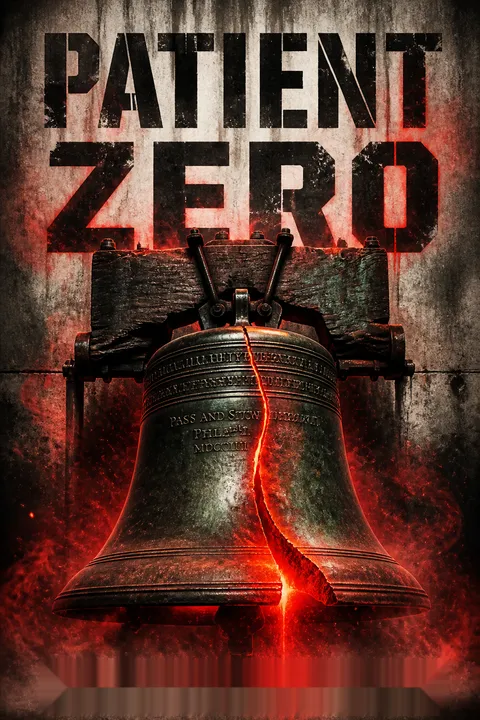


Plot Summary
The Warehouse Biter
Baltimore detective Joe Ledger1 joins a task-force raid on a warehouse after a wiretap links terrorist leader El Mujahid7 to a suspected biological weapon. The operation turns into a firefight: armed men shoot at the officers, and Joe1 kills several attackers, including Javad Mustapha, who lunges at him and tries to bite him.
Days later, while Joe1 is on leave, three federal agents take him from an Ocean City beach to a hidden interrogation site. There, Mr. Church,2 a severe official from an unnamed agency, asks Joe1 to restrain a prisoner.
The prisoner is Javad, apparently dead from Joe's1 shots, yet he springs up and attacks. Joe1 breaks his neck to stop him, discovering that the warehouse raid has opened a door onto a threat beyond ordinary terrorism.
The story begins by making Joe's professional certainty collide with a physical impossibility. He can explain the warehouse shooting as a lawful use of force, but Javad's return invalidates the assumptions on which that judgment rested. Church's test turns recruitment into a moral and psychological ordeal: Joe must act while frightened, without reliable information or institutional protection. The scene also establishes the novel's central problem in concrete terms. The dead are not merely frightening; they make familiar procedures, including confirming a death, suddenly unreliable.
Church's Deadly Audition
Church2 explains that Javad carried a lab-made infection that suppresses ordinary bodily functions, then restores enough movement to make its host attack and spread the disease through bites. He calls the infected walkers, admits that researchers barely understand them, and warns that other carriers may already be in the United States.
Joe1 also learns that surviving members of the warehouse cell died after their handlers withheld a drug that kept another engineered disease dormant. The men had been controlled through their families as well as their medication.
Church2 does not ask Joe1 to join the Department of Military Sciences immediately. He tells him to attend FBI training as planned, but makes clear that the DMS may call again if the threat continues. Joe1 returns to Baltimore shaken, unable to treat the encounter as a delusion or a closed case.
The revelation changes the scale of danger without giving the characters the comfort of a complete explanation. The pathogen is engineered, but the DMS cannot yet predict its limits, and every conclusion must be treated as provisional. Church's decision to send Joe back to ordinary training is not reassurance. It is a way of measuring whether Joe can live with knowledge that has no public outlet and no simple remedy. Joe's fear is therefore inseparable from his duty: he knows enough to be responsible, but not enough to feel prepared.
Gault's Hidden Investment
Six days before the warehouse raid, businessman Sebastian Gault5 meets terrorist commander7 El Mujahid7 in Afghanistan. Gault5 supplies money, transport, and cover while Amirah,6 El Mujahid's wife6 and a brilliant pathogen researcher, develops the Seif al Din infection in a concealed laboratory.
Gault5 sees the project as a way to terrify governments into spending enormous sums on medical research and production, where his companies could profit. He regards religious conviction as a tool and believes his partners share his commercial aim.
Meanwhile, El Mujahid7 deploys infected carriers and tests their violence on isolated communities. When a village in Afghanistan is wiped out, he calls the massacre proof that his weapon works. Gault's5 private calculations make the alliance appear controlled, but the experiment's growing lethality is already outrunning his confidence.
Gault's viewpoint adds a second logic to the outbreak: terror is not only ideological, it is also an instrument in a market strategy. His talent for reading incentives makes him effective at manipulating people, yet that same habit distorts what he sees. He assumes faith can be managed like a contract and that Amirah's science serves his business plan. The village attack exposes the moral cost of this reduction. For El Mujahid, mass death is not an unfortunate side effect of profit seeking. It is a demonstration of sacred purpose, and that difference makes Gault's control fragile from the start.
The Note at the Warehouse
Joe1 cannot settle after his encounter with Javad, so he tells his friend and therapist, Dr. Rudy Sanchez,4 what happened. Rudy4 believes him, researches the science, and admits that nothing he finds can explain a man returning from apparent death.
Joe1 searches government records and the internet, but Church's2 people erase the task-force report and suppress the trail to the DMS. When Joe1 misses a scheduled meeting with Rudy,4 he finds an Oreo package in his car and Rudy's4 card marked with the address of the raided warehouse.
At the site, Church2 shows Joe1 that Rudy4 is being held at gunpoint, then releases him after demanding Joe's1 help. Joe1 must choose whether to leave his friend and the crisis behind or join a hastily assembled tactical unit. He defeats five experienced candidates in seconds and is named their leader.
Joe's instinct to investigate is both a professional strength and a source of danger. Church responds to his curiosity with coercion, making the choice to join the DMS less like a career move than a test of what Joe will protect. The fight that earns him command is efficient but socially costly: he establishes authority through force before his new teammates know him. Rudy's presence keeps the choice human. Joe is not deciding between abstract duty and comfort; he is deciding whether he can protect people he loves without surrendering his judgment to the institution that recruited him.
The Hospital's Ashes
Major Grace Courtland3 and Church2 fill in what Joe1 has not been told. After the raid, Javad revived in transit to St. Michael's Hospital and began biting people. Two DMS agents lost control of him, and the infection spread through a hospital wing before the teams sent inside could understand what they faced.
Twenty-two DMS operatives and 188 civilians died; the authorities contained the outbreak by burning the hospital. The DMS has also found reports of remote villages destroyed after similar attacks, suggesting that someone is field-testing carriers.
Joe1 learns that a surveillance truck reached a crab-processing plant in Maryland, while a second truck disappeared. When he points out that the raid could have alerted other cells, Church2 admits the threat is still active. Joe1 agrees to lead Echo Team into the first known facility.
The hospital massacre supplies the cost of hesitation, but it does not make decisive violence emotionally clean. Joe now understands why the DMS fears a crowded outbreak: confusion allows a single carrier to multiply the consequences of every delayed choice. Grace's account also gives the agency its own moral wound. Its personnel did not simply fail tactically; they faced civilians transformed into threats and were forced to contain the disaster through mass death. Joe accepts the mission with this knowledge, not because he has become fearless, but because the alternative is to leave the next decision to someone less prepared.
Children in the Meat Plant
Joe1 introduces his new team: Ranger first sergeant Bradley Sims,9 Army lieutenant Oliver Brown,10 Navy chief Samuel Tyler,11 and Marine scout Harvey Rabbit,12 known as Bunny.12 Before they have time to train, surveillance locates the missing truck at a Delaware meatpacking plant.
Echo Team enters through a sewer and finds guards, technicians, blue transport cases, and a cage holding children. Infected walkers are being driven toward them with cattle prods. Joe1 abandons the plan to capture prisoners and orders an assault.
His team kills the guards and tries to clear a path for the children, but walkers break into the cage area. One child is bitten and turns; Joe1 shoots him before he can attack anyone else. Seventeen children survive, but the rescue leaves the team with a terrible knowledge of what its own bullets had to do.
The children force the mission's abstract priorities into direct conflict. Church wants prisoners for intelligence, but Joe recognizes that capturing evidence is meaningless if the children are left within reach of the walkers. His command becomes ethically legible through action: he changes the objective and accepts the cost of that decision. Yet the rescue cannot restore innocence. Joe must kill a bitten child, and the survivors witness him doing it. The scene refuses the comforting distinction between protection and violence. Joe saves lives by becoming, in the children's eyes, another armed adult capable of killing them.
Room Twelve Opens
Back at the Baltimore warehouse, Joe1 visits Room Twelve, where the DMS is holding six walkers recovered from St. Michael's. The security team has mounted a heavy gun outside the room, but an alarm brings Joe,1 Bunny,12 and Sims9 to find the guards dead and the door open.
Inside, a walker attacks a soldier while several medical staff and the Delaware prisoner lie murdered. Joe1 breaks the walker's neck and discovers the soldier has been bitten. The facility locks down as Church2 orders staff confined and surveillance footage reviewed.
The cameras failed just before the breach, suggesting deliberate electronic jamming rather than accident. Nobody can explain how the intruder passed security or why the prisoner was killed. The attack turns Joe's1 suspicion outward: a traitor11 may be hiding among the people he must trust.
The breach changes the DMS from a secure refuge into another uncertain environment. Joe's team has just survived an external threat, only to find that its own precautions can be defeated from within. This does not prove that every colleague is guilty, but it makes trust a tactical risk rather than a private feeling. Joe's response is to observe, question, and withhold easy conclusions, even as urgency pushes him toward action. The scene also makes institutional competence conditional: advanced weapons and surveillance offer little protection when someone understands how to disable them.
The Crab Plant Trap
The DMS sends Echo Team to a defunct crab plant near Crisfield, Maryland, where the other truck may have delivered walkers. Joe1 stages a boat explosion to draw the night guard and emergency crews away from the entrance, then slips his team inside disguised among firefighters.
They plant sensors on locked doors while the DMS loses its video feed and radio contact. Joe1 finds corridors strewn with personal belongings and a sealed doorway smeared with blood. A technician17 admits that his family has been taken hostage but cannot reveal the captors' plans.
As the team searches, refrigeration shuts down and hot air pours into the building. Locks click open along the hall, releasing rows of infected people. Joe's1 five-person unit is cut off, its exits sealed, and the quiet mission becomes a fight for survival.
The plant is designed to manipulate the rescuers' habits. The false emergency creates a plausible entrance, while the locked rooms and stolen belongings build dread before the infected appear. Joe has to keep treating incomplete evidence as evidence, rather than as proof of a single explanation. The hostage technician complicates the standard combat division between enemy and civilian: he is part of the operation, but his cooperation has been purchased through threats against his family. When the temperature rises and the doors open, the environment itself becomes an adversary, designed to remove the time and space that careful judgment requires.
The Hallway of Dead
Joe,1 Sims,9 and Bunny12 shoot their way through the advancing walkers and reach a laboratory where Brown10 is tied to a chair. A captured technician17 triggers an explosion, while gunmen attack from outside and the released horde presses into the room.
Grace3 leads Alpha Team through the wall, but a second blast destroys a corridor and kills most of her people. The survivors barricade themselves as hundreds of walkers crowd the laboratory. When their ammunition runs out, Joe1 and his team use metal poles, overturned cabinets, and a discovered arms locker to hold the line.
Grace's3 remaining agents join them, firing until a heavy assault force finally breaks through the building. Echo Team survives, but the facility has cost Alpha Team dearly and left everyone in the room physically and psychologically wounded.
This siege tests whether the cooperation forged under pressure can survive the collapse of every planned advantage. Joe's team adapts from firearms to improvised tools, while Grace's survivors abandon the expectation that equipment alone can restore control. Their survival depends on shared labor, clear orders, and attention to each other's limits. The cost is not merely the dead left behind. The team has learned that even a successful rescue can leave its participants feeling morally damaged, and the loss of Grace's colleagues removes the emotional distance she had maintained as commander.
The Bellmaker's Clue
At the plant, forensic investigator Jerry Spencer13 shows Joe1 that hidden doors and carefully chosen explosives gave the attackers control over the route Echo Team followed. They could have killed the infiltrators outright, but instead left computers and research intact, suggesting the DMS was meant to find them.
A captured technician17 dies from a new control disease after giving Joe1 a clue: Lester Bellmaker. Joe1 and Rudy4 consider the scale of the research and realize that a company could profit if fear forced the United States to spend billions on treatment and prevention.
Church2 agrees to investigate the pharmaceutical industry. Meanwhile, Joe1 suspects the Fourth of July Freedom Bell ceremony in Philadelphia could be a target, since a bellmaker named Andrea Lester16 is casting the new bell. He takes Echo Team there under Secret Service cover.
Forensic reasoning shifts the story from survival to interpretation. The attackers' apparent defeat may itself be part of the operation, which makes evidence both valuable and suspect. Joe's insight is not that he knows the whole plan, but that the scale and theatricality of the attack point toward beneficiaries beyond the visible terrorists. The clue Lester Bellmaker is deliberately incomplete, demanding a connection across disciplines: crime-scene analysis, commercial motive, and public ceremony. His decision to watch the Liberty Bell event follows from this method. He acts on a specific risk before he can prove it.
The Freedom Bell's Secret
At the Liberty Bell Center, Joe1 and Grace3 interview officials involved in recommending DMS candidates while the ceremony gathers political leaders, press, and tourists. Secret Service director Linden Brierly15 admits that he recommended some agents for personal reasons, but insists that Oliver Brown10 is a capable operator.
Joe1 notices a red-haired agent named Michael O'Brien7 behaving oddly, then hears that the new Freedom Bell was made by Andrea Lester,16 descendant of the original bell's metalsmith. He realizes that the dying technician's17 clue meant Lester the bellmaker,16 not a man named Bellmaker.
Andrea16 moves toward the First Lady with a hidden polymer knife as O'Brien7 reaches for a detonator. Joe1 shoots Andrea16 to stop her attack, but O'Brien7 triggers the device. The Freedom Bell bursts apart, launching infectious glass darts into the packed chamber.
The name puzzle resolves just as the public ceremony becomes an attack, making interpretation a matter of seconds rather than retrospective satisfaction. Joe's attention to the bell's history allows him to recognize Andrea's role, but recognition does not prevent the detonator from being activated. The Freedom Bell's symbolism is thus weaponized through the same public trust that makes the event meaningful. Its newness, patriotic staging, and technical concealment turn civic celebration into an attack vector. Joe's act of shooting Andrea protects the First Lady, yet it cannot stop the larger device from releasing its payload.
The Chamber Turns
The glass darts infect people across the chamber, and the crowd becomes a battlefield as some victims collapse and rise as walkers. Joe1 and Grace3 help seal the exits while Rudy4 protects children and assesses the sick. Inside the building, Joe1 kills infected agents and reaches the First Lady, whose detail has been overrun.
He discovers O'Brien7 is El Mujahid7 in disguise, while Brown10 is shot by the terrorist and dies after Joe1 finally recognizes his loyalty. Tyler11 then reveals that he is the paid DMS mole, admits opening Room Twelve, and uses the First Lady as a hostage.
El Mujahid7 revives with enhanced awareness and attacks Joe.1 Sims9 turns on Tyler,11 while Joe1 fights the terrorist with whatever weapons he can reach. He uses a paper cutter blade to sever El Mujahid's7 spinal cord and finally decapitate him; Sims9 overpowers Tyler.11
The crisis brings the novel's central tests together: Joe must distinguish a genuine ally from a carefully planted traitor, protect a public figure, and fight an enemy whose body no longer obeys ordinary limits. The deception around Tyler works because it exploits the team's need to explain suspicious events, while Brown's death makes premature suspicion costly. Joe's victory depends not on becoming invulnerable but on improvising with the room itself. Sims's intervention matters just as much. The climax distributes agency across the team, refusing the fantasy that one exceptional fighter can solve a mass catastrophe alone.
Gault's World Burns
While the Philadelphia attack unfolds, Gault5 returns to Amirah's6 Afghan bunker with his assistant, Toys,8 intending to stop her and recover the cure. He finds that she has secretly advanced the pathogen far beyond the generation he funded.
Amirah6 has infected herself with Generation Twelve, which preserves awareness, and plans to spread the newer forms of Seif al Din among committed extremists. The ordinary staff have been given a lethal strain. Gault5 realizes that his bid to profit from a manufactured crisis has financed a religious apocalypse he never intended.
As Amirah's6 infected followers close in and Toys8 fights to reach him, Gault5 triggers the bunker's geothermal failsafe. The vents collapse, sealing the facility and filling it with destructive heat. The explosion ends the laboratory, though the fate of Gault5 and Toys8 remains obscured.
Gault's arc exposes the danger of believing that another person's convictions can be safely instrumentalized. He treated Amirah's faith as a costume and El Mujahid's devotion as a market lever, only to discover that the project has a goal larger than his own. Amirah's self-infection makes the ideological transformation literal: she regards loss of ordinary human limits as spiritual purification. Gault's final choice is not redemption by confession. It is an attempt to destroy the machinery he helped build, a costly recognition that private profit cannot contain a weapon designed to abolish the world around it.
The DMS Stays Open
Ninety-one people die at the Liberty Bell Center, including members of Congress, but officials describe the outbreak as a nerve-gas attack and credit the Secret Service with stopping El Mujahid.7 The DMS keeps its existence and the pathogen secret.
Investigators connect Andrea Lester16 to El Mujahid's7 network, while Robert Howell Lee, the official who enabled the plot, is found and made to identify Gault.5 Joe,1 Grace,3 Rudy,4 and Church2 learn that the pathogen had multiple forms: one intended to infect the public, another designed to preserve the infected leaders' awareness.
The government begins a vast medical response, and Church2 assigns Joe1 and Grace3 to run the Baltimore DMS base. Joe1 accepts that his old life is gone, while he and Grace3 begin building a private relationship amid the aftermath.
The resolution separates public knowledge from lived knowledge. The official account gives the nation a manageable explanation, but the people who fought inside the center must carry a more disturbing reality that cannot be publicly named. This secrecy protects the DMS and prevents panic, yet it also isolates survivors from ordinary forms of recognition and grief. Joe's new role and relationship with Grace do not erase the cost of the crisis. They offer a structure for continuing after it, with Rudy's support and the DMS's work standing in for a return to the life that existed before the outbreak.
Epilogue
The public mourns the Liberty Bell victims under an official story of nerve gas, while the DMS quietly identifies Sebastian Gault5 as the financier behind the plot and begins a global search for him. In Afghanistan, a vast underground explosion destroys Amirah's6 laboratory.
Later, a badly burned survivor travels aboard a medical ship with Toys8 beside him; the man whispers Amirah's6 name, but the text leaves his identity uncertain. In Baltimore, Joe1 and Grace3 remain with the DMS, Rudy4 and Jerry13 join the work, and Church2 confirms that the agency will continue operating. The victory has saved the immediate public from a wider epidemic, but the danger and the cost have not vanished.
The epilogue denies the clean closure that a conventional victory might promise. The public receives a cover story, the DMS gains an enemy to pursue, and the damaged survivor carries a name that connects the ending back to the people and choices behind the outbreak. Even Joe and Grace's new partnership is framed as a beginning inside continuing danger, not an escape from it. The closing image makes survival provisional: the laboratory is gone, yet the people shaped by its work remain, and the agency must keep watch without the comfort of public acknowledgment.
Analysis
Patient Zero turns zombie horror into a problem of judgment under conditions where evidence, identity, and even death become unstable. Joe's1 police training depends on reconstructing events from physical traces, but the DMS threat repeatedly corrupts those traces: a corpse revives, an apparently successful raid is staged, and a colleague's supposed victimhood may conceal betrayal. The novel therefore treats competence not as certainty but as disciplined revision. Joe's1 best decisions come when he changes his assumptions without abandoning responsibility to the people in front of him.
The pathogen also collapses the distance between public policy and bodily consequence. Gault5 views fear as a market stimulus, El Mujahid7 as religious warfare, and Amirah6 as scientific and spiritual transformation. Each framework converts human beings into instruments, whether consumers, enemies, or experimental subjects. The children at the meat plant make that abstraction impossible to sustain. Joe1 can rescue them only through violence, and the act leaves no clean moral victory behind.
The DMS offers necessary power while reproducing the danger of unaccountable institutions. Church2 can mobilize resources and prevent catastrophe, but he also coerces Joe1 and threatens a prisoner's family. The novel does not resolve this tension by declaring secrecy virtuous or abusive. Instead, it asks what accountability can mean when public disclosure might unleash further harm. The answer remains provisional, embodied in the survivors who must continue working while carrying memories that official history will erase.
Finally, the story's idea of heroism is deliberately costly. Joe's1 decisive actions save others, yet Rudy4 insists that courage does not immunize anyone against trauma. Grace,3 the team, and the ordinary agents who confront infected civilians are marked by what they do. Their work matters precisely because it does not make them invulnerable. The novel's strongest claim is that defending human life requires both the capacity to act and the willingness to recognize the damage such action leaves behind.
Review Summary
Patient Zero receives mostly positive reviews, praised for its fast-paced action, well-developed characters, and unique blend of zombie horror and military thriller. Readers appreciate Joe Ledger as a complex protagonist and the scientific approach to zombies. Some criticize the pacing and excessive military details. The audiobook narrated by Ray Porter is highly recommended. While not a traditional zombie novel, it offers an entertaining mix of action, science, and horror that appeals to both zombie fans and thriller enthusiasts.
People Also Read

Characters
Joe Ledger
The hard-edged investigatorA Baltimore detective, former soldier, and skilled martial artist, Joe reads people and scenes with the same alertness. He uses humor to control fear and anger, but his private history includes severe losses and trauma that he cannot simply outfight. Joe values practical justice over institutional loyalty, which makes him useful to the DMS and difficult to manage. He is not naturally comfortable with command, yet he understands how to train fighters and make decisions under pressure. His central tension is the gap between the man who wants to preserve ordinary human life and the warrior who can act decisively when survival demands violence.
Mr. Church
The ruthless DMS founderThe controlled, enigmatic head of the Department of Military Sciences, Church recruits Joe1 through tests that reveal both the agency's methods and its lack of time. He values intelligence, decisiveness, and results, and he can use intimidation as readily as technology. His composure makes him difficult to read, but it does not mean he is untouched by the deaths around him. Church carries the burden of directing an organization that must act before it fully understands its enemy. His relationship with Joe1 is built on mutual usefulness and conflict: Church needs Joe's1 judgment, while Joe1 refuses to treat authority as proof of moral correctness.
Grace Courtland
The battle-worn commanderA British officer seconded from the secret service Barrier, Grace is a capable commander who expects discipline and distrusts untested recruits. Her military bearing conceals grief and an emotional life she has learned to keep tightly contained. She evaluates Joe1 harshly at first, partly because the DMS cannot afford another failed leader, but she is capable of revising her judgment when evidence demands it. Grace and Joe1 share a growing understanding shaped by combat, loss, and their resistance to easy reassurance. Her leadership is strongest when she can acknowledge fear without letting it decide what her team must do.
Rudy Sanchez
The team's moral witnessA police psychiatrist and Joe's1 close friend, Rudy has treated Joe1 through earlier grief and knows how to recognize the strain beneath his jokes. He approaches crisis by listening, observing, and helping people name what they have witnessed. Though not a combat specialist, Rudy contributes psychological insight to the DMS and challenges Church2 when pressure threatens to narrow the agency's thinking. His compassion is not sentimentality: he understands that people can make necessary choices and still be harmed by them. Rudy anchors the story's concern for survivors, insisting that the people who protect others will need care themselves.
Sebastian Gault
The philanthropic magnateA wealthy pharmaceutical entrepreneur, Gault has built a public reputation through humanitarian medicine and an ability to turn obscure research into profitable ventures. He studies people as carefully as markets, searching for the motives that make them useful. His confidence rests on the belief that money can organize even dangerous partnerships. Gault is intelligent, charming, and practiced at presenting self-interest as civic concern. His connections to Amirah6 and El Mujahid7 place him at the intersection of science, politics, and ambition, where his analytical habits may not protect him from the convictions of those around him.
Amirah
The pathogen's creatorA gifted scientist and El Mujahid's wife7, Amirah leads a covert research program whose sophistication exceeds what her partners initially understand. She combines exceptional technical intelligence with deep religious conviction and an ability to conceal her intentions. Gault5 sees her partly through desire and partly through the business arrangements that bind them, while she maintains a separate relationship to her husband7, her faith, and her work. Her character raises the unsettling question of how scientific mastery changes when it is joined to an absolute moral or religious purpose. She is neither merely a lab genius nor merely a political accomplice.
El Mujahid
The terrorist commanderA highly sought terrorist leader, El Mujahid commands loyalty through force of personality, strategic patience, and an uncompromising interpretation of faith. He is not simply a battlefield brute: he understands how rescue instincts, political symbolism, and public attention can be turned against his enemies. His alliance with Gault5 brings him resources, while his relationship with Amirah6 connects his campaign to advanced biological research. El Mujahid's certainty makes him dangerous because he is willing to accept costs that a conventional strategist would reject. He treats terror as both a military instrument and a declaration of religious purpose.
Toys
Gault's watchful fixerGault's5 elegant personal assistant, born Alexander Chismer, manages travel, communications, and the practical work that keeps his employer's operations running. Toys is fastidious, sharply observant, and openly skeptical of people he considers liabilities. His loyalty to Gault5 is profound but not uncritical; he is willing to challenge him when personal attachment clouds judgment. His dry humor and careful professionalism make him seem light, yet he is capable of sudden violence and decisive action.
Bradley Sims
The team's steady first sergeantA veteran Ranger and experienced noncommissioned officer, Sims brings discipline and an unsentimental understanding of combat to Echo Team. The deaths and injuries in his family have given his service a personal weight, but he does not turn that grief into theatrical bravado. He evaluates Joe's1 leadership through conduct rather than rank and helps the team maintain its focus when fear and anger threaten to fracture it. Sims is a practical mentor to younger soldiers, especially when they need to accept the emotional cost of what they have done.
Oliver Brown
The quiet special operatorAn Army lieutenant with covert-operations experience, Brown is an accomplished fighter whose reserved manner makes him difficult for new teammates to read. His composure can look like coldness, especially in situations where others show fear or grief. Brown takes training and mission demands seriously, and he measures people by their ability to perform rather than by their stories about themselves. His guardedness creates friction with Joe1, who has to distinguish professional opacity from disloyalty.
Samuel Tyler
The quick-witted Navy chiefA tall Navy chief known as Skip, Tyler brings technical competence and humor to a team dominated by older combat veterans. He is physically imposing but carries the self-consciousness of someone who did not fit the expectations of the elite unit he once sought to join. His jokes help him manage tension, though they can make it harder for others to see how seriously he takes danger. Tyler wants to prove that he belongs among the people asked to face the DMS's most unusual threats.
Harvey Rabbit
The towering Marine scoutA large, strong Force Recon Marine called Bunny, Rabbit balances a boyish sense of humor with practical skill in close combat. His size makes him an imposing presence, but he is attentive to the people around him and quick to support teammates under pressure. Rabbit's jokes puncture the group's tension without erasing the danger they face. He values loyalty and directness, and his steady presence helps turn a hastily assembled unit into a working team.
Jerry Spencer
The meticulous crime-scene expertA veteran Washington police investigator and Joe's1 trusted colleague, Spencer has an exceptional eye for physical evidence. He is blunt, proud of his craft, and impatient with people who mistake seniority or federal status for expertise. His forensic reading of the crab plant helps Joe1 understand that the apparent battle may have been staged to shape the DMS's conclusions. Spencer's methods embody a patient form of intelligence: he looks for what the scene physically permits, not what the investigators hope it will mean.
Dr. Hu
The irreverent pathogen expertA DMS scientist with deep knowledge of the engineered infection, Hu combines genuine technical brilliance with a taste for horror films, jokes, and zombie memorabilia. His enthusiasm can make him seem callous, especially to people who have watched children die, but his scientific work is essential to understanding the pathogen. Hu is most useful when he explains complex biological mechanisms in accessible terms. His character also exposes a tension between intellectual fascination and emotional responsibility when science studies suffering at close range.
Linden Brierly
The Secret Service directorA senior Secret Service official overseeing protection for the First Lady and other political figures, Brierly is ambitious, practiced, and protective of his agency's competence. He initially resists Joe1 and Grace's3 requests, but he understands that a genuine threat requires cooperation across institutional lines. Brierly must balance protocol with decisions that may endanger his career and the people under his protection. His role shows how rapidly ordinary security procedures can become inadequate when the threat is both concealed and biologically unfamiliar.
Andrea Lester
The Freedom Bell's makerA North Carolina metalsmith descended from the maker of the original Liberty Bell, Andrea Lester is selected to cast the new Freedom Bell for the Philadelphia ceremony. Her work places her at the center of a public event meant to symbolize national continuity and civic freedom. She appears reserved amid the ceremony's political spectacle, while her craft gives the bell a personal and historical connection that becomes crucial to Joe's1 investigation.
Aldin
The captured laboratory technicianA technician from the biological weapons operation, Aldin is controlled through threats against his family and through medication that suppresses a separate engineered disease. He is frightened, but his concern for his children survives his captivity and shapes what he is willing to reveal. Aldin represents the coerced labor hidden behind the operation's scientific sophistication: not every person inside the laboratory has chosen its purpose freely.
Plot Devices
Seif al Din
The spreading biological weaponThe engineered pathogen changes the body's priorities, shutting down damaged systems while preserving enough movement to make its host attack and transmit infection through bites. The DMS initially calls the infected walkers and struggles to understand why they can appear dead before reviving. Different generations vary in speed, lethality, and effects on awareness. Its biology drives both the action and the moral crisis: a bite victim may soon become a threat, forcing loved ones and rescuers to choose between compassion and containment.
The DMS and MindReader
A secret agency hunts patternsThe Department of Military Sciences is a covert organization built to confront threats that conventional agencies may not recognize in time. Its network, authority, and advanced technology allow Church2 to assemble teams quickly, while MindReader searches disparate databases for connections that human analysts might miss. The agency is powerful but imperfect: rushed recruitment and security gaps allow a saboteur to penetrate its operations. It gives Joe1 the resources to act, but its secrecy and willingness to use coercion ensure that he remains wary of the institution he serves.
Control diseases
Coercion hidden in medicineThe warehouse cell uses a second engineered disease, held dormant by a regularly administered drug, to control its own members. The treatment is concealed in ordinary aspirin, while other operatives are kept compliant through threats to their families. This system makes the terrorists' operation difficult to penetrate: captured people may die before they can speak, and their silence may be an act of protection rather than loyalty. The DMS's later attempts to treat a prisoner show that the control disease itself has multiple strains and can defeat assumptions based on earlier evidence.
The Freedom Bell
Patriotic symbol becomes weaponThe new Freedom Bell is designed for a highly visible Fourth of July ceremony at the Liberty Bell Center. Its construction conceals a mechanism that fires infectious glass darts into the surrounding crowd when a detonator is activated. Because the device is built into a symbol of civic freedom, it can enter the ceremony without attracting the kind of suspicion that an obvious weapon would. Andrea Lester's16 connection to the bellmaking clue gives Joe1 a chance to recognize the threat, but the attack still turns the celebration into a mass exposure event.
The Mole and False Identities
Trust becomes operational riskThe attackers exploit the DMS's rapid recruitment by placing an insider11 among the new personnel and using hidden passages, electronic jamming, forged credentials, and staged injuries to manipulate the team's conclusions. The same strategy appears in the public attack, where a terrorist7 adopts a Secret Service identity. These deceptions ensure that the team cannot rely on uniforms, access, or a colleague's apparent battlefield behavior as proof of loyalty. The device shifts suspense from identifying an external enemy to determining which evidence and relationships have been deliberately arranged.
FAQ
Synopsis & Basic Details
What is Patient Zero about?
- Recruited into secret war: Detective Joe Ledger is unexpectedly recruited by a clandestine government agency, the Department of Military Sciences (DMS), after encountering a reanimated terrorist he previously killed.
- Fighting undead bioweapon: He learns the terrorist was Patient Zero for a terrifying bioweapon that turns people into aggressive, undead carriers, posing an apocalyptic threat to the United States.
- Leading a new team: Thrust into a leadership role, Ledger must quickly form and train a tactical team to investigate the source of the plague, navigate political intrigue, and confront horrors that defy conventional understanding.
Why should I read Patient Zero?
- High-octane action thriller: The book delivers relentless, well-choreographed action sequences, blending police procedural, military tactics, and horror elements for a unique reading experience.
- Complex character journeys: Beyond the plot, the story delves into the psychological toll of facing unimaginable evil, exploring themes of trauma, resilience, and the blurred lines between hero and monster.
- Intriguing conspiracy layers: The narrative unfolds with layers of mystery, revealing not just a terrorist plot but a deeper, more disturbing conspiracy involving powerful global players.
What is the background of Patient Zero?
- Post-9/11 geopolitical context: The story is set in a world grappling with the aftermath of 9/11, where counterterrorism efforts have led to increased surveillance, inter-agency task forces, and a willingness by governments (like the US and UK's Barrier) to operate outside traditional constraints.
- Cutting-edge, terrifying science: The core threat is rooted in speculative biological science, specifically weaponized prion diseases and parasites, pushing the boundaries of known pathology and creating a scientifically plausible (within the narrative) form of the undead.
- Author's expertise influence: Jonathan Maberry's background in martial arts and horror is evident in the detailed combat scenes and the visceral depiction of the "walkers," grounding the fantastical elements in realistic physical confrontation and horror tropes.
What are the most memorable quotes in Patient Zero?
- "When you have to kill the same terrorist twice in one week, then there's either something wrong with your skills or something wrong with your world.": This opening line immediately establishes the book's premise and Ledger's dry, cynical voice, signaling a world fundamentally altered by a new kind of threat (Chapter 1).
- "From now on... we may have to consider 'dead' a relative term.": Mr. Church's chilling statement to Ledger after the Javad encounter encapsulates the paradigm shift the DMS and the world are facing, redefining life and death in the context of the bioweapon (Chapter 6).
- "To stop this thing I'd burn down heaven itself.": Church's stark declaration reveals the extreme utilitarian morality driving the DMS, highlighting the immense stakes and the willingness to make horrific sacrifices to prevent global catastrophe (Chapter 31).
What writing style, narrative choices, and literary techniques does Jonathan Maberry use?
- First-person, hard-boiled narration: The story is primarily told from Joe Ledger's perspective, employing a cynical, direct, and often darkly humorous tone reminiscent of classic detective fiction, which contrasts sharply with the sci-fi horror elements.
- Alternating perspectives and timelines: Maberry intersperses Ledger's narrative with third-person viewpoints focusing on antagonists like Sebastian Gault and Amirah, and occasionally shifts timelines (e.g., "Six days ago"), building suspense and revealing the broader scope of the conspiracy.
- Visceral, detailed action sequences: The author excels at depicting combat, drawing on martial arts knowledge and tactical detail to make the fights against both human and undead foes feel immediate, brutal, and physically grounded, often highlighting the specific techniques used.
Hidden Details & Subtle Connections
What are some minor details that add significant meaning?
- Church's cookie preference: Mr. Church's consistent preference for vanilla wafers over Oreos, noted by Ledger as a "fundamental character flaw, possibly a sign of true evil" (Chapter 4), is a subtle character quirk that humanizes the enigmatic leader while also serving as a minor test of Ledger's observational skills and judgment.
- The hidden door in the shower room: Jerry Spencer's forensic expertise reveals a secret door in the crab plant shower room (Chapter 73), explaining how Skip Tyler was likely taken and highlighting the enemy's meticulous planning and infiltration capabilities beyond simple force.
- Andrea Lester's name and profession: The seemingly minor detail that the new Freedom Bell maker is named Andrea Lester, a descendant of the original bell maker Thomas Lester (Chapter 103), provides the crucial "Lester Bellmaker" link Aldin mentioned, revealing the specific target and method of the final attack.
What are some subtle foreshadowing and callbacks?
- Javad's bite during the raid: Ledger notes Javad tried to bite him during the initial warehouse raid (Chapter 3), a seemingly minor detail at the time that later gains terrifying significance when the infectious nature of the walker bite is revealed (Chapter 6).
- The two panel trucks: The task force losing track of one of the two trucks leaving the warehouse (Chapter 3) is initially presented as "sloppy" police work, but it foreshadows the existence of a second, unknown enemy site that becomes a major plot point (Chapter 31).
- The Liberty Bell's crack: The historical detail that the original Liberty Bell cracked (Chapter 97) serves as a subtle, ironic foreshadowing that the new Freedom Bell, intended as a symbol of unity and freedom, will also "break" in a catastrophic way, becoming a weapon of terror.
What are some unexpected character connections?
- Ollie Brown's CIA background: Lieutenant Oliver Brown, presented as a troubled Army veteran, is unexpectedly revealed by Secret Service Director Brierly to be a highly skilled Delta Force operative on loan to the CIA (Chapter 97), adding a layer of complexity and suspicion to his character, especially regarding his disappearance at the crab plant.
- Andrea Lester and Ahmed Mahoud's relationship: The investigation after the Liberty Bell attack reveals that Andrea Lester, the bell maker, was secretly the lover and convert of Ahmed Mahoud, El Mujahid's brother-in-law (Epilogue), connecting the seemingly unrelated figures and exposing the depth of the infiltration.
- Church's past as a "burier": Mr. Church hints at a dark and violent past, telling Ledger he knows where the bodies are buried because he "buried a lot of them" (Epilogue), suggesting his enigmatic nature and ruthless efficiency stem from extensive, possibly morally ambiguous, prior actions.
Who are the most significant supporting characters?
- Dr. Rudy Sanchez: As Joe's friend and therapist, Rudy provides crucial psychological insight into the characters and the unfolding horrors, serving as a moral compass and a voice of human vulnerability amidst the violence, while also contributing medically (Chapter 10, 51, 56, 71, 79, 84, 93, 97, 115, 125).
- Major Grace Courtland: A formidable British operative, Grace is Joe's initial skeptical counterpart who becomes a trusted ally and confidante, representing the seasoned military perspective and grappling with profound loss, adding an emotional depth and professional foil to Ledger (Chapter 11, 18, 24, 27, 29, 31, 33, 34, 44, 45, 49, 53, 55, 58, 64, 66, 67, 69, 72, 76, 79, 81, 84, 86, 88, 89, 90, 91, 93, 95, 97, 99, 101, 105, 107, 112, 115, 117, 124, 125, Epilogue).
- First Sergeant Bradley Sims ("Top"): As the most experienced military member of Echo Team, Top serves as Joe's reliable second-in-command, embodying the disciplined warrior ethos and providing grounded tactical support, while also representing the personal cost of war (Chapter 36, 38, 39, 40, 41, 42, 43, 44, 52, 53, 57, 58, 60, 61, 62, 63, 67, 88, 89, 91, 93, 95, 97, 99, 101, 105, 107, 109, 113, 114, 116, 118, 120, 122, 124, 125, Epilogue).
Psychological, Emotional, & Relational Analysis
What are some unspoken motivations of the characters?
- Church's need for control: Beyond stopping the plague, Church's actions suggest a deep-seated need for control, stemming perhaps from past failures or a fundamental distrust of conventional systems, driving him to build the DMS as a highly centralized, autonomous entity (Chapter 4, 19, 34, 53, 55, 69, 70, 76, 81, 86, 88, 91, 93, 97, 99, 101, 125, Epilogue).
- Amirah's religious fanaticism: While presented as Gault's lover and scientific partner, Amirah's ultimate motivation is revealed to be absolute religious devotion and a desire for jihad, using Gault and his resources to further her own apocalyptic vision for Allah (Chapter 13, 16, 21, 50, 54, 85, 96, 104, 108, 110, 119, 121, 123, Epilogue).
- Skip Tyler's pure greed: Unlike the ideological motivations of the terrorists or the complex drives of the DMS agents, Skip's betrayal is rooted solely in financial gain (Chapter 120), highlighting a different, perhaps more cynical, form of evil driven by simple avarice rather than belief.
What psychological complexities do the characters exhibit?
- Joe Ledger's compartmentalization: Joe manages his past trauma and the horrors he faces by compartmentalizing his personality into the "Modern Man," "Warrior," and "Cop" (Chapter 15), allowing him to function in extreme situations but also leading to emotional detachment and difficulty processing events.
- Grace Courtland's grief and hardening: Grace's profound grief over the loss of her baby and later her team at St. Michael's (Chapter 90) has hardened her into a ruthless operative, yet moments of vulnerability and compassion break through, showing the internal conflict between her trauma and her humanity (Chapter 11, 18, 24, 29, 31, 44, 45, 53, 55, 58, 64, 66, 67, 69, 72, 76, 79, 81, 84, 86, 88, 89, 90, 91, 93, 95, 97, 99, 101, 105, 107, 112, 115, 117, 124, 125, Epilogue).
- Rudy Sanchez's vicarious trauma: As a psychiatrist, Rudy experiences the horrors of the DMS mission vicariously through Joe and the events he witnesses (Chapter 51, 56, 71, 79, 84, 93, 97, 115, 125), demonstrating the psychological impact of such events even on those not directly in combat and highlighting the need for emotional processing.
What are the major emotional turning points?
- Joe's Javad "audition": Facing the reanimated Javad forces Joe to confront the reality of the undead threat and his own capacity for ruthless action, pushing him past conventional police work into a new, terrifying reality (Chapter 5).
- The Delaware meatpacking plant raid: The discovery of children and the subsequent brutal fight forces Echo Team to confront the true depravity of their enemy and the horrific necessity of killing infected civilians, leaving them deeply scarred (Chapter 42-44).
- The DMS security breach: The attack on Room 12 shatters any illusion of safety within the DMS and introduces the terrifying reality of a mole, leading to paranoia and a breakdown of trust among the team (Chapter 52-55).
How do relationship dynamics evolve?
- Joe and Grace's professional respect to personal connection: Their relationship evolves from initial skepticism and professional friction (Chapter 29) to mutual respect forged in combat (Chapter 45) and finally to a deep emotional and romantic connection born from shared trauma and vulnerability (Chapter 90, 124, Epilogue).
- Joe and Echo Team's rapid bonding: Despite Joe's unconventional leadership style and their initial conflict (Chapter 26), Echo Team quickly forms a tight bond based on shared combat experience, mutual reliance, and Joe's demonstrated competence and loyalty (Chapter 36, 38, 40, 41, 42, 43, 44, 52, 53, 57, 58, 60, 61, 62, 63, 67, 88, 89, 91, 93, 95, 97, 99, 101, 105, 107, 109, 113, 114, 116, 118, 120, 122, 124, 125, Epilogue).
- Gault and Amirah's manipulative "love": Their relationship is a complex dance of manipulation and genuine, albeit twisted, affection (Chapter 13, 16, 21, 50, 54, 85, 96, 104, 108, 110, 119, 121, 123). Gault believes he is using Amirah, while she is ultimately using him for her own religious agenda, leading to a tragic and violent end.
Interpretation & Debate
Which parts of the story remain ambiguous or open-ended?
- The full extent of Church's power and past: While hinted at through his ability to manipulate government agencies and his cryptic remarks about burying bodies (Epilogue), the precise nature of Mr. Church's background and the source of his immense leverage remain largely unexplained.
- The fate of Amirah and Gault: Although presumed dead in the Bunker explosion (Chapter 123), the epilogue reveals Toys and a burned man (implied to be Gault) surviving on a ship (Epilogue), leaving Amirah's ultimate fate and Gault's future plans uncertain.
- The potential for future outbreaks: Despite containing the immediate threats and identifying the pharmaceutical conspiracy, the story leaves open the possibility that other strains or hidden caches of the pathogen exist, or that the conspiracy has deeper roots, suggesting the war against the plague is far from over.
What are some debatable, controversial scenes or moments in Patient Zero?
- Church's interrogation tactics: Mr. Church's psychological manipulation and threats against Aldin's family (Chapter 70) are highly controversial, raising questions about the morality of using such methods, even against a terrorist, and whether the ends justify the means.
- The killing of infected civilians/children: The necessity of killing reanimated civilians, including children, at the Delaware plant (Chapter 43) and the Liberty Bell Center (Chapter 115, 117) is a deeply disturbing and morally complex aspect of the story, forcing characters and readers to confront the horrific reality of the threat.
- The decision to burn St. Michael's Hospital: Church's decision to contain the initial outbreak by burning down the hospital (Chapter 31), resulting in hundreds of civilian deaths, is a stark example of utilitarian ethics that sparks debate about the acceptable cost of preventing a wider catastrophe.
Patient Zero Ending Explained: How It Ends & What It Means
- Immediate threat contained: The climax sees Joe Ledger killing El Mujahid (Chapter 124) and the DMS teams containing the outbreak at the Liberty Bell Center (Chapter 125), preventing a nationwide pandemic by isolating the infected and securing the area.
- Conspiracy partially exposed: The investigation reveals a pharmaceutical company conspiracy led by Sebastian Gault, who funded terrorists to create a crisis that would necessitate massive spending on treatments (Chapter 86, Epilogue). Gault is presumed dead, but his survival is hinted at (Epilogue).
- A new normal for the heroes: The surviving DMS team members, particularly Joe, Grace, and Rudy, are permanently changed by their experiences, marked by the horrors they've witnessed and the sacrifices they've made, but they find a new purpose and belonging within the DMS, ready to face future threats (Epilogue).
Joe Ledger Series Series
Download PDF
Download EPUB
.epub digital book format is ideal for reading ebooks on phones, tablets, and e-readers.








