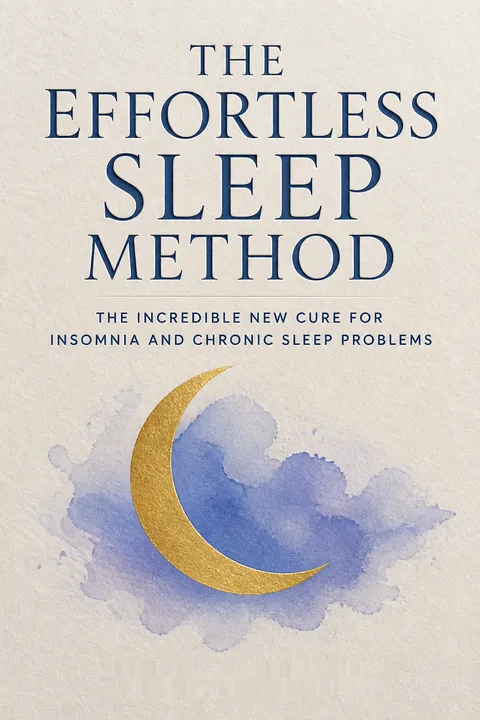


Key Takeaways
Stop forcing sleep; change the habits and fear that keep wakefulness alive.
A pattern takes hold. Sasha Stephens describes insomnia beginning at university, when late mornings and irregular days left her in bed before she was sleepy. Worry about one sleepless night then made sleep feel like a task to perform, and trying harder only increased tension. For 15 years, she searched for remedies and arranged life around sleep, without lasting relief.
A change in context. On a busy countryside trip, a fixed early start and full days left little room for naps, lie-ins, or hours of monitoring sleep. After several difficult nights, she became absorbed in the trip and began sleeping. She concluded that sleep habits and beliefs were reinforcing each other, and that recovery meant changing both rather than chasing sleep directly.
What's compelling is the change in the problem's context: less time available for monitoring, more regular days, and meaningful activity. Behavioral medicine often examines how routines and attention sustain symptoms, even when they did not cause the original problem. The trip offers a vivid personal illustration, not proof that every case of insomnia is maintained by behavior or can be solved by staying busy. That distinction matters. A person can adopt useful routines without blaming themselves for sleeplessness or assuming that medical assessment is unnecessary.
Spend less time awake in bed to rebuild the bed-sleep connection.
Reserve the bed. Stephens argues that going to bed early to catch up, lingering there after waking, and spending long stretches awake in bed can make the bed feel associated with frustration rather than sleep. Her practical approach is to go to bed when genuinely sleepy and reserve the bed for sleep and sex. The book calls sleep-related routines and surroundings sleep hygiene.
Avoid a universal quota. Stephens suggests that many people may function well with six to seven and a half hours in bed, but recommends adjusting according to daytime alertness and sleepiness at bedtime. That is her guideline, not a personalized medical prescription. People with persistent insomnia or other health concerns should seek clinical advice rather than impose a severe limit on time in bed.
The useful insight is associative: a bedroom can become a place where someone rehearses wakefulness, checks the clock, and anticipates failure. Changing what happens in bed can weaken that learned pattern. This is more precise than treating a comfortable mattress as a cure. The book's suggested hours, however, should not be universalized. Sleep need varies, and reducing time in bed too aggressively can increase impairment. A clinician can tailor behavioral changes to the person rather than turn a helpful principle into another rigid test.
Keep wake time steady, and stop using naps to repay sleepless nights.
Anchor the morning. The book recommends getting up at roughly the same time every day, including weekends. Stephens links lie-ins to reduced sleepiness at the next bedtime, especially when someone returns to a weekday schedule after sleeping late on Saturday and Sunday. She also advises avoiding daytime naps, which can reduce the pressure to sleep at night.
Build consistency gradually. Her own insomnia began during a period without a fixed morning schedule. The proposed response is not to punish yourself after a bad night, but to keep the day moving and preserve a regular waking time. If daytime sleepiness is severe or affects safety, the book's no-nap rule should not override sensible medical advice or safe driving and work decisions.
Regular timing can help stabilize the body's sleep-wake rhythm, while long or late naps may make nighttime sleep harder for some people. The book's strength is treating weekends as part of the pattern rather than as a separate opportunity to recover. Its absolute ban on naps is less universal: a brief nap can serve a practical purpose in some circumstances, and avoiding one may be unsafe for a dangerously sleepy person. The better principle is to notice how naps affect nighttime sleep and make decisions with safety and individual circumstances in view.
A bad night becomes chronic when worry recruits more wakeful habits.
The loop feeds itself. Stephens describes a common progression: a stressful event or irregular schedule disrupts sleep, then concern about another bad night leads to going to bed early, sleeping late, napping, or trying hard to fall asleep. Those responses can leave someone less sleepy at bedtime and more alert to every sign of wakefulness. The next difficult night then seems to confirm that something is wrong.
Change the response. The book's model is that behavior and belief reinforce one another. It recommends getting out of bed when wakefulness has become clear and doing a quiet activity before returning when sleepy. This resembles stimulus control, a behavioral approach that strengthens the association between bed and sleep rather than prolonged wakefulness. The author emphasizes responding to the pattern, not treating one poor night as proof of permanent damage.
This feedback-loop model is memorable because it explains how a temporary disruption can acquire a second layer: fear of the disruption itself. Similar cycles appear in anxiety, where avoidance reduces distress briefly but makes the feared situation feel more threatening over time. The model is most useful when it identifies modifiable responses without turning them into a moral judgment. Not every bout of insomnia follows this pathway, and persistent sleep problems can have medical, psychological, or environmental contributors that require evaluation.
Stop giving insomnia the microphone through clocks, labels, and endless searches.
Attention shapes the story. Stephens warns that clock-watching, repeatedly calculating hours slept, describing oneself as an insomniac, and recounting only the worst nights can make sleep dominate the day. Her alternative is to notice good or improving nights, avoid turning sleep into a running topic of conversation, and stop treating every new remedy as a test of whether one's problem is uniquely difficult.
Choose information carefully. The author found online insomnia forums comforting at first, but says stories of prolonged suffering and failed treatments amplified her fears. She recommends stepping back from those spaces and from repeated cure searches. This is not a reason to hide distress or reject all support. It is a suggestion to notice whether particular conversations leave someone informed and supported, or more frightened and preoccupied.
The section captures a real cognitive hazard: memorable failures can outweigh quieter evidence that things sometimes go well. Reframing attention toward progress may correct that imbalance. Still, positive thinking is not a substitute for accurate information, and people should not be pressured to conceal symptoms or perform confidence they do not feel. Supportive relationships and well-chosen clinical guidance can reduce isolation. The practical distinction is between seeking help and compulsively collecting alarming stories or trying each advertised cure as a verdict on one's chances.
Question sleeping pills, but never stop prescribed medication without medical guidance.
Separate experience from general claims. Stephens recounts feeling groggy after temazepam and other medications, and describes tolerance, rebound insomnia, and concern that reliance on a pill can undermine confidence in sleeping unaided. She also cites research on medication benefits and harms. Those citations and her own experience do not establish that every sleep medicine has the same effects or that medication is always inappropriate.
Taper with a clinician. The book explicitly warns readers not to change prescribed medication without medical advice, particularly benzodiazepines and related drugs, because withdrawal can be serious. Its broader message is to discuss the intended duration, risks, and alternatives with a qualified professional, rather than escalating or combining remedies on one's own. The author rejects medication as a standalone long-term solution, but the reader's treatment decision belongs in an informed clinical conversation.
The book is right to challenge the assumption that a prescription automatically solves the processes sustaining chronic insomnia, and it usefully highlights next-day effects and dependence concerns. Its rhetoric about medication is much broader than the evidence it presents can support. Observational associations do not by themselves show that a drug caused an outcome, and risks differ across medicines, doses, and patients. Medication can be appropriate in some situations. The safest lesson is neither automatic trust nor blanket rejection, but shared decision-making and medically supervised changes.
Critique rigid sleep restriction without dismissing evidence-based insomnia treatment.
A punishing version. Stephens objects to strict Sleep Restriction Therapy programs that sharply limit time in bed, require getting up when awake, forbid naps, and hold a fixed morning alarm even after a very poor night. She describes how a single oversleep or accidental nap can feel like failure, increasing pressure and discouragement. Her criticism is aimed at a rigid regime that, in her view, makes patients dependent on rules rather than confident in their own ability to sleep.
Know what is being criticized. The book also recommends spending less time in bed and keeping a regular wake time, so its own approach overlaps with parts of sleep restriction. It is important to distinguish the author's critique of harsh or poorly tolerated implementation from clinician-guided insomnia treatment. Readers should not undertake extreme sleep restriction on their own.
The criticism is strongest when it targets inflexible, unsupervised rules that turn sleep into a pass-or-fail performance. It is weaker when it treats sleep restriction as inherently cruel or ineffective. Cognitive behavioral therapy for insomnia, or CBT-I, uses tailored behavioral and cognitive methods, and sleep restriction or gradual sleep compression can be one component. The distinction is between a treatment delivered with individual assessment and support, and a rigid schedule imposed without adjustment. That nuance preserves the book's warning about pressure while avoiding dismissal of a widely used clinical approach.
Practice relaxation until familiar, and stop turning it into a sleep test.
Novelty can be stimulating. Stephens tried many relaxation recordings and methods once or twice, often on nights when she felt she most needed a result. She found herself monitoring whether each technique worked, which made it another source of alertness. Her advice is to choose a method that feels tolerable and practice it regularly, sometimes for a couple of weeks, before judging it.
Let the mind be. The book offers breathing meditation, a body scan, reviewing the day's events, and a practice of allowing thoughts and feelings rather than wrestling them into silence. Its preferred version is essentially to lie down without trying to force relaxation or sleep. These are options, not requirements. If a technique increases frustration, it need not become another rule to obey.
The central distinction is between using a practice to settle attention and using it as a covert mechanism to force sleep. That distinction connects with acceptance-based approaches, where a person makes room for discomfort instead of escalating the struggle against it. Familiarity may reduce the novelty that keeps attention engaged, though the book's suggested timetable is based on the author's experience, not a guarantee. A relaxation technique should be judged by whether it is useful and sustainable, not by whether it produces sleep on demand.
Make plans despite sleep anxiety, so avoidance stops dictating your life.
Avoidance protects fear. Stephens describes refusing holidays, delaying social plans until the last moment, and asking friends to avoid mentioning future events because she feared a sleepless night beforehand. These strategies may lower anxiety briefly, but they also make ordinary plans feel unusually dangerous and allow insomnia to dictate daily life.
Return to ordinary activity. The book advises making manageable plans, attending events, and behaving as much as possible like someone who is not organizing every decision around sleep. Stephens suggests starting with small occasions rather than creating a dramatic test. This is not a command to ignore exhaustion, medical limits, or safety. The point is to stop treating every invitation as a threat that must be avoided to guarantee sleep.
Avoidance can shrink a person's life while quietly preserving the belief that the avoided situation is unmanageable. Re-entering ordinary activities can provide corrective experience: the feared night may not occur, or a difficult night may prove survivable. This resembles gradual exposure used in anxiety treatment. The approach works best when paced and chosen collaboratively, not as a dare to endure anything. Social functioning is part of health, but sleep loss that creates serious impairment still deserves practical accommodation and professional attention.
Count recovery in growing confidence, not in perfect, uninterrupted nights.
Use evidence, not guarantees. Stephens calls a personally encouraging fact a safety thought: a grounded reminder, such as having slept during a stressful period before, or having managed a day after a poor night. It is meant to interrupt catastrophic predictions, not promise that tonight will go perfectly. The book also suggests measuring early progress by whether a person follows helpful commitments, rather than by counting every hour slept.
Allow imperfect nights. Stephens argues that one bad night need not mean a return to chronic insomnia. Her larger aim is to reduce fear of wakefulness and restore a life that is not organized around preventing every possible sleep disruption. A useful reminder should be credible to the person using it. If an affirmation feels false, a modest, verifiable statement is more appropriate than insisting that sleep is already perfect.
This is the book's most durable psychological move: replace certainty-seeking with confidence that uncertainty is manageable. A safety thought grounded in experience can interrupt catastrophic forecasting without requiring a promise of perfect sleep. The distinction between progress and nightly outcome also resembles behavior-change approaches that reward controllable actions rather than volatile results. Positive affirmations can feel implausible when they contradict experience, so evidence-based reminders are usually more credible than forced optimism. Confidence should coexist with attention to severe symptoms and appropriate care.
Analysis
The book's strongest contribution is its account of how sleep can become a performance problem. Stephens describes an initially ordinary vulnerability, irregular timing and long periods in bed, followed by fear, monitoring, remedy-seeking, and avoidance. The cycle is concrete and psychologically recognizable: sleep becomes more salient precisely because it is being pursued so intensely. The account also makes an important practical point: a person's relationship to the next day can matter as much as the number of hours slept, since anticipatory dread can compound fatigue.
Its most useful framework combines changes to sleep-related behavior with changes to the story told about sleep. Regular wake times, less wakeful time in bed, less clock-checking, and continued participation in daily life all aim to reduce the cues that sustain alertness and threat. The trip that helped Stephens is a memorable demonstration of how structure and attention can shift together, but it remains a personal account rather than proof of a universal mechanism.
The book's limits are substantial. It tends to describe chronic insomnia as a mental problem and presents medication and formal sleep restriction in adversarial terms. That framing can make readers feel responsible for symptoms that may also involve medical conditions, mental health, medication effects, circadian disruption, or other causes. Its claims about pills sometimes rely on older or observational findings and should not be generalized to every medication or patient. Importantly, the author's own recommendations overlap with established behavioral treatment, even while she condemns sleep restriction as a crutch. Current clinical practice distinguishes a tailored CBT-I plan from rigid self-imposed deprivation.
The most balanced reading keeps the book's humane insight and discards its certainty. Worry and compensatory habits can maintain insomnia, and reducing them may help. They are not the only possible causes, and treatment should not become another test of discipline. A reader can experiment with sensible routines, preserve ordinary life, and seek professional assessment when sleep problems persist, impair functioning, or raise safety concerns.
Review Summary
The Effortless Sleep Method receives mixed reviews. Some praise it as life-changing, crediting it for curing their insomnia. Others criticize its repetitive nature, lack of scientific backing, and contradictory advice. Many find the author's tone condescending and dislike her dismissal of skepticism. The book's core advice revolves around sleep hygiene and changing negative thought patterns. While some readers found the techniques helpful, others argue the information is available for free elsewhere. Overall, opinions are divided on its effectiveness and value.
People Also Read









Glossary
The Effortless Sleep Method
Behavior and belief approachStephens's program for reducing persistent sleep difficulty through changes to sleep-related routines and beliefs. Its commitments include regular waking, less time awake in bed, avoiding routine naps, reducing clock-watching and negative sleep talk, and continuing ordinary activities. The method aims to restore confidence in unaided sleep rather than make sleep happen through force.
12 Promises
Twelve behavioral commitmentsThe named set of commitments at the center of the Effortless Sleep Method. The first group focuses on bedtime and daytime habits, including limiting time in bed, avoiding naps, and maintaining a regular wake time. The remaining commitments address medication with medical guidance, monitoring, self-talk, relaxation practices, confidence, and keeping life from revolving around sleep.
safety thought
A credible calming reminderA personally relevant, fact-based reminder intended to reduce fear when someone worries about sleeping. Stephens suggests drawing on evidence from one's own experience, such as having slept during a stressful period or having managed a day after poor sleep. The reminder is meant to support confidence, not guarantee a perfect night.
The Two Negative Principles of the Mind
Attention amplifies concernStephens's label for two linked tendencies: people often give more attention to unwanted or negative events, and sustained attention can make those events feel more important. Applied to insomnia, the idea is that repeatedly reviewing bad nights while overlooking better ones can intensify preoccupation and reinforce a negative self-image.
Sleep Restriction Therapy
Limits time spent in bedA behavioral insomnia treatment described in the book as restricting time in bed to strengthen sleep and consolidate the time spent asleep. Stephens focuses on strict versions involving a fixed rise time, limited time in bed, and no naps, and argues that these can feel punitive. Her criticism should be distinguished from individualized, clinician-guided CBT-I, where related methods may be adapted to the patient.
sleep hygiene
Sleep-supporting routinesStephens uses this term for habits and conditions associated with bedtime and sleep. Examples include keeping a regular wake time, limiting time awake in bed, avoiding naps, and reserving the bed mainly for sleep and sex. In the book, these routines are presented as a foundation for sleep, particularly when irregular schedules or compensatory habits have developed.
FAQ
What's "The Effortless Sleep Method" about?
- Overview of the book: "The Effortless Sleep Method" by Sasha Stephens is a guide designed to help individuals overcome insomnia and chronic sleep problems without the use of medication.
- Author's experience: Sasha Stephens shares her personal journey of battling insomnia for 15 years and how she eventually found a method to sleep effortlessly.
- Holistic approach: The book emphasizes a holistic approach, focusing on changing thoughts, beliefs, and behaviors related to sleep rather than relying on external aids.
- Structure of the book: It is divided into sections that cover groundwork, medical approaches, preliminaries, the making of insomnia, and the cure, providing a comprehensive guide to overcoming sleep issues.
Why should I read "The Effortless Sleep Method"?
- Personal experience: The author, Sasha Stephens, is a recovered insomniac who shares her firsthand experience and insights, making the advice relatable and credible.
- Non-medical approach: The book offers a non-drug solution to insomnia, which can be appealing to those who prefer natural methods.
- Comprehensive guide: It covers both the psychological and behavioral aspects of insomnia, providing a well-rounded approach to tackling sleep issues.
- Practical advice: Readers can benefit from practical tips and techniques that can be easily implemented into their daily routines to improve sleep quality.
What are the key takeaways of "The Effortless Sleep Method"?
- Sleep hygiene is crucial: The book emphasizes the importance of maintaining good sleep hygiene, such as spending less time in bed and avoiding naps.
- Behavioral changes: It highlights the need to change behaviors that reinforce insomnia, like clock-watching and negative sleep talk.
- Positive affirmations: Using positive affirmations and replacing negative thoughts about sleep can significantly improve sleep quality.
- Holistic approach: The method combines behavioral changes with a shift in mindset, focusing on building confidence in one's natural ability to sleep.
What is the philosophy behind "The Effortless Sleep Method"?
- Trust in natural sleep: The method encourages building trust in one's natural ability to sleep without relying on external aids.
- Safety net of belief: It suggests creating a safety net in the form of belief in one's ability to sleep, similar to how good sleepers trust they can sleep.
- Holistic approach: The philosophy is to address both the mental and behavioral aspects of insomnia, rather than treating sleep in isolation.
- Focus on self-belief: The method aims to restore confidence in one's ability to sleep naturally and effortlessly.
What are the 12 promises in "The Effortless Sleep Method"?
- Spend less time in bed: Limit time in bed to ensure you are tired when you lie down.
- No naps: Avoid napping during the day to improve nighttime sleep.
- Get up when you can't sleep: If you can't sleep, get out of bed and do something until you feel sleepy.
- Consistent wake-up time: Get up at the same time every day, including weekends, to establish a routine.
- Bed for sleep and sex only: Use the bed only for sleep and sex to strengthen the bed-sleep association.
- Reduce or eliminate pills: Work towards reducing or eliminating sleeping pills with medical guidance.
- Stop clock-watching: Avoid focusing on the time spent asleep or awake.
- Positive sleep talk: Replace negative sleep talk with positive affirmations.
- End the search for cures: Stop searching for external miracle cures and focus on internal changes.
- Find a relaxation technique: Discover a relaxation method that works for you and use it regularly.
- Develop a safety thought: Create a safety thought to rely on when anxious about sleep.
- Prioritize life over insomnia: Stop rearranging life around insomnia and start living fully.
How does "The Effortless Sleep Method" address the use of sleeping pills?
- Negative impact: The book discusses the negative effects of sleeping pills, including addiction, side effects, and the potential to worsen insomnia.
- Psychological dependency: It highlights how sleeping pills can erode self-belief in one's ability to sleep naturally.
- Encouragement to reduce use: The method encourages reducing or eliminating sleeping pills with medical guidance to restore natural sleep.
- Focus on self-reliance: The goal is to build confidence in one's ability to sleep without relying on medication.
What are some common mistakes insomniacs make according to "The Effortless Sleep Method"?
- Spending too long in bed: Lying in bed awake can weaken the bed-sleep association.
- Napping during the day: Daytime naps can reduce the likelihood of sleeping well at night.
- Clock-watching: Obsessing over time can create anxiety and worsen insomnia.
- Negative sleep talk: Talking negatively about sleep can reinforce insomnia.
- Searching for cures: Constantly looking for external remedies can prevent addressing the root causes of insomnia.
What are the recommended relaxation techniques in "The Effortless Sleep Method"?
- Meditation: Practicing meditation can help calm the mind and reduce sleep anxiety.
- Body scan: A body scan involves focusing on relaxing each part of the body to promote sleep.
- Breath focus: Concentrating on the breath can help distract from anxious thoughts and induce relaxation.
- Binaural beats: Listening to binaural beats can aid in achieving a meditative state conducive to sleep.
How does "The Effortless Sleep Method" suggest changing negative sleep talk?
- Positive affirmations: Replace negative statements with positive affirmations about sleep.
- Focus on good nights: Emphasize and celebrate good nights of sleep to reinforce positive beliefs.
- Avoid negative labels: Stop identifying as an insomniac and focus on the progress being made.
- Write affirmations: Regularly write out positive affirmations to reinforce a positive mindset about sleep.
What is the role of safety thoughts in "The Effortless Sleep Method"?
- Calming anxiety: Safety thoughts are used to calm anxiety about not sleeping.
- Positive focus: They help shift focus from fear of insomnia to positive sleep experiences.
- Personalized: Safety thoughts are based on personal experiences of successful sleep.
- Reinforcement: Regularly using safety thoughts can reinforce confidence in one's ability to sleep.
How does "The Effortless Sleep Method" address the fear of not sleeping?
- Neutralizing fear: The method suggests welcoming and being the fear to neutralize it.
- Focus on acceptance: Accepting and allowing fear to be present can reduce its power.
- Transforming fear: By becoming one with the fear, it can be transformed and dissolved.
- Ultimate relaxation: This technique can lead to profound relaxation and improved sleep.
What are the best quotes from "The Effortless Sleep Method" and what do they mean?
- "The more you talk about how good your sleeping is, the better it will become." This emphasizes the power of positive affirmations and focusing on good sleep experiences.
- "Insomnia is not a monster. Insomnia is not a thing at all." This quote highlights the idea that insomnia is not a disease but a set of behaviors and beliefs that can be changed.
- "You won’t get over your insomnia until you stop making compromises for it." It stresses the importance of prioritizing life over insomnia and not letting it dictate daily activities.
- "All you need to cure yourself is within you." This underscores the book's philosophy that the solution to insomnia lies in changing one's thoughts and behaviors, not in external remedies.
Download PDF
Download EPUB
.epub digital book format is ideal for reading ebooks on phones, tablets, and e-readers.








