

Key Takeaways
Use chosen danger to move toward what grief makes impossible to face
A different kind of attention. In 2013, nearly three years after her mother’s catastrophic stroke, Fontaine joins the World of Wonders, a traveling sideshow, for five months. At the hospital, each day had revolved around emergencies, therapies, and the possibility of death. In the tent, she watches knife throwers and sword swallowers, then learns to handle fire and snakes. The acts do not erase her grief. They pull her attention into immediate tasks, where the next movement matters more than another imagined disaster.
A choice, not a cure. Fontaine’s invitation comes from sideshow owner Chris Christ after she interviews him and watches the show. She is drawn to the performers’ ability to make danger visible and survive it. The experience gives her a temporary way to feel awake, not a solution to her mother’s illness.
What's striking is the shift from passive anticipation to bounded action. A performance has rules, partners, and a next step, unlike the uncertainty of a loved one’s prognosis. That structure can restore a sense of agency without pretending that agency controls the outcome. The distinction matters: deliberately chosen risk can focus attention, while illness imposes risk without consent. The memoir does not present danger as therapy or grief as something that can be conquered by bravado. Its more defensible claim is that a demanding present can briefly interrupt the mind’s habit of living only in feared futures.
Courage grows by repeating the feared act, not by waiting to feel ready
Fear remains present. Fontaine begins with a fire-eating lesson in Oakland. She expects a hidden trick, but learns that the performer must actually bring flame into her mouth and extinguish it through practiced technique. Her body protests: she sweats, hesitates, and once makes a fireball larger by instinctively blowing toward the flame. The class leaves her with burns and a mouth that looks injured, not with a new absence of fear.
Practice changes the response. At the fair, she repeats the fire act and handles a boa despite a bite and persistent terror. Later, she takes the electric-chair role and lights a bulb with her mouth. These skills are not proof that danger is harmless. They are feats learned through attention, repetition, and guidance from experienced performers.
The account resembles exposure-based learning, in which a person encounters a feared stimulus in a structured setting and discovers that fear can be endured. The crucial detail is structure: Fontaine learns from teachers, practices specific procedures, and works alongside people who can intervene. This is not a case for overriding every protective instinct. Some fear is useful information, and the book’s burns, bites, and near misses make that plain. The sharper lesson is that readiness often follows skillful practice rather than preceding it, while competence requires respecting the danger that made practice necessary.
Arrive as a beginner, because humility keeps the door open
A bluff meets reality. Before joining the show, Fontaine tells its manager she can perform acts she has not learned, including snake handling. She has recently taken one fire-eating class, but arrives without the broad skill set her claims imply. Within days she is expected to hold a boa, escape handcuffs, and perform a money trick in front of paying audiences. The crew does not treat her lack of experience as unusual. They teach her by putting her to work.
Learning earns a place. Her first snake lesson ends in tears; later, she performs with the animal, even after it scrapes her finger. She also learns to dismantle and rebuild the show, and eventually becomes an inside performer. The work rewards persistence and willingness to accept correction more than the impressive story she told at the start.
The memoir separates confidence from competence. Fontaine’s initial exaggeration gets her through the door, but it cannot substitute for learning once the work begins. Her progress depends on instructors who correct her without humiliating her, especially when she admits she has little experience. This resembles apprenticeship: knowledge is transferred through tasks, observation, and repeated participation, not credentials alone. Still, the arrangement has limits. Learning in front of an audience can expose both worker and animal to avoidable harm. Humility helps, but responsible training and safety practices matter just as much.
Let audiences help create wonder instead of demanding airtight proof
The crowd completes the act. A bally is a short pitch outside the tent, designed to draw fairgoers inside. Fontaine first performs a simple trick that changes a one-dollar bill into a five while the talker tells stories about the show. The crowd watches her hands, hoping to catch the method. Inside, the performers invite people to decide whether what they are seeing is real. The show relies on suspense and uncertainty, not on proving every claim beyond doubt.
Participation has a price. As an inside talker, Fontaine sells an extra paid viewing of Sunshine contorted inside a blade box. She invents a family history to make the act more compelling, while choosing not to add a more emotionally manipulative story about a child at home. Sideshow language calls customers marks, and the performance makes them participants in judging the spectacle.
This is an unusually clear portrait of entertainment as a negotiated belief. The audience knows it may be seeing illusion, yet chooses to attend, watch closely, and decide what counts as astonishing. That resembles play: people accept temporary rules without confusing the performance with ordinary fact. But the same ambiguity can conceal exploitation. A made-up backstory used to extract money is not ethically identical to a visible trick, even when both are part of a show. Fontaine’s unease points toward a useful boundary: preserve the audience’s freedom to doubt, and do not manufacture vulnerability to defeat it.
Care for someone without mistaking control for love
Medicine measures progress. After Fontaine’s mother has a severe hemorrhagic stroke, her family spends months seeking signs of movement, speech, and recovery. Therapists need measurable progress to continue treatment, while relatives try to understand what her mother wants through gestures and sounds. Her stepfather, Davy, refuses to reduce their shared life to hospital routines. He plans a demanding trip to Italy with her wheelchair, eleven bags, and more than 250 pounds of medical and personal supplies.
Curiosity creates another bond. Fontaine fears the trip is reckless, but Davy and her mother go. Away from the hospital, they share streets, music, meals, and travel decisions, communicating without ordinary conversation. Their connection does not depend on her mother regaining speech or walking. The journey gives them a life beyond treatment, even as the risks remain real.
The contrast is between care as management and care as shared life. Clinical measures are necessary, but they cannot describe every form of participation, pleasure, or relationship. Davy’s plan also raises a serious tension: supporting a disabled person’s agency can mean accepting risks that relatives find frightening, especially when communication is difficult to interpret. The memoir does not make that dilemma disappear. It suggests that protection becomes incomplete when it excludes the person from ordinary experience. Good care must ask not only what can be prevented, but what makes a life feel inhabited.
Revise the family story before crisis makes speech impossible
One past, several accounts. Fontaine grows up hearing conflicting versions of why her mother left her father when she was two. She believes her father’s account for years, building a story in which her mother’s love cannot be trusted. As an adult, she sees that both parents may be telling partial versions shaped by hurt. She recognizes her own cruelty, including telling her mother that she never loved her.
Regret has a specific cost. Before the stroke, Fontaine means to apologize and say that she loves her mother. During a final phone call, when her mother describes feeling like a failure, Fontaine offers easy reassurance instead. Six weeks later, the stroke leaves her mother unable to speak. The memoir does not claim that one perfect conversation would have repaired everything. It shows how postponed words can become permanently unavailable.
Family memory is not a neutral archive. People inherit interpretations, then use them to organize affection, blame, and distance. Fontaine’s later understanding does not establish a definitive version of the separation; it loosens her dependence on a single version. That is a more credible form of reconciliation than simply declaring everyone innocent. Empathy can widen the story without erasing harm. The practical implication is not to force a dramatic confession on every relationship, but to notice when an old explanation has become more important than the person still available to speak.
Build belonging through shared labor, not a convincing costume
The show is work first. Fontaine arrives expecting glitter, danger, and adventure. She finds long days, cramped sleeping quarters, sore muscles, dirty bathrooms, and setup that can take many hours. As a new performer, she earns $275 a week before taxes. Her daily routine can stretch from morning preparations to performances late at night, followed by teardown and travel to the next fair.
Usefulness becomes belonging. She learns to carry tent poles, roll banners, manage props, and perform acts in rotation. At first, the work makes her feel like an outsider; eventually, she can help the crew keep the show running. At the season’s end, she signs her name on the truck wall beside performers who came before her. Her membership rests less on looking like a sideshow performer than on having taken part in its work.
Shared labor can create a powerful sense of membership because people depend on one another in concrete ways. Fontaine’s identity changes as her body acquires skills and routines, not simply as she adopts costumes. Yet the same setting can make belonging conditional on tolerating dangerous hours and poor material conditions. A group’s solidarity should not obscure the economics that constrain its members. The memoir holds both truths together: the work is meaningful because it is shared, and the workers’ loyalty can be used to demand more than the job fairly gives.
Practice courage as moral action, not merely surviving the dangerous act
Performance courage is not enough. Fontaine learns to hold fire, work with a snake, and sit in an electric chair for an audience. Yet the sideshow does not automatically make her brave in every sense. During one fairground fight, she sees a man being beaten with metal pipes. A colleague urges her to stay out of it, and she leaves without calling for help. She never learns what happened to the man.
Harm can come from her, too. During an argument, Fontaine bites Cassie after Cassie ignores her request to stop hugging her. Fontaine regrets the violence and recognizes that her reasons do not undo the injury. The two incidents expose different failures: silence in the face of group violence, and impulsive violence toward a friend. Neither is resolved by being tough onstage.
The distinction here is between physical nerve and ethical agency. A person may tolerate pain, perform under scrutiny, and still retreat when a group’s rules make intervention costly. Likewise, being overwhelmed can explain an outburst without making its consequences disappear. Fontaine’s self-accusation is valuable because it resists the easy identity of either hero or victim. A useful next question is what forms of intervention are realistically available, from seeking help to setting boundaries early. Moral courage is not always confrontation, but it does require refusing to treat harm as somebody else’s business.
Choose aliveness without demanding that recovery restore the old body
Connection changes shape. Near the end of the season, Fontaine’s mother and Davy appear in the audience. Her mother has traveled across the Atlantic and through Europe despite paralysis and limited speech. She watches Fontaine perform, sings softly, and recognizes her daughter. The reunion does not reverse the stroke. It reveals that attention, humor, music, and touch have carried their relationship through altered bodies and forms of communication.
A life is more than its ending. In 2016, Fontaine, her brother, and Davy help her mother into the sea in Greece. She floats in the water, smiling and singing. A few days later, another stroke kills her aboard a ship. The ending holds loss and pleasure together: the last experience is not a cure, but a moment in which her mother is present, adventurous, and connected.
The memoir refuses the familiar bargain in which disability becomes meaningful only if the person recovers. Its account of travel and swimming grants value to an altered life without pretending that the body’s limitations or eventual death are minor. The mother’s agency appears in choices, preferences, attention, and relationships, not only in restored speech. At the same time, a moving final scene can risk making suffering seem redeemed by beauty. The book resists that reading by keeping the loss visible. Joy matters here not because it cancels grief, but because grief does not cancel joy.
Analysis
The memoir braids two journeys that first seem unrelated: a daughter’s entry into the last traditional traveling American sideshow, and a family’s long passage through the consequences of a devastating stroke. The sideshow supplies action, spectacle, and a community of people who make themselves visible through danger. The hospital supplies waiting, repetition, and the painful uncertainty of whether a familiar person remains present inside a changed body. These settings are not simple opposites. Both ask how bodies are read, what counts as evidence, and who gets to decide what a person can endure.
Fontaine’s most important structural choice is to resist turning the carnival into a cure for grief. Its demands give her a way to inhabit the present, but they also reveal her limits. She can perform danger and still fail to intervene when another person is attacked. She can criticize other people’s indifference and discover her own capacity for harm. The memoir gains credibility from these failures because its idea of courage is tested outside the stage lights.
The book also challenges the assumption that communication requires fluent speech. The mother’s gestures, sounds, preferences, and shared travel with Davy gradually become legible without becoming perfectly certain. That uncertainty is ethically important. Loved ones may become skilled interpreters, but interpretation is not the same as access to another person’s mind. The narrative honors intimacy while preserving that gap.
Its deepest resolution is not reconciliation through a miraculous return to the old self. The mother does not regain her former body or speech. Instead, the family finds forms of life that remain possible within changed conditions, including a journey across Europe and a final swim in Greece. The sideshow’s staged transformations and the mother’s real transformation converge around one question: can a person still be recognized when the body no longer fits the expected story? Fontaine’s answer is not a neat yes. It is an ongoing practice of looking, listening, and allowing the person to exceed the role assigned to her.
Review Summary
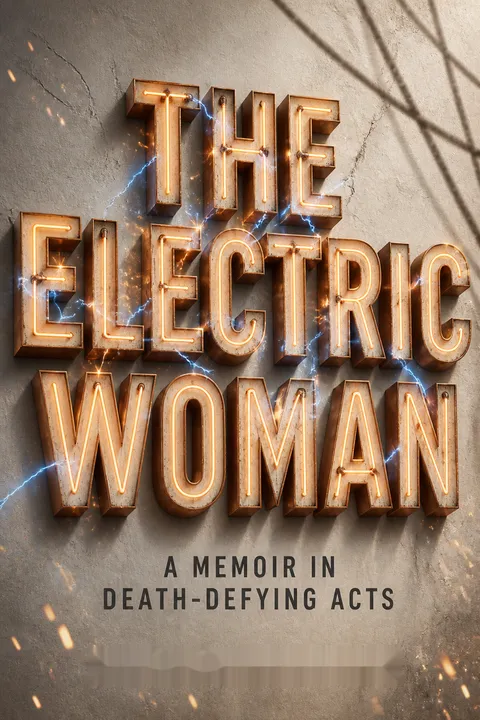
The Electric Woman received mostly positive reviews, with an average rating of 3.92 out of 5. Readers praised Fontaine's vivid writing and fascinating look into carnival life. Many found the parallel stories of her mother's illness and her sideshow experiences compelling. Some reviewers felt the two narratives didn't always mesh well or that the book needed editing. Overall, readers appreciated Fontaine's honesty, bravery, and unique perspective on facing fears and finding self-discovery through unconventional means. The behind-the-scenes glimpse into sideshow life was particularly engaging for many.
People Also Read


Glossary
bally
Free crowd-drawing pitchA short, free performance or spoken pitch outside a sideshow tent. The talker names attractions, performs a teaser, and tries to draw passersby inside to buy admission. Fontaine’s bally work includes handling a snake, escaping handcuffs, and assisting with tricks. It is both performance and sales, with the crowd’s attention determining whether the show earns an audience.
bally girl
Front-stage sideshow performerA woman who works on the sideshow’s front stage, helping the talker attract customers and demonstrating teaser acts. In Fontaine’s role, those acts include fire eating, snake handling, a handcuff escape, and a simple money trick. The job combines performance, display, and sales; it does not necessarily require extensive prior experience, since the show trains new performers.
marks
Potential paying customersCarnival slang for people who may be persuaded to spend money at a game, attraction, or sideshow. The term reflects the carnival worker’s commercial perspective on fairgoers, who are approached, entertained, and invited to buy. In the memoir, audiences are also curious participants, not merely targets, making the word’s dismissive edge part of the sideshow’s uneasy relationship with its customers.
ding
Paid extra viewingAn additional attraction or viewing sold separately from ordinary sideshow admission, often for a small extra payment. Fontaine talks a blade-box ding, encouraging customers to pay to see the contortionist inside the box. The extra income matters to the show and can also provide a performer with a percentage, making the ding both a theatrical reveal and a direct sales pitch.
showpeople
Sideshow performers and crewThe World of Wonders crew’s preferred identity for its performers and workers, distinguished from carnival ride, game, and food workers, whom they call carnies. The word signals status and a shared commitment to the show, although the groups work in the same fairground economy. Fontaine learns that these labels form a hierarchy as well as a sense of belonging.
geek
Performer-made bodily actIn the book’s historical distinction, a geek is a performer who chooses to manipulate or endanger the body as an act, unlike a traditional freak performer whose body is considered nonnormative from birth or through illness or accident. The memoir notes that many contemporary sideshow performers are geeks, while the language and boundaries between these categories remain contested.
freak
Non-normative body performerA sideshow term historically used for performers with bodies considered different from the norm, whether the difference was present from birth or acquired later. The book traces how the label has shifted and notes that some performers reclaim it, much as marginalized groups sometimes reclaim a stigmatizing word. The term can express community and pride, but it also carries a history of public display and exploitation.
meat-grinder
Brutal state-fair stretchThe crew’s name for the especially demanding weeks at major state fairs. These engagements bring large audiences but also very long performance days, crowded living quarters, intense heat, and little time to sleep or recover. Fontaine’s season includes two such periods. The term captures the sense that the work consumes the performers’ energy while the show must keep operating.
box jumper
Performer who changes illusionsA sideshow performer who moves between hidden positions or boxes to appear as several transformed attractions. Fontaine becomes a box jumper in illusions such as the headless woman and four-legged woman. The audience sees a sequence of unusual bodies, while the performer’s backstage work involves precise, cramped movements and costume changes that make the transformations possible.
GTFM
Get the moneyCarnival shorthand for the imperative to earn enough to keep going. The World of Wonders crew uses it to describe the commercial reality behind performance, including selling extra viewings and small souvenirs. For Fontaine, learning to bring in money marks a change from inexperienced newcomer to useful performer. The phrase also raises questions about how far persuasion should go.
Phineas Gage
Railroad injury caseA nineteenth-century railroad worker who survived an accident in which a tamping iron passed through his head and damaged his brain. The memoir recounts the case while considering how brain injury can affect behavior and how earlier accounts were interpreted. Gage’s story offers historical context for the family’s efforts to understand how a stroke can alter a person without making that person wholly unknowable.
Download PDF
Download EPUB
.epub digital book format is ideal for reading ebooks on phones, tablets, and e-readers.








