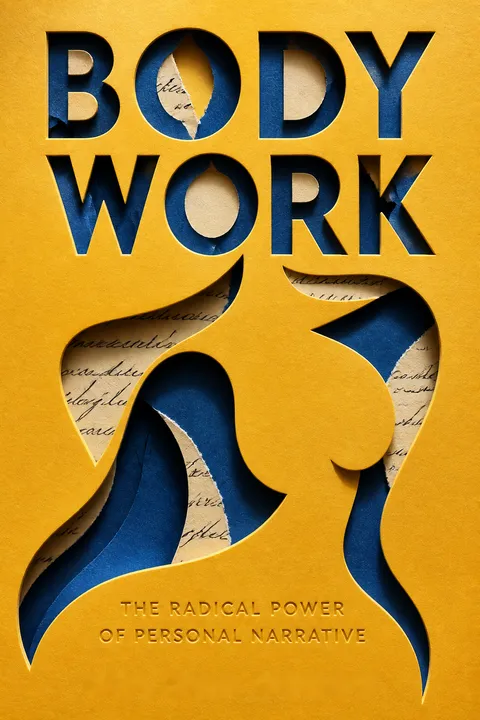


Key Takeaways
Write the body’s story; what gets dismissed as private can expose public power.
Private experience has public stakes. Febos challenges the idea that memoir is inherently self-absorbed, especially when it explores bodies, sex, family, or trauma. A student’s fear of seeming self-indulgent echoes a wider habit of treating women’s experience as less intellectually serious. Personal testimony can reveal how private pain is shaped by social conditions, then help readers recognize what they have been taught to hide.
Writing can also help its writer. Psychologist James Pennebaker asked participants to write about trauma for fifteen minutes a day over four days. Follow-up found that those who wrote emotionally made fewer physician visits over the next year than participants writing about neutral topics. This is not proof that memoir automatically heals, or that therapeutic writing is finished art. It shows that personal writing can matter both inwardly and politically.
The argument connects personal testimony to standpoint epistemology, the idea that people’s positions in society shape what they can know and report. A story dismissed as merely subjective may expose patterns that official accounts leave out. Yet the distinction between testimony and general proof matters: one person’s account can make a problem visible, but cannot by itself establish how common it is or explain every cause. The strongest use of memoir is neither treating it as universal evidence nor reducing it to private feeling. It is a situated account that invites readers to investigate what institutions have overlooked.
Follow the story that keeps calling, even when imagined readers sneer.
The inner censor has a history. Febos once resisted writing memoir, despite having a compelling personal subject, because she imagined that a young woman’s experiences would seem insignificant. She later noticed the same doubt while writing about girlhood: the dismissive reader in her mind was not someone she knew or respected, but a remembered male editor and workshop critic. Her question, “Who cares?” was partly an old social judgment speaking in her own voice.
Fear can point toward material. Febos does not claim that every difficult subject must be written or published. Rather, she urges writers to notice when embarrassment, shame, or anticipated disapproval is steering them away from a story they genuinely want to understand. Writing privately first can help separate the writer’s curiosity from the imagined demand for approval.
This is a useful account of internalized norms: external judgments can persist as self-monitoring even after the original audience has disappeared. Similar dynamics appear in stereotype threat, where awareness of a negative stereotype can interfere with performance. The practical value lies in identifying whose standards are operating, not simply rejecting all criticism. Some imagined readers represent real craft problems, and some fears are appropriate warnings about safety or privacy. Asking who the feared audience is, and what their judgment would actually mean, helps distinguish useful caution from inherited self-erasure.
Earn memoir’s intimacy through craft, research, and unflinching self-scrutiny.
Disclosure is only a beginning. Febos’s first memoir grew from her years as a dominatrix and her heroin addiction. Writing it demanded more than recounting events: she had to shape scenes, plot, dialogue, pacing, and description, while investigating her own motives and responsibility. The book’s personal subject did not make the work easier or exempt it from artistic standards. In fact, writing it required her to face experiences she had first met with numbness.
The writer must know more. Early readers asked what she had felt during a scene, and her therapist noticed that she was still narrating through her dominatrix persona. Those responses revealed a gap between reporting what happened and understanding what it meant. Memoir gains depth when the narrator’s present-day insight can illuminate the limits of the person she was then. Private healing may accompany that work, but it does not substitute for it.
The distinction between disclosure and crafted narrative resembles the difference between raw data and an explanatory model. Experience supplies material; selection, sequence, and reflection make it legible. That process also calls for epistemic humility: memory is partial, and later understanding can reshape how an event is interpreted. Febos’s emphasis on accountability keeps the memoirist from becoming a public hero in their own story. Still, craft should not be confused with polish alone. A formally experimental memoir can be deliberate, while an accessible one can be artistically rigorous.
Notice inherited sexual scripts before they start making your choices for you.
Culture can enter desire. Febos describes arriving at sex and sex work with beliefs about what her body was for, what men wanted, and what feminism permitted. Working as a dominatrix initially seemed to reconcile her desire to be wanted with her wish to resist male power. Over time, she recognized that the work still involved performing men’s fantasies, and that a clever justification did not necessarily free her from the values shaping those fantasies.
Writing can expose the performance. In early memoir drafts, she narrated herself through “Justine,” the persona she had built as a dominatrix, and repeated the story she had told herself at the time. Psychotherapy and further writing helped her recover feelings and motives that the persona obscured. For Febos, an “awakened” sex scene requires awareness of the difference between a writer’s own experience and the sexual stories culture has supplied.
The insight aligns with social scripts theory, which examines how cultural expectations provide familiar roles for intimate behavior. Scripts can be restrictive, but they can also offer shared language and play; their presence does not automatically make a desire false. The more useful question is whether someone can recognize a script, adapt it, or refuse it. Febos’s own account shows that insight may arrive through writing and reflection, rather than through a simple test of whether a choice is politically pure. That complexity avoids replacing one prescribed sexual ideal with another.
Let characters define sex by their desire, not inherited scripts.
Sex is broader than intercourse. Febos recounts learning from her mother that sex was not limited to a particular act, and reflects on how heterosexual assumptions often position penetration as the main event. The wider definition includes queer intimacy, adolescent experimentation, paid erotic work, and encounters that participants themselves understand differently. One client might call a balloon-based session sex; Febos understood it as work. The scene belongs to the meaning its participants give it, not a universal checklist.
Do not idealize the experience. Febos argues that sex in literature can be awkward, unsatisfying, funny, or emotionally complicated. Requiring queer or marginalized characters to represent only healthy, exemplary sexuality creates a different kind of erasure. A scene can also reveal a character’s relationship to their body without depicting sex at all. The writer’s task is to make the character’s experience vivid and consequential, rather than treating sex as a required milestone or punchline.
This approach resembles a basic principle in anthropology: categories should be examined in context rather than assumed to mean the same thing everywhere. Letting characters name their experiences can give them agency, while also showing how social power shapes the available vocabulary. That does not mean every self-description settles ethical questions. Consent, coercion, and unequal power still matter, especially when a story risks presenting violence as ordinary sex. The book’s emphasis on range is strongest when paired with attention to how a character understands an encounter and what constraints shape that understanding.
Protect people from unnecessary exposure, even when the story is yours.
Draft freely, revise responsibly. Febos recommends writing the first version before imagining a parent’s reaction or removing details to spare someone’s feelings. A draft can reveal which details the story actually needs. In her own revision, she often found that cruel details weakened the prose as well as hurt the person described. Writers should identify living people in a manuscript, consider how they may experience the portrayal, and seek a legal review when appropriate.
Narrative ownership has limits. Febos’s most consequential ethical shift came after she recognized that she had published her account of events that had happened more directly to someone else. She came to believe that such a story calls for conversation before drafting and serious consideration before publication. Even when several people share an event, the writer’s version can become the only public one. Accuracy alone does not make every disclosure necessary or fair.
The ethical problem resembles research involving human participants: a person can become exposed through someone else’s account, even when the narrator believes the account is true. There is no perfect procedure, because consent may be impossible, compromised, or withdrawn, and a memoirist also has legitimate reasons to describe harm. A useful test is proportionality: does this detail serve the work, and is the harm of disclosure justified by what readers can learn? Consultation cannot erase the imbalance of publication, but it can reveal consequences the writer’s private perspective misses.
Find enough safety and agency before asking painful memories to speak.
Timing matters. Febos compares memoir with a three-phase model of trauma recovery: establish safety, construct a coherent account of what happened, and reconnect with social life. She stresses that the analogy is not an equation. A memoir is not trauma treatment, and writing about trauma does not guarantee recovery. Still, both processes can require enough stability to approach painful material without being overwhelmed. Febos wrote about addiction while still using drugs, but says she could not gain perspective on that experience until she stopped.
A shift can come first. Sometimes the necessary change is not complete recovery but a small return of agency, a desire to become whole, or a willingness to question the story already being told. Febos recalls writing a title on an index card while trapped in a painful relationship. The writing did not immediately end the relationship, but the intention to tell its truth marked a beginning.
The model offers a valuable corrective to the demand that survivors disclose on schedule. Safety and control over the pace of narration matter; public testimony can be empowering for one person and destabilizing for another. The phases are best understood as a guide, not a universal timetable, since recovery can be nonlinear and material conditions affect what safety is possible. Febos’s distinction between a small internal foothold and complete freedom is especially useful: agency may begin as the ability to question a familiar account, before circumstances change.
Return to the past with enough distance to recognize your own part.
Memory needs interpretation. Febos describes memoir as a reconstruction, not a transcript. A narrator may have to recover emotions, motives, or bodily sensations that were unavailable during an event because survival took priority. The past self and the present writer are different perspectives, and the tension between them gives a memoir its depth. In one relationship essay, Febos initially framed the story as a quest for love. Writing and revising helped her see both the harm she experienced and her own participation in sustaining the relationship.
Honesty is not self-condemnation. The point of returning is not to accuse the earlier self with knowledge she could not yet have. It is to understand what happened, what remained unresolved, and what the writer did not recognize at the time. Febos connects this act of looking back with confession and repentance: change begins when the past can be acknowledged and the self can be seen as changed.
This account has a clear connection to narrative identity, the way people make meaning by organizing experiences into stories about who they are. Such stories can support change, but they can also become neat explanations that hide contradiction. The memoirist therefore needs to distinguish insight from certainty: a later interpretation may be richer without being the final or only truth. Febos’s attention to her own complicity resists a simple victim-versus-villain structure, while her insistence on multiple perspectives keeps accountability from collapsing into blame.
Write toward a witness, then let shared recognition enlarge the story.
Confession needs a listener. Febos traces her desire to write back to childhood notebooks, which gave private thoughts a form and made them less isolating. She connects the act of acknowledging the past with confession, while emphasizing that the first witness may be the writer herself. A reader can provide another kind of recognition: not a verdict, but evidence that the story has reached someone capable of understanding it.
Shared stories can restore connection. After writing about adolescent harassment and ambivalent sexual experiences, Febos spoke with other women who described related experiences. Their conversations offered a different kind of relief from writing alone. Public testimony can also give private harm a place in collective memory, much as a monument marks an event for a community. That social value does not require every writer to disclose publicly; privacy remains a valid choice.
The movement from private account to shared recognition resembles the creation of counter-memory: communities preserve experiences that official histories or dominant cultural narratives omit. A witness can reduce isolation without claiming to speak for everyone who has suffered similarly. That distinction matters because public storytelling can create pressure to turn personal pain into a lesson or a service to others. The book’s strongest implication is that solidarity should expand a person’s options, not impose a duty to be visible, representative, or healed in public.
Build a writing life around transformation, not applause.
The work and its reception differ. Febos describes writing as a practice that helps her understand and integrate experience, while publication can intensify vanity and dependence on outside approval. She sees a sustainable creative life as connected to other forms of living, not merely to a professional identity or a finished book. That orientation makes it possible to keep writing even when publication is uncertain, because the process has value before anyone responds.
Devotion is practical, not glamorous. Many talented writers stop; Febos observes that those who continue make writing central to their inner and outer lives. Her claim is not that art replaces material support or professional ambition. It is that a writer’s relationship with the work can be more dependable than the rewards of reception. For her, writing repeatedly offers a way to return to difficult experience and make something useful from it.
This distinction echoes research on intrinsic and extrinsic motivation: activities sustained by interest and personal meaning may be more durable than those driven solely by external reward. Yet publication is not a trivial vanity for writers who need income, access, or an audience to reach people. The point is not to dismiss recognition, but to avoid making it the sole measure of whether the work mattered. A practice with value independent of applause can protect creative attention without pretending that artistic labor happens outside economic reality.
Analysis
Body Work is a hybrid of memoir, cultural criticism, and craft reflection. Its central claim is that personal narrative does not become politically serious by escaping the body. Instead, bodily specificity can expose how gender, sexuality, race, and power shape experiences that dominant accounts treat as private or marginal. The book’s own form supports that claim: Febos moves between classroom scenes, her writing history, accounts of intimate relationships, and research on trauma and expressive writing.
The most useful distinction is between telling an experience and understanding its meaning. Memoir is not simply a record of events, nor does disclosure automatically make a work insightful. The writer must shape scenes, question inherited explanations, recover what the past self could not know, and consider other people implicated in the account. This makes the book simultaneously permissive and demanding. It grants permission to write about subjects dismissed as trivial, while refusing the idea that personal truth excuses weak craft or careless exposure.
Its account of transformation is persuasive when treated as possibility rather than prescription. Writing may help someone name experience, develop agency, or find recognition, but trauma recovery is not guaranteed by narration. Readiness, safety, privacy, and social support matter. The book is clearest about this distinction when it separates the memoirist’s process from clinical recovery, even as it draws parallels between them.
The work’s most enduring tension is ethical: a writer needs enough freedom to tell a difficult story, yet publication can make one person’s interpretation dominant over others. Febos does not solve that tension with a rule. She offers a developing practice of discernment: write deeply, revise for necessity, attend to asymmetrical power, and accept that some true stories may not be worth publishing. In this account, personal writing is neither self-indulgence nor automatic liberation. It is a demanding method of attention whose private discoveries can become public knowledge when handled with craft and care.
Review Summary
Body Work receives high praise for its insightful exploration of personal narrative writing. Readers appreciate Febos's feminist perspective, engaging prose, and valuable advice on writing about trauma, sex, and others. Many find it transformative, validating their experiences as writers and readers. The book is lauded for its academic depth and emotional resonance. While some find it occasionally challenging or irrelevant to non-writers, most reviewers consider it an essential read for memoir writers and those interested in the power of personal storytelling.
People Also Read



Glossary
Empty consent
Agreement despite inner resistanceA term Febos developed while writing about girlhood. It describes an affirmative response to a sexual interaction given alongside internal ambivalence, aversion, or revulsion. The phrase draws attention to the gap that can exist between outward agreement and a person’s felt experience, without treating that gap as proof that every such encounter has the same meaning.
Expressive writing
Writing through difficult experienceA writing practice studied by psychologist James W. Pennebaker. Participants write continuously about a distressing experience and their thoughts and feelings about it, often in brief repeated sessions. Febos discusses research associating this practice with health benefits, while distinguishing experimental writing exercises from the separate artistic demands of a finished memoir.
Teshuvah
A process of returnA Hebrew term Febos discusses through Maimonides’ account of repentance. It means returning and involves resolving to change, relating honestly to the past, and confessing. In the book, this framework helps connect moral reflection with memoir: looking back can reveal responsibility and change, rather than serving only as an attempt to erase or excuse what happened.
Unrules
Prompts to loosen writing restrictionsFebos’s name for invitations that counter restrictive conventions about writing sex scenes. Rather than replacing one fixed set of rules with another, these prompts encourage writers to reconsider assumptions about acceptable vocabulary, desirable sex, whose experiences count, and what a scene must depict. Their purpose is to widen imaginative choices and make room for more specific, awake portrayals.
Authorial distance
Perspective between past and presentThe distinction between the narrator who experienced the past and the writer who interprets it now. In memoir, this distance allows present understanding to illuminate what the earlier self could not recognize. It need not appear as explicit commentary; it can emerge through the structure and tone of the narrative. Febos treats it as essential to insight, not as emotional detachment.
Three phases of recovery
Safety, narrative, reconnectionA trauma-recovery model Febos describes as three approximate stages: establishing safety, constructing or completing an account of the traumatic experience, and returning to social life. The stages help explain parallels between recovery and memoir, but they are not a guarantee of healing or a universal timetable. Febos explicitly treats writing and trauma treatment as distinct processes.
FAQ
What's Body Work: The Radical Power of Personal Narrative about?
- Exploration of Personal Narrative: The book examines the role of personal narratives in shaping identity and understanding experiences. It highlights storytelling as a tool for liberation and self-discovery.
- Resistance Against Capitalism: Febos discusses how personal narratives can resist capitalist structures that dictate storytelling norms. She encourages writers to reclaim and express their truths authentically.
- Practical Writing Exercises: Structured as a guide, the book includes exercises and prompts to help writers explore their narratives, encouraging playful and experimental engagement with writing.
Why should I read Body Work: The Radical Power of Personal Narrative?
- Empowerment Through Writing: Febos offers a framework for using writing to reclaim voices and stories, especially for marginalized voices seeking representation.
- Unique Perspective on Storytelling: The book blends personal anecdotes with practical advice, challenging conventional narrative notions and encouraging creative thinking.
- Supportive Community: Febos advocates for a collaborative writing community, fostering a nurturing environment for creative expression.
What are the key takeaways of Body Work: The Radical Power of Personal Narrative?
- Personal Narrative as Resistance: Febos argues that reclaiming one's story is a radical act of self-affirmation, challenging societal norms.
- Writing as a Healing Tool: Writing serves as a therapeutic outlet, helping individuals process trauma and navigate emotions, with an emphasis on vulnerability.
- Diverse Approaches to Storytelling: The book encourages experimenting with form and structure, emphasizing that there is no single "right" way to tell a story.
What are the best quotes from Body Work: The Radical Power of Personal Narrative and what do they mean?
- “Resistance and change often begin in art.”: Highlights art's transformative power in enacting social change, suggesting personal narratives can inspire collective action.
- “You don’t have to be good, but you can’t be half-assed.”: Encourages full commitment to writing without perfection pressure, emphasizing authenticity and effort.
- “A door can be a table.”: Illustrates that objects and spaces can hold multiple meanings, encouraging creative thinking in storytelling.
How does Body Work: The Radical Power of Personal Narrative approach the concept of writing exercises?
- Practical Assignments: Includes 78 exercises to engage with personal narratives, promoting experimentation and playfulness.
- Encouragement of Reflection: Exercises prompt reflection on experiences and emotions, fostering deeper narrative understanding.
- Flexibility in Execution: Febos emphasizes adapting prompts to individual styles, with no strict completion rules.
What is the significance of the title Body Work?
- Embodiment of Experience: Reflects the connection between personal narratives and physical bodies, exploring embodied experiences through writing.
- Healing and Transformation: Suggests a healing process through writing, encouraging engagement with bodies and emotions.
- Connection to Feminist Discourse: Resonates with feminist theories on the body's role in identity and power dynamics, inviting readers to consider bodily influences on stories.
How does Body Work: The Radical Power of Personal Narrative address the theme of community among writers?
- Collaboration Over Competition: Advocates for a supportive community where writers uplift each other, sharing resources and experiences.
- Collective Storytelling: Encourages engaging in collective storytelling, recognizing interconnected individual narratives, fostering belonging and shared purpose.
- Mentorship and Guidance: Highlights mentorship's value, encouraging experienced writers to support emerging voices for a more inclusive literary landscape.
What writing styles or genres does Body Work: The Radical Power of Personal Narrative explore?
- Diverse Genres: Encourages experimenting with memoir, fiction, and poetry, emphasizing personal narratives' varied forms.
- Blending of Styles: Advocates blending styles to create unique narratives, drawing from experiences and influences for distinctive voices.
- Emphasis on Authenticity: Stresses authenticity in storytelling, encouraging writers to stay true to experiences and perspectives.
How can I apply the concepts from Body Work: The Radical Power of Personal Narrative to my own writing?
- Engage with Writing Prompts: Use the book's exercises to explore personal narratives, uncovering hidden stories and emotions.
- Reflect on Your Experiences: Reflect on experiences shaping identity, informing writing for more authentic storytelling.
- Experiment with Form: Experiment with genres and styles, allowing freedom to play with structure and content.
What is the role of vulnerability in writing, according to Body Work: The Radical Power of Personal Narrative?
- Embracing Vulnerability: Febos emphasizes vulnerability as crucial for authentic storytelling, encouraging embracing fears and insecurities.
- Connection with Readers: Vulnerability fosters deeper reader connections, allowing relatability and empathy.
- Healing Through Honesty: Writing from vulnerability can be healing, confronting difficult emotions for personal growth and transformation.
How does Body Work: The Radical Power of Personal Narrative address societal expectations and norms?
- Critique of Norms: Febos critiques norms dictating storytelling, challenging the idea that only certain experiences are worthy.
- Empowerment Through Reclamation: Encourages reclaiming narratives to challenge expectations, redefining identities and experiences.
- Intersectionality: Explores identity intersectionality, advocating for inclusive storytelling honoring diverse experiences.
How does Body Work: The Radical Power of Personal Narrative redefine the concept of success for writers?
- Personal Definition of Success: Encourages defining success personally, prioritizing fulfillment over commercial success.
- Value of Authenticity: Posits authenticity as more valuable than meeting external expectations, focusing on unique voices and stories.
- Embracing the Journey: Emphasizes the writing journey as success, finding fulfillment and purpose regardless of external validation.
Download PDF
Download EPUB
.epub digital book format is ideal for reading ebooks on phones, tablets, and e-readers.








