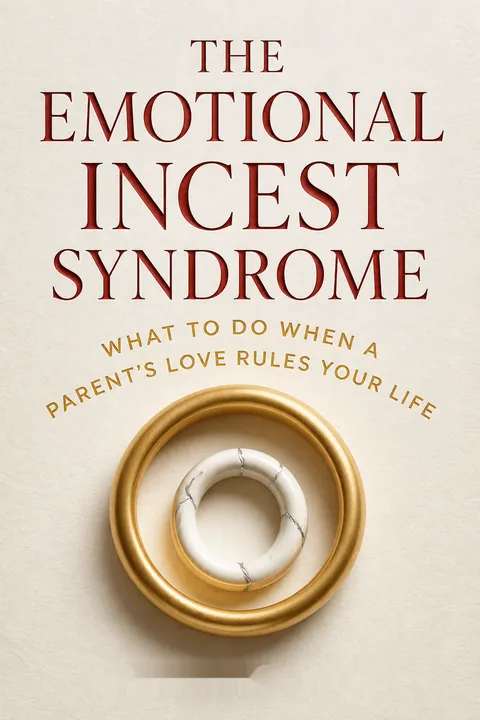


Key Takeaways
A loving parent can still ask a child to carry adult loneliness
The role gets reversed. Patricia Love calls a severe form of parent-child enmeshment emotional incest: a parent relies on a child for companionship, confidences, reassurance, or other support that belongs in adult relationships. The child may be adored and praised, yet their own needs for protection, guidance, limits, and independence go unmet. The term describes an emotional boundary violation, not necessarily sexual contact or deliberate harm.
Gwen seemed to have a loving childhood with her father. They shared music, sports, and private talks, while he criticized her mother and resisted her leaving for college. As an adult, Gwen struggled with self-worth and two divorces. Her story shows why affection alone cannot establish whether a bond is healthy: the key question is whether the child is being asked to serve the adult.
What's important is the distinction between closeness and role reversal. Warm, involved parenting can be protective; the concern arises when a child becomes responsible for regulating an adult's loneliness or emotional stability. The book's vivid label can help people name a confusing experience, but it can also sound equivalent to sexual abuse. That risks obscuring differences in severity and behavior. A careful assessment focuses on what the parent expects, what the child must give up, and whether the child has room to develop an independent life.
Map the family alliances, because one child’s special role reshapes everyone else
The whole household adjusts. Love describes the favored child as the Chosen Child, and calls family members pushed aside the Left-Out Child or Left-Out Spouse. A passive adult who fails to protect a child or challenge the alliance is a Shadow Parent. These roles interact: siblings may compete or withdraw, the excluded spouse may become angry or depressed, and the favored child may absorb blame from others.
A family in the book is thrown into crisis when a favored daughter is rejected by her preferred college. Her mother cancels plans and expects everyone, including the daughter’s sister, to share the disappointment. The book also describes a family-therapy experiment in which a daughter recruited into her parents' conflict showed a larger and longer rise in a blood stress marker than her sister, who was not asked to take sides.
The systems perspective is valuable because it shifts attention from identifying a single villain to understanding how roles are maintained. One person's behavior can become another person's adaptation, and those adaptations can keep the pattern going. The experiment illustrates a plausible mechanism, but one family and a stress marker cannot establish how all families function. Its strongest contribution is a question rather than a universal proof: who is pulled into adult conflict, who is excluded, and how does each person respond?
Read adult relationship struggles as clues, not proof of childhood enmeshment
Attention can have a cost. Love describes adult Chosen Children as sometimes highly accomplished yet privately insecure. They may swing between feeling exceptional and feeling worthless, overwork to earn approval, struggle to identify their own preferences, or alternate between clinging to others and keeping them at a distance. The book also links childhood role reversal with anxiety, guilt, isolation, sexual difficulties, and unstable partnerships, though no single outcome applies to everyone.
Maria became an accomplished economist and tennis player under her father's intense attention. He treated her as a companion, restricted her dating, and failed to protect her from adult situations. As an adult, she searched for the intensity she associated with him in relationships with older men. Her case shows how apparent privilege can coexist with restricted independence and a fragile sense of self.
The book's central insight is that praise and opportunity do not automatically cancel the cost of being used to meet an adult's needs. Its account also resembles a broader developmental principle: children build identity partly by trying out preferences and relationships beyond the family. Still, the listed adult difficulties are not diagnostic evidence of emotional incest. Anxiety, perfectionism, or troubled relationships can have many causes. These patterns are most useful as prompts for inquiry, not as a retrospective diagnosis of a parent.
Question the family story that made neglect look like devotion
Old explanations can conceal needs. Love uses family mythology for the evasions and half-truths that let a family function without naming painful realities. A child may conclude that a parent's drinking is harmless, that favoritism does not exist, or that they have no needs worth mentioning. Coping habits such as people-pleasing, compulsive achievement, or hiding the truth can then persist after childhood, even when the original danger has passed.
The author once believed relatives had failed to help her and that she was an unwanted branch of the family. Interviews revealed that many relatives were struggling financially during wartime. The book recommends writing or telling one's life story, interviewing relatives, and drawing a genogram, a diagram of family relationships and recurring patterns. Together, these exercises can make a private childhood story easier to examine from several angles.
This approach treats self-understanding as evidence gathering rather than a sudden revelation. Family interviews can expose patterns that one child could not see, while a genogram makes alliances and repeated crises visible at a glance. There is a useful caution: memory is reconstructive, and relatives may disagree or protect their own version of events. Conflicting accounts do not automatically prove deception. The aim is a fuller, more testable picture of family life, not a courtroom verdict about who remembers correctly.
Let feelings surface safely instead of mistaking numbness for healing
A muted response can be protective. Love argues that children need room to feel fear, anger, and sadness rather than being mocked, punished, distracted, or made responsible for an adult's reaction. In her account, emotional expression can help a child recover from distress and retain a sense of what feels safe or unfair. She contrasts this with Jim, who recalled severe childhood events without emotion and described himself as having lived in a kind of emotional neutral gear.
The book's recovery exercises invite adults to tell their life story, notice feelings, and seek a supportive listener. It also advises professional help when a person suspects severe abuse or terror. The aim is not to perform a dramatic confrontation with parents, but to recognize what was difficult and how old survival strategies may still shape present choices.
The emphasis on allowing emotion counters the common assumption that composure always means resilience. Emotional awareness can help people notice needs and boundaries that were once suppressed. Yet intense recollection is not automatically healing, and strong emotion does not verify that a memory is complete or precise. A trauma-informed approach prioritizes pacing, choice, and present safety. The book's invitation to explore feelings is most useful when treated as an option, not as a requirement to force catharsis.
Set a small, clear limit before resentment becomes your only voice
Boundaries can preserve contact. The Ten-Second Confrontation is Love's name for a brief, direct response when someone crosses a personal boundary. The point is to state what is not acceptable without turning the moment into a long indictment. Marcos, for example, struggled with relatives inserting themselves into his finances and decisions. After accepting money from his father, he found that the gift came with expectations about how often he should visit.
The book suggests first identifying what belongs to one's own decision-making, such as finances, work, friendships, and romantic choices. Then a person can name a limit calmly, rehearse it with a trusted person, and keep ordinary forms of contact where possible. A limit can change one kind of interaction without requiring estrangement or punishment.
A concise boundary can function as useful information: it tells another person what conduct allows a relationship to continue. That is different from either silent resentment or an abrupt cutoff. The technique also recognizes that boundary-setting can feel threatening when a person has long been responsible for a parent's feelings. Context matters, however. Financial dependence, caregiving duties, cultural expectations, and safety concerns can shape what a person can realistically change. A boundary is a tool for agency, not a one-size-fits-all script.
Give the couple relationship protected time and genuine listening
Adult intimacy needs its own space. The book argues that when partners rely on children for companionship or avoid talking honestly with each other, the marriage can become an empty center of family life. Love recommends recurring time for the couple that is not organized around children or parents. She calls this the Universal Homework Assignment: partners spend time together privately, without making the rest of the family the audience for every detail.
She also offers a structured listening exercise for difficult conversations. One partner states a concern, the other restates what they heard and checks whether the understanding is accurate, and only then do they move toward solving the problem. This is meant to replace the familiar contest over who is right with a clearer exchange of needs and meanings.
The book treats couple time as family structure, not merely recreation. A child who sees adults maintain a relationship outside parenting gets a model of intimacy that does not depend on being indispensable. The listening exercise also reflects a practical insight from conflict resolution: people often argue about solutions before establishing what the problem means to each person. Private time cannot repair a relationship marked by coercion or serious harm, but in a basically safe partnership it can create room for attention and mutual understanding.
Meet adult needs with adults, and give children room to separate
Prevention means changing the support system. The book's parenting advice centers on a clear distinction: parents care for children, while adults seek emotional support from other adults. Children need affection and limits, but also friendships, privacy, age-appropriate independence, and permission to develop tastes unlike their parents'. When a parent relies on a child for comfort, the child may feel guilty for ordinary steps toward a separate life.
Maria, a single mother, had depended heavily on her teenage daughter. Therapy helped her build friendships, pursue education, and change jobs. As her own life became fuller, she became less jealous of her daughter's social life and gave her more freedom. If a parent has already crossed boundaries, Love recommends acknowledging the behavior, apologizing without asking the child to comfort the parent, and following through with different conduct.
This is a strong prevention model because it does not ask parents to love less. It asks them to distribute emotional reliance more appropriately and to treat a child's independence as healthy development rather than rejection. The example of Maria also shows why simply telling a parent to stop leaning on a child may fail if the adult has no other support. An apology matters, but repair is measured by repeated behavior, not by the parent's remorse or the child's immediate forgiveness.
Turn new understanding into small behavior changes in real relationships
Insight matters when it alters a pattern. Love calls a sudden shift in understanding second order change: instead of merely managing a symptom, a person sees the situation differently and gains new options. Frank had blamed himself for his brother's resentment because their mother favored him. After learning that the adults had created the alliance, he felt less guilty and was able to tell his brother to stop repeating a humiliating story.
The book describes recovery in two broad movements: examine childhood and the coping habits it produced, then adjust current relationships. Small, noticeable shifts in behavior are called JNDs, or Just Noticeable Differences. A person might become more direct with a sibling, spend less time appeasing a parent, or make a more independent choice. These modest changes can build a different pattern without requiring a dramatic family showdown.
This account links explanation to action. A new interpretation can weaken a reflexive sense of guilt, which makes a boundary or a more balanced relationship possible. The emphasis on small changes is more realistic than expecting one insight to erase a lifetime of conditioning. At the same time, insight alone is not a reliable treatment for every mental health problem, and some relationships may not respond to improved behavior. The framework is best understood as a map for change, not a promise of control over other people.
Analysis
The book's central contribution is a family-systems explanation for a form of harm that can hide inside apparently affectionate parenting. It asks readers to look beyond whether a parent loved a child and examine what the child was recruited to provide: companionship, emotional regulation, loyalty, or a substitute for an adult partner. This reframing helps explain why a favored child can feel both privileged and deprived, and why siblings, spouses, and later partners may carry the costs of the same arrangement.
Its most practical strength is the movement from naming to action. Family maps, autobiographical reflection, boundary-setting, couple communication, adult support networks, and parental repair all translate an abstract diagnosis into recognizable choices. The case histories make the system legible, while the recovery model emphasizes that insight should change conduct, not merely produce a new account of the past. The book also needs careful reading. Published in 1990, it sometimes treats a broad set of adult problems as characteristic consequences without establishing that the family pattern caused any one person's symptoms. The phrase emotional incest can clarify emotional role reversal, but it may also blur distinctions between intrusive emotional dependence, sexualized behavior, and sexual abuse. Those experiences differ in kind and severity. The book's ideal of a spousal relationship as the central adult support system also reflects a particular family model; single adults and diverse households may build healthy support in other ways.
The most durable principle is therefore not that close parent-child bonds are suspect. It is that closeness becomes costly when a child must manage adult needs at the expense of safety, development, or choice. That distinction preserves the book's insight while avoiding the trap of turning a useful lens into a universal diagnosis.
Review Summary
The Emotional Incest Syndrome receives mostly positive reviews for its insightful exploration of unhealthy parent-child relationships. Readers appreciate the book's first half for its informative content on emotional incest and its effects. Many found it helpful in understanding their own experiences and family dynamics. The second half, focused on recovery strategies, received mixed reactions. Some readers found it valuable, while others criticized its approach to forgiveness and maintaining relationships with toxic parents. Overall, the book is praised for raising awareness about a rarely discussed issue.
People Also Read





Glossary
Emotional incest
Adult needs placed on childrenLove's term for a severe parent-child boundary violation in which a parent relies on a child for emotional support, companionship, intimacy, or other needs better met through adult relationships. The child may be cherished, but is asked to take on a role beyond their developmental capacity. The term does not necessarily imply sexual contact.
Enmeshment
Blurred family boundariesA family pattern in which psychological boundaries between people become unclear, limiting individual autonomy. In the book, an enmeshed parent-child relationship may involve excessive closeness, shared confidences, guilt about separation, or pressure for a child to meet a parent's emotional needs. It contrasts with estrangement, in which family members are excessively distant.
Chosen Child
Parent's emotional favoriteA child selected by a parent as a primary source of emotional support or companionship. The child may receive special attention, privileges, or praise, while being burdened with adult concerns and receiving too little protection or structure. Love uses the term for a family role, not as a claim that the child caused the imbalance.
Parentified child
Child carrying adult responsibilitiesA child who takes on responsibilities normally held by an adult, such as managing household tasks, caring for a parent, or providing emotional support. In Love's account, parentification can occur alongside neglect: the child may be left to fend for themselves at some times and expected to support a parent at others.
Structural Family Therapy
Family roles and boundariesA family-therapy approach associated in the book with Salvador Minuchin. It views a family as a system organized into relationships and subgroups, including adult partners, parents, and siblings. Therapy examines how boundaries and alliances function, then works to clarify roles so that adults care for children without depending on them as adult support.
Second order change
Change through a new understandingA shift in perception that changes how a person responds to a problem, rather than simply easing its immediate symptoms. Love contrasts this with first order change, which manages a difficulty without altering the pattern underneath it. In her example, a favored child stops treating a sibling's resentment as proof of personal guilt and responds more assertively.
Ten-Second Confrontation
Brief, direct boundary statementLove's technique for responding soon after a boundary has been crossed. The person states the limit directly and briefly, without extending the moment into a prolonged argument. Its purpose is to change a specific interaction while preserving the possibility of an ongoing relationship.
JNDs: Just Noticeable Differences
Small observable behavior shiftsLove's term for modest changes in how someone behaves in relationships after gaining insight into family history. Examples include speaking more directly, changing how much time is spent with a relative, or becoming less submissive. Individually small, these changes can gradually replace an established pattern of relating.
genogram
Diagram of family patternsA visual map of family members, relationships, and events across generations. Love describes using shapes and connecting lines to show family structure, marriages, deaths, conflict, and close alliances. The map can help readers notice recurring patterns such as addiction, divorce, or parent-child coalitions, while simplifying a much more complex and changing family life.
Universal Homework Assignment
Protected time for partnersA couple's regular time together, kept separate from children and other family members. In Love's account, the exercise helps partners renew their connection and makes the adult relationship visible as its own part of family life. The couple need not report every detail of how they spent that time.
Shadow Parent
Passive, nonprotective parentLove's term for a passive, detached parent who does not effectively intervene in a harmful family alliance. The role may be occupied by the parent favored by the child or by the excluded spouse. The Shadow Parent's inaction can leave a child unprotected and allow the family imbalance to continue.
FAQ
What's The Emotional Incest Syndrome about?
- Definition of Emotional Incest: The book explores a parenting style where parents rely on their children for emotional support, leading to role reversals and blurred boundaries.
- Impact on Children: It highlights the long-term psychological effects on children, such as anxiety, depression, and relationship difficulties.
- Focus on Recovery: The book provides a pathway for healing, emphasizing the importance of understanding childhood experiences to create healthier relationships.
Why should I read The Emotional Incest Syndrome?
- Insight into Family Dynamics: It offers valuable insights into the dynamics of parent-child relationships, particularly in families with emotional incest.
- Path to Healing: The book provides a structured approach to recovery, with practical exercises and advice to facilitate healing.
- Broader Implications: The concepts apply to various family structures, encouraging readers to reflect on their own family histories and relationships.
What are the key takeaways of The Emotional Incest Syndrome?
- Understanding Emotional Incest: The book defines emotional incest and its impact, emphasizing its prevalence and often unrecognized nature.
- Consequences of Enmeshment: It outlines the psychological and emotional consequences for children, such as fluctuating self-esteem and relationship difficulties.
- Recovery Strategies: A two-stage recovery program is provided, focusing on revisiting childhood experiences and realigning current relationships.
What is the definition of emotional incest according to The Emotional Incest Syndrome?
- Parent-Child Role Reversal: Emotional incest occurs when a parent turns to a child for emotional support, creating a role reversal.
- Lack of Healthy Boundaries: It is characterized by blurred boundaries, leading to unhealthy attachments and hindering the child's development.
- Long-Term Effects: The book discusses consequences like self-esteem issues, anxiety, and relationship difficulties, emphasizing the need for recognition and healing.
How does The Emotional Incest Syndrome address recovery?
- Two-Stage Recovery Program: The book outlines a process involving revisiting childhood experiences and realigning current relationships.
- Emotional Processing: The first stage focuses on processing repressed emotions, crucial for healing and moving forward.
- Realigning Relationships: The second stage emphasizes adjusting current relationships to create healthier dynamics, with practical advice on establishing boundaries.
What are the warning signs of emotional incest mentioned in The Emotional Incest Syndrome?
- Overinvolvement in Child’s Life: Signs include excessive monitoring and reluctance to allow independence, indicating a lack of healthy boundaries.
- Reluctance to Hire Babysitters: Parents may be overly reliant on the child for emotional support, hindering the child's independence.
- Excessive Praise and Expectations: Unrealistic expectations and excessive praise can create pressure on the child to fulfill the parent's emotional needs.
How does The Emotional Incest Syndrome differentiate between healthy and unhealthy family dynamics?
- Clear Boundaries: Healthy families maintain clear boundaries, while unhealthy ones blur them, leading to enmeshment.
- Mutual Support: In healthy families, adults support each other, while children are nurtured without adult burdens.
- Encouragement of Independence: Healthy families foster independence, while unhealthy ones may stifle growth by fostering dependency.
What is the impact of being a Chosen Child as described in The Emotional Incest Syndrome?
- Fluctuating Self-Esteem: Chosen Children experience fluctuating self-esteem, feeling both privileged and burdened.
- Relationship Problems: They often struggle with intimacy and commitment, fearing closeness due to past experiences.
- Emotional Distress: The role can lead to anxiety, depression, and self-worth issues, necessitating recognition for healing.
How does The Emotional Incest Syndrome explain the role of the Left-Out Child?
- Feelings of Neglect: The Left-Out Child feels neglected compared to the favored sibling, leading to a quest for attention.
- Coping Mechanisms: They may seek approval or act out, complicating family dynamics and hindering growth.
- Impact on Identity: This role affects identity and self-worth, making understanding crucial for healing and healthy relationships.
What is the “Ten-Second Confrontation” method mentioned in The Emotional Incest Syndrome?
- Definition of the Method: A technique for asserting oneself briefly and directly when boundaries are violated.
- Practical Application: Used in situations like unreasonable demands, it involves stating your position calmly.
- Benefits: It helps reclaim autonomy, reducing resentment and anger, leading to healthier relationships.
What are some exercises recommended in The Emotional Incest Syndrome?
- Creating Your Autobiography: Writing your life story helps uncover repressed feelings and recognize patterns.
- Family Interviews: Conducting interviews provides insights into family dynamics and clarifies childhood experiences.
- Clarifying Listening Exercise: This exercise improves communication by ensuring both parties feel heard and understood.
How does The Emotional Incest Syndrome address the issue of guilt in relation to emotional incest?
- Understanding Guilt: Guilt can prevent recognizing negative childhood aspects; understanding it is a natural response.
- Revising Belief Systems: Changing faulty beliefs can alleviate guilt, allowing acknowledgment of parents' shortcomings.
- Encouraging Self-Compassion: The book emphasizes self-compassion, allowing acknowledgment of feelings without guilt.
About the Author
Other books by Patricia Love
Download PDF
Download EPUB
.epub digital book format is ideal for reading ebooks on phones, tablets, and e-readers.








