

Key Takeaways
Protect absence: constant connection fills the gaps where thought and desire grow.
A quiet loss. The book’s central idea, the end of absence, describes the disappearance of unfilled time, solitude, and not knowing as digital connection becomes constant. Its opening story makes the change intimate: Linda Jimi, raised in a remote Malaysian settlement, later shows her mother Google Maps and promises that the screen can reveal everything. Her mother asks to see her own mother in the afterlife. The technology can bring the distant world close, but not recover every absence it seems to conquer.
Keep the trade visible. Harris is not arguing that connection is worthless. He asks readers to notice what it replaces: boredom, private reflection, and the room for an experience to unfold without being shared or searched. Once those spaces disappear, their value can be hard to remember.
The opening story gives a philosophical argument a human scale: access can be astonishing and still fail to answer the need that matters most. This is a useful corrective to treating technological progress as a simple sum of added capabilities. Every interface changes the conditions under which attention, memory, and relationships operate. The harder question is not whether a tool is good or bad, but which human capacities its convenience makes less necessary. The argument can sound nostalgic, yet its strongest form is not a demand to return to an earlier world. It is a call to preserve choices that abundance can quietly erase.
Ask what each new tool displaces before celebrating what it delivers.
Tools reshape habits. Harris compares the Internet’s rapid cultural arrival with Gutenberg’s printing press. Printing spread texts, helped knowledge travel, and weakened old authorities, but also displaced practices and ways of knowing that were difficult to recover. The Internet is a more immediate upheaval: its effects reach work, friendship, and attention within a single generation. A new medium does not simply add a channel. It changes the role of older channels and the habits built around them.
Make the exchange explicit. A phone can help someone reach a friend, find a fact, or share a moment. It can also make instant response feel normal and silence feel like a problem. Harris’s practical test is to ask what a technology makes easier, and what it makes easier to neglect.
This is a media-ecology view: tools shape not only what people do, but what begins to feel natural. The printing-press comparison is valuable because it shows that communication revolutions redistribute authority as well as information. It also warns against assuming that present-day users can fully predict long-term effects while living inside the transition. Still, historical parallels should be used as prompts, not as proof that the Internet will reproduce the same consequences as print. The sharper contribution is the displacement question, which applies to any tool without presuming that novelty is either salvation or decline.
Batch messages so unpredictable pings stop renting your attention.
Interruption has a reward loop. Harris counted fifty-two compulsive checks of his inbox in one day. He connects the habit to operant conditioning, learning shaped by consequences, especially rewards that arrive unpredictably. A rare message worth reading can keep a person checking through dozens of routine ones. The inbox offers not only information but the promise that the next refresh might matter.
Busy is not focused. The brain does not truly handle demanding tasks at once, Harris argues. It switches between them, paying a cost each time. He adopts a practical limit of three email checks a day and sets time aside for a difficult book. The point is not perfect concentration. It is to stop treating every alert as a claim that outranks the task already underway.
The reward-loop explanation connects digital checking to behavioral economics: uncertainty can sustain repetition more effectively than a predictable payoff. The inbox is compelling partly because it converts waiting into an action that feels productive. Batching messages changes the environment, not merely the user’s resolve, which makes it a more realistic intervention than exhortations to concentrate harder. The account also distinguishes genuine urgency from the sensation of urgency. Yet a fixed checking schedule will not suit every job or caregiving situation. The transferable principle is to create deliberate access windows instead of allowing every incoming signal to set the day’s priorities.
Give children planned boredom, not only scheduled stimulation.
Young minds adapt. Harris describes his two-year-old nephew trying to zoom in on a printed magazine as if its page were a tablet. The child’s confusion illustrates how quickly familiar interfaces shape expectations. The book cites a 2010 study estimating that American children ages eight to eighteen spent seven hours and thirty-eight minutes a day with media, rising to ten hours and forty-five minutes when simultaneous media use was counted. These are historical figures, not current measurements, but they convey the scale of the concern.
Protect unstructured time. Because brains remain adaptable, Harris argues that children need deliberately screen-free stretches, not just supervision of online content. Boredom can make room for daydreaming and self-directed play. This is not a claim that every screen harms every child. It is a case for giving offline attention a place in the daily environment.
The developmental point is strongest when framed as an opportunity question, rather than a diagnosis of an entire generation. Children learn the affordances of the world around them, so a screen-heavy environment can make other kinds of attention less practiced. Planned boredom is a modest form of developmental design: it leaves room for initiative instead of supplying every next stimulus. The evidence cited in the book combines screen-time measures with broader concerns about attention and empathy, but those findings do not by themselves prove that screens caused every difference. Families and schools can still protect varied experiences without treating technology as an enemy.
Keep vulnerable feelings private until they are ready for an audience.
Confession changes the confessor. The book examines Amanda Todd, a teenager who faced sustained harassment and shared her suffering in a video made with handwritten cards. The video drew attention and support, but also cruel responses. Harris asks why people increasingly bring private pain to public platforms that may expose them to further judgment. The format offers an easy audience, yet a large audience is not the same as trustworthy care.
Choose the right container. A diary, a trusted friend, a counselor, or a public post each creates different risks and possibilities. Online tools can also help identify abusive content or direct people toward support. But turning emotional life into data raises questions about privacy, consent, and who gets to interpret a person’s distress.
The distinction between being heard and being cared for is crucial. Online disclosure can mobilize help, particularly when ordinary support is absent, but visibility also makes vulnerability available to strangers, platforms, and institutions. This resembles a problem in clinical ethics: information can enable intervention while also exposing the person who supplied it. The book’s case makes a compelling argument for safer channels, not for silence. No single rule can govern disclosure, because privacy itself can isolate. The more useful question is whether a person controls the audience, the timing, and the likely afterlife of what is shared.
Use crowds for correction, not as a substitute for judgment.
Participation has uneven power. Wikipedia’s openness can correct errors quickly, but Harris describes cases where persistent groups shaped entries through sustained editing. In one dispute, a doctor challenged claims about Transcendental Meditation’s health benefits; the site’s arbitration process addressed editor behavior, not the factual question. A small, organized group could outlast a larger number of occasional contributors. Openness does not automatically produce reliable consensus.
Keep expertise and discovery together. Online reviews and public ratings let more people share useful local knowledge, while personalized search can narrow what users encounter. Harris argues for a mix: broad participation, informed editors, and tastemakers who introduce material beyond familiar preferences. The goal is not to restore an unquestioned elite. It is to avoid treating popularity, persistence, or a high rating as proof of truth or quality.
This insight connects digital knowledge to collective-action problems. Large groups can pool observations, but participation is rarely equal in time, expertise, or motivation. A committed minority may shape a supposedly general consensus simply by staying involved. At the same time, professional gatekeepers have their own blind spots and exclusions, so the answer is not to replace public access with old monopolies. Reliable systems need transparent sources, meaningful correction, and room for qualified disagreement. The book’s examples make a persuasive case that information abundance requires more judgment, not less.
Use digital access without mistaking a copy for the encounter.
Reach is not presence. Massive open online courses can bring excellent teaching to people far beyond a university campus. Andrew Ng’s early online course attracted one hundred thousand students, a scale he could not have reached through an ordinary classroom. Yet another course founder, Sebastian Thrun, reported that fewer than one in ten students completed his online courses. Digital access expands opportunity, but it does not automatically recreate mentoring, shared discussion, or the habits that sustain learning.
Notice what mediation removes. Harris uses the example of checking his phone during his brother’s wedding, then seeing online images of the moment he had stepped away from. The images preserved the scene while he missed part of it. Copies and remote lessons can be valuable. They should not be confused with every quality of being there.
The distinction is between access and participation. Digital distribution can remove geographic and financial barriers, while embodied settings often provide social cues, accountability, and informal learning that a recording cannot simply reproduce. These are complementary strengths, not competing definitions of education. The completion figure in the book is an important caution, but it does not establish that online courses are ineffective for every learner or purpose. A useful design question is which parts of an experience can be transmitted efficiently, and which depend on sustained relationships, practice, or physical presence.
Memorize what should become part of you, not merely searchable.
Memory is more than storage. After surgery removed much of Henry Molaison’s hippocampus, he could not form ordinary new memories. Yet repeated practice improved his ability to trace a star while looking in a mirror, revealing that learning could occur through a different memory system. Harris uses this case to show that memory is not one mental filing cabinet. Human recollection is also reconstructed, changing slightly as experience and new knowledge shape it.
External help has a tradeoff. Search engines make it easy to remember where a fact can be found instead of retaining the fact itself. That can free attention, but it may leave fewer materials ready to connect. Harris recalls memorizing lines from Milton: imperfectly retained, they became part of his own thinking in a way an instantly searchable text could not.
Cognitive offloading is not inherently a failure. Notes, books, and other people have long extended what an individual can remember. The consequential distinction is between outsourcing retrieval and internalizing material that supports judgment, association, or craft. Memorization can make ideas readily available, but it can also preserve material without understanding it. A balanced memory practice therefore asks what belongs in external storage and what should be learned deeply enough to shape thought. The book’s strongest point is not that every fact must be memorized, but that searchable access and possessed knowledge are different capacities.
Let digital dating widen access without letting profiles define desire.
Convenience expands the search. Apps can help people meet beyond the places where they would ordinarily look. For gay men, location-based services can make connection possible outside designated bars and neighborhoods, which may widen access and visibility. The same tools can turn potential partners into a constantly refreshed catalogue, encouraging rapid judgments based on selected images and preferences.
Leave room for the unlisted. Harris recounts meeting his future partner online, while noticing that the first in-person impressions included details no profile could convey: a gesture, the smell of soap, the feel of a hand on his shoulder. Digital matching may introduce people, but intimacy takes place between embodied individuals. The book also notes that reports of more sexualized online behavior did not mean teenagers were having more sex overall.
Dating platforms are neither simply liberating nor simply alienating. They can help marginalized people find one another, while converting attraction into a searchable market shaped by profile conventions and platform design. This is a useful example of how the same medium can redistribute access and standardize evaluation at once. The distinction between an introduction and a relationship matters: recommendation systems can suggest encounters, but they cannot settle what makes another person compelling. The book’s emphasis on sensory presence is evocative, though online communication can also support meaningful bonds, especially when distance or safety limits in-person contact.
Use short disconnections to expose habits, not to escape modern life.
A break is a diagnostic. Harris spends a month without the Internet or a mobile phone, an experiment he calls Analog August. At first, unanswered questions and missed messages feel unnerving. Work slows sharply, and the solitude is not an instant revelation. When he reconnects, he tears through hundreds of emails and neglects his partner. The return shows how deeply the habits have settled in.
Choose, do not flee. Harris does not recommend permanent abstinence. His point is that stepping away can make automatic behavior visible, while a balanced life still requires other people and useful tools. Thoreau’s retreat to Walden was not a total rejection of society; it was an attempt to choose when and how to engage. The practical task is to decide which connection deserves attention now.
The experiment works less like a cure than a diagnostic stress test. Withdrawal reveals which services support necessary work, which habits are social expectations, and which actions continue without conscious purpose. That distinction matters because a universal digital detox can be impractical or exclusionary for people whose employment, care responsibilities, or safety depend on connectivity. The more durable intervention is selective friction: planned phone-free meals, protected work periods, or an offline walk. Such boundaries treat attention as something shaped by systems and routines, not as a personal virtue that should withstand every interruption.
Analysis
The book’s argument is not that the Internet has made life worse, but that convenience conceals a recurring exchange. Greater access can mean less patience with not knowing; continuous contact can leave less room for solitude; effortless retrieval can weaken the felt difference between information nearby and knowledge internalized. Harris makes this case through a reporter’s narrative rather than a single theory, moving from Linda Jimi’s family to the author’s own work, relationships, and month offline. That structure lets a cultural claim become a series of recognizable scenes.
Its most useful contribution is the insistence that absence has value even when it feels like deprivation. Boredom, delay, and privacy are not merely inconveniences awaiting technological solutions. They can be conditions for attention, memory, desire, and interpretation. This reframes the issue from individual self-control to the environments people inhabit. If every device and service assumes immediate response, choosing otherwise is difficult by design, not simply by weakness.
The book also deserves a historical reading. Many statistics describe the early 2010s, and some anxieties about young people’s attention echo older complaints about writing, print, radio, and television. Those facts counsel caution about treating predictions as settled outcomes. They do not erase the book’s central question: who benefits when a particular way of knowing or relating becomes effortless, and what alternatives become harder to practice?
Harris’s own month offline is especially revealing because it produces no neat conversion story. Work suffers, loneliness persists, and reconnection quickly restores old habits. The experiment does not prove that life without technology is better. It shows that automatic dependence can be mistaken for preference. The book’s lasting value lies in encouraging periodic examination, followed by deliberate choices about which forms of connection genuinely serve a life.
Review Summary
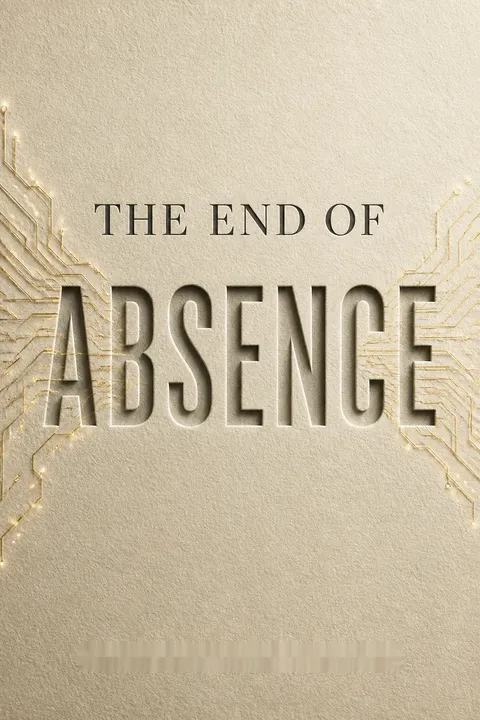
The End of Absence explores the impact of constant connectivity on society, particularly focusing on those born before 1985 who remember life without the internet. Reviews praise Harris's insights into the loss of solitude, creativity, and critical thinking, while some criticize his tone and lack of concrete solutions. Many readers found the book thought-provoking, appreciating Harris's exploration of technology's effects on relationships, memory, and mental health. However, some felt the arguments were repetitive or lacked depth. Overall, the book sparked discussions about finding balance in the digital age.
People Also Read




Glossary
the end of absence
loss of unfilled spaceHarris’s name for the fading of gaps once created by solitude, boredom, ignorance, or disconnection. Digital tools can fill those gaps with information and communication, making absence seem like a problem to solve. The phrase identifies a cultural tradeoff: people gain access and contact while potentially losing conditions that support reflection, daydreaming, and unmediated experience.
continuous partial attention
divided, ongoing attentionA state of repeatedly shifting attention among several information streams without fully completing any one interaction. The term, attributed in the book to Linda Stone, describes the experience of monitoring messages, alerts, and tasks at once. It can create a feeling of being constantly engaged while making sustained concentration more difficult.
straddle generation
people who remember pre-Internet lifeHarris’s term for people who experienced a substantial period of life before the Internet became pervasive and then adapted to connected life. This group can compare both conditions from personal memory. The comparison gives them a distinctive vantage point, though it does not mean every member had the same access, habits, or experience of either era.
temes
replicating technological informationSusan Blackmore’s proposed term for technology-based replicators: digital information and technologies that can be copied, varied, and selected. In Harris’s account, digital systems reproduce information with very high fidelity and can spread rapidly. The concept offers an evolutionary analogy for technology’s growth, without requiring machines to possess conscious intentions.
transactive memory
shared knowledge across peopleA system in which people rely on one another to retain different information and remember who or where to ask for it. Harris connects this established psychological concept to search engines: users may remember where information is stored rather than the information itself. Digital search makes this distributed memory system faster and more accessible.
compound distraction
distraction that spreads between peopleHarris’s term for distraction that multiplies across an interaction. When one person checks a device during a conversation, another may turn to a device too, leaving both less engaged. The term also describes settings where divided attention becomes expected, so sustained conversation begins to feel unusual or unwelcome.
filter bubble
personalized information enclosureA term associated in the book with Eli Pariser, describing how personalized search and social feeds prioritize material predicted to interest a user. The resulting stream can reinforce existing preferences and make unfamiliar viewpoints less visible. Harris presents expert curation and deliberate surprise as ways to counter the narrowing effect of personalization.
smupid
feeling smart yet uninformedDouglas Coupland’s blend of smart and stupid, used for the feeling of having immense information available while doubting one’s own knowledge. Someone may retrieve facts quickly yet feel unable to understand them without the digital system. The term captures the gap between access to information and the slower work of making it one’s own.
Going Walden
temporary withdrawal from connected technologyA phrase in the book’s glossary for attempting to live without connective technologies for a period, with the hope of gaining perspective or restoring solitude. Harris’s own extended offline experiment complicates the idea: disconnection can feel lonely and disrupt work, but it can expose habits that constant access had made seem natural.
FAQ
What's The End of Absence about?
- Exploration of Digital Life: Michael Harris examines how the Internet and digital technology have transformed human experiences, particularly our perceptions of absence and solitude.
- Loss of Solitude: The book argues that the current generation is the last to remember life before the Internet, highlighting the importance of solitude for creativity and self-discovery.
- Cultural Commentary: Harris critiques the pervasive presence of technology, suggesting it diminishes our capacity for deep thought and genuine human connection.
Why should I read The End of Absence?
- Timely Reflection: In today's information-saturated world, the book prompts readers to consider the implications of their digital habits.
- Personal Growth: Harris offers insights into reclaiming moments of absence and solitude, which can lead to greater authenticity and self-awareness.
- Engaging Narrative: The author combines personal anecdotes with cultural analysis, making the book both relatable and thought-provoking.
What are the key takeaways of The End of Absence?
- Value of Absence: Absence is not just a void but a space for reflection, creativity, and personal growth.
- Impact of Technology: While beneficial, technology can lead to a loss of depth in our experiences and relationships.
- Call to Action: Harris encourages readers to create moments of absence, balancing digital engagement with real-world experiences.
What are the best quotes from The End of Absence and what do they mean?
- “This kills that.”: Highlights the trade-offs made as new technologies replace older forms of communication and experience.
- “We may never comprehend just what was subsumed beneath the influence of Gutenberg’s machine.”: Draws parallels between the historical impact of the printing press and the current digital revolution.
- “What will we carry forward? And what worthy things might we thoughtlessly leave behind?”: Challenges readers to consider what aspects of their lives are worth preserving amidst technological change.
How does The End of Absence relate to the concept of continuous partial attention?
- Definition: Continuous partial attention is a state of constant distraction by multiple digital stimuli, leading to fragmented focus.
- Consequences: This state impairs cognitive abilities and emotional well-being, making deep engagement difficult.
- Reclaiming Focus: Harris advocates for practices that foster deeper attention and presence, resisting the urge to be perpetually connected.
What does Michael Harris suggest about the future of digital natives?
- Digital Natives Defined: Those who have grown up with the Internet as an integral part of their lives.
- Cultural Shift: Digital natives may struggle to appreciate moments of disconnection, hindering emotional and intellectual development.
- Need for Balance: Harris calls for teaching young people the value of solitude and reflection to navigate the digital landscape mindfully.
How does The End of Absence address the concept of authenticity?
- Authenticity in the Digital Age: Online personas often differ from real-life identities, leading to feelings of alienation.
- Reclaiming Authenticity: Harris encourages seeking genuine experiences and connections, advocating for moments of absence that foster self-discovery.
- Cultural Critique: The superficiality of online interactions often lacks the depth of face-to-face communication.
What methods does Michael Harris propose for reclaiming absence?
- Intentional Disconnection: Create boundaries around technology use, such as digital detoxes, to cultivate presence and mindfulness.
- Mindful Practices: Engage in activities like meditation, journaling, and spending time in nature to reconnect with oneself.
- Community Engagement: Prioritize face-to-face interactions over digital communication to build strong relationships.
How does The End of Absence compare the digital revolution to the printing press?
- Historical Parallels: Both the printing press and the digital revolution have fundamentally altered human communication and experience.
- Cultural Disruption: Each technological shift brings opportunities and losses, reshaping our understanding of information and connection.
- Reflection on Change: Harris urges readers to consider what is gained and lost in these technological shifts.
What role does solitude play in The End of Absence?
- Importance of Solitude: Essential for personal growth, creativity, and self-reflection, allowing connection with one's inner self.
- Cultural Critique: Modern tendencies to fill every moment with noise undermine deep engagement with oneself and the world.
- Encouragement to Seek Solitude: Harris advocates for intentionally seeking solitude through activities like nature walks and quiet reflection.
How does The End of Absence relate to memory and attention?
- Memory and Technology: Reliance on digital tools can lead to "annotation dependence," affecting memory retention.
- Attention Span: Constant digital engagement diminishes our ability to focus deeply, with "attention residue" hindering performance.
- Reclaiming Memory: Harris suggests practices like reading physical books to enhance memory and cognitive function.
How does The End of Absence challenge conventional views on technology?
- Critical Perspective: Harris questions the inherent benefits of technology, highlighting its costs to attention and well-being.
- Balance and Intention: Advocates for a balanced approach to technology use, emphasizing intentionality in digital interactions.
- Cultural Reflection: Calls for reevaluating the values and priorities that drive technology use in pursuit of a meaningful life.
About the Author
Other books by Michael Harris

Download PDF
Download EPUB
.epub digital book format is ideal for reading ebooks on phones, tablets, and e-readers.








