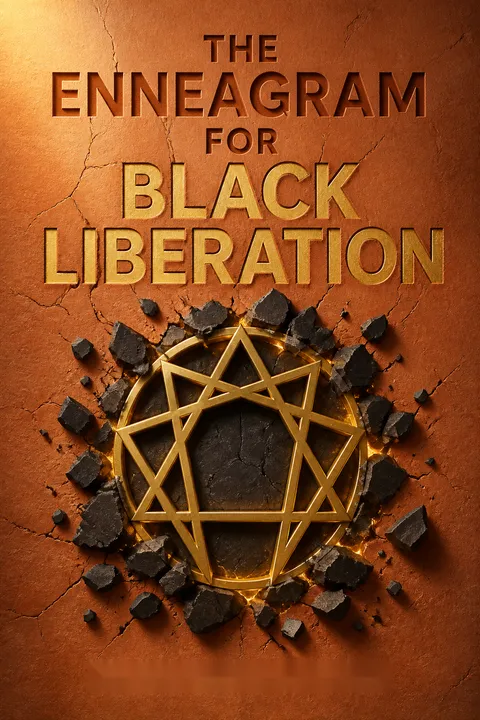


Key Takeaways
Treat your Enneagram type as survival armor, not your whole identity
A pattern is not a person. The Enneagram describes nine type structures: habitual ways of seeking safety, love, and belonging. Agorom frames these structures as armor because they form around pain and help a person cope, but they do not capture the whole self. The book begins with her memory of being a joyful three-year-old, before trauma and the expectation to be unusually mature taught her to rely on strength and wisdom to earn approval.
Make room for more. The essential self is the book’s term for a person’s underlying wholeness and worth, distinct from learned survival patterns. The aim is not to discard a type’s gifts, but to recognize when a protective habit has become a narrow identity. That distinction can create more choice without shaming the strategies that helped someone endure.
What's striking is the shift from asking whether a trait is good or bad to asking what job it performs. That resembles trauma-informed practice, which treats protective responses as adaptations rather than defects. The distinction can soften self-judgment while making change possible. The image of an untouched, joyful self is best treated as a meaningful personal memory, not proof that a pure self exists outside culture or experience. Its value lies in reminding readers that their coping patterns are not the full range of their humanity.
Do not demand vulnerability where real danger still exists
Safety changes the work. Agorom challenges the idea that growth always means lowering one’s defenses. For people facing racism, sexism, or other ongoing threats, vigilance and self-protection may be practical responses to actual danger. A Black woman who adapts her tone or behavior to avoid being stereotyped is not simply acting from a mistaken inner story. Telling her to become more exposed, without addressing the conditions around her, can create more risk.
Ask who benefits. People with greater social protection may have more room to experiment with vulnerability. Their work includes examining how their fears and habits affect others, including whether they help maintain the conditions that make other people’s armor necessary. The goal is choice: recognizing the armor, lowering it where care is present, and using it without shame where protection is needed.
This is a useful corrective to self-help advice that treats openness as universally safe. In trauma-informed care, safety and agency come before exposure; a person cannot freely choose vulnerability if the environment punishes it. The same logic applies at work, in therapy, and in relationships. Still, protection can become costly when it follows someone into every setting. The practical question is not whether armor is virtuous, but whether the present situation calls for it, and who has the power to make the situation safer.
Notice your body’s reaction before your type takes the wheel
Interrupt the automatic response. Agorom’s practice is to notice, pause, and allow: observe a reaction, take time before acting, and let the feeling be present without immediately suppressing or obeying it. The body matters because patterns can show up as a tightened jaw, a clenched stomach, restlessness, or numbness before a person has words for them. Compassion, gratitude, and curiosity guide the pause: acknowledge the pattern’s protective purpose, then explore what it is responding to.
Go slowly. If attention to the body feels overwhelming, the book recommends grounding rather than forcing deeper exploration. One exercise names five things seen, four felt, three heard, two smelled, and one tasted. Another shifts attention to a part of the body that feels neutral or calm. Agorom also encourages support from trusted people or a therapist, and taking a break when needed.
This method connects self-understanding to interoception, the ability to notice internal bodily signals. That can reveal stress before it becomes a reflexive action, giving a person a chance to choose a response. The sequence is also deliberately non-punitive: gratitude recognizes why a coping strategy developed, while curiosity investigates what it now costs. Body-focused attention is not comfortable or appropriate for everyone, especially when trauma makes bodily sensations feel unsafe. The emphasis on pacing and support is therefore essential, not an optional footnote.
Name how each center turns a strength into survival armor
Three routes through fear. The Body Center includes Nines, Eights, and Ones, whose concerns cluster around belonging, power, and control. Nines may adapt to others and lose track of their own preferences; saying yes to avoid conflict can later become resentment. Eights may equate strength with safety, dismissing vulnerability or refusing help. Ones may pursue goodness so intensely that ordinary mistakes feel like evidence of personal failure.
Keep the gift, loosen the rule. Each strategy also has value: adaptability can create connection, strength can protect, and conscientiousness can improve shared work. The problem begins when a useful quality becomes a rigid requirement for being worthy. The book points these types toward more self-directed action, openness to receiving help, and acceptance that imperfection does not cancel belonging.
The center framework offers a compact way to see how a strength can become overused: accommodation, force, or correction can each answer a different fear about belonging and control. This is more illuminating than judging behavior alone, since the same outward act may serve different motives. The framework works best as a prompt for self-observation, not as a shortcut for categorizing colleagues or family members. Social expectations also shape which strategy gets rewarded, so personal reflection should include the environment that made the pattern useful.
Stop earning love through performance, caretaking, or exceptionalism
Three images of worth. The Heart Center includes Twos, Threes, and Fours, whose attention often turns to how others see them. Twos may give care while hiding their own needs, then feel hurt when others do not intuit what they need. Threes may fuse identity with achievement, moving from role to role and treating failure as a verdict on their worth. Fours may try to secure connection by being distinctive, while ordinary days feel like evidence of being forgettable.
Practice receiving and being. These patterns can conceal real gifts: generosity, competence, creativity, and emotional depth. The work is to separate those qualities from the demand that they earn approval. Ask directly for support, let a task go imperfectly, or allow an ordinary preference to count. Such actions make room for relationships based on mutual presence rather than constant image management.
The Heart Center’s image-making is especially relevant in a culture where professional branding, social media, and gendered expectations reward people for being useful or impressive. These incentives are not merely private habits; institutions can profit from endless performance and care work. The book’s emphasis on inherent worth helps resist that pressure. At the same time, wanting recognition or helping others is not automatically defensive. The more revealing question is whether the behavior is freely chosen, or whether love feels at risk if it stops.
Let fear inform you without letting it write the whole story
Three ways to manage uncertainty. The Head Center includes Sixes, Fives, and Sevens. Sixes scan for danger, question trust, and forecast what could go wrong; some avoid feared situations, while others confront them to prove they are not afraid. Fives seek security through knowledge and self-sufficiency, sometimes withdrawing rather than risking depletion. Sevens focus on future options and positive reframing, which can keep painful feelings at a distance.
Return to the present. Preparation, research, and optimism can all be useful. They become limiting when they replace action, connection, or emotional honesty. A Six can take a step without having eliminated uncertainty. A Five can act before mastering every detail. A Seven can stay with disappointment without immediately turning it into a silver lining. The shared invitation is to use the mind without abandoning the body’s present experience.
These patterns echo familiar responses to uncertainty: threat monitoring, information gathering, and positive reframing. Each can be adaptive in moderation, and each can become a loop that promises certainty but postpones contact with the situation itself. The distinction between a Six’s fear and intuition is particularly difficult when danger is real, as it can be for marginalized people. This is why the book’s wider context matters: the goal is not to dismiss threat perception, but to distinguish useful information from an automatic prediction that every moment will repeat the past.
Make healing collective: personal freedom cannot replace shared justice
Wellness has a social setting. Agorom defines wellness as involving personal, relational, and collective needs, so soothing an individual’s anxiety cannot be the whole response to an unjust situation. A qualified job seeker facing racial discrimination and possible eviction may benefit from breathing exercises, but also needs practical resources and recognition of the discrimination causing the distress.
Use power with others. The book distinguishes power over, which depends on control and dominance, from power within, a person’s sense of agency, and power with, the capacity created through mutual support and collaboration. During the COVID-19 pandemic, mutual aid groups delivered food and medicine, raised money, and distributed masks. Such efforts show how collective care can meet needs when formal systems fail, while personal healing can help people participate without reproducing domination.
This section resists a common error in wellness culture: translating structural harm into an individual’s failure to cope. A systemic lens asks not only how a person can regulate distress, but what material conditions are producing it and who can change them. The idea of power with also connects liberation to collective efficacy, the capacity of people to coordinate around shared needs. Mutual aid can provide meaningful support, though it should not become an excuse for governments or institutions to withdraw responsibility.
Practice rest and joy without pretending injustice has disappeared
Thriving is not denial. Agorom argues that rest, ease, and joy are not rewards reserved for a future after oppression ends. They can help people remember that survival is not the whole of life. The book also warns that activism can become another form of armor when a person treats constant struggle as proof of worth. Commitment to justice need not require permanent exhaustion or turn suffering into an identity.
Make joy embodied. The conclusion recalls a viral image of a Black man running, dancing, and playing in a field, followed by others sharing similar moments. Agorom reads this not as escapism but as grounded delight: a brief experience of freedom that does not deny the world’s dangers. The practical invitation is to notice what brings real ease, and to allow it without having to justify its usefulness.
The distinction between grounded joy and avoidance is subtle and important. Pleasure can interrupt despair and help restore a sense of agency, while forced positivity can silence grief or obscure injustice. Rest can also be political when a culture treats certain people’s labor as inexhaustible. Yet rest should not become another moral assignment, especially for people already denied resources and care. The strongest implication is permission, not prescription: joy belongs alongside grief and collective action, rather than serving as a substitute for either.
Analysis
The book’s central contribution is not a new inventory of personality types, but a change in what type language is for. Instead of treating a type as a fixed identity or a collection of traits, Agorom presents it as a protective strategy shaped by pain, culture, and power. The image of armor makes room for two truths at once: a pattern may have helped someone survive, and it may now restrict their choices. The recurring return to the author’s joyful childhood memory gives this argument a narrative anchor. Liberation means reconnecting with a self that is more expansive than the role built for survival.
The book also refuses to isolate inner work from social conditions. Its distinction between individual soothing and systemic support is especially strong: anxiety produced by discrimination, financial precarity, or ongoing threat cannot be resolved by breathing exercises alone. This insistence also makes the Enneagram more ethically demanding. Readers with greater access to safety are asked to examine how their habits shape other people’s room to breathe, while marginalized readers are not told to become defenseless for the sake of growth.
The approach has limits. The Enneagram is not an established clinical diagnostic system, and its type descriptions should not be mistaken for validated explanations of personality or trauma. Typologies can invite recognition, but they can also encourage confirmation bias: once a label feels accurate, readers may interpret every action as evidence for it. The book’s insistence on self-observation, context, and not typing other people helps counter that risk, but does not remove it. Its ideas are most useful as a reflective vocabulary, not as a verdict.
The most practical test is therefore not whether a person has identified the correct number. It is whether the framework increases compassion, bodily awareness, and choice without blaming people for adaptations to unjust conditions. On that standard, the book’s strongest insight is that freedom means neither rejecting one’s armor nor wearing it everywhere. It means knowing what it protects, recognizing who benefits from its necessity, and finding places where it can safely be set down.
Review Summary
The Enneagram for Black Liberation receives high praise for its fresh perspective on the Enneagram, focusing on Black experiences and liberation. Readers appreciate its accessible explanations, intersectional approach, and emphasis on armor as protection. Many find it eye-opening and transformative, noting its unique insights and practical tools for self-reflection. The book is lauded for centering Black voices while remaining relevant to all readers. Some reviewers suggest it's best for those already familiar with the Enneagram, while others recommend it as an excellent introduction to the system.
People Also Read






Glossary
Type structure
learned survival patternIn the book’s Enneagram framework, a type structure is a habitual way of interpreting needs, relationships, and threats. It develops as a person tries to protect against pain and secure love, safety, or belonging. A type structure can contain real strengths, but it is not the person’s complete identity or essence.
Essential self
self beyond survival patternsThe essential self is Agorom’s term for the person’s underlying worth and wholeness, distinct from the personality patterns formed in response to pain. The book suggests that this self is not destroyed by those patterns, though people may lose contact with it. Reconnecting involves awareness, compassion, and attention to embodied experience.
Defense system
mechanism maintaining type armorThe defense system is the structure that keeps a type’s protective story in place. It has three parts: an idealization, or the quality a person believes they must embody; an avoidance, or the feared quality pushed out of awareness; and a defense mechanism that protects the split between them. Recognizing these parts can reveal how a coping pattern operates.
Centers of intelligence
three modes of knowingThe Enneagram’s centers of intelligence are Body, Heart, and Head. The Body Center emphasizes felt-sense knowing, power, and belonging; the Heart Center emphasizes relationships, image, and approval; the Head Center emphasizes information, safety, and uncertainty. Everyone has all three, but the framework says a person tends to rely most on the center associated with their type.
Holy Ideas
unfiltered perspectives on realityHoly Ideas are nine Enneagram perspectives on reality that, in the book’s spiritual framework, are not filtered through a type’s defensive personality story. Each type is associated with one. Reconnecting with its Holy Idea is presented as a way to loosen a rigid belief about what is required for worth, love, safety, or belonging.
Notice-Pause-Allow
embodied awareness practiceNotice-Pause-Allow is a practice for creating space between a trigger and an automatic response. A person notices thoughts, emotions, or physical sensations, pauses rather than reacting immediately, and allows the experience to be present without shame. Compassion, gratitude, and curiosity support the practice, which is intended to create more choice, not perfect or instant transformation.
power over
dominance through controlPower over is a model of power based on control, hierarchy, and deciding who receives access to resources. It treats power as scarce, so one group’s gain is framed as another’s loss. Agorom contrasts this with forms of power based on individual agency and collective cooperation.
power within
personal agency and worthPower within is a person’s sense of worth and agency, including the capacity to imagine that individual action can make a difference. In the book, it is not merely confidence or individual achievement. It becomes part of a liberatory approach when joined with collaboration and efforts to change unjust conditions.
power with
shared power through cooperationPower with is collective capacity built through mutual support, solidarity, and collaboration. The book uses mutual aid during the COVID-19 pandemic as an example: people organized food, medicine, money, and other resources for neighbors. Unlike dominance-based power, power with aims to expand community capacity rather than preserve one group’s control.
Phobic stance
avoid threats through accommodationThe phobic stance is one way a Type Six may respond to fear. It tends to accommodate authority and avoid situations perceived as threatening, seeking predictability and safety. The book contrasts it with the counterphobic stance, which confronts or challenges perceived threats. A Six may show either pattern in different parts of life.
Counterphobic stance
confront threats to manage fearThe counterphobic stance is a Type Six response in which a person challenges authority or moves toward feared situations to test or overcome perceived danger. Although it may look bold, the book distinguishes it from courage because fear may still be directing the response. Courage involves acknowledging fear while choosing how to act.
Download PDF
Download EPUB
.epub digital book format is ideal for reading ebooks on phones, tablets, and e-readers.








