

Key Takeaways
Treat rising alienation as a crisis of human identity, not just politics
The visible crisis has a deeper cause. Walsch uses Alienation to describe the growing estrangement between people who see one another as opposing camps. He points to political hostility, economic inequality, social exclusion, religious intolerance, and online conflict as symptoms of a society whose systems often produce the reverse of their intended benefits. The book argues that blaming a succession of outside groups misses the deeper problem: people lack a shared understanding of who they are and how they belong to one another.
Look beneath the headlines. Walsch’s case is that laws, markets, and institutions matter, but cannot mend estrangement if people continue to see others as fundamentally separate. His proposed remedy begins with examining the beliefs shaping everyday choices, not merely reacting to each new conflict.
The useful move is from naming villains to examining the assumptions that make scapegoating feel natural. That shift can widen the space for dialogue without denying that institutions distribute power and harm unevenly. The book is strongest when it treats alienation as both a personal experience and a social pattern. Its explanation is less persuasive when it implies that a change in spiritual identity can resolve material injustice by itself. A fuller account would connect inner beliefs to concrete reforms, rather than treating them as competing explanations.
Question inherited beliefs with the same rigor used to revise science
Sacred does not have to mean unquestionable. Walsch argues that people readily revise assumptions in medicine, technology, and science, yet often defend their earliest beliefs about God, human nature, and life’s purpose as beyond examination. He calls for applying the same willingness to test old ideas to spiritual and moral beliefs, especially when those beliefs shape public life.
A story illustrates the risk. Walsch imagines an early community performing a rain dance just as a storm begins. The group might credit the ritual rather than the weather, then pass the mistaken explanation down as tradition. He explicitly presents this as an invented possibility, not documented history. Its point is about how a compelling story can become inherited certainty before anyone checks its cause.
The analogy to scientific revision is powerful because it frames doubt as intellectual care rather than disloyalty. It also invites a distinction between questioning a belief and dismissing the people who hold it. The rain-dance story works as a thought experiment, not historical evidence; Walsch says as much. Its broader lesson is that traditions can preserve meaning while also preserving errors. A belief becomes more responsible when its adherents can ask what it explains, what it produces, and what evidence might lead them to revise it.
Choose a spiritual identity and a shared essence over separation
The book’s central proposal has two parts. The Daring Decision is Walsch’s name for choosing to see humans as Spiritual Beings Manifesting Physically and as One Essence Manifesting Individually. The first claim gives life a purpose beyond biological survival. The second says individuality need not mean disconnection, much as distinct fingers remain parts of one hand. Together, these ideas form his alternative to the Assumption of Separation, the belief that people and life are fundamentally divided.
Walsch treats this as a choice of worldview. He argues that people who feel connected to others are more likely to cooperate and less likely to treat disagreement as a threat. The book presents this as a spiritual interpretation of reality, not a scientifically demonstrated account of souls or the universe.
The distinction between individuality and isolation is the proposal’s most accessible strength. It can support solidarity without requiring people to become identical or surrender their particular histories. The harder step is the metaphysical claim that all beings share a divine essence. Readers need not accept that claim to test its ethical implication: treat another person’s well-being as connected to one’s own. Keeping the ethical practice separable from the supernatural explanation makes the idea more usable across religious, secular, and uncertain audiences.
Use policy and money, but do not mistake leverage for transformation
Coercion can quiet a conflict without changing its roots. Walsch describes a recurring cycle: people try legislation, economic pressure, or military force; temporary calm follows; then the original conflict returns, sometimes in another form. He sees the same pattern in personal life, where bargaining gives way to financial pressure, then threats or broken relationships. His point is not that these tools never matter, but that they cannot by themselves alter the beliefs and motives that keep a conflict alive.
Aim below the surface. Walsch calls humanity’s problem spiritual because, in his view, its deepest source is a mistaken understanding of identity and relationship. He asks readers to consider whether their methods address only the symptoms while leaving the assumptions that generate hostility untouched.
The distinction between stopping harm and resolving its causes is valuable. A ceasefire, law, or financial intervention may prevent immediate damage even when it cannot transform a worldview. The book’s memorable cycle cautions against assuming that a temporary settlement equals reconciliation. Yet describing social crises as primarily spiritual risks making practical intervention sound secondary. The strongest reading is additive: institutions can constrain harmful behavior, while reflection and relationship-building address the beliefs that formal rules cannot reliably change.
Let care reveal the human instinct beneath self-preservation
Walsch looks to moments of spontaneous courage. He imagines a person entering a burning building to help a child or stopping to rescue a stranger in danger. In such Burning Building Moments, he argues, people may act before calculating their own safety. He interprets this impulse as evidence that human nature includes a deep capacity to protect and care for others, not merely to survive.
Make that capacity a guide. The examples do not prove that self-preservation is never instinctive. Rather, they challenge the claim that it must always come first. Walsch asks readers to consider not only how long they live, but what their actions express about the kind of person they choose to be. Compassion, in this account, is not an exception to human nature but one of its central possibilities.
The examples make an abstract idea vivid: people sometimes take risks for strangers without pausing to calculate a personal return. That observation supports a more generous account of human motivation than pure self-interest. Still, dramatic rescues are unusual precisely because ordinary survival responses remain powerful. The practical lesson need not be to seek danger or deny fear. It is to notice smaller opportunities for care, where helping someone does not require a heroic emergency and where compassion can become a deliberate habit.
Make compassion your response to harm, without excusing the harm
Understanding is not acquittal. Walsch proposes asking what pain or unmet longing might lie behind a person’s harmful behavior. He calls this Life’s Most Compassionate Question. His claim is that even cruelty can arise from a distorted attempt to protect, possess, or obtain something deeply valued. Seeing a possible motive may help people resist the urge to reduce a wrongdoer to a permanent enemy; it does not make the wrongdoing acceptable.
A public example gives the idea weight. After surviving an assassination attempt, Pope John Paul II visited the imprisoned attacker and publicly forgave him. Walsch presents this as an example of compassion that does not erase the seriousness of the act. The challenge is to hold accountability and human understanding together, rather than letting either cancel the other.
This approach can interrupt dehumanization, which often makes retaliation easier to justify. Asking about the injury beneath aggression may reveal a path to prevention or rehabilitation that punishment alone cannot offer. But a compassionate explanation must not be mistaken for certainty about another person’s motives, or for an obligation on victims to forgive. Safety, boundaries, and justice remain important. The insight is most constructive when compassion expands understanding while accountability still addresses what happened and protects those at risk.
Turn oneness into a daily test of choices and reactions
Two questions turn belief into practice. Walsch’s Beingness Question asks whether a choice fits the deeper purpose a person assigns to life. It can be used before entertainment, food, conversation, or a difficult response. His Oneness Question asks whether a quality noticed in someone else also exists, in some form, in oneself. Admiration can reveal a strength to cultivate; discomfort can uncover a trait to confront rather than simply condemn.
The questions are prompts, not verdicts. Walsch uses them to bring spiritual identity and shared humanity into ordinary moments. A tense exchange, for example, can become a chance to notice one’s own defensiveness before escalating it. The practice asks for honest self-examination, not the claim that every person’s conduct is equally harmless or that every reaction is justified.
These prompts translate a large metaphysical claim into observable behavior. They encourage perspective-taking and self-scrutiny, two useful checks against reflexive blame. The inward question also needs care: recognizing a capacity for anger in oneself does not make one responsible for another person’s violence. Nor should every difficult decision be reduced to a private spiritual test when practical consequences are at stake. Used with those limits, the questions can slow an automatic response and make room for a more intentional one.
Treat every word as a choice about the world you are making
Speech is where belief becomes visible. Walsch argues that people express the divine, as he understands it, whenever they offer love, fairness, comfort, forgiveness, or hope. He therefore asks readers to notice whether their words assign blame or help resolve a problem, and whether they speak with both honesty and care. The idea applies at home as much as in public debate: words can harden an us-versus-them divide or make disagreement safer to face.
Use the spiritual claim as a discipline. The book’s invitation to speak as though one’s words carry sacred weight can make everyday communication feel consequential. It does not require claiming divine authority. A practical version is to ask whether a statement is truthful, useful, and humane before saying it.
The spiritual framing gives ordinary speech moral weight without requiring grand gestures. It encourages people to treat communication as an action with consequences, not merely an outlet for emotion. There is also a useful tension: calls to speak gently can sometimes be used to silence anger or criticism. Careful speech should not mean avoiding hard truths. The more robust standard combines accuracy, candor, and respect, so that compassion improves confrontation rather than replacing it.
Build an awakened culture around honesty, sharing, and what works
An awakened species is Walsch’s picture of a mature society. He describes people who recognize life’s interdependence, keep their word, share resources, protect the environment, and prefer cooperation to competition. Sharing does not mean surrendering everything; it means contributing time, ability, or resources where they can help without leaving oneself unable to give. The standard of success shifts from accumulating more to ensuring that people can live with dignity and meet basic needs.
The proposed change begins with a new shared story. Walsch suggests that widespread adoption of a belief in human oneness could reshape religion, politics, economics, and social life. He cites a one-in-ten adoption threshold and rapid growth in social media as reasons for optimism. The comparison is suggestive, not proof that spiritual beliefs spread in the same way as a platform.
The social vision is concrete enough to evaluate: honesty, resource-sharing, ecological restraint, and cooperation can be assessed through behavior and institutions. That makes the idea more than an inward sentiment. The proposed critical-mass threshold, however, is an assertion rather than a demonstrated law, and adopting a shared belief does not guarantee just outcomes. A community still needs procedures for resolving disagreement and distributing resources fairly. The strongest test of an awakened culture is not its language of unity, but whether its practices protect people who have less power.
Analysis
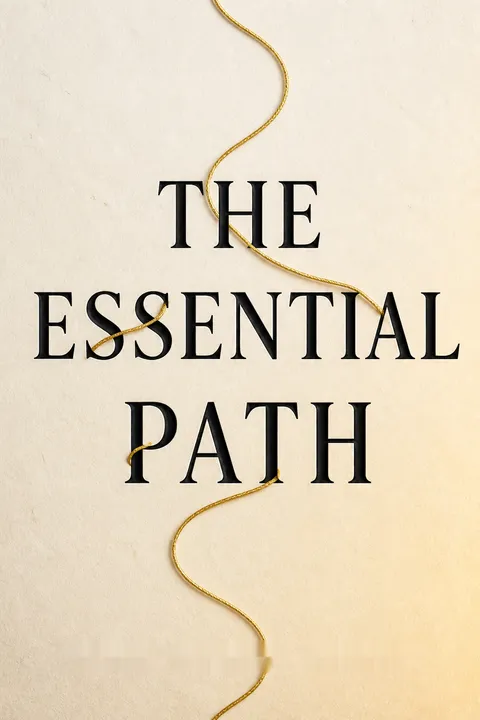
The Essential Path is a spiritual self-help argument arranged as a widening sequence. It begins with public polarization and institutional failure, traces both to inherited beliefs about separation, proposes a combined spiritual and relational identity, then turns that proposal into practices of compassion, reflection, and speech. Its narrative engine is a reversal: the author asks readers to stop treating conflict as evidence that people are naturally separate and instead regard separation as a belief that shapes conflict.
The book’s most durable contribution is ethical rather than metaphysical. Its distinction between individuality and isolation allows connection without sameness, while its account of compassion asks readers to understand harmful behavior without approving it. Its everyday questions also give the reader a way to test whether a broad spiritual belief changes actual conduct. These are useful even for readers who do not accept the author’s account of souls, God, or an eternal purpose.
The argument is less secure when it treats spiritual misunderstanding as the primary cause of political and economic suffering. Such a view can illuminate motives, but it does not establish that belief change alone can correct unequal institutions, material scarcity, or organized violence. Likewise, the author’s imagined origin story for religious ritual and his appeal to quantum physics are suggestive supports for a worldview, not proof of it. His strongest standard is the practical one he repeatedly proposes: examine what a belief produces. Applied consistently, that standard should also test the book’s own claims. Readers can therefore take the central proposal as both a spiritual commitment and an ethical experiment. Does regarding another person as connected to oneself reduce contempt, increase generosity, and improve how conflict is handled? The book offers no controlled demonstration that this change would transform civilization, but it does provide a clear personal practice: question inherited certainties, look for common humanity, and let that recognition affect choices. Its promise is compelling as an invitation, not established as a guaranteed solution.
Review Summary
The Essential Path receives mixed reviews, with an average rating of 3.98/5. Some readers find it thought-provoking and appreciate its message of unity and compassion, while others feel it lacks substance or is too vague. Positive reviews highlight the book's motivational aspects and practical tools for self-reflection. Critics argue it repeats ideas from the author's previous works or fails to provide concrete solutions. Many reviewers appreciate the book's spiritual perspective but disagree on its effectiveness in addressing global issues.
People Also Read









Glossary
Alienation
Social and personal estrangementWalsch’s term for the growing experience of separation, hostility, and disconnection between people and groups. He treats it as both a personal condition and a civilization-wide problem, visible in polarized politics, exclusion, prejudice, and conflict. In his argument, Alienation grows from beliefs that people are fundamentally separate and have incompatible interests.
Assumption of Separation
Belief that life is dividedWalsch’s name for the premise that people, beings, and life itself exist as fundamentally separate entities. He argues that this premise influences how people imagine God, understand the universe, organize society, and pursue individual interests. He presents it as a basic misunderstanding that can encourage isolation and conflict.
Separation Theology
God and humanity are dividedWalsch’s label for religious thinking that places God apart from humanity, with people below and God elsewhere. He argues that this picture can support a wider view of life as divided into disconnected beings and groups. The term describes his interpretation of a theological pattern, not every tradition or believer.
Spiritual Beings Manifesting Physically
Spiritual identity expressed bodilyOne half of Walsch’s proposed account of human identity. It describes people as spiritual beings expressing themselves through physical life, rather than as biological organisms alone. The idea gives earthly life a purpose beyond survival and achievement. The book presents it as a spiritual belief, not an established scientific finding.
One Essence Manifesting Individually
Shared essence expressed uniquelyThe second half of Walsch’s proposed human identity. It means that people are distinct individuals who nevertheless share one underlying essence, which he associates with Divinity. The concept aims to distinguish individuality from separation: people can differ in form, character, and perspective while remaining connected at a fundamental level.
Daring Decision
Choose a shared spiritual identityWalsch’s name for consciously adopting both parts of his proposed identity: humans are spiritual beings living physically, and individuals express one shared essence. He calls the choice daring because it challenges inherited religious, secular, and cultural assumptions. In the book, this decision is intended to alter how people relate and organize society.
Burning Building Moments
Risk taken to help anotherWalsch’s phrase for emergencies in which someone acts to protect or rescue another person despite personal danger. He uses such moments to question whether self-preservation is humanity’s only or deepest instinct. The phrase supports his view that care and courageous aid are also central possibilities in human nature.
Beingness Question
Check a choice against purposeWalsch’s name for a reflective prompt used before decisions or during difficult situations. It asks whether a choice fits the deeper purpose a person assigns to life. The practice is meant to shift attention from immediate impulse toward personal growth and the expression of one’s highest values.
Oneness Question
Find shared traits within yourselfWalsch’s prompt for examining an emotional reaction to another person or experience. It asks whether a quality seen in someone else has also appeared, in some form, in oneself. He uses it to encourage self-awareness and compassion, especially when the observed behavior is troubling, without claiming that recognition excuses harm.
Life’s Most Compassionate Question
Ask what pain drives harmWalsch’s name for a question about what hurt or unmet need might lead someone to hurt others. It is intended to replace instant condemnation with an effort to understand a possible motive. The question does not excuse harmful conduct; it aims to make compassion and accountability compatible.
Awakened species
Society living interdependenceWalsch’s term for a mature form of human civilization that recognizes the unity of life and acts accordingly. He describes such a society as truthful, cooperative, generous, environmentally careful, and less focused on punishment, ownership, scarcity, and competition. It is an aspirational contrast with what he calls humanity’s unawakened state.
About the Author
Other books by Neale Donald Walsch








Download PDF
Download EPUB
.epub digital book format is ideal for reading ebooks on phones, tablets, and e-readers.








