

Plot Summary
The Plane Comes Down
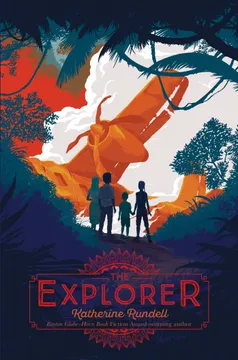
Fred, a schoolboy sent to Brazil to recover from pneumonia, is flying toward Manaus with three other children when their pilot collapses and the plane plunges into the rainforest. Fred survives the crash and a spreading fire, then finds Lila and her five-year-old brother, Max. Con, a sharp-tongued English girl travelling alone, soon joins them.
They are burned, frightened and without an adult; the pilot is dead, and the jungle stretches beyond their sight. When Max spots a snake near Fred, all four bolt into the darkness. Fred carries Max when the boy cannot run, and they reach a moonlit clearing. Lila comforts her brother, while Fred insists that daylight may make their predicament easier to solve.
The crash strips away the protections each child has relied on: Fred's books cannot tell him exactly what to do, Lila must parent without her parents, and Con's insistence on logic cannot make the jungle predictable. Fred's decision to carry Max is the first practical act of leadership, but it is not a claim to authority. He responds to an immediate need. The children become a group through shared danger before they have any reason to like or trust one another. Their initial hope that morning will restore order is fragile, yet it lets them endure the first night.
A Den in the Trees
At dawn Fred panics when Max is missing, only to find him beside a foul pool, frightened by Fred's soot-blackened appearance. Lila and Con argue over whether to return to the crash site and wait for rescuers. Lila points out that the burned clearing offers little food and that searchers may never find them; she believes they must reach Manaus themselves.
Fred notices that fallen trunks have been arranged into a shelter, with old tools and a woven roof inside. Although Con fears whoever built it might return, Lila judges the shelter safer than wandering. They repair its roof and clear a sleeping space. Following ants leads them away from camp to a river, where they drink and wash, but a piranha frightens them back onto the bank.
The argument over the den is the group's first negotiation between passive hope and purposeful risk. Con's appeal to rescue reflects not foolishness but a rational wish to preserve the world she knows. Lila's choice to move forward carries the harder cost: she must accept that her parents cannot protect her or Max in the present. Fred's attention to the constructed shelter turns curiosity into useful judgment. The piranha encounter then corrects a simplistic idea of bravery. The children do not conquer the river; they learn that survival means noticing danger, retreating when needed, and trying again with more knowledge.
Steel for a Flame
Hunger forces the children to eat cocoa-pod grubs that Lila gathers, though Max rejects the food and misses his parents. Fred realizes the broken watch from his father contains steel that can strike sparks from a flint. Giving it to Con costs him the one personal gift he treasures, but her persistence catches a spark, and the children build their first fire.
With the heat, they cook the grub paste into rough pancakes. Fred then proposes a raft as their best chance of reaching Manaus. He gathers branches while Lila prepares them and Max collects vines. Con, after resisting, strips the vines into workable cord. Fred ties the logs into a sturdy platform, turning their first shared fire into the means to leave camp.
The watch connects Fred's private longing for his distant father to the immediate work of keeping the group alive. He does not discard its emotional meaning; he chooses to spend it. Con's role in making the fire matters just as much. Her skill emerges through concentration and effort, not through sudden transformation into a different person. The raft likewise becomes a shared object: Fred imagines the route, but Lila and Con supply labor and judgment. Hunger keeps these choices concrete. Cooperation is not a sentimental cure for fear; it is the practical condition that allows the children to outlast it.
A Sloth Named Baca
The children test the raft on the river. Fred dives for a glinting object and narrowly escapes an electric eel, retrieving an empty sardine tin marked as made in England. Back at camp, he recognizes that their carefully positioned mooring branch was tied in place by someone.
While gathering fruit, he finds pineapples, but the next morning Max disappears with some of them. Max has offered pieces to a baby sloth stranded above a dead adult and threatened by vultures. Lila climbs the tree, rescues the sloth and gently coaxes it to eat.
She names it Abacaxi, shortened to Baca, after the Portuguese word for pineapple. Her tenderness gives the children a vulnerable new creature to protect, while the tin and the crafted mooring suggest another human presence nearby.
These discoveries shift the jungle from an empty threat into a place shaped by earlier human lives and ongoing animal lives. The tin is not useful food, but it changes the children's understanding of their location: someone has crossed this wilderness before them. Baca's rescue reveals Lila's knowledge as a form of care rather than mere information. She understands that loving an animal requires restraint, particularly when Max wants to handle it. The sloth also gives the group a shared responsibility that is not about their own escape. Their attention begins to widen beyond survival toward the lives around them.
The Map in the Canopy
Max insists that monkeys used ants to protect themselves before raiding a beehive. The others follow him and watch the animals rub ants over their fur, then take honey from the hive without being stung. Fred copies their method and climbs for honey. Near the hive, he finds a red leather tobacco pouch tied to a branch. Inside are a penknife and a hand-drawn map with an X.
Con's photographic memory lets her record the river's bends and forks from the treetop view, even as the map itself is still legible. The X gives the children a destination beyond their clearing. Lila guesses the red pouch was hidden where bees would not notice it; Fred sees the map as a reason to take the dangerous journey.
Max's observation, initially dismissed as confusion, becomes the group's route to both food and a larger purpose. His attentiveness is real, even when his language and impulse control make adults underestimate him. The map gives Fred's explorer stories a physical object to pursue, but it also tests whether curiosity serves the group or only his own ambitions. Con's memory offers a counterweight to Fred's appetite for discovery: she preserves details and turns wonder into usable direction. The pouch and hive suggest that survival knowledge is often local and embodied, learned by watching rather than imposed from books.
Smoke Erases the Map
As the children prepare to follow the map, their unattended embers ignite the clearing. Con reaches the raft first, but Max is stranded high in a tree. Lila climbs to him while Fred and Con wait below in smoke and falling sparks. When Lila and Max plunge into the river, Fred dives after them and hauls Max toward the raft.
Con paddles out to reach them, then Lila surfaces and is pulled aboard. The fire destroys their shelter and turns the paper map to pulp. Fred blames himself, but Con reconstructs its route from memory by carving the bends into bark. With no safe camp to return to, the children push off and follow her directions.
The fire is a consequence of the children's own mistake, which makes the loss more painful than a random natural disaster. Fred's leadership does not prevent harm; it must include accepting responsibility and continuing after failure. Con's memory, once an eccentric trait, becomes the practical replacement for the ruined map. Her reconstruction prevents panic from becoming paralysis. Lila's rescue of Max echoes Fred's earlier decision to carry him, but now each child contributes to the chain that saves the others. Their journey begins not because they feel ready, but because the fire has removed the possibility of waiting.
The River's Pink Guides
The raft carries the children through unfamiliar forks and past a caiman, while Con and Lila learn to share the work of steering. A pod of pink river dolphins circles them. Fred swims toward one, and a scarred dolphin approaches before leaping away; the encounter leaves him with a vivid sense of the life moving beneath the surface.
The children gather figs and keep Baca fed as they continue downstream. Later, weeds choke the river, and the canopy darkens overhead. Comparing the bends with Con's bark map, Fred believes they have reached the end of the marked water. The raft emerges onto a small lake beneath a towering, vine-covered cliff. Their destination lies above them, and reaching it means climbing.
The journey changes the children from passengers in a desperate escape into observers who can read the river together. Con's memory and Lila's natural knowledge complement Fred's determination, while Max and Baca keep their attention tied to needs that cannot be postponed. The dolphin encounter offers wonder without turning the wild into a tame companion: the animal chooses its approach and departure. That distinction prepares the children for a more complicated idea of exploration. The cliff interrupts the apparent logic of the route. The map has brought them to a threshold, not to an easy answer.
A City Under Green
Fred insists that the children climb the cliff together, with Max tied to his back. Con and Lila follow despite their fear, and the four reach the plateau exhausted and scraped. A slope carries them into a vast stone courtyard hidden beneath the rainforest canopy. They find ruined buildings and monumental carvings of a monkey, panther, woman and man.
Before they can explore, a scarred stranger appears with a knife and a huge vulture. He questions their arrival, gives them water, and lets them sleep in a ruined structure, but forbids them to cross a curtain of vines. He refuses to share his name. Though the children have finally found another human, his welcome is guarded, and the city remains full of things he will not explain.
The city fulfills the children's expectation that the map leads somewhere significant, but its first human guardian complicates the familiar adventure story of discovery and acclaim. The stranger's weapon makes the children vulnerable; his water and shelter make him responsible for them, however reluctantly. The ruins themselves suggest a past that predates the stranger and the children, so neither can claim simple ownership of what they see. Fred's arrival is an achievement, yet the knife reminds him that finding something does not automatically give him permission to expose it. The city is both a marvel and a contested responsibility.
The Secret Divides Them
The stranger admits he is a bush pilot who crashed near the ruins. He offers provisions and a possible route to Manaus if the children promise never to reveal the city or his existence. Fred refuses, imagining that the discovery should be known and celebrated. Con urges him to agree for the sake of getting home, while Lila focuses on rescuing her brother and the others.
The explorer withdraws his offer. That night Fred and Lila approach the forbidden vines, hoping to find food, and Con follows with Max. The explorer catches them before they can cut through the barrier and threatens them with his knife. Fred is left ashamed, still convinced that the secret and the children's survival cannot easily be reconciled.
The disagreement exposes different emotional economies. Fred wants recognition partly because he longs for his father's pride, while Con and Lila measure the decision against immediate danger and the people waiting for them. None of these motives is trivial, but Fred mistakes public acknowledgment for a universal good. The explorer's demand appears self-serving because he has not yet explained what disclosure could cost. Their trespass further weakens the children's claim to moral certainty: they violate a clear boundary while arguing for responsible discovery. The scene forces Fred to encounter the difference between wanting truth known and having the right to reveal it.
Lessons From the Stranger
Fred approaches the explorer the next morning and accepts that sneaking toward the vines was dishonest. The explorer responds by teaching him to build a spring snare, then saves the children from a green snake and shows them how to gather and cook tarantulas. The children discover that the spiders are edible, a lesson that makes a journey on foot seem more possible.
The explorer also shares food and begins to answer questions, though he remains guarded. Fred notices that the stranger uses the same knot seen on the old mooring branch, confirming that he made the camp they first found. His practical help changes the children's understanding of him: he is not simply an obstacle, but a skilled guide who has reasons to keep his distance.
The apology changes the relationship because Fred takes responsibility without demanding forgiveness or immediate assistance. The explorer answers not with warmth but with instruction, a form of care he can tolerate. Survival skills are also a language of trust: a snare can feed the children after they leave, so teaching it means preparing for their absence. The explorer's precise knowledge contrasts with Fred's book-derived confidence and teaches him humility without extinguishing curiosity. The old knot links the mysterious man to the children's earlier discoveries, making the rainforest feel like a connected world rather than a series of unrelated dangers.
Why the City Must Hide
After the children try to cook a meal for the explorer, he shares fish with them and describes the rainforest as a place worth protecting. On a night fishing trip, he explains that his own plane crash damaged the city's canopy. He is trying to repair the gaps so people searching from the air will not find the ruins.
He also tells Fred that his wife died after catching measles from Europeans, and that cholera later took their young son. The children understand why he fears new visitors and disease. Fred changes his mind and promises to keep the city secret. Con, Lila and Max make the same commitment, marking X shapes on their hands as a lasting sign of their shared vow.
The revelation recasts secrecy from eccentric possessiveness as a response to historical harm. The explorer's fear is not abstract: contact has already taken his family, and his own arrival damaged the place he now protects. That history does not make his methods automatically right, but it gives the children evidence they lacked when they first challenged him. Fred's change is therefore moral learning rather than defeat. He retains his belief in exploration while recognizing that public knowledge can invite exploitation. The X shifts from a symbol of destination to a chosen obligation, connecting the map's promise with the restraint required to preserve what it reveals.
Explorer School Begins
The explorer wakes the children early and teaches them what they must know before attempting the route to Manaus: how to read the river, spear fish and recognize hazards. He lends them pieces of his mosquito net and warns them about dangers farther along the trail. Though he insists he has no time for children, Fred later sees him keeping watch over their sleeping shelter.
During a violent rainstorm, the children abandon work and play a game of tag among the statues. The brief joy makes their growing closeness unmistakable. By morning Max is missing again. They find him convulsing near the wall, and the explorer identifies bullet-ant stings as the cause. Max needs a hospital quickly, so the overland plan is no longer enough.
The explorer's training replaces his earlier refusal with a limited, practical investment in the children's future. He teaches what he can and watches over them while pretending that attachment is irrelevant. The rain-soaked game matters because it lets the children inhabit childhood again without pretending the danger has disappeared. Max's bullet-ant reaction abruptly exposes the limits of preparation: knowledge can reduce risk, but it cannot guarantee safety. The group now faces a deadline that their planned walk cannot meet. This crisis converts the explorer's hidden resources and Fred's developing competence into necessities, rather than prizes for having discovered the city.
The Hidden Aeroplane
To save Max, the explorer leads the children behind the vine curtain and reveals a small aircraft concealed inside a stone building. He has repaired it since his own crash but can no longer pilot because of his injured leg. Lila refuses to leave Max, and Con initially believes a second flight is too dangerous. Fred is terrified, yet agrees to learn.
Under the explorer's instruction, he takes off, practices steering and cloud flight, and manages a difficult landing. Con admits she wants to remain in the city, where she feels freer than in her tightly controlled life, but the explorer tells her she must go. Fred invites her to stay with his family after the rescue, offering friendship beyond the jungle. At dawn, they prepare to fly.
The concealed plane brings the explorer's two identities together: the man who accidentally harmed the city and the pilot who can now help the children escape. Fred's decision to fly is not confidence but action taken while afraid, and the lesson makes responsibility literal. Con's wish to stay reflects the freedom she has discovered, but the explorer reminds her that qualities awakened in the jungle belong to her, not only to the place. Fred's invitation gives that insight a concrete future. The children's departure will not erase what they have learned; it asks them to carry it into relationships and lives beyond the forest.
Flying Toward Home
Fred pilots the aircraft north-east with Con navigating and Lila holding the feverish Max steady. With fuel running low, he lands in a cattle field, bouncing the plane hard but bringing everyone down alive.
Fred and Con set the aircraft on fire as the explorer requested, keeping the hidden city and its route from becoming evidence. Local people take the children to medical care, and Max reaches a hospital in Manaus. After recovery and a sea voyage, Lila and Max reunite with their parents and grandmother, while Con's great-aunt comes to meet her.
Fred sees no familiar face at first and fears his father has stayed away. Then his father runs through the crowded dock and embraces him, revealing how deeply he feared losing his son. Fred's journey ends with the homecoming he had doubted.
The landing resolves the immediate danger, but the decision to burn the aircraft completes the children's promise to protect the city. Their return is not a triumphant public unveiling; it is an act of deliberate silence. Each child receives a different form of homecoming: Lila and Max return to their parents, Con is met by the relative who raised her, and Fred finally encounters the affection he had assumed his father could not show. The father's embrace revises Fred's interpretation of their relationship without making past distance disappear. Survival has taught him that love may be present even when it is poorly expressed.
Epilogue
Twelve years later, Fred meets Lila, Max and Con at the Ritz, where they order cakes and hot chocolate in remembrance of their time in the jungle. Lila brings the elderly Baca, who slowly accepts a piece of sugar. The four friends show that the small X marks on their palms have not vanished entirely, and each confirms their promise to keep the city secret.
Fred is preparing to return to the Amazon after the rainy season, not to expose the ruins but to confirm that they survived and continue to explore. Their reunion turns a childhood ordeal into a lasting bond, carried forward without betraying the place that changed them.
The reunion measures time through changed bodies and unchanged commitments. Max has grown tall, Baca is old, and the children's scars and habits remain as quiet records of their survival. Their promised cakes make the Ritz an ordinary meeting place charged with the memory of hunger, while the faint X marks keep the secret physically present. Fred's planned return is not an attempt to claim the city or turn it into a headline. He wants to revisit the place on terms shaped by care. The ending treats exploration as a continuing practice of attention, loyalty and restraint, rather than a single discovery that belongs to its discoverer.
Analysis
The novel begins with a familiar adventure premise, children stranded in an immense wilderness, then gradually questions the assumption that discovery is automatically virtuous. Fred's ambition is emotionally legible: he wants a story dramatic enough to make his distant father see him. The hidden city appears to promise exactly that. But the explorer's account of disease, loss and damage caused by outsiders forces Fred to distinguish wonder from entitlement. A place can be extraordinary without becoming public property, and telling the truth can still expose people and histories to harm.
The children learn through distinct forms of attention. Fred turns reading into action but must revise his confidence. Lila notices living things and tends the vulnerable. Con remembers routes and structures with unusual precision. Max sees animal behavior others dismiss. Their survival depends on treating these differences as shared resources rather than ranking them by age or conventional authority. The explorer, in turn, embodies the cost of knowledge without responsibility: he once arrived seeking the world and now spends his days repairing damage he caused.
The story does not make secrecy an uncomplicated virtue. The explorer's demands are severe, and Fred is right to ask why a discovery should be hidden. The moral shift comes only when he learns what exposure could mean in this particular place. Their promise is therefore conditional in its own terms, lasting until it is safe to tell, rather than treating silence as eternal obedience. The children's return also revises their private beliefs about family: Fred's father does care, Con has a possible home among friends, and Lila's protective love need not mean facing everything alone. Exploration finally means attending closely enough to know when to proceed, when to turn back and when to protect what one has found.
Review Summary
The Explorer is a middle-grade adventure novel that has received mostly positive reviews. Readers praise its vivid depiction of the Amazon jungle, engaging characters, and themes of survival and friendship. Many found the story exciting and appreciated its messages about bravery and environmental conservation. Some critics felt the characters lacked depth or found certain aspects unrealistic. Overall, the book is considered a captivating read for children and adults alike, with beautiful writing and a classic adventure feel.
People Also Read
Characters
Fred
Bookish boy turned pilotFred is a tall English schoolboy sent to Brazil to recover from pneumonia, with a head full of explorer stories and a private hunger to be more than sensible and overlooked. His father is distant and absorbed in work, so Fred imagines that a remarkable achievement might finally earn his attention. In the jungle, Fred is quick to act, sometimes before he has fully judged the danger. He helps the others build shelter and a raft, learns from mistakes, and gradually recognizes that courage is not the same as certainty. His curiosity remains central to him, but he becomes more attentive to the consequences of what he wants to discover.
Lila
Protective natural observerLila is a Brazilian girl travelling with her younger brother, Max. She is small, observant and deeply interested in animals and plants, knowledge shaped by her scientist parents and life in a city rather than by any claim to be a jungle expert. She often sees practical risks before the others do, but her care can make her feel responsible for every danger Max faces. Lila protects him fiercely while trying not to smother his independence. Her compassion extends beyond her family, as her rescue and patient care of Baca show. She balances Fred's appetite for discovery with close attention to the living creatures and people affected by their choices.
Con
Guarded girl with a map-memoryCon is a blonde English girl travelling alone, dressed in formal clothes that seem unsuited to either the heat or the freedom she secretly wants. She uses sarcasm, argument and rigid reasoning to keep others from seeing how frightened and lonely she feels. Her photographic memory for maps and designs gives the group a skill none of them can replace, while her careful hands prove useful in building and making things. Con has lived through bereavement, rejection by a foster family and a difficult relationship with her great-aunt. Beneath her defensive manner is a fierce wish to be accepted without having to become quiet or ornamental.
Max
Small, stubborn younger brotherMax is Lila's five-year-old brother, an impulsive, noisy child who is easily frightened and equally quick to become absorbed in what he sees. Hunger, exhaustion and separation from his parents often overwhelm him, and his choices can put the group at risk. Yet Max notices things the older children miss, including animal behavior that eventually leads them to food and a map. He loves Lila intensely, even when his demands strain her patience, and he responds warmly to Baca and the explorer's vulture. His presence forces the older children to make their plans answerable to someone smaller and more vulnerable than themselves.
The explorer
Wary guardian of the ruinsThe explorer is a scarred, resourceful bush pilot living alone in an ancient city concealed by rainforest. He dresses in carefully made garments from local materials, keeps a vulture as a companion and speaks with a brusque humor that discourages questions. His knowledge of hunting, plants, river travel and aircraft comes from long experience, but his protectiveness is rooted in a painful history and a distrust of outsiders. He believes the ruins and the people connected to them are vulnerable to attention from the wider world. Beneath his severity is a capacity for care that he disguises as instruction, practical help and threats he rarely seems eager to carry out.
Baca
Rescued baby slothBaca is a baby sloth rescued by Lila after Max discovers him threatened by vultures. Slow-moving and fragile, he clings to Lila's clothes and hair, eats the fruit she offers and requires careful handling. His presence gives Lila a creature to nurture beyond her brother and offers the group small moments of tenderness amid danger. Baca is not a mascot who makes the jungle safe; he remains an animal with his own needs, rhythms and limits.
Fred's father
Distant, work-bound parentFred's father is a businessman who has spent years prioritizing his firm and arranging his son's care from a distance. Fred reads his formality and absence as evidence that he is not wanted, though his father has chosen a personal gift for him and worries more than Fred understands. He represents the emotional uncertainty Fred carries into the jungle: a child trying to interpret love through the few gestures an adult allows himself to show.
Con's great-aunt
Strict family guardianCon's great-aunt is the relative responsible for her after the deaths of her parents and the end of a foster placement. She sends Con to schools and summer programs abroad, hoping to improve her behavior, but Con experiences the arrangement as another attempt to make her quieter and more manageable. The great-aunt's arrival to meet her at the dock shows that their relationship carries more attachment than Con has allowed herself to expect.
Lila and Max's parents
Scientist parentsLila and Max's parents are scientists who study plants and the Amazon region. Their practical advice shapes Lila's attention to animals and her sense that panic can make sound decisions harder. They are absent during the crash and survival journey, making Lila responsible for her younger brother without the adults she usually depends on. Their reunion with the children represents the home and family life Lila and Max have been trying to reach.
The pilot
Fallen flight captainThe older pilot transports Fred, Con, Lila and Max toward Manaus. When he becomes gravely ill at the controls, the aircraft crashes into the rainforest, leaving the children without adult guidance and beginning their struggle to survive.
Plot Devices
The river map
Turns curiosity into a routeA hand-drawn map found inside a red tobacco pouch gives the children a destination marked with an X. They use the river's bends and forks to navigate toward it. The paper is destroyed when their camp burns, but Con's photographic memory allows her to recreate the route on bark. The map first appears to offer a direct path to escape; its deeper function is to make the children rely on one another's different abilities. Its X later echoes in the mark they choose to keep as a sign of their promise to protect the hidden city.
The raft
Carries survival downstreamFred builds a broad raft from branches bound with liana vines, using knowledge drawn from the adventure books he has read. The raft lets the children follow the river instead of attempting a long walk through unfamiliar forest. Its first trial teaches them to watch for currents, animals and hazards below the surface. During the fire, Con uses it to reach Fred and Max in the river. Later it becomes their transport toward the mapped destination, turning Fred's private reading into a tool tested and improved by the group.
The red pouch
Hides the explorer's mapThe red leather tobacco pouch is tied high in a tree near a beehive. Fred retrieves it while climbing for honey, and it contains a penknife and the map that redirects the children's journey. The placement is deliberate: the pouch blends into the tree from a bee's perspective, while its height and the surrounding wildlife discourage casual discovery. It connects earlier evidence of a human presence, including the sardine tin and carefully tied mooring branch, to a particular hidden route.
The vine curtain
Conceals the city and planeA thick barrier of planted and woven vines blocks off part of the ruined city. The explorer forbids the children from crossing it, making the curtain a boundary that tests their trust and respect for his privacy. When Max is dangerously ill, the explorer opens the hidden space behind it to reveal an aircraft he has repaired. The curtain therefore conceals both his private work and the means of the children's escape. Its meaning changes from a forbidden mystery into a necessary passage, though the city it protects must remain undisclosed.
The palm X
Makes secrecy a shared vowAfter the explorer explains the harm that outside attention could bring to the city, the children mark X shapes on their palms with ink and blood. The mark recalls the map's destination but now stands for an agreement: they will keep the ruins and the explorer's existence secret until disclosure is safe. It gives the children a physical way to recognize their shared responsibility years later. The X is not a magical seal; its force comes from the choice each child makes to honor the promise.
About the Author

Download PDF
Download EPUB
.epub digital book format is ideal for reading ebooks on phones, tablets, and e-readers.








