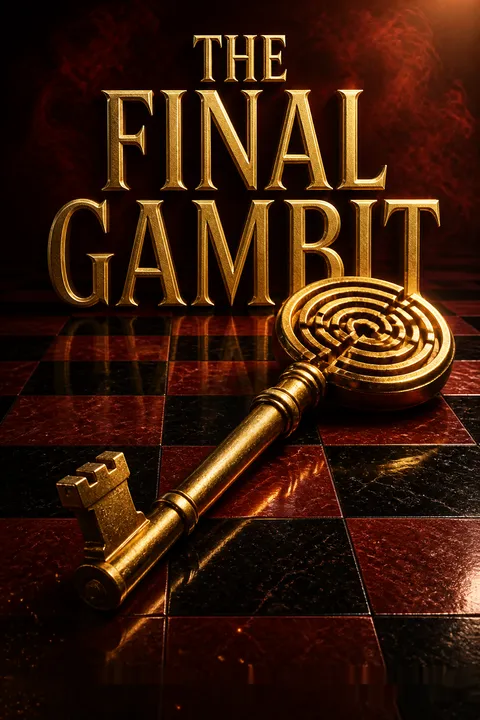


Plot Summary
Eve at the Gates
Avery Grambs is approaching her eighteenth birthday and the end of the year she must live at Hawthorne House before inheriting its vast fortune. She refuses lawyer Alisa Ortega's plan to shelter the money in a trust, while secret passages and puzzles keep her busy as Jameson travels abroad and Grayson remains distant.
At Avery's birthday celebration, Grayson returns home. The next morning, security chief Oren brings Avery a young woman named Eve, who says Toby Hawthorne, Avery's elusive protector and the father she recently found, has been taken.
Eve escaped an attack at their planned meeting place and came because Toby told her to seek Avery. With no ransom demand and little evidence, Avery faces a choice: trust a stranger or leave Toby alone.
Avery's inheritance is both promise and exposure. Her instinct to refuse a trust signals that she wants agency, yet she has not had time to learn what exercising it will cost. Eve's arrival makes that tension intimate: Avery recognizes the precariousness of being a poor young woman whom powerful people may dismiss, but Eve is also a stranger entering a fortified family world. The kidnapping turns Avery's approaching inheritance from a legal milestone into a vulnerability, giving the plot its central urgency.
Emily's Living Echo
Eve looks uncannily like Emily Laughlin, the girl whose death still haunts Grayson and Jameson. Grayson initially mistakes the sight for a hallucination, then learns Eve is Toby's daughter and related to Emily's family. Jameson doubts Eve's story, while Grayson insists the Hawthornes must protect her.
Avery asks what the kidnappers might want and realizes Toby could have been taken for a small, valuable disk connected to Avery's dead mother. She withholds the clue until Eve proves herself during Xander's dangerous house-wide Chutes and Ladders race, where players trade secrets for climbing gear.
Eve reveals the rejection she endured in her childhood, and Avery sees a painful reflection of her own outsider years. She shares the disk's drawing, giving Eve a reason to help find Toby.
The resemblance makes grief visible, but the brothers respond differently: Grayson is pulled toward the past, while Jameson protects himself with suspicion. Avery has to distinguish Eve from the dead girl she resembles, even as the resemblance threatens existing loyalties. The game gives Eve a way to demonstrate character through action rather than pleading. Its exchange of secrets for equipment also mirrors the household's emotional economy: intimacy is often earned through tests, yet the test reveals that Avery's mistrust has its own history.
A Vengeance in Red
A courier delivers the missing disk with a blood-red message that Jameson decodes as a promise of vengeance. The brothers connect it to the fire on Hawthorne Island decades earlier, where three young people died and Toby was presumed dead.
Avery calls her estranged grandmother, a member of the Rooney family, but learns the Rooneys do not have Toby. Grayson rules out his father's relatives, and the group questions Skye Hawthorne, the brothers' estranged mother.
Skye recognizes the disk as belonging to her father and admits Toby stole it when he fled the family, but denies involvement in the kidnapping. Her reaction confirms that the disk matters, while her account leaves its value unexplained. The search shifts from old family grudges toward whoever knows the Hawthornes' games.
The note transforms a disappearance into a contest whose rules remain hidden. Avery and the brothers initially interpret revenge through the fire because it is the most legible family wound, but each suspected relative exposes how incomplete that explanation is. Skye's recognition is especially useful: it establishes the disk's history without making her the culprit. The scene also shows that the Hawthornes' inherited habits of coded play are not merely eccentric family rituals. They are a language an enemy can use to control the family.
The Photograph's Warning
Oren's team finds no trace of Toby at the rendezvous site, but a later envelope contains a photograph of him alive, beaten, and holding a newspaper. Avery and Xander discover that blacked-out letters in the article form a message claiming the sender always wins. The threat confirms that the kidnapper is targeting Avery, not simply seeking the disk.
Oren reports attempts to recruit members of Avery's security team, while lawyer Alisa notes a smear campaign against the Hawthornes and trouble in Tobias Hawthorne's companies. A locked jewelry box then reaches Avery at school, carrying a phone and a countdown. Its sole contact calls himself Luke and warns that Toby will suffer if Avery cannot solve the next riddle before time expires.
The photograph offers proof of life without relief: Toby's injuries make the evidence itself an instrument of pressure. The sender's message recruits Avery's own intelligence against her, forcing her to solve clues while watching the clock. At the same time, attacks on security, business, and reputation show that the threat is systemic rather than a single kidnapping. Avery has to coordinate people with different expertise, but the pattern also erodes her trust in the protections she inherited along with the fortune.
The Prodigal's Riddle
Max recognizes the phone's calendar entry as a reference to the Gospel of Luke, and its lock combination points to the parable of the prodigal son. When Luke calls at the timer's end, Avery explains the returning son and the forgiving father; Eve identifies the overlooked brother who stayed and received no reward.
The kidnapper refuses to speak with anyone but Tobias Hawthorne's chosen heiress and tells Avery to consider all three roles. The exchange gives the investigation a new frame: the enemy may be less interested in Toby's old fire than in a perceived injustice within the Hawthorne family. Avery and the brothers compare the parable's figures, but they cannot yet tell who represents the father or which son has been wronged.
The riddle works because it makes interpretation a form of pressure. Avery can decode its surface reference, yet the kidnapper controls the meaning by withholding context. Eve's contribution is both perceptive and emotionally costly: she speaks for the overlooked sibling, a position she understands from her own family life. The parable also unsettles the Hawthornes' assumption that their grandfather's family history is complete. Its three-part structure becomes a tool for asking who was rewarded, who was abandoned, and who believes the debt remains unpaid.
A Game Beneath Water
Alisa delivers a sealed leather satchel that Tobias Hawthorne ordered opened only if Avery met Evelyn Shane, Eve's full name. Inside are a steamer, flashlight, towel, magnetic letters, a glass disk, and a damaged audio file. Avery deciphers the extra letters and numbers as chess notation for the Queen's Gambit, then finds the matching jeweled chess set in the vault.
A hidden strip beneath its black queen instructs her to stop breathing. Combining that clue with the glass and towel, Avery studies the pool's blue-green tiles and sees a chessboard beneath the surface. She repeats the gambit's moves underwater, triggers a concealed tile, and retrieves a sealed package containing a photograph of three women dated in France in 1973.
Tobias's challenge gives Avery a different kind of agency from the kidnapper's timed tests. Its objects initially appear arbitrary, but each rewards patience and pattern recognition rather than obedience to an enemy. The Queen's Gambit also introduces sacrifice as a practical strategy, not merely an emblem of loss. Avery's willingness to dive alone shows her growing confidence, while Jameson's presence at the pool keeps their partnership central. The puzzle is both a bequest and a lesson in how the Hawthornes learned to read a world designed by someone else.
The Chandelier's Warning
The photograph's wine-region name and date lead Avery, Jameson, and Grayson to a 1973 bottle of Château Margaux. Steam loosens its label, which sketches a chandelier in Hawthorne House. A flashlight through one crystal projects a warning that no one should be trusted, apparently ending Tobias's game.
Avery remembers Eve photographing files about Sheffield Grayson, the father Grayson says is abroad, and questions her motives. Seeking family history, Avery accompanies Eve to meet Mallory Laughlin, Emily and Rebecca's mother.
Mallory recalls a charming older teenager named Liam who visited the Hawthorne estate and later abandoned her. Before they can make sense of this, another fire-proof envelope yields seven digits and the concentric-circle emblem from Toby's disk.
The warning's breadth is its danger: it can be read as sound security advice or as a weapon that isolates Avery from everyone capable of helping her. She does not simply accept it; she tests suspicion against Eve's behavior and the facts surrounding the photographs. Mallory's memory supplies a new human link to the old estate, but her grief makes it incomplete. The abrupt arrival of the numbers and familiar seal shifts the mystery away from the family's visible scandals toward a deeper history that even the Hawthornes have failed to name.
The Patent Names Blake
Avery and Jameson trace the seven digits to a patent filed by Tobias Hawthorne and Vincent Blake. A second, superior patent filed by Tobias alone had made the shared design worthless and launched his fortune. Nan explains that Blake once mentored Tobias, then tolerated his betrayal as a hard-won victory.
The search also exposes how Tobias's business practices harmed workers and rivals. Meanwhile, Eve slips away from her guard to reach Blake's ranch, but Grayson and Jameson intercept her and bring her back.
Avery and Xander visit Isaiah Alexander, Xander's estranged father, who confirms that Blake's concentric disk is a family seal granting influence and a future share of the estate. Isaiah recalls Blake's vanished son, Will, and the name connects to the poet Toby used in his hidden writings.
The patent revelation replaces a vague ancestral grievance with a specific model of power: Tobias built his empire by turning a collaboration into a winning position. Blake's anger is therefore not simply envy, and Tobias's success cannot be separated from the people he outmaneuvered. Xander's meeting with Isaiah adds a personal counterpoint to the corporate history. His father was kept away by the same powerful family system that treated people as pieces. The seal links those histories, suggesting that lineage can function as both belonging and a mechanism of control.
The Locket Opens
Avery realizes that Mallory's Liam may be Will Blake and that Eve could be connected to Vincent Blake's family. At the chapel, she demands to see Eve's locket. Eve's gun appears before Avery can inspect it, and Oren disarms and restrains her.
Eve admits she helped Blake take Toby because she wanted to earn a place in his empire; her earlier bruises and pleas had helped her gain the household's trust. Grayson initially defends her, but refuses to let her take the USB Avery found beneath the chapel altar.
Eve is removed from the estate. Grayson then admits how deeply Tobias's expectations and Emily's death have shaped his self-punishment. Avery reassures him that he belongs with them, while revealing that she has the second USB needed to decode the first.
Eve's betrayal is painful precisely because her need for family was real, even when she used it strategically. The novel refuses to make her hunger for belonging a simple excuse: she chose to put others at risk and now must face the consequences. Grayson's response marks a shift from compulsive rescue toward responsibility. Eve's attempt to exploit his grief fails when he recognizes that compassion does not require surrendering judgment. Avery's renewed connection with Grayson likewise depends on seeing his pain without taking responsibility for curing it.
The Old Man's Confession
Xander combines the two distorted audio files from Tobias's satchel and the chapel altar. Tobias's recorded message explains that he expected Vincent Blake to move against the Hawthorne family after his death. He chose Avery partly because she could draw Blake's attention away from his grandsons and his daughters, and partly because she might survive the danger.
Tobias also admits he used Avery's mother, Hannah Rooney, in an effort to reach Toby, and that Hannah knew about the Blake seal. The revelation confirms that Avery's inheritance was never simply a reward. Tobias designed it as a diversion and a final test for the family. Avery absorbs the truth, then turns to the blueprints of Hawthorne House to find the remains Toby hid.
The recording collapses the comforting story that Tobias chose Avery because he alone recognized her worth. He did see her abilities, but he also treated her as expendable protection for people he loved. This mixture of recognition and exploitation is psychologically harder to resolve than simple malice: Avery can value what she learned without mistaking manipulation for care. The confession also reframes the inherited fortune as an active danger. The family must decide whether they will repeat Tobias's habit of sacrificing outsiders or build a different kind of loyalty.
The Body in the Maze
Avery orders Tobias's construction plans chronologically and finds a hidden crypt inside the chapel altar. It holds a new USB drive and Toby's carved accusation that his father knew what happened.
The combined recordings direct the search toward the hedge maze, where Rebecca helps reveal the remains of Will Blake, Vincent's missing son. Groundskeeper Mr. Laughlin explains that Will used sixteen-year-old Mallory to approach Tobias, then attacked her when she threatened to expose him.
Mallory struck Will with a brick, and Tobias left him without medical care. Mr. Laughlin helped conceal the death and kept the secret to protect his daughter. Toby later discovered the body, moved the remains, and left clues for his father. Blake's demand now has a target Avery can actually find.
The hidden body makes the family's past materially present, rather than a rumor that can be managed through money or public relations. Mallory's violence occurred in a context of exploitation and immediate danger, but the secrecy afterward burdened three generations with a false story. Tobias's decision to conceal the death protected a vulnerable teenager while also preserving his own power and keeping the truth from his family. Rebecca's role matters because she refuses the old family habit of making herself small. Her intervention turns inherited silence into testimony.
A Trade for Alisa
As Avery and her allies locate Will's remains, Alisa calls from captivity to report that Vincent Blake exchanged her for Grayson. Avery refuses to hand Blake the remains privately, instead reporting the discovery to authorities and arranging a public account of Tobias's role in Will's death. She knows the exposure may complicate the bargain, but it limits Blake's leverage and puts witnesses outside his control.
Avery then takes the Blake family seal to his ranch, with Alisa and Oren waiting beyond the gates and the press watching. Blake's men admit her because she carries the seal. Inside, Avery presents the jeweled chess set and offers a wager: if she wins, Blake must end his campaign and leave the Hawthornes alone.
Avery turns exposure into protection. Reporting the remains is not a clean moral victory, since she is also shaping a story to constrain Blake, but it denies him the private control he has exercised throughout the kidnapping. Her decision to enter the ranch alone carries real danger, yet the seal and the watching press give her leverage beyond personal bravery. This is the moment Avery stops treating the mystery as something to solve before acting. She makes a move with incomplete information and accepts responsibility for its consequences.
Three Games at the Ranch
At the ranch, Blake reveals that Toby and Grayson are still under his control and turns the confrontation into three chess matches. Toby first plays Eve, then Avery, while Avery and Eve face each other last. Toby must win both of his games to leave as a presumed dead man; losing twice means accepting the Blake name.
Eve can win seals and power, while Avery can secure the release of Grayson and a promise that Blake will stop targeting her circle. Blake also threatens to expose Sheffield Grayson's death, a secret Oren helped conceal. Toby beats Avery, but she wins against him only by forcing him to play honestly. The losses leave her to face Eve with the future of everyone she loves resting on the final board.
Blake's tournament converts family bonds into measurable stakes. The rules appear impartial, but each game is weighted with emotional leverage: Toby's identity, Eve's craving for recognition, and Avery's need to protect others. Toby's refusal to throw their match shows that love cannot always be expressed by giving someone an easy win; he trusts Avery to play for herself. Yet Avery's promised victory over Blake cannot resolve every demand. She begins to see that the contest is only one board inside a larger struggle for power.
The Gambit That Wins
Avery spots a route to beat Eve quickly, but deliberately lets Eve win so Blake will underestimate her. She then offers to place the Hawthorne fortune under Blake's control until she turns thirty if he risks a private chess match. Alisa helps formalize the wager.
Avery opens with the Queen's Gambit, then uses a prepared sequence to trap Blake and take his queen. He concedes, honors their agreement, and releases Grayson; Eve keeps all five seals and gains Blake's recognition, though she understands Avery manipulated the match.
Toby chooses to remain with Eve rather than risk Blake breaking the deal. As Avery leaves with Grayson and Alisa, Toby gives her a wooden puzzle bearing a message about her resemblance to Hannah, and Jameson arrives to take her home.
Avery's decisive move is not simply superior calculation. She manages Blake's perception, accepting a visible loss so he will misread her capacity in the decisive game. The tactic echoes Tobias's manipulation, but Avery uses it to limit harm rather than accumulate dominion. Her choice to let Eve win is also ethically complicated: it grants Eve the prize she wanted while using her as part of a larger strategy. Toby's decision to stay shows the cost of victory. Avery saves people without restoring the family to an uncomplicated shape.
A Fortune Given Away
After returning to Hawthorne House, Avery rejects the trust Alisa once proposed and burns the paperwork. On her eighteenth birthday, she reaches the year required by Tobias's will and inherits the fortune.
During a celebration designed around games and family, she announces that ninety-four percent of the money will go into a charitable trust and be distributed within five years. She keeps Hawthorne House, enough resources to maintain it, and a smaller personal fortune.
Avery invites the Hawthornes to help direct the giving and funds Libby's mutual-aid work and cupcake business. Grayson, Jameson, Nash, Xander, Alisa, and Libby each respond to the decision in their own way, but Avery accepts responsibility for the power rather than passing it to a trustee.
Avery's decision answers the opening question of whether she will let others manage her inheritance. She does not reject wealth as inherently corrupt; she rejects the concentration of power that made Tobias and Blake able to decide other people's futures. The charitable trust turns a private fortune into a collective process, though Avery remains accountable for its design. Her choice also separates inheritance from imitation. She can keep the house and the people she loves without preserving the system that made the Hawthornes' wealth untouchable.
Epilogue
One year later, Avery has begun distributing the fortune through a foundation named for her mother. The Hawthorne brothers work with her: Grayson leaves Harvard to help, Xander works alongside Isaiah, and Jameson travels with Avery, collecting risks and adventures.
Avery studies actuarial science and plans to turn the family's old puzzle tradition into a public contest with meaningful prizes. During a televised interview at Hawthorne House, she presents the first invitation card and announces that the new game begins immediately.
The epilogue does not pretend that the family has escaped its history; it changes what the history is used for. Tobias's games once trained the Hawthornes to compete for one man's approval. Avery's contest keeps their pleasure in puzzles but redirects its rewards outward. Her chosen field, risk assessment, reflects a similar shift: danger is no longer romanticized or controlled by a patriarch, but studied and managed. The invitation also leaves the ending open. Avery has inherited a world of mysteries, yet she now helps decide who gets to play and what winning can provide.
Analysis
The novel's central conflict is not simply whether Avery can solve a kidnapping. It asks what inheritance does to a person when money arrives already entangled with other people's injuries. Tobias gives Avery extraordinary resources, but his recorded explanation reveals that he also selected her as a decoy. She is valued for her intelligence and simultaneously used as a shield. That contradiction keeps the story from treating wealth as uncomplicated rescue.
Puzzles make this conflict visible. Tobias's games train Avery to notice patterns, but Blake imitates that form to control her attention. Avery's maturity lies in learning that not every clue deserves obedience and that solving the puzzle is not the same as accepting its rules. Her decisive chess strategy works because she controls what Blake believes he is seeing. Yet she does not copy Tobias's aim of accumulating power. At the story's end, she redistributes most of the fortune and builds a process in which expertise and ideas can come from people outside the Hawthorne circle.
Family in the novel is similarly unsettled. Blood ties do not guarantee care, and chosen loyalty does not erase harm. Eve's longing to belong is real, but it does not excuse her betrayal. Toby's protection of his daughters is compromised by his secrecy. The Laughlins' silence began as protection and became a burden carried across generations. Avery's strongest relationships emerge when care does not require possession: she supports Grayson without accepting responsibility for his grief, and she loves Jameson without letting him confine her for her own safety.
The resolution does not purify the Hawthorne legacy. It changes what Avery can do with it. She keeps the house, the relationships, and the pleasure of a good puzzle, while refusing to preserve the fortune as a private instrument of control. Her choice makes generosity a form of governance, not a gesture of personal sainthood.
Review Summary
The Final Gambit received mixed reviews, with an overall rating of 4.12 out of 5. Many readers enjoyed the mystery and puzzle aspects, praising the author's writing. However, opinions were divided on the romance subplot and character development. Some felt the love triangle was frustrating, while others were satisfied with the resolution. Criticisms included predictability, rushed plot, and perceived character inconsistencies. Fans of Grayson's character were particularly disappointed with his portrayal. Despite these issues, many readers found the conclusion satisfying and looked forward to the next book.
Characters
Avery Grambs
Reluctant heiressAvery is a resourceful young woman who grew up with little money and learned to read people quickly. Her instinct is to notice what others overlook, whether she is tracking a hidden passage or weighing a person's motive. The Hawthorne fortune gives her extraordinary options, but she is wary of being treated as a symbol, a tool, or a child whose decisions belong to someone else. She cares fiercely for her sister and friends, and her affection for Jameson draws her toward risk rather than safety. Avery's central tension is between accepting the power she has been handed and refusing to use it in the same way the family has used power before.
Jameson Hawthorne
Thrill-seeking puzzle solverJameson is the adventurous Hawthorne brother, a gifted strategist who treats danger and puzzles as invitations. He and Avery share an instinctive rhythm built on dares, questions, and mutual challenge. Beneath his confidence, Jameson carries grief about Emily's death and a fear that his relationship with Avery could become another competition with Grayson. He has spent years learning to win through audacity rather than restraint, and he struggles to distinguish protection from control when Avery is threatened. His hunger for experience makes him exciting company, but it also leaves him wrestling with what kind of man he wants to be.
Grayson Hawthorne
Duty-bound heir apparentGrayson is the controlled, disciplined Hawthorne brother, raised to anticipate consequences and meet impossible standards. He is perceptive, formally courteous, and accustomed to putting family obligations ahead of personal wants. Beneath that polished self-command is a young man carrying grief and a punishing sense of responsibility, especially around Emily's death. Avery sees the vulnerability he tries to conceal, while his brothers know how often he turns pain into work or physical endurance. Grayson's struggle is not a lack of feeling but the belief that feeling makes him less capable. His care for others can be profound, though he must learn to offer it without treating himself as a shield.
Toby Hawthorne
Avery's vanished protectorToby is the Hawthorne family's missing son and a complicated figure from Avery's childhood. Avery remembers him as the man who played chess with her after her mother's death and watched over her from the margins. His history is marked by secrets, flight, and a deep distrust of the family that raised him. Toby can be affectionate, but he is also difficult to know, partly because he believes distance protects the people he loves. His connection to Avery's mother gives him a lasting emotional presence in Avery's life. He is shaped by guilt about the past and by the conviction that the next generation should not inherit every burden he carries.
Eve
Toby's searching daughterEve arrives at Hawthorne House with little money, a battered bag, and a fierce determination to find her father. Her resemblance to Emily unsettles those who knew the dead girl, but Eve has her own history and temperament. She is competitive, observant, and quick to recognize when people underestimate her. Years of exclusion have made belonging feel urgent, while self-protection has taught her not to depend on anyone for long. Eve's desire to be seen is not vanity; it comes from growing up treated as an inconvenient presence. She can be vulnerable and strategic at once, which makes it difficult for others to know when she is asking for help and when she is making a move.
Xander Hawthorne
Inventive family jesterXander is the youngest Hawthorne brother, an inventive engineer with an inexhaustible appetite for elaborate games, contraptions, and distractions. His humor is generous, not merely frivolous: he uses it to interrupt spirals of fear and help people regain perspective. He is Avery's devoted friend and treats her as family without making her prove she belongs. Beneath his exuberance is a quieter uncertainty about his origins and whether the people he loves would choose him if given the chance. Xander's talent for connecting odd details makes him valuable in a crisis, while his loyalty gives the household a warmth that its competitive traditions might otherwise lack.
Nash Hawthorne
Protective eldest brotherNash, the eldest Hawthorne brother, is a laid-back cowboy with a strong protective streak. He teaches Avery practical self-defense and offers support without demanding that she explain every feeling. Nash has spent much of his life resisting the family's obsession with wealth and achievement, and his humor often hides how carefully he watches those around him. He is especially attentive to the ways the younger brothers have been shaped by their upbringing. His affection for Libby makes him imagine a quieter, more dependable kind of family life than the one he experienced as a child.
Libby Grambs
Avery's steadfast sisterLibby is Avery's older sister and the person who gave her a home when she had nowhere else to go. Warm, creative, and generous, she often responds to fear by feeding people or making something with her hands. Her love is expansive, though past relationships have made her doubt her judgment and worth. Libby brings emotional steadiness to Hawthorne House without being absorbed by its rules. Her growing connection with Nash offers a glimpse of intimacy based on ordinary care, teasing, and mutual recognition.
Oren
Avery's security chiefOren leads Avery's security detail and approaches danger with professional discipline. He is watchful, strategic, and inclined to protect Avery even when she resents being told what to do. His loyalty is partly an obligation to the Hawthorne family, but his care for Avery becomes personal through the daily work of keeping her safe. Oren's experience gives him a clear-eyed understanding of how quickly threats can spread from one target to an entire circle. He also has to balance security protocols against Avery's need to act for herself.
Alisa Ortega
Avery's formidable lawyerAlisa is Avery's attorney, a capable professional who thinks in terms of legal exposure, public perception, and long-term consequences. She can seem overbearing because she is accustomed to making plans before other people recognize the danger. Her disagreements with Avery arise from competing forms of care: Alisa wants to preserve the heiress's security and fortune, while Avery wants room to make consequential choices herself. Alisa also shares a complicated past with Nash, which makes her presence in the Hawthorne orbit personal as well as professional.
Max
Avery's irreverent best friendMax is Avery's closest friend, quick with jokes and unembarrassed by her own enthusiasms. She brings an outside perspective to Hawthorne problems and is particularly good at spotting references others have overlooked. Her warmth is practical: she checks in, makes Avery laugh, and offers help without turning friendship into a debt. Max's relationship with Xander grows out of an established friendship, giving her a different route into the Hawthorne family's strange rhythms.
Rebecca Laughlin
Emily's fiercely loyal sisterRebecca is Emily's older sister, a perceptive young woman who spent much of her childhood adjusting herself around her sister's needs. She has a quiet intensity and often hides strong feelings behind silence. Avery's friendship helps her take more ownership of her appearance, desires, and future, though grief remains close to the surface. Rebecca is especially protective of the people she loves and can find courage when someone else is being hurt. Her relationship with Thea gives her a space to be wanted for herself rather than defined by Emily.
Thea Calligaris
Sharp-tongued loyal friendThea is a confident, fashion-conscious young woman with a cutting sense of humor and a talent for making herself impossible to ignore. Her apparent indifference is partly armor; she is deeply loyal to Rebecca and still carries grief for Emily, her former best friend. Thea's public fluency and instinct for managing attention become useful when rumors threaten people she cares about. She resists sentimental language, but her devotion is evident in what she does, particularly when Rebecca is tempted to retreat from her own life.
Skye Hawthorne
Estranged Hawthorne matriarchSkye is the mother of the Hawthorne brothers, a theatrical and self-protective woman who prefers to control the terms on which others see her. She is clever at reading emotional weaknesses and often uses charm to avoid accountability. Beneath her performance is a long hunger for attention and a sense that her father treated her as less important than the men who might inherit his power. Her relationship with her sons is marked by real affection tangled with abandonment, resentment, and a wish to be loved without being constrained.
Zara Hawthorne
Tobias's shrewd daughterZara is Tobias Hawthorne's daughter and the aunt of the four brothers. She is sharp, composed, and difficult to surprise. Her experience with the family has taught her to distrust easy explanations and to look for the assumptions hidden inside a question. Zara is more interested in power and consequence than in preserving appearances, and she does not soften her judgments for the comfort of others. When the investigation turns toward family history, her knowledge helps Avery reconsider what the Hawthornes believe they know.
Nan
Blunt family elderNan is an elderly Hawthorne relative, sharp-tongued, observant, and impossible to intimidate. She knew Tobias as a young man and remembers the family before its fortune became an empire. Her affection is expressed through blunt criticism and demanding rituals, including regular games with Avery. Nan's memories complicate the legend of Tobias by preserving details about his mentors, ambitions, and private loyalties. She is a keeper of history, though she shares it only when she believes the question deserves an answer.
Mallory Laughlin
Grieving mother and grandmotherMallory is Rebecca and Emily's mother, a former surgeon whose life became organized around Emily's serious heart condition. After Emily's death, she struggled to maintain the shape of ordinary life. Mallory can be tender and nurturing, but grief makes her attachment to the past powerful and sometimes painful for Rebecca. Her memories connect the Laughlin family to the Hawthorne estate and its concealed history. She wants to protect the people she loves, even when protection means refusing to speak about what happened.
Mr. Laughlin
Hawthorne groundskeeperMr. Laughlin has served the Hawthorne estate for decades as its groundskeeper. Gruff and practical, he is protective of his family and deeply loyal to the people who have employed him. His knowledge of the grounds is matched by a strong attachment to the past, including promises he has kept for years. He rarely explains himself until forced to confront the cost of silence. His relationship with Rebecca carries affection beneath their understated exchanges.
Vincent Blake
Powerful rival patriarchVincent Blake is an elderly Texas power broker whose family wealth predates the Hawthorne fortune. He is controlled, strategic, and accustomed to making other people prove their value. Blake treats loyalty as conditional and power as something to be won, not shared. His old connection to Tobias Hawthorne gives him a particular grievance against the family, while his command of land, money, and influence makes him dangerous beyond the chessboard. He sees Avery as young and inexperienced, a judgment she learns to use.
Isaiah Alexander
Xander's estranged fatherIsaiah is an inventive engineer who now runs a small mechanic shop. He once worked for Tobias Hawthorne and later for Vincent Blake, experiences that taught him how powerful men use talent and loyalty. Isaiah is calm, practical, and cautious about becoming dependent on another wealthy employer. His relationship with Xander carries years of missed connection and unresolved questions, but he approaches his son with patience rather than demands. Their shared love of building things offers them a tentative way to begin knowing one another.
Emily Laughlin
A haunting family absenceEmily was Rebecca's younger sister and Thea's closest friend. Her death continues to shape the Hawthorne brothers, especially Grayson and Jameson, and affects how the family responds to Eve's resemblance to her. In memory, Emily remains more than a source of grief: she is a reminder of the people the Hawthornes failed to save and the past they have not fully faced.
Hannah Rooney
Avery's beloved late motherHannah was Avery's mother and Toby's great love. Avery remembers her as resilient, loving, and determined to protect her daughter despite the limits of their circumstances. Hannah's choices and knowledge continue to influence events after her death, especially Avery's understanding of Toby and the Hawthorne family. Her name, like Toby's, carries private meaning for Avery and connects the story's present to the life she lost.
Plot Devices
The Hawthorne Inheritance
Fortune as a pressure pointTobias Hawthorne leaves his multibillion-dollar fortune to Avery on the condition that she live at Hawthorne House for a year. The inheritance gives Avery resources, but it also makes her visible to family rivals, press, and people seeking influence. Legal questions about a trust sharpen the conflict between adult protection and Avery's right to decide. The fortune ultimately becomes both bait for Vincent Blake and the instrument Avery can redirect toward public good.
The Blake Family Seal
A token of conditional belongingThe disk engraved with concentric circles is not an antique treasure but a seal used within Vincent Blake's family. Possessing one grants status and a claim to a share of Blake's future estate, but the privilege can be revoked. Toby took the seal from his father and left it with Avery's family history, making the object a clue to the kidnapping, the Blake lineage, and a buried crime. Its arrival also lets Avery enter Blake's ranch.
The Kidnapper's Riddles
Threats disguised as puzzlesLuke's messages combine codes, a timed phone, a newspaper photograph, and a biblical reference. Each puzzle yields a piece of context without giving Avery control over when the next clue arrives. The format imitates Tobias Hawthorne's games, encouraging the family to assume a clue will lead neatly to another. That expectation itself becomes a trap, keeping Avery and her allies occupied while Blake tightens pressure through security, business, and public reputation.
Tobias's Final Game
A legacy hidden in objectsThe leather satchel contains ordinary-looking tools and fragments of an audio file, each connected to a sequence of puzzles. Chess notation leads Avery to a jeweled queen, a message directs her to the pool, and a photograph points to a wine label and chandelier. The clues eventually require a second USB drive to restore Tobias's recording. The game tests Avery's ability to combine observation with judgment, while revealing that Tobias planned for the possibility of Blake's return.
Chess and the Gambit
Strategy through chosen sacrificeChess links Avery's childhood games with Toby to the Hawthorne puzzles and the final contest at Blake's ranch. The Queen's Gambit offers a practical model: a player can surrender something apparently valuable to gain a stronger position. Avery first learns this through Tobias's clues, then uses it to make Blake underestimate her. The device ties the novel's puzzle-solving to its emotional conflicts, since each character must decide what can be risked without surrendering the people or principles they mean to protect.
FAQ
Synopsis & Basic Details
What is The Final Gambit about?
- Avery faces new threats: Avery Grambs is nearing the end of her year at Hawthorne House and the inheritance is almost hers, but new threats emerge, including Toby's kidnapping and the arrival of his daughter, Eve.
- Unraveling family secrets: Avery, along with the Hawthorne brothers, must navigate a dangerous game of puzzles and riddles to uncover the truth behind Toby's disappearance and the Hawthorne family's dark secrets.
- A battle for control: Avery finds herself in a high-stakes battle against a powerful adversary who seeks revenge and control of the Hawthorne fortune, testing her intelligence, resilience, and newfound relationships.
Why should I read The Final Gambit?
- Intriguing mysteries and puzzles: The book offers a captivating blend of mysteries, riddles, and puzzles that will keep readers guessing until the very end, engaging their minds and encouraging them to participate in the unraveling of the plot.
- Complex character dynamics: The intricate relationships between Avery, the Hawthorne brothers, and the new characters create emotional depth and compelling character arcs, exploring themes of love, loyalty, and betrayal.
- High-stakes drama and suspense: The constant threat of danger, the ticking clock, and the high stakes involved in the game create a thrilling and suspenseful reading experience, making it difficult to put the book down.
What is the background of The Final Gambit?
- Wealth and privilege: The story is set against the backdrop of immense wealth and privilege, exploring the complexities and burdens that come with inheriting a vast fortune and the power dynamics within a wealthy family.
- Family secrets and betrayals: The Hawthorne family's history is filled with secrets, betrayals, and rivalries, creating a complex web of relationships and motivations that drive the plot and add layers of intrigue to the story.
- Game theory and strategy: The characters are constantly engaged in games, puzzles, and strategic thinking, reflecting the influence of Tobias Hawthorne's love for games and the importance of strategy in navigating the challenges they face.
What are the most memorable quotes in The Final Gambit?
- "There's no such thing as fighting dirty if you win.": This quote encapsulates Avery's pragmatic approach to problem-solving and her willingness to do whatever it takes to protect herself and her loved ones, highlighting her resourcefulness and determination.
- "I learned how to be bad in the most strategic ways. But now? With you? I want to be better than that.": This quote reveals Jameson's internal conflict and his desire to change for Avery, showcasing his growth as a character and the transformative power of their relationship.
- "You may be tested by the flames, but you need not burn.": This quote, part of Tobias Hawthorne's message, serves as a guiding principle for Avery, reminding her of her strength and resilience in the face of adversity and encouraging her to rise above the challenges she faces.
What writing style, narrative choices, and literary techniques does Jennifer Lynn Barnes use?
- Fast-paced and suspenseful: Barnes employs a fast-paced writing style with short chapters and frequent cliffhangers to maintain a high level of suspense and keep readers engaged.
- Multiple perspectives and shifting alliances: The narrative shifts between different characters' perspectives, creating a sense of uncertainty and allowing readers to see the complexities of the relationships and motivations at play.
- Riddles, puzzles, and games: Barnes incorporates riddles, puzzles, and games throughout the story, adding layers of intrigue and challenging readers to solve the mysteries alongside the characters.
Hidden Details & Subtle Connections
What are some minor details that add significant meaning?
- The recurring key motif: The bronze key pin symbolizes belonging and acceptance within the Hawthorne family, highlighting Avery's journey from outsider to insider and the evolving dynamics of her relationships with the brothers.
- The significance of colors: The deep midnight green of Avery's ball gown symbolizes transformation and hidden depths, foreshadowing her growing power and the unveiling of secrets within the Hawthorne family.
- The importance of names: The emphasis on characters' full names, like "Avery Kylie Grambs," underscores their identities and the weight of their legacies, highlighting the theme of self-discovery and the struggle to define oneself within a predetermined narrative.
What are some subtle foreshadowing and callbacks?
- Skye's tarot card reading: Skye's mention of drawing "The Wheel of Fortune, followed by the Eight of Cups, inverted" foreshadows the unpredictable events and emotional turmoil that Avery will face, hinting at both good fortune and potential loss.
- Grayson's comment about choices and cost: Grayson's remark that "every choice worth anything came with a cost" foreshadows the difficult decisions Avery must make and the sacrifices she must endure to protect those she cares about.
- The recurring phrase "fighting dirty": The repeated emphasis on the idea that "there's no such thing as fighting dirty if you win" foreshadows the moral compromises and ethical dilemmas that Avery and the Hawthornes will face as they navigate the dangerous game.
What are some unexpected character connections?
- Eve's connection to Emily Laughlin: Eve's striking resemblance to Emily Laughlin creates tension and unease among the Hawthorne brothers, forcing them to confront their past traumas and question their perceptions of Eve.
- Xander's connection to Isaiah Alexander: The revelation that Isaiah Alexander is Xander's biological father adds emotional depth to Xander's character and creates new possibilities for his personal growth and understanding of his identity.
- Mallory Laughlin's connection to the Hawthornes: Mallory Laughlin's past relationship with Tobias Hawthorne and her role in the events surrounding Will Blake's death reveal a hidden layer of complexity to the Hawthorne family history and challenge the reader's understanding of the characters' motivations.
Who are the most significant supporting characters?
- Alisa Ortega: As Avery's lawyer, Alisa provides legal guidance and support, but her own agenda and past connection to Nash Hawthorne add complexity to her character and create tension in her relationship with Avery.
- Oren: As Avery's head of security, Oren is fiercely loyal and protective, but his past connection to Tobias Hawthorne and his willingness to bend the rules raise questions about his true allegiances and motivations.
- Libby: As Avery's sister, Libby provides emotional support and a sense of normalcy amidst the chaos of Hawthorne House, but her own struggles with love and her past experiences add depth to her character and make her a valuable confidante for Avery.
Psychological, Emotional, & Relational Analysis
What are some unspoken motivations of the characters?
- Jameson's need for validation: Beneath his charming exterior, Jameson craves validation and fears being seen as inadequate, driving him to take risks and compete with Grayson for Avery's attention and the approval of his grandfather.
- Grayson's fear of weakness: Haunted by his past failures and the weight of his family's expectations, Grayson is driven by a deep-seated fear of appearing weak or broken, leading him to suppress his emotions and maintain a facade of control.
- Eve's desire for belonging: Having grown up feeling like an outsider, Eve is driven by a desperate desire for belonging and acceptance, making her vulnerable to manipulation and willing to do whatever it takes to find a place for herself in the world.
What psychological complexities do the characters exhibit?
- Jameson's self-destructive tendencies: Jameson's tendency to engage in reckless behavior and take unnecessary risks stems from a deep-seated need for excitement and a fear of vulnerability, making him a complex and unpredictable character.
- Grayson's emotional repression: Grayson's inability to express his emotions and his tendency to suppress his feelings stem from a lifetime of being taught to prioritize duty and control, leading to internal conflict and a struggle to connect with others on a deeper level.
- Eve's manipulative tendencies: Eve's willingness to manipulate others and use her resemblance to Emily Laughlin to her advantage stems from a deep-seated insecurity and a desire for power, making her a morally ambiguous and psychologically complex character.
What are the major emotional turning points?
- Grayson's breakdown and vulnerability: Grayson's emotional breakdown in front of Avery marks a turning point in their relationship, forcing him to confront his own vulnerabilities and allowing Avery to see him as more than just a stoic protector.
- Jameson's confession of love and fear: Jameson's confession of love for Avery and his fear of becoming like his grandfather marks a turning point in his character arc, as he acknowledges his flaws and commits to becoming a better person.
- Eve's betrayal and revelation of her true motives: Eve's betrayal and revelation of her true motives mark a turning point in the story, shattering Avery's trust and forcing her to confront the possibility that she has been manipulated all along.
How do relationship dynamics evolve?
- Avery and Jameson's relationship: Their relationship evolves from a playful rivalry to a deep and passionate love, as they learn to trust and support each other through the challenges they face.
- Avery and Grayson's relationship: Their relationship evolves from a guarded respect to a deep understanding and unspoken connection, as they both grapple with their past traumas and find solace in each other's presence.
- The Hawthorne brothers' relationship: Their relationship evolves from a competitive rivalry to a strong bond of loyalty and support, as they learn to work together and rely on each other to protect their family and their legacy.
Interpretation & Debate
Which parts of the story remain ambiguous or open-ended?
- The true nature of Tobias Hawthorne's motives: While the story provides some insight into Tobias Hawthorne's motivations, the full extent of his plans and the reasons behind his choices remain ambiguous, leaving readers to question his true intentions and the legacy he left behind.
- The future of Eve's character: Eve's ultimate fate and her potential for redemption remain open-ended, leaving readers to wonder whether she will ever find true belonging and overcome the darkness of her past.
- The long-term impact of Avery's decision to give away her inheritance: The long-term consequences of Avery's decision to give away her inheritance and the success of her charitable foundation remain uncertain, leaving readers to speculate about the future of the Hawthorne legacy and the impact of Avery's choices on the world.
What are some debatable, controversial scenes or moments in The Final Gambit?
- Avery's decision to trust Eve: Avery's decision to trust Eve despite the warnings and red flags raises questions about her judgment and her ability to protect herself and those she cares about.
- The romantic entanglements between Avery and the Hawthorne brothers: The complex and shifting romantic dynamics between Avery, Jameson, and Grayson spark debate among readers, with different interpretations of their feelings and motivations.
- The portrayal of Tobias Hawthorne as a flawed but ultimately redeemable figure: The portrayal of Tobias Hawthorne as a flawed but ultimately redeemable figure sparks debate about the nature of forgiveness and the possibility of redemption for those who have committed harmful acts.
The Final Gambit Ending Explained: How It Ends & What It Means
- Avery chooses her own path: Avery's decision to give away the majority of her inheritance represents a rejection of the traditional power structures and a commitment to using her wealth for good, empowering her to forge her own path and define her own legacy.
- The Hawthorne brothers find their purpose: The Hawthorne brothers find purpose and fulfillment in supporting Avery's vision and working together to make a positive impact on the world, demonstrating the transformative power of love, loyalty, and shared goals.
- The cycle of revenge is broken: By confronting Vincent Blake and choosing to forgive rather than seek revenge, Avery breaks the cycle of violence and manipulation that has plagued the Hawthorne family for generations, paving the way for a brighter future.
The Inheritance Games Series

About the Author
Other books by Jennifer Lynn Barnes


Download PDF
Download EPUB
.epub digital book format is ideal for reading ebooks on phones, tablets, and e-readers.








