

Key Takeaways
Read Muhammad's humanity as the source of his historical force
A life beneath legend. Lesley Hazleton argues that Muhammad becomes harder to understand when later reverence turns him into a flawless symbol. The early biographies, written generations after his death, preserve competing reports and sometimes admit that only God knows which account is correct. Hazleton reads these sources as evidence to be weighed, not as a seamless transcript. Her opening scene on Mount Hira shows why: after what he experienced as a divine encounter, Muhammad reportedly came down terrified, doubtful, and afraid he had lost his sanity.
An extraordinary human story. That response does not prove what caused the experience. It does, however, make the familiar portrait of effortless mystical certainty inadequate. The biography asks readers to see a man navigating faith, political pressure, grief, and his own uncertainty, rather than treating his life as the inevitable unfolding of a legend.
What's compelling here is the distinction between taking a religious experience seriously and claiming to explain it. A biography can describe what an experience did to a person without deciding whether its source was divine, psychological, or both. That distinction is useful far beyond religious history: it keeps interpretation open without flattening the person into either a saint or a diagnosis. The method has limits, since the earliest accounts are retrospective and already shaped by belief. Human detail can deepen a portrait, but it cannot erase the distance between an event and its surviving record.
Let outsiderhood reveal a society's blind spots, without romanticizing it
A childhood at the margins. Muhammad's father died before his birth, and his mother died when he was six. For his first five years, a Bedouin foster family raised him outside Mecca. Hazleton presents this early life as a source of both vulnerability and perspective. In the desert, he learned a practical dependence on nature and a culture that prized shared obligations. Back in Mecca, he was a poor relation in a city whose growing wealth had weakened older forms of communal care.
An outsider among insiders. His experience did not automatically make him a reformer. But the child who lacked secure inheritance, influential parents, and an easy place in society could see what established families had reason to overlook: the widening gap between Mecca's public piety and its private concentration of wealth. His later challenge to the city's order grew from a particular social world, not from ideas in isolation.
The biography makes a strong case that social position can sharpen perception: people excluded from a system often notice the assumptions that insiders mistake for nature. But hardship is not a recipe for moral insight. Many people experience loss without becoming reformers, and many insiders criticize injustice. The more precise point is that Muhammad's early vulnerability met a moment of rapid economic change. Biography gains explanatory power when personal experience and historical conditions are treated as interacting forces, rather than when a difficult childhood is made to predict greatness.
Treat doubt as part of faith, not evidence against it
A silence after revelation. After the first encounter on Mount Hira, Muhammad reportedly received no further revelation for about two years. Hazleton describes this as a period of painful uncertainty: the voice had come, then vanished, leaving him to wonder whether the experience had been real. A later revelation reassured him that he had not been abandoned. The episode matters because it replaces a story of instant certainty with a difficult process of learning to live with conviction.
A fallible messenger. The disputed episode known as the Satanic Verses sharpens the point. Early accounts say Muhammad briefly recited words that seemed to accommodate Meccan deities, then rejected them as a mistake. Many Muslim scholars dispute the story. Hazleton argues that, if accepted, it shows how a desire for reconciliation could be mistaken for divine guidance, and why correction required courage.
Doubt can function as intellectual discipline: it makes a person test the difference between a cherished conclusion and evidence that actually supports it. In this account, uncertainty does not cancel commitment; it helps distinguish humility from self-certainty. The Satanic Verses episode also demands care. Its historical status is disputed, and treating it as settled fact would reproduce the very overconfidence the story is used to question. The broader insight survives that dispute: a leader's willingness to reconsider a claim can strengthen credibility, though public correction may also create new conflicts.
Make spiritual unity answer the material injustices around it
A message with social consequences. Muhammad's early preaching did more than insist that God was one. It condemned hoarding wealth, contempt for the poor, and the treatment of sons as measures of family worth. It also denounced the killing of infant girls. In Hazleton's account, these teachings challenged Mecca's commercial elite, whose control of pilgrimage services had turned religious devotion into a source of concentrated profit.
Faith as public criticism. The Quranic message placed rich and poor, men and women, enslaved people and nobles under one moral standard. Its appeal came partly from that promise of dignity for those shut out of Meccan power. The message also drew on Jewish and Christian traditions, presenting itself as continuous with earlier prophets while speaking in Arabic to its immediate audience. Monotheism thus became both a spiritual claim and a critique of the social order.
The account resists a common separation between religious belief and economic life. A claim about one God can unsettle human hierarchies when it denies that wealth, ancestry, or gender determines moral worth. The historical force of the message depends on that connection: spiritual unity becomes politically consequential when it changes who counts. Yet ideals do not enforce themselves. Once a movement acquires institutions and power, it can reproduce the inequalities it opposed. The lasting question is not only what a faith declares, but whether its social practices continue to match those declarations.
Build belonging beyond blood, then protect the trust that creates it
A new kind of community. Persecution and the threat of death pushed Muhammad's followers to leave Mecca for Medina in the hijra, a migration that broke ties to home, clan, and family. There, Muhammad helped create an umma: a community defined by shared commitment rather than ancestry alone. He paired Meccan emigrants with Medinan helpers as family, while an agreement among local groups, including Jewish tribes, set rules for cooperation and mutual defense.
Belonging requires institutions. The agreement was an attempt to turn unity into everyday obligations, not just a shared feeling. It gave Muhammad a role in resolving disputes and made political cooperation possible across old divisions. But the community's inclusion was vulnerable to rivalry and mistrust. The project widened the meaning of kinship, while the pressures of war and leadership tested whether that wider bond could hold.
This is an early example of a community trying to make shared principles stronger than inherited divisions. Its important innovation is practical: identity is joined to duties, procedures, and mutual protection. That is a useful reminder that belonging is not secured by slogans alone. At the same time, a written agreement cannot eliminate unequal power or competing interests. Its promise depends on how disputes are handled and whether all parties believe the rules apply to them. The tension between inclusive language and political control is already present in the community's founding arrangements.
Power can defend a movement while exposing its moral limits
Conflict changed the mission. In Mecca, Muhammad's followers endured boycotts and violence while generally refusing to retaliate. In Medina, raids against Meccan caravans and battles such as Badr and Uhud brought the movement into armed politics. Badr, a surprise victory against a larger Meccan force, strengthened Muhammad's standing. Uhud, where disobedience among his archers contributed to defeat, revealed the cost of leadership and the vulnerability of the new community.
Victory did not remove moral questions. The most severe test came after the siege of Medina, when the Qureyz tribe surrendered and hundreds of its men were executed; women and children were taken captive. Hazleton emphasizes the political context and the uncertainty in the surviving accounts, but does not make that context an absolution. The episode exposes a central tension: a leader may use force to secure authority, yet the human cost can contradict the movement's claims to justice.
The biography is strongest when it refuses to turn political necessity into moral innocence. Threats to a community are real, and leaders cannot always preserve every ideal under pressure. But explaining why a decision seemed useful is different from proving that it was justified. The execution of the Qureyz demands particular caution because accounts, numbers, and explanations are contested. Neither a modern verdict detached from context nor an appeal to historical custom settles the question. The episode invites a harder inquiry into how security, authority, and collective punishment become entangled.
Use restraint as leverage when victory is not yet possible
A truce that looked like defeat. In 628, Muhammad led followers toward Mecca for pilgrimage, carrying no weapons of war. The Meccans blocked their entry, and negotiations produced the Truce of Hudaibiya. Muhammad agreed to turn back without performing the pilgrimage that year and to halt raids on Meccan caravans. His followers, who had expected a homecoming, saw the terms as humiliating.
The value beneath the concession. The agreement also recognized Muhammad as a negotiating equal and freed allied tribes to choose between Mecca and Medina. That shift helped expand his influence without another battle. The following year, his followers completed the pilgrimage under the truce. Hazleton presents the episode as a political achievement built through disciplined restraint, but also notes the leadership challenge: Muhammad had to persuade disappointed followers to accept a result whose benefits were not immediately visible.
The truce illustrates how a concession can change the terms of a conflict rather than merely surrender ground. By approaching Mecca as pilgrims, Muhammad made the city's reputation as guardian of the sanctuary part of the negotiation. That is a form of leverage based on an opponent's own public commitments. The strategy also depended on trust inside his camp. A leader who sees the long game but cannot explain it may lose the very coalition needed to carry it out. Restraint is not automatically wise; its value depends on what it secures and who bears its costs.
Return by renewing shared symbols, not merely taking the city
A return without broad revenge. In 630, Muhammad entered Mecca with a large force after the truce collapsed. The takeover was largely peaceful. He declared a general amnesty for former opponents, including prominent figures who had fought him, and restored the Kaaba as the center of worship of one God. Tribal stones around the sanctuary were removed, while pilgrimage practices were retained and redirected.
A change in what the city meant. Mecca became a shared religious center rather than the preserve of its ruling elite. Yet Muhammad did not move the government there. He returned to Medina, the community that had received and sheltered him. Hazleton reads the conquest as a process of reopening and reconciliation, not simply an exchange of rulers. His approach joined a break with old privilege to a deliberate continuity with familiar rites.
The return shows the political usefulness of separating a place's symbols from the power that once controlled them. By preserving pilgrimage while changing its religious meaning, Muhammad could make reform recognizable rather than wholly foreign. Amnesty also gave former opponents a path into the new order, though it was not unconditional: a small number were initially excluded unless they sought forgiveness. Reconciliation is therefore neither forgetting nor pretending the conflict was equal. It is a choice about which grievances to pursue, which to set aside, and what kind of future those choices make possible.
Leadership made every private choice part of public life
No private corner remained. As Muhammad's community grew into a political power, his household became part of its public life. Marriages linked him to allies and former opponents, while his wives faced constant scrutiny and demands for access to him. Hazleton describes the strain of balancing these relationships, the reports surrounding Aisha's lost necklace, and Muhammad's decision to withdraw briefly from his wives when household conflict intensified.
The cost of becoming a symbol. The Quran's designation of the wives as mothers of the believers gave them honor but also restricted their future lives. Muhammad's own exhaustion grew as petitions, diplomacy, governance, and religious leadership converged. He died in 632 after a severe illness, still surrounded by people looking to him for direction. The transformation from solitary seeker to public leader brought influence, but it also narrowed the space for ordinary privacy and rest.
The household offers a close view of how political authority reshapes intimate relationships. Marriage can create alliances, but the people in those alliances remain individuals with jealousy, ambition, and limited control over their public image. The account also cautions against assuming that private life is ever fully separate from leadership: in a tightly connected community, a rumor about a spouse can become a crisis of institutional credibility. That does not make every personal detail politically significant, nor does it justify public intrusion. It shows how power can turn ordinary vulnerability into a matter of state.
Do not mistake consensus for an uncontested succession
The question left open. Muhammad did not leave an uncontested written designation of a successor. Reports of his final pilgrimage preserve differing versions of what he said about the Quran, the prophet's example, and his family. His praise of Ali at Ghadir Khumm was clear, but whether it appointed Ali as political successor remained disputed. During Muhammad's final illness, a request for writing materials led to an argument, and no document naming a successor was produced.
A decision with lasting consequences. After his death, leaders met in a council and chose Abu Bakr as the first caliph. Ali's supporters believed Muhammad had intended him to lead. These competing understandings became part of the division between Sunni and Shia traditions. Hazleton's account does not reduce the split to one sentence or one meeting. It shows how grief, political urgency, family ties, and ambiguous evidence combined at a moment when the community had to act.
The ending demonstrates that a movement's founding authority cannot settle every question about its future. Consensus can create a workable decision without producing universal agreement about what the founder intended. Here, competing memories mattered because they were attached to real claims about leadership, kinship, and the community's identity. The episode also warns against reading later divisions backward as if they were inevitable from the start. Ambiguous evidence leaves room for interpretation, but political institutions decide which interpretations gain authority and which communities preserve them.
Analysis
Hazleton's central achievement is to make Muhammad's political and religious transformation intelligible without treating it as either a miracle that requires no explanation or a fraud that requires no empathy. The book's three-part arc, from orphanhood to exile to leadership, connects individual experience with the conditions of seventh-century Arabia: Meccan commercial power, tribal obligations, oral culture, and rivalry among regional empires. Its most persuasive pattern is the repeated collision between an ideal of unity and the practical demands of building a community. The Quranic critique of wealth and lineage becomes a social movement; the movement's survival requires alliances, military decisions, and eventually coercive authority.
That progression also complicates any simple moral portrait. Muhammad's patience under persecution and his negotiated return to Mecca sit beside raids, expulsions, and the executions of the Qureyz. Hazleton contextualizes these actions but does not fully resolve their ethical tension. The distinction matters. Historical explanation can show why a decision was made, what pressures shaped it, and whom it benefited, without establishing that it was right. The narrative's sympathy for Muhammad sometimes leans toward interpreting his choices as strategic responses to necessity, so readers should keep the experiences of those subjected to his power in view as well.
The source problem is inseparable from the book's subject. Early biographies preserve a wealth of detail, but they were written after the events and transmit competing accounts shaped by memory, theology, and political argument. Hazleton uses uncertainty as a feature of the story rather than an inconvenience to hide. This approach gives readers a vivid portrait while requiring them to distinguish documented report, later tradition, and the author's own reconstruction. The result is not a final verdict on Muhammad, but a historically grounded invitation to understand how a vulnerable outsider became the center of a new community, and how that community inherited both his ideals and unresolved questions about power.
Review Summary
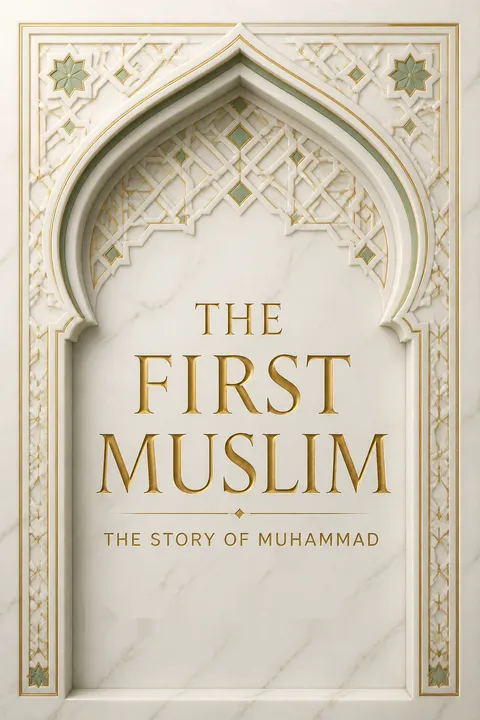
The First Muslim received mixed reviews. Many praised its readable narrative style and humanizing portrayal of Muhammad, appreciating the author's attempt to view him from a non-religious perspective. Some Muslims found it insightful, while others criticized perceived biases and speculative interpretations. The author's Jewish background was noted, with some praising her sympathetic approach despite religious differences. Critics pointed out factual errors and questioned some of the author's conclusions. Overall, reviewers found it an engaging, if sometimes controversial, biography that offered a unique perspective on Muhammad's life.
People Also Read


Glossary
umma
community beyond tribeA community or people whose shared identity is not limited to clan or ancestry. In Muhammad's Medinan setting, the term described a political and religious community that included emigrants from Mecca and local helpers, and whose agreements could also include other groups. It became a foundational idea for the wider community of Islam.
hijra
migration from MeccaMuhammad's followers' migration from Mecca to Medina in 622, prompted by persecution and the need for protection. The move severed people from homes, families, and tribal ties, and created a new base for the community. The Muslim calendar later counted years from this migration.
hanif
independent monotheistA person who turned toward belief in one God without fully identifying with the established Jewish or Christian communities of the time. Hazleton describes the hanifs as a small circle of Meccan seekers who looked to Abraham as an ancestral model of monotheism. The Quran later uses the term approvingly for figures devoted to the one God.
tahannut
solitary religious meditationAn ascetic practice of retreat and meditation associated with the hanifs and adopted by Muhammad in the mountains near Mecca. It involved solitary vigils and distance from ordinary social life. Muhammad was engaged in this practice before the first Quranic revelation on Mount Hira.
jahiliya
pre-Islamic ignoranceA Quranic term used for the era and values Muhammad's message challenged. It is often translated as ignorance, darkness, or barbarism. Hazleton cautions that later histories sometimes treated it as proof that pre-Islamic Mecca was simply immoral or godless, obscuring its actual religious and social complexity.
qibla
direction faced in prayerThe direction toward which worshippers face during prayer. The early believers initially prayed toward Jerusalem. In Medina, the direction changed to the Kaaba in Mecca, marking an important shift in the community's religious identity and relationship to its place of origin.
qital
physical combatAn Arabic term used in the Quran for fighting or physical combat. Hazleton distinguishes it from jihad, a broader term for striving. In the book's account, Quranic passages about qital address armed conflict, while their conditions and applications remain a matter of interpretation.
jihad
striving in God's wayA term meaning striving or struggle in the way of God. In the book, its meaning is not identical to qital, the more specific term for physical combat. Later Muslim interpretation developed both an inward sense of moral and spiritual struggle and an outward sense involving armed defense.
munafiqun
those holding backA Quranic term commonly translated as hypocrites, applied in the Medinan period to people whose commitment to Muhammad's leadership was questioned. Hazleton stresses that the term can obscure political disagreement: some people who were labeled this way may have accepted Islam while reserving the right to oppose Muhammad's political decisions.
shahada
declaration of faithThe testimony affirming that there is no god but God and that Muhammad is God's messenger. In the early community, reciting the shahada marked a person's public acceptance of the movement's central religious claim and could also signal a change in social and political allegiance.
sunna
prophet's customary exampleThe practice or custom of Muhammad, understood as a guide for believers. Reports about his words and actions were gathered into hadith traditions and used alongside the Quran in later Islamic thought. In accounts of Muhammad's final message, some reports name the sunna as part of what he left to the community, while others give a different formulation.
FAQ
What's The First Muslim: The Story of Muhammad about?
- Biographical Focus: The book provides a detailed biography of Muhammad, from his early years as an orphan to his role as a prophet and leader of Islam.
- Historical Context: Lesley Hazleton places Muhammad's life within the broader historical and cultural context of seventh-century Arabia, highlighting the social dynamics and religious landscape of the time.
- Humanizing Muhammad: The author presents Muhammad as a complex human being, emphasizing his struggles, doubts, and the profound impact of his experiences on his life and teachings.
Why should I read The First Muslim: The Story of Muhammad?
- Engaging Narrative: Hazleton's writing style is accessible and engaging, making the historical narrative compelling for readers unfamiliar with Islamic history.
- Insightful Analysis: The book offers deep insights into the life of Muhammad, challenging stereotypes and providing a nuanced understanding of his character and motivations.
- Cultural Relevance: Understanding Muhammad's life is crucial for grasping the foundations of Islam and its influence on contemporary society, making this book relevant for both historical and modern contexts.
What are the key takeaways of The First Muslim: The Story of Muhammad?
- Muhammad's Early Life: The book emphasizes Muhammad's orphanhood and the psychological impact it had on him, shaping his empathy and leadership qualities.
- Revelation and Doubt: Hazleton explores the tension between Muhammad's profound experiences of revelation and his human doubts, illustrating the complexity of his prophetic journey.
- Social Justice Themes: The narrative highlights Muhammad's commitment to social justice, equality, and the welfare of the marginalized, which are central themes in his teachings.
What are the best quotes from The First Muslim: The Story of Muhammad and what do they mean?
- "I am just one of you": This quote reflects Muhammad's humility and his insistence on his humanity, emphasizing that he is not above others despite his prophetic role.
- "The life of this world is but a sport and a pastime": This statement critiques materialism and the transient nature of worldly pursuits, urging followers to focus on spiritual and ethical values.
- "Say: ‘Disbelievers, I serve not what you serve’": This quote underscores the importance of faith and conviction, marking a clear distinction between the beliefs of Muhammad and those of his opponents.
How does Lesley Hazleton portray Muhammad's early life in The First Muslim?
- Orphaned Background: Hazleton details Muhammad's early years as an orphan, which instilled in him a sense of vulnerability and empathy for the marginalized.
- Foster Care Influence: His upbringing with a Bedouin foster family is highlighted as crucial in shaping his character, instilling values of honor and resilience.
- Struggles for Acceptance: The narrative emphasizes Muhammad's lifelong struggle for acceptance and belonging, which influenced his later leadership and prophetic mission.
What role does the concept of revelation play in The First Muslim: The Story of Muhammad?
- Complex Experience: Hazleton describes revelation as a complex and often terrifying experience for Muhammad, filled with doubt and fear rather than immediate clarity or joy.
- Satanic Verses Incident: The book discusses the controversial "Satanic Verses" episode, illustrating Muhammad's struggle with the authenticity of his revelations and the pressure to conform to societal expectations.
- Ongoing Dialogue: The narrative presents revelation as an ongoing dialogue between the divine and the human, emphasizing Muhammad's role as a mediator rather than a mere conduit.
How does The First Muslim: The Story of Muhammad address the social justice themes in Muhammad's teachings?
- Critique of Materialism: Hazleton highlights Muhammad's condemnation of wealth accumulation and social inequality, urging a return to ethical values and communal responsibility.
- Empowerment of the Marginalized: The book emphasizes Muhammad's focus on the poor, women, and orphans, advocating for their rights and dignity within society.
- Call for Unity: Muhammad's teachings are portrayed as a call for unity among diverse tribes and clans, transcending traditional loyalties in favor of a broader community based on shared faith.
What challenges did Muhammad face in Mecca according to The First Muslim: The Story of Muhammad?
- Opposition from the Quraysh: Hazleton details the fierce opposition Muhammad faced from the Quraysh elite, who felt threatened by his message and sought to silence him.
- Personal Loss: The narrative emphasizes the personal losses Muhammad endured, including the deaths of Khadija and abu-Talib, which left him vulnerable and isolated.
- Social Boycott: The book describes the social boycott imposed on Muhammad and his followers, illustrating the lengths to which the Quraysh would go to maintain their power and suppress dissent.
How does Lesley Hazleton depict the significance of the Night Journey in The First Muslim: The Story of Muhammad?
- Spiritual Transformation: The Night Journey is portrayed as a pivotal moment in Muhammad's life, marking his transition from a local preacher to a leader with a universal message.
- Connection to Previous Prophets: Hazleton emphasizes the significance of Muhammad's encounters with earlier prophets during the journey, reinforcing his role within the broader monotheistic tradition.
- Symbol of Hope: The journey serves as a symbol of hope and divine affirmation, providing Muhammad with the strength to continue his mission despite the challenges he faced.
What impact did the hijra have on Muhammad and his followers in The First Muslim: The Story of Muhammad?
- New Community in Medina: The hijra marked the establishment of a new community in Medina, where Muhammad and his followers could practice their faith freely and build a supportive environment.
- Political Authority: Hazleton illustrates how the hijra allowed Muhammad to assume a political role, uniting the diverse tribes of Medina under the banner of Islam.
- Strengthened Resolve: The journey reinforced the resolve of Muhammad and his followers, transforming them from a persecuted minority into a cohesive group with a shared purpose and identity.
How does The First Muslim: The Story of Muhammad explore the relationship between Muhammad and Khadija?
- Mutual Support: The book highlights the deep bond between Muhammad and Khadija, portraying her as his primary supporter and confidante throughout his early struggles.
- Impact of Loss: Hazleton emphasizes the profound impact of Khadija's death on Muhammad, illustrating how her absence left a void that could never be filled.
- Legacy of Love: Their relationship is depicted as one of genuine love and respect, setting a standard for Muhammad's later marriages and shaping his understanding of partnership and loyalty.
How does The First Muslim: The Story of Muhammad address the conflicts between Muhammad and the Jewish tribes?
- Initial Alliances: The book outlines how Muhammad initially sought alliances with the Jewish tribes in Medina, viewing them as potential supporters of his monotheistic message.
- Growing Tensions: As the Jewish tribes resisted his leadership and questioned his prophethood, tensions escalated, leading to political and religious conflicts.
- The Qureyz Massacre: Hazleton presents the massacre of the Qureyz tribe as a strategic move by Muhammad to consolidate power, reflecting the complexities of leadership and authority.
About the Author
Other books by Lesley Hazleton
Download PDF
Download EPUB
.epub digital book format is ideal for reading ebooks on phones, tablets, and e-readers.








