

Key Takeaways
Islam turned Arabia's rival tribes into a community with a wider allegiance
A desert shaped society. Pre-Islamic Arabia's scarce water and shifting pastures made family and tribe essential sources of protection. Its culture prized hospitality and memorized poetry, while Mecca's Ka'ba drew pilgrims and trade. Muhammad, an orphan and respected merchant, preached one God alongside accountability, care for the poor, and equality beyond wealth or lineage. Those teachings challenged both idol worship and the Quraysh elite's economic interests in pilgrimage.
Belief became belonging. Persecution drove Muhammad and his followers to migrate from Mecca to Medina in 622. This Hijra, or emigration, began the Islamic calendar and marked a political change: Muslims became an Umma, a community whose ties rested on shared faith rather than tribe alone. The early community also made agreements with Medina's Jewish groups, though relations grew tense.
What's striking is how the book treats a religious message as social infrastructure. Shared belief supplied a basis for cooperation among people whose older loyalties had repeatedly drawn them into conflict. That resembles a broader historical pattern: institutions work best when they create trust across existing group boundaries. Yet the new identity did not make kinship or political interest disappear. The Medina story is most persuasive when read as the creation of an additional allegiance, not as the instant replacement of tribal life.
Political unity survived Muhammad, but succession turned it into a recurring fault line
Leadership had to continue. After Muhammad's death in 632, the community selected Abu Bakr as caliph, a political successor, not a new prophet. Rebellions among Arabian tribes tested whether allegiance to Islam also meant accepting a central government. Abu Bakr's campaigns reunified the peninsula; under Umar, Muslim armies expanded into Byzantine Syria and Egypt and Sassanid Iraq and Persia. The conquests transformed a young state into a regional power.
Unity had a price. Disputes over the caliphate's authority and Uthman's appointments culminated in his murder in 656. Ali's accession did not settle the conflict: fighting among Muslims began, and Ali was killed in 661. Mu'awiya restored central rule, but made succession hereditary. Husayn's death at Karbala in 680 became a defining event for Shi'a Muslims. The early caliphate thus joined remarkable expansion to unresolved arguments about legitimate leadership.
The episode complicates any neat story in which unity simply follows from shared doctrine. A new political community still needs procedures for leadership, accountability, and dissent. The early caliphs had no settled succession rule, so personal authority and military power filled the gap. Mu'awiya's hereditary solution reduced one kind of uncertainty while creating another: rule could be stable yet contested as illegitimate. The history is a useful reminder that political institutions shape religious communities, even when their members share foundational beliefs.
Conquest changed rulers faster than it changed most subjects' lives
An empire absorbed difference. The Byzantine and Sassanid empires were weakened by long warfare when Muslim armies entered their territories. In many conquered regions, local farmers, churches, and trade continued under new rulers. Christian and Jewish communities often retained their worship and paid taxes to the new government. The jizya was a poll tax applied to non-Muslims; the book notes that its rates were often below earlier imperial taxes, though treatment varied.
Inclusion was incomplete. By the mid-700s, the book estimates that Muslims made up only about 10 percent of the empire's population. Under the Umayyads, Arab Muslims held advantages, and non-Arab converts could still face discriminatory taxation. That inequality helped the Abbasids mobilize support by promising broader inclusion. Their revolution widened non-Arabs' role in administration, especially for Persians. Expansion, conversion, and political integration were related, but they were not the same process.
The distinction between changing a government and changing a population is crucial. It prevents the common mistake of treating military expansion as instant mass conversion, and it reveals how tax rules can shape who benefits from a new order. The account also invites caution: promises of tolerance did not mean equal power, and a policy described as protective could still mark communities as subordinate. A good comparison therefore asks not only which faiths were permitted, but who controlled law, revenue, and political office.
Build knowledge by translating earlier work, testing it, and putting it to use
Baghdad connected scholars. Under the Abbasids, the House of Wisdom in Baghdad brought together a library, translation center, and research community. Arabic helped scholars from different regions exchange ideas, while rulers' support made scholarship materially possible. Al-Khwarizmi helped develop algebra and spread the Indian numeral system. Astronomers refined calculations useful for navigation and finding the direction of Mecca; geographers estimated Earth's dimensions with striking accuracy.
Inquiry reached practical life. Physicians such as al-Razi challenged inherited medical explanations, while Ibn Sina's medical encyclopedia became a major reference beyond the Muslim world. Ibn al-Haytham tested theories of vision through observation and experiment. Hospitals in cities including Baghdad and Cairo offered organized care, including treatment for people who could not pay. The book presents these achievements as cumulative: scholars translated earlier learning, criticized it, and extended it rather than simply preserving it.
The most durable lesson is institutional, not civilizational bragging. Translation mattered because it was paired with patronage, shared scholarly language, and permission to revise received ideas. That combination resembles modern research systems, where discovery depends on both individual insight and durable places to compare results. The book's sweeping claims about Islamic science as the foundation of later European advances should be read carefully; intellectual influence is rarely a single handoff. Its stronger point is that knowledge grew through exchange across languages and generations.
Treat Islamic law as a tradition of argument, not one fixed code
Law required interpretation. Fiqh is the human study and interpretation of Islamic law. As Muslim communities spread far beyond Muhammad's lifetime and the settings described in the Quran, scholars developed methods for applying scripture and prophetic precedent. The four major Sunni schools, Hanafi, Maliki, Shafi'i, and Hanbali, differed over the weight of reason, local practice, analogy, and hadith, reports about the Prophet's words and actions. They were approaches to law, not separate religions.
Political disagreements deepened. Hadith scholars such as al-Bukhari assessed reports partly by examining the reliability of the narrators who transmitted them. Meanwhile, the dispute over whether Ali's descendants had the right to lead developed into Shi'a traditions with distinct accounts of authority and religious guidance. Sunni and Shi'a identities therefore emerged through both political conflict and theological debate. The result was not one unchanged interpretation, but institutions and communities built around different claims about how to preserve the faith.
This is a useful corrective to the idea that a major religious tradition speaks with one legal voice. Interpretive schools can preserve common commitments while allowing differences in method, much as constitutional systems develop competing readings of shared texts. The book also shows that standards of religious authority are never merely technical: deciding which narrators, scholars, or leaders count has consequences for community membership. Its account is clearest when it treats Sunni and Shi'a history as a process of differentiation, rather than projecting fully formed modern identities back onto the earliest disputes.
Al-Andalus shows why cultural brilliance cannot compensate for political fragmentation
A western crossroads flourished. Muslim armies entered Iberia in 711, amid divisions in the Visigothic kingdom. Under the Umayyads of Cordoba, al-Andalus became a mixed society of Arab, Berber, and local Hispanic communities. Cordoba's libraries, workshops, and Great Mosque made it a major center of learning and production; Jewish scholars also made important contributions. Arabic words and artistic forms entered local culture, while knowledge circulated between Iberia and Christian Europe.
Rivalry opened the door. In the eleventh century, the unified state broke into ta'ifa, or factional kingdoms. Their rulers sometimes hired Christian powers against Muslim rivals, weakening themselves as northern Christian kingdoms expanded. Almoravid and Almohad movements briefly restored political unity, but the Christian advance continued. Granada, the last Muslim state in Iberia, fell in 1492. The remaining Muslim population faced forced conversion and, eventually, expulsion. The long history ended not with one decisive defeat, but with repeated fragmentation and pressure.
Al-Andalus is compelling because it resists a simple golden-age story. Libraries, architecture, and cultural exchange can coexist with unequal status and political instability; none guarantees a state's survival. The taifa episode makes the strategic cost of elite rivalry unusually visible, especially when rulers invite outside powers into local contests. At the same time, the book's broad portrait of coexistence should not be mistaken for frictionless harmony. Cultural contact is not proof of equal treatment, but it can still create durable intellectual and artistic exchange.
Follow trade routes to understand Islam beyond the caliphate's borders
Commerce carried connection. Across West Africa, Muslim merchants crossed the Sahara and settled in trading towns. Mali's ruler Mansa Musa made his 1324 pilgrimage to Mecca with a large retinue and conspicuous wealth; after returning, he supported scholars and construction in Timbuktu. On East Africa's coast, merchants intermarried with local communities, helping form Swahili culture, which remained African in language while incorporating Arabic influences.
Conversion took many paths. In Southeast Asia, trade links and Muslim rulers helped Islam spread through port cities and local networks. In China, Muslim communities grew through migration, government service, and assimilation; the explorer Zheng He was a Chinese Muslim admiral. The book also traces Muslim Africans forcibly transported across the Atlantic, where enslavement disrupted religious teaching and community life. Together these cases show that Islam's history traveled through trade, migration, political patronage, and coercion, not only through armies.
These histories widen the map beyond the empires that dominate political narratives. Trade networks move more than goods: they carry languages, religious practices, family ties, and access to learning. The East African example is especially useful because it shows local culture shaping the form Islam took, rather than simply receiving it from abroad. The forced migration of Muslim Africans adds a sharp counterpoint: connections can also be broken by violence. No single model explains conversion across such different settings, and that variety is part of the story's value.
After Baghdad fell, Muslim power rebuilt from new regional centers
The Crusades exposed division. European Crusaders captured Jerusalem in 1099 while Muslim rulers in the region remained politically divided. Salah al-Din later united Egypt and Syria, defeated the Crusader army at Hattin, and retook Jerusalem in 1187. Unlike the earlier massacre, his conquest allowed the city's Christian residents to leave safely and protected Christian sites.
The Mongols struck the heartland. In 1258, Hulagu's army took Baghdad, killed the caliph, and destroyed institutions including the House of Wisdom. The loss was both political and intellectual. Yet Mongol expansion was checked in 1260 when Mamluk forces defeated a Mongol army in Palestine. Meanwhile, Turkish power grew in Anatolia, where the Ottomans would build a new empire. The sequence is not a simple recovery from catastrophe: it shows how political authority and scholarship could move to different centers after devastation.
Baghdad's destruction is a powerful case of how vulnerable knowledge can be when it is concentrated in a capital, a library, or a ruling court. The comparison with the Crusades also shows that external pressure did not automatically unite Muslim rulers; political coordination had to be built. Salah al-Din's success depended on controlling Egypt and Syria, while the Mamluk victory depended on military organization. These episodes caution against treating a civilization as a single actor. Its survival often rests on institutions and communities outside the center that has just fallen.
Three gunpowder empires revived Muslim rule without restoring one empire
Power returned in several forms. The Ottomans conquered Constantinople in 1453 and later ruled a diverse empire from the Balkans to Arab lands. Under Suleiman, they reworked their legal code and expanded to their greatest extent. The Safavids established a Persian state centered on Twelver Shi'a Islam, while the Mughals built a Muslim-led empire in India that drew on Persian, Turkic, and Indian traditions. These states shared Islamic and cultural connections, but they were separate political projects.
Success brought new limits. Ottoman military advantage faded as European powers caught up; internal administration and economic pressures added to the strain. Nineteenth-century reforms borrowed heavily from European models, while nationalism challenged the empire's multiethnic structure. The Ottoman case is not a sudden collapse but a long struggle to adapt. Meanwhile, the Safavid and Mughal states also declined. The age restored Muslim imperial power, but not the single caliphate that had once stretched from Spain to India.
The three empires are best understood as a connected system of rivals, not as one unified Muslim bloc. Their shared cultural inheritance coexisted with sharp differences, especially over religious authority and political legitimacy. This helps explain why imperial strength did not automatically produce pan-Islamic unity. The Ottoman decline also resists a single-cause explanation: military competition, administrative choices, and changing economic conditions interacted. The book's rise-and-fall rhythm is memorable, but dynasties do not follow a fixed life cycle; institutions can adapt, stagnate, or break in uneven ways.
Colonial borders made Muslim unity a political argument, not an inherited fact
War redrew the map. During World War I, Britain encouraged an Arab revolt against the Ottomans while secretly negotiating with France over the region's division. The Balfour Declaration added a further competing promise concerning Palestine. After the Ottoman defeat, European powers shaped new states and borders, while Turkey's Mustafa Kemal abolished the caliphate in 1924 and pursued a secular national project. The end of colonial rule did not erase those borders; independence often preserved them.
Muslims debated the remedy. Some reformers urged a return to early Islamic practice; others favored nationalism, secular government, or combinations of religious values and modern institutions. In India, Muslim leaders supported partition, leading to Pakistan in 1947. In Egypt, the Muslim Brotherhood paired social services with an Islamic political vision. These responses did not resolve the tension between inherited religious identities and modern states. They made that tension a central question of Muslim politics.
The modern story is not simply that foreign rule ended and sovereignty returned. Borders, bureaucracies, and political identities carried colonial decisions into independent states, shaping the options available to later generations. Yet an explanation centered only on Europe would be incomplete: local elites, regional rivalries, and competing visions of legitimate rule mattered too. The enduring debate is not a choice between a pure past and a foreign present. It concerns how communities can draw on religious inheritance while governing diverse populations through institutions capable of handling modern political life.
Analysis
Lost Islamic History is a sweeping chronological survey, but its deeper argument is about connection: Islamic civilization grew when people, institutions, and ideas crossed boundaries, and weakened when political fragmentation or coercion severed those ties. The narrative travels from tribal Arabia through caliphates, scientific centers, Iberia, African and Asian trading networks, the Ottoman, Safavid, and Mughal empires, and finally colonial rule and nation-states. This geographic range is the book's distinctive strength. It makes clear that Islamic history cannot be reduced to the modern Middle East or to the fortunes of a single dynasty.
The account also offers a useful corrective to histories that cast Muslim societies as isolated from European development. Translation, medicine, astronomy, commerce, and diplomacy appear as shared processes, not gifts from one civilization to another. Its treatment of the House of Wisdom and Cordoba shows how knowledge depends on patronage and institutions as well as individual genius. Likewise, the stories of Timbuktu, Swahili cities, and Chinese Muslims demonstrate that religious life takes locally distinctive forms. The survey's broad arc can, however, imply a cleaner rise, decline, and recovery than the evidence warrants. Military success does not prove social harmony, and formal religious toleration did not erase hierarchy. Nor does the book's account of European imperialism fully explain every later political failure; internal struggles, economic choices, and changing social coalitions also shaped outcomes. The recurring dynastic-cycle model is an engaging narrative device, but it risks making diverse societies seem governed by one predictable pattern.
The most productive way to read the book is as an invitation to recover neglected connections, not as a verdict that one golden age should simply be restored. Its history is richest when it shows exchange and conflict together: states can unite communities while privileging some, and intellectual flourishing can coexist with political fragility. That complexity gives contemporary arguments about religion, nationalism, and governance a longer and more nuanced context.
Review Summary
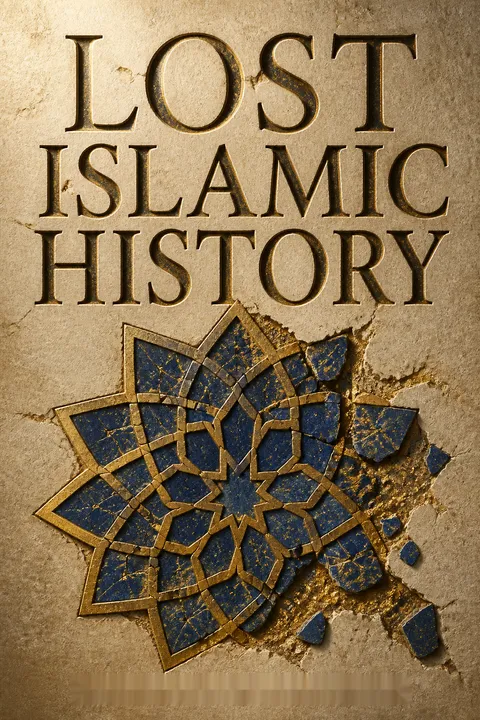
Lost Islamic History provides a concise overview of 1400 years of Islamic history, from pre-Islamic Arabia to modern times. Readers praise its accessible writing style, comprehensive coverage, and ability to connect historical events to contemporary issues. Many found it enlightening, especially regarding scientific advancements and cultural contributions of Muslim civilizations. Some criticize perceived biases or oversimplifications, but most recommend it as an excellent introduction to Islamic history for both Muslims and non-Muslims seeking to understand the religion's rich past.
People Also Read






Glossary
Umma
community of Muslim believersThe Umma is the community of Muslims understood as a collective bound by shared faith. In the book's account of Medina, it offered an allegiance broader than clan or tribe and helped organize a new political community. The term does not mean that Muslims were always politically united; the history repeatedly shows disputes over leadership and authority within the Umma.
Hijra
emigration to MedinaThe Hijra is Muhammad's migration from Mecca to Medina in 622, accompanied by followers escaping persecution. It created the setting in which the Muslim community could organize as a political society rather than remain a vulnerable religious minority. The event marks the beginning of the Islamic calendar and is treated in the book as a decisive turning point.
caliph
political successor to MuhammadA caliph was a political leader of the Muslim community after Muhammad's death, not a prophet. The early caliphs governed from Medina and were expected to preserve the community and follow the Prophet's example. Disagreement over who could legitimately hold the office shaped early conflicts, and Mu'awiya's appointment of his son established hereditary succession under the Umayyads.
jizya
poll tax on non-MuslimsThe jizya was a poll tax levied on non-Muslim subjects in many Muslim-ruled states. In the book's account, payment was associated with protection and exemption from military service, while Muslims paid other obligations, including zakat. Rates and enforcement varied. Umayyad rules that continued the tax for some non-Arab converts reveal how fiscal policy could produce unequal treatment.
House of Wisdom
Baghdad's scholarly institutionThe House of Wisdom, or Bayt al-Hikmah, was an Abbasid institution in Baghdad associated with libraries, translation, teaching, and research. It brought scholars and texts from different intellectual traditions into a shared scholarly environment. In the book, it represents the institutional support behind the Abbasid-era growth of mathematics, astronomy, medicine, and other fields.
fiqh
interpretation of Islamic lawFiqh is the scholarly interpretation and application of Islamic law. It covers religious practice as well as social, commercial, and legal questions. Because Muslims lived in settings unlike seventh-century Medina, jurists developed methods for applying the Quran and prophetic precedent to new circumstances. Different approaches produced schools of law that shared core sources but differed in method.
madhhab
school of legal interpretationA madhhab is a school of Islamic jurisprudence that applies methods of fiqh to religious and practical questions. The book describes four major Sunni schools: Hanafi, Maliki, Shafi'i, and Hanbali. Their differences concern how scholars weigh sources such as hadith, local practice, analogy, and reason. They are legal traditions, not separate religions.
hadith
reports about MuhammadHadith are reports describing Muhammad's sayings, actions, or approvals, used alongside the Quran as a source of religious guidance. Scholars developed methods to assess their authenticity, including scrutiny of the wording and the chain of people who transmitted each report. Collections such as al-Bukhari's became influential references for law, theology, and religious practice.
ta'ifa
factional kingdom in IberiaA ta'ifa was one of the small, competing states that emerged in al-Andalus after the collapse of Umayyad unity in the eleventh century. The plural is tawa'if. Their rulers pursued local power and sometimes sought Christian allies against Muslim rivals. This rivalry weakened Muslim political control and allowed northern Christian kingdoms to expand.
Salafism
emulation of early MuslimsSalafism is a movement urging Muslims to model religious practice on the earliest generations of Muslims, the salaf, or predecessors. In the book, it is associated with Muhammad ibn Abd al-Wahhab's call to remove practices he considered later innovations and return to an authentic form of Islam. The movement gained wider influence through its alliance with the Saudi state.
millet system
communal self-administrationThe millet system was an Ottoman arrangement allowing religious communities, especially Christians and Jews, to organize aspects of their communal life and choose leaders who represented them to the government. It helped administer a diverse empire without requiring religious uniformity. The system offered a degree of autonomy, though communities remained within an imperial hierarchy and were not necessarily equal in power.
FAQ
What's Lost Islamic History about?
- Historical Examination: The book by Firas Alkhateeb explores the rise and fall of Muslim civilizations, focusing on their historical impact and contributions across various regions, particularly in India.
- Themes of Jihad and Conversion: It delves into the concept of Jihad and the methods of conversion to Islam, highlighting the role of violence and coercion in many instances.
- Cultural and Religious Dynamics: The book examines the interactions between Muslims and non-Muslims, detailing the cultural imperialism that often accompanied Islamic rule and the resulting societal changes.
Why should I read Lost Islamic History?
- In-depth Research: The book is based on meticulous investigation of the Quran and historical texts, providing a well-researched perspective on Islamic history.
- Understanding Current Events: It offers insights into the challenges faced by both Muslim and non-Muslim communities today, particularly in relation to Islamic extremism.
- Engaging Narrative: Alkhateeb presents the material in an engaging manner, making complex historical events accessible to a broad audience, including those unfamiliar with Islamic history.
What are the key takeaways of Lost Islamic History?
- Jihad as a Central Theme: The book emphasizes that Jihad, or holy war, has been a foundational aspect of Islam, often associated with violence and forced conversion.
- Role of Violence in Conversion: It highlights that many conversions to Islam were achieved through violence and coercion, as seen in historical accounts.
- Historical Revisionism: The author calls attention to the tendency of modern historians to romanticize Islamic rule while downplaying the violence and oppression that accompanied it.
What are the best quotes from Lost Islamic History and what do they mean?
- “I have been made victorious with terror.”: This quote reflects the belief that fear and intimidation were used as tools for establishing Islamic authority.
- “The Islamic historians and scholars have recorded with utmost glee and pride of the slaughters of Hindus…”: This underscores the troubling historical narrative where Muslim chroniclers celebrated violence against non-Muslims.
- “The tragic 9/11 attacks... have plunged both the Islamic and non-Islamic world into a crisis of security and stability.”: This underscores the ongoing impact of extremist actions on global relations and security.
How does Lost Islamic History address the life of Prophet Muhammad?
- Prophet’s Actions: The book details how Muhammad engaged in warfare and violence to establish Islam, including the forced conversion of idolaters and the treatment of Jews.
- Historical Context: It places Muhammad’s actions within the broader context of 7th-century Arabia, illustrating the socio-political dynamics of the time.
- Critique of Idealization: The author challenges the idealized view of Muhammad as a peaceful figure, presenting evidence of his militaristic strategies.
What does Lost Islamic History say about Islamic imperialism in India?
- Brutal Expansion: The book describes the violent expansion of Islam in India, detailing how Muslim invaders engaged in mass slaughter and forced conversions.
- Cultural Impact: It discusses the cultural and social ramifications of Islamic rule in India, including the destruction of temples and the imposition of jizyah on non-Muslims.
- Long-term Consequences: The author argues that the legacy of Islamic imperialism has led to enduring tensions between Muslim and non-Muslim communities in India.
How does Lost Islamic History address the concept of Sufism?
- Sufism's Role in Conversion: The book discusses how Sufis, often viewed as peaceful figures, were involved in the violent conversion of non-Muslims.
- Historical Examples: Alkhateeb provides examples of Sufi saints who supported or instigated violence against Hindus.
- Cultural Tensions: The author highlights the tension between Sufi practices and the local cultures they encountered, often leading to conflict rather than peaceful coexistence.
What is the author's perspective on Islamic slavery in Lost Islamic History?
- Historical Context: Alkhateeb provides a detailed account of how slavery was institutionalized under Islamic rule, emphasizing its systematic nature.
- Cultural Justification: The author discusses how Islamic teachings were used to justify the enslavement of non-Muslims.
- Long-lasting Effects: Alkhateeb argues that the legacy of slavery under Islamic rule has had lasting effects on social structures and demographics.
How does Lost Islamic History challenge the notion of peaceful Islamic expansion?
- Violent Conquests: Alkhateeb provides detailed accounts of the violent nature of Islamic conquests, countering the narrative that Islam spread peacefully.
- Historical Documentation: The book references various historical sources to substantiate claims of brutality and coercion during the expansion of Islam.
- Critical Perspective: The author encourages readers to critically assess the romanticized views of Islamic history and recognize the complexities and harsh realities of its expansion.
How does the author compare Islamic and British rule in Lost Islamic History?
- Severity of Islamic Rule: Alkhateeb argues that the brutality of Islamic conquests was often more severe than the economic exploitation experienced under British colonialism.
- Cultural Legacy: The author suggests that the cultural and social impacts of Islamic rule have had a more profound and lasting effect on Indian society.
- Historical Narratives: The book challenges the tendency to view British rule as the sole source of suffering in India, advocating for a more nuanced understanding.
What are the implications of Lost Islamic History for understanding modern Islamic societies?
- Historical Roots of Conflict: Alkhateeb argues that many contemporary issues in Islamic societies can be traced back to historical practices of violence and exploitation.
- Cultural Identity: The book suggests that the legacy of Islamic rule has shaped cultural identities and social hierarchies in modern regions.
- Need for Reevaluation: The author calls for a reevaluation of historical narratives surrounding Islam, advocating for a more honest and comprehensive understanding.
Download PDF
Download EPUB
.epub digital book format is ideal for reading ebooks on phones, tablets, and e-readers.








