

Key Takeaways
Treat national unity as a political practice, not a slogan
Azad argued for shared nationhood. A Muslim nationalist, he believed religious communities could share one political home. In 1912, he founded the Urdu weekly Al Hilal to challenge Muslim leaders who urged loyalty to Britain and distance from the freedom movement. Its circulation reached 26,000 copies a week, evidence, in his account, of a strong audience for nationalist politics among Muslims. He also tried to convince Hindu revolutionaries that Indian Muslims were potential allies, not a community to be treated as an enemy.
The Congress fell short too. Azad recounts how Bombay's Parsi leader K.F. Nariman and Bihar's Muslim leader Syed Mahmud were passed over for provincial leadership. He saw these decisions as evidence that the Congress had not yet made its inclusive nationalism real in its own appointments.
What's striking is the distinction between declaring a nation and building one through representation. Azad's account makes inclusion practical: political trust depends not only on shared ideals but on who receives authority. That insight applies to any coalition claiming to represent diverse groups. Yet his own testimony is not a complete audit of Congress conduct. The examples are selected by a participant with strong views about the failures he witnessed. Their value lies less in proving a uniform pattern than in showing how even isolated exclusions can discredit an organization’s universal claims.
Use limited office to build capacity, but judge power by who controls it
Participation was a strategic choice. The Government of India Act of 1935 gave provinces elected governments but reserved emergency powers for their British governors. Azad still argued that Congress should contest the elections: a boycott could leave legislatures to its opponents, while campaigning could teach political ideas to voters. Congress won majorities in five large provinces and became the largest party in four others. Azad then urged Congress to take office and use the powers available rather than reject them in advance.
The ministries could still act. They pursued land reform, relief from agricultural debt, and expanded education. Azad presents C.R. Das as an earlier advocate of using limited provincial authority to prepare for greater self-government. But he also acknowledges that Congress failed its own test when communal considerations helped determine who would lead governments in Bombay and Bihar.
Azad's position resembles a useful distinction in institutional politics: participating in a flawed system can create leverage, but office is not the same as sovereignty. Provincial ministries could deliver reforms and demonstrate administrative competence, while governors retained a veto over the constitutional order. The account also resists a tidy success story. Congress gained governing experience, yet its choices about leaders weakened the inclusive legitimacy it needed. The lesson is not simply to enter or boycott institutions, but to assess both what power they permit and what their use signals to people left out.
Support a just cause only when your people can choose freely
Azad separated democracy from obedience. When Britain entered the Second World War in 1939, the Viceroy declared India at war without consulting Indian representatives. Azad opposed Nazism and Fascism, and said a free India should support the democratic powers. But he rejected the idea that a colonized country should fight for democracy abroad while denied political choice at home. If Britain refused freedom, he argued, India should withhold support.
He differed from Gandhi on principle. Gandhi opposed participation in war as a matter of conviction; Azad treated non-violence as a political method suited to India's struggle, not an absolute rule. During the war, Congress backed individual protests against involvement. Azad accepted that course despite preferring a broader anti-war movement. His position was conditional: freedom would make Indian participation a voluntary national decision.
The tension here is between moral consistency and political responsibility. Gandhi's absolute non-violence offered a clear ethical boundary; Azad's approach allowed a free society to defend itself, while refusing to let an empire define that society's choices. His argument anticipates a recurring problem in alliances: shared opposition to an aggressor does not erase unequal power among partners. The difficult question is how to distinguish genuine consent from a promise made under pressure. Azad's answer is political agency, though the account gives less attention to how a newly free state might resolve the moral costs of war.
A promise after the war is not power during the war
The Cripps offer failed Azad's immediate test. In 1942, Sir Stafford Cripps proposed an Indian constitution after the war and an Indian-majority Executive Council during it. At first, Cripps described the council as functioning like a cabinet, with the Viceroy as a constitutional figure. Under questioning, he could not guarantee that arrangement: legally, the Viceroy retained authority, and Britain kept control of defence. Provinces could also decline to join the future union.
Azad judged authority, not presentation. He wanted an Indian government able to direct the country's defence and command public confidence now, not merely a future promise. After two weeks of discussions, Congress rejected the offer. Azad argued that reserving defence to Britain left Indian ministers responsible for tasks without controlling the decisions that shaped them.
This episode offers a sharp way to read political agreements: test the formal allocation of authority, not just the language used to sell it. An executive body can look representative yet remain powerless if another actor keeps the decisive veto. Azad's insistence on present responsibility also identifies a credibility problem: people are less likely to accept risk on behalf of a government they cannot influence. At the same time, his account reflects Congress's negotiating position, not a neutral transcript of every British calculation. The core distinction between consultation and control remains the useful one.
Never confuse a leader's moral confidence with operational readiness
Azad expected arrests and disorder. In 1942, Gandhi called for the British to leave India, and Congress approved the Quit India Resolution. Azad supported the demand but doubted that a non-violent campaign could be sustained if its leaders were immediately arrested. He warned that the government would act quickly. On 9 August, the leading Congress figures were detained; Azad was taken to Ahmednagar Fort, and the mass response included attacks on railways, police stations, and other sites.
Imprisonment carried private costs. The leaders were cut off from news and correspondence for weeks. In 1944, Azad learned that his wife had died while he was detained; government officials had refused requests for him to visit her. His account shows the personal price of the struggle alongside the strategic gap between a movement's intended discipline and what happens after its organizers are removed.
Azad's warning concerns a basic problem of political organization: a plan that depends on leaders guiding every step becomes vulnerable when the state can remove those leaders at once. The movement's moral purpose did not guarantee control over its tactics or consequences. That does not make mass resistance illegitimate, but it does make contingency planning essential. The memoir gives a leader's view of events and cannot capture every local motive behind the violence. Its strongest insight is narrower: movements need to reckon honestly with what followers may do when central coordination disappears.
Federal autonomy offered a middle path between domination and partition
Azad proposed a weak but useful centre. During the 1946 Cabinet Mission negotiations, he argued that India's provinces should control most domestic matters. The central government would have three compulsory responsibilities: defence, foreign affairs, and communications. Other subjects could be transferred to the centre by provincial choice. He believed Muslim-majority provinces would then have substantial self-government without breaking the country apart.
The Cabinet Mission adopted the basic idea. Its plan added groups of provinces, including Muslim-majority groupings, and proposed a constitution-making assembly. Congress and the Muslim League both accepted the plan, though they disagreed about how binding the groupings would be. For Azad, the plan addressed Muslim fears about central domination while preserving a shared union. It was a constitutional compromise, not a claim that communal differences had disappeared.
The proposal treats constitutional design as a way to manage distrust rather than demand that distrust vanish first. Distributing authority can make cooperation tolerable to groups that fear a permanent national majority will control them. This is federalism's central promise, and also its difficulty: a system must specify who decides when units disagree about the rules themselves. Azad's plan made room for local autonomy, but its complicated group structure left room for incompatible readings. The episode shows that a compromise needs not only a balanced design but a shared understanding of how that design becomes binding.
One careless press conference can undo years of negotiated trust
A public statement changed the political stakes. After the Congress approved the Cabinet Mission Plan in July 1946, Jawaharlal Nehru told reporters that Congress would enter the constitution-making assembly without being bound by prior agreements. Azad believed this contradicted the Congress decision and gave Muslim League leader Muhammad Ali Jinnah grounds to withdraw the League's acceptance. The League soon rejected the plan and called for Direct Action Day, observed in Calcutta on 16 August amid mass violence.
Azad assigns Nehru heavy blame. He saw the remark as a decisive political error, but his account also describes longstanding mistrust, the League's separatist ambitions, and British policy. The breakdown was not simply a matter of one sentence. Still, a leader's public interpretation of a deal can shape whether opponents believe the deal will be honored.
This is a vivid case of credible commitment: an agreement is only as durable as each side's belief that the other will follow it when circumstances change. A leader may mean to preserve flexibility, yet opponents can hear an invitation to rewrite the bargain after securing their own participation. Azad's account rightly highlights the signal a public statement sends. Its causal story should be handled carefully, however. The remark mattered within a conflict already shaped by competing national claims and deep distrust; it cannot alone explain the violence that followed.
Partition moved minorities across borders without making them secure
Azad warned that partition relocated the problem. He argued that creating Pakistan would leave roughly 45 million Muslims in India as a minority, while Hindus and Sikhs would remain in Pakistan. Those populations were not neatly separated by the new borders. Punjab and Bengal were divided, and the rapid transfer of power was followed by killings, forced flight, and homes abandoned by people who feared for their lives.
The promised security did not follow automatically. Azad had argued that two states organized around religious identity could make each side's minorities more vulnerable to suspicion and retaliation. He describes how the idea of treating minorities as hostages, to be protected through reprisals against the other country's minorities, gained currency among some politicians. He considered this logic both morally indefensible and practically dangerous.
Partition illustrates the limits of a territorial answer to a problem of political belonging. A border can create a state with a religious majority, but it cannot make populations homogeneous or guarantee equal citizenship. Azad's warning about retaliation identifies how a security dilemma works: each side's fear of attack can justify measures that make the other side less safe. His account emphasizes the human and institutional costs, though its argument against partition is also the argument of a leader who fought to preserve a united India.
Keep the army and civil service outside communal retaliation
Azad opposed dividing institutions by religion. During partition, he argued for keeping the Indian Army under a unified command and retaining civil servants in their home provinces regardless of faith. He feared that sorting personnel into national armies and services by community would carry communal loyalties into institutions meant to protect everyone. His colleagues rejected the unified-army proposal, and the forces were divided between India and Pakistan.
Delhi showed the stakes. After partition, Muslims in the capital faced attacks and sought refuge in Azad's home and in camps. Gandhi fasted to press for their safety and for the restoration of Muslim homes and shrines. Azad describes southern troops helping restore order when local forces could not be relied upon. The episode links public security to institutional neutrality, and ends in tragedy with Gandhi's assassination in January 1948.
The importance of neutral institutions becomes clearest when social trust collapses. An army, police force, or civil service cannot protect minorities if its members are treated, or act, as representatives of competing communities. Azad's account makes institutional impartiality more than an administrative ideal: it is a condition of public safety. Yet neutrality cannot be secured by labels alone. It depends on command, accountability, and consistent protection across groups. The violence described here suggests how quickly those guarantees fail when officials hesitate or communities expect the state to take sides.
Analysis
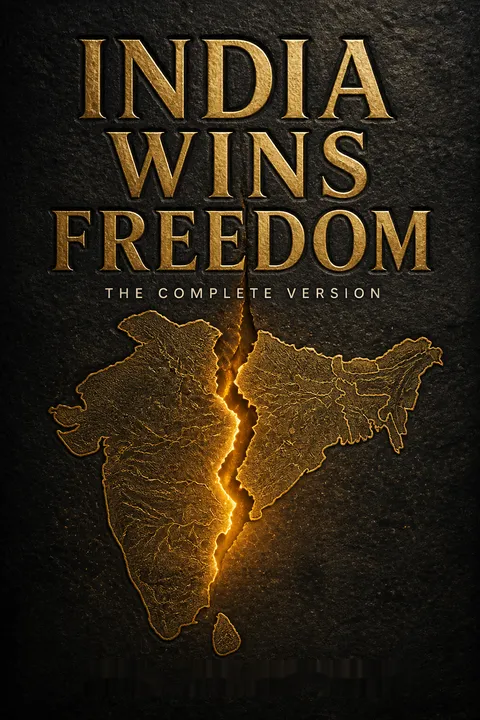
India Wins Freedom is a political memoir about a narrowing path: Azad begins with the conviction that Indian nationalism can unite communities across religion, then recounts how constitutional negotiations, mistrust, and hurried decisions ended in partition. Its central argument is not merely that partition was tragic. Azad insists that it was avoidable, that federal autonomy offered a workable alternative, and that Congress leaders helped destroy that alternative through errors of judgment. The book's value lies in joining constitutional detail to the lived experience of imprisonment, political disagreement, bereavement, and communal violence.
The memoir is also an argument among contemporaries, not a disinterested chronicle. Azad praises his own efforts, sharply criticizes particular decisions by Nehru and Patel, and gives special weight to the possibility that different choices could have preserved unity. These judgments are important evidence of how a senior Congress leader understood the crisis, but the reader should distinguish his retrospective interpretation from established causation. The breakdown involved several actors and pressures, including the League's demands, British decisions, and communal mobilization. Azad's account illuminates these forces while viewing them through his commitment to a united India.
The book's making adds another layer. Humayun Kabir assembled the English text from conversations, notes, and drafts that Azad reviewed. Azad had withheld some passages from the first edition; the complete version restored his stronger judgments. This is therefore neither an unmediated autobiography nor simply an editor's history. It is a carefully directed testimony, shaped by translation, revision, political loyalty, and retrospective regret. Its enduring lesson is that inclusive nationalism requires institutional choices that make belonging credible. Its enduring question is whether such choices can survive when leaders prize immediate political advantage over the trust a negotiated settlement depends on.
Review Summary
India Wins Freedom is praised as an insightful, first-hand account of India's independence struggle from 1935-1947. Readers appreciate Azad's candid perspective on key events and leaders, including Gandhi, Nehru, and Patel. The book is valued for its detailed coverage of negotiations with the British and the partition process. Some reviewers note Azad's bias against certain leaders, particularly Sardar Patel. Overall, it is considered an essential read for those interested in Indian history, offering a unique insider's view of the freedom movement and its aftermath.
People Also Read






Glossary
Cabinet Mission Plan
Federal settlement for IndiaA 1946 British proposal for transferring power through an Indian constitution-making assembly. It sought to keep India united while allowing extensive provincial autonomy and grouping provinces into sections. Defence, foreign affairs, and communications would be central responsibilities. Congress and the Muslim League initially accepted the plan, but disagreed about whether provinces had to join their assigned groups.
Quit India Resolution
Demand for British withdrawalThe resolution adopted by the All India Congress Committee in August 1942, demanding an immediate end to British rule. It called for a mass struggle under Gandhi's leadership, on non-violent lines, and urged Indians to continue resistance even if Congress leaders were arrested. The arrests that followed left the movement without its central leadership.
Satyagraha
Non-violent political resistanceA form of political action associated with Gandhi, based on resisting injustice without violence and accepting the consequences of that resistance. In Azad's account, individual Satyagraha during the Second World War involved volunteers publicly opposing India's involvement and accepting arrest. Azad supported non-violence as a political method, while differing from Gandhi's view of it as an absolute moral commitment.
Two-nation theory
Hindus and Muslims as nationsThe political argument that Hindus and Muslims constituted separate nations and therefore required separate states. Azad rejected this premise, arguing that religious difference did not erase shared political life. He warned that partition would leave large minorities on both sides of the border and would not, by itself, protect their rights or resolve communal distrust.
Direct Action Day
League's mass political actionThe day designated by the Muslim League for direct action in support of its political demands, 16 August 1946. In Calcutta, it coincided with extensive communal violence and loss of life. Azad presents the episode as a turning point that made a negotiated settlement between Congress and the League much harder to achieve.
FAQ
1. What is India Wins Freedom by Abul Kalam Azad about?
- Autobiographical narrative: The book is an autobiographical account by Maulana Abul Kalam Azad, a key leader in India’s independence movement, offering an insider’s perspective on major political events from the 1930s to the late 1940s.
- Political and communal history: It details the Indian National Congress’s strategies, negotiations with the British, and the rise of communal tensions between Hindus and Muslims.
- Partition and aftermath: The narrative covers the tragic partition of India, the violence that followed, and Azad’s reflections on the consequences for both India and Pakistan.
- Personal experiences: Azad shares his own experiences, including imprisonment, leadership challenges, and his relationships with other prominent leaders.
2. Why should I read India Wins Freedom by Abul Kalam Azad?
- Firsthand historical insight: Azad was a principal participant in the freedom struggle, providing unique, firsthand observations on the era’s political dynamics.
- Nuanced view of communal politics: The book offers a deep analysis of Hindu-Muslim relations, the Muslim League’s demands, and the roots of partition.
- Leadership lessons: Azad’s candid reflections on successes, mistakes, and relationships with leaders like Gandhi, Nehru, and Patel offer valuable lessons in political leadership and negotiation.
- Comprehensive coverage: Major events such as the Quit India Movement, Cabinet Mission, and the formation of the Interim Government are covered in detail.
3. What are the key takeaways from India Wins Freedom by Abul Kalam Azad?
- Complexity of independence: The struggle for freedom was marked by internal divisions, communal tensions, and difficult negotiations with the British.
- Partition as a tragedy: Azad viewed partition as a grave mistake that institutionalized communal hatred and created lasting problems for both nations.
- Importance of unity: The book emphasizes the need for national unity and the dangers of communalism, advocating for a democratic and inclusive India.
- Leadership and compromise: Azad’s experiences highlight the tension between principle and pragmatism in political decision-making.
4. What are the best quotes from India Wins Freedom by Abul Kalam Azad and what do they mean?
- On partition: “I must confess that the very term Pakistan goes against my grain...” — Azad rejects partition on religious grounds, advocating for a united India.
- On leadership mistakes: “It was a mistake which I can describe in Gandhiji's words as one of Himalayan dimension.” — He acknowledges his regret over key political decisions.
- On communalism: “The basis of partition was enmity between Hindus and Muslims...” — Azad warns that partition entrenched communal divisions.
- On freedom and sacrifice: “Our offer was not merely to live but also to die for democracy.” — This reflects his commitment to the cause of independence.
5. How does India Wins Freedom by Abul Kalam Azad describe the role of the Indian National Congress in the freedom movement?
- Leadership in struggle: The Congress played a central role in mobilizing the masses and negotiating with the British for independence.
- Internal debates: There were significant internal disagreements, especially over participation in provincial governments and strategies for dealing with the British.
- Commitment to unity: Azad highlights Congress’s efforts to maintain a national, non-communal character, despite pressures from the Muslim League and other groups.
- Challenges and shortcomings: The book acknowledges Congress’s occasional failures, particularly in upholding minority rights and managing communal tensions.
6. What was Maulana Azad’s solution to the communal problem in India as described in India Wins Freedom?
- Federal constitution proposal: Azad advocated for a federal system with maximum provincial autonomy and a limited central government to address communal fears.
- Rejection of Pakistan: He strongly opposed the partition of India, arguing it would harm both Muslims and the nation as a whole.
- Influence on Cabinet Mission Plan: His ideas shaped the Cabinet Mission Plan, which sought to protect minorities through provincial groupings and limited central powers.
- Emphasis on national unity: Azad believed communal issues could be resolved within a united, democratic India rather than through division.
7. How does India Wins Freedom by Abul Kalam Azad portray the impact of World War II on the Indian freedom struggle?
- Divergent leadership views: Azad and Gandhi differed on India’s participation in the war, reflecting broader divisions within Congress.
- Political leverage: The war intensified negotiations with the British, leading to initiatives like the Cripps Mission and influencing the timing of the Quit India Movement.
- Internal Congress divisions: The war exposed and deepened rifts within the Congress Working Committee over strategy and principles.
- Acceleration of independence: The global context of the war hastened British willingness to negotiate Indian independence.
8. What were the key events and outcomes of the Cabinet Mission and Interim Government according to India Wins Freedom by Abul Kalam Azad?
- Cabinet Mission Plan: Proposed a federal structure with limited central powers and grouped provinces to protect minorities, largely reflecting Azad’s ideas.
- Initial acceptance and breakdown: Both Congress and the Muslim League initially accepted the plan, but disagreements over interpretation led to deadlock.
- Formation of Interim Government: Congress and the Muslim League joined the Interim Government, but internal conflicts and mistrust undermined its effectiveness.
- Direct Action and violence: The breakdown in negotiations led to the Muslim League’s call for Direct Action Day, resulting in widespread communal violence.
9. How does India Wins Freedom by Abul Kalam Azad describe the role of Jawaharlal Nehru and Sardar Patel in the freedom movement and partition?
- Warmth and criticism of Nehru: Azad had a close relationship with Nehru but criticized his impulsiveness and certain political misjudgments, especially regarding the Cabinet Mission Plan.
- Critique of Patel: Azad was critical of Patel’s handling of the Home portfolio, his approach to communal violence, and his support for partition.
- Influence on partition: Both leaders eventually accepted partition, with Patel being a strong proponent, which Azad saw as contributing to the tragedy.
- Complex leadership dynamics: The book reveals the interplay of personal and political factors among Congress leaders during critical moments.
10. What does India Wins Freedom by Abul Kalam Azad reveal about the communal violence during and after partition?
- Widespread carnage: The book details horrific violence in Calcutta, Punjab, Delhi, and other regions, with thousands killed and millions displaced.
- Leadership failures: Azad criticizes leaders, especially Sardar Patel and local officials, for inadequate responses to protect minorities.
- Entrenched communal hatred: Partition institutionalized communal divisions, leading to long-term distrust and instability between India and Pakistan.
- Personal accounts: Azad shares moving stories of suffering, helplessness, and the challenges of restoring peace.
11. How does India Wins Freedom by Abul Kalam Azad reflect on the assassination of Mahatma Gandhi?
- Failure to protect Gandhi: Azad expresses deep sorrow and anger over the lack of adequate security despite clear threats.
- National tragedy: Gandhi’s assassination is portrayed as a turning point, exposing deep communal tensions and causing widespread grief.
- Political fallout: The event led to public outrage against communal organizations and intensified the call for national unity.
- Personal loss: Azad mourns Gandhi as the greatest son of modern India and highlights his efforts to restore peace during violence.
12. What insights does India Wins Freedom by Abul Kalam Azad provide about his personal experiences during imprisonment?
- Harsh conditions: Azad describes the isolation, mental strain, and deteriorating health he endured during his imprisonment at Ahmednagar Fort Jail.
- Maintaining morale: He recounts efforts to stay mentally engaged, such as gardening and reading, despite severe restrictions.
- Personal losses: Azad suffered the deaths of close family members while imprisoned, deepening his sense of sacrifice.
- Continued leadership: Despite captivity, he remained intellectually and emotionally involved in the freedom struggle, demonstrating resilience and commitment.
Download PDF
Download EPUB
.epub digital book format is ideal for reading ebooks on phones, tablets, and e-readers.








