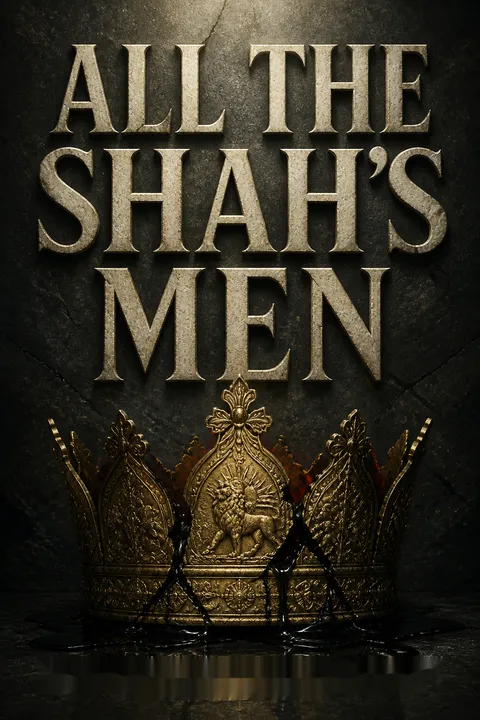


Key Takeaways
The 1953 coup restored the Shah, but cost America Iran's trust.
The immediate victory was real. In August 1953, the CIA and British intelligence helped remove Prime Minister Mohammad Mossadegh, whose government had nationalized Iran's oil industry. The Shah returned from exile, and a pro-Western government took power. For Washington and London, the operation appeared to solve an urgent strategic problem and restore access to oil.
The consequences outlasted the coup. The Shah's rule grew increasingly repressive, while many Iranians remembered that the United States had helped bring him back. After the 1979 revolution, militants seized the American embassy partly because they feared another foreign-backed restoration. The book links that history to later anti-Americanism and state support for militant groups, while showing that the coup was one cause among many, not a complete explanation.
What's striking is the mismatch between a short-term operational measure and a long-term political relationship. In international politics, legitimacy functions like infrastructure: it is easy to damage quickly and difficult to rebuild. The coup secured immediate cooperation from Iran's rulers, but it also gave later opponents a powerful story about foreign interference. That story could organize grievance across generations. The causal chain should not be mistaken for inevitability, though. Revolutions and political violence have multiple causes, and the coup alone cannot explain every choice made by Iran's later leaders.
Treat oil ownership as sovereignty, not merely a contract dispute.
The imbalance was tangible. In 1901, a British financier received extensive rights to search for and extract Iranian oil. The resulting Anglo-Iranian Oil Company became a major British asset, and the British government eventually owned 51 percent of it. Iran received a share of reported profits, but could not audit the company's books or direct its operations. In 1947, the company reported £40 million in after-tax profit and paid Iran £7 million.
Abadan made the arrangement visible. The refinery offered British administrators comfortable homes, clubs, and pools, while many Iranian laborers lived in crowded, poorly serviced housing. This was not simply a disagreement over royalties. For Iranians, control of oil represented the right to govern their own resources and escape a political order in which foreign interests carried more weight than the people who lived above the oil.
The dispute illustrates a central political-economy problem: a formally legal contract can lose legitimacy when its benefits and decision-making power are distributed so unevenly. The company's managers could point to investment and technical expertise, but those facts did not answer who should control the resource. That distinction matters in any extractive economy. Efficiency and legality are not substitutes for consent. At the same time, national ownership does not automatically produce fair distribution or competent management. The Iranian case shows why the demand for sovereignty and the practical challenge of running an industry must be considered together.
Iran's oil revolt drew force from a century of thwarted self-rule.
Earlier rebellions built a political memory. In 1891, a tobacco monopoly granted to a British company provoked a nationwide boycott after a senior religious leader condemned it. The Shah's own household joined the protest, and he canceled the concession. In 1906, a constitutional movement won a parliament, known as the Majlis, and a written constitution. That experiment was later crushed, with Russian military pressure helping end it.
Oil carried those memories forward. Britain and Russia had divided Iran into spheres of influence in 1907, and British power over oil continued through later decades. By the time Mossadegh championed nationalization, many Iranians saw it as another attempt to reclaim political agency. The country's Shiite traditions, with their emphasis on unjust rule and moral resistance, also gave the struggle a language of sacrifice and justice that reached beyond questions of revenue.
Political movements do not begin from a blank slate. Historical memory supplies both symbols and expectations, helping explain why an economic dispute can become a test of national dignity. The tobacco boycott and constitutional movement offered precedents for collective resistance, even though each had ended incompletely. Such memory can help people coordinate across social groups, including clerics, merchants, workers, and secular nationalists. It can also make compromise harder: a concession may be read not as practical bargaining but as surrender to an old pattern of domination. That is a powerful force, but it should not be treated as a single, uniform Iranian response.
A principled nationalist can still weaken the institutions he hopes to defend.
Mossadegh's convictions were genuine. He championed constitutional government, Iranian self-rule, and resistance to corruption. His popularity surged after nationalization, and he became a symbol of dignity to people who had long felt foreign powers shaped their country's choices. He resisted royal authority and refused to treat the Shah as the country's elected government.
His political methods had limits. The National Front remained a loose coalition rather than a durable, disciplined political organization. In 1952, Mossadegh halted parliamentary elections after eighty of the Majlis's 136 seats had been filled, arguing that foreign interference threatened the process. His opponents used the decision to portray him as power-hungry. He also refused to arm the Tudeh party, even as his government faced escalating threats. His commitment to principle did not give him a reliable institutional base.
This is a useful distinction between personal integrity and political capacity. A leader can sincerely defend democracy yet fail to build the parties, procedures, and alliances that allow it to survive a crisis. Institutions matter most when a popular figure is absent, isolated, or under attack. Mossadegh's preference for direct moral authority gave him enormous symbolic appeal, but it could not replace organized support. His opponents also exploited procedural weaknesses. The caution is not that principled leaders should abandon restraint, but that restraint needs durable institutions behind it, especially when opponents are willing to use money, intimidation, and covert force.
Rejecting workable compromise turned Britain's oil dispute into a national rupture.
Iranian leaders offered openings. Prime Minister Ali Razmara wanted to negotiate changes to the oil agreement, including access to company accounts, more Iranian managers, and a fairer share of profits. American diplomat George McGhee also urged the British to consider sharing profits with Iran on the 50-50 basis already agreed between Saudi Arabia and an American oil company. British officials and Anglo-Iranian's leaders rejected these proposals.
The refusals narrowed every path. As Iranian public opinion hardened, Britain continued to oppose nationalization, threatened military action, and supported economic pressure that blocked Iran from selling oil. The company and government treated control as non-negotiable, even when their own diplomats warned that the policy was alienating Iranians. A compromise might not have satisfied every faction, but rejecting discussion helped turn an oil contract into a showdown over whether Iran could govern itself.
Negotiation fails not only when parties disagree, but when one side misreads the other side's minimum demand. British leaders treated the dispute as a commercial problem that could be settled by adjusting payments. For many Iranians, control itself was the issue. The gap between those definitions made each offer seem irrelevant or insulting. This is a general lesson in bargaining: compensation cannot always substitute for authority or recognition. Still, it is impossible to know whether a deal would have held. Iranian politics was volatile, and Mossadegh was himself resistant to compromise. The missed opportunities were real, but no peaceful outcome was guaranteed.
Cold War alarm recast a contested oil crisis as an imminent communist threat.
Washington changed its interpretation. President Truman opposed a coup and sought mediation, partly because he saw Iranian nationalism as distinct from communism. After Dwight Eisenhower took office, Secretary of State John Foster Dulles and CIA director Allen Dulles viewed Iran through a more urgent Cold War lens. They feared that instability could lead to a communist takeover and treated Mossadegh's government as increasingly dangerous.
The threat became the case for intervention. The CIA funded propaganda portraying Mossadegh as corrupt, pro-communist, and hostile to religion. Agents paid politicians and recruited mobs, while staged attacks were designed to inflame public opinion. The book notes that later scholars questioned claims about Tudeh's strength and whether it could actually have seized power. The risk was not imaginary, but it was presented with more certainty than the evidence could support.
A security frame can make uncertain threats feel immediate and make extraordinary action seem like ordinary prudence. That dynamic is especially potent when officials interpret local politics mainly through a global ideological conflict. The book shows how the communist danger helped unite American and British policymakers, despite their earlier differences over oil. The counterpoint is not that the danger was fabricated from nothing. Tudeh existed and the Soviet Union had intervened in northern Iran. The analytical failure was collapsing possibility into probability, then using the worst-case scenario to foreclose less coercive options.
When the first coup failed, CIA operatives improvised instead of leaving.
The opening attempt collapsed. On August 15, 1953, Colonel Nematollah Nasiri tried to deliver the Shah's decree dismissing Mossadegh and arrest the prime minister. The government learned of the plot, arrested Nasiri, and announced that it had defeated a coup. The Shah fled Iran, and Kermit Roosevelt received messages from Washington urging him to leave as well.
Roosevelt tried again. He stayed, hid General Fazlollah Zahedi, and had copies of the Shah's decree distributed to politicians, officers, and newspapers. On August 18, Ambassador Loy Henderson used a staged complaint about threats to Americans to press Mossadegh. The prime minister ordered police to suppress demonstrations, weakening his own street support. The next day, anti-government crowds and military units moved against government buildings and Mossadegh's home. The improvised second effort succeeded where the carefully planned first one had failed.
The episode reveals how covert operations can become less controlled as they become more desperate. After the initial failure, Roosevelt no longer followed a settled script. He adapted to street events, exploited a diplomatic channel, and used the royal decree to offer wavering officers a claim of legality. This is a case of improvisation under pressure, not proof that covert action is reliably controllable. Indeed, the very need to improvise increased the role of chance. The book's narrative is compelling partly because it shows how small choices, made in a rapidly changing situation, can carry national consequences.
Foreign plots need local allies, but outcomes still turn on contingencies.
Iranian networks supplied the operation's reach. British agents had cultivated the Rashidian brothers, who in turn maintained contacts among politicians, military officers, religious leaders, newspaper editors, and street gangs. General Zahedi offered a local military figurehead, while Colonel Nasiri and other officers helped turn political pressure into force. On the final day, crowds included paid demonstrators, ordinary opponents of Mossadegh, and people swept into the turmoil.
The result depended on more than planning. General Daftary, whom Mossadegh trusted to suppress unrest, joined the anti-government side. The loyal army chief of staff, General Riahi, was captured, while a column that might have defended the government turned back. Tudeh did not mobilize for Mossadegh. The CIA and British service shaped events, but Iranian actors and contingent decisions made the coup possible.
This is a reminder that foreign intervention works through domestic relationships, not around them. The principal-agent problem is plain: outside sponsors need local partners, but those partners have their own ambitions and may not behave as expected. The Rashidians, Zahedi, and military officers were not interchangeable tools. They brought networks, authority, and motives that the foreign planners could not simply manufacture. Yet the book also resists an opposite myth, that a spontaneous popular movement alone decided the outcome. The coup combined external money and planning with local agency, institutional weakness, and a sequence of uncertain choices.
A restored throne bought control, not legitimacy, and repression deepened the backlash.
The post-coup settlement restored foreign influence. A 1954 consortium gave British, American, French, and Dutch companies roles in Iran's oil industry. The National Iranian Oil Company kept its name, and profits were shared with Iran, but foreign companies retained operational control and Iranian officials could not audit their books. The Shah meanwhile concentrated power, expanded security forces, and suppressed political opposition.
The political wound remained open. The Shah's dictatorship ended in the 1979 revolution. Revolutionaries remembered the 1953 coup and feared that the United States might again restore the monarch. That fear helped motivate the seizure of the American embassy. The book connects the coup's legacy to the later regime's anti-Western militancy and support for armed groups, while making clear that repression, revolutionary ideology, and regional conflict also shaped those outcomes.
The distinction between control and legitimacy is central here. A government can endure for years with outside backing and coercive capacity, yet remain vulnerable if citizens see it as imposed and unaccountable. The oil consortium offered a more favorable financial arrangement than the old contract, but it did not resolve the question of who held authority. Political memory then became a resource for revolutionary leaders. That does not make later violence an automatic consequence of the coup. It does show how a government that closes peaceful avenues of opposition can strengthen movements whose methods are far more radical than those of the earlier nationalists.
Analysis
Kinzer's account is strongest when it treats the coup not as a single dramatic conspiracy, but as the collision of several political systems. Iran's oil nationalization challenged an unequal corporate arrangement, Britain's imperial assumptions, and Washington's Cold War threat model at once. The crucial misreading was mutual: British leaders mistook sovereignty claims for bargaining tactics, while American officials increasingly treated Iranian nationalism as evidence of communist drift. In both cases, the chosen frame narrowed the range of acceptable responses.
The narrative also complicates a simple hero-and-villain reading. Mossadegh's integrity and mass appeal were real, but his loose coalition and procedural missteps left the government exposed. The British and American services possessed money, access, and coordination, but depended on Iranian networks, military defections, and a series of contingencies. The operation was neither purely foreign nor purely domestic. It was an intervention that succeeded by exploiting existing divisions and moments of institutional weakness.
The book's most important causal claim concerns legitimacy. The coup helped restore the Shah and secure Western oil interests, but it damaged the credibility of constitutional politics and gave later opponents a durable account of foreign domination. Repression under the Shah and the 1979 revolution carried this memory into a new political order. That sequence makes the coup consequential without making it a sufficient explanation for the revolution, hostage crisis, or later state-sponsored violence. Those outcomes also depended on decisions and conflicts that cannot be reduced to one event.
The account's sweep from ancient Persian and Shiite history to modern terrorism is vivid, but such breadth can imply more continuity than history warrants. Cultural traditions shape political meaning; they do not dictate political outcomes. The more defensible lesson is narrower and sharper: when powerful states override local self-determination for immediate strategic gain, they may weaken the moderate institutions and relationships that could have served their interests more durably. A victory measured by a changed government can conceal a defeat measured by trust.
Review Summary
All the Shah's Men is a highly praised book about the 1953 CIA-led coup in Iran. Readers found it engaging, well-researched, and eye-opening, providing crucial context for understanding US-Iran relations. Many were struck by the long-term consequences of the coup, including the rise of anti-American sentiment and Islamic fundamentalism. The book's accessible writing style and Kinzer's passion for the subject were frequently noted. Some readers felt it helped explain current geopolitical tensions, while a few found the author's political leanings occasionally apparent.
People Also Read


Glossary
Operation Ajax
CIA-backed 1953 coupThe CIA's name for the covert operation that helped remove Iranian prime minister Mohammad Mossadegh in August 1953 and restore the Shah's authority. British intelligence cooperated in planning and execution. The operation used propaganda, payments to local allies, political pressure, and support for military action. British officials also referred to the effort as Operation Boot.
Majlis
Iran's national parliamentIran's parliament, established after the Constitutional Revolution of 1906. It became a central arena for disputes over the Shah's authority, foreign influence, and the oil industry. The Majlis voted to nationalize the Anglo-Iranian Oil Company and later elected Mossadegh prime minister. Its authority was repeatedly constrained by monarchs and foreign intervention.
Tudeh
Iranian communist partyIran's principal communist party, founded in 1942 by left-leaning intellectuals and activists. It initially supported social reform, then moved closer to Marxism and the Soviet Union. Tudeh gained members among workers and some military personnel, but its actual capacity to take power in the early 1950s remains disputed in the account. Its presence helped fuel American fears of a communist takeover.
National Front
Iranian nationalist coalitionA coalition formed in 1949 by political parties, labor groups, civic organizations, and other supporters of Iranian independence and constitutional government. Led by Mohammad Mossadegh, it campaigned to limit royal power and nationalize the oil industry. The coalition united groups with different religious and political aims, but did not develop into a durable, tightly organized party.
firman
Royal decreeA formal decree issued by the Shah. During the 1953 coup, the Shah signed decrees dismissing Mossadegh and naming General Zahedi as prime minister. The decrees gave the coup plotters a claim of royal authority, although the legality of the Shah's power to dismiss the prime minister was disputed.
blowback
Unintended consequences of interventionA term used for damaging consequences that follow covert action or foreign intervention. In this account, the coup's immediate success helped restore the Shah, but its role in undermining trust and constitutional politics contributed to later anti-American sentiment. The term describes a delayed political backlash, not a claim that one intervention alone caused every subsequent crisis.
FAQ
1. What is All the Shah's Men by Stephen Kinzer about?
- Historical account of 1953 coup: The book details the CIA- and British-backed coup that overthrew Iran’s Prime Minister Mohammad Mossadegh and restored the Shah to power.
- Roots of Middle East conflict: It explores how this pivotal event shaped U.S.-Iran relations and contributed to the rise of anti-Western sentiment and terrorism in the region.
- Narrative style: Kinzer combines thorough historical research with engaging storytelling, focusing on the personalities, political intrigue, and international maneuvering behind the coup.
- Themes of nationalism and imperialism: The book examines the clash between Iranian nationalism and Western imperial interests, and the long-term consequences of foreign intervention.
2. Why should I read All the Shah's Men by Stephen Kinzer?
- Essential context for modern issues: The book provides crucial background for understanding the roots of anti-Americanism and the 1979 Iranian Revolution.
- Insight into covert operations: Readers gain a behind-the-scenes look at how intelligence agencies orchestrate regime change, with details on Operation Ajax.
- Lessons for foreign policy: Kinzer highlights the dangers and unintended consequences of foreign intervention, offering sobering lessons for policymakers and citizens alike.
- Uncovering hidden history: The book reveals little-known details about the coup, filling gaps in public knowledge about a turning point in Middle Eastern and global history.
3. What are the key takeaways from All the Shah's Men by Stephen Kinzer?
- Foreign intervention has lasting impact: The 1953 coup ended Iran’s democratic experiment and set the stage for decades of dictatorship, revolution, and hostility.
- Roots of anti-Western sentiment: The coup fueled deep mistrust and resentment toward the U.S. and Britain, contributing to the rise of fundamentalist movements and terrorism.
- Complexity of local dynamics: Kinzer stresses the importance of understanding local history, culture, and politics before intervening in foreign countries.
- Pattern for future interventions: The success of Operation Ajax became a model for subsequent U.S. covert operations around the world.
4. Who was Mohammad Mossadegh and why is he important in All the Shah's Men by Stephen Kinzer?
- Iran’s nationalist prime minister: Mossadegh led Iran from 1951 to 1953 and nationalized the Anglo-Iranian Oil Company, challenging British dominance.
- Symbol of democracy and dignity: He embodied Iranian aspirations for self-rule and became a global icon of anti-colonial resistance, even being named Time magazine’s Man of the Year.
- Victim of foreign intervention: Mossadegh’s overthrow by the CIA and British intelligence marked the first U.S.-backed coup against a foreign government.
- Legacy of resistance: His downfall is seen as a turning point that shaped Iran’s future and its relationship with the West.
5. What was Operation Ajax and how did it unfold according to All the Shah's Men by Stephen Kinzer?
- CIA-British coup operation: Operation Ajax was the code name for the covert plan to overthrow Mossadegh and reinstate the Shah.
- Tactics used: The operation involved propaganda, bribery, organizing street riots, and manipulating political and religious leaders.
- Key players: CIA officer Kermit Roosevelt led the operation on the ground, with support from British agents and the Dulles brothers in Washington.
- Initial setbacks and ultimate success: The first coup attempt failed, but a second effort succeeded, resulting in Mossadegh’s arrest and the Shah’s return.
6. How did the Anglo-Iranian Oil Company influence the events described in All the Shah's Men by Stephen Kinzer?
- Economic exploitation: The company held a monopoly on Iranian oil, paying Iran a small share of profits while controlling production and refining.
- Source of nationalist anger: Its practices fueled widespread resentment and inspired Mossadegh’s move to nationalize the oil industry in 1951.
- British government interests: The company was closely tied to the British state, which saw Iranian oil as vital to its economy and military.
- Trigger for international crisis: The nationalization led to economic warfare, embargoes, and ultimately the coup.
7. How did the U.S. and British governments justify their intervention in Iran, according to All the Shah's Men by Stephen Kinzer?
- Cold War fears: Both governments claimed Mossadegh was unable to resist Soviet influence, raising the specter of a communist takeover.
- Protection of oil interests: Britain sought to maintain control over Iranian oil, which was seen as essential to its national interests.
- Strategic geopolitical concerns: Iran’s location and resources made it a critical asset in the global balance of power.
- Public and covert rationales: While publicly denying involvement, both countries secretly coordinated the coup to secure their interests.
8. What role did propaganda and psychological warfare play in the 1953 coup as described in All the Shah's Men by Stephen Kinzer?
- Media manipulation: The CIA funded newspapers, religious leaders, and politicians to spread anti-Mossadegh propaganda, often accusing him of communism.
- Orchestrated street protests: Paid mobs were used to create chaos and undermine Mossadegh’s support, making the coup appear as a popular uprising.
- Information control: Psychological tactics isolated Mossadegh and swayed public opinion in favor of the Shah.
- Destabilization strategy: These efforts were central to the success of Operation Ajax.
9. Who were the key figures involved in the 1953 coup according to All the Shah's Men by Stephen Kinzer?
- Mohammad Mossadegh: The democratically elected prime minister who was overthrown.
- Mohammad Reza Shah: The monarch restored to power by the coup, later ruling as an authoritarian.
- Kermit Roosevelt: The CIA operative who led the coup on the ground in Iran.
- The Dulles brothers: John Foster Dulles (Secretary of State) and Allen Dulles (CIA Director), who orchestrated U.S. policy.
- British agents: Including the Rashidian brothers and Sir John Sinclair, who coordinated British efforts.
10. How did the Iranian public react to the 1953 coup as described in All the Shah's Men by Stephen Kinzer?
- Polarized and manipulated crowds: The coup relied on paid mobs to create the appearance of popular support for the Shah and opposition to Mossadegh.
- Widespread resentment: Many Iranians saw the coup as blatant foreign interference and resented the Shah’s regime.
- Deepened nationalist sentiment: The events fueled distrust of Western powers and strengthened Iranian nationalism.
- Long-term unrest: The coup’s aftermath contributed to future instability and revolution.
11. What were the long-term consequences of the 1953 coup according to All the Shah's Men by Stephen Kinzer?
- End of democracy: The coup ended Iran’s brief experiment with democratic governance and installed a repressive monarchy.
- Rise of anti-Americanism: It created deep-seated resentment toward the U.S. and Britain, setting the stage for the 1979 Islamic Revolution.
- Roots of terrorism: The book links the coup to the emergence of anti-Western terrorism and fundamentalist movements in the Middle East.
- Model for future interventions: Operation Ajax became a template for subsequent U.S. covert actions abroad.
12. What lessons about foreign intervention and covert operations does Stephen Kinzer offer in All the Shah's Men?
- Unintended consequences: The book warns that foreign coups often backfire, leading to instability, blowback, and long-term hostility.
- Limits of power: Kinzer highlights the dangers of underestimating local nationalism and the complexity of foreign societies.
- Moral and ethical dilemmas: The narrative explores the moral ambiguity of intervention, showing that short-term gains can have costly repercussions.
- Importance of historical awareness: Kinzer argues that ignorance of past actions, like the 1953 coup, continues to fuel mistrust and conflict today.
About the Author

Download PDF
Download EPUB
.epub digital book format is ideal for reading ebooks on phones, tablets, and e-readers.








