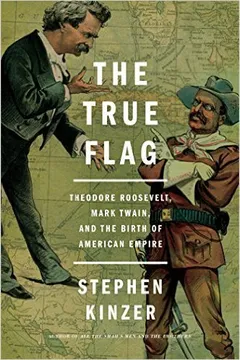


Key Takeaways
Read 1898 as America's original argument over intervening abroad
A debate in two places. On June 15, 1898, opponents of overseas expansion met at Boston's Faneuil Hall while Congress voted in Washington to annex Hawaii. The anti-imperialists argued that a country founded on self-government could not rule people without their consent. Expansionists answered that trade, security, and a duty to spread civilization required a larger American role. The House approved annexation by 209 votes to 91, while the protest movement took its first organized public step.
Two instincts, one country. The book's central claim is that Americans did not simply swing between intervention and restraint. Both impulses endure at once: a desire to guide the world, and a belief that peoples should govern themselves. The 1898 debate gave these conflicting convictions their first full national contest.
The same-day contrast gives the argument a vivid structure: dissent was not a later correction to policy, but a rival vision present at the moment of decision. That matters because it shifts attention from a supposedly unified national will to the institutions and coalitions that made one option prevail. The book also treats the conflict as recurring rather than resolved. That is illuminating, though it risks making later interventions look like repetitions of a single template when their causes, actors, and constraints differ.
Notice how markets and naval strategy turned expansion into a rescue mission
Commerce supplied the pressure. After the severe depression of 1893, business and political leaders worried that farms and factories produced more than Americans could buy. They argued that overseas markets could ease economic strain. Naval strategist Alfred Thayer Mahan added a military prescription: trade and national power depended on controlling sea routes and securing distant bases. Henry Cabot Lodge and Theodore Roosevelt embraced this case for a stronger navy and overseas possessions.
Morality supplied the cover. Advocates also described expansion as Christian service and racial uplift, claiming that people deemed unfit for self-government needed American rule. These were not separate arguments. Commercial opportunity and strategic advantage could be presented as duties to supposedly helpless populations. Lodge called this broad expansionist program the large policy: enlarging American power, wealth, and influence abroad.
The combination is more persuasive than any single motive. Economic anxiety can make a strategic proposal feel urgent, while moral language makes it feel honorable. This is a useful way to examine policy claims: ask who benefits materially, what danger is being invoked, and whose consent is missing. Yet the motives should not be flattened into a simple mask for greed. Some advocates sincerely believed they were helping. The sharper point is that sincere benevolence does not cancel interests or grant outsiders authority to decide another people's future.
A war launched for Cuban freedom quickly became a contest for territory
A sensational crisis accelerated events. William Randolph Hearst's newspaper published inflammatory reports about Spanish conduct in Cuba and treated the 1898 explosion of the USS Maine as proof of enemy action before responsibility had been established. President McKinley initially urged caution, but public anger and political pressure mounted. Congress declared war on Spain, while the Teller Amendment pledged that the United States would not take control of Cuba after the fighting.
Victory widened the map. The United States defeated Spain in Cuba and destroyed its fleet at Manila Bay. It then took Puerto Rico, Guam, Hawaii, and the Philippines, and maintained military control in Cuba. The Teller Amendment was a congressional promise of Cuban independence, not a general bar on acquiring other territories. In a matter of months, war presented as liberation had become a route to overseas rule.
The Maine episode shows how uncertainty can be converted into political certainty when vivid claims circulate faster than careful investigation. Hearst's commercial incentive and the administration's changing calculations both matter, but neither alone explains the outcome. The deeper mechanism is a narrowing of the space for delay: once public anger, military preparation, and patriotic expectation reinforce one another, restraint can be portrayed as weakness. The book's account also warns against treating a humanitarian rationale as evidence that a war's results will remain humanitarian.
Ask whether the people being rescued actually consented to the rescue
Filipino independence was already declared. In June 1898, Emilio Aguinaldo and his allies proclaimed a Philippine republic after fighting Spanish rule. Admiral George Dewey supplied the rebels with weapons, but the United States did not recognize their government. When Spain surrendered Manila to American forces, Filipino fighters were excluded from the ceremony. The Treaty of Paris then transferred the Philippines from Spain to the United States for $20 million.
The promise became a war. President McKinley ordered Filipinos to accept American authority under a policy called benevolent assimilation, which presented U.S. rule as protective and civilizing. Aguinaldo's government rejected the order. Fighting began in February 1899 as the Senate considered the treaty, and the Senate ratified it by 57 votes to 27. The issue was not merely whether American rule might improve conditions. It was whether a people who had fought for independence could refuse it.
Consent is the decisive test because it distinguishes aid from tutelage imposed by force. A government may claim that it understands another population's interests better than that population does, but such a claim is difficult to disprove if the people affected are denied a meaningful choice. The episode also shows how wartime alliances can be temporary and unequal: shared opposition to Spain did not mean shared plans for what came next. Good intentions, even when genuine, cannot stand in for political agency.
Follow Mark Twain's shift from supporting Cuba's war to opposing empire
Distance changed his view. Mark Twain initially supported the war against Spain, believing the United States was helping Cubans win freedom. He was living abroad and had spent years observing how European empires treated people under colonial rule. When the Treaty of Paris showed that the United States planned to take the Philippines rather than grant it independence, his support collapsed.
Satire exposed the contradiction. Twain became one of the anti-imperialist movement's most visible voices. In essays, speeches, and newspaper pieces, he compared America's language of liberation with its actions in the Philippines. He also challenged the idea that a powerful country could make domination benevolent simply by declaring its motives pure. His turn was not a rejection of helping oppressed people. It was a rejection of calling conquest help.
Twain's change of mind gives the debate a human scale: support for a just-sounding cause can survive only until the evidence about its actual destination becomes hard to ignore. His experience abroad also widened his comparison set. Rather than treating American conduct as exceptional by definition, he judged it alongside the imperial practices he had seen elsewhere. Satire is especially effective here because it punctures the gap between noble vocabulary and practical power. Still, ridicule can expose hypocrisy more readily than it can design a workable alternative.
Bryan's compromises helped ratify the treaty and blur the 1900 choice
A strategic vote had lasting effects. William Jennings Bryan fiercely opposed imperialism, yet he urged Democratic senators to ratify the Treaty of Paris. He believed the United States should first take control of the Philippines, then establish self-government and grant independence. His advice weakened the treaty's opponents at a moment when a few votes could decide the outcome. The treaty passed by just one vote more than the required threshold.
A second choice narrowed the campaign. In 1900, anti-imperialists hoped Bryan would make the election a clear verdict on the Philippines. He kept his free-silver platform, which frightened many voters and wealthy potential allies. The election was fought largely on economic issues instead. Bryan's case illustrates how a leader can support a cause in principle yet make choices that strengthen its opponents.
Bryan's calculation is compelling precisely because it was not simple betrayal. He seems to have believed that ratification gave the United States the leverage to free the Philippines, while rejecting the treaty might leave events in the hands of expansionists. But policy sequences are risky: once a government acquires territory, institutions and interests form around possession, making the promised next step harder to deliver. His electoral strategy also shows that a movement needs more than moral clarity. It needs a coalition and a decision about which issue will organize the vote.
Race made the language of universal freedom selective on both sides
Expansion rested on racial hierarchy. Supporters often described Filipinos and Hawaiians as too primitive for self-rule, using that judgment to justify American authority. Theodore Roosevelt and other advocates linked national greatness to white supremacy. The claim that America brought liberty therefore depended on denying that some peoples could exercise it for themselves.
Opposition was not free of prejudice. Booker T. Washington and other African American critics connected overseas rule to racial injustice at home. But some white anti-imperialists opposed annexation partly because they feared incorporating non-white populations, and labor leader Samuel Gompers worried about immigration from the new territories. The coalition against empire united people with different moral commitments, not a single consistent theory of equality.
This complication strengthens the history rather than weakening it. Political movements often gather allies who agree on an outcome but disagree about why it matters. The anti-imperialist cause included principled defense of self-rule, domestic reform, economic anxiety, and racial exclusion. Those motives cannot be treated as interchangeable. A useful standard is to ask whether a principle is applied to people who are unpopular or feared, not only to those imagined as future citizens. Universal language earns credibility through that test.
Empire demanded a legal exception and a brutal war to sustain it
The fighting outlasted the victory parade. The Philippine War lasted 41 months. About 120,000 American soldiers served; U.S. commanders later estimated that roughly 20,000 Filipino insurgents were killed, while hundreds of thousands of civilians died. Reports described torture, village burning, forced relocation, and killings. The government called its project protective, but the methods of establishing control inflicted severe harm.
Law adapted to possession. In the Insular Cases, the Supreme Court ruled 5 to 4 that some territories under U.S. control were not fully part of the United States for constitutional purposes. That allowed Congress to govern their inhabitants without automatically extending all constitutional protections. The legal exception made overseas rule easier to maintain, but it exposed a basic contradiction: the republic claimed universal ideals while limiting their reach.
The pairing of battlefield force and legal doctrine reveals that empire is not only a military event. It also requires rules that define who receives protection, who may decide, and where constitutional obligations stop. Narrow votes can matter enormously, but the close margins do not erase the broader political appetite for expansion described in the book. A difficult question remains: can constitutional principles survive if their application depends on a population's race, location, or presumed readiness? The cases show how exclusion can be made administratively ordinary.
Independence on paper can coexist with control through imposed conditions
Cuba exposed the limits of a promise. The Teller Amendment had pledged that the United States would leave Cuba to its people. Instead, Congress attached the Platt Amendment to an army spending bill in 1901. It required Cuba to accept limits on its foreign relations, allowed U.S. intervention, and provided for American naval stations. Cuba became formally independent, but Washington retained powerful means of control.
The arrangement had a name. Plattismo describes this model of nominal sovereignty combined with external constraints and the possibility of intervention. It differed from direct annexation: local leaders governed, but within boundaries set by the United States. For anti-imperialists, this was not fulfillment of the independence promise. It was a way to preserve influence while avoiding the appearance of outright colonial rule.
Formal sovereignty and practical autonomy are not the same thing. A state may have its own flag and officials yet lack meaningful freedom to choose its alliances, economic arrangements, or political direction. This distinction helps explain why counting colonies alone can understate a powerful country's reach. At the same time, the Cuban case warns against treating every unequal agreement as identical: the important questions are how freely it was accepted, what options existed, and whether intervention remained available as a threat.
Opposition lost the vote but made empire harder to pursue openly
The first expansionist surge carried lasting costs. The Anti-Imperialist League failed to stop the Treaty of Paris, the Philippine War, or American rule over the islands. Yet the rebellion and its casualties made the costs of conquest visible. Roosevelt, who entered national politics as an ardent expansionist, grew more cautious about annexation after experiencing the burdens of rule. Kinzer argues that the Philippines became the last major burst of formal U.S. annexation.
Intervention did not disappear. American power continued through occupations, political pressure, and covert action, often under newer labels such as humanitarian intervention or democracy promotion. The book's closing lesson is not that the United States can avoid influencing the world, but that its claims of benevolence do not guarantee good outcomes. Restraint, local knowledge, and serious attention to long-term consequences matter.
A movement can lose an immediate vote and still change the political vocabulary and perceived cost of future choices. That is a more subtle measure of influence than legislative victory. The book's account is strongest when it distinguishes formal annexation from later forms of intervention, while showing how both can limit other peoples' choices. Its broad historical arc can make restraint seem like the clear lesson, but the hard policy question is more specific: what form of assistance is possible without taking control, and how can outsiders know when their presence is doing more harm than good?
Analysis
Kinzer makes 1898 the origin story of a recurring American conflict, and the book's narrative form gives that claim unusual force. It opens with simultaneous scenes of protest and annexation, then follows the people, arguments, and contingencies that move the country from war with Spain to rule over distant populations. The historical actors are not abstractions: Lodge strategizes, Roosevelt performs heroism, Hearst sells outrage, Twain changes his mind, and Bryan makes choices that undercut the cause he champions. This cast makes policy feel contingent rather than inevitable.
The book's deepest analytical contribution is its account of how moral language and material interests reinforce one another. Trade, naval strategy, racial hierarchy, religion, and national prestige do not appear as separate explanations. They combine into a story in which taking power can be described as service. The counterargument is not simply that American ideals are false, but that ideals lose their force when the people supposedly being helped cannot refuse the help. The Filipino republic makes that tension concrete.
The narrative also complicates the familiar split between a patriotic majority and disloyal dissenters. Anti-imperialists argued that criticism during war could be an act of national loyalty, while expansionists treated unity as a requirement of victory. Yet the opposition was an imperfect coalition, and the author shows that some critics of empire relied on their own racial exclusions. That prevents a comforting story in which one side owns virtue outright.
Kinzer's broad frame has a limitation: the later history of American intervention is condensed into a long succession of examples, each with distinct contexts. The analogy to 1898 is useful as a warning, not as a complete causal explanation. The book's most durable question is therefore not whether America is inherently imperial or anti-imperial. It is whether a government can restrain its power when its own interests and its sense of moral mission point in the same direction.
Review Summary
Reviews of The True Flag are largely positive, averaging 3.96/5. Readers praise Kinzer's accessible writing and his examination of America's imperial origins through the 1898 Spanish-American War and its aftermath. Many appreciate the portrayal of key figures like Roosevelt, Lodge, and Mark Twain, and find the historical parallels to modern foreign policy debates compelling. Common criticisms include Twain's limited presence despite his subtitle billing, a rushed final chapter, and occasionally repetitive primary source quotations.
People Also Read


Glossary
the large policy
Expanding American powerHenry Cabot Lodge's term for an ambitious foreign policy that enlarged American wealth, influence, and military reach. In the book, it includes acquiring overseas territories, securing naval bases, and pursuing new markets. Its supporters presented this expansion as strategic necessity and national duty, while critics saw it as a departure from self-government and a path toward empire.
benevolent assimilation
Rule framed as protectionThe McKinley administration's stated policy for the Philippines after the United States took control from Spain. It described American authority as a way to provide justice, security, and good government. The policy did not promise independence or require Filipino consent, and the Philippine Republic resisted the demand to submit to U.S. rule.
Teller Amendment
Pledge of Cuban independenceAn amendment adopted by Congress in 1898 alongside its war resolution against Spain. It declared that the United States did not intend to exercise sovereignty over Cuba and promised to leave the island's government to its people after pacification. The pledge became a standard against which critics judged later American control of Cuba.
Platt Amendment
Limits on Cuban sovereigntyA 1901 provision imposed as a condition of Cuban independence. It restricted Cuba's foreign relations, gave the United States a claimed right to intervene, and required access to naval stations. It allowed Cuba to exist as a formally independent republic while leaving Washington substantial power over its choices.
insular cases
Territories and constitutional rightsA series of Supreme Court cases addressing whether the Constitution automatically applied to territories acquired by the United States. In Downes v. Bidwell, the Court ruled 5 to 4 that some territories could be under U.S. jurisdiction without being fully part of the country. The ruling enabled Congress to govern overseas possessions without extending all constitutional protections to their inhabitants.
Plattismo
Control without formal annexationThe book's term for the system of influence associated with the Platt Amendment. A country could retain its own government and formal independence while accepting restrictions that preserved American leverage and allowed intervention. The arrangement offered a form of control different from direct colonial rule, and became a model for U.S. influence in parts of the Caribbean and Central America.
About the Author

Download PDF
Download EPUB
.epub digital book format is ideal for reading ebooks on phones, tablets, and e-readers.








