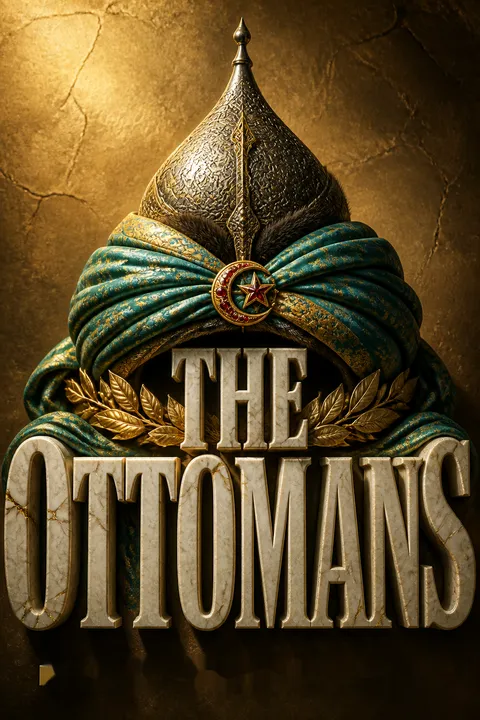


Key Takeaways
Read Ottoman history as part of Europe's story, not its opposite
An empire across worlds. The Ottoman dynasty began around 1300 as one frontier power among many, then ruled lands in Asia, Africa, and Europe for more than six centuries. Its rulers took Constantinople in 1453, made it their capital, and claimed to inherit Rome. They called their southeastern European provinces Rûmeli, meaning the land of the Romans. The book’s central argument is that Muslim rule does not make European territory or history cease to be European.
Shared history, not a claim of sameness. Ottoman influence ran through European diplomacy, trade, religion, and warfare. The empire was neither simply Turkish nor exclusively Muslim, and its connections with Byzantium and Christian Europe were not incidental. Seeing these links changes the story told about Europe’s formation, including who shaped ideas of tolerance, modern government, and empire.
What's striking is how much a map can smuggle in a theory of belonging. If Europe is defined by Christian rule, Ottoman provinces become foreign by definition, even when they sit on the same continent and share political histories with neighboring states. The book usefully turns geography into a question for historians: who gets counted as an heir to Rome? The corrective should not become a reverse simplification. Including the Ottomans in European history does not make every Ottoman institution equivalent to a Western European one. It makes comparison possible without treating one side as the standard and the other as an exception.
Build power by absorbing rivals, but count the human cost
A coalition becomes a state. Osman’s early following included Muslim nomadic warriors, Sufis, Christian allies, and local rulers. His close companion Beardless Michael fought beside him as a Christian for years before converting. The later image of the first Ottomans as Muslim holy warriors against Christians misses this more mixed frontier politics. Alliances and service mattered alongside religion.
Recruitment through coercion. Under Murad I, the devşirme, or Collection, took Christian boys from subject communities, converted them to Islam, and trained them as officials or soldiers. The system helped the sultan build a loyal elite less tied to rival local families. By the late sixteenth century, Ottoman chroniclers counted more than 200,000 boys recruited this way. It offered some recruits extraordinary advancement, but tore children from families and violated the protections the empire claimed to extend to Christian subjects.
The Ottoman case unsettles the easy opposition between meritocracy and inherited privilege. The palace could elevate people from conquered communities, but it first controlled their movement, faith, language, and training. Opportunity for the recruit and coercion against the family were part of the same institution. This is a useful lens for other states that describe elite access as open while concealing how people are selected and remade. The book also cautions against attributing the empire’s rise to a single martial ideology: geography, trade, Byzantine political fractures, Mongol upheaval, and deliberate institutional choices all contributed.
Recognize tolerance as managed difference, not equality
Room to remain distinct. After conquering Constantinople, Mehmed II repopulated the damaged city with Muslims, Christians, and Jews. He appointed religious leaders who could oversee parts of their communities’ education, worship, family law, and taxation. This approach built on earlier Ottoman practices: most Christians and Jews could continue their religious lives, while local leaders helped the government administer diverse populations.
A hierarchy remained. Sunni Islam stood above Christianity and Judaism in the legal order. Women, non-Muslims, and enslaved people held subordinate status, and Muslims who left Islam could face execution. Ottoman tolerance therefore meant that rulers permitted some differences, not that all beliefs or people had equal standing. The sultan could restrict, withdraw, or reshape those permissions. Diversity endured in part because the state managed it, not because the state rejected hierarchy.
This distinction matters well beyond Ottoman history. Tolerance can reduce the violence of forced uniformity while still leaving the tolerated group dependent on the discretion of those in power. That arrangement may be durable, but it is not secure equality. The book’s account avoids both familiar caricatures: the empire was not a haven of modern pluralism, and it was not a machine bent on converting everyone. Its institutions preserved difference when preservation served rule. A useful test for any supposedly tolerant system is therefore not just whether minority practices exist, but who controls their legal status and can revoke it.
Put Ottoman scholars and sailors back into the Renaissance
Knowledge crossed borders. Mehmed II collected Greek, Latin, Hebrew, Persian, Armenian, and Arabic works, employed Greek and Italian scholars, and commissioned a world map based on Ptolemy. The Venetian painter Gentile Bellini made his portrait. These were not decorative curiosities: they show a ruler engaged with the intellectual and artistic currents of his age.
The sea was an Ottoman arena. Piri Reis, a former corsair who became an admiral, drew an early map of the Americas in 1513 using European, Arab, and ancient sources. Ottoman fleets and officials also operated in the Red Sea, Persian Gulf, and Indian Ocean, competing with Portugal and supporting trade networks reaching toward Southeast Asia. The book calls this an Ottoman Age of Discovery, while noting that Ottoman ambition focused mainly on the connected seas to the east, not crossing the Atlantic.
The strongest implication is not that the Ottoman Empire should be awarded someone else’s label, but that familiar labels can hide connected histories. Maps, mathematical tables, shipping routes, and diplomatic alliances circulated across political and religious boundaries. A Renaissance confined to Italy or an Age of Discovery reserved for Atlantic voyages can make that exchange disappear. At the same time, the evidence supports participation, not an identical program: Ottoman maritime power pursued its own strategic geography and achieved uneven results. A broader account becomes more accurate when it adds difference as well as connection.
Call it transformation, not decline, when authority shifts away from the sultan
A ruler loses the center. After Suleiman I, the empire faced costly wars, cash-driven commerce, armed provincial rebellions, and changing military recruitment. Critics called this decline, but their complaints often defended the privileges of an older elite. The system was changing: merchants, tax farmers, provincial officials, and salaried soldiers gained influence while the sultan became less involved in daily government.
The break became visible in 1622. Osman II tried to replace the Janissaries and restore personal rule. The Janissaries and allied jurists deposed him, then killed him, the first Ottoman sultan to be murdered. The event showed that government could continue without the sultan’s person at its center. Over time, authority became more institutional and contested. This was neither a smooth march toward democracy nor simple decay, but a shift in who could claim power.
The term decline can turn a political argument into a moral verdict. It encourages readers to imagine a once healthy empire that simply lost its virtues, rather than asking which groups gained or lost leverage as the economy and military changed. The story of Osman II makes that question concrete: the ruler’s attempt to recover authority collided with institutions and constituencies that no longer accepted his command. The comparison with other early modern states is valuable, but it should remain a comparison, not a claim that Ottoman and European political developments followed the same path.
Treat the palace household as political infrastructure
Private life shaped succession. The Ottoman harem was the royal household, not simply a secluded sexual space. Its women raised princes, negotiated alliances, funded public works, and influenced access to the ruler. Hürrem Sultan broke precedent by marrying Suleiman I and moving into the palace at the center of government. In later generations, mothers of sultans could become powerful regents when their sons were children.
The household had limits and rivals. Eunuchs guarded the palace and connected its women to the administration. The system’s rules around concubines and male heirs were designed to protect the dynasty, but they also made women’s status depend on reproduction and court politics. As succession shifted from competition among princes to seniority, secluded princes often lacked governing experience. The palace was therefore both a tool of dynastic continuity and a source of political vulnerability.
The household is often treated as background because political history tends to privilege public offices and formal institutions. Here, that distinction fails: decisions about marriage, childbirth, residence, and access changed who could rule and how authority moved through the state. The same analytic move is useful in other monarchies, where kinship and domestic labor sustain institutions that appear impersonal. Still, recognizing women’s influence should not romanticize the harem or erase the constraints placed on its inhabitants. Political agency and structural inequality can coexist inside the same room.
Reforms promising equality also weakened the empire's old bargain
A new citizenship project. Nineteenth-century reforms promised greater legal equality, public schools, secular courts, and wider participation in government. The 1839 decree sought to protect life and property; the 1856 edict made religious equality more explicit. Ottomanism aimed to bind subjects to the empire through shared citizenship rather than requiring conversion to Islam for entry into the ruling order.
The bargain became harder to hold. Foreign powers used protection of Christian communities to intervene, while nationalist movements demanded autonomy or independence. The Ottoman elite also absorbed European ideas of civilization and applied them to its own subjects, describing Kurds, Arabs, and nomads as backward populations to be disciplined. Reform was not simply secular versus religious, or Western versus Ottoman. It expanded rights and state control at once, while making the empire’s promises of shared belonging increasingly difficult to sustain.
Reform is often narrated as a benevolent upgrade, but this account reveals its double edge. Standardized administration can protect individuals while also making populations easier to classify, supervise, and mobilize. Equality on paper may weaken an old hierarchy without creating trust in its place, especially when foreign intervention and competing nationalisms reshape political loyalties. The Ottoman case also complicates the idea that modernity arrived from outside: local actors adapted constitutional, educational, and bureaucratic forms for their own purposes. The outcome depended on who controlled reform and whose definition of equality prevailed.
World war turned political fear into the Armenian genocide
A regime chose annihilation. After the Young Turk Committee of Union and Progress seized power, its leaders pursued a centralized Muslim empire and treated political opponents as existential threats. During the First World War, military defeats and Armenian resistance in the east fed the regime’s conspiracy thinking. In 1915, the government arrested Armenian leaders, disarmed Armenian soldiers, and deported civilians. Armed groups attacked deportation columns, while survivors were driven toward desert camps without adequate food or water.
Intent is essential to the account. Interior Minister Talat Pasha’s own records counted more than 900,000 Armenians deported. The book estimates that 650,000 to 800,000 Armenians were killed by 1916; Assyrians also suffered mass violence. The genocide was not an inevitable result of centuries of coexistence or a religious war against all Christians. It was a deliberate state campaign under wartime conditions, condemned by Ottoman officials and documented in postwar trials.
The book’s emphasis on contingency does not soften responsibility. It clarifies the mechanism: leaders identified a population as disloyal, treated wartime emergency as permission to destroy it, and used deportation as a weapon rather than protection. The distinction between explanation and justification is crucial, particularly when resistance by some Armenians is used to excuse the murder of civilians far from battle zones. The Ottoman record also resists a simple religious explanation: authorities targeted Armenians and Assyrians selectively, and some Muslims risked themselves to save Christians. State policy, not an eternal civilizational instinct, made the catastrophe possible.
The 1923 republic remade imperial loss into a national beginning
A dynasty gives way. After the First World War, Mustafa Kemal led a Muslim nationalist movement from Ankara, defeated occupying forces, and helped abolish the sultanate in 1922. The Turkish Republic followed in 1923. Its leaders turned away from the Ottoman Empire’s multiethnic and multireligious inheritance, recast public identity around Turkish nationalism, and sought to make the Ottoman past distant and unreadable.
Population policy completed the break. The Treaty of Lausanne required a compulsory exchange of Greek Orthodox Christians in Turkey and Muslims in Greece. About 200,000 Greek Orthodox Christians and 350,000 Muslims were exchanged, after roughly a million Greek Orthodox people had already fled western Anatolia. Between 1913 and 1923, Anatolia’s Christian share fell from about one fifth to about one in forty. Kurds and Armenians were denied the autonomy promised under the earlier Treaty of Sèvres.
A republic can declare a clean break without escaping the institutions, violence, and memories that preceded it. The population exchange shows how national homogeneity could be treated as a practical solution to imperial diversity, even at the cost of expulsion and permanent loss. The book’s ending is most persuasive when it refuses to let either Ottoman nostalgia or republican self-congratulation close the argument. Historical inheritance is not a verdict of collective guilt, but it does create obligations: to distinguish memory from myth, and to recognize communities erased from the national story.
Analysis
Baer’s account is both a dynastic history and an argument about the categories through which history is told. Its recurring intervention is to replace sealed civilizational blocks with entangled institutions: the Ottoman state inherited Byzantine territory and practices, drew on Mongol political traditions, adapted Islamic authority, and operated inside European diplomacy and commerce. This approach changes the meaning of Renaissance, tolerance, modernity, and even the geography of Europe. It also reveals that historical inclusion is not praise. The same imperial systems that incorporated Christians and Jews could rank them unequally, extract their labor, and later persecute them.
The book’s strongest narrative engine is the changing basis of Ottoman rule. Early expansion relied on personal alliances, conquest, and incorporation. Murad I’s recruitment system and Mehmed II’s centralized palace built a powerful state by converting conquered people into servants of the dynasty. Over time, commerce, firearms, provincial power, palace politics, and elite conflict altered the balance. Calling every change decline obscures whose interests were threatened and which forms of authority were emerging. The 1622 killing of Osman II makes that transformation visible in a single event, while the later reform era shows how institutions can be redesigned without securing shared allegiance.
The final chapters connect political insecurity to the Young Turks’ shift from Ottomanism toward a Muslim and increasingly Turkish national project. The account insists that the Armenian genocide was a contingent political decision, not an inevitable expression of Islam or an ancient Turkish character. That argument is ethically important, though it requires careful handling: showing how war, conspiracy thinking, and state centralization enabled atrocity must never imply that Armenian resistance caused it. The evidence of deportation orders, massacres, and postwar Ottoman trials supports the book’s insistence on agency and responsibility.
The broad European frame is most productive as an invitation to comparison, not a claim that Ottoman and Western European histories were identical. Their shared crises and exchanges illuminate divergence as well as connection. The result is a history that treats empire as a political relationship among rulers, subjects, and memories, and that leaves the reader with a demanding question: who benefits when a society decides which parts of its past count as its own?
Review Summary
The Ottomans by Marc David Baer receives mixed reviews averaging 3.94/5 stars. Readers appreciate the comprehensive 600-year history and argument for Ottoman inclusion in European history. Positive reviews praise its accessibility, coverage of cultural topics like the harem and sexuality, and insights into tolerance and diversity. Critical reviews fault heavy reliance on questionable sources, agenda-driven narrative favoring Turkish politics, poor prose with information-dense sentences, and excessive focus on pederasty. Most agree Baer's scholarship is impressive despite debates over his "Ottomans as European" thesis and occasional dry, fact-heavy passages.
People Also Read


Glossary
The Ottoman Way
Imperial order through differenceBaer’s term for the Ottoman system of rule built around a stratified society, an elite recruited in part through conversion, and institutions that incorporated rather than erased religious and ethnic difference. The system combined sultanic authority, military and administrative service, religious law, and secular decrees. It created paths to advancement, especially for palace recruits, while preserving profound inequalities among Muslims and non-Muslims, men and women, and free people and slaves.
devşirme
Christian child recruitmentThe Ottoman Collection, a levy that took boys from Christian subjects and trained them for service to the sultan. Recruits were converted to Islam and could become elite soldiers, palace servants, or administrators. The institution helped rulers build a corps whose advancement depended on the dynasty rather than local aristocratic families. It could enable remarkable careers, but it was also coercive, separating children from their homes and communities.
timar
Revenue for military serviceA nonhereditary Ottoman land grant that assigned a cavalryman the tax revenue produced in a district. In return, the holder was expected to serve the sultan in military campaigns and local policing. The arrangement linked provincial taxation to military service and helped fund the cavalry without making the land itself the holder’s private hereditary property. Later commercialization and tax farming weakened this older system.
gaza
Frontier warfare and holy warA term used for warfare against non-Muslims, often presented as holy war, but whose meaning shifted across Ottoman history. Early frontier fighters could be called gazis while fighting alongside Christians or battling Muslim rivals. Later chroniclers recast the founding dynasty as consistently waging Islamic holy war against Christians. The term therefore describes both a religious ideal and a political language used to legitimize conquest.
Rûm
Ottoman lands of RomeThe Ottoman name for the lands associated with the Roman and Byzantine inheritance, especially southeastern Europe and western Anatolia. Rûm derives from Rome, and Rûmeli means the land of the Romans. The terms reflect the Ottoman claim to inherit Roman political space and challenge the assumption that territory ceased to be European when governed by Muslim rulers.
devlet
Fortune, dynasty, then stateA term whose political meaning changed over Ottoman history. In the dynasty’s earlier centuries, it referred to the fortune and power bestowed on the sultan. By the seventeenth century, it could mean the dynasty and sultanate beyond the individual ruler. In the later empire, it increasingly acquired the modern sense of government or state, reflecting the separation of public authority from the person of the sultan.
Dönme
Sabbatian converts to IslamThe name used by outsiders for followers of the Jewish messiah Sabbatai Zevi who converted publicly to Islam in the seventeenth century but maintained a distinct community and secret religious beliefs. Many Dönme lived in Salonica, where some became prominent merchants, educators, and political actors. Their role in the Young Turk movement later fueled false conspiracy claims that mistook a varied political coalition for a single religious plot.
Kadızadeli
Puritan reform movementA Sunni Muslim reform movement in the seventeenth-century Ottoman Empire, named for preacher Kadızade Mehmed. Its followers sought stricter public observance and condemned practices they regarded as religious innovations, including some Sufi rituals, music, coffeehouse culture, and intoxicants. The movement gained influence at court, especially under Mehmed IV, and challenged the ecstatic and devotional forms of Islam long present in Ottoman society.
Download PDF
Download EPUB
.epub digital book format is ideal for reading ebooks on phones, tablets, and e-readers.








