

Key Takeaways
Build a whole character, not a pious life with neglected corners
Balance is the central test. Al-Hashimi’s ideal Muslim woman is not defined by worship alone. She also cares for her health, keeps her speech clean, learns, treats relatives fairly, and contributes to her community. The book begins with familiar contradictions: someone may pray diligently yet gossip, study religion yet neglect her family, or care for her home while ignoring her own growth. Its answer is an integrated character shaped by the Qur’an and Sunnah across ten areas of life, from worship and self-development to marriage, neighbors, and society.
A practice, not a pedestal. The ideal is a guide for examining neglected responsibilities, not a claim that any person will perform every role perfectly. The author’s recurring question is whether devotion is changing conduct beyond the prayer space.
What's striking is the book’s systems view of character: private devotion, self-care, family conduct, and public behavior are treated as connected rather than competing definitions of virtue. That resembles virtue ethics, where a good life is a coherent pattern of habits, not a single impressive act. The approach is useful precisely because it exposes compartmentalized morality. Its risk is turning an expansive ideal into an impossible scorecard, especially when the expected duties are numerous. A practical reading asks which neglected relationship or responsibility most needs attention now, rather than demanding flawless performance everywhere.
Let worship shape private conduct, not merely public ritual
Faith reaches the unseen moment. The book presents worship as a continuing awareness of Allah that should govern choices when nobody else is watching. Taqwa means mindful reverence that moves a person toward obedience and away from wrongdoing. Hajar’s trust in Allah while alone with her infant in an empty valley illustrates faith under extreme uncertainty. A second story describes a young woman who refused her mother’s request to dilute milk for sale because she believed private dishonesty mattered as much as public misconduct.
Ritual builds the habit. The five daily prayers, fasting, charity, Qur’an recitation, and voluntary worship orient life toward accountability. Yet extra worship is not meant to become unsustainable: the book favors steady practice over exhausting bursts, and treats good intentions in ordinary duties as part of worship.
The strongest ethical move here is to connect ritual with integrity when no audience is present. In moral psychology, internalized standards tend to guide behavior more reliably than rules followed only under observation. The milk seller’s daughter makes that distinction vivid: the test is not whether wrongdoing can be detected, but whether the person regards it as wrong. Religious accountability gives this principle a transcendent foundation. The idea is most persuasive when paired with compassion and reflection, since an intense focus on judgment can otherwise become scrupulosity rather than moral growth.
Care for body, mind, and soul without letting one consume the rest
Self-care has three parts. The book asks the reader to maintain physical health and cleanliness, keep learning, and nourish spiritual life through prayer and remembrance. It treats grooming as compatible with modesty, while warning against vanity and waste. Knowledge is not presented as a luxury: women are urged to learn religious foundations and useful subjects, ask questions, read, and develop sound judgment.
Women are knowledge-makers. Aisha is presented not merely as a transmitter of religious reports but as a learned authority in law, poetry, history, and medicine. Other accounts describe women seeking dedicated teaching and challenging answers they did not understand. These stories make intellectual curiosity part of the ideal, alongside bodily care and worship, rather than an optional extra.
This three-part model anticipates a basic insight of contemporary well-being research: physical health, cognitive engagement, and meaning influence one another. The chapter’s stories of Aisha and other female scholars also complicate any narrow reading of women’s education as merely instrumental to household management. At the same time, the author sometimes frames learning chiefly around family responsibilities. A broader application preserves the book’s insistence on women’s intellectual development while allowing their fields of study and ambitions to be shaped by individual ability, opportunity, and social need.
Choose marriage with agency, then build it through reciprocal care
Consent matters at the start. The book argues that a woman should not be forced to marry someone she rejects. It recounts how al-Khansa complained to the Prophet after her father arranged an unwanted match, and the marriage was invalidated. It also presents religious commitment and character as more durable foundations than beauty, wealth, or status alone.
Marriage requires daily work. The ideal wife supports her husband, protects confidences, and seeks harmony; the husband, in turn, is expected to provide, protect, and help sustain the family. The book also honors women who advised their husbands. Umm Salamah’s counsel at Hudaybiyyah helped resolve a standoff after the Prophet’s followers hesitated to carry out his instruction. Her example places practical judgment within the marital partnership.
The chapter holds two important ideas together: a woman’s consent is essential, and marriage is a sustained relationship of care rather than a status prize. Its historical examples show women exercising judgment, not simply receiving instruction. Yet the duties it assigns are not symmetrical: the wife’s obedience receives much more emphasis than the husband’s reciprocal obligations. Modern readers can retain the book’s concern for commitment and mutual support while asking whether each partner’s agency, safety, and labor are being respected in practice. Consent at the wedding is meaningful only if dignity continues afterward.
Raise children with affection, fairness, and watchful guidance
Care forms character. Al-Hashimi treats parents, especially mothers, as responsible for helping children develop faith, judgment, and good conduct. His practical emphasis is not simply discipline: affection, listening, age-appropriate correction, and a parent’s own example are central. The Prophet’s warmth toward children, including greeting children at play and showing affection to his family, is offered as a model of tenderness rather than emotional distance.
Fairness includes daughters. Parents are urged not to favor one child over another, including by treating sons as more valuable than daughters. The book also calls for attention to children’s reading, friends, habits, and environment. This vigilance is meant to guide rather than abandon them to outside influences, while equal affection helps prevent resentment and sibling rivalry.
The emphasis on affection and fairness aligns with a broad developmental principle: children learn trust and self-regulation through consistent, responsive care. The book’s insistence that daughters deserve equal warmth directly challenges inherited son preference. Its language of parental oversight, however, can be read too narrowly as control. A stronger application combines attentive guidance with growing autonomy, so that monitoring becomes conversation and trust rather than surveillance. Children are not only recipients of moral instruction; their questions and temperaments also help parents learn how to guide them well.
Make women’s public participation part of religious life
The ideal reaches beyond home. The book describes women attending mosques, Friday and Eid gatherings, and religious teaching. It also recounts women migrating for their faith, bringing supplies and tending the injured during military campaigns, and offering counsel in consequential public moments. Asma bint Abi Bakr, for example, carried food and news to the Prophet during his migration from Makkah. Umm Salamah’s advice at Hudaybiyyah helped move the community past a moment of paralysis.
Responsibility is shared. Women are presented as morally accountable participants in the community, with a duty to support what is good and oppose what is harmful. The book does not reduce public contribution to paid employment: teaching, care, counsel, worship, and social service all count as consequential work.
These accounts matter because they put named women inside the action of history. They appear as teachers, strategists, caregivers, and religious agents, not only as symbols of virtue. The book’s own evidence therefore supports a wider account of women’s contribution than its more restrictive passages on work might suggest. A useful distinction is between a society’s need for care and the assumption that care belongs exclusively to women. Recognizing unpaid work should make it visible and valued, not serve as a reason to exclude women from education, leadership, or other forms of public service.
Turn kinship and neighborliness into everyday acts of solidarity
Closeness creates obligations. The book treats care for parents and relatives as continuing responsibilities, not duties that disappear when someone marries or becomes busy. It extends this concern to neighbors, including those of another faith, and advises attention to the neighbor living closest. The Prophet’s teaching about sharing food is made concrete through gifts, visits, kind speech, and patience when a neighbor behaves badly.
Repair the relationship. The same ethic applies among friends and Muslim sisters: offer greetings, forgive ordinary mistakes, avoid grudges, and take the first step toward reconciliation. Maintaining family ties is described as an active commitment, even when relatives do not reciprocate. The aim is a network of mutual care that begins with family and reaches outward into the community.
The book’s relational ethic resembles social capital: repeated small gestures build trust, make cooperation easier, and give people support before a crisis arrives. Its emphasis on non-Muslim neighbors also makes hospitality broader than an in-group duty. The harder question is how to maintain ties when contact is harmful or unsafe. Forgiveness need not mean accepting abuse, and kinship does not erase boundaries. A careful application distinguishes ordinary friction, which patience can repair, from patterns of serious harm, where protection and outside support matter.
Protect trust by refusing gossip, deception, and unjust judgment
Speech has social consequences. The book treats truthfulness, keeping promises, and protecting confidences as everyday duties. It warns against gossip, slander, false testimony, mockery, suspicion, and flattery because each can injure a person’s standing or corrode trust. Aisha’s account of Zaynab, a woman she regarded as a rival, is especially telling: when asked to comment on Zaynab’s character, she acknowledged her virtues and did not use the opportunity to attack her.
Fairness must survive disagreement. The book also praises a woman who challenged Umar’s proposed limit on marriage gifts by citing Qur’anic guidance. Umar accepted that her argument was right. Together, these stories present moral courage as both truthful speech and willingness to recognize truth when it comes from someone else.
The chapter’s ethic is more demanding than simply avoiding lies. It asks people to resist reputational harm, including the satisfying but corrosive habit of repeating a story before checking it. Research on group behavior likewise shows how rumor can police social boundaries and damage cooperation, even when speakers regard it as harmless conversation. The account of Aisha’s fairness is a useful counterweight to rivalry. Still, restraint should not be confused with silence about misconduct: protecting privacy and speaking truthfully must be balanced with the need to report abuse or prevent harm.
Make generosity practical, from debt relief to an unexpected guest
Goodness is not measured only in money. The book includes obligatory charity, voluntary giving, helping someone in hardship, visiting the sick, and removing hazards from a path. It also urges creditors to give struggling debtors more time, and praises those who forgive a debt. These acts convert faith into material relief for people who might otherwise face hunger, illness, or humiliation.
Hospitality tests priorities. One story describes an Ansari couple who welcomed a guest sent by the Prophet even though they had little food. They served the guest and went without their own meal. The account makes generosity a practice of sharing limited resources, not merely a display by the wealthy. The book also warns that reminding recipients of a gift can turn help into humiliation.
This is a practical account of prosocial behavior: aid is not only a transfer of money, but also time, attention, hospitality, and relief from shame. The example of postponing repayment is especially strong because it changes the creditor’s power into protection for someone in difficulty. Yet generosity cannot substitute for fair institutions or become an expectation that vulnerable people endlessly sacrifice. Individual compassion is most durable when paired with systems that reduce avoidable hardship and distribute care more broadly.
Use knowledge and gentle counsel to improve the community
Learning carries responsibility. The book urges women to study religious sources and useful knowledge, then share what they know through advice, teaching, and calling others toward good. Da’wah means inviting people toward Islam and its teachings. Nasihah is sincere counsel, offered for another person’s benefit rather than to shame or control her. The book advises the caller to speak clearly, adapt to her audience, and avoid making instruction so long or harsh that people turn away.
Correction can come from courage. Khawlah bint Tha’labah brought a complaint about her husband to the Prophet, and Qur’anic revelation addressed the injustice she described. Elsewhere, a woman’s argument corrected Umar. These episodes portray women’s voices as capable of raising moral questions and shaping public understanding.
The book’s model of counsel combines moral conviction with attention to how people receive a message. That pairing resembles effective teaching: clarity, empathy, and timing often matter as much as the content. Khawlah’s complaint is also significant because her appeal is not treated as social noise; it becomes a matter of religious concern. The challenge is to keep counsel genuinely reciprocal. Guidance is most credible when the speaker remains open to correction, especially from people with less status, and when the community makes room for those most affected to describe what is wrong.
Analysis
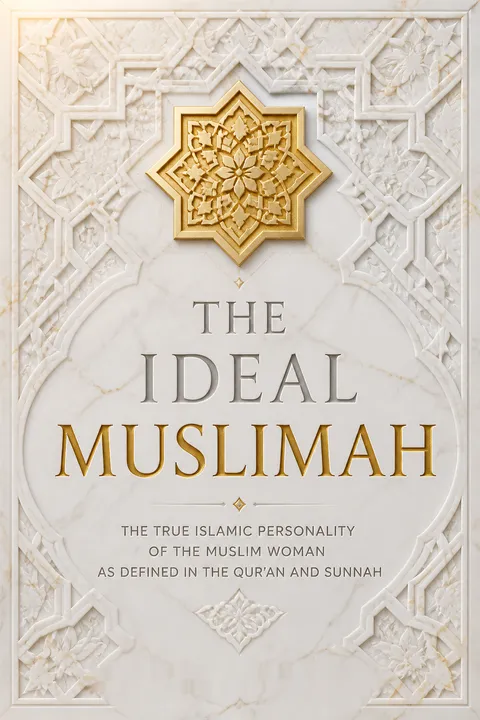
The Ideal Muslimah is a religious character manual, organized by relationships and responsibilities rather than by a single linear argument. Across ten chapters, it moves from the woman’s relationship with God to self-development, family, neighbors, friends, and society. Its recurring method is to pair Qur’anic instruction and hadith with stories of early Muslim women. Hajar models trust under pressure; Aisha embodies scholarship and discernment; Umm Salamah demonstrates strategic counsel; and Khawlah’s complaint shows a woman bringing injustice into religious deliberation.
The book’s central contribution is its refusal to treat piety as ritual alone. Worship should reach the marketplace, the dinner table, private speech, caregiving, and public responsibility. That integrated vision remains powerful: it exposes the gap between professed faith and daily behavior, while making generosity, learning, honesty, and neighborly attention part of religious life.
Its tensions are equally important to notice. The ideal combines women’s consent, learning, public participation, and moral authority with a strongly gendered account of domestic responsibility and marital obedience. These elements do not always sit comfortably together. The author’s historical examples often show women acting with independence and influence, while his prescriptions can narrow the range of roles open to them. The text also makes sweeping comparisons between Islamic and Western societies that its cited stories do not establish as neutral historical evidence.
A careful reading can separate the book’s ethical aims from every social prescription used to defend them. Its strongest aims are holistic integrity, care for the vulnerable, fair treatment, learning, and accountability. Readers can ask how those aims apply within present circumstances, whose labor is being assumed, and whether a practice protects dignity in reality. That approach preserves the book’s spiritual seriousness without treating its account of ideal womanhood as a single template for every Muslim woman.
Review Summary
The Ideal Muslimah receives mostly positive reviews for its comprehensive guidance on being a righteous Muslim woman. Readers appreciate its use of Quranic verses and hadiths to support points. Some find it repetitive or unbalanced in parts, particularly regarding spousal relationships. Many consider it an essential reference for Muslim women, praising its coverage of various life aspects. Some criticize it as restrictive or outdated. Overall, most reviewers recommend it as a valuable resource for understanding the Islamic ideal of womanhood, though a few take issue with certain perspectives.
People Also Read






Glossary
Tawhid
belief in Allah’s onenessTawhid is the affirmation that Allah is one and has no partner in worship or divine authority. In the book, it is the foundation of belief and the standard against which other loyalties and practices are judged. It grounds the Muslim woman’s worship, moral accountability, and commitment to seek Allah’s approval.
taqwa
mindful reverence and obedienceTaqwa is awareness of Allah that shapes a person’s choices. It includes reverence, attention to divine guidance, obedience to what is commanded, and avoidance of what is forbidden. The book presents taqwa as an inward quality made visible in conduct, including honesty in private, patience in hardship, and fairness toward others.
ihsan
excellence in worship and conductIhsan is a high standard of worship and moral conduct, associated in the book with acting in awareness that Allah sees what is public and private. It is cultivated through devotion and careful behavior, and appears in examples such as resisting wrongdoing when no human observer is present. The term signals excellence beyond mere outward compliance.
birr
righteous kindness to parentsBirr refers broadly to righteousness and goodness, and in the book it especially describes honoring one’s parents through kindness, respect, service, and continued care. It is treated as a major religious duty, extending into a child’s adult life and applying even when parents are not Muslim, while obedience does not extend to commands that conflict with worship of Allah.
nasihah
sincere advice and loyaltyNasihah means sincere counsel and sincerity toward the person or community receiving it. In the book, it is not simply unsolicited criticism: it is an obligation to seek another’s good, offer truthful guidance, and support sound conduct. Its value depends on both intention and manner, so advice should be honest without becoming needlessly humiliating.
fitrah
humanity’s natural dispositionFitrah is the natural disposition with which human beings are created. The book uses the term to describe an original orientation toward goodness and Islam, while noting that upbringing and environment shape a child’s later beliefs and behavior. It also refers to bodily grooming practices presented as consistent with this natural state.
da’wah
inviting others to IslamDa’wah is the act of calling or inviting people toward Islam and its teachings. In the book, it is a responsibility that women share with men and can take many forms, including teaching, sincere advice, example, and correcting harmful conduct. Effective da’wah requires knowledge, patience, clear speech, and sensitivity to the audience.
FAQ
What's The Ideal Muslimah about?
- Focus on Identity: The Ideal Muslimah explores the true Islamic personality of a Muslim woman as defined in the Qur'an and Sunnah, emphasizing the importance of understanding one's role and responsibilities within Islam.
- Holistic Approach: It covers various aspects of a Muslim woman's life, including her relationship with Allah, her family, and her community, presenting a balanced view of duties and rights.
- Cultural Context: The book addresses contemporary issues faced by Muslim women, particularly in the context of modern feminist theories, and serves as a reminder of the respect and honor Islam affords women.
Why should I read The Ideal Muslimah?
- Comprehensive Guidance: The book provides a thorough understanding of the ideal characteristics and behaviors expected of a Muslim woman, serving as a guide for aligning one's life with Islamic teachings.
- Empowerment through Knowledge: It empowers women by providing insights into their rights and responsibilities, encouraging a deep connection with Islamic principles.
- Cultural Relevance: In a time of societal pressures, the book offers a refreshing perspective rooted in authentic Islamic sources, counteracting misconceptions about women's roles in Islam.
What are the key takeaways of The Ideal Muslimah?
- Faith and Worship: Emphasizes the importance of a strong relationship with Allah through worship and obedience, highlighting the necessity of fulfilling religious obligations.
- Family and Community Roles: Outlines responsibilities towards family, including parents, husband, and children, and stresses the unique potential of Muslim women in nurturing the next generation.
- Balance in Life: Advocates for a balanced approach to life, fulfilling spiritual, familial, and social obligations without neglecting any aspect.
What are the best quotes from The Ideal Muslimah and what do they mean?
- "The true Muslim woman worships her Lord sincerely.": Highlights the importance of a strong spiritual connection and fulfilling religious obligations.
- "The Muslim woman is the only woman who has the potential to achieve this.": Emphasizes the unique role and capabilities of Muslim women in society.
- "Seeking knowledge is a duty on every Muslim.": Stresses the importance of education and personal development for both men and women in Islam.
How does The Ideal Muslimah define the role of a Muslim woman in marriage?
- Mutual Respect and Obedience: A Muslim woman should be obedient to her husband, provided it does not involve sin, and mutual respect is foundational for a successful marriage.
- Choosing a Good Partner: Emphasizes selecting a husband based on religious commitment and character, ensuring compatibility and shared values.
- Rights and Responsibilities: Discusses the rights of both partners, highlighting a woman's right to choose her husband and the protection of her pride and humanity in Islam.
What specific advice does The Ideal Muslimah offer for personal development?
- Seek Knowledge: Encourages pursuing both religious and secular knowledge, essential for personal growth and fulfilling societal roles.
- Maintain Cleanliness: Stresses the importance of personal hygiene and appearance, reflecting character and respect for oneself and others.
- Regular Worship: Highlights the significance of regular prayers and acts of worship in purifying the soul and maintaining a strong spiritual connection.
How does The Ideal Muslimah address the relationship between a Muslim woman and her children?
- Primary Responsibility: Asserts that mothers have a greater responsibility in upbringing, influencing children through character and values.
- Nurturing Environment: Emphasizes creating a loving and secure environment essential for children's emotional and psychological development.
- Instilling Values: Discusses the importance of teaching Islamic values, kindness, and respect from an early age.
What does The Ideal Muslimah say about community involvement?
- Active Participation: Encourages Muslim women to be actively involved in their communities, contributing positively and supporting initiatives that promote good.
- Building Relationships: Stresses the importance of building strong relationships with other women, fostering a sense of sisterhood and mutual support in faith.
- Social Responsibility: Portrays the ideal Muslim woman as aware of her social responsibilities, striving to address community needs with charity and compassion.
How does The Ideal Muslimah define the concept of modesty?
- Modesty in Dress and Behavior: Defines modesty as essential, encompassing both dress and behavior, encouraging women to reflect dignity and Islamic values.
- Inner Modesty: Emphasizes humility and self-respect as crucial for a balanced character, beyond outward appearance.
- Cultural Sensitivity: Acknowledges cultural variations in modesty while maintaining that core Islamic principles should guide choices.
How does The Ideal Muslimah encourage women to seek knowledge?
- Religious Duty: States that seeking knowledge is a fundamental duty for every Muslim, applying equally to men and women.
- Empowerment through Education: Encourages pursuing both religious and secular knowledge for personal growth and societal roles.
- Historical Examples: Provides examples of prominent women in Islamic history who became scholars, inspiring modern women to follow in their footsteps.
What challenges faced by Muslim women today are discussed in The Ideal Muslimah?
- Cultural Pressures: Addresses cultural pressures that may lead women to compromise values, emphasizing resilience and adherence to Islamic teachings.
- Misinterpretation of Rights: Discusses how misinterpretation of rights can lead to confusion and conflict in roles.
- Balancing Modernity and Faith: Highlights the challenge of balancing modern expectations with traditional values, encouraging a harmonious path.
How does The Ideal Muslimah encourage women to deal with conflicts?
- Promoting Reconciliation: Emphasizes reconciliation, encouraging women to resolve disputes amicably and maintain strong bonds of sisterhood.
- Patience and Understanding: Advocates for patience and understanding in conflicts, approaching disagreements calmly and rationally.
- Seeking Guidance: Encourages seeking guidance from Islamic teachings to ensure responses align with faith.
Download PDF
Download EPUB
.epub digital book format is ideal for reading ebooks on phones, tablets, and e-readers.








