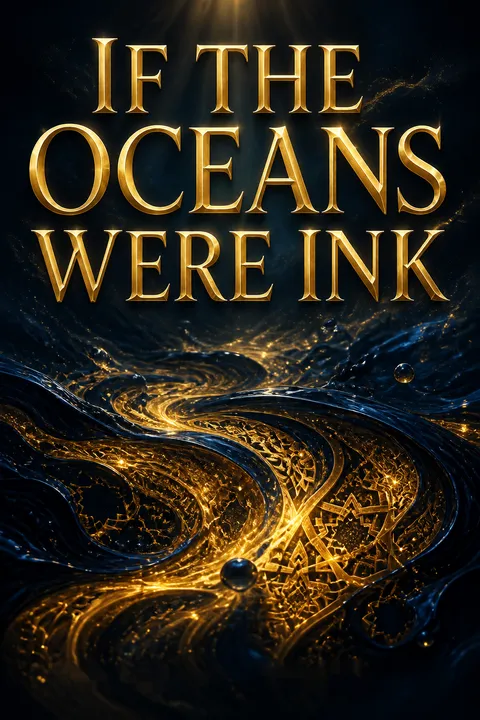


Key Takeaways
Read the Quran in context, not as a storehouse of convenient quotations.
A demanding text. Journalist Carla Power begins studying the Quran with Sheikh Akram Nadwi, a traditional Muslim scholar and longtime friend. She expects a book she can read from start to finish. Instead, she finds a scripture arranged by themes rather than revelation date, whose verses draw on Arabic, biblical stories, and seventh-century Arabian customs. Akram argues that isolated lines invite selective readings, while careful study considers the whole text and its historical setting.
Meaning stays contested. The opening chapter, Al-Fatiha, compresses core ideas into about twenty-five Arabic words, yet even its closing lines can be read in ways that trouble interfaith readers. The Quran likens its meaning to an ocean that cannot be exhausted. Power learns that reverence does not remove interpretive difficulty, and that translation adds another layer of judgment.
What's striking is that context functions here as an ethical discipline, not merely an academic technique. It slows the impulse to turn a difficult verse into instant proof of what a whole religion believes. That approach resembles close reading in literature and source criticism in history: meaning emerges through wording, setting, and competing interpretations. It does not guarantee agreement, however. Contextual readers can still disagree sharply, and appeals to a text's larger unity can sometimes conceal the interpreter's own assumptions.
Trade civilizational labels for relationships that reveal actual human complexity.
Friendship as reporting. Power grew up in Tehran, Kabul, Delhi, and Cairo, then built a career writing about Muslim societies, often through politics and newsworthy conflict. After 9/11, she and Akram watch public debate harden into a choice between the West and Islam. Their friendship unsettles that binary: she is a secular feminist with Jewish and Quaker family roots; he is a conservative scholar trained in India and living in Britain.
The headlines select. Power recalls Taliban officials who loved Rome or Las Vegas, and a shy young guide embarrassed to speak with women journalists. Such encounters do not excuse oppressive movements, but expose how easily a category replaces a person. At Akram's village, questions about American policy matter more to listeners than her hoped-for story about shared values. Dialogue must meet people where their concerns actually are.
The book's strongest answer to stereotyping is not a counter-stereotype of the agreeable Muslim, but sustained contact with someone who remains genuinely different. In media terms, conflict is highly selectable: it produces vivid scenes and clear villains, while ordinary coexistence rarely earns the same attention. Personal relationships can correct that imbalance, though they cannot represent a population of immense diversity. The useful lesson is narrower and stronger: treat any single encounter as evidence about a person, not as a verdict on a civilization.
Separate inherited custom from scripture before calling a practice religiously required.
Law is interpretation. Akram distinguishes the Quran and the Prophet's example from fiqh, the human legal reasoning developed by scholars after Muhammad's death. He believes later legal systems can harden into rules that obscure the scripture's emphasis on worship and moral character. He points to practices such as prayer caps and face veils, which he regards as custom or optional rather than universal religious commands.
Sources can unsettle habits. Akram's reading of Islamic history supports women praying in mosques, and his study of inheritance leads him to press his own family to give his aunts the land share they were owed. The change initially frightens them, because custom has made exclusion feel normal. Returning to sources can expose that injustice, but it still requires interpretation, knowledge, and the courage to challenge one's community.
This distinction resembles the difference between a constitution and the precedents accumulated around it: later institutions may preserve a text, but they can also narrow its possibilities. Akram's examples show why historical inquiry matters to reform, especially when a custom gains the authority of sacred obligation. Yet a return to foundational sources is not interpretation-free. Scholars must decide which reports are reliable and how an old rule applies now. The approach opens debate; it does not make debate disappear.
Use forgotten women scholars to prove exclusion was never inevitable.
A hidden record. While researching hadith, Akram kept encountering women as teachers and authorities. What he expected to be a short pamphlet became a forty-volume biographical project documenting nearly nine thousand women scholars across Islamic history. Among them were Umm al-Darda, who taught men and women in mosques, and Fatimah al-Samarqandiyyah, who issued legal opinions and advised her husband, a jurist.
History changes the argument. These women lectured, issued fatwas, traveled to study, and sometimes taught male students. Their lives challenge claims that women's religious authority is foreign to Islam. Akram argues that many disappeared from public memory because modesty conventions kept women's names out of records, and later cultural conservatism narrowed their opportunities. Recovering the past gives contemporary women precedents for education and leadership, even if it cannot by itself remove present-day barriers.
The project illustrates how archival absence can be mistaken for historical absence. When records were made by institutions that did not consistently name women, the archive itself reproduces the inequality a historian later encounters. Recovering individual lives therefore changes not only the story, but the range of futures that seem culturally possible. Still, precedent is a powerful argument only within communities that value precedent. The same evidence may inspire reformers while leaving institutions untouched unless access, teaching, and authority also change.
Let informed disagreement revise religious rulings, while naming the limits that remain.
A scholar changes course. Power is deeply troubled when Akram defends the historical marriage of Muhammad and Aisha, who was very young. Two of his advanced students challenge him with evidence about the harm of child marriage today. After weeks of discussion, he revisits legal sources, finds an earlier jurist who opposed marrying minors, and publicly revises his position. He concludes that injustice in current practice demands opposition to child marriage.
Openness is not sameness. Akram's willingness to reconsider is significant, but his views do not align fully with Power's. He accepts polygamy and male guardianship within the household, and rejects same-sex relationships. The book's honesty depends on showing both his capacity for revision and the boundaries of his conclusions. Serious dialogue does not require pretending that every disagreement has been resolved.
This episode presents intellectual authority at its best: not as infallibility, but as a practiced willingness to hear evidence, return to sources, and change a public position. It also shows why experience matters in legal reasoning. The students bring medical and public-health knowledge that a narrow textual discussion might omit. Yet revision in one case should not be mistaken for comprehensive reform. The account makes room for admiration and criticism at once, a more demanding response than either dismissal or uncritical praise.
Build religious character through daily practice, not state-enforced identity.
Faith in the space available. In his teaching on Yusuf, the Quranic Joseph, Akram draws a distinction between the circumstances a person cannot control and the daily practices they can. Joseph remains faithful through a well, slavery, and prison before his fortunes change. Akram calls this steady God-consciousness taqwa: orienting ordinary choices toward God rather than waiting for an ideal country or political system.
A lived tradition. Akram follows the Prophet's example in small habits, manners, prayer, and care for guests. For him, Islam is embodied history, not only a set of abstract moral ideas. This outlook can give migrants and people with limited power a sense of agency. It can also shade into political quietism, especially where repression blocks people from worship or basic rights. Personal resilience and public justice are not always substitutes.
The distinction between controllable practice and uncontrollable circumstance echoes approaches to resilience that separate agency from outcome. It can protect dignity when migration, poverty, or political upheaval makes control scarce. The caution is equally important: endurance can help people survive injustice, but it can also be invoked to discourage resistance. The ethical test is whether inward discipline sustains humane action or is used to excuse those who impose the hardship. The book leaves that tension visible rather than resolving it with a slogan.
Read jihad through its setting, and choose peace when conflict destroys the community.
Context narrows the claim. Akram rejects the use of Quranic passages as free-floating commands for violence. He reads the so-called Verse of the Sword in the setting of a broken treaty and attacks on the early Muslim community, and notes that the passage also permits enemies to go free if they repent. In his account, armed jihad is defensive, requires legitimate leadership, and excludes harm to civilians and property.
A strategic pause. He points to the Treaty of Hudaybiyah, when Muhammad accepted terms that seemed humiliating in exchange for a truce. The pause gave the Muslim community time to grow and eventually enter Mecca without battle. Akram argues that political movements often mistake force for strength. His stance differs from Mona, an Egyptian activist who sees political action as necessary against dictatorship, exposing the real cost of quietism.
The episode joins textual interpretation to conflict strategy: a ceasefire can be more than retreat when it prevents losses and creates room for a weaker party to recover. It also challenges the dramatic appeal of armed action, which can turn sacrifice into proof of righteousness. But strategy depends on conditions. For people facing state violence, refusing politics may leave power entirely to the powerful. The contrast between Akram and Mona prevents peace from becoming an automatic answer to every conflict.
Respect across faiths without pretending that theological differences have vanished.
Common roots, real boundaries. The Quran honors earlier prophets, including Abraham, Moses, Jesus, and Mary, and recognizes Jews and Christians as People of the Book. Akram teaches respect for them and describes their scriptures as part of a shared monotheistic history. But he also believes people who encounter Muhammad's message must accept it to be saved, a conclusion Power finds difficult.
No easy harmony. Power searches other Quranic passages and Muslim interpretations that leave more room for salvation across religions. She does not resolve the disagreement by claiming that all readings say the same thing. Instead, she shows how context, translation, and theological commitments shape conclusions. Interfaith friendship can be genuine without requiring either person to surrender convictions or conceal a point of friction.
This is a useful model of pluralism as a civic practice rather than a claim that religions are interchangeable. People can share neighborhoods, obligations, and affection while disagreeing about ultimate truth. Such pluralism is harder than polite celebration because it requires listening without demanding consensus. It also has limits: respect in conversation does not automatically prevent discrimination or unequal power. The book's account is most persuasive when it treats friendship as a beginning for understanding, not proof that theology no longer matters.
Let mortality reorder daily life without expecting faith to erase grief.
Return as orientation. Akram's recurring image is a life divided between daily practice and the circumstances one happens to inhabit. Prayer repeatedly turns attention toward God, while awareness of death places worldly ambition in perspective. Power, who does not convert, finds this orientation calming, especially during the deaths of her parents and Akram's mother.
Grief remains human. Muslim condolence visits, Jewish mourning practices, and an Urdu elegy all offer ways to accompany loss. Yet Akram's belief in the afterlife does not make his mother's death painless, and Power's secular outlook does not prevent her from finding comfort in ritual. The book closes not with agreement about belief, but with a friendship enlarged by attentive conversation and a shared recognition of life's fragility.
Ritual gives grief a social form: it creates occasions for presence when language is inadequate and private sorrow risks becoming isolation. The parallel mourning practices do not prove that religions make identical claims; they show that communities develop different ways to carry loss together. The section also resists a common simplification, that faith either cures grief or has no practical value. Belief can shape how death is understood, while the absence of the loved one still hurts.
Analysis
If the Oceans Were Ink is a reported memoir, a cross-cultural study, and an argument about how sacred texts acquire public meaning. Its narrative engine is a year of Quran study between Carla Power, a secular journalist, and Akram Nadwi, a conservative scholar whose beliefs cannot be reduced to familiar Western labels. Their lessons offer readers an unusual vantage: Islam appears neither as a single political program nor as a reassuring collection of universal values, but as a tradition interpreted through language, history, law, family, and daily practice.
The book's method is its central strength. Power lets disagreement remain in the story. Her discomfort with Akram's views on salvation, gender roles, and sexuality keeps the relationship from becoming a public-relations portrait. His change of position on child marriage, prompted by female students' arguments and evidence of harm, shows that inherited scholarship can contain tools for ethical revision. The recovered record of thousands of women scholars makes a related point: historical memory is not passive. What communities preserve or omit influences what they imagine to be possible.
The account also has clear limits. One scholar, however learned, cannot stand for a global and internally diverse Muslim population. Akram's preference for personal piety over political struggle is illuminating in some settings and potentially inadequate in others, a tension embodied by Mona's activism under dictatorship. Likewise, returning to original sources does not yield a single uncontested answer; interpretation remains shaped by authority and circumstance.
The book's most durable contribution is therefore not a final definition of Islam, but a method for approaching difference. It asks readers to resist headlines, study context, and let real disagreement complicate easy moral confidence. Understanding is not conversion, consensus, or absolution. It is a more rigorous encounter with people and texts than either stereotype or selective quotation permits.
Review Summary
If the Oceans Were Ink explores the Quran through conversations between journalist Carla Power and Islamic scholar Sheikh Akram Nadwi. Readers praise Power's open-minded approach and the book's insights into Islam, though some critics felt it lacked depth or analysis. Many appreciated the book's portrayal of a moderate Islamic perspective and its efforts to bridge cultural divides. The writing style and personal narratives were generally well-received. While not a comprehensive study of Islam, it's seen as an accessible introduction that challenges stereotypes and promotes understanding.
People Also Read

Glossary
taqwa
God-consciousnessTaqwa is awareness of God that guides a person's conduct, choices, and worship. In Akram's teaching, it is cultivated through repeated daily practice, patience, and attention to one's duties, rather than through public displays of religious identity or the control of political institutions.
fiqh
Human Islamic jurisprudenceFiqh is the body of legal reasoning developed by Muslim scholars from the Quran, hadith, and other sources. Unlike divine revelation itself, fiqh is human interpretation and can differ across scholars and legal schools. Akram argues that treating inherited rulings as fixed can obscure the Quran's broader moral aims.
hadith
Reports of Muhammad's words and deedsA hadith is a report about something the Prophet Muhammad said, did, or approved. Hadith collections preserve accounts used by Muslims to understand religious practice and law. Scholars assess both the report and its chain of transmitters; in the book, these reports also make the Prophet's example concrete in everyday life.
sunna
The Prophet's lived exampleThe sunna is the guiding example of Muhammad, including his actions, statements, and conduct. It is preserved chiefly through hadith and biographies of the Prophet. Akram treats the sunna as a practical guide for applying Quranic principles, from worship and manners to family life.
adab
Humane manners and conductAdab refers to cultivated manners, ethical behavior, and intellectual courtesy. In the book, it means more than politeness: it involves engaging others with restraint, generosity, and respect. Power sees Akram's adab in his calm manner and his refusal to answer hostility with public spectacle.
qiwamah
Household support and responsibilityQiwamah is a Quranic term often translated as male guardianship or authority in marriage. Akram interprets it primarily as a husband's duty to provide financially for his household, not proof that men are spiritually superior. Other interpreters understand the verse differently, and the term remains central to debates about gender and family law.
jihad
Struggle in faithJihad means struggle or striving. The book distinguishes armed conflict from the effort to discipline one's own conduct and live faithfully. Akram argues that armed jihad is limited to specific defensive conditions, requires legitimate leadership, and forbids harm to noncombatants and property.
dawa
Calling others to IslamDawa is the effort to invite or call people toward Islam. Akram presents it as persuasion through knowledge, character, and considerate relations, not coercion or an attempt to win arguments. He encourages Muslims to engage neighbors of other faiths as individuals and contribute to the societies where they live.
FAQ
What's If the Oceans Were Ink about?
- Exploration of the Quran: The book follows Carla Power's journey to understand the Quran through her friendship with Sheikh Mohammad Akram Nadwi, a traditional Islamic scholar.
- Cultural Dialogue: It aims to bridge the gap between Western and Islamic perspectives, especially in the post-9/11 context, emphasizing dialogue and understanding.
- Personal Growth: Power reflects on her own beliefs and biases, illustrating how her study of the Quran challenges her secular worldview.
Why should I read If the Oceans Were Ink?
- Unique Perspective: Offers rare insights into the Quran from both a scholarly and personal viewpoint, making it accessible to those unfamiliar with Islamic texts.
- Timely Relevance: Serves as a reminder of shared humanity and values that transcend cultural differences, encouraging understanding over division.
- Rich Cultural Context: Enriched with historical anecdotes and contemporary issues, providing a comprehensive view of the Quran's significance.
What are the key takeaways of If the Oceans Were Ink?
- Importance of Understanding: Emphasizes that reading the Quran is essential for understanding the Muslim faith and its followers.
- Diverse Interpretations: Shows the Quran as a text with myriad interpretations, reflecting diverse beliefs within the Muslim community.
- Role of Women in Islam: Highlights historical contributions of women scholars, challenging the notion that women have been sidelined in religious discourse.
What are the best quotes from If the Oceans Were Ink and what do they mean?
- Infinite Depth: “Say, even if the ocean were ink...” illustrates the Quran's infinite depth and divine wisdom.
- Acceptance and Growth: “When you come to the space given to you by Allah, don’t complain!” emphasizes acceptance for spiritual growth.
- Inner Modesty: “The best dress is the dress of taqwa.” underscores the importance of God-consciousness over outward appearances.
How does Carla Power approach the Quran in If the Oceans Were Ink?
- Personal Journey: Approaches the Quran as a curious outsider, seeking understanding through her friendship with Akram.
- Dialogue with a Scholar: Structured around lessons with Akram, discussing themes and verses from the Quran.
- Cultural Context: Situates exploration within post-9/11 America, addressing misconceptions and fears surrounding Islam.
What insights does If the Oceans Were Ink provide about women in Islam?
- Historical Contributions: Reveals significant roles women have played in Islamic scholarship, countering stereotypes.
- Contemporary Challenges: Discusses ongoing struggles women face, emphasizing that cultural practices often overshadow Islamic teachings.
- Empowerment through Knowledge: Illustrates how education and understanding of the Quran can empower women within Islamic contexts.
How does If the Oceans Were Ink address the concept of jihad?
- Misunderstandings of Jihad: Explores common misconceptions, emphasizing jihad as a personal struggle for self-improvement.
- Historical Context: Provides historical examples of jihad as a concept rooted in justice and moral struggle.
- Personal Responsibility: Highlights jihad as the effort to live a righteous life and promote understanding and peace.
What role does friendship play in If the Oceans Were Ink?
- Bridge Between Cultures: Friendship between Power and Akram illustrates how personal connections foster understanding across cultural divides.
- Mutual Learning: Both learn from each other, enriching their perspectives on faith, culture, and humanity.
- Humanizing the Other: Friendship humanizes misunderstood aspects of Islam, making it relatable to readers.
How does If the Oceans Were Ink challenge stereotypes about Islam?
- Complexity of Belief: Emphasizes Islam's diverse interpretations and practices, challenging the stereotype of a singular Islamic identity.
- Highlighting Moderation: Showcases moderate voices within Islam, countering the portrayal of Muslims as extremists.
- Personal Stories: Shares personal anecdotes, dismantling preconceived notions and fostering deeper understanding.
What does If the Oceans Were Ink reveal about the Quran's impact on personal lives?
- Guidance for Daily Life: Portrays the Quran as a source of guidance shaping followers' actions, decisions, and relationships.
- Connection to God: Illustrates how the Quran fosters a deep connection between individuals and their Creator.
- Cultural and Social Influence: Reveals the Quran’s teachings impacting social structures and cultural norms within Muslim communities.
How does If the Oceans Were Ink address the theme of cultural identity?
- Navigating Dual Identities: Explores Power's struggles with cultural identity as a secular Western woman engaging with Islamic teachings.
- Cultural Exchange: Emphasizes cultural exchange and dialogue in fostering understanding and acceptance.
- Reclaiming Identity: Highlights the need for Muslims to reclaim cultural and religious identities from stereotypes.
What is the significance of the title If the Oceans Were Ink?
- Metaphorical Depth: Suggests the vastness and richness of the Quran and Islamic knowledge.
- Endless Exploration: Reflects the idea that understanding the Quran is a lifelong journey.
- Connection to Faith: Emphasizes the Quran's importance as a source of guidance and spiritual nourishment.
Download PDF
Download EPUB
.epub digital book format is ideal for reading ebooks on phones, tablets, and e-readers.








