

Key Takeaways
Use the Five Elements as a map of tendencies, never a verdict on character.
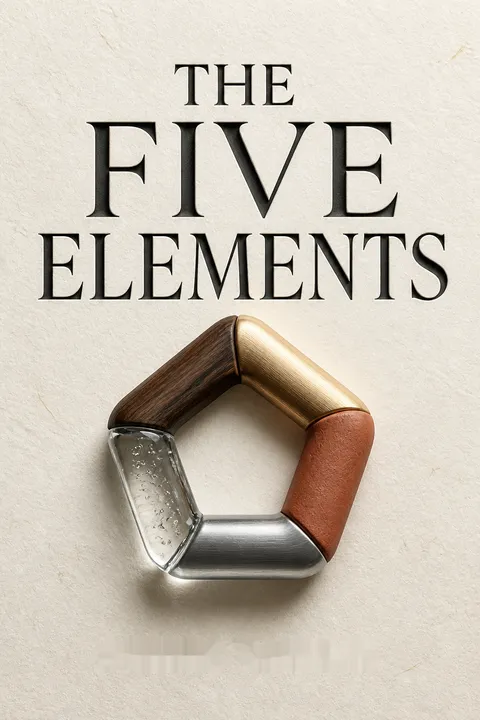
A map, not a label. The Five Elements is a traditional Chinese framework that links five natural phases with patterns of temperament: Water reflects inward reflection, Wood purposeful action, Fire expressive energy, Earth care and connection, and Metal order and refinement. The elements are not literal substances in a person. They are ways of describing how someone tends to move through life and respond to pressure.
People contain all five. Dahlin argues that most people have one or more prominent elements, while other tendencies emerge in particular settings or under stress. Her own mother and daughters display different combinations, and the same person can act differently at home, at work, or onstage. The framework is most useful as a prompt to observe, not as a box to put someone in.
What's useful here is the shift from asking what kind of person someone is to asking what pattern is active in this situation. That resembles contextual approaches in psychology, which treat behavior as an interaction between a person and their circumstances rather than a permanent trait. The model can invite curiosity and soften snap judgments. Its limit is equally important: an appealing typology is not a validated personality test, and a label can become a stereotype if it replaces attention to the actual person.
Read stress responses as clues to needs, not proof someone is against you.
Stress has a signature. In Dahlin's model, pressure tends to draw out recognizable patterns: Water may withdraw into fear or sadness, Wood may become angry and accusatory, Fire may panic, Earth may worry and overhelp, and Metal may detach. These are not excuses for harmful behavior. They are possible explanations for why someone reacts in a way that seems baffling or personal.
Change the first question. Instead of immediately concluding that a friend's silence means rejection, or a partner's bluntness means contempt, consider whether stress is shaping the interaction. Dahlin describes interpreting a friend's rigid expectations as a possible Metal imbalance rather than evidence that the friend wanted to hurt her. The practical move is to check what is happening, clarify needs, and set boundaries without assuming motive.
This is a practical antidote to the fundamental attribution error, the common habit of explaining another person's actions by their character while overlooking the situation. A stress lens can interrupt that reflex and make conflict less combustible. Still, explaining behavior does not erase its impact. Compassion and accountability belong together: understanding why someone lashes out may guide a better response, but it does not require accepting repeated harm or abandoning a boundary.
Give Water room to think, then help it reconnect with the living world.
Depth needs an outlet. Water types are described as reflective, imaginative, and drawn to meaning, art, history, and intimate conversation. Some are quiet philosophers; others are playful and curious but struggle to carry ideas through. Their slow pace and need for solitude can support creativity, but extended withdrawal may turn into rumination, fear, and procrastination.
Pair solitude with contact. Dahlin recalls a Water teacher who let her write freely while music played, giving her space to process loneliness without encouraging her to stay stuck in it. That balance is the lesson: make room for quiet and creative work, then add gentle movement, supportive company, and realistic time limits. A meaningful conversation or a walk with a friend can reconnect a Water person without demanding that they adopt someone else's speed.
The distinction between restorative solitude and isolating rumination is valuable beyond this typology. Creative work often needs stretches of unstructured attention, while mood and perspective can deteriorate when reflection has no route back to action or social contact. The useful question is not whether a person should be alone, but whether solitude is renewing or narrowing their world. Because low mood can have many causes, a personality description should not be treated as a diagnosis or a substitute for appropriate care.
Turn Wood's anger into useful action, then practice flexibility before it hardens.
Drive can serve a cause. Wood types are portrayed as decisive, energetic, and motivated by fairness. They plan, persist, and often perform well under pressure. Anger can alert them to an injustice and give them the force to act. But the same conviction can become impatience, sharp speech, overwork, or the assumption that slower people are irresponsible.
Pause before pushing. In one story, a Wood mother stepped away during a clash with her young son, calmed herself, then listened and offered him choices rather than issuing orders. Dahlin recommends movement and rest to loosen the body's and mind's rigidity, alongside speaking more carefully and acknowledging other people's pace. The goal is not to blunt a Wood's determination. It is to make that determination persuasive rather than intimidating.
The account captures a useful distinction between anger as information and anger as instruction. Anger may flag a perceived violation, but it does not automatically identify the best remedy or prove that one's interpretation is complete. A pause creates room for that second step. The mother's use of reflective listening also echoes approaches in conflict resolution that lower defensiveness by showing the other person they have been heard before negotiating a solution.
Let Fire bring joy, but build in pauses before enthusiasm becomes overload.
Energy is a gift and a limit. Fire types thrive on people, pleasure, performance, and the excitement of the present. Their warmth can make strangers feel like friends and help a serious group loosen up. The risks are equally vivid: Fires may say yes too quickly, chase whatever feels exciting, interrupt, or spread themselves across so many plans that they become anxious and scattered.
Enjoyment needs boundaries. Dahlin describes a Fire friend persuading her to stay after a dance performance instead of leaving immediately to protect a professional image. The night became more joyful and connected than the rigid rule she had set for herself. That does not mean every invitation deserves a yes. Fires can pause before committing, protect time for rest, and make agreements explicit so that spontaneity does not become unreliability.
Fire's pull toward immediate reward resembles present bias, the tendency to give near-term pleasure more weight than future costs. The model makes that tendency memorable without treating it as a moral defect. A planned pause can preserve spontaneity while improving judgment: a person can enjoy the invitation and still decide after considering energy, obligations, and boundaries. The challenge is not to extinguish enthusiasm, but to prevent charisma from creating commitments that other people reasonably take seriously.
Make Earth's care reciprocal before generosity turns into worry or resentment.
Care can overrun its owner. Earth types are described as compassionate, welcoming, and skilled at helping people feel safe. Their vulnerability is taking responsibility for everyone else's comfort, resisting change, and giving more than they can sustain. Dahlin's example of an Earth dance teacher lending costumes and giving away lessons shows how generosity can become painful when the giver cannot comfortably say no or ask for fair payment.
Include yourself in the circle. Earth people can state what they want, ask others to contribute, and let people manage problems that belong to them. Support does not require rescuing. The distinction matters because overhelping can foster dependence and leave the helper depleted. Accepting care from others is not a betrayal of generosity; it is part of a relationship in which both people matter.
This section usefully separates kindness from unlimited availability. In caregiving research and practice, sustainable support depends on boundaries, shared responsibility, and attention to caregiver strain. The example also raises a subtle question: help can feel compassionate in the moment while weakening another person's opportunity to act independently. That does not make generosity wrong. It suggests that good care should be responsive to what is actually needed, rather than driven solely by the helper's discomfort at seeing someone struggle.
Keep Metal's standards, but do not confuse detachment with wisdom.
Clarity can become distance. Metal types value order, excellence, simplicity, and reflection. They can distill a complicated problem to its essentials and remain composed when others feel overwhelmed. Under strain, those strengths may harden into perfectionism, emotional aloofness, or relentless work on a solution that is not helping.
Stay in relationship with imperfection. Dahlin recounts meeting a spiritual traveler in India whose pursuit of transcendence seemed to block his attention to nearby poverty and to another person's concerns. The story challenges the idea that rising above emotion is always maturity. Metals can preserve their reflective practice while listening, acknowledging others' feelings, and accepting that human life is unfinished. Connection is not a distraction from insight; it can test whether insight remains humane.
The distinction between equanimity and disengagement is important. Emotional regulation does not require emotional absence; a person can remain steady while recognizing pain, including another person's pain. The story also points to a broader risk in ideals of purity: distance from ordinary needs can be mistaken for moral or spiritual superiority. A useful test for any personal standard is whether it improves one's conduct toward other people, not merely one's sense of inner order.
Translate between elemental styles instead of demanding effortless compatibility.
Two relationship patterns. Dahlin describes a flow cycle, in which one element tends to support another, and a control cycle, in which two styles may press on each other's vulnerabilities. In the flow sequence, Water supports Wood, Wood supports Fire, Fire supports Earth, Earth supports Metal, and Metal supports Water. For example, Water may generate ideas that Wood turns into plans. In a control pairing, Wood's pace and pressure may unsettle Earth, while Earth's caution may frustrate Wood.
Use friction as information. These pairings suggest places where partners may need to translate rather than assume bad intent. A Wood can soften urgency; an Earth can state a need directly. The book does not present the cycles as guarantees of success or failure. Values, history, stress, and communication matter too, so use the patterns to start a conversation, not to predict a relationship.
The cycles offer a compact way to think about complementarity and friction: a trait that helps one person may feel constraining to another. This resembles systems thinking, where an interaction is understood through feedback between people rather than through either individual alone. The model becomes most useful when it generates specific questions, such as what pace feels respectful or how much reassurance is needed. Its predictive power should remain modest; real relationships are shaped by context and behavior, not merely by a type pairing.
Treat yin and yang as adjustable intensity within each person's elemental style.
One element can have different volume. Yin and yang are terms the book uses for contrasting qualities. Yin is inward, soft, and subtle; yang is outward, forceful, and pronounced. A Wood person, for example, might express determination quietly or confrontationally, depending on this balance. The Five Elements wheel also links Water, Wood, Fire, Earth, and Metal to winter, spring, summer, seasonal transitions, and autumn, presenting personality as movement through phases as well as a basic disposition.
Observe your own rhythm. Dahlin encourages readers to notice when their energy rises and falls rather than assume one daily schedule suits everyone. Her account includes traditional Chinese medicine's associations between organs, emotions, and times of day. These are features of that traditional framework, not established medical rules. The practical takeaway is simply to notice personal patterns without turning them into universal prescriptions.
This addition helps prevent the five types from becoming caricatures: the same broad tendency can appear with very different intensity. It also offers a useful counterweight to productivity advice that treats one schedule as ideal for everyone. Still, circadian biology is a scientific field, while traditional organ-time correspondences are a separate explanatory system. Personal observation can inform routines, but the latter claims should not be mistaken for medical evidence or used to diagnose bodily problems.
Support a child's temperament without turning a young personality into a permanent label.
Children show the elements differently. The afterword argues that young children move among all five styles and that a primary pattern may be hard to identify before about age seven. It also notes that upbringing, environment, and difficult experiences can shape what adults observe. A quiet Water child, for instance, may need smaller groups and a safe way to express ideas; an energetic Fire child may benefit from preparation before transitions and time to settle after excitement.
Adapt the support, not the child. The guidance is to notice what helps a child feel secure, heard, and capable. A Wood child may respond better to clear reasons and responsibility than to unexplained commands. An Earth child may need extra time with change. These are prompts for attentive caregiving, not substitutes for understanding the individual child or seeking professional help when concerns persist.
The child-focused guidance is strongest when it encourages adults to observe before correcting. Developmental psychology likewise emphasizes that temperament and behavior are shaped by both individual differences and environments, which makes flexible support more useful than a fixed label. The caution about young children's changing patterns is especially important: adults can accidentally make a prediction self-fulfilling by treating a child as inherently timid, difficult, or distractible. The element language should expand a caregiver's curiosity, not narrow the child's future.
Analysis
The book's central contribution is less a scientific taxonomy than a vocabulary for translating difference into needs. Its stories make five recognizable patterns memorable: reflective Water, driven Wood, exuberant Fire, nurturing Earth, and exacting Metal. The strongest use of the system is interpersonal. A partner's retreat, a colleague's urgency, or a parent's overhelping can be interpreted as a style under strain rather than an intentional insult. This reframing may reduce shame and create room for more precise requests.
The model also resists a common weakness of typologies by insisting that people contain combinations and shift with context. That flexibility is humane, but it makes the framework difficult to test: almost any behavior can be explained after the fact as a primary, secondary, situational, or imbalanced element. The personality quizzes therefore work better as reflection prompts than as measurement instruments. Likewise, traditional Chinese medicine's associations between elements, organs, and emotions should be understood as part of its historical worldview, not as established biomedical diagnosis or treatment.
The most actionable advice is often independent of the metaphysics: pause before reacting, move when stuck, communicate needs clearly, share responsibility, and make room for different paces. These recommendations can be evaluated by their effects in ordinary life without requiring belief in elemental energies. The book's distinctive value is the bridge between an evocative seasonal metaphor and practical relationship questions. Its main risk is letting an elegant label replace curiosity. Used lightly, the system can prompt better listening. Used rigidly, it can excuse behavior, stereotype children, or claim more certainty than the evidence supports.
Review Summary
The Five Elements receives mostly positive reviews, with readers praising its insights into personality types and self-understanding. Many find it helpful for understanding themselves and others better. Some criticize the author's name-dropping and personal anecdotes as distracting. Readers appreciate the book's accessible writing style and practical applications. However, a few reviewers find it basic or lacking depth. Overall, the book is seen as a valuable introduction to the Five Elements system, with potential for personal growth and improved relationships.
People Also Read







Glossary
Five Elements
five patterns of changeA traditional Chinese framework organized around Water, Wood, Fire, Earth, and Metal. The book uses these elements to describe recurring temperaments, emotional tendencies, seasonal phases, and ways of relating. Each person is understood to contain all five, with some more prominent than others. The framework is presented as a tool for self-understanding and compassion, not as a complete account of an individual's character.
Five Elements wheel
cycle of elemental phasesThe book's circular arrangement of the five elements as a sequence of life phases: Water with winter, Wood with spring, Fire with summer, Earth with seasonal transitions, and Metal with autumn. The wheel represents movement from inward renewal through growth and expression to transition and release. It is also used to organize relationships among the elements and their traditional organ associations.
flow cycles
supportive elemental sequenceA relationship pattern in which one element is said to support another: Water supports Wood, Wood supports Fire, Fire supports Earth, Earth supports Metal, and Metal supports Water. Dahlin uses the sequence to describe possible complementarities, such as Water's ideas helping Wood's plans. These are broad interpretive patterns, not guarantees that two people will get along.
control cycle
elemental friction patternA pattern describing pairings that may press on one another's vulnerabilities: Water controls Fire, Fire controls Metal, Metal controls Wood, Wood controls Earth, and Earth controls Water. The book uses these relationships to suggest why certain styles may feel frustrating or constraining. Awareness is intended to support communication and adjustment, not to predict incompatibility.
yin and yang
contrasting energetic qualitiesTraditional Chinese terms for complementary qualities. In the book's account, yin tends toward inward, soft, and yielding expression, while yang tends toward outward, forceful, and pronounced expression. The terms can modify how an element appears, so two people with the same dominant element may behave differently. They are part of the traditional framework, not clinical personality categories.
FAQ
1. What is The Five Elements: Understand Yourself and Enhance Your Relationships with the Wisdom of the World's Oldest Personality Type System by Dondi Dahlin about?
- Ancient personality system: The book introduces the Chinese Five Elements personality system—Water, Wood, Fire, Earth, and Metal—explaining how these elemental energies shape personality, emotions, and behaviors.
- Modern application: Dondi Dahlin translates this ancient wisdom into practical advice for self-understanding, relationship improvement, and personal growth, blending Eastern and Western perspectives.
- Comprehensive guide: The book covers each element’s traits, stress responses, health tips, and offers exercises and assessments to help readers identify and work with their elemental makeup.
2. Why should I read The Five Elements by Dondi Dahlin?
- Deep self-understanding: The book provides a unique lens to explore your motivations, emotional patterns, and behaviors, fostering self-acceptance and growth.
- Improved relationships: Understanding the Five Elements helps you navigate conflicts, communicate more effectively, and cultivate empathy with others.
- Holistic health insights: Dahlin connects personality with physical health and lifestyle, offering tailored advice on diet, movement, and energy medicine for each element.
3. What are the key takeaways from The Five Elements by Dondi Dahlin?
- Elemental self-awareness: Recognizing your primary and secondary elements clarifies your strengths, challenges, and stress responses.
- Relationship harmony: The Five Elements system explains why people behave differently and how to support and communicate with each type.
- Practical tools: The book provides exercises, movement suggestions, and energy medicine techniques to balance your elemental energies and improve well-being.
- Holistic integration: It links emotional, physical, and spiritual health, encouraging a balanced, compassionate approach to life and relationships.
4. What are the Five Elements personality types in Dondi Dahlin’s system and their core characteristics?
- Water: Introspective, creative, and philosophical, Waters value depth, solitude, and meaning, but may struggle with fear and isolation.
- Wood: Driven, decisive, and justice-oriented, Woods are natural leaders who thrive on action and fairness, but can be rigid or irritable.
- Fire: Energetic, joyful, and charismatic, Fires love social connection and spontaneity, but may become scattered or panicked under stress.
- Earth: Nurturing, dependable, and compassionate, Earths prioritize harmony and caregiving, but can worry excessively and become codependent.
- Metal: Orderly, refined, and spiritual, Metals seek purity and high standards, often appearing detached and struggling with grief or letting go.
5. How does Dondi Dahlin’s Five Elements system connect personality types to health and emotions?
- Elemental emotions: Each element is associated with a primary emotion—fear (Water), anger (Wood), joy/panic (Fire), worry (Earth), and grief (Metal).
- Physical health links: The system connects elements to specific organs and health tendencies, such as Water with kidneys/bladder and Metal with lungs/skin.
- Holistic well-being: Dahlin offers tailored advice on diet, movement, and energy practices to support both emotional and physical health for each element.
6. How can I identify my primary and secondary elements using Dondi Dahlin’s method?
- Self-assessment tools: The book provides quizzes and reflective exercises to help you determine your dominant and secondary elements.
- Observation of traits: By examining your core motivations, stress responses, and relationship patterns, you can recognize your elemental makeup.
- Physical and emotional clues: Dahlin describes physical characteristics, emotional tendencies, and lifestyle preferences unique to each element for self-identification.
7. What practical advice does Dondi Dahlin give for balancing each of the Five Elements personality types?
- Water: Engage in gentle movement, stay hydrated, seek social support, and use creative outlets to avoid isolation and fear.
- Wood: Practice martial arts or stretching, rest your eyes, use breathing exercises to calm anger, and detoxify the liver.
- Fire: Incorporate calming activities like swimming or yoga, manage stress with specific energy exercises, and maintain heart health.
- Earth: Prioritize self-care, set boundaries, manage worry with grounding activities, and avoid codependency.
- Metal: Practice letting go, use deep breathing and yoga, and balance detachment with meaningful connection to others.
8. How does understanding the Five Elements improve relationships, according to Dondi Dahlin?
- Recognize stress responses: Knowing how each element reacts under stress helps prevent misunderstandings and reduces conflict.
- Tailor communication: Approaching others with awareness of their elemental needs fosters empathy and connection.
- Enhance compassion: The system encourages seeing beyond surface behaviors to the underlying elemental energies, promoting patience and harmony.
9. What are the flow and control cycles in the Five Elements system, and how do they affect compatibility and relationships?
- Flow cycles: Elements that support each other in the natural flow (e.g., Water supports Wood, Wood supports Fire) tend to have harmonious, balanced relationships.
- Control cycles: Elements in control relationships (e.g., Water controls Fire, Fire controls Metal) may experience tension and push each other’s buttons, leading to conflict.
- Awareness and harmony: Understanding these cycles helps manage challenges, promote balance, and foster mutual respect in relationships.
10. How are the Earth and Metal elements described in detail in The Five Elements by Dondi Dahlin?
- Earth: Nurturing, empathetic, and community-oriented, Earths express love through caregiving but may struggle with worry, codependency, and setting boundaries.
- Metal: Orderly, stoic, and focused on refinement, Metals value structure, high standards, and spiritual growth, but can become detached and struggle with grief.
- Emotional and health patterns: Earths are prone to digestive issues and emotional exhaustion, while Metals may experience respiratory problems and isolation.
11. How does Dondi Dahlin address children’s personalities and development using the Five Elements system?
- Elemental traits in children: The book explains how each element manifests in children’s behaviors, fears, and needs, such as Water’s imagination or Wood’s assertiveness.
- Parenting strategies: Dahlin offers tailored advice for motivating, setting boundaries, and supporting emotional expression in children of each element.
- Energy exercises: Specific movement and energy medicine practices are provided to help children balance their elemental energies and promote well-being.
12. What are some of the best quotes from The Five Elements by Dondi Dahlin and what do they mean?
- Water (Abraham Lincoln): “I walk slowly but I never walk backward.” Reflects Water’s thoughtful, steady progress and resilience.
- Wood (Harry S. Truman): “I never gave anybody hell. I just told the truth and they thought it was hell.” Captures Wood’s blunt honesty and directness.
- Fire (Marie Osmond): “If you’re going to be able to look back on something and laugh about it, you might as well laugh about it now.” Emphasizes Fire’s joyful, present-moment attitude.
- Earth (Rumi): “When we practice loving kindness and compassion, we are the first ones to profit.” Highlights Earth’s nurturing and compassionate essence.
- Book praise: “The Five Elements will grow your compassion and appreciation of people. It’s simple, yet so profound.” Summarizes the book’s core benefit of fostering deeper understanding and harmony.
Download PDF
Download EPUB
.epub digital book format is ideal for reading ebooks on phones, tablets, and e-readers.








