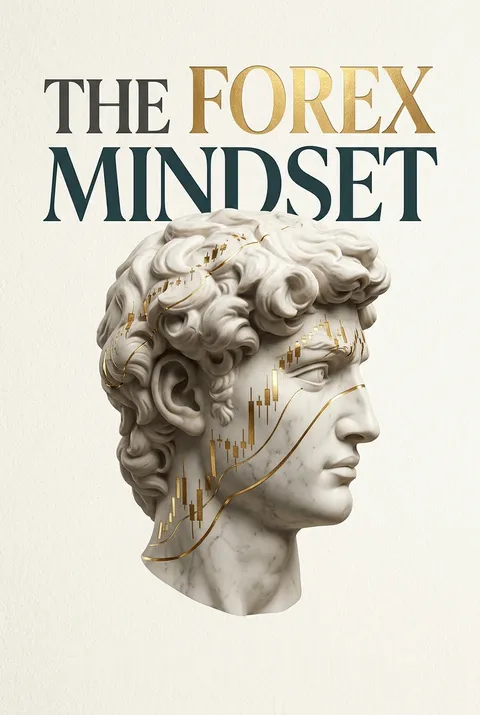


Key Takeaways
Treat Forex trading as emotional training, not a shortcut to income.
Mindset under pressure. Martinez argues that trading success depends less on technical knowledge than on managing the habits and emotions that surface when money is at risk. He estimates the balance as 10 percent technique and 90 percent mindset, drawing on years of teaching traders. That ratio is his broad observation, not a measured law, but it captures the book’s central concern: a sound strategy is useless if fear, greed, or impatience keeps overriding it.
Prepare for the whole job. Trading is a demanding skill, not a fast answer to debt or financial stress. The book urges continued education, clear goals, and balance across work, family, health, and personal life. When one area is in turmoil, the strain can spill into trading decisions.
What's valuable here is the distinction between knowing a rule and being able to follow it when the outcome feels personal. That gap appears in many high-stakes fields, from surgery to competitive sport: expertise includes regulating attention, not just acquiring information. The 90/10 estimate should not be treated as a scientific allocation or as proof that mindset can overcome a weak strategy. Profitable trading also depends on methods, costs, market conditions, and risk. The useful lesson is narrower and stronger: technical skill and emotional discipline have to work together.
Cap every loss before entry; never let one trade endanger your life.
Define the downside. A protective stop-loss order is an instruction to exit a position at a chosen level, limiting the intended loss if the market moves against the trade. Martinez insists traders decide in advance how much they can afford to lose, financially and emotionally, and pass on trades whose downside is unacceptable.
A costly lesson. In his account of a disastrous trade, Martinez entered without a stop, added more positions as the market fell, and watched his losses grow to roughly $350,000. The market eventually reversed, but he refused to exit when it briefly returned to profit. It turned again, and his account was wiped out. The point is not that markets always reverse, but that hope and pride are no substitute for a predefined exit.
This story makes risk concrete: the danger is not simply being wrong, but allowing a wrong position to grow until it threatens the trader's future. In finance, this is closely related to risk of ruin, where a sufficiently large loss can remove the ability to continue, even if the underlying strategy has an edge. A stop order can help enforce a limit, though fast-moving markets may not fill at the exact selected price. Protection therefore includes position size and a willingness not to enter, not just placing an order.
Write your trading rules while calm, then obey them under pressure.
A personal rulebook. Martinez calls a trader’s written code of operating principles a trader’s constitution. It spells out what the trader will do, what risks are acceptable, and which actions are off-limits. Written beforehand, the rules provide a reference when a market move or emotional impulse makes improvisation tempting.
Make rules executable. His example includes continuing to study, using a method with clear entry and exit conditions, waiting when no suitable trade appears, and setting a protective stop. A useful rule is specific enough to guide a decision, not merely a wish to be disciplined. The purpose is not to guarantee a profitable outcome. It is to make decisions consistent with a tested plan rather than with the mood of the moment.
A written constitution is a form of precommitment: a person chooses in advance how to act when later judgment may be clouded by stress or temptation. Similar principles appear in emergency checklists and implementation intentions, which link a recognizable situation to a planned response. The analogy has limits. Rules should not become untouchable dogma; a strategy that stops working needs review against evidence. The strongest rulebook distinguishes between disciplined execution during a trade and scheduled evaluation after it.
Plan exits around probabilities, not fear of giving back a small gain.
Use fear in the right place. Martinez says many traders reverse the roles of fear and hope: they cling to losing trades, hoping the market will recover, then rush out of a winning trade because they fear losing a small profit. He describes a trader who endured a move of about 2,000 pips against a position, only to leave with a tiny gain after the market recovered. The example illustrates how a missing exit plan can turn hope into prolonged exposure and fear into premature profit-taking.
Let rules decide. The book’s prescription is to set the acceptable loss before entry and define how a profitable trade will be managed. That does not mean holding every winner indefinitely. It means allowing the strategy, rather than panic, to determine the exit.
The broader principle is asymmetric decision-making: losses and gains can trigger different impulses, even when the same plan should govern both. Behavioral finance describes loss aversion, the tendency to experience losses more intensely than equivalent gains, as one force behind this pattern. But “let profits run” is not universally correct; it depends on the strategy and its tested exit rules. The more reliable application is to make the loss limit and profit-taking method explicit before the trade, then judge them across many trades rather than one vivid outcome.
Catch emotional hijacking before stress replaces your trading plan.
Name the takeover. Martinez uses emotional hijacking to describe a moment when perceived danger or loss overwhelms deliberate thinking and prompts a rapid, reactive choice. A trader may enter impulsively, face an unexpected move, and then abandon the plan to escape the discomfort. He connects this to a simplified model of logical and emotional brain systems; the practical point is that high stress can make recall and judgment harder.
Insert a pause. The book recommends noticing the emotional trigger, stepping back when possible, and returning to a plan instead of reacting immediately. A trader who can recognize rising fear or anger has a chance to stop an impulsive action before it compounds a financial mistake.
The term is useful as a label for a familiar experience, but the book’s account of separate left-brain logic and right-brain emotion is too neat. Emotion and reasoning interact across the brain; stress can impair working memory and narrow attention without literally shutting off a logical hemisphere. That distinction matters because emotions are not simply enemies to eliminate. They can signal uncertainty or risk. The practical aim is to notice the signal, regulate the response, and use procedures that remain available when attention is strained.
Convert frustration into useful information before it becomes revenge trading.
Find the unmet expectation. Martinez traces frustration to expectations that are not met. In trading, that may mean expecting quick profits, blaming a broker, or believing a losing trade proves personal failure. Left unchecked, frustration can lead to anger, blame, and decisions made to recover money or restore pride rather than follow a strategy.
Turn reaction into review. The book asks traders to notice whether they blame first, speak before thinking, or dwell on setbacks for hours. It recommends identifying what triggered the response and creating a rule or adjustment to reduce a repeat. Anger itself can be useful information, but acting while angry is dangerous. A pause, a walk, or a brief reflection can help restore perspective before the next decision.
This approach treats frustration as diagnostic data rather than proof that a person is unsuited to trading. That is a constructive shift: in cognitive behavioral approaches, naming a trigger and examining the thought attached to it can interrupt an automatic response. Still, the goal should not be emotional indifference at all costs. Suppressing anger can leave its cause unresolved, while some frustration points to a real flaw in the plan, platform, or working conditions. Productive regulation means understanding the emotion and choosing a considered response.
Wait for a setup; sitting out is part of the job.
Delay the impulse. The book uses a Stanford study with young children, offered one treat immediately or a larger reward if they waited. Martinez reports that some children waited and others did not, then describes differences observed as they grew up. He applies the story to trading: a person who cannot tolerate waiting may enter without a valid setup, then chase the market and take additional losses.
Treat waiting as work. Martinez defines patience as the capacity to endure delay without becoming reactive. He recommends finding another useful task when no trade meets the trader’s criteria, rather than staring at a chart until boredom produces an impulsive entry. In his view, being out of a trade and wishing to enter is safer than being in one and wishing to leave.
The trading application is persuasive because it reframes inaction as a deliberate choice rather than a failure to participate. The marshmallow story is memorable, but it should not be read as evidence that childhood self-control alone determines adult success. A child’s decision can also reflect trust in the adult and the reliability of the promised reward. Likewise, a trader’s patience is not a moral virtue that guarantees returns; it is useful when linked to a clearly defined setup and tested method.
Learn from mentors, but listen carefully and test what they teach.
Borrow experience. Martinez recommends finding a person with a record of success in the skill being learned, observing how that person works, and asking for guidance. A mentor can help a beginner avoid predictable errors and focus on what matters. The book also stresses humility: listen, ask questions, and admit what is not yet understood.
Listen to the evidence. Martinez extends listening to charts, treating price patterns and technical signals as information to interpret rather than commands to override with a hunch. He calls bracketing the temporary setting aside of personal assumptions so another person’s perspective can be understood. In practice, this means separating what the chart shows from what the trader wants it to show, then comparing decisions with the written method.
Mentorship can compress learning by making tacit knowledge visible: a learner sees not only what an expert does, but how the expert frames decisions. The same benefit applies to feedback from charts or a trade journal, provided interpretation is systematic. There is also a practical caution in paid education. A mentor’s confidence or commercial interest is not evidence that a method works. Seek verifiable results, understand incentives, and evaluate advice against independent records and an affordable test before risking meaningful capital.
Rehearse better responses until disciplined trading becomes a practiced habit.
Change in stages. Martinez describes a progression from acting ineffectively without recognizing it, to noticing the problem, to learning a better action consciously, and finally practicing until it becomes more automatic. He calls these stages unconscious incompetence, conscious incompetence, conscious competence, and unconscious competence. For example, a trader who repeatedly enters from fear of missing out can learn to identify that trigger, rehearse waiting for the required setup, and repeat the new response.
Build a routine. His change process begins with identifying the benefit, locating the trigger, choosing a replacement behavior, rehearsing it, and making a commitment to follow through. He also connects excellence to small repeated actions and a balanced life, not to flawless performance or a single spectacular win.
This learning sequence echoes skill acquisition models in which a novice moves from not knowing a deficit to deliberate practice and more fluent performance. Rehearsal helps because it reduces the number of decisions that must be invented under pressure. Yet automaticity has a downside: a habit can persist after conditions change. Trading routines therefore need periodic review, records of outcomes, and the humility to revise a method rather than confuse repetition with proof.
Persist in learning, but adapt instead of demanding the market obey.
Persistence is not stubbornness. Martinez presents persistence as the quality that keeps a trader learning after mistakes and setbacks. He also draws a clear distinction between adapting to market conditions and expecting the market to conform to personal wishes. A mistake can become useful experience if the trader identifies what happened and changes the process; repeating a known error without learning is not perseverance.
Keep the larger life intact. The book encourages ambitious goals, ongoing education, and excitement about work, while warning against letting trading consume every part of life. Family, health, relationships, and personal purpose matter alongside financial aims. The durable lesson is to persist with learning and disciplined practice, not with a losing position, an untested strategy, or the belief that effort guarantees profit.
The distinction between persistence and stubbornness is essential in uncertain work. In entrepreneurship and science, continued effort is valuable when paired with feedback and adaptation; persistence without updating beliefs can become escalation of commitment. Trading makes this especially consequential because markets do not reward conviction by itself. The book’s optimism can motivate readers to study and endure frustration, but it should not imply that every dream is financially attainable or that sufficient effort assures success. A sound ambition includes limits, review, and permission to stop.
Analysis
The book’s strongest contribution is not a trading system but a behavioral account of why people violate the systems they already know. Its recurring sequence is concrete: a trader enters with an expectation, the market moves against that expectation, fear or frustration narrows attention, and an impulsive decision magnifies the original problem. Martinez’s stories, especially his own catastrophic trade, make that sequence memorable because the error is not obscure technical knowledge. It is the refusal to define and respect a limit.
The most useful ideas are therefore procedural: decide risk before entry, write rules while calm, wait for qualifying conditions, review mistakes, and protect the rest of life from trading’s emotional spillover. These practices resemble precommitment and checklist design in other high-stakes domains. They move some decision-making out of the moment when judgment is most vulnerable.
The book is less reliable when it presents broad psychological claims as settled fact. Its 10/90 ratio is an experienced instructor’s estimate, not a universal measurement. The account of separate logical and emotional brain hemispheres is an oversimplification, and confidence or optimism cannot by itself create a market edge. The text also occasionally frames persistence as the route to inevitable success, a risky message in a profession where many participants lose money. Its best corrective is implicit in its own central example: persistence should attach to learning and disciplined process, not to a position or dream at any cost. As a result, the book is best read as a manual for self-management around trading, not as evidence that Forex trading is an appropriate path to financial independence. It offers a useful vocabulary for recognizing impulse and a strong case for capital preservation. Readers should pair that vocabulary with tested methods, independent evidence, realistic expectations, and the willingness to stop when the numbers do not justify continuing.
Review Summary
The Forex Mindset receives an average rating of 4.21 out of 5 stars based on 47 reviews on Goodreads. While the overall reception is positive, one reader gave it a 3-star rating. The book appears to be available at the Singapore National Library Board, specifically in the Sengkang branch, under the call number 332.45. The limited review information provided suggests that readers have mixed opinions about the book, with some finding it more valuable than others.
People Also Read








Glossary
emotional hijacking
Stress-driven reactive thinkingMartinez’s term for a moment when perceived danger or loss provokes an intense emotional response and makes deliberate problem-solving more difficult. In trading, this can mean abandoning a plan, exiting impulsively, or making a new trade to relieve distress. The book explains it through a simplified brain model; the term is most useful as a practical label for stress-driven reactivity.
trader’s constitution
Written trading principlesA trader’s personally written set of rules, values, and boundaries for making trading decisions. It can define how a method is used, when to enter or exit, how much risk is acceptable, and when to wait. Martinez presents it as a guide that helps traders act consistently under pressure rather than make choices based on passing emotions.
conscious incompetence
Recognizing a skill gapA stage in Martinez’s four-part learning progression in which a person becomes aware that current actions or abilities are inadequate. In trading, this might mean recognizing that impulsive entries or emotional exits are producing poor results. Awareness does not yet provide mastery, but it makes deliberate learning and a change in behavior possible.
bracketing
Setting assumptions asideA listening practice in which a person temporarily sets aside personal assumptions, preferences, and prior interpretations to understand another person’s perspective as fully as possible. Martinez applies the idea to learning from mentors and interpreting charts: distinguish the information being presented from what one wants or expects to hear.
indifference
Emotional distance from tradesMartinez uses indifference to mean not attaching personal worth or identity to a trade’s outcome. The trader aims to follow a method without reacting to each gain or loss as a personal victory or insult. The term does not need to mean ignoring risk or suppressing all emotion; its practical purpose is to reduce impulsive, ego-driven decisions.
delayed gratification
Waiting for a larger rewardThe ability to postpone an immediate reward in favor of a potentially greater later benefit. Martinez connects this idea to a study in which children could take one treat immediately or wait for a larger reward. In trading, it means tolerating the wait for a qualifying setup instead of entering merely to feel active.
protective stop-loss order
Preplanned loss limitAn order intended to close a trading position when the market reaches a specified price, limiting the planned loss if the trade moves adversely. Martinez treats it as a core protection against allowing a losing position to grow unchecked. It helps define risk in advance, although actual execution can differ from the chosen price in fast-moving markets.
FAQ
What is "The Forex Mindset" by Jared F. Martinez about?
- Focus on Trading Psychology: The book centers on the psychological and emotional aspects of Forex trading, arguing that mindset is more important than technical skill.
- Emotional Intelligence Emphasis: Martinez stresses that 90% of trading success comes from emotional intelligence, self-awareness, and habit formation, with only 10% attributed to technical skills.
- Personal Development Approach: The book blends trading advice with broader life lessons, encouraging readers to develop habits, attitudes, and character traits that lead to both trading and personal success.
- Practical Tools and Stories: Through personal anecdotes, practical exercises, and step-by-step processes, Martinez provides actionable strategies for managing emotions, building discipline, and achieving excellence in trading.
Why should I read "The Forex Mindset" by Jared F. Martinez?
- Go Beyond Technical Analysis: The book addresses the often-overlooked psychological challenges that cause most traders to fail, making it essential for those who want to succeed long-term.
- Learn from Experience: Martinez shares hard-earned lessons from his own trading journey, including costly mistakes and how he overcame them, offering readers a chance to avoid similar pitfalls.
- Develop Winning Habits: Readers are guided to replace destructive habits with productive ones, fostering a mindset that attracts success in trading and life.
- Applicable to Life: The principles of emotional intelligence, persistence, and self-improvement are relevant not just to trading, but to any area where performance and mindset matter.
What are the key takeaways from "The Forex Mindset" by Jared F. Martinez?
- Mindset Over Skill: Success in Forex trading is 90% mindset and emotional control, and only 10% technical skill.
- Importance of Habits: Your daily habits and self-discipline directly impact your trading results and overall success.
- Emotional Mastery: Learning to manage fear, greed, frustration, and anger is crucial for consistent profitability.
- Persistence and Change: Achieving excellence requires persistence, willingness to change, and the courage to confront personal weaknesses.
How does Jared F. Martinez define and address emotional intelligence in "The Forex Mindset"?
- Emotional Intelligence Defined: Martinez describes emotional intelligence as the ability to exercise positive self-control over negative emotions, especially under trading stress.
- Key to Trading Success: He argues that emotional intelligence is more important than academic intelligence for traders, as it determines how one handles setbacks, risk, and decision-making.
- Practical Application: The book provides strategies for recognizing emotional triggers, pausing before reacting, and shifting negative emotions into constructive actions.
- Foundation for Character: Emotional intelligence is presented as the bedrock of a trader’s character, influencing reputation, relationships, and long-term success.
What role do habits play in "The Forex Mindset" by Jared F. Martinez?
- Habits as Destiny: Martinez opens the book with a poem about habit, emphasizing that habits are either the best servants or worst masters in trading and life.
- Replace Bad with Good: He advocates for consciously replacing destructive habits with productive ones, as habits shape both trading outcomes and personal character.
- Habit Formation Process: The book outlines how repeated thoughts and actions become subconscious habits, which then drive automatic behavior in the market.
- Self-Assessment: Readers are encouraged to examine their current habits honestly and make intentional changes to align with their trading goals.
How does "The Forex Mindset" by Jared F. Martinez explain the impact of greed and fear on trading?
- Greed and Fear Drive Markets: Martinez asserts that markets are fundamentally driven by greed (entering trades) and fear (exiting trades), and that most traders are unaware of how these emotions control their actions.
- Personal Stories: He shares real-life examples, including his own and others’, to illustrate how unchecked greed can lead to devastating losses and how fear can paralyze decision-making.
- Emotional Awareness: The book teaches traders to recognize when greed or fear is influencing their decisions and to implement rules and stop-losses to mitigate their effects.
- Reversing Emotional Traps: Martinez explains that traders often hope when they should fear (holding onto losing trades) and fear when they should hope (cutting profits short), and provides guidance on reversing this pattern.
What is the significance of having a mentor according to "The Forex Mindset" by Jared F. Martinez?
- Mentorship Accelerates Success: Martinez believes finding a mentor is a shortcut to success, as mentors provide hindsight, guidance, and help avoid common mistakes.
- Learning from Experience: A mentor’s experience can become the trader’s foresight, saving time and money that would otherwise be lost to trial and error.
- Spirit of Service: True mentors are motivated by a desire to help others, and their legacy is built through the success of those they teach.
- Creating Future Mentors: The book encourages readers not only to seek mentorship but also to become mentors themselves as they gain experience.
How does "The Forex Mindset" by Jared F. Martinez recommend dealing with frustration and anger in trading?
- Recognize Emotional Triggers: Martinez explains that unmet expectations often lead to frustration and anger, which can derail trading performance.
- Indifference as a Tool: He advocates developing a sense of indifference toward losses and setbacks, allowing traders to remain logical and unemotional.
- Practical Steps: The book provides quizzes and step-by-step processes for identifying sources of frustration and anger, and for replacing reactive habits with calm, constructive responses.
- Focus on Problem-Solving: Successful traders are described as methodical problem-solvers who do not let emotions dictate their actions.
What is a "trader’s constitution" and how does "The Forex Mindset" by Jared F. Martinez suggest creating one?
- Definition: A trader’s constitution is a personal set of rules, values, and principles that govern trading behavior, much like a nation’s constitution governs its laws.
- Foundation for Discipline: Writing and adhering to a constitution helps traders maintain discipline, avoid emotional decisions, and stay aligned with their long-term goals.
- Personalization: Martinez encourages readers to reflect on their character, values, and boundaries, and to craft a constitution that is both aspirational and realistic.
- Example Provided: The book includes Martinez’s own trader’s constitution as a template, emphasizing ongoing revision and self-assessment.
How does "The Forex Mindset" by Jared F. Martinez address the importance of patience, self-control, and resisting temptation in trading?
- Patience as a Virtue: The book highlights patience and delayed gratification as key traits separating successful traders from impulsive ones, referencing psychological studies.
- Self-Control in Action: Martinez provides strategies for resisting the temptation to overtrade, chase losses, or break trading rules, emphasizing the long-term benefits of discipline.
- Practical Exercises: Readers are given steps to identify triggers for impatience and temptation, and to develop habits that reinforce waiting for high-probability setups.
- Balance Between Too Little and Too Much: The book warns against both settling for too little (exiting too early) and giving in to greed (overreaching), advocating for a balanced, rule-based approach.
What are the best quotes from "The Forex Mindset" by Jared F. Martinez and what do they mean?
- “Excellence, then, is not an act or a onetime event, it is a habit.” — Emphasizes that consistent, repeated actions lead to excellence, not occasional effort.
- “Either you control your fear, or your fear controls you!” — Highlights the necessity of mastering fear to succeed in trading.
- “The market is never wrong—it is always right.” — Reminds traders to adapt to the market rather than trying to force their will upon it.
- “You cannot dream yourself into a position of a successful trader. You must work your way into it.” — Stresses the importance of action, discipline, and persistence over mere wishing.
What practical steps and methods does "The Forex Mindset" by Jared F. Martinez provide for building a winning trading mindset?
- Self-Assessment and Reflection: The book encourages regular self-examination of habits, attitudes, and emotional triggers, using exercises and quizzes.
- Writing a Personal Constitution: Martinez recommends crafting a written set of trading rules and values to guide decision-making and maintain discipline.
- Emotional Management Techniques: Practical methods such as pausing before reacting, practicing indifference, and using positive visualization are detailed.
- Continuous Education and Mentorship: The book advocates for ongoing learning, seeking mentorship, and investing in personal growth as essential components of a winning mindset.
Download PDF
Download EPUB
.epub digital book format is ideal for reading ebooks on phones, tablets, and e-readers.








