


Plot Summary
Apple May's First Cruelty
Back in the Chandelier City infirmary after the prison, Ruth is feverish, infected, and unable to stand because her legs were amputated. When a nightmare leaves her bed wet, shame makes her freeze while Warrose, her battle-scarred companion, tries to help; she sends him away for a nurse.
Then Apple May, a frail Emerald Wife resentful of the attention Ruth receives, enters, mocks her disability, and dumps Ruth's vomit onto her chest. Ruth answers with anger but cannot force the woman out. The ward offers no refuge: Ruth's body is vulnerable, her dignity feels beyond her control, and ordinary care arrives tangled with humiliation.
Ruth's first crisis is not only physical. The accident exposes how illness can turn privacy into a scarce resource, while Apple treats dependence as permission to degrade her. Ruth's anger is one of the few forms of agency still available to her, but her inability to make Apple leave makes that agency feel painfully small. Warrose's presence offers safety, yet Ruth's shame makes even his help difficult to accept.
Aurick's Funeral Flag
Marilynn lays the Demechnef flag on Aurick's coffin while soldiers and officials gather to honor the leader she once loved. Her grief is complicated by what she witnessed: Aurick obeyed his abusive father and tolerated experiments on their friends, even as Marilynn remembered their gentler life together.
Niles stands beside her, helping her eat before the funeral and offering comfort afterward. Skylenna and Dessin are absent, unwilling to honor a man whose family helped destroy their lives. Their absence leaves Marilynn and Niles to face the ceremony together, and their shared tenderness begins to pull Marilynn toward a future she had tried to keep at a distance.
Marilynn refuses the easy choices of either idealizing Aurick or denying that she loved him. Her mourning holds affection and moral judgment at once, a psychologically demanding form of grief because it offers no clean story of the dead. Niles becomes a witness rather than a rescuer: he makes space for her conflicting feelings without asking her to resolve them for his comfort.
The Fever and the Wound
As Ruth shakes through another infection, Warrose climbs into her bed and holds her until she can sleep; by morning, her fever has eased. Apple soon intrudes again, taunting Ruth about Warrose and pressing her fingers into Ruth's healing stump. The pain drags Ruth back into memories of the prison execution, and she screams.
Apple pretends to be a concerned neighbor, but Warrose refuses her offer to bring Ruth food. His care steadies Ruth, yet she still experiences it through shame and fear of becoming a burden. Apple's attack shows that Ruth's injuries remain both physically sensitive and psychologically charged, even in a place meant to help her heal.
The same touch can mean protection or violation, depending on trust and control. Warrose asks permission and gives Ruth warmth; Apple chooses the precise point where pain can overwhelm her. The contrast clarifies why recovery cannot be measured by medical progress alone. Ruth's body remembers the prison, and compassion has to respect that memory rather than simply insisting she is safe now.
A Nursery for the Prophecy
Marilynn invites Niles to help prepare a nursery for the baby she is carrying. His enthusiasm fills the room as he imagines an enchanted setting and begins planning the work with her. For Marilynn, the nursery is more than a practical room: she wants her pregnancy to hold joy rather than dread, despite the role prophecy has assigned her and the absence of Aurick, the child's father.
Niles's uncomplicated excitement lets her accept a moment of happiness without explaining everything she knows about the future. Their partnership deepens through the small task, giving Marilynn a glimpse of family life built on kindness rather than political duty.
The nursery offers Marilynn a rare experience of authorship. Prophecy has trained her to see her life as a script written elsewhere, but choosing wallpaper and toys makes the future concrete in a way she can touch and shape. Niles's joy matters because it does not demand disclosure. His presence gives her permission to inhabit the present, even while uncertainty remains.
Wooden Legs, Closed Door
When nurses present wooden prosthetic legs, Ruth sees the permanence of what the prison took from her and breaks into an uncontrollable sob. She orders everyone out, including Warrose, then wounds him with a cruel lie about preferring Kaspias. Warrose leaves rather than force his presence on her. Ruth's fury collapses into shame, but she cannot yet call him back.
She stops accepting visitors and food, convinced that dependence and survival have become unbearable. The prosthetics are intended to offer mobility, but their arrival first makes loss undeniable. Ruth's attempt to protect herself by pushing Warrose away only deepens her isolation and makes her recovery more precarious.
The prosthetic legs arrive as a symbol of possibility, but Ruth cannot receive them that way yet. Their presence demands that she acknowledge a changed body before she has had space to grieve it. Her attack on Warrose is both rejection and an indirect test of whether anyone can endure her pain. When he leaves, her words have gained control of the room but cost her the relationship she most wants to preserve.
A Blind Escape from Bed
As Ruth stops eating and withdraws from everyone, Apple visits at night and reveals that Meridei, the asylum worker killed in Skylenna's fire, was her daughter. Apple plans to burn Skylenna's cottage. Ruth may be unable to walk, but she can still defend her friend: she digs her thumbs into Apple's eyes and leaves her blinded.
Warrose breaks through the infirmary's resistance and carries Ruth away. When she fears he has returned only from pity, he makes clear that he cannot bear a life without her. Ruth lets herself rest against him, though she is still too exhausted to explain everything Apple did.
Ruth's violence is not a sudden cure for helplessness. It is a narrow, desperate act of protection, made possible by her loyalty when self-preservation has failed. Warrose's return also reframes care: he is not simply fulfilling a duty but naming his own need for connection. Ruth accepts rescue before she can believe herself worthy of it, a small but consequential opening toward recovery.
Red Paint on Marilynn's House
Men smash a window at Marilynn's home and paint a misogynistic message across the exterior after she announces her claim to Aurick's position. Niles gets her safely past the broken glass, then stays beside her as she explains that the attack is meant to frighten her into yielding power to male officials. She refuses to retreat.
Their shared resolve turns the vandalism into a warning of the opposition she will face, not a reason to abandon her claim. Niles promises to help her reclaim good moments from the threats, giving Marilynn both practical protection and affection as she prepares to challenge a government built to exclude women.
The graffiti makes political violence intimate: it marks the walls of Marilynn's home, trying to make public authority feel unsafe even in private space. She understands the tactic clearly, which keeps the threat from being mistaken for mere vandalism. Niles's support does not substitute for her political judgment; it helps her resist the isolation that intimidation is designed to create.
Dessin's Empty World
After weeks at home, Ruth begins eating and seeing her friends again, and Chekiss brings the group to Skylenna's cottage. There they find Dessin unconscious. Skylenna explains that Kaspias implanted a chemical failsafe that sent him into a coma after intimacy, and that she cannot find him or his alters in the void.
She is also pregnant with his child. Warrose grieves beside his oldest friend, while Ruth and the others promise Skylenna that she will not raise the baby alone. The gathering turns Ruth's recovery outward: the friends who once survived the prison together must now support one another through a loss they cannot repair.
The coma changes the group's problem from escape to endurance. Skylenna's inability to reach Dessin through the void removes the inner refuge that once made their bond feel accessible, while pregnancy makes the future arrive alongside grief. The family responds with collective care, but its promise cannot resolve the uncertainty. Their support is meaningful precisely because it does not pretend to restore what has been lost.
Care Without Shame
Marilynn brings Niles a late-night plate of food and, after admitting that her foreknowledge of the future keeps her guarded, lets him kiss her. In another room, Ruth begins menstruating and expects disgust when Warrose helps her bathe and offers supplies. Instead, he treats her body without shame, prepares food and comforts her.
His attention helps Ruth eat, though she still doubts he desires her after her amputation. The two women take different risks: Marilynn allows intimacy despite what she cannot reveal, while Ruth accepts practical care despite the body she struggles to recognize. Neither relationship is effortless, but both make vulnerability less lonely.
The scenes challenge the idea that intimacy requires a polished, untroubled body. Niles accepts the boundary around Marilynn's knowledge, while Warrose treats menstruation as ordinary rather than degrading. Ruth's lingering doubt shows that respectful care cannot instantly undo a lifetime of body surveillance. The change is subtler: she is allowed to be seen without having to perform beauty or gratitude.
The Will Burns First
At the all-male council meeting, Marilynn claims Aurick's leadership and presents his will naming her as successor. Ratticus throws the document into the fire, and other councilmen insist a woman cannot rule. Marilynn counters with records proving her family owns most of the country's land, then warns that she has allies among the seven colonies.
She also calls for an end to the lady-doll regimen that controls women's bodies. The council's silence does not settle the struggle, but it changes its terms: Marilynn is no longer asking the men to recognize her authority. She has shown that denying her may cost them their estates and political security.
Marilynn meets patriarchal power on its own material ground. The council tries to erase her claim by destroying a document, but her response reveals that legitimacy is not held in one paper or granted by one room of men. Her land records and alliances turn inherited resources into leverage. The moment is not a completed reform; it is the point where exclusion becomes costly.
A Throne With Wheels
Warrose builds Ruth a wheeled chair from a rare Delilian's Heart tree, carving animals into its frame so she can move without being carried. He takes her to meet the maimed Winter Storm Lions, who survived battle beside DaiSzek. Their injuries give Ruth a way to mourn without pretending her own loss is small; she cries openly while the lions gather around her.
Then she insists on propelling herself uphill to the buggy. Her arms nearly fail, but she makes it. The chair does not restore her legs. It gives her a first hard-won measure of control over where she goes and how she gets there.
The chair matters because its design answers a specific deprivation: Ruth wants to choose her own movement. It does not turn disability into a problem solved by willpower, since her arms tire and she needs support. The lions deepen that recognition. They are neither untouched nor defeated by injury, and their presence lets Ruth imagine a future that includes grief rather than waiting for grief to disappear.
The Void Cannot Answer
While the others make plans around Dessin's unconscious body, Skylenna retreats into memories of childhood days with him and spends long stretches searching the void. She returns cold and weakened, unable to find him or the alters who once filled that inner world.
Chekiss feeds her and listens as she admits she fears that the life she has left is only a burden. Her pregnancy gives her a responsibility, but not yet the joy that others promise it will bring. Skylenna keeps going without certainty that Dessin will wake, and her grief remains active rather than neatly resolved.
Skylenna's inward journeys have previously offered knowledge and connection; now they return nothing. The empty void makes absence a place she can enter and still fail to cross. Chekiss's care does not supply an answer, and that is its strength. He helps her remain in relation to others while she cannot manufacture hope or convert pregnancy into an instant remedy for grief.
A Ride Across the Line
Returning from the council, Marilynn sits on Niles's lap in the only available buggy seat. The rough road jolts them together, and their restrained affection turns openly physical. Niles stops short of making love, promising to give her a more deliberate first time.
At the estate, Ruth proudly transfers herself into her new chair so her friends can see what she can do. Niles cries when he understands what the carved wheels mean, and Marilynn recognizes the chair as a throne. The two moments meet at the same threshold: Ruth claims mobility for herself, while Niles and Marilynn stop pretending their attraction is only friendship.
These scenes link independence with chosen closeness without confusing the two. Ruth's transfer is her own achievement, even though Warrose made the chair; Niles's physical response to it recognizes both labor and loss. Marilynn's contact with Niles, by contrast, is a mutual risk. The chapter's emotional force comes from people learning to receive one another without taking ownership of another person's choices.
A Warning in Blood
An armed group attacks the estate, and Warrose kills the intruders before the Ringmaster can cut Ruth's throat. The attackers have left animal remains and a blood-written threat against the Mazonist Queen. Ruth connects the message to the Mazonist Brothers' earlier recognition of her, suggesting that they traced her hidden lineage.
The group moves her to Skylenna's cottage for safety. There, DaiSzek brings a package addressed to Ruth, Marilynn, and Skylenna: an invitation to the Hallows Colony Ball. The threat makes Ruth's ancestry newly dangerous, while the invitation gives the women a reason to gather beyond fear.
The attack turns Ruth's suspected ancestry from a private clue into a public danger. Its use of animal bodies also draws a line between violence against people and the cruelty the story's rulers have normalized toward beasts. DaiSzek's package does not neutralize the threat; it changes the group's immediate posture from hiding to gathering, creating a fragile opening for the alliance that follows.
Hallows Names a Queen
At the ball, the friends dress in elaborate costumes and find the colonies gathered around fire dancers and music. Warrose and Ruth dance together, and Ruth finally learns that he still wants her; their kiss is cut short when Helga Bee and Gerta arrive.
The mountain warriors explain that Vexamen has its own prophecy and that they came to judge whether Ruth could lead. They name her the last Mazonist heir and invite her to return and rule. Marilynn also lets slip that Skylenna is carrying twins, giving her friend a flash of hope. Ruth does not accept at once, but she no longer sees leadership as an impossible fantasy.
The ball briefly gathers pleasure, grief, and political consequence in one public space. Ruth's kiss with Warrose answers her private fear of being undesirable, but the interruption prevents romance from becoming an escape from responsibility. The delegation's offer recognizes a capacity Ruth cannot yet see in herself. Marilynn's revelation about twins likewise gives Skylenna hope without curing her grief.
Promises Beneath the Leaves
At an inn after the ball, Niles tells Marilynn how Mind Phantoms once manipulated him into abducting a couple, and how the prison helped him trust her. He admits he loves her; she accepts him and the support he offers her child. Ruth then apologizes to Skylenna for their argument and insists that returning to Vexamen is her decision, not proof that she is invulnerable.
Skylenna forgives her and shares a story of Dessin's alter Dai choosing to attack captors instead of vulnerable prisoners. Ruth takes that as a reason to trust her own strength, then asks Warrose to travel with her and help claim the throne.
Each relationship turns on a different form of consent. Niles tells Marilynn his history without asking her to absolve it, and she chooses him with her eyes open. Ruth demands the right to risk herself, while also repairing the harm she caused Skylenna. Her decision is not a denial of disability or danger; it is an assertion that protection cannot mean taking her future away.
The Black Knight Sails
Warrose accepts the role of Ruth's black knight, and the friends gather on the shore to see them off with a coalition of colony allies and animals, including the Winter Storm Lions. Marilynn and Niles remain behind, as do Skylenna, Dessin, Chekiss, and DaiSzek. On the ship, Ruth and Warrose stop hiding their feelings and become lovers.
Six months later, Marilynn gives birth to a son, Niklaus, with Niles beside her. By the following year, Ruth and Warrose have abolished the Meat Carnival and turned its arena into a sanctuary and orphanage. A mysterious visitor tells Ruth that she has already seen her greatness come to pass.
The departure makes loyalty active: Ruth leaves the people who helped her survive, but does not sever those bonds, promising to return. Warrose's role is partnership rather than substitution for her authority. The later reforms give the journey a concrete political result, while the visitor's knowledge preserves the story's unease around prophecy. Ruth has changed conditions, but the future remains partly beyond her grasp.
A Son and a Sanctuary
Seven years after Marilynn's son is born, her and Dessin's daughter, Sapphire, stands beside her father's comatose body after dreaming that he runs from her through asylum halls. She resents that he has never opened his eyes, then admits to Warrose that she cannot save him and feels ordinary beside his reputation.
Warrose reminds her that Dessin loved the people he protected and tells her that she may become extraordinary in her own way. Sapphire leaves without an answer about when her father might wake, but with a different measure of what her own life could hold.
The epilogue transfers the unresolved question of survival to the next generation. Sapphire's anger is not treated as disloyalty; it is the understandable response of a child confronting a parent who is physically present yet unavailable. Warrose offers inheritance without demanding imitation. His reassurance shifts the measure of worth from matching Dessin's powers to discovering what Sapphire herself may become.
Epilogue
Seven years later, Dessin remains in a coma, and his daughter Sapphire resents that she has never known him awake. After a nightmare in which he runs from her, she tells Warrose she cannot save her father and believes she has nothing special to offer.
Warrose acknowledges Dessin's strength while assuring Sapphire that her own future need not resemble his. The story closes with her still grieving, but newly able to imagine herself as more than a powerless child beside a silent bed.
The epilogue refuses a conventional cure for the family's central wound. Dessin remains unconscious, and Sapphire's need for a father cannot be answered by praise of his reputation. Warrose's reassurance matters because it separates inheritance from replication: Sapphire may carry her parents' capacities without being required to become either of them. The ending gives the next generation a possible future, not a guarantee, preserving both the grief and the uncertainty that have shaped the story.
Analysis
The novella's central transformation is not from disabled to healed, but from being acted upon to making consequential choices. Ruth cannot recover her legs, and the book gives that loss time, anger, bodily difficulty, and depression rather than treating it as a temporary obstacle. Warrose's carved chair matters because it changes the conditions of movement; Ruth's exhausting push matters because she decides where to go. Care becomes meaningful when it supports that autonomy instead of replacing it.
The political plots echo this bodily struggle. Marilynn faces a council that treats women's authority as unnatural, while the lady-doll regimen turns women's bodies into objects of public discipline. Her land records and alliances are practical counters to that power, not abstract declarations of equality. Ruth's later role in Vexamen extends the same conflict to animals, whose suffering has been made entertainment through the Meat Carnival.
Prophecy complicates the story's emphasis on agency. Marilynn knows more than she can say, and Ruth is told that her future is already written, yet each woman must still decide what to do with the knowledge and power available to her. Their choices are not entirely free, but neither are they meaningless. The unresolved coma preserves the cost of survival: love, friendship, and political change can create a future without undoing trauma or guaranteeing a complete ending.
People Also Read







Characters
Ruth
Disabled survivor and rebelRuth is a fiercely loyal friend whose survival after imprisonment leaves her with amputated legs, chronic pain, and deep psychological distress. Her pride makes dependence feel humiliating, so she sometimes rejects the very care she longs for. She is also quick to defend others, even when she cannot yet imagine a future for herself. Ruth's bluntness and flashes of humor coexist with self-loathing, making her neither an emblem of resilience nor a simple victim. Her central struggle is to recover agency without denying the lasting effects of what happened to her.
Warrose
Battle-scarred protector and loverWarrose is a powerful fighter and a devoted friend, especially to Dessin and Ruth. His instinct is to act: guard the vulnerable, carry them from danger, make food, and stay nearby through pain. That instinct can become overprotectiveness, but he learns to support Ruth without deciding for her. Beneath his gruff manner is a man who fears helplessness and measures love through consistency. His loyalty is not merely martial; he is attentive to the practical, intimate details of care that others might hide or dismiss.
Marilynn
Prophecy-bound political heirMarilynn is intelligent, politically prepared, and burdened by knowledge she cannot freely share. She has spent much of her life resisting the role prophecy has assigned her, partly because it makes her relationships feel predetermined. Her grief over Aurick is complicated by her judgment of his choices, and her pregnancy forces her to imagine a future beyond mourning. Marilynn combines strategic patience with a sharp sense of justice, especially where women's autonomy is concerned. Her private reserve is not coldness; it is the cost of trying to protect both her own agency and the people she loves.
Niles
Golden-hearted loyal companionNiles is the group's warm, comic presence, but his humor can cover old fear and a deep need to belong. He values gentleness and emotional honesty, and his instinct is to make others feel safe without demanding that they disclose more than they can. His closeness with Marilynn grows from patience and shared trust rather than conquest. Niles does not see himself as a warrior, yet his loyalty and capacity for tenderness make him indispensable to the group. His past leaves him with shame, but he is willing to face it rather than let it define every future relationship.
Skylenna
Void-walking survivor and seerSkylenna is a resilient survivor whose abilities connect her to an inner world and to memories others cannot access. She is fiercely protective of her friends, sometimes to the point of trying to decide what risks they should take. Her bond with Dessin shapes how she understands safety, identity, and hope. Skylenna's courage is not an absence of fear; it is the effort to keep caring while carrying knowledge and experiences that isolate her. She is perceptive, loyal, and capable of humor, though grief can draw her inward.
Dessin
Fractured experimental survivorDessin is Skylenna's beloved partner and Warrose's closest friend, a survivor of experiments that fractured his identity into distinct alters. He is formidable and often difficult to read, using sharpness and control to guard a deeply protective nature. His history has taught him to survive through adaptation, but his bonds with Skylenna and the wider group reveal a capacity for tenderness he rarely displays openly. Dessin's loyalties are intense, and his willingness to endure danger for others makes him both a source of security and a figure marked by profound vulnerability.
DaiSzek
Wounded guardian beastDaiSzek is a powerful animal companion bound closely to Skylenna and the group's safety. Though he cannot speak, his attention, grief, and protectiveness are legible through his actions. His injuries do not erase his instinct to guard the people he loves, and his relationship with the others makes animal loyalty part of the story's emotional language.
Chekiss
Steady elder and caretakerChekiss is an older, patient presence who cares for the group without demanding that they recover on his timetable. He offers practical help, listens when others cannot find solutions, and understands that grief often needs company more than advice. His quiet steadiness makes him a surrogate elder to the younger survivors.
Aurick
Compromised former rulerAurick is Marilynn's former partner and the Demechnef leader whose choices continue to shape the political landscape. He is difficult to reduce to either the man Marilynn loved or the ruler who failed people harmed by his family. That contradiction matters to Marilynn's grief and to the question of who should inherit his authority.
Apple May
Bitter Emerald WifeApple May is a status-conscious Emerald Wife whose resentment and insecurity emerge as cruelty toward Ruth. She is preoccupied with beauty, attention, and the social privileges attached to her position. Her taunts are not harmless eccentricity; she uses Ruth's vulnerability to assert control. Beneath her performance of refinement lies a capacity for vindictiveness.
Helga Bee
Mountain warrior and allyHelga Bee is a blunt, confident warrior from the East Vexello Mountains. She judges people by their choices under pressure rather than their status or appearance. Her humor and physical confidence make her seem imposing, but her loyalty is grounded in a serious belief that leadership must protect the vulnerable.
Gerta
Mountain warrior and allyGerta is Helga Bee's fellow mountain warrior, direct in manner and steadfast in loyalty. She shares Helga's commitment to judging character by action. Together they bring Vexamen's political needs into Ruth's world and offer the strength of an alliance built on observation, not flattery.
Kaspias
Cruel prison experimenterKaspias is one of the figures associated with the experiments and coercion that shaped the survivors' lives. He uses manipulation and bodily control as instruments of power, leaving lasting damage that persists beyond the prison. His presence in the story represents a threat rooted in institutions, not simply individual violence.
The Ringmaster
Executioner and prison tyrantThe Ringmaster is a representative of the prison's spectacle of punishment, turning violence into public entertainment. His authority depends on fear and humiliation, and he treats people as bodies to display rather than human beings with agency. He embodies the system Ruth and her friends have survived.
Meridei
Asylum worker and daughterMeridei is Apple May's daughter and worked at the asylum. Though she is not present in the main action, her history explains the resentment Apple directs toward Skylenna and her friends.
Ratticus
Misogynistic council memberRatticus is an outspoken member of the Demechnef council who opposes Marilynn's claim to leadership. He treats male authority as natural and women's autonomy as a threat, making him a clear voice for the institution's entrenched sexism.
Judas
Marilynn's wary brotherJudas is Marilynn's brother and shares the burden of their family's prophetic obligations. He understands her wish to escape that role, even when he cannot offer her a way out. Their history shows how prophecy shapes family bonds as well as political decisions.
Nurse Aggie
Infirmary caregiver and witnessNurse Aggie tends to Ruth during her recovery and tries to ease the ward's strain with warmth and humor. Her presence reflects the real care available in the infirmary, even as its routines cannot remove Ruth's pain or restore her independence.
Sapphire
Daughter searching for connectionSapphire is a child growing up around the absence of a father she has never known awake. She is angry, grieving, and unsure what her own abilities might be. Her questions reflect the burden of inheriting a family history before she is old enough to understand it.
Plot Devices
The Handmade Chair
Access becomes self-commandWarrose builds Ruth a wheeled chair from Delilian's Heart wood and carves animals into its frame. It does not reverse her amputation or make movement effortless. Instead, it gives her a way to navigate without being carried, and her first difficult push toward the buggy becomes a concrete test of choice and stamina. Later, the chair's resemblance to a throne links Ruth's access to her emerging political authority.
The Mazonist Prophecy
Inheritance becomes obligationProphecy shapes Marilynn's guarded relationship with the future and, later, the mountain warriors' understanding of Ruth's place in Vexamen. It creates both a political inheritance and a psychological burden: characters can see possible outcomes but cannot freely share or control all of what they know. The prophecy's force is tested against Ruth's right to choose whether she will accept leadership.
The Void and Alters
Memory's hidden terrainSkylenna's ability to enter the void gives her access to an inner world connected to Dessin and his alters. The space offers a way to explore memories and relationships that cannot be reached through ordinary conversation. Its limits matter as much as its possibilities: searching the void cannot guarantee contact or repair, leaving Skylenna to confront absence without the reassurance she once found there.
Kaspias's Failsafe
Love made a triggerKaspias's implanted chemical failsafe is designed to activate after intimacy and leaves Dessin in a coma. It transforms a private act of connection into the mechanism of a devastating consequence. Because the threat comes from prior experimentation, the effect extends the prison's control into the survivors' attempt to build a life beyond it.
The Animal Alliance
Solidarity made visibleThe Winter Storm Lions and other animals make the costs of Vexamen's cruelty visible while also becoming allies in the struggle to change it. Their battle injuries parallel Ruth's own altered body without making the experiences identical. The animals' presence gives her a community that recognizes endurance without demanding that she hide pain, and their support helps turn her political claim into a broader campaign for human and animal welfare.
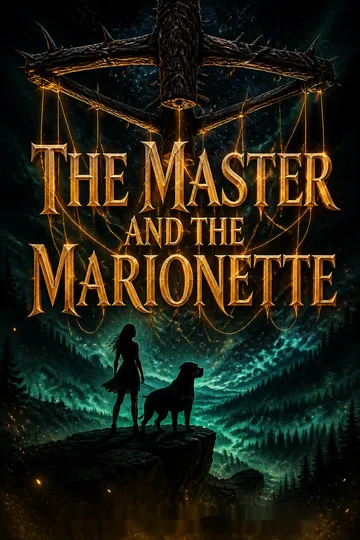
The Pawn and The Puppet Series



Download PDF
Download EPUB
.epub digital book format is ideal for reading ebooks on phones, tablets, and e-readers.








