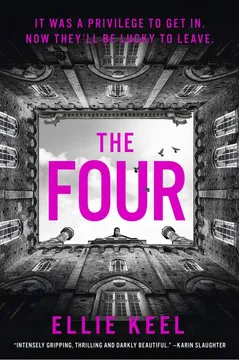


Plot Summary
The Window Stays Open
In September 1999, Rose Lawson arrives at High Realms, an elite Devon boarding school, with three other scholarship pupils: the brilliant, unschooled Marta De Luca, guarded pianist Lloyd Williams, and warm-hearted Sami Lynch.
Their places depend on academic success, but the school’s rules and pecking order are enforced by privileged students as much as staff. After hockey practice, Rose finds their shared room in chaos and Senior Patroller Genevieve Lock inspecting it. Genevieve humiliates Marta over her background and her dead mother.
Marta advances on her, arms raised, while Genevieve sits beside an open window six storeys above the lawn. Lloyd, Sami, and Genevieve’s boyfriend Max arrive before anything happens. Rose later understands that this near-violence begins the chain that will bind all four scholars together.
The opening makes danger a matter of proximity rather than spectacle: an open window, a cruel remark, a body moving toward another body. Rose’s retrospective knowledge gives the scene an ominous double meaning, yet her uncertainty remains genuine. She has only just met Marta and does not yet feel loyalty strong enough to risk herself for her. High Realms immediately teaches its newcomers that rules are not neutral protections. They are tools wielded by students with status, while the scholarship pupils are expected to absorb humiliation and keep performing. The interrupted attack is not simply a threat deferred. It is the first moment the group’s private choices begin to acquire public consequences.
The Horse Statue
The next afternoon, Rose and Marta reach the stables for their assigned work and find Senior Patroller Genevieve astride a horse, presiding over Gerald Foster, a red-haired stable worker strapped to a stone horse statue with reins.
The students surrounding him chant as he struggles, and the top rein threatens to tighten around his neck. Sylvia Maudsley, Genevieve’s powerful deputy, quietly signals a younger pupil to fetch a teacher, but the crowd scatters before help arrives. Marta rushes to hold Gerald’s legs still while Rose frees a buckle.
Gerald kicks loose and crashes down with Marta, bruising her and covering her in dirt and vomit. Rose claims she called for help, drawing Genevieve’s suspicion onto Marta. The rescue leaves Rose shaken by a school where cruelty has become ceremony.
The stable courtyard turns the school’s social order into physical theater. Genevieve controls the spectacle, the crowd supplies its chorus, and Gerald’s appointment to a student leadership post cannot protect him from a hierarchy that predates formal authority. Sylvia’s covert intervention complicates any easy division between bully and rescuer: she attempts to limit the harm without openly challenging the system that enables it. Marta, meanwhile, responds to suffering before calculating whether the victim deserves her help. Rose’s lie is a small act of solidarity, but it also marks her first voluntary entry into High Realms’ moral fog. Once she protects Marta, she cannot pretend that the school’s violence is somebody else’s problem.
Matches in Room 1A
Marta misses morning stable duty after spending the night in the library, then returns to class full of excitement. When Rose later enters their room, she finds Marta holding a lit match beside her exposed, scarred thighs.
Marta explains that hurting herself sometimes gives her relief, then asks Rose to keep it secret. A letter from Marta’s father reveals that he wants her to leave High Realms by Christmas, though she refuses to explain why he is difficult or unwell. The school doctor, Isobel Reza, has already noticed the matches and Marta’s oversized uniform.
She asks Rose whether anything is wrong, and Rose denies it, honoring Marta’s warning rather than seeking help. Rose sees their shared bereavement as a bond, but does not yet grasp how much she has agreed to carry alone.
Rose mistakes privacy for care because the distinction offers a manageable role: she can keep Marta’s confidence without confronting the limits of what a friend can safely do. Their shared loss of mothers makes the bond feel reciprocal, but the resemblance conceals a crucial difference between Rose’s grief and Marta’s distress. Reza represents an adult route toward intervention, yet Rose’s lie closes that route before she understands its value. The school’s culture reinforces the choice. Students are trained to endure, conceal, and resume their schedules; asking for help risks surrendering control. The matches are therefore both a coping mechanism and a warning that Rose reads through affection rather than through the danger they signal.
An Invitation to Bridge Night
As term settles into a punishing routine, Rose earns respect on the hockey team and Sami finds purpose in Dr Reza’s Medical Society, while Marta refuses Games and attracts more punishment.
Max Masters, a popular organ scholar and Genevieve’s boyfriend, befriends Lloyd and invites all four scholars to Bridge Night, an illicit party beside Donny Stream. Before the party, Marta learns she has topped the academic rankings, but barely reacts; Max’s disappointment reveals how much status matters to him.
He also tells Rose that Genevieve’s younger sister Persie died at school, explaining some of Genevieve’s grief without excusing her cruelty. Marta declines a date with Gerald, then accepts Rose’s borrowed dress and joins the group. For Rose, the invitation feels like a chance to stop being an outsider.
The school offers inclusion as a conditional privilege. Rankings, team membership, and invitation-only parties promise recognition, but each rewards conformity to a system that scholars entered hoping to escape social exclusion. Marta’s indifference to her top score unsettles Max because she has achieved the currency he values without wanting to spend it. The story of Persie introduces grief as an explanation that can become an alibi: Genevieve’s loss matters, but it does not erase the choices she makes afterward. Rose’s eagerness to attend exposes her own vulnerability to approval. She hopes the party will translate proximity to powerful students into belonging, a hope that makes her susceptible to Max’s charm.
Across Donny Stream
At Bridge Night, students drink champagne and dance around a bonfire before crossing a makeshift plank bridge into the woods. Max presses alcohol and pills on the scholars. Rose drinks, dances with him, and nearly kisses him before Marta pulls her away, protecting her from Genevieve’s notice.
Later Rose sees Marta and Lloyd kissing, while Sami leaves with another student. Sami returns alone and tells Rose that the rugby boys have been tormenting him, including trapping him in his trunk and smashing his tuck box.
He is also alarmed by Marta’s vulnerability and by Lloyd’s closeness to her. A muffled cry comes from the woods. Sami goes to investigate, leaving Rose behind; Marta eventually returns, cold and shaken, and insists that everyone is fine. Rose does not learn what happened between Marta, Lloyd, Max, and Genevieve.
The party makes intimacy look like a route out of isolation, but its loosened boundaries intensify the group’s unequal knowledge. Rose experiences Max’s attention as a possible entrance into the social world, while Marta sees the danger in that attention and intervenes. Her tenderness toward Rose contrasts with the school’s habit of treating vulnerability as weakness. Meanwhile, Sami’s account of being bullied reveals that the scholars’ apparent academic success has not protected them from physical coercion. Each friend is carrying a different private injury, and their promise to be a team is not yet matched by the honesty needed to understand one another. The unanswered cry converts a night of celebration into a concealed fracture.
The Hose in Block C
After leaving the woods, Rose and Marta go to the stable to finish their duty. Genevieve and Sylvia find them there, disheveled and furious. Genevieve turns a high-pressure hose on Marta, driving her to the floor and raising painful welts on her skin.
Rose tackles Genevieve while Sylvia shuts off the water, then Dr Reza and Gerald arrive. Reza takes Marta to the nearby San. Marta refuses to report Genevieve, convinced the school would believe its senior students and punish her for speaking up.
She also admits that her father still wants her home by Christmas. Rose breaks her promise and tells Sami about Marta’s self-harm and the letters. The students then agree to conceal the attack, and the Senior Patrol’s open violence temporarily stops.
The hose assault makes the cost of silence unmistakably bodily, yet Marta’s refusal to report it is not simple passivity. She understands that authority is distributed unevenly and that a complaint could expose her to retaliation without producing justice. Rose sees this logic, but still violates Marta’s confidence by telling Sami, seeking relief from the burden of knowing. Her disclosure creates solidarity among the friends while also beginning a pattern in which they make consequential decisions around Marta rather than with her. Reza’s arrival offers immediate care, but the students’ mistrust of institutional adults remains intact. The temporary ceasefire demonstrates that High Realms can stop visible violence without confronting the conditions that made it routine.
The Fall on the Eiger
Weeks later, Genevieve confronts Marta on the Main House stairs after learning that Max’s feelings have shifted toward Lloyd. Lloyd separates them, but Marta slaps Genevieve, who is already off balance and falls down the Eiger. She survives with catastrophic injuries.
Sylvia accuses Marta of pushing her, while Lloyd insists the fall followed a slap, not a shove. Marta is nowhere to be found. In Room 1A, Rose discovers Marta’s note: her father has arrived unexpectedly, Major Gregory dismissed her attempt to explain something about him, and she planned to seek Dr Wardlaw’s help.
The note makes clear that Marta fears being taken home. As the police and school search the grounds, Rose realizes Marta has not left the estate and leads Lloyd and Sami toward the stables.
The fall converts the private violence of High Realms into a crisis that its authorities cannot contain through routine punishment. The ambiguity of the physical event is important: Marta’s slap is real, but the school’s assumption that she deliberately pushed Genevieve is not established. Sylvia’s accusation quickly becomes a usable story, while Marta’s disappearance makes her unable to contest it. Her note reveals the school’s failure at a decisive point: she tried to seek help and was sent away. Rose’s movement from witness to investigator marks a change in her agency, but she is still acting on partial knowledge. The crisis begins not with a solved mystery, but with competing accounts and an absent person whose safety is at stake.
The Room Behind Plywood
Rose, Lloyd, and Sami uncover a concealed staircase behind the plywood wall of Block C and find Marta in the clocktower room, soaked, injured, and terrified. She refuses to return while her father is at school.
The next day, after learning that police are searching and that her father is pressing them to find her, Marta explains that she has been homeschooled and that her mother supported her scholarship plan. After her mother disappeared, her father became dependent on her and demanded that she leave.
Marta asks the three friends to hide her until she turns eighteen, only six months away. Lloyd supplies camping gear, Sami brings food, and Rose agrees. They invent a trail toward Oxford and Cambridge, then begin smuggling provisions into the stable tower.
The hidden room gives the friends a literal refuge, but it also turns care into an improvised institution with no clinical safeguards, no independent oversight, and a fragile supply chain. Their choice is emotionally intelligible: Marta fears a return to her father, and the adults at school have already failed to hear her. Yet the group’s decision substitutes loyalty for assessment. Lloyd’s own history of being moved without control makes him especially committed to giving Marta a choice, while Rose and Sami are driven by love and fear. The clocktower thus symbolizes both protection and enclosure. What they create keeps Marta from immediate removal, but its secrecy makes them increasingly responsible for needs they cannot fully meet.
The Lie Becomes Home
For weeks, the friends feed Marta from their plates and steal blankets, medicine, and equipment, while Major Gregory watches their movements and assigns punishments that keep them from the clocktower. Lloyd’s resourcefulness helps them evade detection.
Police interviews become more pointed, and Rose’s clumsy answers expose gaps in their invented story. During a hockey match, Bella injures Rose and forces her off the pitch. Sami then explains what happened in the woods: Marta saw Max and Lloyd kissing, and Genevieve was watching too.
He believes Genevieve later targeted Marta because she was defending Lloyd. Rose also learns that Max had used Genevieve’s grief after Persie’s death to secure her trust. When Max’s friends break his wrist, Sylvia intervenes to protect him, despite her anger at his betrayal.
Concealment gradually becomes an identity rather than a temporary tactic. Rose’s lies feel easier because they serve a purpose, but every successful evasion deepens the group’s dependence on secrecy. Their different histories shape how they interpret risk: Lloyd fears losing the only route he has to a future, while Sami is more willing to trust formal help. Rose’s delayed discovery of the woods encounter shows how loyalty can preserve a friend’s confidence and still damage intimacy. Max’s relationship with Genevieve is also exposed as ethically complicated: his care helped her through grief, yet he later wants to leave her. Sylvia’s defense of him reveals her governing value, loyalty, even when that value keeps her entangled in harm.
Marta’s Story of Home
When Lloyd accuses Marta of making the group risk everything without explaining why, she shows them the burns on her thighs and describes how her father sexually assaulted her before she left for school. She had called her mother dead because it was easier than facing that her mother had left the family. Later, Professor De Luca confronts Rose and claims Marta has invented stories to keep him away.
He reveals that Marta’s mother is alive but abandoned them, a fact Marta concealed because she had imagined her mother would return for her. Rose sees the fear and control beneath his self-pity and pushes him to the ground. The confrontation leaves Rose furious and uncertain, while her trust in Marta is strained by the lie about her mother.
Marta’s confession explains the urgency of the refuge without making her trauma a puzzle the friends are entitled to solve. Her mother’s absence complicates the story further: Marta’s protective fiction is not merely deception but a way of making abandonment survivable. Rose’s confrontation with Professor De Luca gives her anger a physical outlet, but it cannot repair the conditions that produced Marta’s fear. It also exposes Rose’s own vulnerability to narrative persuasion. Both father and daughter present partial accounts shaped by pain and self-protection. The novel asks readers to distinguish uncertainty about facts from uncertainty about harm: Rose cannot know every detail, yet she can recognize that Marta’s fear is real and that the adults have not made her safe.
A Letter After Christmas
Over Christmas, Rose stays away from Marta after learning that the story of her dead mother was untrue. When school resumes, Sami gives Rose a letter in which Marta explains why she has clung to that account: she fears that her mother chose not to return, and the belief that she died is easier to live with.
Rose goes back to the clocktower and finds Marta dangerously thin, ill, and living in a makeshift tent. They embrace, and their friends spend the evening talking as they once did.
Rose later bathes Marta in a plastic tub and admits her guilt about hiding her. Marta says their ordinary conversations help her feel human. But when Gerald enters the room, he discovers the secret refuge. Marta is so frightened by his presence that she vomits after he leaves.
The letter restores context without erasing the hurt caused by Marta’s lie. Rose’s return matters because she chooses relationship over the comfort of moral certainty, while Marta’s explanation makes clear that fiction can function as emotional shelter. Their reunion is built through practical tenderness: food, bathing, books, and conversation, not through a sudden cure. Marta’s insistence that ordinary companionship helps her resists the idea that she should be reduced to a diagnosis or a victim. Gerald’s discovery then shatters the fragile domesticity they have made. The clocktower is both a home they have constructed and a room whose isolation leaves Marta exposed to anyone who finds it.
The Price of Silence
Gerald demands that Lloyd persuade Max to apologize for destroying his art portfolio and spreading rumors about his friendship with Persie. If Max refuses, Gerald threatens to tell the police that Marta is hidden in the clocktower.
Meanwhile Marta cuts her arm so deeply that Sami spends the night cleaning and bandaging it. He and Rose want to bring in an adult, but Lloyd argues that doing so would strip Marta of the choice they promised to preserve. During the same strained night, Rose and Sami seek comfort in each other and begin a sexual relationship.
Sylvia tells Rose that Gerald assaulted her months earlier; she used her influence to have him stripped of his stable leadership post. Lloyd finally gets Max to agree to apologize, but when he and Rose hurry to tell Marta, they find Gerald has reached her first.
The friends’ private pact is now under pressure from needs that point in opposite directions. Marta wants autonomy, but her self-injury makes their hands-on care increasingly inadequate. Sami recognizes that good intentions cannot substitute for treatment; Lloyd fears that outside intervention will repeat the loss of control he has known throughout his childhood. Rose is caught between them and seeks closeness with Sami, a human response that also reveals how depleted she has become. Sylvia’s disclosure adds another layer: Gerald’s violence has crossed beyond Marta, while the school’s punitive hierarchy has delayed meaningful protection. The promised apology briefly suggests that the friends can negotiate their way out. Their confidence is tragically misplaced.
The Clocktower Assault
Rose and Lloyd enter the clocktower expecting to tell Marta that Max has agreed to make amends. Instead, they find her injured and Gerald standing over her. He has raped her, and flees when they arrive.
Rose sits beside Marta as Lloyd fetches water, while the damage to her body makes any easy reassurance impossible. Sami soon arrives with news that Professor De Luca has suffered another severe stroke and may die. He believes Marta could finally be free of her father, but his hope collides with the assault they have just witnessed.
The three friends then find Gerald in the snow, drag him into the chapel, and beat him. When he tries to climb into the organ loft and fall, they pull him back. The school’s violence has now entered their own hands.
The assault is the point at which protection fails in the most intimate and irreversible way. The friends did not cause Gerald’s violence, but their secrecy and improvised care have left Marta alone in a room he could enter. Their immediate response cannot undo that failure. The beating of Gerald offers a brief fantasy of justice through force, then exposes the emotional cost of becoming an instrument of the same retaliatory culture they despise. His attempt to fall from the organ loft forces them to prevent another death even as they are consumed by rage. The news about Marta’s father creates a false opening toward freedom, but biological crisis cannot repair the harm already inflicted.
Ten Days Behind Doors
After Professor De Luca becomes unconscious, Major Gregory places Rose, Lloyd, and Sami under House Arrest for ten days, citing their academic duties while admitting little concern for Marta. They cannot reach the clocktower. In the isolation that follows, Marta’s mental state deteriorates.
When the friends finally visit, she is confused, does not recognize Rose or Sami, and clings to Lloyd before trying to touch him sexually. Lloyd pulls away, and Marta lashes out at Sami. The three leave, believing they have failed her.
Rose later tells Sylvia the truth about the hidden room and the assault. Sylvia and Dr Reza arrange professional care, while Rose takes Marta outside at dawn. In a lucid interval, Marta asks Rose to find help, recognizing that the hiding arrangement is harming them all.
House Arrest exposes the cruelty of a system that can confine three teenagers for protecting a friend while refusing to take responsibility for the friend’s welfare. The sanction also destroys the practical support that had kept Marta connected to the outside world. Her confused, aggressive behavior is not a revelation of her true character but an expression of trauma, isolation, and illness. Rose’s decision to disclose the situation to Sylvia and Reza marks a difficult change: she begins to understand that honoring Marta’s choices does not require preserving a dangerous arrangement at any cost. Marta’s lucid request matters because it restores her agency at the moment when those around her are most tempted to decide everything on her behalf.
The Open Window
Dr Reza listens as Rose explains months of secrecy, the abuse by Marta’s father, and Gerald’s assault. She proposes moving Marta to a specialist clinic with Reza and Rose accompanying her. Marta rests in the San while Rose returns to lessons, hockey, and a new closeness with Sylvia. That night, Rose leaves to meet Marta, changing in Room 1A first.
She hears a scream and sees Marta’s body on the lawn below the high window. Rose, Lloyd, and Sami reach her, but Marta dies. The book leaves uncertain exactly how she came to fall. The school removes the three friends, and Dr Reza loses her position. In time, the friends face a trial, where letters, Gerald’s testimony, and evidence of Marta’s history clear them of most charges.
The ending refuses to treat the decision to seek help as a guarantee of rescue. Marta asks for care, Reza organizes it, and Rose is finally willing to trust an adult, yet the fragile interval before transfer proves fatal. The uncertain mechanics of the fall preserve the limits of what survivors can know, resisting a neat explanation that might make grief feel containable. Rose’s earlier wish to protect Marta has gradually given way to a recognition that professional care is necessary, but timing cannot be recovered. The school’s response compounds the loss by protecting its reputation and expelling the young people who tried to help. Their later legal vindication cannot reverse the death or erase their guilt.
Epilogue
In 2012, Rose, Lloyd, Sami, and Sylvia return to High Realms to help award a scholarship in Marta’s memory. The narrator recounts their trial: Gerald testifies that they cared for Marta, and the friends submit her letters to establish what the school and police failed to understand. They are cleared of nearly all charges, though the cost of their secrecy remains part of their lives.
The school has since changed its pastoral care and welcomes them back. At Donny Stream, the friends remember Marta’s intelligence, stubbornness, and capacity for love. Sami says he will love her always; Lloyd and Rose agree. Sami then tells Rose that Sylvia still loves her. Rose takes Sylvia’s hand, and the four survivors walk back toward the school together.
The return to High Realms transforms memory into a practical obligation. The scholarship does not redeem the institution or compensate for Marta’s death; it creates a route for another student to receive the opportunity Marta wanted, under conditions the friends hope are safer. The trial’s evidence restores Marta’s account to public view, while the friends remain unable to prove that different choices would have saved her. Their continuing affection is not a cure for grief, but it prevents grief from becoming an isolating private burden. Rose’s renewed connection with Sylvia offers a future without replacing Marta. The final walk is therefore neither absolution nor closure in the conventional sense. It is a decision to carry love forward without claiming that the loss has become fair.
Analysis
The Four examines what happens when young people inherit responsibility from institutions that are present in their lives but absent from their care. High Realms is not merely a setting for bullying. Its routines, sanctions, and prestige produce a closed moral world in which suffering is normalized as discipline and asking for help can seem more dangerous than silence. The friends’ decision to hide Marta is therefore both an act of love and a consequential failure of judgment. The novel refuses to flatten that contradiction: they protect her from a feared home, but they do not have the training, authority, or resources to treat the injuries and trauma that follow.
Rose’s narration makes this ethical tension personal. She remembers each decision as a possible point of no return, then recognizes that damage often accumulates between dramatic events: in missed conversations, unasked questions, and the exhaustion of daily concealment. Her hindsight does not make her omniscient. It makes her acutely aware that care can become possessive when friends treat another person’s choices as theirs to manage, even while they believe they are acting selflessly.
The novel also distinguishes explanation from absolution. Genevieve’s grief, Sylvia’s loyalty, Max’s need for approval, Lloyd’s fear of losing his future, and Sami’s wish to help all explain behavior without making its consequences disappear. Marta’s stories about her family are likewise survival tools, not simple deceptions. Against this fractured record, letters and testimony become imperfect ways to restore a voice that institutions repeatedly failed to hear.
The ending rejects the fantasy that love, insight, or good intentions can guarantee survival. The friends’ trial and later scholarship cannot repair Marta’s death, but they can alter what her memory enables. Their eventual return to High Realms converts grief into a demand for better care, while leaving guilt unresolved. The book’s deepest claim is not that friends should never intervene, nor that authorities should always be trusted. It is that care requires humility: listening, sharing responsibility, and recognizing when affection alone is not enough.
Review Summary
Reviews for The Four are mixed, averaging 3.26 out of 5. Praise focuses on its atmospheric dark academia setting, compelling queer representation, and emotionally immersive storytelling. Many readers found it gripping and emotionally devastating, with strong character work, particularly Rose's narration. However, common criticisms include excessive length, implausible plot developments, underdeveloped character bonds, unrealistic adult behavior, and an overreliance on dark themes. Several reviewers noted it feels more YA than adult fiction, and comparisons to The Secret History were frequently deemed undeserved.
People Also Read




Characters
Rose Lawson
The watchful scholarship girlRose is a bright, reserved student from Hackney whose father drives a taxi. She comes to High Realms hoping for academic opportunity and a ready-made social life after her mother’s death. Her instinct is to keep moving, excel, and avoid exposing how lonely she feels. She notices more than she first admits, especially the difference between the school’s official rules and the power its students actually wield. Rose is drawn to people who offer warmth and certainty, but she is also capable of acting decisively when someone is in danger. Her account is shaped by hindsight and guilt, making her both a careful witness and a narrator aware that good intentions do not guarantee good outcomes.
Marta De Luca
The brilliant outsiderMarta is a gifted, intensely curious scholar who has been homeschooled and arrives at High Realms without the social habits its students take for granted. She reads voraciously, excels across subjects, and treats intellectual questions with joyful seriousness. Her bluntness can make her seem defiant, but she is also quick to defend people whom others have made vulnerable. Marta resists being shaped by the school’s hierarchy and is often more interested in ideas than approval. Grief and a difficult home life complicate her confidence, while her friendships offer both belonging and pressure. She wants to be treated as a whole person, not merely protected or pitied, and her need for choice is central to how she relates to others.
Lloyd Williams
The resourceful strategistLloyd is a talented pianist and a sharp observer whose calm manner hides a deep sensitivity to instability. Raised in care and moved between homes, he has learned to plan carefully and to guard against losing the few people he trusts. At High Realms he sees education as a rare chance to build a secure future, which makes him especially alert to risks that could cost him his scholarship. His friendship with Sami and Rose develops through shared pressure, while his connection to Marta draws out both tenderness and confusion. Lloyd’s competence makes him a natural organizer, but his reliance on strategy can also lead him to mistake control for care.
Sami Lynch
The tender-minded doctorSami is a warm, conscientious student from a close Yorkshire family, with parents who are both doctors. He wants to study medicine and brings an instinct for practical care to the group, often noticing when someone is frightened or hurt. His gentleness does not make him immune to bullying, and his wish to prove himself can keep him in situations he could leave. Sami is fiercely loyal to Rose, Lloyd, and Marta, sometimes carrying their pain as though he can treat it through attention alone. He is the friend most willing to consider outside help, but he also understands why trust and choice matter. His compassion is generous, though it sometimes costs him more than he can bear.
Sylvia Maudsley
The formidable deputySylvia is the Vice-Captain General of the school, an exceptionally capable student whose cold poise and quick temper make her difficult to approach. She is closely tied to Genevieve and is accustomed to using authority to protect the people she considers hers. Beneath her command of the school’s hierarchy is a fierce commitment to loyalty, formed by years of boarding-school life and complicated family relationships. Sylvia is perceptive, ambitious, and guarded about her own vulnerability. She values action over emotional exposition, offering help through intervention and practical protection. Her relationship with Rose challenges her certainty about where loyalty ends and where harm begins.
Max Masters
The charming organ scholarMax is a gifted organist and a socially agile student who can make outsiders feel briefly welcome. His scholarship carries prestige, and he moves easily among the school’s most powerful students. He likes being admired and often manages other people’s feelings with charm, sometimes blurring the difference between kindness and influence. His relationships with Genevieve and Lloyd reveal different sides of his emotional life, while his history at High Realms makes him sensitive to status and rejection. Max can show genuine tenderness, but he is also capable of self-protection and careless choices. His charisma draws people toward him before they fully understand what he wants from them.
Genevieve Lock
The ruling prefectGenevieve is a Senior Patroller, a strong hockey player, and the daughter of a prominent politician. Her relationship with Max makes her one of the school’s most watched students, while her authority lets her turn personal dislike into institutional punishment. Genevieve is glamorous and disciplined, but her anger can become disproportionate and frightening. She is shaped by a family loss that few people discuss openly, and she guards her private pain behind social command. Her treatment of the scholarship pupils reflects the school’s assumption that status entitles its holders to set the rules. Genevieve’s public confidence conceals a dependence on loyalty and a fear of losing the people closest to her.
Gerald Foster
The isolated horsemanGerald is a red-haired, physically imposing student whose life revolves around horses, art, and the stable block. His bluntness and awkwardness make him an easy target in a school where popularity determines who is believed. He has a complicated history with Genevieve, Sylvia, Max, and Persie, and he carries old injuries beneath an abrasive exterior. Gerald can be proud and resentful, but he is not simply the role the school assigns him as a social outcast. His artistic skill and his attachment to the horses reveal a more patient, observant side. The divide between his capacity for care and his capacity for harm is one of the novel’s most disturbing tensions.
Isobel Reza
The school’s steady doctorDr Reza is High Realms’ doctor, a thoughtful and capable professional who tries to offer students confidential care. She notices when a pupil’s behavior or physical state suggests something is wrong, but her efforts to help do not always earn trust. Reza understands that medical support must be offered without turning vulnerability into another form of control. She is willing to challenge school authority when student welfare is at stake, though she cannot simply override every rule or remove every danger. Her patient manner contrasts with the school’s punitive routines. She represents the possibility of adult help, while the students’ reluctance to approach her shows how thoroughly High Realms has taught them to manage crises alone.
Professor Nathaniel De Luca
Marta’s protective fatherProfessor De Luca is an academic and the widowed or separated father of Marta, a man whose education and intellectual life are central to his identity. His attachment to his daughter is intense, and he speaks of her as the person who gives his life meaning. A major stroke has left him physically impaired, but he remains forceful in his opinions and expectations. His relationship with Marta is difficult to interpret from the outside because affection and control are intertwined. He fears losing his family and believes that his own judgment should determine what is safe for his daughter. His presence complicates the friends’ decisions about home, autonomy, and whose account of a family conflict should be trusted.
Major Gregory
The unforgiving housemasterMajor Gregory is Hillary House’s Housemaster and a former High Realms pupil with a military background. He prizes discipline, neatness, and academic performance, and communicates through sanctions and exacting demands. He regards the scholarship students as an institutional investment whose results must justify their places. His attachment to High Realms is intense, but it is directed more toward its reputation and success than toward the emotional welfare of individual pupils. Gregory’s authority is weakened by his inability to understand the students’ private realities, yet he remains powerful enough to constrain their movements and choices. His rigidity helps create the conditions in which students learn to conceal problems rather than seek his help.
Bella Ford
The relentless games captainBella is Captain of Games and a formidable hockey player who treats sport as the clearest measure of worth. She is physically confident, direct, and accustomed to having her judgments obeyed. Her hostility toward Marta and Rose is intensified by the school’s hierarchy, though her own emotional life is less settled than her hard exterior suggests. Bella is passionate about performance and loyalty to her team, and she can mistake discipline for fairness. Her relationships with Sylvia and the Senior Patrol place her inside a powerful circle, but her focus on Games gives her a distinct identity within it.
Jolyon Astor
The polished school captainJolyon is Captain General of School and the Head of the Senior Patrol. He is socially assured, physically confident, and skilled at enforcing High Realms’ hierarchy while appearing to embody its ideals. His relationship with Shana and his closeness to the school’s elite keep him near the center of power. Jolyon treats scholarship pupils and social outsiders with open contempt, often making humiliation sound like a reasonable correction. His authority is not based on wisdom so much as his ability to represent the institution’s inherited confidence.
Persephone Lock
Genevieve’s remembered sisterPersie is Genevieve’s younger sister and a student whose memory remains important to several people at High Realms. She is associated with horses and with friendships that cross the school’s social boundaries. Her presence in other characters’ recollections reveals how grief can reshape loyalties, rivalries, and behavior long after a loss. Persie is not present in the main action, but the different ways people remember her expose their own fears and regrets.
Miss Kepple
The exacting English teacherMiss Kepple is Head of Raleigh House and teaches English at High Realms. She values precision and literary argument, and her lessons give Marta room to display the intelligence that the school’s social hierarchy often resents. Kepple is not an especially warm teacher, but she takes ideas seriously and can recognize a strong interpretation even when it challenges her own. Her classroom offers a brief alternative to the school’s physical and social contests, where language and thought carry weight.
Plot Devices
The clocktower room
A refuge becomes a trapA concealed staircase behind a plywood stable wall leads to an unused room inside the clocktower. Rose, Lloyd, and Sami discover it while searching for Marta after Genevieve’s fall, then use it to hide her from the school, her father, and the police. Its obscurity gives them time, but its cold, isolation, and lack of medical care intensify Marta’s needs. The hidden room makes the friends’ promise tangible: they can shelter her, feed her, and keep her company. It also narrows their idea of safety until secrecy itself seems like the only available protection. The device drives the plot from an investigation into an exhausting moral and practical test of what friendship can provide.
Senior Patrol sanctions
Power disguised as disciplineHigh Realms gives senior students authority to inspect rooms, assign punishments, and enforce social expectations. These powers let Genevieve, Sylvia, Bella, and their peers turn status into physical and emotional pressure, while staff often fail to intervene. The sanctions are not merely background details: they isolate the scholarship pupils, deter complaints, and teach them that official channels may work against them. Later, Major Gregory’s House Arrest uses a similar logic at adult scale, confining the friends under the stated purpose of academic correction. The school’s disciplinary machinery repeatedly converts unequal power into apparently ordinary procedure, making cruelty harder to identify and easier to perpetuate.
The four scholarships
A fragile chosen familyRose, Marta, Lloyd, and Sami arrive at High Realms as scholarship pupils expected to justify their places through exceptional results. Their shared outsider status helps them become allies, but their histories and motives differ: Rose wants opportunity and connection, Marta wants education and freedom, Lloyd wants security, and Sami wants to meet his family’s hopes. The scholarship creates a bond without making them naturally alike. It also raises the cost of resisting school authority, since expulsion could threaten futures they have worked hard to earn. Their group identity is therefore both emotional shelter and institutional vulnerability. The story’s central choices grow from the question of what they owe one another when their ambitions and their care for Marta begin to conflict.
Letters and false accounts
Private truth under pressureLetters from Marta’s father, Marta’s explanations to her friends, the notes she leaves, and the stories the group gives the police gradually disclose how much each character is concealing. The letters offer evidence but not complete certainty; Marta’s account protects her from a truth she cannot yet face, while the friends’ false leads protect her from people they do not trust. The device keeps narrative knowledge uneven. Rose and the reader learn that a statement can be emotionally true without being factually exact, and that a lie may protect someone while also preventing help. The later use of Marta’s letters in court changes their function again, turning private records into public testimony that the school failed to hear in time.
Poetry as evidence
Language tests what characters seeEnglish lessons repeatedly ask students to interpret poems and novels, allowing Marta, Rose, and Sylvia to reveal their ways of understanding pain, structure, and feeling. Marta’s reading of a poem about grief changes after her own hope collapses, while Sylvia and Marta disagree over whether apparent hardness can conceal fragility. Literary analysis is not an escape from the plot; it provides a vocabulary for experiences the students struggle to state directly. The book also uses stories and imagined accounts as both refuge and risk. Reading teaches characters to notice contradictions, but it cannot by itself resolve them. The device links intellectual achievement to emotional perception without suggesting that understanding a metaphor is the same as being able to prevent harm.
Download PDF
Download EPUB
.epub digital book format is ideal for reading ebooks on phones, tablets, and e-readers.








