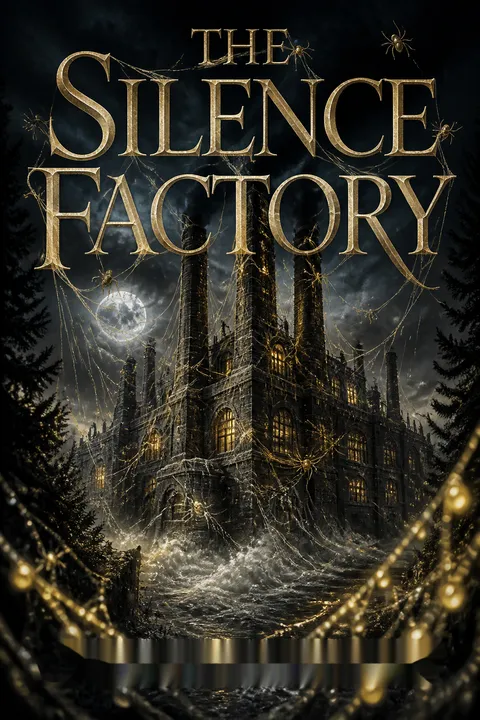


Plot Summary
Prologue
In an English orangery, pregnant Sophia tends the spiders her husband, James, has brought back from the Greek island of Kratos. Their silk throws uncanny sounds through the glass tanks, and she reads reproach in the creatures’ many eyes.
She remembers how James drugged her and carried her away without letting her say goodbye to Hira, the island healer who had become her closest companion. He has taken the spiders too, treating their sacred habitat as a storehouse for specimens. Sophia fears that Hira believes she helped him. With little left to trust, she promises the spiders that she will keep them and their young alive.
The opening makes captivity feel intimate before it becomes industrial. Sophia is not simply homesick: she is implicated in the removal of the spiders and fears that her silence has made her complicit in James’s theft. Her pregnancy sharpens that conflict, turning the promise to protect the spiders into a vow about the future she carries. The spiders’ sound remains both physical and supernatural, a signal that the novel will not let scientific explanation settle every moral question. By beginning after the island has been left behind, the prologue makes the story’s central question urgent: what does an exile owe to the beings and people taken from home?
A Scrap of Impossible Silk
In Argyll’s London emporium, Henry Latimer, a widower who sells hearing devices, meets Sir Edward Ashmore-Percy, a prosperous factory owner seeking help for his deaf daughter. Edward gives Henry a square of spider silk that can shut out every surrounding sound. For Henry, whose nights are haunted by the absence of his wife, Madeleine, and the child he believes he lost, the silence brings his first real sleep in months.
Edward invites Argyll to assess the girl, but when the older man cannot travel, Henry asks to go in his place. On the journey to Devon, Telverton’s strange disorientation and factory noise announce a town transformed by silk. Henry arrives at Cathermute House determined to prove useful.
The silk enters Henry’s life at the precise point where grief has made ordinary sound feel like an assault. Its appeal is not abstract comfort: it grants sleep, and therefore a temporary escape from the memories he cannot master. Edward’s gift also ties that relief to a person, making Henry’s professional opportunity emotionally charged from the outset. His decision to travel is partly a bid for work and partly a reach toward the man who noticed his bereavement. The novel thus establishes a vulnerability that can be exploited without making Henry foolish. He is looking for a way to endure, and the silk offers one with immediate, convincing results.
Philomel's Unheard Poem
Henry meets Philomel, Edward’s young daughter, in a sunny schoolroom with her governess, Ruth Fielding. Philomel is deaf from birth, but alert, playful, and already fluent in fingerspeak, the visual language Ruth uses with her.
When Philomel performs a signed poem, Henry sees a grammar and imaginative world he cannot read. He proceeds through his cases of trumpets and audiphones, but none reaches her auditory nerve. Ruth explains that Edward wants spoken English and forbids signing, while she fears that partial speech would leave Philomel less able to express herself.
Henry decides he should leave rather than harm the child through persistence. Before he can go, Edward’s business crisis and Henry’s outspoken defence of the silk give him a different chance to stay.
Philomel’s poem overturns Henry’s assumptions about deafness more forcefully than any failed instrument. He has arrived thinking in terms of repair, but her signed performance shows that communication is already present, rich, and artistic. Ruth’s resistance is not simple obstruction: she fears a social compromise in which Philomel loses a fluent language for the sake of being more acceptable to hearing people. Henry’s decision to stop is his first moment of ethical restraint, though it is tangled with his fear of failure. The scene makes the book’s central distinction concrete: access is not the same as conformity, and a supposedly helpful intervention can narrow a life.
Hira's Island Welcome
Sophia’s journal reaches back to Kratos, where she and her ambitious husband, James Ashmore, arrive expecting to meet a scholar who has already died. Hira, a village healer who speaks English, feeds Sophia and leads her to the sea; in the following weeks, Sophia finds companionship among Hira and the island women while James sinks into frustration over his failed search for legendary spiders.
One morning Sophia sees a red-jointed spider on Hira’s hair, trailing shining thread. Afraid James will miss his chance to study it, Sophia carries the creature home in her shawl. James claims it as his discovery, keeps Sophia beside its web, and tests its effects on sound. His excitement revives his ambition, but the spider is now imprisoned.
Sophia’s capture of the spider is a small act with a long moral shadow. She does not take it from ignorance alone: she knows Hira has refused to reveal the sacred place, yet chooses James’s approval over the trust she has begun to build. James’s renewed tenderness rewards that choice, teaching Sophia how easily affection can be made conditional on usefulness. The spider’s power also unsettles the boundary between specimen and subject. Its web changes perception, but the human characters interpret that effect according to their desires: James sees a discovery, Sophia hears something almost alive. The conflict begins not with malice, but with the belief that knowledge entitles its pursuer to possession.
The Mill's Hidden Cost
After Edward asks him to address potential investors, Henry turns his unplanned defence of the silk into a persuasive case for selling sanctuary rather than fabric. The dinner earns Edward fresh interest and earns Henry a place at Cathermute to reshape the company’s catalogue.
He visits the factory with Samuel Worsley, Edward’s manager, and sees children tending spiders in the quiet upper room before entering the deafening weaving shed. There, a child crawls under the looms to collect silk waste while workers communicate with gestures.
Worsley dismisses the danger and calls the workers fortunate to have employment. In the spider house, Henry encounters Mercy Harman, a worker pleading for help for her son Joe, whose mind has deteriorated after work in the shed. The silk’s glamour now has a human cost.
Henry’s speech matters because he speaks from personal experience, but its success also recruits him into Edward’s enterprise. He can describe the relief the silk gives him with complete sincerity while ignoring the workers whose bodies absorb its danger. The factory tour briefly disrupts that selective vision: the child under the loom and Mercy’s plea are not theoretical costs but visible people. Yet Henry remains susceptible to Worsley’s reassuring account, converting the scene into notes about industry’s benefits. This is not a sudden failure of conscience so much as the beginning of a bargain. Henry wants to be useful to Edward, and each compromise can be framed as temporary, practical, or necessary.
The Shroud Stolen Back
Sophia’s first pregnancy ends after the spider escapes its confinement and traps a bird in its web. Its cry overwhelms her; she collapses and begins bleeding. Hira comes to care for her, but James attacks Hira after she frees the spider and condemns his treatment of it. Sophia loses the tiny, undeveloped remains of the child.
Hira wraps them in a spider-silk cloth that silences sound and protects the dead, then helps Sophia bury them. During the night James digs up the grave and washes the cloth, insisting that the remains were not a child and that the silk belongs to his research. Sophia sees the stained fabric drying beside him and understands that his scientific ambition has displaced even their shared grief.
This section gives the silk a meaning opposite to the factory’s commercial promise. Hira uses it to preserve a boundary around the dead, while James treats that boundary as an obstacle to inquiry. The difference is not simply religion versus science: Hira tends to a grieving person, while James’s experiments require him to disregard one. Sophia’s grief exposes how a language of progress can conceal intimate violations. Her child’s loss is not a side tragedy; it shows the cost of letting another person define what counts as real, worthy, or human. The shroud becomes a material test of care: does one protect what is vulnerable, or take it because it can be studied?
Sub Rosa's Bright Promise
Back in Telverton, Henry replaces Edward’s dull price list with a lavish catalogue organized around the rooms and silences a household might need. Edward rewards the work by giving him Sub Rosa, a grand house to furnish as a showroom. As they tour its empty rooms, Henry recognizes that his gratitude has become desire for Edward himself.
Ruth warns him that the silk is dangerous, then takes him through the sealed rooms once used by Edward’s wife, Cecilia, and gives him Sophia Ashmore’s journal. Henry reads through the night. The next morning, Edward describes Cecilia’s breakdown as a tragedy and suggests that he has lost his wife. Henry accepts the account, returns the journal, and chooses the new life Edward is offering.
The showroom literalizes the novel’s concern with curated perception. Henry arranges every room so that visitors will feel the silk’s benefits before asking what those benefits cost. In parallel, he curates Edward’s character, accepting a version of Cecilia’s history that permits his desire to continue untroubled. Ruth’s evidence does not simply enlighten him; it threatens the future he has built around Edward. The result is a revealing asymmetry: Henry can recognize the salesmanship in a catalogue, yet not in his own emotional life. His longing is real, but that reality does not guarantee that the person he longs for is trustworthy.
The Sacred Tent
Sophia’s later journal records James demanding more spiders and rejecting her when she will not betray Hira’s trust. At the island’s sacred place, Sophia watches Hira guide a woman through childbirth in a silk pavilion, where the women share the work and danger of birth.
Sophia and Hira kiss and enter the larger pavilion together, an intimacy Sophia experiences as a home she has found rather than a fantasy of escape. Afterward James behaves as though their marriage can begin again, retrieves Sophia’s discarded wedding ring, and keeps her occupied with plans to move their possessions.
He gives her a drink that leaves her helpless, then carries her back to England with the spiders. In England, Sophia records a new pregnancy whose conception she cannot explain.
The chapter’s emotional movement is from communal witnessing to enforced separation. Hira’s care is active and embodied; James’s care is offered as a means of regaining authority over Sophia. That contrast complicates the idea of safety. The sacred place does not erase pain, yet it gives women a way to face it together. England, by contrast, promises propriety while isolating Sophia from the relationships that made her feel whole. The unexplained pregnancy carries this conflict forward: it is both hope and uncertainty, a future Sophia claims as hers even though the conditions around its conception remain obscured.
Sophia's Dangerous Diary
As Henry prepares Sub Rosa for its opening, Ruth urges him to leave Telverton and explains that the factory’s noise has harmed children and adults. She shows him Cecilia’s abandoned rooms, lined with silk and marked by evidence of confinement, and argues that the material itself can distort the mind.
Sophia’s journal makes the danger harder to dismiss: it records a lost pregnancy, James’s theft of the shroud, and the way the spiders’ sound unsettled everyone near them.
Edward arrives the next morning and presents Cecilia’s condition as the source of the sealed rooms, describing her as unstable and dangerous. Henry wants to trust him. He lets Edward take the journal and continues preparing the gala, choosing the version of events that protects his new place.
Ruth’s warning arrives through two forms of evidence: the physical rooms and Sophia’s first-person record. Neither can compel Henry, because his investment is no longer only financial or professional. He has made his future depend on Edward’s approval, so disbelief becomes a form of self-protection. Edward’s account is plausible enough to absorb the facts without answering their hardest questions. This is how the novel depicts complicity taking shape: not through a single explicit decision to do evil, but through repeated acts of selective interpretation. Henry does not lack evidence. He lacks the willingness to let evidence cost him what he wants.
The Unsent Letters
Mercy gives Henry medical letters documenting that factory work has damaged Joe, her son, and asks him to put the evidence before Edward. Henry promises to help but leaves the packet undelivered.
At church, he sees Edward again and chooses to speak about their plans rather than confront him with Mercy’s appeal. When Ruth and Philomel interrupt a private moment, Henry returns the letters to Ruth and tells her to direct Mercy to the Quakers instead. His decision protects Edward from an inconvenient charge and leaves Joe without the help Mercy sought.
Henry’s near-confession of love has been interrupted, but his declaration of loyalty is unmistakable. He has made his place beside Edward more important than the worker whose suffering he has witnessed.
The letters make Henry’s moral failure unusually legible: he has evidence, a request, and the power to carry one to the other. He does not need to invent a justification; he merely redirects the problem toward people with less influence and calls that restraint. His choice is bound up with desire, but not reducible to it. Edward’s approval has become the measure by which Henry evaluates his own worth, so protecting Edward feels like protecting the self Henry hopes to become. The scene also shows the cost of deferred action. Mercy’s need does not pause while Henry waits for a more convenient moment.
The Gala's Red Stain
Before the gala begins, Henry admits his love to Edward in the silk-draped bedroom at Sub Rosa. Edward kisses him, and Henry enters the crowded opening believing their private understanding has changed everything.
During Edward’s speech, the factory owner promises that new silk devices will quiet disobedience and social unrest. Mercy pushes through the guests and accuses him of causing madness and death, then smashes a bladder of pig’s blood against his chest. Henry freezes instead of stopping her.
Edward survives and immediately rebukes Henry for letting Mercy escape. The guests leave with the spectacle fresh in their minds, not the catalogue Henry built. By morning, Edward has dismissed him from Cathermute House, turning the most hopeful night of Henry’s life into an abrupt expulsion.
The kiss and the attack occur almost back to back, forcing Henry to experience private hope beside public consequence. Edward’s speech exposes a purpose Henry had not been told: the silk is being developed not only to provide quiet but to suppress resistance. Mercy’s accusation is theatrical, yet the evidence behind it is not. Henry’s freeze is both a physical failure and the culmination of his previous choices; he has spent the story learning to defend Edward before learning what Edward is defending. The dismissal strips away the future Henry had built at Sub Rosa, but it also leaves him with fewer reasons to protect the story he has been told.
Cecilia Behind Bars
After Edward sends him away, Henry confronts Ruth, who reveals that Cecilia is alive in an asylum and was locked in the weaving shed while pregnant. The machinery left her deaf; afterward, she was separated from Philomel and confined.
Ruth suspects that the supposed accident was deliberate, and the painted panels in Cathermute’s hall echo Cecilia’s own images. Henry goes to the factory, where Worsley shows him a silk apparatus that suppresses a person’s will.
Worsley explains that it can make workers obedient and proposes using it to prevent strikes and dissent. Gower, his uneasy assistant, admits the experiments have harmed animals. Henry understands that the silk’s most profitable promise is not comfort but control, and that Edward has supported the work.
Cecilia’s story revises the meaning of every earlier silence. Her rooms were not simply remnants of illness, and Philomel’s deafness is connected to a system of violence that the household has hidden behind the language of accident and care. Worsley then makes the political use of the silk explicit, translating its sensory effects into a technology of obedience. His plan is chilling partly because it sounds administratively reasonable: better housing and reduced complaints conceal the removal of choice. Henry’s belated understanding is not an abstract awakening. It joins a woman’s confinement, children’s injuries, animal experiments, and a commercial product into one continuous chain of power.
The Flood's Reckoning
During a storm, Henry returns to the factory and cuts apart Worsley’s will-suppressing cage. In the spider house he finds Mercy, armed and ready to smash the tanks, with poison prepared in case she is caught. Henry stops her from drinking it and joins her in breaking the glass vivaria and tearing down the webs.
Worsley and the nightwatchman arrive; Worsley restrains Mercy and orders Henry to help save the remaining spiders. Henry refuses, and Worsley attacks him. Then a flood surges through the mill yard. Worsley is swept under as Henry tries to reach the spider house, which collapses into the torrent. Henry survives on the stairs, but Mercy and the nightwatchman are missing, and the spiders are gone.
Henry’s destruction of the apparatus is not a clean act of heroism. He and Mercy damage the spiders’ tanks in a frenzy, and the flood makes the consequences impossible to control. Yet his refusal to obey Worsley marks a decisive change: he no longer treats Edward’s enterprise as a future worth any price. The flood then literalizes the instability the factory tried to master. Water breaches walls, carries off machinery, and erases the careful separation between productive order and human cost. The uncertain fates of Mercy and the nightwatchman keep the ending from becoming a simple victory. Henry can oppose the system, but he cannot command what it has already set in motion.
A Daughter Still Waits
Henry wakes in the home of William Hinshaw, the Quaker who had once offered him help. He learns that Worsley’s body was found, while Mercy and the nightwatchman remain lost; the flood has ruined Edward’s factory and fortune.
Ruth visits before taking Philomel to live with her mother’s family and attend a school for deaf children. Henry finally tells her that he has a daughter, whom he sent to his cousin after Madeleine’s death. A letter and drawing show that the child, Linnet, is alive and growing stronger.
Hinshaw offers Henry a possible position at a school near York, where he could learn fingerspeak and teach. Henry accepts the possibility of a different life. When he later hears a free spider’s web sing, he steps away and continues toward home.
The resolution brings Henry back to the opening wound without pretending that he can undo it. His daughter has not been restored to him by fate; he must choose to approach her after years of treating separation as the safest arrangement. Teaching deaf children offers a practical form of atonement, but it also redirects his knowledge toward communication rather than correction. The final spider tests whether he still confuses longing with instruction. He hears the silk’s invitation and feels its pull, yet does not follow it. His growth is modest and concrete: he cannot repair every loss, but he can stop surrendering his choices to grief, ambition, or enchantment.
Analysis
The novel’s central conflict is not between science and superstition, but between forms of attention. Henry and James both want to understand the silk, yet their desire to explain it repeatedly risks becoming a license to possess it. The spiders are removed from a place where their webs belong to communal rituals, then bred in factory tanks and made to serve the ambitions of men who call extraction progress. The novel does not make every scientific inquiry corrupt. It asks what inquiry refuses to notice: the workers beneath the looms, the women whose testimony is dismissed, the child whose language is treated as a defect, and the animals rendered disposable by experiment.
Silence changes meaning with power. Henry first experiences it as relief from grief and city noise. Hira’s people use spider silk in practices that shelter the dead and support birth, while Quaker silence is a chosen discipline of waiting. Worsley’s invention turns silence into compliance. The material remains the same; the ethical difference lies in who chooses, who benefits, and who can leave. This distinction makes the book’s fantasy sharply political. A quiet room can be a refuge, but a quieted population is a captive one.
Henry’s emotional arc follows the same movement from appetite to responsibility. He initially mistakes Edward’s attention for a promise of mutual regard, and accepts the comforts of the factory while discounting Mercy’s evidence. His failure is believable because ambition, grief, and desire reinforce one another. He wants a life in which he matters, and Edward gives that wish a convincing shape. The later turn toward teaching does not erase his complicity or restore what he abandoned. It gives him a different practice: learning a language already present, rather than trying to repair people into forms others prefer.
Sophia’s journal widens the argument beyond Henry’s choices. Her longing for Hira’s world is bound to real injury, but the island is not a harmless idyll; it too contains pain, danger, and difficult obligations. What it offers is not safety from suffering, but ways of meeting suffering together. Across both narratives, care is defined by whether it respects another person’s agency. The silk can be a shroud, a lure, a commodity, or a cage. Its beauty does not decide which. People do.
Review Summary
The Silence Factory receives mixed reviews, averaging 3.42/5. Praised for its atmospheric gothic setting, unique premise of silence-inducing spider silk, and beautiful prose, many readers found it compelling and original. The dual timeline structure — following Henry Latimer in Victorian England and Sophia Ashmore-Percy's 1820 diary — drew both admiration and criticism. Common complaints include Henry being an unlikeable, frustratingly passive protagonist, pacing issues, underdeveloped characters, and an unsatisfying resolution. Fans of Collins' previous work had divided opinions, though the book's gothic atmosphere and thought-provoking themes were widely appreciated.
People Also Read




Characters
Henry Latimer
The grieving salesmanA London aurist and former aspiring poet, Henry begins as a man whose grief has narrowed his life to routine and sleeplessness. He is observant and articulate, but his hunger for recognition makes him vulnerable to people who offer purpose alongside affection. His work with hearing instruments gives him a practical vocabulary for sound, yet Philomel and the factory expose how little technical expertise can settle questions of dignity or justice. Henry’s central tension is between wanting to be useful and wanting to be loved. He is capable of courage, but must learn that loyalty without judgment can become a service to harm.
Sophia Ashmore
The island's uneasy exileSophia is an Englishwoman traveling with her natural-philosopher husband, James, whose ambitions take them to a Greek island in search of rare spiders. Intelligent, curious, and trained to make herself agreeable, she has learned to treat obedience as part of being a good wife. Her journal reveals a mind more observant than her social role permits: she notices how people touch, feed, grieve, and command. Hira’s friendship awakens Sophia’s appetite for a life not organized around James’s approval. Her deepest struggle is not simply between marriage and desire, but between inherited explanations of duty and the bodily knowledge that another way of living is possible.
Sir Edward Ashmore-Percy
The silk magnateEdward owns the Telverton silk factory and is Philomel’s father. He is charismatic, quick-witted, and skilled at making ambition feel like shared adventure. His confidence masks financial strain and a deep need to escape the shadow of his father’s legacy. He recognizes Henry’s talent and gives him opportunities that feel both professional and intimate, which makes their relationship difficult for Henry to judge clearly. Edward’s public idealism is bound to his private need for control: he wants his enterprise to succeed, his household to reflect his authority, and the people around him to remain useful to his plans.
Hira
The island healerHira is a Kratos villager who speaks English and serves as a healer, confidante, and guide to Sophia. She is self-possessed without being remote, offering food, practical care, and companionship without turning kindness into a debt. Her knowledge of the spiders and the sacred place comes from a culture of shared responsibility, not a desire to possess or explain everything. Hira resists James’s assumption that scholarship gives him rights over the island’s life. Her steadiness helps Sophia recognize how much of her own identity has been shaped by obedience, while her reserve keeps her from becoming merely a symbol of freedom.
Ruth Fielding
Philomel's steadfast governessRuth Fielding teaches Philomel and protects her ability to communicate through fingerspeak. The daughter of a schoolmaster, she learned the language through her deaf aunt and understands it as a full means of thought rather than a substitute for speech. Ruth is principled but not untouched by dependence: her position in Edward’s household limits what she can safely say and do. She resists Henry’s attempts to impose hearing and spoken English, not because she rejects help, but because she knows how easily a child’s needs can be defined by adults who value conformity. Her loyalty to Philomel is practical, patient, and fiercely attentive.
Philomel
The signing young poetPhilomel is Edward’s young daughter, deaf from birth and fluent in fingerspeak. Curious, playful, and imaginative, she communicates through gesture, drawing, dance, and close attention to vibration. She understands far more than the hearing adults around her often assume. Her bond with Ruth gives her a secure space for expression, while Edward’s insistence on spoken English threatens to make her natural language seem disobedient. Philomel’s signed poem is an early challenge to Henry’s belief that hearing must be restored before a person can be understood.
Mercy Harman
A worker's desperate motherMercy works in the spider house and is the mother of Joe, a boy whose condition she links to his time in the weaving shed. She is poor, grieving, and repeatedly forced to make a case for suffering that powerful people would rather dismiss. Her appeals are supported by letters from educated witnesses, yet she cannot make Edward answer them. Mercy’s desperation can appear disruptive to those who benefit from order, but it grows from a practical need to defend her child when polite requests have failed. She embodies the human consequences that Henry’s polished language initially pushes to the margins.
Samuel Worsley
The factory's ruthless managerWorsley manages Edward’s factory and treats its workers, children, and experimental subjects as parts of an operation. He is efficient, contemptuous, and skilled at presenting exploitation as common sense. His loyalty to Edward is mixed with ambition: he wants to advance his own discoveries and believes power belongs to those willing to use it. Worsley understands the silk’s effects more clearly than Henry does, but his understanding is purely instrumental. Where Henry initially sees a product that could relieve suffering, Worsley sees a way to make resistance disappear.
William Hinshaw
The Quaker with clear eyesHinshaw is a Quaker whom Henry first encounters on the train and later at Edward’s dinner. His plain speech and patient attention make him a counterweight to the salesmanship and social maneuvering around the factory. He understands that silence imposed on others is not the same as silence freely chosen for reflection or worship. Hinshaw is willing to help Henry without claiming authority over him, offering hospitality and a possible future among deaf students. His moral clarity is not naïve: he sees both the factory’s economic realities and the damage hidden behind them.
James Ashmore
The ambitious natural philosopherJames is Sophia’s husband and a scholar obsessed with proving the existence and properties of the Greek spiders. He is intelligent, restless, and eager for recognition, especially when his research promises to restore his standing among family and fellow scholars. His Christian convictions coexist with a readiness to dismiss local beliefs and take what he considers scientifically valuable. James can offer affection, but it often returns when Sophia serves his ambitions. His certainty allows him to reinterpret injury as evidence, possession as research, and obedience as a wife’s duty.
Cecilia Ashmore-Percy
The absent musicianCecilia is Edward’s wife and Philomel’s mother, remembered as a beautiful and accomplished musician. Though she is absent from most of the household’s daily life, her history shapes its rooms, its silences, and the stories Edward tells about himself. Others describe her through illness and family duty, but the signs of her artistic life suggest a person with talent, intelligence, and a strong sense of self. Cecilia’s importance lies partly in the gap between the woman she was and the explanations others use to contain her.
Mr Argyll
Henry's demanding employerArgyll is Henry’s father-in-law and employer in the London hearing-aid shop. He is practical, exacting, and proud of the business he has built, though he often treats Henry as an inadequate junior partner rather than family. His dry judgments reinforce Henry’s sense that his poetic ambitions have failed. Beneath the irritation, Argyll shares Henry’s grief over Madeleine and offers a limited kind of companionship shaped by reticence. He represents the life Henry knows how to return to, even when that life no longer feels like a home.
Madeleine Latimer
Henry's remembered wifeMadeleine is Henry’s late wife, remembered through her music, warmth, humor, and the family life they hoped to build. Her absence is not passive: Henry measures new sounds, rooms, and intimacies against the life he shared with her. He recalls her tenderness, but also carries guilt about how helpless he felt during her final illness. Madeleine’s memory helps reveal the difference between grieving someone and allowing grief to make every future choice on one’s behalf.
Linnet
The child awaiting welcomeLinnet is a young girl known through family letters and a small drawing. Her early milestones, including sitting up and responding to birdsong, give a distant life a vivid presence. She is not developed through direct scenes, yet the image of her makes questions of kinship and responsibility concrete. Her name also recalls the book’s recurring attention to birds, voice, and the forms of life that can be heard or overlooked.
Gower
The uneasy experimenterGower assists Worsley in the factory laboratory and helps develop the silk apparatus. He is less openly cruel than his superior, but his discomfort does not stop him from participating. He tries to distinguish himself from the powerful men who direct the work, even while benefiting from their authority. Gower’s nervous explanations expose a familiar form of complicity: he recognizes harm, yet prefers to describe himself as powerless rather than refuse his part in it.
Plot Devices
Arain spider silk
A beautiful instrument of powerThe silk comes from rare spiders native to Kratos and is carried to England by James Ashmore. One side can absorb sound, while another creates disorienting echoes and altered sensations. Its effects make the material valuable to Edward, but they also expose people and animals to mental and physical harm. The silk shifts meaning with its use: it can shelter the dead, quiet a room, lure the senses, or suppress a person’s will. Its material beauty helps disguise the difference between care and control. The device drives the novel’s commercial plot while connecting Henry’s grief to Sophia’s history and Telverton’s industrial suffering.
The Telverton malaise
The town's sensory warningNear the factory, people experience dizziness, pressure, strange echoes, and difficulty separating ordinary sounds from imagined ones. The effect is linked to the silk and its manufacture, but its precise workings remain uncertain. Some characters treat it as a minor headache; others find their memories, emotions, and sense of direction altered. The malaise gives the town a distinct atmosphere and makes perception itself unreliable. It also foreshadows the wider consequences of treating a powerful material as a predictable machine. Henry’s encounters with it show that curiosity and vulnerability can overlap, especially when a sound seems to answer a private longing.
Fingerspeak
A language adults try to forbidFingerspeak is a visual language used by Philomel, Ruth, and deaf children in Telverton. It has grammar and expressive range, allowing its users to discuss ideas rather than merely mime objects. Edward prefers Philomel to learn spoken English, while Ruth understands that restricting fingerspeak would reduce the child’s ability to communicate. The language connects the personal plot to the factory’s wider effects, since many children become deaf as the silk industry grows. For Henry, seeing fingerspeak challenges his professional assumption that hearing is the necessary route to understanding. It represents access built through relationship and shared learning, rather than through an attempt to make everyone alike.
Worsley's ghost cage
Silk engineered to erase resistanceWorsley’s apparatus uses carefully arranged silk to overwhelm a person’s ability to think and act independently. Under its influence, an ordinary request can feel like the only available instruction, while pain and fear become difficult to interpret. Worsley presents the cage as a model for a larger scheme: silk built into workers’ homes could make them compliant and prevent strikes or dissent. The device transforms the story’s earlier promise of quiet into an explicit instrument of coercion. Henry’s experience inside it makes the political danger bodily, and his later destruction of the cage marks a break from the enterprise he once helped promote.
Sophia's journal and the paintings
Records that expose hidden livesSophia’s journal preserves a private account of Kratos, James’s research, Hira’s care, and the silk’s disturbing effects. Ruth gives it to Henry because she cannot make him understand the danger by argument alone. At Cathermute, paintings of mythic women and fragments of color in Cecilia’s former rooms offer another kind of record, one that the household cannot easily explain away. Together, the journal and visual clues make history contested rather than settled. They show how official stories can erase the experience of women and the vulnerable, while leaving traces that a later observer may learn to read. Henry’s willingness to read them becomes a measure of his moral attention.

Download PDF
Download EPUB
.epub digital book format is ideal for reading ebooks on phones, tablets, and e-readers.








