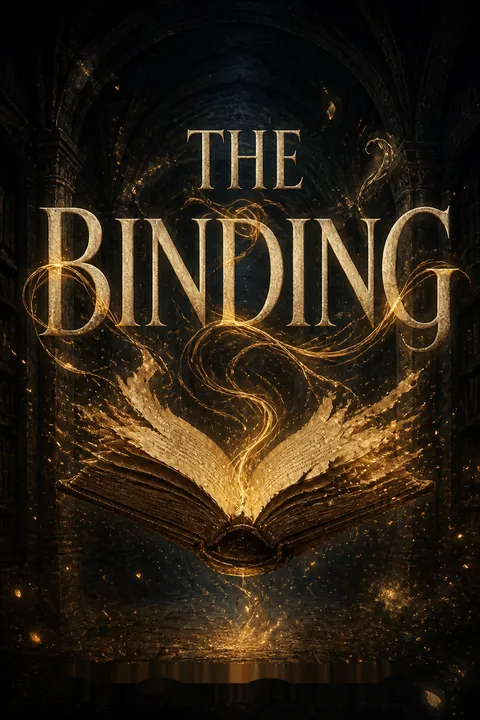


Plot Summary
A Farm Sends Emmett Away
Emmett Farmer has only partly recovered from an illness that left him hallucinating, weak, and frightened of his own mind. His parents receive a letter from Seredith, a binder on the marsh road, asking to take him as an apprentice. Emmett’s mother resists, but his father insists the farm cannot keep carrying him.
The decision recalls an older wound: as a child, Emmett bought a book at the Wakening Fair and was beaten after his parents discovered it. Now the same family that taught him books were shameful is sending him to make them. He leaves before the harvest is finished, carrying little more than clothes and the suspicion that his parents know something they have never explained.
The opening makes departure feel less like a vocational choice than the latest consequence of illness. Emmett measures his worth by physical labor, so his reduced strength becomes, in his eyes, a failure of character as well as body. His parents’ secrecy about books deepens that shame: the craft offered as a refuge is also something they taught him to fear. The farm’s practical logic and the family’s affection coexist uneasily, leaving Emmett unable to tell whether he is being cared for or discarded.
The Customer at the Window
Seredith welcomes Emmett into her weathered house and introduces him to the workshop, where leather, tools, and colored papers stir an unexpected sense of belonging. She warns him away from locked doors, especially the room where clients meet her, but he is not yet strong enough to ask why. Weeks later, a pale young man watches him through a workshop window.
Lucian Darnay says he has come for a binding, then questions Emmett with a desperation edged by hostility. Seredith interrupts and takes Lucian into the private room. Before Emmett can understand what he has witnessed, the familiar blackness of his illness returns. He wakes days later, tied to his bed, while Seredith sews pages for Lucian’s book.
The workshop gives Emmett a rare experience of fit: his hands and attention seem suited to a craft his family condemned. Lucian’s appearance disrupts that fragile recovery before either man can explain their connection. Emmett experiences his fear as illness, while the reader sees it attach itself specifically to Lucian and the locked room. The scene establishes the book’s central imbalance of knowledge: Emmett feels the force of a history he cannot remember, and Seredith chooses silence because she believes he is not ready.
A Fever With a Name
After five days unconscious, Emmett learns from Seredith that his episodes are binder’s fever, a dangerous reaction that can strike people with the gift for binding. The explanation gives his terror a name, but not a cause he can grasp. Seredith says the illness will pass and that Emmett may become an unusually capable binder.
He returns to simple workshop tasks, gradually regaining strength as autumn turns cold. Still, Seredith works behind locked doors and refuses to show him a finished book. Emmett hears Lucian’s name in his nightmares and senses that the hidden room is connected to both of them. His growing competence at the bench cannot quiet the question of what Seredith is doing there.
Naming the fever relieves Emmett of the idea that he is simply losing his sanity, but it also binds his identity to the very craft he fears. Seredith offers reassurance without full disclosure, a form of care that protects him while also controlling what he can know. The slow routine of finishing work steadies him because it turns anxiety into repeatable actions. Yet the locked room remains an unprocessed center of experience: his body registers its importance before his conscious memory can explain it.
Milly's Winter Arrival
As winter closes the road, Gytha arrives at Seredith’s house with her friend Milly, who is raving and resisting the journey. Gytha begs the binder to make Milly well, then waits in the workshop while Seredith takes Milly into the private room. Hours later, Milly emerges calm and recognizes Gytha, but her stillness feels less like recovery than absence.
Gytha takes her home, grateful and unsettled. Emmett has heard enough to understand that binding is more than decorative bookmaking, yet Seredith will not explain what happened. He sees that Milly’s pain has vanished from her face, but also suspects the procedure has removed something that belonged to her.
Milly’s transformation gives Emmett his first human evidence that Seredith’s hidden practice can relieve suffering. The apparent success is deliberately incomplete: Gytha’s relief is real, but Milly’s vacant calm makes the benefit difficult to separate from loss. Their contrast captures the ethical problem more sharply than abstract explanation could. Gytha wants her friend restored, even at a cost she cannot measure; Emmett, who fears losing control of himself, notices the cost precisely because the procedure’s result looks so peaceful.
The Book Beneath the Floor
After Emmett discovers an unlocked stairway beneath the workshop, he finds a sealed vault and a book block beside a cover decorated with a tiny skeleton made from mother-of-pearl. Seredith catches him and explains that binders do not put people into books. They remove memories that clients choose to surrender, then preserve those memories in a binding.
The skeleton belongs to Milly’s baby, whom Milly secretly buried alive after despair overcame her. Gytha’s father, the man who demanded the book be destroyed, had fathered the child and abused Milly. Seredith judged that Milly’s continuing life mattered more than forcing her to carry the memory alone. Emmett rejects the practice, but can no longer mistake it for harmless craft.
The mother-of-pearl bones make the hidden work materially beautiful and morally unbearable at once. Emmett’s first interpretation, that binders imprison souls, is wrong in its mechanics but perceptive about the danger of taking another person’s history into one’s custody. Seredith’s account complicates judgment: Milly committed a terrible act, yet her father’s violence and her desperation shape the circumstances without erasing responsibility. The scene asks whether relief can be humane when it also removes a person’s access to a defining truth.
Rain Against the Torches
Milly’s father returns with armed companions, oil, and a torch, demanding the book that holds his daughter’s memories. Seredith, shaken by memories of the old Crusade against binders, retreats inside and bolts the door, leaving Emmett outside with the men. They seize him and prepare to set the house alight.
Emmett warns them that the violence will stain their lives, speaking with a force that surprises him. Rain then breaks over the marsh, extinguishing the torches and scattering the attackers. Seredith lets Emmett back in and admits that fear had made her freeze. She says the books must be protected, though she still will not explain everything they contain.
The attack turns the village’s prejudice into a physical threat and tests the difference between Seredith’s craft and the superstitions surrounding it. Emmett’s apparent curse and the sudden rain invite a magical explanation, but Seredith rejects the idea that binders control weather. What matters is that Emmett acts while his mentor cannot, shifting their relationship from caretaker and patient toward mutual dependence. His courage does not resolve his doubts about binding. It does, however, make the bindery a place he has chosen to defend.
The Master Takes Over
The night after the attack, Emmett finds Seredith feverish and carries her to bed. When she becomes too weak to manage the workshop, he cleans and repairs the house, then enters the private binding room alone. Facing the two chairs, he finally weeps for the farm life he has lost and accepts that his hands belong to a different trade.
Seredith recognizes the change and promises to teach him the binding itself when she recovers, but she dies before she can. Her son, the polished binder known as de Havilland, takes control of the house, claims Emmett as his apprentice, and begins removing Seredith’s books from the vault. Emmett leaves the marsh for de Havilland’s commercial bindery in Castleford.
Emmett’s acceptance comes through grief rather than a lesson: alone in the room he feared, he mourns the life he imagined and recognizes the skill his hands have actually acquired. Seredith’s death deprives him of both a teacher and the person who could explain the craft on humane terms. De Havilland’s arrival turns that loss into institutional capture. The books are not merely possessions; whoever controls the vault controls the memories entrusted to the binder, and Emmett has little power to resist.
Emmett's Name in Leather
De Havilland sends Emmett to the wealthy Darnay household to bind Nell, a maid he describes as troubled. Nell did not ask for the binding; her employer, Piers Darnay, arranged it. As Emmett begins, he is swept through Nell’s memories and sees that Piers has repeatedly raped her, then had her memories removed so he could abuse her again without consequence.
Emmett finishes the binding, tells Nell to rest, and tries to escape. Lucian blocks the door, and their argument leads him to a stack of books delivered for his father. One bears Emmett’s name. When Lucian taunts him with it, Emmett seizes the book and throws it into the fire. Its burning returns the memories Emmett had been made to surrender.
Nell’s binding exposes the system’s central corruption: consent can be simulated by an employer who has already deprived a worker of practical freedom. Emmett’s first binding is therefore not simply a difficult apprenticeship task. It makes him an instrument of repeated abuse, and the memories force him to recognize the cost of his obedience. His book’s presence in the Darnay collection makes private experience legible as property. Burning it is an act of recovery, but one that also leaves Lucian physically and emotionally entangled in memories neither man can control.
A Girl Through the Ice
The story turns back to the winter before Emmett’s binding. While crossing the frozen moat at a ruined castle, Emmett finds his sister Alta stranded after the ice gives way. Lucian Darnay, a wealthy young man staying nearby, wraps her in his cloak and carries her home. Alta has deliberately risked the crossing to attract Lucian’s attention, and she quickly becomes infatuated with him.
Emmett, protective and suspicious of Lucian’s privilege, threatens him and orders him away. Yet Lucian continues visiting, adopts a vulnerable puppy named Splotch, and spends time with Alta as she recovers. Their growing familiarity forces Emmett to watch the stranger he mistrusts become a welcome presence at the farm.
The rescue gives Alta a romantic story to inhabit, while Emmett sees the same event as proof that she has put herself in danger for a rich stranger. Their different readings establish a family pattern: Alta seeks escape through fantasy, while Emmett tries to protect her by controlling access. Lucian’s class position sharpens the conflict, since his generosity can look like effortless power even when he is lonely and displaced. The puppy softens the household’s suspicions, but it also gives Lucian a reason to return.
A Stranger Joins the Farm
Lucian keeps coming to the farm, where Alta treats his visits as proof that he may love her. Their mother hopes a marriage could secure Alta’s future and asks Emmett to watch over them. Emmett obeys reluctantly, then finds himself enjoying Lucian’s company as they tend animals, repair fences, and search the woods for Splotch.
At the Wakening Fair, Lucian catches Emmett approaching a bookstall and explains that books contain real memories, sometimes sold for strangers to consume. Emmett realizes his parents’ fear was justified. Lucian offers him a paid position managing his estate, but Emmett refuses, unwilling to trade farm work for dependence on a man he does not trust.
The farm makes intimacy practical before it becomes romantic. Lucian earns trust through ordinary labor and care for the puppy, while Emmett’s wariness remains tied to real inequalities rather than simple prejudice. The fair’s revelation recasts Emmett’s childhood attraction to books as contact with another person’s life, not innocent reading. Lucian’s offer of employment could free Emmett from the farm, but it also risks placing him under Lucian’s authority. Emmett’s refusal protects his independence and conceals how strongly he is beginning to want Lucian near.
A Proposal Turns Sideways
After a period away, Lucian takes Emmett to the ruined castle and says he intends to ask Alta to marry him. Emmett tells him not to, exposing the desire he has tried to disguise. Lucian kisses him instead, and the two begin a secret relationship in the place where they first met.
Lucian admits he had prepared an engagement ring for Alta, then gives the silver-and-stone band to Emmett. They agree that no one can know, especially not Alta. Their stolen meetings bring Emmett a happiness he has never experienced, but Lucian’s public attention remains fixed on Alta so the family will not suspect. The ring becomes a private promise worn beneath Emmett’s clothes.
The proposal is a hinge because it forces Emmett to stop presenting jealousy as mere protectiveness. Lucian’s kiss answers the truth Emmett cannot say plainly, but secrecy immediately makes their love dependent on the very performance that hurts Alta. The ring intended for one sibling becomes a hidden emblem for the other, turning a conventional marriage token into evidence of a life the surrounding world cannot recognize. Their happiness is real, yet its concealment creates the conditions for betrayal and makes every family gathering a performance.
Alta Finds the Secret
Lucian’s father summons him back to Castleford, and Emmett returns alone to a household already strained by Alta’s hopes. Alta eventually discovers the lovers at the ruins after Emmett hides a boot to get time alone with Lucian. She tells their parents what she saw and identifies Lucian’s gift, the painted egg, as proof of their intimacy.
Emmett’s parents condemn him and demand that he renounce Lucian; Alta’s heartbreak hardens into anger. Piers Darnay sends his agent Acre to offer Emmett money and a binding that will erase the affair. Emmett refuses. Acre later ambushes him before dawn, threatens Alta, and has Splotch beaten to death when Emmett will not cooperate.
Alta’s betrayal grows from a real wound, but the family’s reaction converts heartbreak into a moral prosecution of Emmett’s identity. Their demand that he return to being an acceptable son offers belonging only on the condition that he deny what he wants. Piers’s proposed payment extends that logic into the market: memory can be erased, and social damage priced. The killing of Splotch makes the threat brutally concrete. Emmett’s choice will no longer concern private grief alone; refusal may expose his sister to violence.
The Memory He Surrenders
Acre forces Emmett into a cart with the injured Alta and Splotch’s bloodied body, then drives him toward Seredith’s bindery. He tells Emmett to claim the binding is voluntary and to conceal the threat. Emmett, devastated and convinced that Lucian may have treated their affair as one of several, tries to hold onto the last details of their time together.
At the house, he asks to forget Lucian and enters the quiet binding room. He cannot keep himself separate from the memories as the process begins. The narrative then returns to the earlier apprenticeship, revealing that this surrender left Emmett feverish and without the history that would later make Lucian’s presence feel like a wound without a name.
The binding is coercive even though Emmett voices the request himself. Acre has engineered a situation in which consent is extracted through threats against Alta and the dog, making the ceremony’s formal rules inadequate protection. Emmett’s attempt to preserve one memory while surrendering the rest shows how he understands identity as something that can be rationed under duress. The narrative’s return to the apprenticeship reframes his illness: what seemed like an unexplained collapse is the bodily cost of a memory removed before he could integrate its loss.
Lucian's Inherited Silence
After Emmett’s book burns, Lucian watches him collapse and feels the force of the memories without understanding why they affect him. Piers orders servants to remove Emmett, then tells Lucian that he has just completed Nell’s binding for him. Lucian confronts his father’s use of the maids and tries to warn Nell that Piers has abused her and erased her memories.
Piers turns the warning into a cruel demonstration, describing the assaults while Nell can neither remember nor accuse him. He then reveals that Lucian himself was bound a little over two months earlier, and says the memories in that book are terrible. Lucian has no access to the truth about his own actions.
Lucian’s father uses memory control as both private indulgence and social immunity. Nell’s inability to recognize the abuse does not make her safe; it makes her testimony structurally unavailable. Lucian’s attempt to intervene is compromised by his own ignorance, since he cannot know whether he is acting from compassion, guilt, or a history he has lost. The disclosure that he too has a book destabilizes his self-image. Piers offers no evidence, only authority, and Lucian must confront the possibility that his apparent innocence is another effect of erasure.
Nell's Last Testimony
Lucian tries to tell Nell what Piers has done, but she cannot recover memories she no longer possesses. Soon after, he finds her hanging in his father’s study and cuts her down, injuring his own hand on broken glass. Piers presents the death as a household misfortune and treats Lucian’s wound as useful evidence of concern.
When Lucian accuses him of starting another binding, Piers confirms that Lucian’s own memories were removed and warns him not to investigate. Lucian knows only that the hidden history is bad enough to frighten his father. He is left with Nell’s death, a question about his own past, and the suspicion that his family has made forgetting part of its routine.
Nell’s death makes the limits of disclosure painfully visible: telling someone the truth cannot restore a memory that has been taken, and it may deepen the person’s distress without giving them usable knowledge. Piers responds by managing appearances, converting Lucian’s injury into a prop for a respectable story. Lucian’s uncertainty is therefore not neutral; his father controls the evidence and the interpretation at once. The scene turns guilt into a problem of epistemic power: Lucian cannot judge himself when the past has been removed and its custodian is abusive.
A Key Bought in Secret
Lucian tracks down de Havilland, who refuses to help him locate Emmett or his own binding. Later, Lucian witnesses Acre and another man drugging de Havilland in an alley, then carrying him away as part of a plan to burn the bindery. While they are distracted, Lucian steals the bronze key to Seredith’s vault.
He finds Emmett in Castleford and persuades him to guide him back to the marshes. Their ride ends at the bindery, where the vault stands empty: de Havilland has already removed its books. In the cold workshop, Emmett tends Lucian’s cut hand, and their closeness briefly returns. Lucian leaves at dawn for the wedding he has not yet decided to abandon.
Lucian’s theft is an act of partial resistance, but it is purchased through silence: he does not stop Acre from taking de Havilland, and the bindery’s destruction remains possible. The empty vault denies him the clean recovery he hoped would settle his identity. Meanwhile, Emmett’s practical care for his hand restores a form of intimacy that neither man can safely name. Their tenderness does not erase the betrayal between them; instead it makes their unresolved dependence more difficult to deny.
The Wedding Loses Its Groom
At the wedding, Lucian recognizes Lord Latworthy among the guests and understands that the collector has read his bound memories. He cannot proceed with the ceremony and slips away from the hall. Emmett, who has come to see him before leaving for a new binding job, finds him outside. Lucian admits he has run from the wedding, while Emmett explains that Latworthy owns the book de Havilland delivered.
They hire a cab to the estate and enter through the servants’ passage with help from a maid Emmett knows. Lucian finds his gray-green volume behind a metal grille in the library. Emmett urges him to burn it, but Lucian refuses, still believing the memories may contain something unforgivable.
The wedding makes Lucian’s social future visible as a choice between performing respectability and confronting the past that performance conceals. Latworthy’s presence transforms that abstract fear into a witnessed violation: someone has consumed Lucian’s private life as a collectible. Emmett’s return offers help without promising absolution. Yet Lucian still treats the book as a potential indictment, not a source of self-knowledge. The barred case gives that fear a literal form, placing the truth within sight but beyond reach.
The Library Catches Fire
With Latworthy expected back, Emmett decides that the only way to release Lucian’s book is to burn the library around it. The fire spreads rapidly through the collection, and Lucian climbs into the smoke to force open the grille. As he searches among the volumes, his fear breaks open into memories of abuse, complicity, and actions he cannot yet distinguish from what his father made him believe.
Emmett reaches him as the upper floor begins to collapse. Lucian’s book burns before he can retrieve it, releasing his memories and restoring the truth of his life. The other bindings in the library burn too, sending many stored memories back to the people they belonged to.
The fire reverses the familiar image of censorship: here, destroying books releases rather than suppresses the people trapped in them. But the act is not uncomplicated liberation. Emmett chooses for Lucian, overriding his stated refusal, and risks releasing traumatic memories across the collection. The climax therefore places love beside a serious ethical violation. Lucian’s recovered past cannot be reduced to a verdict of innocence or guilt; its first gift is the ability to distinguish his own experience from the story Piers imposed on him.
Memory Returns to the Living
Lucian wakes outside the burning library with Emmett beside him, his body hurt by smoke and his mind crowded with the life he had lost. He remembers their love, the farm, and the betrayals that separated them, along with painful truths he must now face. Emmett admits that he had not known whether Lucian’s memories would return safely.
Lucian apologizes for leaving him and for his earlier cruelty; Emmett does not pretend the damage has vanished. The two take each other’s hands as a carriage approaches through the trees. Around them, the memories released by the fire are returning to their owners. They leave the library behind with their histories restored, but no easy repair for what those histories contain.
The ending refuses the fantasy that recovered memory automatically heals its owner. Lucian and Emmett regain the conditions for honest choice, not a guarantee of forgiveness or safety. Their joined hands matter because they are offered after the truth has returned, rather than in the protective numbness of forgetting. The approaching carriage leaves their next practical step unresolved, while the released memories widen the consequence beyond the couple. The novel’s final hope is not innocence restored, but a chance to live without another person controlling the story of who one is.
Analysis
The Binding makes memory a material object so that questions usually treated as private become political. A person can consent to relief from trauma, but the novel shows how consent changes meaning when employers control food, shelter, reputation, or physical safety. Nell’s repeated bindings make the system’s worst abuse legible: forgetting does not end violence when an abuser can purchase the conditions for its repetition. Seredith’s practice offers a countermodel, yet even her care carries risk because preserving a memory in a vault places the binder in custody of another person’s past. The split chronology turns that ethical problem inward. Emmett first experiences himself as an invalid who has been sent away, then as a skilled apprentice, and only later learns that a stolen history shaped his illness and his attachment to Lucian. Lucian faces the inverse problem. He has social power and outward confidence, yet his father’s control over memory has made his own self-knowledge unreliable. Their romance is therefore not simply forbidden by class and family. It is built across unequal access to truth, and each man must decide whether trust can survive after one has acted without the other’s consent.
Books carry a second contradiction. They can preserve lives with beauty and precision, but they can also let strangers consume suffering while the people involved remain silent or unaware. The fire at Latworthy’s library offers release, not a clean cure: memories return without undoing the harm that was done, and the lovers still have to face the past rather than substitute forgetting for repair. The novel’s deepest claim is not that painful memories must always be kept. It is that the authority to remove, preserve, or return them cannot be separated from the power to define another person. Love matters here because it can make someone brave enough to remember, but it does not make choosing for them harmless.
Review Summary
The Binding by Bridget Collins presents a unique premise where books contain extracted memories rather than stories. Reviews are deeply divided: many praise the poignant romance, atmospheric writing, and fascinating concept of binding memories into books, calling it spellbinding and beautifully crafted. Critics note the slow pacing, particularly in Part One, lack of world-building explanation about how binding works, and disappointment that the fantasy premise becomes primarily a gay romance with dark themes. Common complaints include underdeveloped characters, unanswered questions about the binding system, and excessive focus on the romantic relationship at the expense of exploring broader societal implications. Overall rating: 3.85/5 stars.
People Also Read

Characters
Emmett Farmer
The reluctant binderEmmett is a farmer’s son whose sense of worth depends on being useful, strong, and able to carry his share of the work. Illness disrupts that identity before he understands what is happening to him. He is observant, stubborn, and more tender than his blunt manner suggests, especially toward his younger sister, Alta. His attraction to books and his aptitude for binding put him at odds with his family’s fear of the craft. Emmett distrusts power that asks for obedience without explanation, yet his desire to protect people can lead him to decide for them. His central tension is between a genuine wish to ease suffering and the danger of becoming an instrument of someone else’s control.
Lucian Darnay
The guarded heirLucian is a wealthy young man accustomed to being observed, indulged, and treated as an extension of his family’s status. His cultivated manners often conceal impatience, loneliness, and a sharp awareness of how money can purchase other people’s silence. He can be teasing and generous, but his defensive pride makes him capable of cruelty when he feels exposed. Lucian longs for attachment while assuming that intimacy will eventually become another form of leverage. His relationship with Emmett unsettles the polished identity he performs around his family. He is drawn to honesty, yet fears what the truth might demand of him.
Seredith
The austere mentorSeredith is an elderly binder who lives far from town and treats binding as a solemn act of care rather than a commodity. Blunt, patient, and protective, she teaches through craft and routine, allowing Emmett to regain confidence with his hands. Her secrecy is not simple coldness: she has witnessed what people can do with memories and knows that an apprentice may be harmed by learning too quickly. She believes that painful memories can sometimes be carried more safely in a book, but she understands that the decision belongs to the person who bears them. Her moral seriousness sets her apart from binders who value access, prestige, or profit.
Alta Farmer
Emmett's impetuous sisterAlta is Emmett’s younger sister, lively, clever, and impatient with the narrow future her family’s farm seems to offer. She wants romance and a life beyond familiar chores, and she is quick to turn a dramatic moment into evidence that her hopes are destined to come true. Her closeness with Emmett gives her an intimate knowledge of his habits, but sibling loyalty does not prevent resentment when she feels overlooked or betrayed. Alta’s emotional boldness contrasts with Emmett’s guarded protectiveness. She is not merely a romantic rival: her choices are shaped by the limited prospects available to a young woman in her position.
Piers Darnay
The respectable predatorPiers Darnay is Lucian’s wealthy, influential father, a man who turns social standing into protection from scrutiny. He speaks in measured, paternal tones while expecting obedience and treating other people’s private lives as possessions. His collection of bound memories reflects a broader appetite for control: he wants access to experience without accepting responsibility for the people who lived it. Piers is skilled at making coercion look like generosity and at making family loyalty feel like a debt. His power rests not only on money, but on the willingness of institutions and household workers to preserve his reputation.
De Havilland
The commercial binderDe Havilland is a prominent binder who presents himself as modern, influential, and more sophisticated than rural practitioners. He values professional status and access to wealthy clients, and he treats the physical labor of making books as beneath the binder’s supposedly elevated art. His confidence masks a willingness to bend the craft toward commerce. In contrast with Seredith, he speaks of efficiency and prestige more readily than trust, leaving apprentices and clients vulnerable to the priorities of powerful patrons.
Acre
The family enforcerAcre is Piers Darnay’s agent, entrusted with managing trouble that money and persuasion cannot quietly remove. He is calm, courteous, and threatening in the same breath, using the language of assistance to disguise coercion. Acre understands that binding depends on consent and therefore engineers circumstances in which refusal carries a cost. His professional obedience makes him dangerous: he treats other people’s fear as a practical tool rather than a reason to stop.
Nell
The silenced maidNell is a young servant in the Darnay household, economically dependent on the people who control her work, shelter, and safety. Her quietness is often mistaken for passivity, but it reflects how little room she has to refuse those above her. She is a person with preferences and a private inner life, not merely a client in need of relief. Her circumstances expose the danger of treating a powerful employer’s request as evidence that a binding is freely chosen.
Hilda Farmer
The anxious motherHilda is Emmett and Alta’s mother, practical and loving, but shaped by a fear of books and the harm they can carry. She wants her children safe and believes a settled life depends on avoiding scandal. That concern can make her compassionate, yet it also makes her willing to ask Emmett to silence parts of himself for the family’s comfort. Hilda’s choices reveal how protection can become a form of pressure when fear is allowed to decide what another person may be.
Robert Farmer
The burdened fatherRobert runs the family farm and measures survival in completed work, repaired machinery, and provisions carried through winter. He cares about Emmett, but the household’s finances and his own fear of books shape his treatment of his son. Robert’s authority is physical and practical, unlike the distant social power of the Darnays. He wants his children to remain within the bounds he understands, even when those bounds cannot give Emmett a future.
Gytha
Milly's steadfast friendGytha brings Milly to Seredith because she cannot bear to watch her friend suffer any longer. She distrusts the binder and fears the cost of the procedure, yet her devotion outweighs that suspicion. Gytha embodies the painful position of a loved one who wants to help but cannot decide what another person should be made to forget.
Milly
A grieving clientMilly is a young woman in crisis whose history is obscured by family violence, isolation, and an act she cannot bear to remember. Her story prevents easy divisions between guilt and victimhood. She is not reducible to the worst thing she has done, nor does suffering erase the gravity of it. Her visit to Seredith reveals why some people seek binding as a last means of continuing to live.
Honor Ormonde
The perceptive fiancéeHonor is Lucian’s intended bride, navigating an engagement shaped by family expectations and the need to protect her own future. She notices that Lucian’s composure does not mean he wants the life being arranged for him. Her directness contrasts with the ornamental role society expects her to play. Honor asks for kindness and honesty rather than a grand romantic performance.
Lord Latworthy
The wealthy collectorLord Latworthy is a privileged collector whose interest in bindings reflects the upper classes’ appetite for other people’s private experiences. He treats intimate memory as an object of connoisseurship, sheltered from the consequences borne by the person remembered. His status gives him access to both binders and their books, making his curiosity part of a larger market for human pain.
Lord Archimbolt
The absent landlordLucian’s uncle owns the New House and the land around the ruined castle. His property and title shape the boundary between the Darnays and the Farmer family, while his decaying estate carries traces of older privilege.
Splotch
The farm's small terrierSplotch is the runt of Springle’s litter, adopted by Lucian when the farm cannot keep every puppy. Her energy and affection give Emmett, Alta, and Lucian a shared reason to spend time together.
Plot Devices
Memory bindings
Pain sealed in booksA binder enters a willing client’s memories and records the chosen experience in a book, allowing the client to leave without remembering it. The procedure can offer relief from unbearable trauma, but its ethical promise depends on genuine consent. The story shows how employers and wealthy patrons exploit the practice, arranging bindings that protect abusers or let them repeat their crimes. Each book therefore functions both as a crafted object and as evidence of a person’s lost history.
Binder's fever
The body resists the craftPeople with a talent for binding may suffer a dangerous fever, hallucinations, and episodes of terror. Seredith calls it a condition of the calling rather than proof of madness. Emmett’s illness is especially severe, and the gaps in his memory make it hard for him to understand what has happened to him. The fever links his physical suffering to the hidden mechanics of the craft while giving his early fear a plausible explanation within the story’s world.
Trade bindings and novels
Private pain becomes a marketSome bindings are made for the people whose memories they contain; others are sold or collected for readers seeking access to real lives. The trade turns private suffering into entertainment and rewards binders who serve wealthy clients. Alongside genuine bindings, invented books called novels imitate the form without containing anyone’s actual memories. This distinction lets the story examine why people value a story more when they believe it is true, and how the desire for authenticity can become voyeurism.
Vaults and keys
Memory under lock and keyBinders store completed books in guarded vaults, where the physical security of a volume protects the memory it contains. The vault makes abstract control tangible: whoever possesses its key can determine who may read, keep, or transfer another person’s experience. Seredith’s insistence on safeguarding her books contrasts with commercial binders and collectors who treat them as assets. The bronze key later gives Lucian access to the search for his own history, though access alone cannot ensure he will recover it.
Books set alight
Fire releases what was sealedWhen a bound book burns, the person whose memories it contains remembers them again. This makes fire both a threat to the binder’s archive and a means of restoring lives that have been taken or sold. The consequence is uncertain and potentially painful: recovered memories may include trauma, grief, or guilt. The novel repeatedly turns the familiar fear of book burning inside out, making the destruction of a collection a possible act of liberation while preserving the moral danger of choosing for someone else.
Download PDF
Download EPUB
.epub digital book format is ideal for reading ebooks on phones, tablets, and e-readers.








