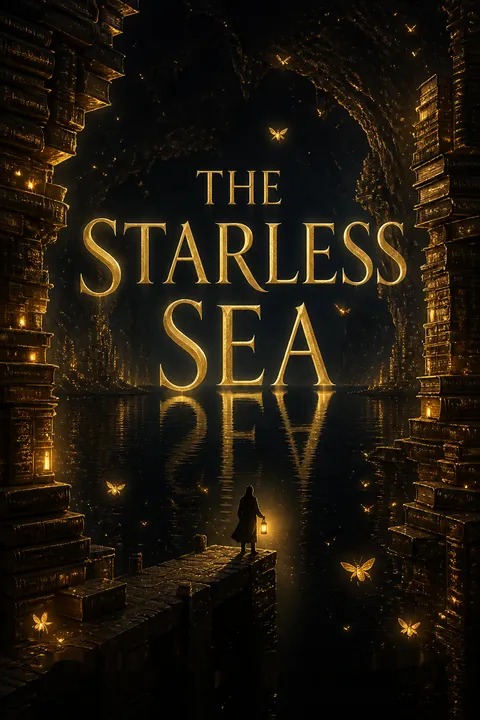


Plot Summary
Prologue
A pirate waits in a cell for execution while a young woman brings him food, then wine, and finally her company. They never speak until the last night, when she asks for a story. He gives her many, and after he finishes she takes the key from its hook and frees him.
Their escape begins with a kiss, but the tale warns that their lives will circle through separation and reunion. The pirate’s story introduces the book’s deep grammar: a locked door, a tale passed between people, and a choice that can change what comes next.
The opening makes storytelling an act of intimacy and a practical form of resistance. The girl does not rescue the pirate through strength or argument; she first learns how to remain near him, then gives him the key when she decides the story must continue. Their silence leaves room for the reader to interpret their bond, while the final promise of repetition makes love feel both enduring and precarious. This small scene also establishes the novel’s method: images and roles recur, but each return can alter the outcome. A story is not merely preserved here. It is a door that someone may choose to open.
The Book Knows Zachary
In January 2015, graduate student Zachary Ezra Rawlins checks out an authorless volume called Sweet Sorrows from his university library. Its opening tales describe a pirate and a secret underground refuge, but a later passage recounts a boy exactly like Zachary, including the day at eleven when he found a painted door in New Orleans and walked away.
The book even remembers details Zachary never told anyone. When he peels the faulty library barcode from its back cover, he finds the same bee, key, and sword painted on the childhood door. Zachary has spent years wondering what lay behind it. Now a book has turned that old regret into a present-tense mystery, and he cannot return it to the shelf and forget.
The book does not simply predict Zachary. It gives narrative weight to an ordinary childhood hesitation he has privately replayed for years. That recognition unsettles the boundary he depends on between imagined stories and lived experience. His immediate response is not heroic certainty but compulsive rereading, a reader’s attempt to control a text by studying it. The scene also makes his regret specific: he did not fail because a villain blocked him, but because he protected himself from disappointment. The novel’s central question begins there, with whether a person can enter a story after once declining its invitation.
The Masquerade Breadcrumb
Library assistant Elena traces Sweet Sorrows to a private donation from the Keating Foundation, but the other donated books reveal no clear connection. One volume of mythology disappears while Zachary is searching it, then resurfaces in the hands of Dorian, a watchful stranger who has been following him.
Online, Zachary finds a photograph of a masked woman wearing the bee, key, and sword necklace, and learns she may attend the Algonquin Hotel’s literary masquerade. He travels to New York carrying the book and meets Mirabel, dressed as the king of the wild things, who dances with him before slipping away. A masked storyteller then leads Zachary through a dark corridor and leaves him a midnight appointment at the public library.
Zachary’s academic habits become the tools of an investigation: catalog searches, image searches, and attention to small discrepancies move him toward an encounter he cannot explain. Yet the clues are not a clean puzzle trail. The vanished mythology book and the masked woman keep withholding certainty, making his search depend on trust as much as evidence. The party also gives him his first contact with Mirabel and Dorian through performance rather than formal introduction. Masks do not conceal the story so much as make it possible for people to approach one another before they know what role they are playing.
A Borrowed Book Swap
At the appointed meeting, Dorian returns Sweet Sorrows and explains that a secretive Collector’s Club is tracking Zachary and the book. He recruits Zachary to enter its Manhattan headquarters with the missing mythology volume as a decoy, then exchange it for a small brown book from a locked display case.
Zachary follows Dorian’s instructions, evades the club’s young attendant, and escapes through a rear garden with the recovered book. Allegra Cavallo, an elegant woman in white fur, tries to persuade him to abandon the matter and go home. He refuses. Dorian takes him through Central Park to a painted door, where someone splashes gold paint across Zachary’s back as he passes through. The door vanishes behind him, leaving Dorian outside.
The heist converts curiosity into commitment. Zachary is no longer interpreting a text from the safety of his dorm; his choices now place him inside a conflict between people who claim to protect the same hidden place. Allegra offers a plausible alternative, safety and ordinary life, but Zachary rejects it because he has already felt the cost of turning away from a door. Dorian’s willingness to enlist him remains ethically uncertain: he gives instructions but little context. Zachary nevertheless acts, improvising when the plan becomes unstable. His first passage into the extraordinary is therefore also a decision to accept responsibility without knowing its full price.
The Harbor Below
An ornate elevator carries Zachary deep underground to a chamber where dice and a drink serve as an entrance test. He rolls six hearts, drinks the honeyed liquor, and enters a vast Harbor of books, rooms, cats, and broken clockwork. The Keeper, its formal custodian, records Zachary’s arrival and gives him a compass that points back to the Heart.
Zachary learns that the painted doors lead to this sanctuary, though this Harbor is nearly empty and deteriorating. Mirabel appears and confirms that Dorian has been taken by Allegra’s organization, who intend to use him as bait. She invites Zachary to help retrieve him. The refuge he entered through a book is real, but its welcome is inseparable from an urgent rescue.
The Harbor makes the novel’s imaginative promise material, then immediately complicates it with decay. Its library is not an untouched paradise; it is a place whose lights, rooms, and communities have already begun to fail. Zachary’s entrance test is less a measure of worth than a first act of participation, shaped by chance and appetite. The Keeper offers orientation but not explanation, preserving the Harbor’s rules without making them transparent. Mirabel’s arrival redirects Zachary from passive wonder to action. The sanctuary becomes meaningful not because it is perfect, but because people and stories within it are at risk.
Tea and the Fire
At the Collector’s Club, Mirabel finds Dorian suspended in a net of ribbons, but Allegra’s people capture Zachary before the rescue is complete. Allegra ties him to a chair, serves him tea, and threatens his mother to force him to reveal what he knows about Sweet Sorrows. She argues that closing the Harbor’s doors protects it from a world that would exploit it.
While Allegra interrogates him, Mirabel cuts the lights and reaches Dorian in a hidden room. The pair free him, carry him through a concealed door, and set fire to the club’s records and paintings to delay pursuit. Zachary has also drunk poisoned tea, so once they return below, Mirabel gives him a remedy from the Kitchen and keeps watch until he recovers.
Allegra’s threat makes preservation personal: she uses Zachary’s love for his mother to enforce a policy that treats access as danger. Her case is not wholly incoherent, which is why the conflict is more than a simple contest between freedom and cruelty. Yet her methods reveal the cost of turning protection into control. Mirabel answers with improvisation, breaking the system’s routines rather than confronting it on its own terms. The rescue also binds Zachary and Dorian through shared peril, while Zachary’s poisoning exposes how little he understands about the world he has chosen to enter.
Three Things Lost
Back in the Harbor, Zachary explores its neglected rooms and discovers that a candle hides the entrance to a burned chamber containing the ruined remains of a dollhouse universe. A note directs him to the Queen of the Bees, whose statue conceals stairs into a crypt.
There, memory-covered bodies surround fragments of a disintegrating book that identify three things lost in time: a book, a sword, and a man. Rhyme, a silent acolyte, leaves Zachary a second manuscript, The Ballad of Simon and Eleanor.
He and the recovering Dorian read it together. The tale follows Simon Keating, who entered the Harbor through a cottage, and Eleanor, a child who arrived through a ruined door. Their meeting crossed time, and their story may explain the missing man.
The clues turn the Harbor into an archive whose gaps are as consequential as its books. The burned dollhouse shows that an entire miniature world can be lost, while the crypt’s bodies preserve identity in fragments rather than complete biographies. Zachary’s search now depends on connecting damaged records, and Dorian’s shared reading makes the investigation intimate as well as practical. The phrase identifying a lost man changes the goal from recovering objects to finding a person. Rhyme’s silent assistance suggests that preservation is not the same as hoarding: sometimes a story must be released from a guarded shelf to reach the person it concerns.
Simon and Eleanor
Simon’s manuscript reveals how he came to the Harbor. Raised by an uncle who despised his dead mother, he receives a key on his eighteenth birthday and finds her hidden cottage, which opens onto the underground refuge.
There he meets Eleanor, a child who had fallen through a door years earlier. A room outside ordinary time lets them encounter one another at different points in their lives; they fall in love, but the passage separates them again. Eleanor later raises their daughter, Mirabel, alone.
Simon searches for Eleanor and loses his memory among the Harbor’s deepest passages. Reading the story, Zachary and Dorian recognize that Simon is the man named in the crypt’s clue, while the novel’s scattered fables begin to converge around the Keatings.
Simon and Eleanor’s romance is shaped not by distance across geography but by incompatible access to time. Their connection is real, yet the Harbor’s temporal openings make ordinary continuity impossible. The child born from their meeting helps explain why the Keating name appears across books, donations, and hidden plans. This history also reframes the Harbor’s mysteries as consequences of relationships, not merely supernatural puzzles. Simon’s loss of memory is a particularly severe form of displacement: he remains within the story’s world but can no longer reliably recognize his place in it. The book becomes his external memory, waiting for someone to return it.
The Heart Splinters
The Harbor’s central clockwork collapses as Zachary, Dorian, Mirabel, and the Keeper confront Allegra. She raises a gun against Dorian, but the Keeper redirects her wrist; the bullet strikes the machinery instead. The pendulum and golden mechanisms smash through the tiled floor, opening a chasm. Allegra grabs Dorian’s coat as the ground gives way, and both fall into the depths.
Zachary is left screaming while the Keeper holds him back. The Keeper believes Mirabel has also been lost in the collapse, but she later reappears, battered and alive. She takes Zachary in the damaged elevator toward an older Harbor, revealing that Allegra once raised her and now tries to close the painted doors Mirabel creates.
The collapse makes the Harbor’s failing infrastructure visible as a physical crisis. Allegra’s attempt to stop Dorian instead destroys the mechanism that orders the place, turning a conflict over access into an immediate threat to everyone inside. The Keeper’s intervention shows that his loyalty is not simply to rules; he acts when a person’s life is at stake. Mirabel’s history with Allegra adds grief to their opposition. Allegra once gave her care and purpose, but later treated her as a danger. The novel portrays control as a response to anticipated loss, one that can bring about the very ruin it hopes to prevent.
Dorian in Honey
Dorian survives the fall by landing in the Starless Sea, which has become a vast, glowing body of honey. Eleanor, now captain of a lantern-lit ship, pulls him aboard and explains that the depths reshape a person according to the stories they carry. A sword appears tattooed on Dorian’s chest, matching the guardian tradition described in Sweet Sorrows.
Eleanor guides him to an inn at the edge of the world, where its innkeeper gives him a hidden box left by his wife. Dorian opens it with a small silver mouse and discovers Fate’s beating heart inside. Armed with the heart and a sword, he leaves the inn to find Zachary, crossing a landscape that turns his memories into traps.
Dorian’s survival depends on accepting a world where stories can become bodily fact. The sword on his chest is not an official credential bestowed by an institution; it emerges from what he has come to believe about himself. Eleanor’s ship likewise embodies a story she has made navigable through practice. The heart in the box gives Dorian a concrete purpose, but it also tests what he believes about attachment and responsibility. He leaves the inn despite its safety because comfort without the person he seeks has become insufficient. His journey through hostile illusions mirrors his earlier choice to stop living by Allegra’s commands.
The Man in the Temple
After the collapse, Zachary wanders through the ruined lower city and falls into darkness, where a voice insists that the Harbor and its people are fantasies born from his failure. Simon finds him and leads him to a candlelit temple assembled from statues, ropes, keys, and pages. Simon has been trying to record the story he hears in the depths, but time has stripped away his name and much of his past.
Zachary gives him The Ballad of Simon and Eleanor, helping him recognize the life that has been lost inside his own. Simon explains that the Owl King is less a single ruler than a force announcing change. He points Zachary toward the Starless Sea, while a small owl delivers a folded page about the next part of the story.
The darkness attacks Zachary through a voice tailored to his private fear that his life has been empty and that he has imagined meaning to compensate. Simon’s presence does not defeat that fear by argument; it gives Zachary a person to protect and a story to share. Returning Simon’s manuscript restores enough identity for him to act, though not enough to make time orderly. The Owl King’s description shifts the threat away from a conventional villain and toward change itself, arriving before anyone can control its form. The scene makes remembering an ethical act: Zachary’s reading helps another person recover a life the world has nearly erased.
The Door in the Snow
A path through snow brings Zachary to an apparent version of his mother’s farmhouse, where a familiar Dorian claims they have shared years together and suggests Zachary’s memories of the Harbor are illness. Zachary recognizes the scene as a story engineered from his desire for home and refuses to stay, even though it offers warmth and belonging.
In another stretch of snow, he briefly meets the real Dorian across a temporal distance and gives him the sword. A golden-antlered stag then leads Zachary to an icy likeness of Mirabel. She presses a key into his chest, leaving a burn-shaped mark, and the scene returns him to the New Orleans alley where he once refused the painted door. This time he turns its knob and enters.
The false farmhouse is dangerous because it offers not terror but the life Zachary might have wanted: a stable relationship, family warmth, and an explanation for his confusion. He escapes by recognizing that comfort can be another form of confinement when it requires him to deny his own experience. His brief contact with Dorian gives him a reason to keep moving, though it cannot provide a shared present. The key burned into his chest converts the old childhood failure into a new choice. Zachary does not erase the boy who walked away; he returns to the same image and acts differently.
A Fatal Reunion
The painted door leads Zachary through the deep caverns to the Starless Sea, where honey covers the shore and remnants of old Harbors lie scattered. Dorian has been fighting creatures that borrow the faces of people he loves, and when Zachary appears, Dorian cannot tell that this is finally the real man. He strikes with the sword and kills him.
Zachary wakes dead on a different shore, surrounded by a paper sea, cardboard castle, and stars folded from pages. He finds a small rowboat and rows toward a distant city built from the dollhouse world he once saw in Sweet Sorrows. The journey carries him away from the Harbor’s literal ruins and into the story’s final, fragile landscape.
The reunion fails because Dorian’s survival strategy has taught him not to trust appearances, even when the person before him is the one he most wants to find. The mistake is tragic precisely because both men have been acting to stay alive and reach each other. Zachary’s death does not end his movement through the story; it changes the medium around him, from stone and honey to paper and miniature construction. That shift makes the novel’s central problem newly concrete: a world can be made from stories, but its figures still suffer consequences. The paper sea is beautiful, yet it cannot offer an easy escape from loss.
The Bees Need an Ending
In the dollhouse, giant bees recognize Zachary as the key the story sculptor promised would arrive. They explain that he has brought the tale to its ending and offer him a drink and a place to wait. Zachary refuses to accept an ending without seeing Mirabel again, so the bees build a ballroom where he can meet her.
Their explanation reveals that the Kitchen, which has comforted him throughout the Harbor, is the same community of bees. The small meals and notes that once steadied him were not incidental kindness; they came from the very custodians waiting for the story’s conclusion. Zachary accepts their invitation to the ballroom, though the rising honey already threatens the dollhouse around him.
The bees give Zachary a role that is both empowering and frightening: he is not merely a visitor, but the key meant to bring a long-contained story to its conclusion. His bond with the Kitchen complicates the machinery of fate with care. The bees have fed, answered, and comforted him, so their function is not impersonal even when they insist the ending has arrived. Zachary’s refusal is not simply denial; he asks for a final encounter that can make the ending emotionally legible. The scene distinguishes closure from abandonment. An ending may be necessary, but the people inside it still deserve recognition and farewell.
The Last Dance
In the bees’ waxen ballroom, Zachary dances with Mirabel, who admits that she has spent lifetimes trying to bring the scattered story to this point. She explains that she can offer doors and possibilities, but cannot dictate what people choose. Their dance gives Zachary a chance to thank her and say goodbye.
Mirabel draws a door in the ballroom wall and leaves through it, while the honey rises through the collapsing dollhouse. Zachary cannot reach the rowboat before the sea engulfs the miniature world and pulls him under. Above, Rhyme and the Keeper lead the remaining cats through a hidden door, allowing the old Harbor to return to the Sea with its books and stories.
Mirabel’s final conversation rejects the comforting idea that an immortal guide can arrange a perfect plot. She has shaped opportunities, but Zachary’s choices remain his own, including the choice to tell his story and enter the door as a child. Their dance acknowledges affection without making it a promise of possession. The Harbor’s destruction is not framed as a defeat to be reversed; the Keeper and Rhyme evacuate those they can, while the place itself returns to the Sea. The scene makes change costly and necessary at once. Preserving a world forever would also mean preventing it from becoming anything else.
A Heart Given Back
Dorian reaches the sea with the boxed heart he recovered at the inn and finds Zachary’s body aboard Eleanor’s ship. The old Harbor is sinking, and Dorian has no certainty that the heart can bring Zachary back. He opens the box and offers its beating center to the man he has crossed the depths to find.
Zachary wakes with a living heart, and the two men finally recognize each other without masks, false memories, or borrowed faces between them. Their reunion turns the novel’s recurring near-misses into a beginning rather than another cycle of separation. Above, the Keeper and Rhyme escape the flooding Harbor, carrying a cat and the stories they can preserve.
Dorian’s act converts the book’s central symbol into a choice made for another person. Fate’s heart has been hidden, carried, and protected; its return matters because Dorian refuses to treat it as an abstract artifact. Zachary’s revival is not a reward for solving every mystery, but the consequence of a relationship in which someone risks acting without guarantees. The Harbor’s destruction continues alongside their reunion, so private renewal does not undo collective loss. The ending offers hope without pretending that the old world can be restored. What survives is not the same place, but the possibility of telling and inhabiting new stories.
Epilogue
While Zachary is missing, his friend Kat Hawkins investigates the Collector’s Club, discovers its threats, and refuses Allegra’s offer to join. Years later, a message from the Keating Foundation leads Kat to an abandoned Canadian library painted with scenes from the Harbor.
She finds a locked door and uses the feather-shaped key she has kept since college. Outside, Mirabel and the Keeper wait as the door opens onto a new Harbor. Kat’s arrival extends the story beyond Zachary’s return: another seeker has been given a choice, and this time she is ready to enter.
Kat’s ending restores the novel’s concern with agency to a character who has spent years searching for evidence without knowing whether Zachary is alive. Her refusal of Allegra is not a failure to answer a call; it is a deliberate choice to keep her name, judgment, and future open. The feather key eventually gives her a different invitation, one she accepts on her own terms. The new Harbor suggests continuity without simple restoration. It is not the lost refuge returned unchanged, but another place made possible by people willing to meet uncertainty. Kat’s arrival also answers the novel’s recurring question about who gets to be part of a story: not only the person chosen by a book, but the person who chooses the door.
Analysis
The Starless Sea treats stories not as escapes from reality but as environments in which people rehearse choices, remember one another, and decide what deserves protection. Zachary begins as a reader who understands agency theoretically through games, yet avoids exercising it in his own life. His childhood refusal of the painted door becomes a durable image of self-protection: he would rather preserve the possibility of wonder than risk discovering that the door is only paint. The novel does not shame that hesitation. It makes his later growth the slow practice of choosing without guarantees.
The Harbor’s decline sharpens the conflict between preservation and use. Allegra is right that a magical refuge could be exploited, but her response is to lock away its doors, books, and futures. Her protection becomes a form of possession. Mirabel’s alternative is not reckless openness; she offers entrances while leaving the decision to others. The novel therefore distinguishes care from control by asking whether the protected thing can still change, welcome newcomers, and generate new stories.
Its nested narratives also test the limits of memory. Simon loses his identity in time; the crypt preserves the dead in fragments; Sweet Sorrows records lives while remaining incomplete. No archive can contain the whole person. Reading becomes most valuable when it leads to action, as Zachary’s return of Simon’s book helps him recover enough of himself to continue.
Finally, the ending refuses both easy restoration and absolute closure. The old Harbor sinks, Zachary dies, and the story reaches an ending before Dorian’s use of Fate’s heart creates a new beginning. That rescue does not undo the loss of the place. It establishes that endings can release what they contain. The novel’s deepest claim is not that every door should be opened, but that a meaningful life cannot be lived entirely as a spectator, waiting for a story to grant permission.
Review Summary
The Starless Sea received mixed reviews. Many praised its lyrical prose, intricate storytelling, and imaginative world-building. Readers appreciated the book's focus on the power of stories and its homage to literature. However, some found the plot confusing and slow-paced, with underdeveloped characters and relationships. The novel's non-linear structure and multiple storylines were divisive, appealing to some while frustrating others. Overall, opinions varied widely, with some hailing it as a masterpiece and others struggling to connect with the narrative.
People Also Read




Characters
Zachary Ezra Rawlins
The reluctant story-seekerA graduate student studying video games, Zachary is an avid reader who feels more at ease inside designed narratives than in his uncertain everyday life. He is observant, self-deprecating, and slow to act when he fears disappointment, a hesitation shaped by the childhood door he once left unopened. His mother’s work as a fortune teller has made him familiar with spiritual language without making him certain that magic is real. Zachary’s interest in choices, consequences, and player agency becomes personal when a book records his own life. He is drawn not just to the Harbor’s wonders but to the possibility that belonging requires participation, risk, and the willingness to tell a story of his own.
Dorian
The exiled storytellerDorian is a skilled storyteller and a former member of the organization that guards the Harbor’s secrets. He reads people with unusual precision, speaks many languages, and has learned how to disappear among cities and libraries. His composed manner conceals a history of obedience to powerful authorities and an increasing distrust of the purposes they claim to serve. Dorian tends to withhold information, partly from caution and partly because he has grown used to acting alone. His connection with books is intensely personal: stories preserve what institutions and time can take away. Beneath his guardedness is a capacity for tenderness, though choosing to follow it requires him to abandon habits that once kept him safe.
Mirabel
The painter of doorsMirabel is a quick-witted artist with pink hair, a taste for elaborate costumes, and a talent for creating painted doors that open into the Harbor. She moves easily between playfulness and deep seriousness, often using humor to keep fear from taking command. Having grown up among stories and watched the Harbor change, she resists the belief that preservation requires sealing everything away. Mirabel offers people choices rather than forcing them onto a predetermined path, even when she has spent a long time hoping for a particular outcome. Her affection for the Harbor is bound to its capacity to change, and her relationships carry the weight of repeated meetings, partings, and unfinished promises.
The Keeper
The Harbor’s ancient custodianThe Keeper records arrivals, maintains the Harbor’s rooms, and preserves its customs with formal patience. He seems reserved and exacting, but his devotion to the place is personal rather than merely bureaucratic. He knows more than he reveals and carries the emotional burden of long history without displaying it openly. The Keeper’s care appears through practical gestures: giving visitors a compass, arranging a room, and ensuring that the cats are looked after. His relationship with change is complicated by his responsibility to protect what remains. He embodies the tension between keeping a story intact and accepting that even a beloved place cannot stay unchanged forever.
Allegra Cavallo
The preservationist leaderAllegra is an elegant, formidable organizer who leads the Collector’s Club and sees herself as a protector of the Harbor. She is disciplined, strategic, and accustomed to treating uncertainty as a threat that must be contained. Her methods can be severe, but her motives are rooted in attachment to a place she believes is vulnerable to public attention and exploitation. Allegra once painted and studied the Harbor, and her sensitivity to what may happen gives her choices an air of tragic conviction. She distrusts open access and improvisation, preferring systems of control that promise safety. Her character asks how love for a fragile thing can harden into a refusal to let it live.
Simon Jonathan Keating
The man lost in timeSimon grows up under the contempt of an uncle who treats him as an unwanted replacement for a child who died before him. A key inherited from his mother leads him to a hidden cottage and then to the Harbor, where he encounters a world that gives his curiosity room to breathe. He is intelligent, romantic, and prone to asking questions that his guardians consider unwise. Simon’s relationship to books is intimate: he wants to read them, study them, and carry them into his life. The Keating family’s troubled history drives him toward an identity of his own, while the Harbor’s unstable time tests how much of a person can survive when memory loses its landmarks.
Eleanor
The Harbor’s fearless explorerEleanor arrives in the Harbor as a small child after knocking on the remains of a door in the woods. Curious and self-reliant, she explores rooms and passages others warn her away from, often finding meaning through direct experience rather than explanation. She grows up among books, cats, and stories, but never becomes entirely comfortable with the limits others set around her. Eleanor is practical as well as imaginative, able to turn fragments into routes and a changing world into a navigable map. Her identity is shaped by movement between places and times, and she values exploration as a form of self-discovery rather than a search for a fixed home.
Katrina Hawkins
The determined investigatorKat is Zachary’s energetic friend, a student of emerging media and theatre who builds playful, sensory experiments around storytelling. She is sociable, funny, and generous, often drawing Zachary out of his isolation with food, classes, and invitations. When he disappears, her curiosity turns into sustained investigation: she follows his library trail, studies the Collector’s Club, and records what she learns in a private notebook. Kat is not credulous simply because she loves fairy tales; she questions what she sees and refuses an offer that would cost her independence. Her creative work reflects her belief that audiences should have choices, and her persistence shows how friendship can continue even when certainty and contact are gone.
Rhyme
The silent acolyteRhyme is an acolyte who communicates through gesture and serves the Harbor’s stories with quiet attentiveness. She notices what other residents overlook and offers Zachary a manuscript that helps him identify Simon. Her silence is not passivity; it reflects a chosen devotion to listening and preserving the voices of others. Rhyme’s knowledge of the Harbor runs deeper than her limited appearances suggest, and her care extends to the cats and the records stored in the Archive.
Madame Love Rawlins
Zachary’s intuitive motherMadame Love is a spiritual advisor who reads objects, practices divination, and raises Zachary in an environment where intuition is ordinary but never compulsory. She is warm, theatrical, and direct, offering care without demanding that her son adopt her beliefs. Her store and farmhouse give Zachary a sense of family that is vivid but sometimes difficult for him to understand. She trusts her perceptions while acknowledging that foresight cannot remove uncertainty.
Elena
The library detectiveElena is a library assistant with a taste for mystery novels and a gift for patient research. She traces the faulty barcode on Sweet Sorrows to the Keating Foundation and gives Zachary the catalog clues that move his investigation forward. Her curiosity is methodical rather than mystical, grounding the early mystery in archives, records, and careful observation.
The Kitchen
The Harbor’s generous serviceThe Kitchen communicates through a dumbwaiter, handwritten cards, and an astonishing range of food, remedies, and practical help. It answers Zachary’s requests with warmth and remembers his preferences, making an unfamiliar underground room feel inhabitable. Its generosity is one of the Harbor’s clearest forms of community: care delivered through small, concrete acts.
The Owl King
The herald of changeThe Owl King appears in tales as a crowned figure associated with extraordinary sight, but the Harbor’s stories suggest the name is larger than any one individual. Owls recur as messengers and witnesses, and their presence signals that a long-delayed change is approaching. The figure remains deliberately difficult to define.
The Persian Cat
Zachary’s silent companionA squashed-faced Persian cat follows Zachary through the Harbor, offering company without explanation or obedience. It chooses when to accompany him and when to disappear, becoming a small, steady presence in rooms where human companionship is scarce.
Plot Devices
Sweet Sorrows
The book that recruitsThis anonymous, incomplete volume contains interwoven tales and an exact account of Zachary’s childhood encounter with a painted door. Its faulty barcode and hidden bee, key, and sword connect it to the Keating Foundation and the Harbor. Later, other characters recognize portions of their own lives in its pages, making the book both evidence and an imperfect record. Its gaps matter as much as its text: missing pages conceal histories and leave room for readers to act. Sweet Sorrows turns Zachary’s private regret into a plot, while suggesting that written stories can preserve events without fully explaining them.
Painted Doors
Entrances into the HarborPainted doors appear on ordinary walls, in ruins, and in hidden corners. When opened, they lead to the Harbor beneath the surface, though some doors are damaged, concealed, or destroyed. Mirabel can paint new ones, while Allegra’s organization tries to close them. Their repeated presence makes choice tangible: a person can hesitate, enter, or turn away. They also connect separate lives and periods, so a door may lead into a place where time behaves differently from the world above.
Bee, Key, Sword
Symbols that guide choicesThe bee, key, and sword recur on doors, jewelry, books, and the Harbor’s objects. They signal links to keepers, guardians, and acolytes, but their meanings shift across different stories and eras. Dice bearing these and other symbols are used during the Harbor’s entrance ritual; Zachary’s roll of six hearts marks him as unusual without defining his path. Keys open literal doors and hidden mechanisms, while the sword connects acts of protection to personal history. The symbols work less like fixed labels than clues that invite interpretation.
The Harbor and Sea
A refuge that keeps changingThe Harbor is an underground sanctuary filled with books, rooms, performances, and residents who arrive through doors from the surface. It stands beside the Starless Sea, a honey-colored expanse linked to stories and endings. The Harbor’s structure changes as time passes and doors close; its present emptiness contrasts with stories of crowded festivals and dancing on the shore. The sea’s changing level gives the novel a physical measure of neglect and transformation. It is both setting and pressure on the plot, drawing characters toward deeper places as the old refuge fails.
The Stories Within Stories
A map made of narrativesFairy tales, legends, manuscripts, songs, painted scenes, and stories told aloud recur throughout the novel. Their connections gradually reveal the histories of Simon, Eleanor, Mirabel, the Keeper, and Dorian, while some tales echo events that have not yet happened. Stories can preserve memory, mislead, offer comfort, or become physical environments that characters must navigate. They are never complete substitutes for lived experience: Zachary learns that the Harbor is more than the description he read, and that a person can change a story by choosing how to act within it.
FAQ
Synopsis & Basic Details
What is The Starless Sea about?
- A graduate student's life: Zachary Ezra Rawlins discovers a mysterious, authorless book in his university library that contains a story from his own childhood, specifically a moment he encountered a painted door he didn't open.
- A hidden world of stories: The book leads Zachary on a quest to find a secret, subterranean labyrinth known as the Harbor on the Starless Sea, a place filled with countless stories in various forms, hidden doors, and enigmatic residents.
- A journey of seeking and finding: Zachary navigates this magical world, encountering figures tied to the book's narratives, uncovering layers of mystery about the Harbor's history, its guardians, and his own unexpected connection to its fate.
Why should I read The Starless Sea?
- Immersive, layered storytelling: The novel weaves together multiple narratives, including fairy tales, myths, and stories-within-stories, creating a rich, complex tapestry that rewards close reading and invites interpretation.
- Atmospheric and evocative prose: Erin Morgenstern's writing creates a palpable sense of wonder, mystery, and melancholy, bringing the hidden world of the Harbor and its inhabitants vividly to life through sensory details and metaphorical language.
- Exploration of profound themes: The book delves into deep questions about the nature of stories, fate, time, choice, identity, and the human desire for meaning and connection, prompting readers to reflect on their own lives and narratives.
What is the background of The Starless Sea?
- A world built on stories: The primary background is the fictional universe of the Harbor on the Starless Sea itself, a timeless, magical space existing beneath the surface world, sustained by stories and those who care for them.
- Intertextual and mythological roots: The narrative draws heavily on literary allusions, mythology, and fairy tale tropes, creating a rich intertextual background that informs the characters, symbols (bees, keys, swords, owls, cats), and plot developments.
- A history of guardians and keepers: The Harbor has a long, complex history involving different groups dedicated to its preservation and the stories within it, including acolytes, guardians, and keepers, whose roles and methods have evolved over centuries.
What are the most memorable quotes in The Starless Sea?
- "A boy at the beginning of a story has no way of knowing that the story has begun.": This recurring line, first appearing when Zachary encounters the painted door (p. 14), encapsulates the theme of destiny and the often-unseen moments that initiate a life's narrative arc.
- "To Seeking," the star merchant said... "To Finding," came the traditional response.": This exchange (p. 129) highlights the core thematic journey of the novel, emphasizing the active pursuit of meaning and discovery that drives many characters, particularly Zachary.
- "Change is what a story is, after all.": Mirabel's simple yet profound statement (p. 177) underscores the novel's central argument about the dynamic nature of narratives, lives, and the Harbor itself, suggesting that transformation is inherent to existence.
What writing style, narrative choices, and literary techniques does Erin Morgenstern use?
- Nested narratives and frame stories: Morgenstern employs a complex structure where stories are contained within other stories, blurring the lines between the main plot and the tales Zachary reads, mirroring the labyrinthine nature of the Harbor itself.
- Lyrical, sensory-rich prose: The writing is highly descriptive and atmospheric, using vivid imagery, metaphors, and sensory details (scents of honey, smoke, paper; sounds of buzzing, clanking keys) to create an immersive, dreamlike quality.
- Symbolism and recurring motifs: The novel is heavily reliant on recurring symbols (bees, keys, swords, owls, cats, doors, stars, moons) and motifs (seeking/finding, time/fate, preservation/change, reading/being read) that carry multiple layers of meaning and connect disparate narrative threads.
Hidden Details & Subtle Connections
What are some minor details that add significant meaning?
- The scent of sage: Zachary's dorm room smells of sage from tapestries sent by his mother (p. 21), a subtle callback to his childhood home above his mother's fortune teller shop (p. 12), linking his present to the magical origins of his story.
- The Persian cat's presence: The squish-faced Persian cat appears repeatedly in significant locations (Keeper's office, dollhouse room, crypt, Starless Sea shore), often observing Zachary or guiding him, hinting at a deeper, perhaps symbolic, role beyond being just a pet (p. 269, 304, 501).
- The Keeper's burning braids: The Keeper burning his pearl-strung braids (p. 549) is a seemingly small, personal act, but it symbolizes the shedding of his immense, time-bound history and dedication to the sinking Harbor, preparing for a new beginning with Mirabel.
What are some subtle foreshadowing and callbacks?
- The pirate's key on a hook: The key to the pirate's cell is left "on a hook that hangs on the wall nearby" (p. 3), foreshadowing the later image of hundreds of doorknobs hanging on ribbons in the Collector's Club hallway (p. 107), symbolizing lost or collected access points.
- The Owl King's feather: The girl in "The Girl and the Feather" story finds a golden feather shed by the Owl King (p. 170), which later manifests as a feather-shaped scar on her hip (p. 172), subtly linking the fictional story to a physical mark on a character who may be Eleanor.
- Allegra's mismatched eyes: Allegra's different colored eyes (p. 198) are a physical manifestation of the sacrifice she made ("I sacrificed an eye in exchange for the ability to see," p. 510), foreshadowing her ability to "see the whole story" (p. 510) and the future she desperately tries to prevent.
What are some unexpected character connections?
- The Keeper and Mirabel's relationship: The revelation that the Keeper and Mirabel are lovers who have been repeatedly separated and reunited across lifetimes (p. 302, 376) is a major, unexpected connection that re-contextualizes their individual roles and motivations within the larger narrative of Time and Fate.
- Simon and Eleanor's time-crossed romance: Simon Keating, lost in time, and Eleanor, the girl who fell into the Harbor, meet in a pocket outside of time (p. 255), their romance spanning what feels like moments for them but years for Eleanor, highlighting the unpredictable nature of time within the Harbor and their fated connection.
- Allegra as the Painter: Allegra Cavallo is revealed to be the painter who created many of the significant artworks within the Harbor, including the portrait of Zachary and Dorian (p. 379), connecting her role as a guardian/antagonist to the artistic creation and preservation of the Harbor's stories.
Who are the most significant supporting characters?
- The Keeper: More than just an administrator, the Keeper is revealed to be Time itself, eternally bound to the Harbor and his love for Mirabel/Fate, serving as a central figure in understanding the metaphysical rules and history of the space (p. 377).
- Rhyme: As an acolyte who chose to sacrifice her tongue but gained the ability to hear the stories (p. 11), Rhyme represents dedication to the narratives and serves as a guide and companion in the Harbor's final moments, embodying the living spirit of the Archive (p. 547).
- Kat Hawkins: Zachary's friend from Vermont, Kat's independent investigation (p. 460) provides an external perspective on Zachary's disappearance and the mysterious organization pursuing him, demonstrating that the story's ripples extend beyond the magical realm and highlighting themes of seeking and belief in the mundane world.
Psychological, Emotional, & Relational Analysis
What are some unspoken motivations of the characters?
- Zachary's need for belonging: Beyond intellectual curiosity, Zachary is driven by a deep-seated feeling of not belonging (p. 490), seeking a place where he fits and a story that is truly his own, which is subtly hinted at in his discomfort with his major and his hermit-like tendencies (p. 18, 197).
- Dorian's desire for redemption: Dorian's actions are fueled by guilt over past failures and a longing to atone, particularly regarding his relationship with Allegra and his role in the Collector's Club, which motivates his protective behavior towards Zachary (p. 341).
- Allegra's fear of loss: Allegra's extreme measures stem from a profound fear of losing the Harbor and its stories, driven by her past experiences of watching it change and decline, and the loss of those she cared for within it (p. 371).
What psychological complexities do the characters exhibit?
- Zachary's struggle with reality: Zachary grapples with dissociative episodes and difficulty distinguishing fantasy from reality (p. 468), a psychological complexity that makes his journey into the magical world both terrifying and potentially healing, blurring the lines between mental state and external reality.
- Dorian's layered identity: Dorian uses multiple aliases and struggles with his past actions and the person he was within the Collector's Club, exhibiting a fragmented sense of self that he is trying to reconcile through his connection with Zachary (p. 341).
- Simon's temporal disorientation: Simon's experience of being lost in time results in memory loss and confusion about his own identity and the passage of time, highlighting the psychological toll of existing outside linear narrative (p. 439).
What are the major emotional turning points?
- Zachary's discovery of his story: Finding himself written into "Sweet Sorrows" (p. 22) is the initial emotional shock that propels Zachary from passive reader to active participant, fundamentally changing his perception of his own life.
- Dorian's realization of love: Dorian's confession to Zachary amidst the chaos of the collapsing Heart (p. 363) marks a pivotal emotional turning point, prioritizing his feelings for Zachary over the unfolding disaster and revealing the depth of his connection.
- Mirabel's acceptance of change: Mirabel's final dance with Zachary in the collapsing honeycomb ballroom (p. 541) signifies her emotional acceptance of the Harbor's end and the inevitability of change, moving beyond her past attempts to control the narrative.
How do relationship dynamics evolve?
- Zachary and Dorian's bond: Their relationship evolves from a mysterious encounter (p. 94) and reluctant alliance (p. 97) to deep trust (p. 214) and eventually love (p. 478), forged through shared danger, vulnerability, and a mutual connection to the Harbor's mysteries.
- The Keeper and Mirabel's eternal cycle: Their dynamic is defined by a pattern of separation, loss, and reunion across lifetimes (p. 376), illustrating an enduring love that transcends time and circumstance, deeply tied to the fate of the Harbor itself.
- Zachary and the Kitchen's unexpected connection: Zachary develops a surprisingly intimate and emotionally resonant relationship with the disembodied voice of the Kitchen bees (p. 328), highlighting the possibility of finding connection and comfort in unexpected places within the Harbor.
Interpretation & Debate
Which parts of the story remain ambiguous or open-ended?
- The true nature of the Starless Sea: While described as an ocean of honey (p. 382), its origins, full extent, and metaphysical properties remain largely mysterious, serving more as a symbolic source of stories than a fully explained physical entity.
- The identities of Time and Fate: While the Keeper is strongly implied to be Time (p. 377) and Mirabel/her previous incarnations are linked to Fate (p. 376), their exact nature and the rules governing their existence and interactions are left open to interpretation.
- The ultimate fate of the Harbor: The ending sees the Harbor flooded by the Starless Sea (p. 552), but whether this is a true destruction, a transformation, or a return to its source before a new incarnation begins is left ambiguous, reflecting the cyclical nature of stories.
What are some debatable, controversial scenes or moments in The Starless Sea?
- Allegra's motivations and methods: Allegra's actions, particularly her willingness to cause harm and manipulate others (poisoning Zachary, threatening his mother, stringing up Dorian), are presented as protective but can be debated as cruel and controlling, raising questions about whether her ends justify her means.
- The nature of death and afterlife: Zachary's experience after being stabbed (p. 511) is surreal and open to interpretation – is it a literal afterlife, a psychological projection, or another layer of the Harbor's reality? This ambiguity invites debate about the story's metaphysical rules.
- The ending kiss between Zachary and Dorian: While presented as a moment of salvation and beginning (p. 566), its context within a collapsing, possibly imaginary, space after Zachary's apparent death leaves its reality and permanence open to debate among readers.
The Starless Sea Ending Explained: How It Ends & What It Means
- The Harbor is reclaimed by the Sea: The physical space of the Harbor is flooded by the rising Starless Sea (honey), returning the stories and elements within it to their source (p. 552), signifying the end of this particular incarnation of the Harbor.
- Zachary and Dorian are reunited and find love: Zachary, seemingly killed by Dorian, is revived by Fate's heart (p. 561) and they share a long-awaited kiss (p. 566), suggesting that their love story is a new beginning that transcends the ending of the Harbor's narrative.
- Stories are cyclical and enduring: The ending emphasizes that stories never truly end as long as they are told (p. 566), implying that the Harbor, its inhabitants, and their tales will continue in new forms, perhaps guided by figures like Kat Hawkins who begins writing her own version (p. 561).
About the Author
Other books by Erin Morgenstern

Download PDF
Download EPUB
.epub digital book format is ideal for reading ebooks on phones, tablets, and e-readers.








