


Plot Summary
Prologue
After Queen Rina and her adviser are murdered, Elena takes Matrus’s throne and turns public grief toward the possibility of war with Patrus. She appoints her combative sister Tabitha chief of the wardens, while privately ordering defense trainer Melissa Dale to find Violet Bates and the stolen silver egg.
Elena also sends her obedient twin sisters, Selina and Marina, to follow Dale and seize the girl and the egg if they can. Though Elena publicly promises restraint, she intends to arm Matrus and attack when the moment suits her.
Elena’s coronation makes mourning a political resource. She does not merely inherit a crown; she shapes the crowd’s grief into permission for a conflict her mother resisted. Her appointments reveal the same calculation in miniature: Tabitha’s appetite for combat is useful if given a channel, while Dale and the twins provide overlapping means of controlling Violet. The prologue also establishes that Matrus’s language of peace can conceal preparation for violence. Elena’s public restraint and private duplicity foreshadow the book’s repeated problem: people are turned into instruments by leaders who claim to act for their protection.
Accusation in the Ashes
The laboratory bombing leaves Patrus counting the dead, and Viggo Croft is held in detention despite having carried survivors from the wreckage while searching for Violet. King Maxen explains that the attack was meant to frame Viggo, then presents evidence accusing Violet and her husband, Lee Bertrand, of the bombing and Queen Rina’s murder.
The files recast the woman Viggo had trusted as a convicted criminal with a violent past. His hurt hardens into anger, though he cannot fully silence his doubts. Maxen orders him to recover the silver egg and bring Violet back for questioning, with permission to kill her if necessary. The promise of reinstatement means little to Viggo; he leaves focused on finding her.
Viggo’s assignment turns private betrayal into state business. Maxen uses a dossier to make the situation seem settled, but the evidence’s authority depends on Viggo accepting the government’s version of Violet. His emotional injury makes him more vulnerable to that framing and more determined to act. The scene also complicates his role as a warden: he must pursue a woman he cares for under orders that permit her death. The egg gives the king a strategic rationale, while Viggo’s unresolved attachment supplies the personal pressure that will repeatedly undermine his certainty.
Northbound, Then Falling
Alone on Lee’s flying motorcycle, Violet carries the egg, Lee’s letter, and the supplies he packed, unsure whether Viggo survived the blast. Returning to Patrus might let her explain, but could also put her in Viggo’s hands; instead, she decides to seek Tim, her younger brother, who was sent away after failing Matrus’s screening test.
She tries to master the aircraft’s controls while scanning the forest below for a place to land. When wind throws the motorcycle off balance, she accidentally triggers its canopy and plunges into The Green. The craft catches in the treetops, leaving Violet dangling above the ground with the egg and her limited survival gear still aboard.
Violet’s first decision makes her priorities legible: the possibility of reconciling with Viggo matters, but Tim’s safety comes first. The crash turns that choice into a physical ordeal and strips away the distance the aircraft had given her from The Green. Her limited control of the machine mirrors her larger predicament: she has inherited plans, equipment, and dangers without knowing how they work. The egg remains both leverage and burden, while the brother she hopes to rescue is not yet a destination she can reach safely.
Samuel and the Tracker
Viggo follows the tracking software Lee left active and finds Violet’s location in The Green. At Lee’s house, he discovers Samuel, a frightened brown dog Violet left behind, and finds no clear explanation for her plans. A gang member from Porteque arrives, followed by two more men seeking revenge for Viggo’s earlier rescue of Violet.
Viggo escapes the house by lowering himself from a window with tied bedsheets, carrying Samuel with him. He alerts headquarters, then asks Alejandro Simmons, an experienced river guide, to take him toward the forest. Alejandro quizzes him on its hazards and warns that Queen Rina’s death has raised tensions. Viggo crosses into The Green with Samuel and the tracker.
The dog complicates Viggo’s pursuit in a useful, concrete way: Samuel is not evidence about Violet’s intentions, but he becomes a responsibility Viggo chooses to accept. Escaping the Porteque men also shows the difference between his professional training and the violence surrounding him. He can leave a dangerous fight unfinished because Violet’s trail matters more, yet that choice does not make the gang disappear. Alejandro’s warnings establish The Green as an environment requiring knowledge rather than brute force, a challenge that will expose the limits of both protagonists’ preparation.
Red Wings, Black Venom
After surviving a swarm of red flies by hiding in a hollow log, Violet discovers centipedes crawling over her and one biting through her clothes. She treats the wound with scraps of fabric and water, but fever, swelling, and vomiting soon make every step harder. A giant python attacks; Violet fires into its open mouth and keeps moving south.
Realizing the venom will kill her without medicine, she weighs a return to Patrus against surrendering to Matrus. She chooses Matrus, hoping to trade the egg and Lee’s letter for treatment, Tim’s return, and passage to the Outlands. With a walking stick and dwindling supplies, she sets off, knowing she may not survive the journey.
Violet’s body forces a decision that abstract loyalties could not settle. The bite turns the egg from a political secret into a bargaining resource, and the need for medicine makes her reconsider a government she distrusts. Her plan is not confidence in Matrus so much as a calculation under pressure: the Outlands offer uncertainty, while the forest offers almost certain death. The red flies, centipedes, and python make survival brutally material. Her determination is real, but it cannot erase the fact that she is choosing among dangerous options with incomplete information.
An Egg Between Them
When Violet’s tracker stops moving, Viggo abandons his cautious pace and races to find her. He discovers her unconscious beside the remains of her vomit, with venom from a black centipede already attacking her leg. He cuts out the sac of infant centipedes, treats the wound, and keeps her hydrated until she regains strength.
Reading Lee’s letter and examining the photographs, he sees evidence that Lee manipulated the mission and that the egg may belong to Matrus, not Patrus. Violet admits she opened it and explains her plan to bargain for Tim. Viggo hears her out, but follows Maxen’s order and arrests her, leaving their trust fractured once more.
Viggo’s rescue reveals the gap between his official duty and his actual conduct: he risks himself and uses his medical training to keep Violet alive before deciding what justice requires. The letter unsettles the simple story Maxen supplied, but it does not instantly repair the harm Violet’s role in the bombing caused. His arrest is therefore not a clean return to certainty; it is an attempt to impose procedure on feelings and facts he cannot reconcile. The egg’s ownership remains contested, and both characters are still caught between national claims and personal need.
The Forest Takes Her
Viggo leads Violet through The Green in cuffs, still insisting that he must return her to Patrus. Their argument turns physical when Violet kicks him, and the two tumble down a slope before the fight gives way to an uneasy moment of affection. Then a bipedal figure swings through the canopy and carries Violet away.
She waits for the creature’s grip to loosen, drops near the ground, and runs toward Viggo’s tracker signal. A woman with a gun appears through the mist and fires at Violet. Viggo shoots the woman, and Violet collapses, apparently hit. When she stands, they discover the woman is Melissa Dale, Violet’s former defense teacher, who had been aiming at the creature pursuing her.
The abrupt shift from intimacy to abduction denies the pair any stable emotional resolution. Violet and Viggo can acknowledge their longing, but neither has yet found a way to trust the other or agree on where to go. The unidentified captor makes the forest feel inhabited by dangers beyond the known animals, while Dale’s appearance reveals how easily incomplete perception can turn a rescuer into an apparent attacker. Viggo’s shot is an error with consequences, not a malicious act, and Violet’s immediate care for Dale will test whether compassion can survive their worsening circumstances.
Concrete Under the Canopy
Violet insists that Viggo help the wounded Dale instead of abandoning her, although the blood draws a vast swarm of red flies. The three flee through the forest, spraying themselves as the insects begin to bite. Samuel disappears in the chase. Violet spots the white shape she had glimpsed from the air and leads Viggo to a concealed concrete building.
They force their way through its airlock as the swarm closes in. Violet activates a decontamination cycle that fills the chamber with gas and kills the flies. The survivors remove their masks and enter the facility. Inside, Violet finds medical supplies, while Viggo and Dale recover from their injuries. The structure offers shelter, but no sign of its absent inhabitants.
Violet’s insistence on saving Dale establishes a moral choice that carries immediate physical cost: the group is slower, exposed, and covered in blood. Viggo’s eventual cooperation marks a change from the survival-first stance he earlier defended. The bunker interrupts the forest’s relentless pressure, but does not provide simple safety; its automated airlock is useful only because Violet recognizes how to operate it. Samuel’s disappearance leaves the group incomplete, and the facility’s silence introduces a different uncertainty: they have escaped nature’s hazards only to enter a place built for unknown purposes.
The Cellblock Beneath Matrus
Violet and Viggo search the bunker’s bedrooms, greenhouse, and communal rooms, finding signs that people once lived there but no occupants. Dale wakes, confirms that she came to retrieve Violet, and offers no useful location for the mines where Tim was supposedly sent. Before the group can decide what to do, two women force their way into the facility.
Viggo stays behind to keep them from finding Violet, who slips into a ventilation duct. The intruders capture him and take him away for interrogation. Crawling through the ducts, Violet reaches lower levels and discovers rows of suspended cells, each holding a boy rejected by Matrus’s screening system. She realizes the facility is not an abandoned refuge but a hidden prison and laboratory.
The building’s domestic comforts and concealed cells expose two incompatible functions: it can shelter its operators while confining the boys they study. Violet’s discovery changes her understanding of Tim’s disappearance, but also intensifies her responsibility to him. Above her, Viggo again chooses to draw danger toward himself so she can escape. The choice resembles a sacrifice, yet it risks repeating their pattern of separating protection from consent. The twins’ arrival makes the facility’s history active rather than past; its systems are still connected to people willing to use force to control what is hidden inside.
One Door Opens
Violet searches the cells but cannot find Tim among the many boys, so she continues through the ventilation system. In Professor Alastair Jenks’s laboratory, she finds a second egg labeled as a failed trial. She leaves that case in the cabinet and hides the genuine egg in her pack, creating a decoy for anyone searching the room.
Following the ducts, she reaches Viggo’s interrogation chamber and sees him bound while Dale questions him. Dale uses a tranquilizer on the twins, giving Violet the chance to enter and free him. Violet and Viggo restrain Dale and the unconscious sisters, then use Jenks’s computer to search for Tim. The file locates him in cell 55B, and Violet hurries downstairs.
Violet’s egg swap is a rare moment when she acts ahead of the people manipulating her. She no longer treats the object only as a bargaining chip; she uses a decoy to preserve control while she pursues Tim. Her rescue of Viggo reverses their earlier roles without erasing the damage between them. Dale’s intervention is strategically useful but does not settle whether she can be trusted. The computer finally converts Violet’s vague fear into a location, while the hundreds of other files show that Tim’s case is part of a systematic operation, not an isolated mistake.
Timothy in the Glass
Viggo searches Jenks’s records while Violet reaches cell 55B and finds Tim alive but withdrawn after eight years in confinement. Dale studies the cell’s controls, but her first attempts trigger a blinding stress test and then a chamber-filling endurance test. Violet watches Tim nearly drown before the system revives him.
She yanks out a bundle of wires, causing a malfunction that offers a relocation option; Dale activates it, and the cell opens. Tim barely responds until Violet reaches him and he recognizes her. Meanwhile, Viggo’s reading reveals that Queen Rina and Jenks pursued human enhancement, using boys rejected by Matrus as test subjects and developing the embryo inside the silver egg as their intended culmination.
The reunion is earned through risk rather than recognition alone. Violet has to witness the machinery of Tim’s abuse and decide to keep trying even when each attempt seems to hurt him further. His first response is minimal, a reminder that physical escape cannot undo eight years of isolation. The discoveries in the files widen the story from personal injustice to state-sponsored experimentation. The egg now represents a proposed future built from the same logic as the cells: human beings treated as material that governments may improve, own, or discard.
Three Shots, Two Heirs
As Violet brings Tim toward the laboratory, Selina and Marina break back into the facility. Viggo fights Marina, but Selina shoots him in the back. Violet responds with three shots, killing Selina, while Marina attacks her and tries to crush her chest. Tim pulls Marina away and fights her, revealing a strength that surprises Violet.
After Marina gains the upper hand and threatens Tim, Dale shoots her. The immediate threat ends, but Viggo lies bleeding, and Violet initially believes he is dead. Tim finds a faint heartbeat; Violet takes charge, ordering him to press the wound while Dale applies blood patches. She runs upstairs for more medical equipment, leaving them to keep Viggo alive.
The violence forces Violet into the role of protector at precisely the moment she is most emotionally vulnerable. Her shooting of Selina is decisive, but it does not restore control: Marina turns the fight toward Tim, and only his intervention keeps Violet from being killed. Tim’s strength complicates the image of him as solely a victim, without diminishing the trauma he carries. Viggo’s wound makes his repeated acts of self-sacrifice tangible in his body. Violet’s orders and search for supplies show her converting grief into action because mourning too soon could make his death real.
Beyond Both Kingdoms
Viggo survives the gunshot but suffers a tear in his heart after using too much adrenaline; saving him requires a surgical laser the facility lacks. While he remains unconscious, Violet meets the bunker’s leader, Desmond Bertrand, who reveals she is Lee’s mother and that she built a resistance outside Matrus and Patrus.
Desmond explains that Lee helped her investigate the boys’ disappearances and that she ordered him to steal the egg. Violet admits she killed Lee, and Desmond accepts her account without demanding revenge.
She offers to help obtain the equipment Viggo needs and asks Violet to help lead a rebellion against Matrus. Violet has not yet committed, but the book ends with her weighing a fight against the system that imprisoned Tim.
The final revelation reframes Lee’s actions without absolving him or making Violet’s choices simple. Desmond’s acceptance of Violet’s honesty breaks with the governments’ habit of assigning guilt to convenient targets, but her proposed rebellion carries its own moral danger. Violet’s immediate needs are intimate: Tim needs care, Viggo needs surgery, and both require protection. Desmond links those needs to a larger political struggle, asking Violet to turn survival into participation. The ending stops before a decision or victory, leaving the central tension intact: resisting a corrupt system may require entering another conflict built around power.
Analysis
The novel’s central conflict is not simply between Matrus and Patrus, but between people’s lived experience and the official stories each nation uses to justify control. Patrus’s gender hierarchy and Matrus’s screening of boys appear different in form, yet both systems classify people before they can choose their own lives. The hidden laboratory sharpens that comparison: Matrus’s language of peace coexists with experiments on children and a reproductive project designed to create an advantage over its rival.
Violet and Viggo are caught inside those systems in different ways. Violet has been treated as a criminal, an operative, and a bargaining piece; Viggo has been asked to enforce authority even when its evidence is incomplete. Their developing trust matters because it is built through corrections, not declarations. Viggo has to reconsider his judgment of Violet, while Violet learns that accepting help need not mean surrendering agency. Tim’s rescue extends that question beyond romance: care is necessary, but it cannot erase the damage done by institutional violence.
The egg condenses the book’s ethical problem. Its scientific promise is inseparable from the secrecy and coercion that produced it, so returning it to either government would not be a neutral solution. Desmond offers resistance as an alternative, but her proposed rebellion does not resolve the novel’s concern about power; it transfers the question of who may wield it to Violet. The ending is therefore deliberately provisional. Violet has found Tim, Viggo is alive but needs treatment, and she has learned enough to understand the scale of the conspiracy. What remains is whether she can oppose a system without becoming another instrument in someone else’s plan.
Review Summary
The Gender Secret receives mixed reviews, with ratings ranging from 1 to 5 stars. Some readers praise the action-packed plot, character development, and world-building, while others criticize the forced romance, inconsistent characterization, and repetitive dialogue. Many find the story compelling and can't wait to continue the series, but some feel it lacks depth compared to other dystopian novels. The book's exploration of gender dynamics and societal divisions is seen as both intriguing and problematic by different readers.
Characters
Violet Bates
The determined survivorViolet is a resourceful young woman shaped by loss, punishment, and fierce devotion to her younger brother, Tim. She has learned to rely on her physical skill and improvisation, yet she is not untouched by guilt over the people harmed in her orbit. Her distrust of institutions comes from experience: both Matrus and Patrus use rules and official stories to limit people’s choices. Violet’s tenderness appears in action, especially when she risks supplies or safety to help someone else. Her central struggle is not simply whether to survive, but whether she can reclaim agency without letting fear, anger, or other people’s plans decide what kind of person she becomes.
Viggo Croft
The haunted wardenViggo is a former chief coordinator of wardens, a skilled fighter, and a man still carrying grief over his late wife. He values evidence and procedure, but his experience has taught him how readily institutions turn both into tools of control. Violet unsettles him because he is attracted to her while also believing she has betrayed him. His instinct to protect can become paternalistic, particularly when he decides what risks others should take. The forest repeatedly forces him to choose between rigid duty and human attachment. Viggo’s moral strength lies less in fearlessness than in his willingness to revise a judgment when new evidence exposes the story he wanted to believe.
Queen Elena
The strategic new queenElena is Matrus’s newly crowned queen, politically alert and skilled at reading what her people need to hear. She presents restraint and mercy in public while quietly preparing for conflict with Patrus. Her decisions about Tabitha, Dale, and the twins show a ruler who prefers layered plans to open declarations. Elena’s composure should not be mistaken for moderation: she treats public anger as something that can be cultivated and directed. Her role establishes the gap between Matrus’s peaceful self-image and the force it is willing to prepare behind that image.
Tabitha
The war hungry sisterTabitha is Elena’s muscular, combative sister, impatient for a formal role in war. She prizes action and strength, and her difficult relationship with Elena includes a history of physical clashes. As chief of wardens, she receives a position that channels her aggression into recruitment and defense rather than immediate battle.
Selina
The obedient royal twinSelina is one of Elena’s twin sisters and an operative in the effort to recover Violet and the egg. She is forceful, quick to anger, and comfortable using physical power to get compliance. Her confidence rests partly on her rank and partly on the close partnership she shares with Marina. Selina represents the danger of treating royal authority as permission to inflict harm.
Marina
The calculating royal twinMarina is Selina’s twin and the more controlled of the pair, often tempering her sister’s impulsiveness while remaining committed to Elena’s orders. She is observant and tactical, able to weigh the usefulness of keeping someone alive against the satisfaction of punishing them. Her calm manner makes her no less formidable than Selina. Together, the twins embody a disciplined form of power that can appear reasonable while still serving a coercive political mission.
Melissa Dale
The guarded instructorMelissa Dale is Violet’s former defense teacher and a highly capable investigator whose public role conceals a practiced talent for gathering information. She knows how to manage her expression and control what she reveals, which makes her difficult to trust. Her connection to Violet is real, but it competes with her loyalty to Matrus and its political priorities. Dale is neither simply mentor nor enemy; she can offer help while withholding truths, forcing others to judge her through what she does rather than what she claims.
Lee Bertrand
The divided spyLee is Violet’s husband in the cover arrangement and a spy with ties to both Matrus and Patrus. Born between the two nations, he carries a complicated sense of belonging and is skilled at manipulating the people around him. His scientific access and political connections make him central to the struggle over the egg. Lee’s divided identity is more than a biographical detail: it shapes his resentment toward borders and his desire to act outside the choices either country offers.
Tim Bates
The lost younger brotherTim is Violet’s younger brother, separated from her after failing Matrus’s screening test. He is quiet and watchful, with a deep need for safety after prolonged isolation. His bond with Violet remains important even when he cannot readily show affection or trust. Tim’s presence gives Violet’s choices a specific human stake, while his unusual strength hints that the system that classified him may have misunderstood or exploited him.
King Maxen
The pragmatic Patrian kingMaxen rules Patrus as a calculating leader concerned with his nation’s survival and independence from Matrus. He can acknowledge uncertainty when it serves him, but he is willing to authorize extreme measures when the egg or national security is at stake. His treatment of Viggo shows how quickly a ruler can turn a subordinate’s history into a useful explanation for political violence.
Queen Rina
The reigning Matrian queenRina is Elena’s mother and the previous ruler of Matrus, remembered as a leader who favored mercy and peace with Patrus. Her secret cooperation with Alastair Jenks complicates that reputation, revealing the distance between public ideals and concealed state projects. Rina’s legacy becomes the political ground on which Elena builds her authority and the conflict over the egg gathers force.
Alastair Jenks
The ambitious scientistJenks is a Matrian scientist whose research into human enhancement receives royal backing. He is methodical and ambitious, prepared to pursue a theoretical breakthrough through experiments on boys rejected by the state’s screening system. His laboratory shows the danger of scientific work when ethical limits are subordinated to national advantage. Jenks’s research connects the suspended cells, the princesses’ unusual abilities, and the embryo protected by the egg.
Desmond Bertrand
The independent strategistDesmond is a resistance organizer who operates beyond the formal reach of Matrus and Patrus. She is direct about the risks of her plans and refuses to disguise political demands as charity. Her strategic calm contrasts with Violet’s exhaustion and emotional urgency, but she does not treat that vulnerability as weakness. Desmond’s goals make her a potential ally, though her willingness to wage a rebellion raises questions about how liberation can avoid reproducing the power it opposes.
Owen Barns
The cloaked operativeOwen is an operative serving Desmond’s organization, capable of moving through the forest without being easily seen. He is disciplined and guarded, and his first instinct is to control when Violet receives information. His brisk manner can feel dismissive, but he is tasked with helping her and her companions navigate the organization’s plans.
Alejandro Simmons
The riverwise guideAlejandro is a veteran boatman who navigates the toxic river and knows The Green’s hazards. He trained Viggo in survival skills and speaks from practical experience rather than political loyalty. His help gets Viggo safely to the forest’s edge.
Samuel
The loyal brown dogSamuel is the brown dog Violet leaves behind at Lee’s home. Viggo takes him along into The Green, where the dog’s instincts warn of danger and his presence gives the warden a small, steady source of comfort.
Plot Devices
The silver egg
A contested genetic futureThe egg is a small, locked case containing an embryo, but both governments treat it as a strategic asset. Violet carries it through The Green, while Viggo is ordered to recover it for Patrus. Its origins and purpose emerge gradually through Lee’s letter and Jenks’s research records: it is connected to an attempt to produce an enhanced human. The case gives Violet leverage, attracts state violence, and raises a question larger than ownership: whether either nation should control a technology developed through secret experiments.
The Green
A hostile natural barrierThe Green is a polluted forest between the two nations, filled with toxic air and dangerous creatures. Humans need filtered masks, repellents, medicine, and knowledge to cross it. Red flies hunt by blood, centipede venom destroys tissue, and giant pythons turn a stumble into a fight for survival. The forest repeatedly strips away political certainty by forcing Violet and Viggo to make immediate physical choices. It also conceals a concrete research facility, showing that human institutions have established themselves inside the supposedly impassable wilderness.
Lee’s tracking software
A trail through uncertaintyLee’s tracking software leaves an active signal on Violet, which Viggo accesses through Lee’s computer. The signal lets him locate her in The Green and pursue her despite having no reliable account of her intended destination. It also turns her movements into information available to someone she does not know is following her. The tracker drives the characters into contact, but it cannot explain motive or establish guilt; Viggo must still decide whether the evidence he finds deserves trust.
The suspended cells
A hidden human laboratoryRows of concrete cells hang over a deep void beneath the concealed facility. Each holds a boy rejected by Matrus’s screening system, and the room is monitored through observation windows and control panels. The cells make the government’s hidden treatment of these boys physically visible, while their dangerous mechanisms complicate rescue: a wrong control can trigger a test or put a subject at risk. Tim’s cell becomes the most personal example, forcing Violet to act despite not knowing how the system works.
Gender screening
A state sorting mechanismMatrus screens boys for traits it labels aggressive, then removes those who fail from ordinary society. Violet once believed her brother had been sent to the mines, as the official story claimed. The hidden facility exposes a different reality: the rejected boys are used in experiments intended to enhance human abilities. Screening therefore operates as both social policy and cover for scientific exploitation. It determines Tim’s fate, shapes Violet’s guilt, and reveals that Matrus’s self-description as a peaceful society depends on concealing the people it discards.
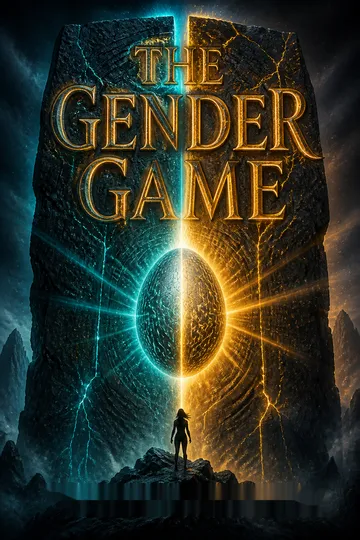
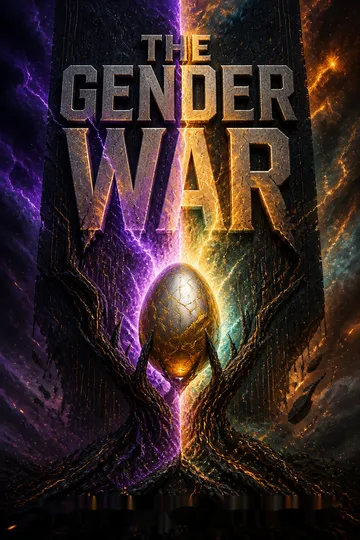
The Gender Game Series





About the Author


Download PDF
Download EPUB
.epub digital book format is ideal for reading ebooks on phones, tablets, and e-readers.








